SPECIAL SPECIFICTIONS


                      (part I )
             RECOMMENDED LIMITS FOR
                   AGGREGATES
           USED FOR ALL CONCRETE WORKS

AGGREGATES USED IN ALL CONCRETE WORKS
SHALL COMPLY WITH THE REQUIREMENTS OF
THE FOLLOWING RECCOMENDED LIMITS.

A – Physical and mechanical properties testing. (TABLE -1)
B – Contamination and reactivity testing. (TABLE – 2)
C – Total chloride and sulphate content in concrete. (TABLE -3)
D – Size and gradings of aggregates. (TABLE -4)
E – For more information refer to C.I.R.A Guide.

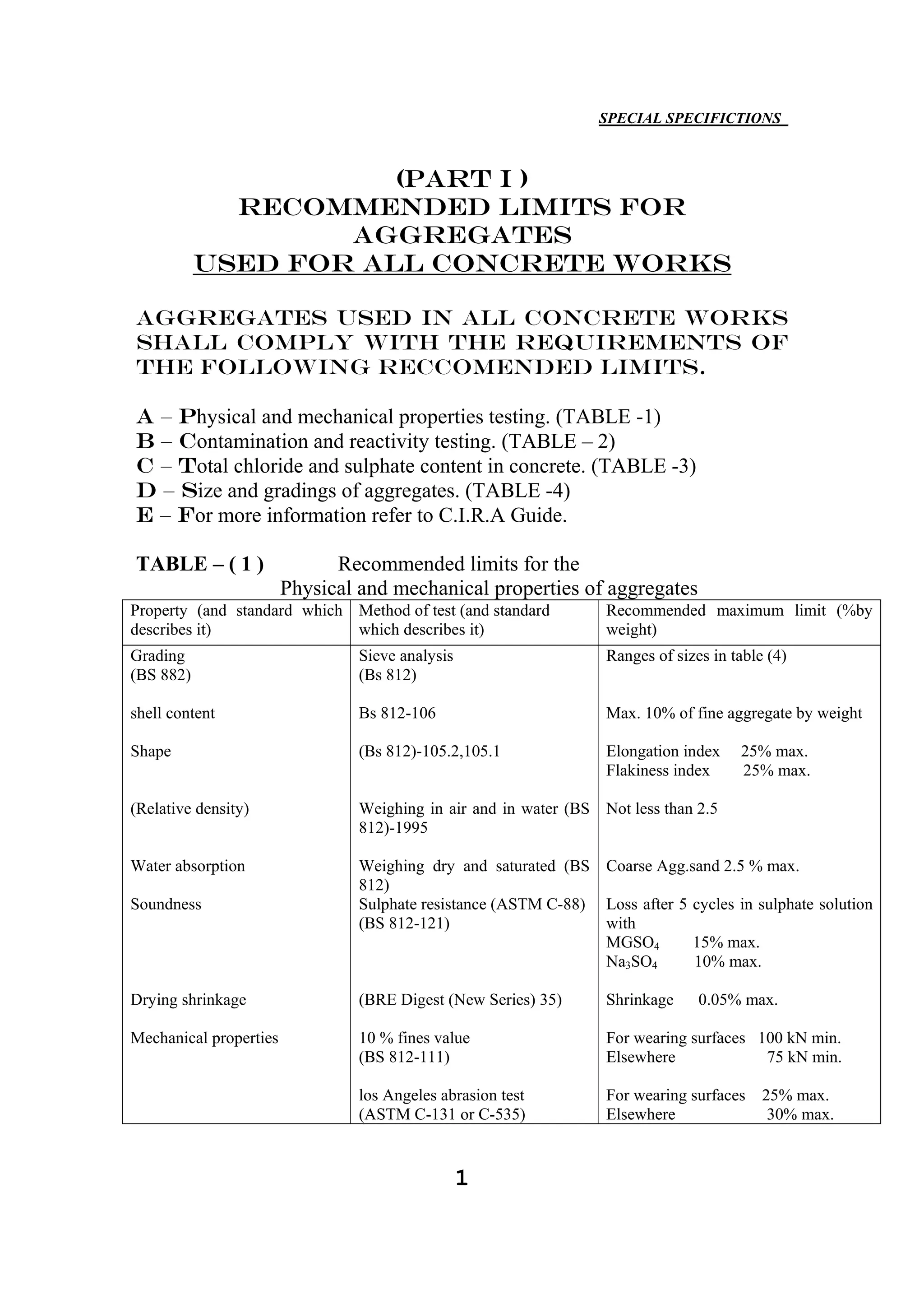
TABLE – ( 1 )                 Recommended limits for the
                        Physical and mechanical properties of aggregates
Property (and standard which Method of test (and standard          Recommended maximum limit (%by
describes it)                which describes it)                   weight)
Grading                          Sieve analysis                    Ranges of sizes in table (4)
(BS 882)                         (Bs 812)

shell content                    Bs 812-106                        Max. 10% of fine aggregate by weight

Shape                            (Bs 812)-105.2,105.1              Elongation index    25% max.
                                                                   Flakiness index     25% max.

(Relative density)               Weighing in air and in water (BS Not less than 2.5
                                 812)-1995

Water absorption                 Weighing dry and saturated (BS Coarse Agg.sand 2.5 % max.
                                 812)
Soundness                        Sulphate resistance (ASTM C-88) Loss after 5 cycles in sulphate solution
                                 (BS 812-121)                    with
                                                                 MGSO4        15% max.
                                                                 Na3SO4       10% max.

Drying shrinkage                 (BRE Digest (New Series) 35)      Shrinkage     0.05% max.

Mechanical properties            10 % fines value                  For wearing surfaces 100 kN min.
                                 (BS 812-111)                      Elsewhere             75 kN min.

                                 los Angeles abrasion test         For wearing surfaces 25% max.
                                 (ASTM C-131 or C-535)             Elsewhere             30% max.


                                                  1
SPECIAL SPECIFICTIONS


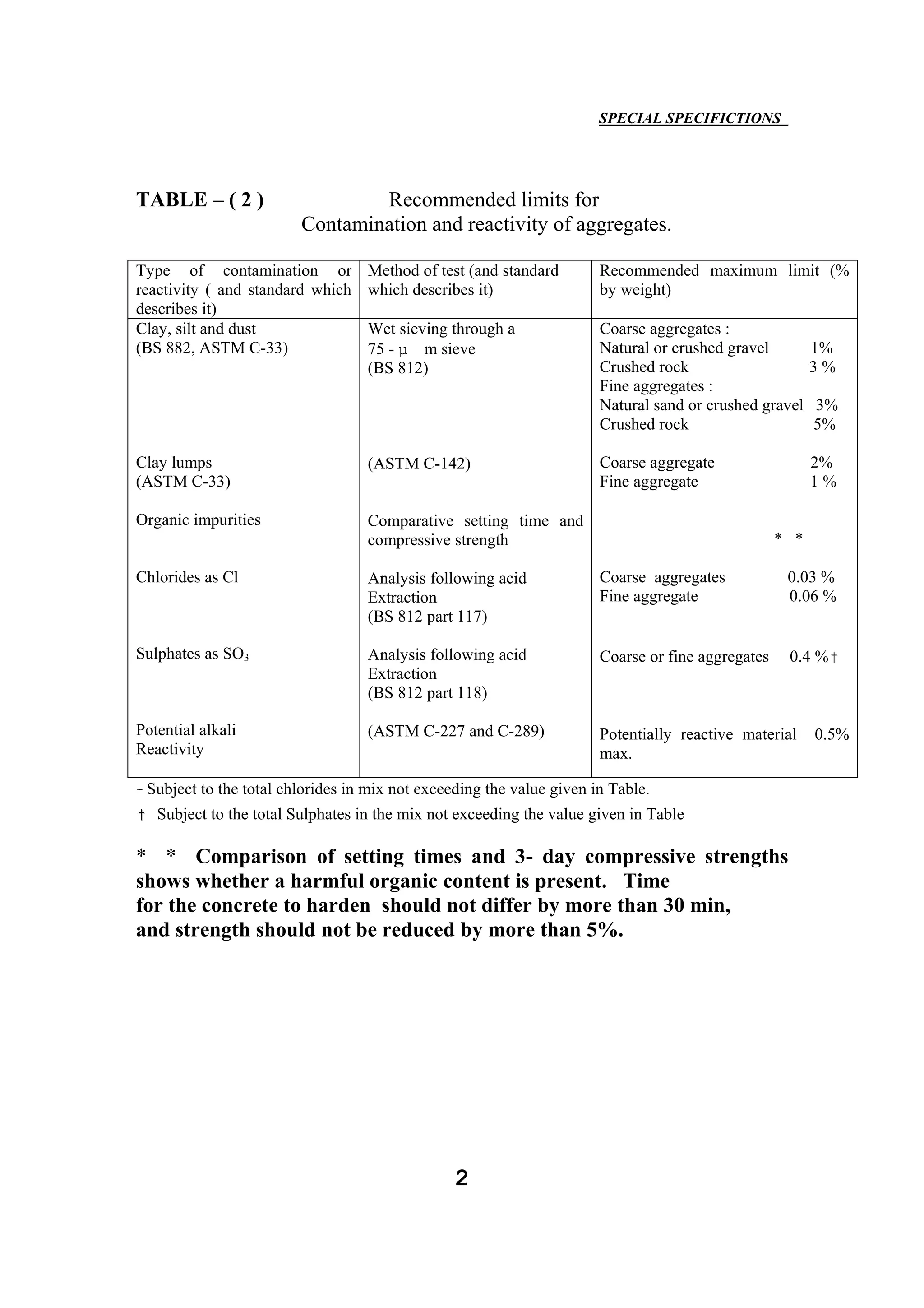
TABLE – ( 2 )                    Recommended limits for
                         Contamination and reactivity of aggregates.

Type of contamination or           Method of test (and standard        Recommended maximum limit (%
reactivity ( and standard which    which describes it)                 by weight)
describes it)
Clay, silt and dust                Wet sieving through a               Coarse aggregates :
(BS 882, ASTM C-33)                75 - µ m sieve                      Natural or crushed gravel         1%
                                   (BS 812)                            Crushed rock                      3%
                                                                       Fine aggregates :
                                                                       Natural sand or crushed gravel    3%
                                                                       Crushed rock                      5%

Clay lumps                         (ASTM C-142)                        Coarse aggregate                  2%
(ASTM C-33)                                                            Fine aggregate                    1%

Organic impurities                 Comparative setting time and
                                   compressive strength                                            * *

Chlorides as Cl                    Analysis following acid             Coarse aggregates            0.03 %
                                   Extraction                          Fine aggregate               0.06 %
                                   (BS 812 part 117)

Sulphates as SO3                   Analysis following acid             Coarse or fine aggregates         †
                                                                                                    0.4 %†
                                   Extraction
                                   (BS 812 part 118)

Potential alkali                   (ASTM C-227 and C-289)              Potentially reactive material     0.5%
Reactivity                                                             max.

- Subject to the total chlorides in mix not exceeding the value given in Table.
† Subject to the total Sulphates in the mix not exceeding the value given in Table

* * Comparison of setting times and 3- day compressive strengths
shows whether a harmful organic content is present. Time
for the concrete to harden should not differ by more than 30 min,
and strength should not be reduced by more than 5%.


                                                 2
SPECIAL SPECIFICTIONS


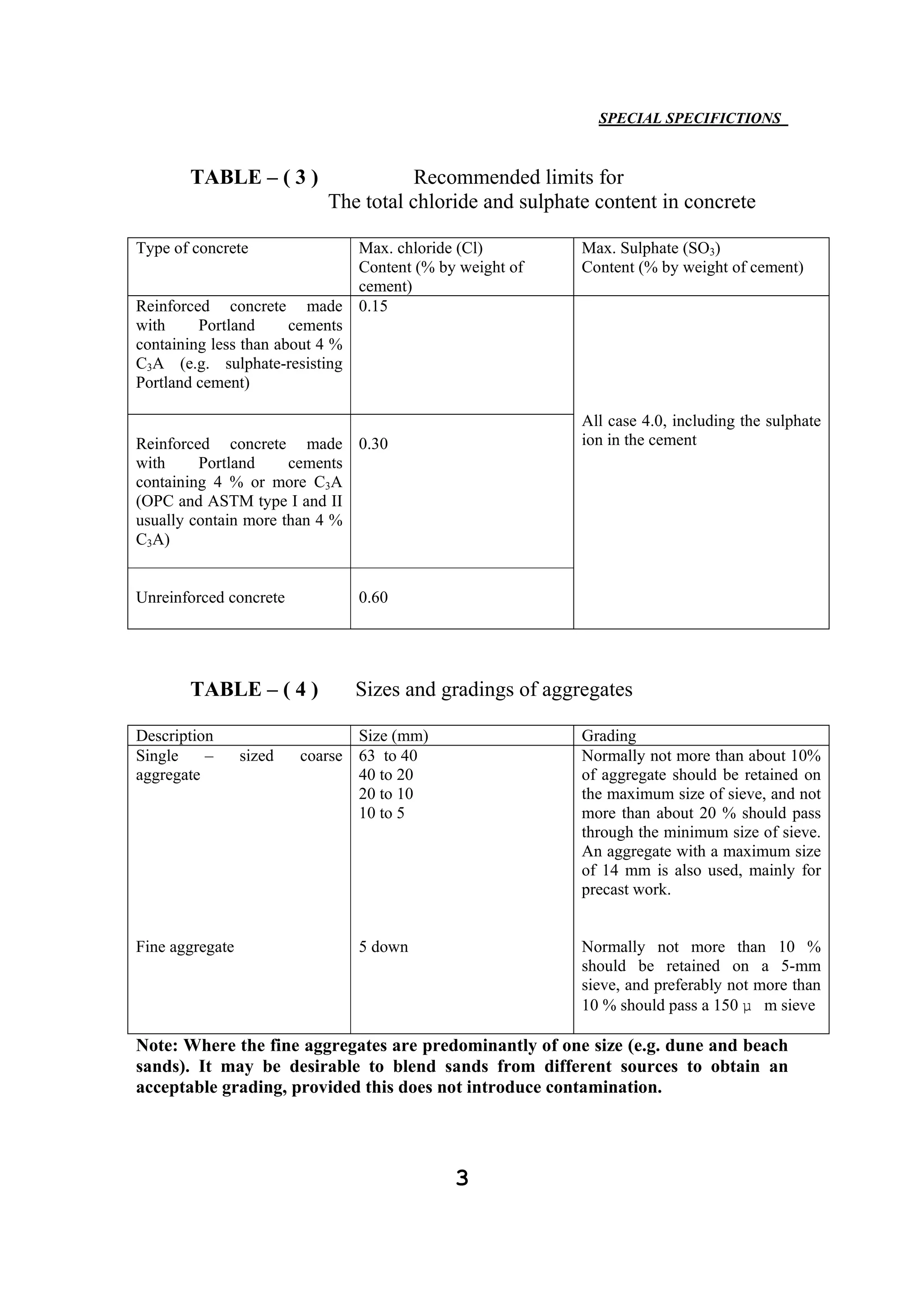
       TABLE – ( 3 )                   Recommended limits for
                            The total chloride and sulphate content in concrete

Type of concrete               Max. chloride (Cl)         Max. Sulphate (SO3)
                               Content (% by weight of    Content (% by weight of cement)
                               cement)
Reinforced concrete made 0.15
with     Portland      cements
containing less than about 4 %
C3A (e.g. sulphate-resisting
Portland cement)

                                                          All case 4.0, including the sulphate
Reinforced concrete made 0.30                             ion in the cement
with     Portland     cements
containing 4 % or more C3A
(OPC and ASTM type I and II
usually contain more than 4 %
C3A)


Unreinforced concrete           0.60


       TABLE – ( 4 )           Sizes and gradings of aggregates

Description                     Size (mm)                 Grading
Single    –      sized   coarse 63 to 40                  Normally not more than about 10%
aggregate                       40 to 20                  of aggregate should be retained on
                                20 to 10                  the maximum size of sieve, and not
                                10 to 5                   more than about 20 % should pass
                                                          through the minimum size of sieve.
                                                          An aggregate with a maximum size
                                                          of 14 mm is also used, mainly for
                                                          precast work.


Fine aggregate                  5 down                    Normally not more than 10 %
                                                          should be retained on a 5-mm
                                                          sieve, and preferably not more than
                                                          10 % should pass a 150 µ m sieve

Note: Where the fine aggregates are predominantly of one size (e.g. dune and beach
sands). It may be desirable to blend sands from different sources to obtain an
acceptable grading, provided this does not introduce contamination.


                                            3

Recommended limits for aggegates

  • 1.
    SPECIAL SPECIFICTIONS (part I ) RECOMMENDED LIMITS FOR AGGREGATES USED FOR ALL CONCRETE WORKS AGGREGATES USED IN ALL CONCRETE WORKS SHALL COMPLY WITH THE REQUIREMENTS OF THE FOLLOWING RECCOMENDED LIMITS. A – Physical and mechanical properties testing. (TABLE -1) B – Contamination and reactivity testing. (TABLE – 2) C – Total chloride and sulphate content in concrete. (TABLE -3) D – Size and gradings of aggregates. (TABLE -4) E – For more information refer to C.I.R.A Guide. TABLE – ( 1 ) Recommended limits for the Physical and mechanical properties of aggregates Property (and standard which Method of test (and standard Recommended maximum limit (%by describes it) which describes it) weight) Grading Sieve analysis Ranges of sizes in table (4) (BS 882) (Bs 812) shell content Bs 812-106 Max. 10% of fine aggregate by weight Shape (Bs 812)-105.2,105.1 Elongation index 25% max. Flakiness index 25% max. (Relative density) Weighing in air and in water (BS Not less than 2.5 812)-1995 Water absorption Weighing dry and saturated (BS Coarse Agg.sand 2.5 % max. 812) Soundness Sulphate resistance (ASTM C-88) Loss after 5 cycles in sulphate solution (BS 812-121) with MGSO4 15% max. Na3SO4 10% max. Drying shrinkage (BRE Digest (New Series) 35) Shrinkage 0.05% max. Mechanical properties 10 % fines value For wearing surfaces 100 kN min. (BS 812-111) Elsewhere 75 kN min. los Angeles abrasion test For wearing surfaces 25% max. (ASTM C-131 or C-535) Elsewhere 30% max. 1
  • 2.
    SPECIAL SPECIFICTIONS TABLE –( 2 ) Recommended limits for Contamination and reactivity of aggregates. Type of contamination or Method of test (and standard Recommended maximum limit (% reactivity ( and standard which which describes it) by weight) describes it) Clay, silt and dust Wet sieving through a Coarse aggregates : (BS 882, ASTM C-33) 75 - µ m sieve Natural or crushed gravel 1% (BS 812) Crushed rock 3% Fine aggregates : Natural sand or crushed gravel 3% Crushed rock 5% Clay lumps (ASTM C-142) Coarse aggregate 2% (ASTM C-33) Fine aggregate 1% Organic impurities Comparative setting time and compressive strength * * Chlorides as Cl Analysis following acid Coarse aggregates 0.03 % Extraction Fine aggregate 0.06 % (BS 812 part 117) Sulphates as SO3 Analysis following acid Coarse or fine aggregates † 0.4 %† Extraction (BS 812 part 118) Potential alkali (ASTM C-227 and C-289) Potentially reactive material 0.5% Reactivity max. - Subject to the total chlorides in mix not exceeding the value given in Table. † Subject to the total Sulphates in the mix not exceeding the value given in Table * * Comparison of setting times and 3- day compressive strengths shows whether a harmful organic content is present. Time for the concrete to harden should not differ by more than 30 min, and strength should not be reduced by more than 5%. 2
  • 3.
    SPECIAL SPECIFICTIONS TABLE – ( 3 ) Recommended limits for The total chloride and sulphate content in concrete Type of concrete Max. chloride (Cl) Max. Sulphate (SO3) Content (% by weight of Content (% by weight of cement) cement) Reinforced concrete made 0.15 with Portland cements containing less than about 4 % C3A (e.g. sulphate-resisting Portland cement) All case 4.0, including the sulphate Reinforced concrete made 0.30 ion in the cement with Portland cements containing 4 % or more C3A (OPC and ASTM type I and II usually contain more than 4 % C3A) Unreinforced concrete 0.60 TABLE – ( 4 ) Sizes and gradings of aggregates Description Size (mm) Grading Single – sized coarse 63 to 40 Normally not more than about 10% aggregate 40 to 20 of aggregate should be retained on 20 to 10 the maximum size of sieve, and not 10 to 5 more than about 20 % should pass through the minimum size of sieve. An aggregate with a maximum size of 14 mm is also used, mainly for precast work. Fine aggregate 5 down Normally not more than 10 % should be retained on a 5-mm sieve, and preferably not more than 10 % should pass a 150 µ m sieve Note: Where the fine aggregates are predominantly of one size (e.g. dune and beach sands). It may be desirable to blend sands from different sources to obtain an acceptable grading, provided this does not introduce contamination. 3