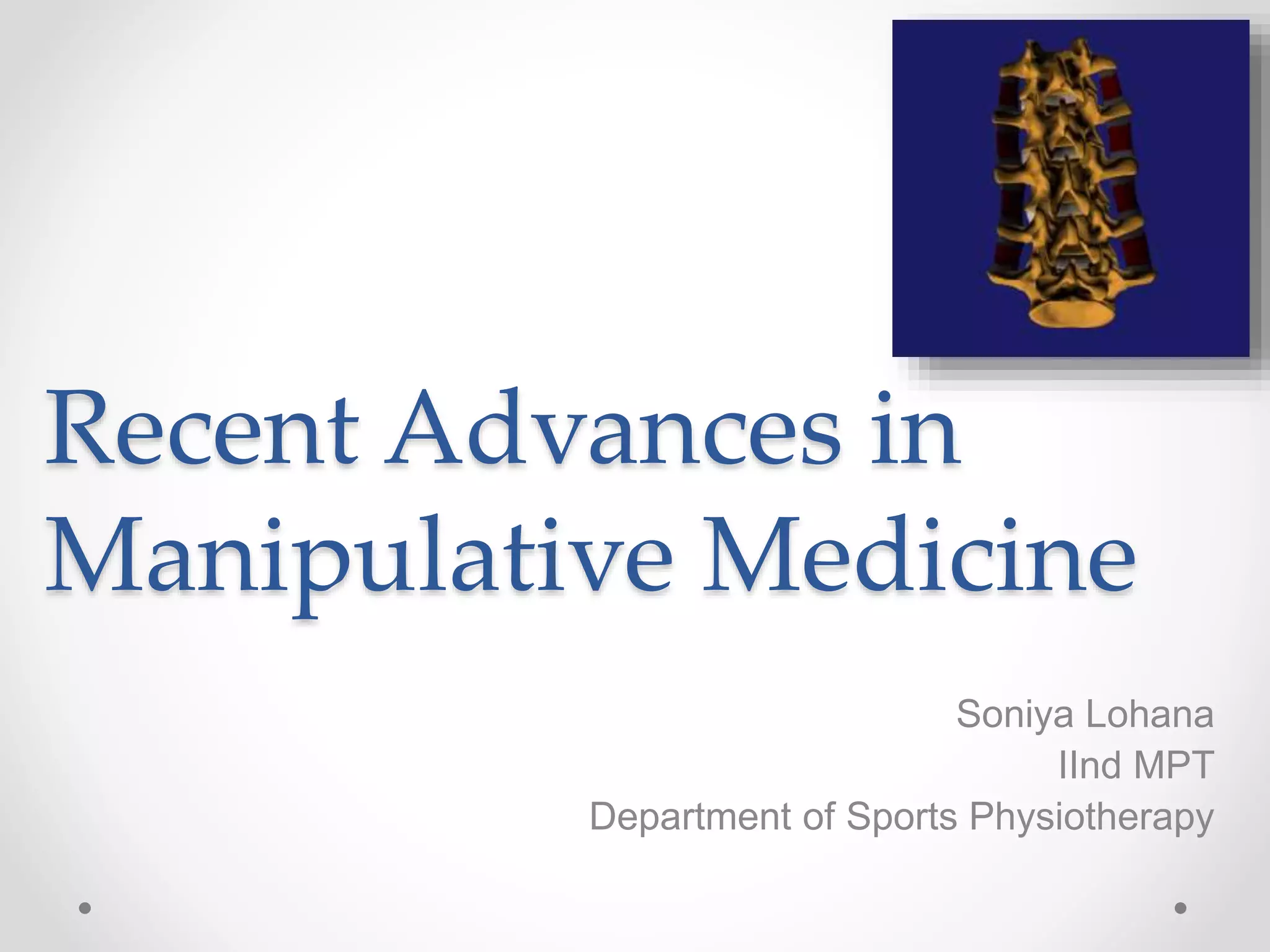
Recent Advances in
Manipulative Medicine
Soniya Lohana
IInd MPT
Department of Sports Physiotherapy
Contents
• Introduction
• History
• Principles of Manipulative Medicine
• Assessment of Somatic Dysfunction
• Types of Manual Therapy
• Concepts of Manual Therapy
• Recent Advances
• References
6/1/2021
Recent Advances in manipulative
medicine
2
Introduction
• Manual medicine is not a single technique or type of
therapy; rather, it encompasses a spectrum of
therapeutic elements.
• Manipulative procedures are used primarily to increase
mobility in restricted areas of musculoskeletal function
and decrease pain.
• Goal- restore maximal, pain free movement
• Massage and stretching are types of manual medicine
6/1/2021
Recent Advances in manipulative
medicine
3
History
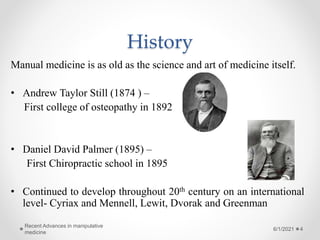
Manual medicine is as old as the science and art of medicine itself.
• Andrew Taylor Still (1874 ) –
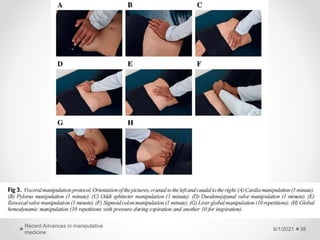
First college of osteopathy in 1892
• Daniel David Palmer (1895) –
First Chiropractic school in 1895
• Continued to develop throughout 20th century on an international
level- Cyriax and Mennell, Lewit, Dvorak and Greenman
6/1/2021
Recent Advances in manipulative
medicine
4
Principles of Manipulative Medicine
1. The body is a unit; the person a unit of body, mind, and spirit.
2. The body is capable of self regulation, self healing, and health
maintenance.
3. Structure and function are reciprocally interrelated.
4. Rational treatment is based on an understanding of the above three
principles.
6/1/2021
Recent Advances in manipulative
medicine
5
Osteopathic assessment of somatic
dysfunction
• A- Functional and Structural Asymmetry
• R -The abnormality may be either restricted or increased
mobility and includes assessment of quality of
movement and ‘end-feel’.
• T - The identification of tissue texture change is
important in the diagnosis of somatic dysfunction.
Palpable changes may be noted in superficial,
intermediate and deep tissues.
Gibbons and Tehan (2001)
6/1/2021
Recent Advances in manipulative
medicine
6
Techniques most commonly used
in sports medicine
• Soft tissue techniques – enhance muscle relaxation,
flexibility and circulation of body fluids.
These include massage, stretching, SCS,MFR, MET and
indirect functional techniques
• Mobilization techniques (Articulation Techniques) –FPR
and joint play.
• Manipulation techniques – High Velocity, Low Amplitude
(HVLA) Technique.
These have been developed to restore the symmetry of the
movements associated with the vertebral or extremity
joints.
6/1/2021
Recent Advances in manipulative
medicine
7
Difference between
Osteopathy and Chiropractic
• Osteopathy deals with soft tissue techniques as well as
HVLA treatment.
• Chiropractic approach focuses on nervous system and
advocates adjustments to spinal vertebrae using HVLA,
taking very less interest in soft tissue techniques.
6/1/2021
Recent Advances in manipulative
medicine
8
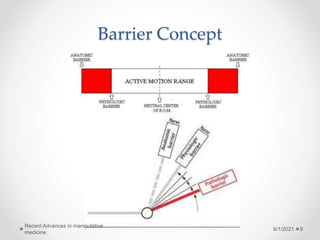
Barrier Concept
6/1/2021
Recent Advances in manipulative
medicine
9
6/1/2021
Recent Advances in manipulative
medicine
10
6/1/2021
Recent Advances in manipulative
medicine
11
Spinal Manipulative Therapy
(SMT)
• Acts on various components of vertebral motion segment.
• SMT distracts the facet joints with faster suppression when a
cracking sound is heard.
• Intradiscal pressure may decrease briefly.
• Forceful stretching of the paraspinal muscles occurs, inducing
relaxation
Reference: Maigne JY, Vautravers P. Mechanism of action of spinal manipulative therapy.
Joint bone spine.2003 Sep 1;70(5):336-41.
6/1/2021
Recent Advances in manipulative
medicine
12
Efficacy of Spinal Chiropractic Manipulative Therapy for
adjusting the relationship between cervical facet joints to treat
Headache caused by Acute Mountain Sickness
6/1/2021
Recent Advances in manipulative
medicine
13
Authors Yuan Wang, Mengzi Xu, and Yan Shi et al. 2020
Methodology One hundred individuals (58 men and 42 women) who travelled to
Tibet between June and October 2015 were randomized to SCMT
and standard AMS pain control groups. The primary endpoints
were headache and vertigo improvement.
Results The two groups showed significantly improved VAS pain scores.
The SCMT group showed higher baseline VAS scores compared
with controls, but lower VAS scores at 30 minutes. Improvements
were also noted in dizziness, blood pressure, and oxygen saturation.
Conclusion SCMT can be used to relieve AMS-induced headache, dizziness,
blood pressure, and oxygen saturation of people traveling rapidly to
high altitudes. SCMT may be suitable for the management of AMS
for patients who want to avoid drugs and oxygen inhalation.
Spinal Manipulative Therapy and Sports Performance
Enhancement: A Systematic Review
6/1/2021
Recent Advances in manipulative
medicine
14
Authors Marcelo B.Botelho, Bruno A.P. Alvarenga, Nícolly Molina et al
Methodology The purpose of this study was to review the literature regarding the
relationship between spinal manipulative therapy (SMT) and sports
performance.PubMed and Embase databases were searched for
original studies published up to July 2016. Inclusion criteria were if
SMT has been applied to athletes and if any sports performance–
related outcome was measured.
Conclusion Although 4 of 7 studies showed that SMT improved sports
performance tests, the evidence is still weak to support its use.
Spinal manipulative therapy may be a promising approach for
performance enhancement that should be investigated with more
consistent methodological designs.
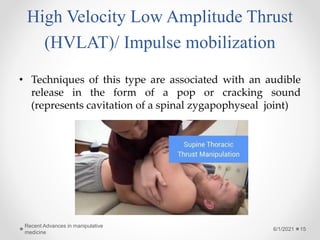
High Velocity Low Amplitude Thrust
(HVLAT)/ Impulse mobilization
• Techniques of this type are associated with an audible
release in the form of a pop or cracking sound
(represents cavitation of a spinal zygapophyseal joint)
6/1/2021
Recent Advances in manipulative
medicine
15
High-velocity Low-amplitude Manipulation (Thrust) And
Athletic Performance: A Systematic Review
6/1/2021
Recent Advances in manipulative
medicine
16
Authors Mikhail Santos Cerqueira, Rafael Moreira Sales Cláudia Thais et al
2017
Aim To evaluate the effects of thrust on the performance of athletes in
relation to the outcomes hand-grip strength, jump height and
running speed.
Methodology The databases used in the search were MEDLINE / PUBMED, etc
and Randomized controlled trials were included, whose participants
were professionals or recreational athletes and had thrust as
intervention.
Conclusion The current evidence is insufficient to determine the use or nonuse
the HVLAT in sports in order to improve performance.
Chapman’s reflex points
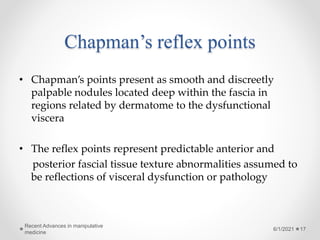
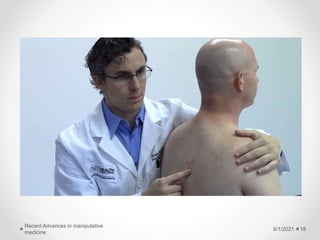
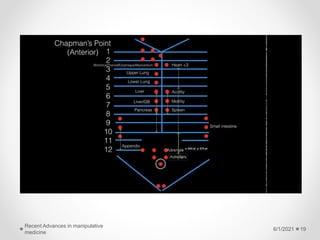
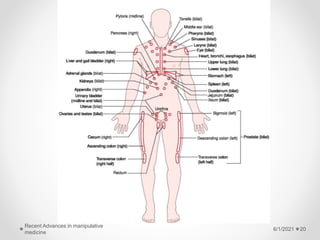
• Chapman’s points present as smooth and discreetly
palpable nodules located deep within the fascia in
regions related by dermatome to the dysfunctional
viscera
• The reflex points represent predictable anterior and
posterior fascial tissue texture abnormalities assumed to
be reflections of visceral dysfunction or pathology
6/1/2021
Recent Advances in manipulative
medicine
17
6/1/2021
Recent Advances in manipulative
medicine
18
6/1/2021
Recent Advances in manipulative
medicine
19
6/1/2021
Recent Advances in manipulative
medicine
20
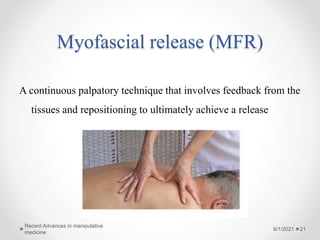
Myofascial release (MFR)
A continuous palpatory technique that involves feedback from the
tissues and repositioning to ultimately achieve a release
6/1/2021
Recent Advances in manipulative
medicine
21
The use of Myofascial Release in the Agility and Power of healthy
subjects: Randomized Controlled Clinical Study
6/1/2021
Recent Advances in manipulative
medicine
22
Authors Matheus Minosso Kulka ,Wagner Menna Pereira, Nerison Lucas Costa
Pereira et al. 2020
Methods Thirty healthy participants were invited, divided into three distinct
groups: active stretching group (SG); foam roller group (FR); and
control group (CG). The participants initially underwent an
anthropometric assessment , performed the Illinois Test for agility,
and the Vertical Jump Test for explosive strength of lower limbs.
Results After 4 weeks of intervention, no significant data related to vertical
jump, which assessed muscle power, was observed, however,
through the Illinois test, there was gains related to the agility of
subjects in the FR when compared to the others.
Conclusion Use of foam roller, as a strategy for self-myofascial release, proved
to be efficient for the agility of the participants, however it did not
present data as significant when related to muscle power.
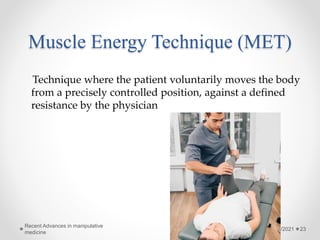
Muscle Energy Technique (MET)
Technique where the patient voluntarily moves the body
from a precisely controlled position, against a defined
resistance by the physician
6/1/2021
Recent Advances in manipulative
medicine
23
The Effect Of Muscle Energy Technique On Flexibility Of
Hamstring Muscle In Futsal Players
6/1/2021
Recent Advances in manipulative
medicine
24
Authors Narviena Shri Srithren and Subramanian Shenbaga Sundaram
2020
Methodology After being screened as per the inclusion and exclusion criteria, the
participants were included. The technique was performed for 7-10
seconds with 20 percent of resistive effort synchronized with the
breathing pattern of the participant. This was repeated until no
further gain was possible. Hamstring length was assessed using the
Active Knee Extension Test (AKET) before and after the
intervention, the values were then compared.
Results The result of the study show improvements in the hamstring length
following the intervention to be statistically significant (P <0.01)
when compared to the baseline findings.
Conclusion It has been concluded that MET can increase the hamstring
flexibility among futsal players, and thus will be able to reduce the
injury rate.
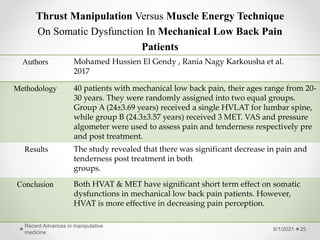
Thrust Manipulation Versus Muscle Energy Technique
On Somatic Dysfunction In Mechanical Low Back Pain
Patients
6/1/2021
Recent Advances in manipulative
medicine
25
Authors Mohamed Hussien El Gendy , Rania Nagy Karkousha et al.
2017
Methodology 40 patients with mechanical low back pain, their ages range from 20-
30 years. They were randomly assigned into two equal groups.
Group A (24±3.69 years) received a single HVLAT for lumbar spine,
while group B (24.3±3.57 years) received 3 MET. VAS and pressure
algometer were used to assess pain and tenderness respectively pre
and post treatment.
Results The study revealed that there was significant decrease in pain and
tenderness post treatment in both
groups.
Conclusion Both HVAT & MET have significant short term effect on somatic
dysfunctions in mechanical low back pain patients. However,
HVAT is more effective in decreasing pain perception.
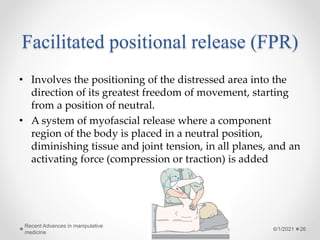
Facilitated positional release (FPR)
• Involves the positioning of the distressed area into the
direction of its greatest freedom of movement, starting
from a position of neutral.
• A system of myofascial release where a component
region of the body is placed in a neutral position,
diminishing tissue and joint tension, in all planes, and an
activating force (compression or traction) is added
6/1/2021
Recent Advances in manipulative
medicine
26
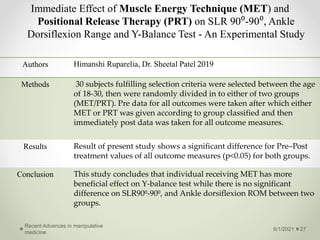
Immediate Effect of Muscle Energy Technique (MET) and
Positional Release Therapy (PRT) on SLR 90⁰-90⁰, Ankle
Dorsiflexion Range and Y-Balance Test - An Experimental Study
6/1/2021
Recent Advances in manipulative
medicine
27
Authors Himanshi Ruparelia, Dr. Sheetal Patel 2019
Methods 30 subjects fulfilling selection criteria were selected between the age
of 18-30, then were randomly divided in to either of two groups
(MET/PRT). Pre data for all outcomes were taken after which either
MET or PRT was given according to group classified and then
immediately post data was taken for all outcome measures.
Results Result of present study shows a significant difference for Pre–Post
treatment values of all outcome measures (p<0.05) for both groups.
Conclusion This study concludes that individual receiving MET has more
beneficial effect on Y-balance test while there is no significant
difference on SLR90⁰-90⁰, and Ankle dorsiflexion ROM between two
groups.
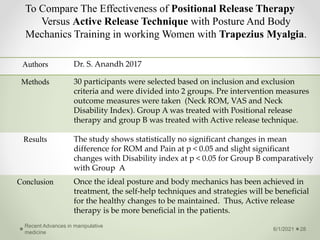
To Compare The Effectiveness of Positional Release Therapy
Versus Active Release Technique with Posture And Body
Mechanics Training in working Women with Trapezius Myalgia.
6/1/2021
Recent Advances in manipulative
medicine
28
Authors Dr. S. Anandh 2017
Methods 30 participants were selected based on inclusion and exclusion
criteria and were divided into 2 groups. Pre intervention measures
outcome measures were taken (Neck ROM, VAS and Neck
Disability Index). Group A was treated with Positional release
therapy and group B was treated with Active release technique.
Results The study shows statistically no significant changes in mean
difference for ROM and Pain at p < 0.05 and slight significant
changes with Disability index at p < 0.05 for Group B comparatively
with Group A
Conclusion Once the ideal posture and body mechanics has been achieved in
treatment, the self-help techniques and strategies will be beneficial
for the healthy changes to be maintained. Thus, Active release
therapy is be more beneficial in the patients.
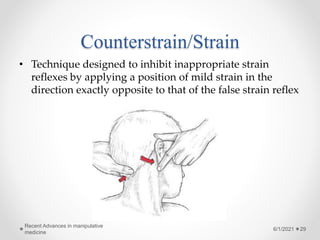
Counterstrain/Strain
• Technique designed to inhibit inappropriate strain
reflexes by applying a position of mild strain in the
direction exactly opposite to that of the false strain reflex
6/1/2021
Recent Advances in manipulative
medicine
29
The strain-counter strain technique in the management of anterior
interosseous nerve syndrome: A case report
6/1/2021
Recent Advances in manipulative
medicine
30
Authors Manu Goyal, Kanimozhi Narkeesh et al 2017
Methods 37 year old female patient who complained of an abnormal pen grip
while writing. Clinical observation showed weak pincer grip
strength, active trigger point in the middle of the forearm. Her
treatment course included cryomassage, TENS and SCS, 4 times a
week for 2 weeks.
Results On follow up, the patient reported an inactive trigger point on
palpation, improvement in her handwriting and improved pincer
grip strength as recorded by hydraulic pinch guage.
Conclusion This case report explored the effectiveness of SCS as an important
adjunct to other conservative treatments for entrapment
neuropathies. SCS has also shown its potential to improve muscle
strength.
A Study on Effect of Strain-counterstrain in Plantar Fasciitis
6/1/2021
Recent Advances in manipulative
medicine
31
Authors Pournima A. Pawar, Ruchi U. Tople, Ujwal L. Yeole et al.
2017
Methods 30 individuals aged between 18-35 years both male and female with
plantar fasciitis were recruited for the study. The patients were
treated for a period of 7 days using the technique of strain-
counterstrain. Pre-intervention and post-intervention scores of
Plantar Fasciitis Pain and Disability scale were assessed and were
analysed using unpaired t-test and repeated ANOVA
Results A significant difference was noted between the pre and post
interventional measure of a type of manual therapy called strain-
counterstrain (p<0.0001).
Conclusion
The technique of strain-counterstrain which is a type of manual
therapy is effective in patients affected by plantar fasciitis. It also
showed an improvement in the limited ankle dorsiflexion range.
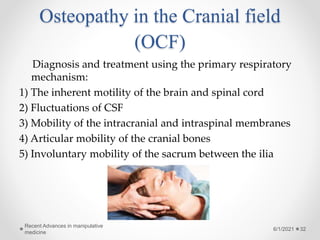
Osteopathy in the Cranial field
(OCF)
Diagnosis and treatment using the primary respiratory
mechanism:
1) The inherent motility of the brain and spinal cord
2) Fluctuations of CSF
3) Mobility of the intracranial and intraspinal membranes
4) Articular mobility of the cranial bones
5) Involuntary mobility of the sacrum between the ilia
6/1/2021
Recent Advances in manipulative
medicine
32
Effectiveness Of Osteopathic Manipulative Treatment Versus
Osteopathy In The Cranial Field In Temporomandibular
Disorders – A Pilot Study
6/1/2021
Recent Advances in manipulative
medicine
33
Authors Christina Gesslbauer et al 2018
Methodology 40 female subjects with long-term temporomandibular disorders
were included. Subjects were randomly assigned into two groups:
(1) osteopathic manipulative treatment group and (2) osteopathy in
the cranial field group. Examination was performed at baseline and
at the end of the last treatment, consisting of subjective pain
intensity with the VAS, Helkimo Index and SF-36 Health Survey.
Subjects had five treatments, once a week. 36 subjects completed the
study
Results Patients showed significant effect in outcome measures in both the
groups.
Conclusion Both had similar clinical results. The findings support the use of
osteopathic manipulative treatment and osteopathy in the cranial
field as an effective treatment modality in patients with
temporomandibular disorders.
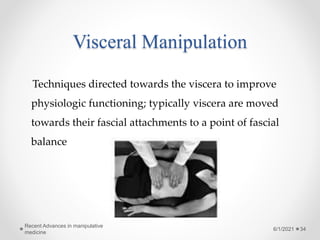
Visceral Manipulation
Techniques directed towards the viscera to improve
physiologic functioning; typically viscera are moved
towards their fascial attachments to a point of fascial
balance
6/1/2021
Recent Advances in manipulative
medicine
34
Effect of Osteopathic Visceral Manipulation on Pain, Cervical Range
of Motion and Upper Trapezius Muscle Activity in Patients with
Chronic Nonspecific Neck Pain and Functional Dyspepsia: A
Randomized, Double- Blind, Placebo- Controlled Pilot Study
6/1/2021
Recent Advances in manipulative
medicine
35
Authors Andreia Cristina de Oliveira Silva et al. 2018
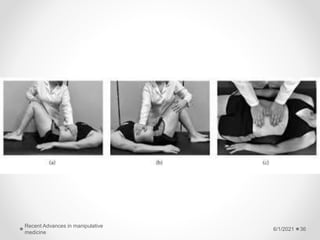
Methodology 28 NS-NP patients were randomly assigned into 2 groups: The
control group received placebo visceral manipulation (PVMG) and
the effect of osteopathic visceral manipulation (OVMG) of the
stomach and liver on pain, cervical mobility and EMG activity of UT
muscle in individuals with NS-NP and functional dyspepsia was
seen.
Results Significant effects after treatment on NPRS and pain area were seen
(p<0.001) Significant increases in EMG activity in OVMG. No
differences between the groups for cervical ROM
Conclusion Study concludes that single visceral mobilization session for
stomach and liver reduces cervical pain and increases the amplitude
of EMG signal of UT muscle immediately and 7 days after
treatment.
6/1/2021
Recent Advances in manipulative
medicine
36
Active Visceral Manipulation associated with Conventional
Physiotherapy in people with Chronic Low Back Pain and Visceral
Dysfunction: A Preliminary, Randomized, Contolled, Double- Blind
Clincal Trial
6/1/2021
Recent Advances in manipulative
medicine
37
Authors Lucas Villalta Santos et al 2018
Methodology A blinded evaluation was conducted involving 20 people with
chronic LBP with visceral dysfunction. Pain perception, Lumbar
mobility and functionality was assessed. Protocol consisted of 50
min session of conventional physiotherapy and visceral
manipulation.
Results Significant improvements were found in the experimental group for
lumbar mobility and specific functionality. (p<.05) There were no
significant differences for pain perception and global functionality.
Conclusion The combination of visceral manipulation and conventional physical
therapy program demonstrated significant between-groups
differences over time for lumbar spine mobility and specific
functionality.
6/1/2021
Recent Advances in manipulative
medicine
38
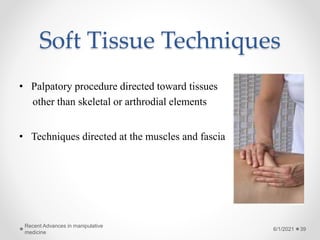
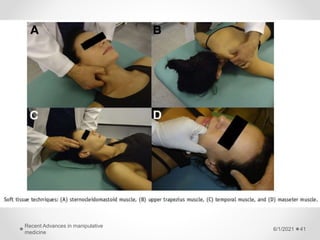
Soft Tissue Techniques
• Palpatory procedure directed toward tissues
other than skeletal or arthrodial elements
• Techniques directed at the muscles and fascia
6/1/2021
Recent Advances in manipulative
medicine
39
Effectiveness of a Treatment Involving Soft Tissue Techniques
and/or Neural Mobilization Techniques in the Management of
Tension-Type Headache: A Randomized Controlled Trial
6/1/2021
Recent Advances in manipulative
medicine
40
Authors Alejandro Ferragut-Garcı´as et al 2017
Aim To evaluate the effects of a protocol involving soft tissue techniques
and/or neural mobilization techniques in the management of
patients with frequent episodic tension-type headache (FETTH) and
those with chronic tension-type headache (CTTH).
Methodology Patients (N=97; 78 women, 19 men) diagnosed with FETTH or CTTH
were randomly assigned to groups A, B, C, or D.
Interventions: (A) Placebo superficial massage; (B) soft tissue
techniques; (C) neural mobilization techniques; (D) a combination of
soft tissue and neural mobilization techniques.
Conclusion The application of soft tissue and neural mobilization techniques to
patients with FETTH or CTTH induces significant changes in
PPT, the characteristics of pain crisis, and its effect on activities of
daily living as compared with the application of these techniques as
isolated interventions.
6/1/2021
Recent Advances in manipulative
medicine
41
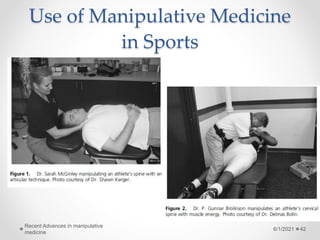
Use of Manipulative Medicine
in Sports
6/1/2021
Recent Advances in manipulative
medicine
42
Osteopathic Manual Medicine & the Athlete
6/1/2021
Recent Advances in manipulative
medicine
43
Authors P. Gunnar Brolinson, Sarah M.G. McGinley, and Shawn Kerger
• From its beginning, osteopathic medicine has taken an active
role in promoting participation in athletics at all levels.
• It aids in improved performance, recovery from injury,
prevention of injury, and ultimately successful outcomes in
competition.
• Implementation of osteopathic principles and practices,
which may include manual medicine, should then be applied
to aid in the recovery or prevention of illness or injury.
References
1. Greenman’s Principles of Manual Medicine.
2. Wang Y, Xu M, Shi Y. Efficacy of spinal chiropractic manipulative therapy for
adjusting the relationship between cervical facet joints to treat headache caused by
acute mountain sickness. Journal of International Medical Research. 2020
Jan;48(1):0300060519898005.
3. Botelho MB, Alvarenga BA, Molina N, Ribas M, Baptista AF. Spinal manipulative
therapy and sports performance enhancement: a systematic review. Journal of
manipulative and physiological therapeutics. 2017 Sep 1;40(7):535-43.
4. Cerqueira MS, Sales RM, Pinto CT, Moreno BG, Moura Filho AG. High-velocity low-
amplitude manipulation (thrust) and athletic performance: a systematic review.
Fisioterapia em Movimento. 2017 Apr;30(2):413-22.
5. Ruparelia H, Mishra RN. Immediate Effect of Muscle Energy Technique (MET) and
Positional Release Therapy (PRT) on SLR90⁰-90⁰, Ankle Dorsiflexion Range and Y-
Balance Test-An Experimental Study. International Journal of Health Sciences and
Research. 2019;9(9):53-8.
6/1/2021
Recent Advances in manipulative
medicine
44
6. Anandh S. To Compare The Effectiveness of Positional Release Therapy Versus Active
Release Technique with Posture And Body Mechanics Training in working Women
with Trapezius Myalgia.
7. Goyal M, Goyal K, Narkeesh K, Samuel AJ, Sharma S, Chatterjee S. The strain–
Counter strain technique in the management of anterior interosseous nerve
syndrome: A case report. Journal of Taibah University Medical Sciences. 2017 Feb
1;12(1):70-4.
8. Pawar PA, Tople RU, Yeole UL, Gharote GM, Panse RB, Kulkarni SA. A study on effect
of strain-counterstrain in plantar fasciitis. Int J Adv Med. 2017 Mar;4(2):551-2.
9. Kulka MM, Pereira WM, Pereira NL, Correia ME, Pauli PH, Rossi LP, Ferreira LA,
Dumont AJ. The use of myofascial release in the agility and power of healthy subjects:
randomized controlled clinical study. Manual Therapy, Posturology & Rehabilitation
Journal. 2020 Sep 3;18:1-8.
10. Srithren NS, Sundaram SS. The Effect of Muscle Energy Technique on Flexibility of
Hamstring Muscle in Futsal Players. Malaysian Journal of Movement, Health &
Exercise. 2020 Jul 30;9(2).
11. ElGendy MH, Karkousha RN, Hassan AS, Mourad RR. Thrust manipulation versus
muscle energy technique on somatic dysfunction in mechanical low back pain
patients. International Journal of Physiotherapy and Research. 2017;5:2379-84.
6/1/2021
Recent Advances in manipulative
medicine
45
12. Cuccia AM, Caradonna C, Annunziata V, Caradonna D. Osteopathic manual therapy
versus conventional conservative therapy in the treatment of temporomandibular
disorders: a randomized controlled trial. Journal of bodywork and movement therapies.
2010 Apr 1;14(2):179-84.
13. Silva, A.C.D.O., Biasotto-Gonzalez, D.A., Oliveira, F.H.M., Andrade, A.O., Gomes,
C.A.F.D.P., Lanza, F.D.C., Amorim, C.F. and Politti, F., 2018. Effect of osteopathic visceral
manipulation on pain, cervical range of motion, and upper trapezius muscle activity in
patients with chronic nonspecific neck pain and functional dyspepsia: a randomized,
double-blind, placebo-controlled pilot study. Evidence-Based Complementary and
Alternative Medicine, 2018.
14. Santos LV, Córdoba LL, Lopes JB, Oliveira CS, Grecco LA, Andrade AC, Neto HP. Active
Visceral Manipulation Associated With Conventional Physiotherapy in People With
Chronic Low Back Pain and Visceral Dysfunction: A Preliminary, Randomized,
Controlled, Double-Blind Clinical Trial. Journal of Chiropractic Medicine. 2019 Jun
1;18(2):79-89.
15. Jung GH, Lee H, Kong HJ, Ryu HY, Ku YH, Kang JH. A Systematic Review of Chuna
Manual Therapy for Adolescent Idiopathic Scoliosis. Journal of Acupuncture Research.
2019 Aug 23;36(3):119-30.
16. Kwak MK, Kim MW, Jeong SJ, Kim S, Jeong MY, Kim JH. Systematic review of chuna
manipulative treatment for ankle sprain. Journal of Acupuncture Research. 2018;35(2):61-
8.
17. Ferragut-Garcías A, Plaza-Manzano G, Rodríguez-Blanco C, Velasco-Roldán O, Pecos-
Martín D, Oliva-Pascual-Vaca J, Llabrés-Bennasar B, Oliva-Pascual-Vaca Á. Effectiveness
of a treatment involving soft tissue techniques and/or neural mobilization techniques in
the management of tension-type headache: a randomized controlled trial. Archives of
physical medicine and rehabilitation. 2017 Feb 1;98(2):211-9.
6/1/2021
Recent Advances in manipulative
medicine
46
Recent advances in Manipulative Medicine

Recent advances in Manipulative Medicine

  • 1.
    Recent Advances in ManipulativeMedicine Soniya Lohana IInd MPT Department of Sports Physiotherapy
  • 2.
    Contents • Introduction • History •Principles of Manipulative Medicine • Assessment of Somatic Dysfunction • Types of Manual Therapy • Concepts of Manual Therapy • Recent Advances • References 6/1/2021 Recent Advances in manipulative medicine 2
  • 3.
    Introduction • Manual medicineis not a single technique or type of therapy; rather, it encompasses a spectrum of therapeutic elements. • Manipulative procedures are used primarily to increase mobility in restricted areas of musculoskeletal function and decrease pain. • Goal- restore maximal, pain free movement • Massage and stretching are types of manual medicine 6/1/2021 Recent Advances in manipulative medicine 3
  • 4.
    History Manual medicine isas old as the science and art of medicine itself. • Andrew Taylor Still (1874 ) – First college of osteopathy in 1892 • Daniel David Palmer (1895) – First Chiropractic school in 1895 • Continued to develop throughout 20th century on an international level- Cyriax and Mennell, Lewit, Dvorak and Greenman 6/1/2021 Recent Advances in manipulative medicine 4
  • 5.
    Principles of ManipulativeMedicine 1. The body is a unit; the person a unit of body, mind, and spirit. 2. The body is capable of self regulation, self healing, and health maintenance. 3. Structure and function are reciprocally interrelated. 4. Rational treatment is based on an understanding of the above three principles. 6/1/2021 Recent Advances in manipulative medicine 5
  • 6.
    Osteopathic assessment ofsomatic dysfunction • A- Functional and Structural Asymmetry • R -The abnormality may be either restricted or increased mobility and includes assessment of quality of movement and ‘end-feel’. • T - The identification of tissue texture change is important in the diagnosis of somatic dysfunction. Palpable changes may be noted in superficial, intermediate and deep tissues. Gibbons and Tehan (2001) 6/1/2021 Recent Advances in manipulative medicine 6
  • 7.
    Techniques most commonlyused in sports medicine • Soft tissue techniques – enhance muscle relaxation, flexibility and circulation of body fluids. These include massage, stretching, SCS,MFR, MET and indirect functional techniques • Mobilization techniques (Articulation Techniques) –FPR and joint play. • Manipulation techniques – High Velocity, Low Amplitude (HVLA) Technique. These have been developed to restore the symmetry of the movements associated with the vertebral or extremity joints. 6/1/2021 Recent Advances in manipulative medicine 7
  • 8.
    Difference between Osteopathy andChiropractic • Osteopathy deals with soft tissue techniques as well as HVLA treatment. • Chiropractic approach focuses on nervous system and advocates adjustments to spinal vertebrae using HVLA, taking very less interest in soft tissue techniques. 6/1/2021 Recent Advances in manipulative medicine 8
  • 9.
    Barrier Concept 6/1/2021 Recent Advancesin manipulative medicine 9
  • 10.
    6/1/2021 Recent Advances inmanipulative medicine 10
  • 11.
    6/1/2021 Recent Advances inmanipulative medicine 11
  • 12.
    Spinal Manipulative Therapy (SMT) •Acts on various components of vertebral motion segment. • SMT distracts the facet joints with faster suppression when a cracking sound is heard. • Intradiscal pressure may decrease briefly. • Forceful stretching of the paraspinal muscles occurs, inducing relaxation Reference: Maigne JY, Vautravers P. Mechanism of action of spinal manipulative therapy. Joint bone spine.2003 Sep 1;70(5):336-41. 6/1/2021 Recent Advances in manipulative medicine 12
  • 13.
    Efficacy of SpinalChiropractic Manipulative Therapy for adjusting the relationship between cervical facet joints to treat Headache caused by Acute Mountain Sickness 6/1/2021 Recent Advances in manipulative medicine 13 Authors Yuan Wang, Mengzi Xu, and Yan Shi et al. 2020 Methodology One hundred individuals (58 men and 42 women) who travelled to Tibet between June and October 2015 were randomized to SCMT and standard AMS pain control groups. The primary endpoints were headache and vertigo improvement. Results The two groups showed significantly improved VAS pain scores. The SCMT group showed higher baseline VAS scores compared with controls, but lower VAS scores at 30 minutes. Improvements were also noted in dizziness, blood pressure, and oxygen saturation. Conclusion SCMT can be used to relieve AMS-induced headache, dizziness, blood pressure, and oxygen saturation of people traveling rapidly to high altitudes. SCMT may be suitable for the management of AMS for patients who want to avoid drugs and oxygen inhalation.
  • 14.
    Spinal Manipulative Therapyand Sports Performance Enhancement: A Systematic Review 6/1/2021 Recent Advances in manipulative medicine 14 Authors Marcelo B.Botelho, Bruno A.P. Alvarenga, Nícolly Molina et al Methodology The purpose of this study was to review the literature regarding the relationship between spinal manipulative therapy (SMT) and sports performance.PubMed and Embase databases were searched for original studies published up to July 2016. Inclusion criteria were if SMT has been applied to athletes and if any sports performance– related outcome was measured. Conclusion Although 4 of 7 studies showed that SMT improved sports performance tests, the evidence is still weak to support its use. Spinal manipulative therapy may be a promising approach for performance enhancement that should be investigated with more consistent methodological designs.
  • 15.
    High Velocity LowAmplitude Thrust (HVLAT)/ Impulse mobilization • Techniques of this type are associated with an audible release in the form of a pop or cracking sound (represents cavitation of a spinal zygapophyseal joint) 6/1/2021 Recent Advances in manipulative medicine 15
  • 16.
    High-velocity Low-amplitude Manipulation(Thrust) And Athletic Performance: A Systematic Review 6/1/2021 Recent Advances in manipulative medicine 16 Authors Mikhail Santos Cerqueira, Rafael Moreira Sales Cláudia Thais et al 2017 Aim To evaluate the effects of thrust on the performance of athletes in relation to the outcomes hand-grip strength, jump height and running speed. Methodology The databases used in the search were MEDLINE / PUBMED, etc and Randomized controlled trials were included, whose participants were professionals or recreational athletes and had thrust as intervention. Conclusion The current evidence is insufficient to determine the use or nonuse the HVLAT in sports in order to improve performance.
  • 17.
    Chapman’s reflex points •Chapman’s points present as smooth and discreetly palpable nodules located deep within the fascia in regions related by dermatome to the dysfunctional viscera • The reflex points represent predictable anterior and posterior fascial tissue texture abnormalities assumed to be reflections of visceral dysfunction or pathology 6/1/2021 Recent Advances in manipulative medicine 17
  • 18.
    6/1/2021 Recent Advances inmanipulative medicine 18
  • 19.
    6/1/2021 Recent Advances inmanipulative medicine 19
  • 20.
    6/1/2021 Recent Advances inmanipulative medicine 20
  • 21.
    Myofascial release (MFR) Acontinuous palpatory technique that involves feedback from the tissues and repositioning to ultimately achieve a release 6/1/2021 Recent Advances in manipulative medicine 21
  • 22.
    The use ofMyofascial Release in the Agility and Power of healthy subjects: Randomized Controlled Clinical Study 6/1/2021 Recent Advances in manipulative medicine 22 Authors Matheus Minosso Kulka ,Wagner Menna Pereira, Nerison Lucas Costa Pereira et al. 2020 Methods Thirty healthy participants were invited, divided into three distinct groups: active stretching group (SG); foam roller group (FR); and control group (CG). The participants initially underwent an anthropometric assessment , performed the Illinois Test for agility, and the Vertical Jump Test for explosive strength of lower limbs. Results After 4 weeks of intervention, no significant data related to vertical jump, which assessed muscle power, was observed, however, through the Illinois test, there was gains related to the agility of subjects in the FR when compared to the others. Conclusion Use of foam roller, as a strategy for self-myofascial release, proved to be efficient for the agility of the participants, however it did not present data as significant when related to muscle power.
  • 23.
    Muscle Energy Technique(MET) Technique where the patient voluntarily moves the body from a precisely controlled position, against a defined resistance by the physician 6/1/2021 Recent Advances in manipulative medicine 23
  • 24.
    The Effect OfMuscle Energy Technique On Flexibility Of Hamstring Muscle In Futsal Players 6/1/2021 Recent Advances in manipulative medicine 24 Authors Narviena Shri Srithren and Subramanian Shenbaga Sundaram 2020 Methodology After being screened as per the inclusion and exclusion criteria, the participants were included. The technique was performed for 7-10 seconds with 20 percent of resistive effort synchronized with the breathing pattern of the participant. This was repeated until no further gain was possible. Hamstring length was assessed using the Active Knee Extension Test (AKET) before and after the intervention, the values were then compared. Results The result of the study show improvements in the hamstring length following the intervention to be statistically significant (P <0.01) when compared to the baseline findings. Conclusion It has been concluded that MET can increase the hamstring flexibility among futsal players, and thus will be able to reduce the injury rate.
  • 25.
    Thrust Manipulation VersusMuscle Energy Technique On Somatic Dysfunction In Mechanical Low Back Pain Patients 6/1/2021 Recent Advances in manipulative medicine 25 Authors Mohamed Hussien El Gendy , Rania Nagy Karkousha et al. 2017 Methodology 40 patients with mechanical low back pain, their ages range from 20- 30 years. They were randomly assigned into two equal groups. Group A (24±3.69 years) received a single HVLAT for lumbar spine, while group B (24.3±3.57 years) received 3 MET. VAS and pressure algometer were used to assess pain and tenderness respectively pre and post treatment. Results The study revealed that there was significant decrease in pain and tenderness post treatment in both groups. Conclusion Both HVAT & MET have significant short term effect on somatic dysfunctions in mechanical low back pain patients. However, HVAT is more effective in decreasing pain perception.
  • 26.
    Facilitated positional release(FPR) • Involves the positioning of the distressed area into the direction of its greatest freedom of movement, starting from a position of neutral. • A system of myofascial release where a component region of the body is placed in a neutral position, diminishing tissue and joint tension, in all planes, and an activating force (compression or traction) is added 6/1/2021 Recent Advances in manipulative medicine 26
  • 27.
    Immediate Effect ofMuscle Energy Technique (MET) and Positional Release Therapy (PRT) on SLR 90⁰-90⁰, Ankle Dorsiflexion Range and Y-Balance Test - An Experimental Study 6/1/2021 Recent Advances in manipulative medicine 27 Authors Himanshi Ruparelia, Dr. Sheetal Patel 2019 Methods 30 subjects fulfilling selection criteria were selected between the age of 18-30, then were randomly divided in to either of two groups (MET/PRT). Pre data for all outcomes were taken after which either MET or PRT was given according to group classified and then immediately post data was taken for all outcome measures. Results Result of present study shows a significant difference for Pre–Post treatment values of all outcome measures (p<0.05) for both groups. Conclusion This study concludes that individual receiving MET has more beneficial effect on Y-balance test while there is no significant difference on SLR90⁰-90⁰, and Ankle dorsiflexion ROM between two groups.
  • 28.
    To Compare TheEffectiveness of Positional Release Therapy Versus Active Release Technique with Posture And Body Mechanics Training in working Women with Trapezius Myalgia. 6/1/2021 Recent Advances in manipulative medicine 28 Authors Dr. S. Anandh 2017 Methods 30 participants were selected based on inclusion and exclusion criteria and were divided into 2 groups. Pre intervention measures outcome measures were taken (Neck ROM, VAS and Neck Disability Index). Group A was treated with Positional release therapy and group B was treated with Active release technique. Results The study shows statistically no significant changes in mean difference for ROM and Pain at p < 0.05 and slight significant changes with Disability index at p < 0.05 for Group B comparatively with Group A Conclusion Once the ideal posture and body mechanics has been achieved in treatment, the self-help techniques and strategies will be beneficial for the healthy changes to be maintained. Thus, Active release therapy is be more beneficial in the patients.
  • 29.
    Counterstrain/Strain • Technique designedto inhibit inappropriate strain reflexes by applying a position of mild strain in the direction exactly opposite to that of the false strain reflex 6/1/2021 Recent Advances in manipulative medicine 29
  • 30.
    The strain-counter straintechnique in the management of anterior interosseous nerve syndrome: A case report 6/1/2021 Recent Advances in manipulative medicine 30 Authors Manu Goyal, Kanimozhi Narkeesh et al 2017 Methods 37 year old female patient who complained of an abnormal pen grip while writing. Clinical observation showed weak pincer grip strength, active trigger point in the middle of the forearm. Her treatment course included cryomassage, TENS and SCS, 4 times a week for 2 weeks. Results On follow up, the patient reported an inactive trigger point on palpation, improvement in her handwriting and improved pincer grip strength as recorded by hydraulic pinch guage. Conclusion This case report explored the effectiveness of SCS as an important adjunct to other conservative treatments for entrapment neuropathies. SCS has also shown its potential to improve muscle strength.
  • 31.
    A Study onEffect of Strain-counterstrain in Plantar Fasciitis 6/1/2021 Recent Advances in manipulative medicine 31 Authors Pournima A. Pawar, Ruchi U. Tople, Ujwal L. Yeole et al. 2017 Methods 30 individuals aged between 18-35 years both male and female with plantar fasciitis were recruited for the study. The patients were treated for a period of 7 days using the technique of strain- counterstrain. Pre-intervention and post-intervention scores of Plantar Fasciitis Pain and Disability scale were assessed and were analysed using unpaired t-test and repeated ANOVA Results A significant difference was noted between the pre and post interventional measure of a type of manual therapy called strain- counterstrain (p<0.0001). Conclusion The technique of strain-counterstrain which is a type of manual therapy is effective in patients affected by plantar fasciitis. It also showed an improvement in the limited ankle dorsiflexion range.
  • 32.
    Osteopathy in theCranial field (OCF) Diagnosis and treatment using the primary respiratory mechanism: 1) The inherent motility of the brain and spinal cord 2) Fluctuations of CSF 3) Mobility of the intracranial and intraspinal membranes 4) Articular mobility of the cranial bones 5) Involuntary mobility of the sacrum between the ilia 6/1/2021 Recent Advances in manipulative medicine 32
  • 33.
    Effectiveness Of OsteopathicManipulative Treatment Versus Osteopathy In The Cranial Field In Temporomandibular Disorders – A Pilot Study 6/1/2021 Recent Advances in manipulative medicine 33 Authors Christina Gesslbauer et al 2018 Methodology 40 female subjects with long-term temporomandibular disorders were included. Subjects were randomly assigned into two groups: (1) osteopathic manipulative treatment group and (2) osteopathy in the cranial field group. Examination was performed at baseline and at the end of the last treatment, consisting of subjective pain intensity with the VAS, Helkimo Index and SF-36 Health Survey. Subjects had five treatments, once a week. 36 subjects completed the study Results Patients showed significant effect in outcome measures in both the groups. Conclusion Both had similar clinical results. The findings support the use of osteopathic manipulative treatment and osteopathy in the cranial field as an effective treatment modality in patients with temporomandibular disorders.
  • 34.
    Visceral Manipulation Techniques directedtowards the viscera to improve physiologic functioning; typically viscera are moved towards their fascial attachments to a point of fascial balance 6/1/2021 Recent Advances in manipulative medicine 34
  • 35.
    Effect of OsteopathicVisceral Manipulation on Pain, Cervical Range of Motion and Upper Trapezius Muscle Activity in Patients with Chronic Nonspecific Neck Pain and Functional Dyspepsia: A Randomized, Double- Blind, Placebo- Controlled Pilot Study 6/1/2021 Recent Advances in manipulative medicine 35 Authors Andreia Cristina de Oliveira Silva et al. 2018 Methodology 28 NS-NP patients were randomly assigned into 2 groups: The control group received placebo visceral manipulation (PVMG) and the effect of osteopathic visceral manipulation (OVMG) of the stomach and liver on pain, cervical mobility and EMG activity of UT muscle in individuals with NS-NP and functional dyspepsia was seen. Results Significant effects after treatment on NPRS and pain area were seen (p<0.001) Significant increases in EMG activity in OVMG. No differences between the groups for cervical ROM Conclusion Study concludes that single visceral mobilization session for stomach and liver reduces cervical pain and increases the amplitude of EMG signal of UT muscle immediately and 7 days after treatment.
  • 36.
    6/1/2021 Recent Advances inmanipulative medicine 36
  • 37.
    Active Visceral Manipulationassociated with Conventional Physiotherapy in people with Chronic Low Back Pain and Visceral Dysfunction: A Preliminary, Randomized, Contolled, Double- Blind Clincal Trial 6/1/2021 Recent Advances in manipulative medicine 37 Authors Lucas Villalta Santos et al 2018 Methodology A blinded evaluation was conducted involving 20 people with chronic LBP with visceral dysfunction. Pain perception, Lumbar mobility and functionality was assessed. Protocol consisted of 50 min session of conventional physiotherapy and visceral manipulation. Results Significant improvements were found in the experimental group for lumbar mobility and specific functionality. (p<.05) There were no significant differences for pain perception and global functionality. Conclusion The combination of visceral manipulation and conventional physical therapy program demonstrated significant between-groups differences over time for lumbar spine mobility and specific functionality.
  • 38.
    6/1/2021 Recent Advances inmanipulative medicine 38
  • 39.
    Soft Tissue Techniques •Palpatory procedure directed toward tissues other than skeletal or arthrodial elements • Techniques directed at the muscles and fascia 6/1/2021 Recent Advances in manipulative medicine 39
  • 40.
    Effectiveness of aTreatment Involving Soft Tissue Techniques and/or Neural Mobilization Techniques in the Management of Tension-Type Headache: A Randomized Controlled Trial 6/1/2021 Recent Advances in manipulative medicine 40 Authors Alejandro Ferragut-Garcı´as et al 2017 Aim To evaluate the effects of a protocol involving soft tissue techniques and/or neural mobilization techniques in the management of patients with frequent episodic tension-type headache (FETTH) and those with chronic tension-type headache (CTTH). Methodology Patients (N=97; 78 women, 19 men) diagnosed with FETTH or CTTH were randomly assigned to groups A, B, C, or D. Interventions: (A) Placebo superficial massage; (B) soft tissue techniques; (C) neural mobilization techniques; (D) a combination of soft tissue and neural mobilization techniques. Conclusion The application of soft tissue and neural mobilization techniques to patients with FETTH or CTTH induces significant changes in PPT, the characteristics of pain crisis, and its effect on activities of daily living as compared with the application of these techniques as isolated interventions.
  • 41.
    6/1/2021 Recent Advances inmanipulative medicine 41
  • 42.
    Use of ManipulativeMedicine in Sports 6/1/2021 Recent Advances in manipulative medicine 42
  • 43.
    Osteopathic Manual Medicine& the Athlete 6/1/2021 Recent Advances in manipulative medicine 43 Authors P. Gunnar Brolinson, Sarah M.G. McGinley, and Shawn Kerger • From its beginning, osteopathic medicine has taken an active role in promoting participation in athletics at all levels. • It aids in improved performance, recovery from injury, prevention of injury, and ultimately successful outcomes in competition. • Implementation of osteopathic principles and practices, which may include manual medicine, should then be applied to aid in the recovery or prevention of illness or injury.
  • 44.
    References 1. Greenman’s Principlesof Manual Medicine. 2. Wang Y, Xu M, Shi Y. Efficacy of spinal chiropractic manipulative therapy for adjusting the relationship between cervical facet joints to treat headache caused by acute mountain sickness. Journal of International Medical Research. 2020 Jan;48(1):0300060519898005. 3. Botelho MB, Alvarenga BA, Molina N, Ribas M, Baptista AF. Spinal manipulative therapy and sports performance enhancement: a systematic review. Journal of manipulative and physiological therapeutics. 2017 Sep 1;40(7):535-43. 4. Cerqueira MS, Sales RM, Pinto CT, Moreno BG, Moura Filho AG. High-velocity low- amplitude manipulation (thrust) and athletic performance: a systematic review. Fisioterapia em Movimento. 2017 Apr;30(2):413-22. 5. Ruparelia H, Mishra RN. Immediate Effect of Muscle Energy Technique (MET) and Positional Release Therapy (PRT) on SLR90⁰-90⁰, Ankle Dorsiflexion Range and Y- Balance Test-An Experimental Study. International Journal of Health Sciences and Research. 2019;9(9):53-8. 6/1/2021 Recent Advances in manipulative medicine 44
  • 45.
    6. Anandh S.To Compare The Effectiveness of Positional Release Therapy Versus Active Release Technique with Posture And Body Mechanics Training in working Women with Trapezius Myalgia. 7. Goyal M, Goyal K, Narkeesh K, Samuel AJ, Sharma S, Chatterjee S. The strain– Counter strain technique in the management of anterior interosseous nerve syndrome: A case report. Journal of Taibah University Medical Sciences. 2017 Feb 1;12(1):70-4. 8. Pawar PA, Tople RU, Yeole UL, Gharote GM, Panse RB, Kulkarni SA. A study on effect of strain-counterstrain in plantar fasciitis. Int J Adv Med. 2017 Mar;4(2):551-2. 9. Kulka MM, Pereira WM, Pereira NL, Correia ME, Pauli PH, Rossi LP, Ferreira LA, Dumont AJ. The use of myofascial release in the agility and power of healthy subjects: randomized controlled clinical study. Manual Therapy, Posturology & Rehabilitation Journal. 2020 Sep 3;18:1-8. 10. Srithren NS, Sundaram SS. The Effect of Muscle Energy Technique on Flexibility of Hamstring Muscle in Futsal Players. Malaysian Journal of Movement, Health & Exercise. 2020 Jul 30;9(2). 11. ElGendy MH, Karkousha RN, Hassan AS, Mourad RR. Thrust manipulation versus muscle energy technique on somatic dysfunction in mechanical low back pain patients. International Journal of Physiotherapy and Research. 2017;5:2379-84. 6/1/2021 Recent Advances in manipulative medicine 45
  • 46.
    12. Cuccia AM,Caradonna C, Annunziata V, Caradonna D. Osteopathic manual therapy versus conventional conservative therapy in the treatment of temporomandibular disorders: a randomized controlled trial. Journal of bodywork and movement therapies. 2010 Apr 1;14(2):179-84. 13. Silva, A.C.D.O., Biasotto-Gonzalez, D.A., Oliveira, F.H.M., Andrade, A.O., Gomes, C.A.F.D.P., Lanza, F.D.C., Amorim, C.F. and Politti, F., 2018. Effect of osteopathic visceral manipulation on pain, cervical range of motion, and upper trapezius muscle activity in patients with chronic nonspecific neck pain and functional dyspepsia: a randomized, double-blind, placebo-controlled pilot study. Evidence-Based Complementary and Alternative Medicine, 2018. 14. Santos LV, Córdoba LL, Lopes JB, Oliveira CS, Grecco LA, Andrade AC, Neto HP. Active Visceral Manipulation Associated With Conventional Physiotherapy in People With Chronic Low Back Pain and Visceral Dysfunction: A Preliminary, Randomized, Controlled, Double-Blind Clinical Trial. Journal of Chiropractic Medicine. 2019 Jun 1;18(2):79-89. 15. Jung GH, Lee H, Kong HJ, Ryu HY, Ku YH, Kang JH. A Systematic Review of Chuna Manual Therapy for Adolescent Idiopathic Scoliosis. Journal of Acupuncture Research. 2019 Aug 23;36(3):119-30. 16. Kwak MK, Kim MW, Jeong SJ, Kim S, Jeong MY, Kim JH. Systematic review of chuna manipulative treatment for ankle sprain. Journal of Acupuncture Research. 2018;35(2):61- 8. 17. Ferragut-Garcías A, Plaza-Manzano G, Rodríguez-Blanco C, Velasco-Roldán O, Pecos- Martín D, Oliva-Pascual-Vaca J, Llabrés-Bennasar B, Oliva-Pascual-Vaca Á. Effectiveness of a treatment involving soft tissue techniques and/or neural mobilization techniques in the management of tension-type headache: a randomized controlled trial. Archives of physical medicine and rehabilitation. 2017 Feb 1;98(2):211-9. 6/1/2021 Recent Advances in manipulative medicine 46