Recurrent Pregnancy
       Loss
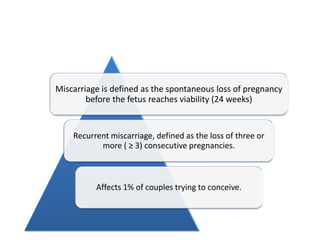
Miscarriage is defined as the spontaneous loss of pregnancy
        before the fetus reaches viability (24 weeks)

    Recurrent miscarriage, defined as the loss of three or
           more ( ≥ 3) consecutive pregnancies.


          Affects 1% of couples trying to conceive.
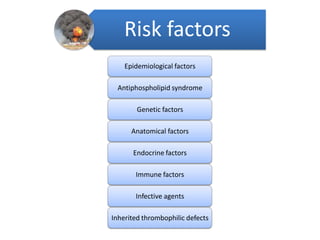
Risk factors
    Epidemiological factors

 Antiphospholipid syndrome

        Genetic factors

      Anatomical factors

      Endocrine factors

       Immune factors

       Infective agents

Inherited thrombophilic defects
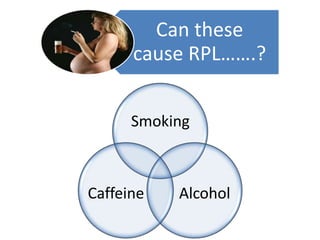
Can these
      cause RPL…….?


      Smoking


Caffeine   Alcohol
Can it….?
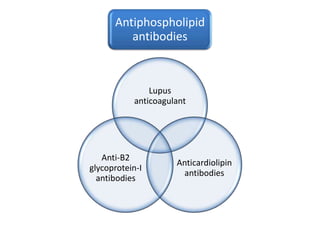
Antiphospholipid
         antibodies


               Lupus
           anticoagulant


   Anti-B2
                     Anticardiolipin
glycoprotein-I
                      antibodies
  antibodies
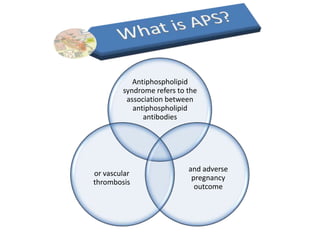
Antiphospholipid
        syndrome refers to the
         association between
           antiphospholipid
              antibodies


                           and adverse
or vascular
                            pregnancy
thrombosis
                             outcome
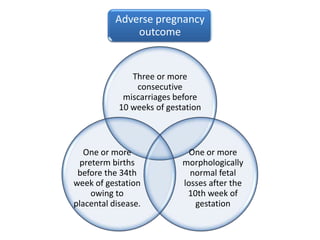
Adverse pregnancy
               outcome


               Three or more
                consecutive
             miscarriages before
            10 weeks of gestation


   One or more                One or more
 preterm births             morphologically
 before the 34th              normal fetal
week of gestation           losses after the
    owing to                 10th week of
placental disease.             gestation
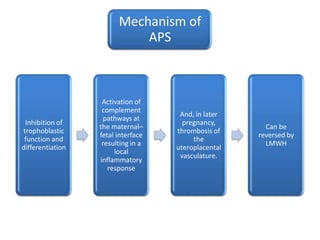
Mechanism of
                            APS


                   Activation of
                   complement
                                     And, in later
                    pathways at
 Inhibition of                        pregnancy,
                  the maternal–                        Can be
trophoblastic                       thrombosis of
                  fetal interface                    reversed by
 function and                            the
                   resulting in a                      LMWH
differentiation                     uteroplacental
                       local
                                     vasculature.
                  inflammatory
                     response
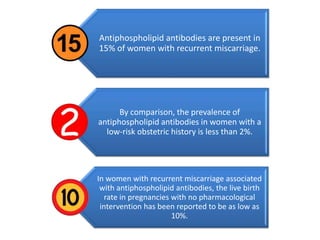
Antiphospholipid antibodies are present in
15% of women with recurrent miscarriage.


      By comparison, the prevalence of
antiphospholipid antibodies in women with a
  low-risk obstetric history is less than 2%.


In women with recurrent miscarriage associated
 with antiphospholipid antibodies, the live birth
   rate in pregnancies with no pharmacological
 intervention has been reported to be as low as
                       10%.
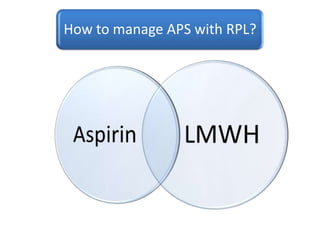
How to manage APS with RPL?
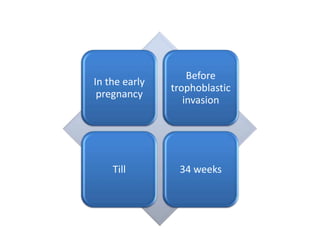
Before
In the early
               trophoblastic
 pregnancy
                  invasion


    Till        34 weeks
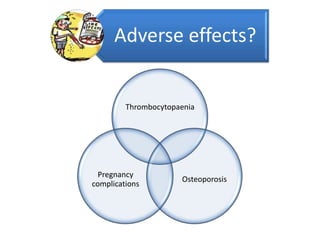
Adverse effects?


         Thrombocytopaenia


  Pregnancy
                      Osteoporosis
complications
Controlled Diabetes mellitus?


 Controlled Thyroid disease?


 Euthyroid with Antithyroid
        antibodies?
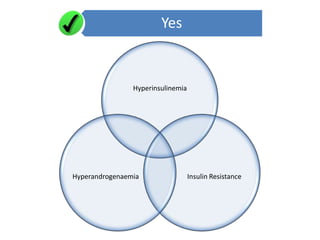
Yes


                Hyperinsulinemia


Hyperandrogenaemia                 Insulin Resistance
Metformin?
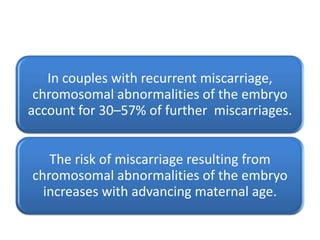
In couples with recurrent miscarriage,
 chromosomal abnormalities of the embryo
account for 30–57% of further miscarriages.


   The risk of miscarriage resulting from
chromosomal abnormalities of the embryo
  increases with advancing maternal age.
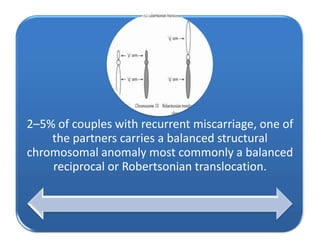
2–5% of couples with recurrent miscarriage, one of
    the partners carries a balanced structural
chromosomal anomaly most commonly a balanced
    reciprocal or Robertsonian translocation.
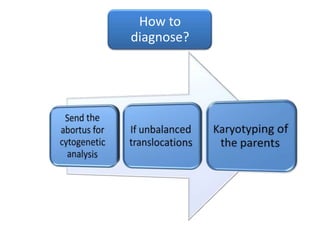
How to
diagnose?
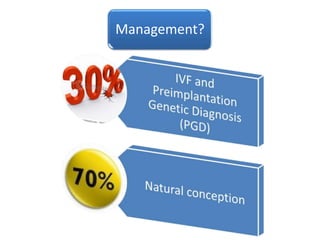
Management?
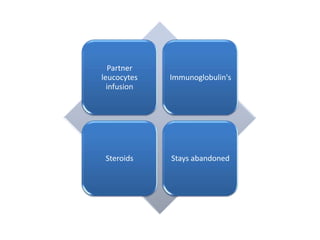
Partner
leucocytes   Immunoglobulin's
  infusion


 Steroids    Stays abandoned
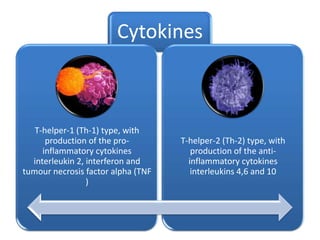
Cytokines


   T-helper-1 (Th-1) type, with
      production of the pro-        T-helper-2 (Th-2) type, with
     inflammatory cytokines            production of the anti-
  interleukin 2, interferon and       inflammatory cytokines
tumour necrosis factor alpha (TNF      interleukins 4,6 and 10
                 )
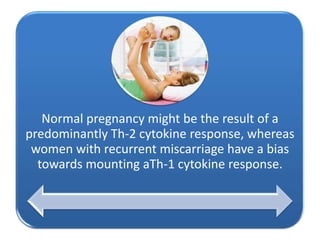
Normal pregnancy might be the result of a
predominantly Th-2 cytokine response, whereas
 women with recurrent miscarriage have a bias
  towards mounting aTh-1 cytokine response.
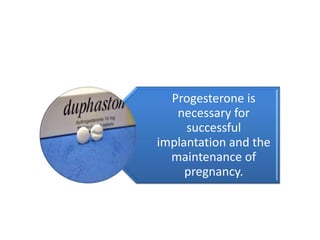
Progesterone is
   necessary for
     successful
implantation and the
  maintenance of
     pregnancy.
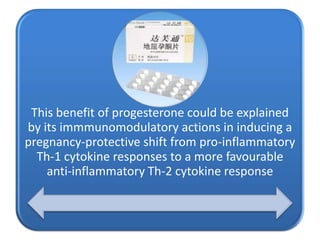
This benefit of progesterone could be explained
by its immmunomodulatory actions in inducing a
pregnancy-protective shift from pro-inflammatory
  Th-1 cytokine responses to a more favourable
    anti-inflammatory Th-2 cytokine response
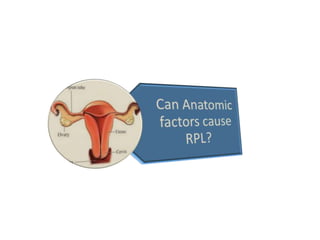
The reported prevalence of uterine anomalies in recurrent
miscarriage populations ranges between 1.8% and 37.6%.


The prevalence of uterine malformations appears to be
higher in women with second-trimester miscarriages
compared with women who suffer first-trimester
miscarriages, but this may be related to the cervical
weakness that is frequently associated with uterine
malformation
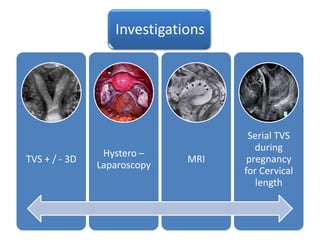
Investigations


                                    Serial TVS
                                      during
                Hystero –
TVS + / - 3D                 MRI    pregnancy
               Laparoscopy
                                   for Cervical
                                      length
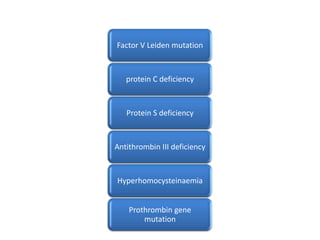
Factor V Leiden mutation


   protein C deficiency


   Protein S deficiency


Antithrombin III deficiency


Hyperhomocysteinaemia


    Prothrombin gene
        mutation
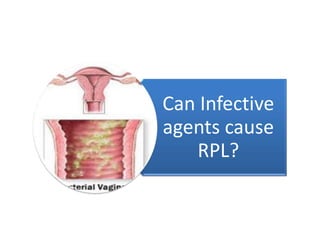
Can Infective
agents cause
   RPL?
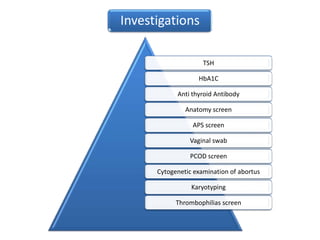
Investigations

                     TSH

                   HbA1C

            Anti thyroid Antibody

               Anatomy screen

                 APS screen

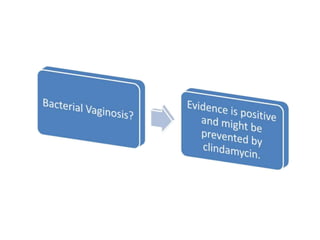
                Vaginal swab

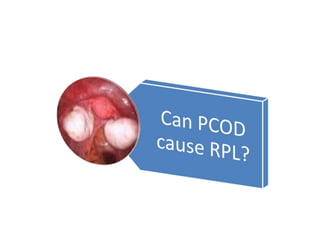
                PCOD screen

      Cytogenetic examination of abortus

                 Karyotyping

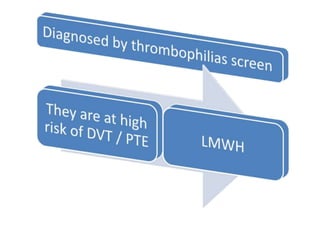
            Thrombophilias screen
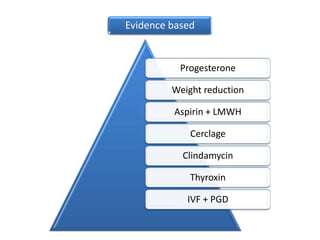
Evidence based


           Progesterone

         Weight reduction

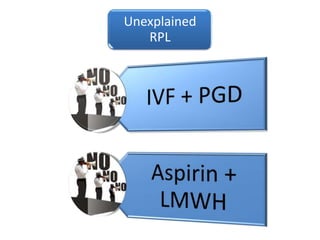
         Aspirin + LMWH

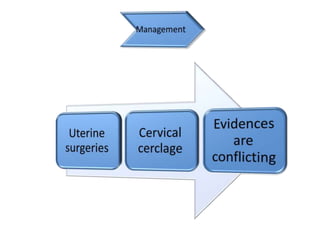
             Cerclage

           Clindamycin

             Thyroxin

            IVF + PGD
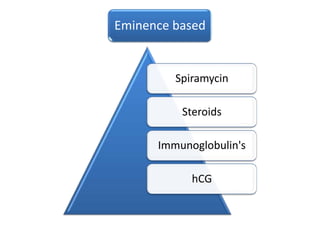
Eminence based


         Spiramycin

          Steroids

      Immunoglobulin's

            hCG
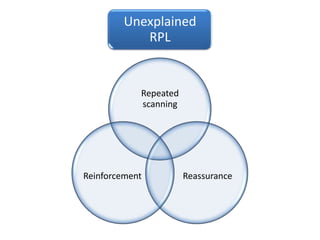
Unexplained
            RPL


            Repeated
            scanning


Reinforcement          Reassurance
Unexplained
   RPL
Reccurent Pregnancy Loss

Reccurent Pregnancy Loss

  • 1.
  • 2.
    Miscarriage is definedas the spontaneous loss of pregnancy before the fetus reaches viability (24 weeks) Recurrent miscarriage, defined as the loss of three or more ( ≥ 3) consecutive pregnancies. Affects 1% of couples trying to conceive.
  • 4.
    Risk factors Epidemiological factors Antiphospholipid syndrome Genetic factors Anatomical factors Endocrine factors Immune factors Infective agents Inherited thrombophilic defects
  • 8.
    Can these cause RPL…….? Smoking Caffeine Alcohol
  • 10.
  • 14.
    Antiphospholipid antibodies Lupus anticoagulant Anti-B2 Anticardiolipin glycoprotein-I antibodies antibodies
  • 15.
    Antiphospholipid syndrome refers to the association between antiphospholipid antibodies and adverse or vascular pregnancy thrombosis outcome
  • 16.
    Adverse pregnancy outcome Three or more consecutive miscarriages before 10 weeks of gestation One or more One or more preterm births morphologically before the 34th normal fetal week of gestation losses after the owing to 10th week of placental disease. gestation
  • 17.
    Mechanism of APS Activation of complement And, in later pathways at Inhibition of pregnancy, the maternal– Can be trophoblastic thrombosis of fetal interface reversed by function and the resulting in a LMWH differentiation uteroplacental local vasculature. inflammatory response
  • 18.
    Antiphospholipid antibodies arepresent in 15% of women with recurrent miscarriage. By comparison, the prevalence of antiphospholipid antibodies in women with a low-risk obstetric history is less than 2%. In women with recurrent miscarriage associated with antiphospholipid antibodies, the live birth rate in pregnancies with no pharmacological intervention has been reported to be as low as 10%.
  • 21.
    How to manageAPS with RPL?
  • 23.
    Before In the early trophoblastic pregnancy invasion Till 34 weeks
  • 24.
    Adverse effects? Thrombocytopaenia Pregnancy Osteoporosis complications
  • 26.
    Controlled Diabetes mellitus? Controlled Thyroid disease? Euthyroid with Antithyroid antibodies?
  • 28.
    Yes Hyperinsulinemia Hyperandrogenaemia Insulin Resistance
  • 30.
  • 32.
    In couples withrecurrent miscarriage, chromosomal abnormalities of the embryo account for 30–57% of further miscarriages. The risk of miscarriage resulting from chromosomal abnormalities of the embryo increases with advancing maternal age.
  • 33.
    2–5% of coupleswith recurrent miscarriage, one of the partners carries a balanced structural chromosomal anomaly most commonly a balanced reciprocal or Robertsonian translocation.
  • 34.
  • 35.
  • 38.
    Partner leucocytes Immunoglobulin's infusion Steroids Stays abandoned
  • 40.
    Cytokines T-helper-1 (Th-1) type, with production of the pro- T-helper-2 (Th-2) type, with inflammatory cytokines production of the anti- interleukin 2, interferon and inflammatory cytokines tumour necrosis factor alpha (TNF interleukins 4,6 and 10 )
  • 41.
    Normal pregnancy mightbe the result of a predominantly Th-2 cytokine response, whereas women with recurrent miscarriage have a bias towards mounting aTh-1 cytokine response.
  • 43.
    Progesterone is necessary for successful implantation and the maintenance of pregnancy.
  • 44.
    This benefit ofprogesterone could be explained by its immmunomodulatory actions in inducing a pregnancy-protective shift from pro-inflammatory Th-1 cytokine responses to a more favourable anti-inflammatory Th-2 cytokine response
  • 46.
    The reported prevalenceof uterine anomalies in recurrent miscarriage populations ranges between 1.8% and 37.6%. The prevalence of uterine malformations appears to be higher in women with second-trimester miscarriages compared with women who suffer first-trimester miscarriages, but this may be related to the cervical weakness that is frequently associated with uterine malformation
  • 47.
    Investigations Serial TVS during Hystero – TVS + / - 3D MRI pregnancy Laparoscopy for Cervical length
  • 50.
    Factor V Leidenmutation protein C deficiency Protein S deficiency Antithrombin III deficiency Hyperhomocysteinaemia Prothrombin gene mutation
  • 52.
  • 56.
    Investigations TSH HbA1C Anti thyroid Antibody Anatomy screen APS screen Vaginal swab PCOD screen Cytogenetic examination of abortus Karyotyping Thrombophilias screen
  • 57.
    Evidence based Progesterone Weight reduction Aspirin + LMWH Cerclage Clindamycin Thyroxin IVF + PGD
  • 58.
    Eminence based Spiramycin Steroids Immunoglobulin's hCG
  • 59.
    Unexplained RPL Repeated scanning Reinforcement Reassurance
  • 60.