Induction of ovulation
By
Mohamed Elmahdy
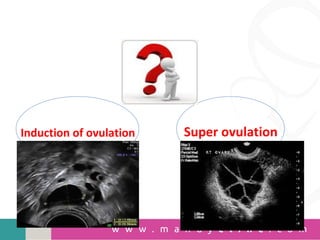
Induction of ovulation Super ovulation
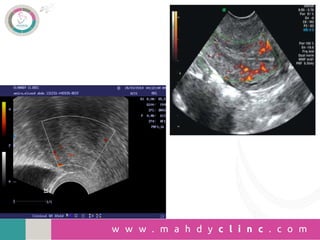
DOPPLER
when PI was > 3.0. the uterine Doppler flow
indices have a high negative predictive value and
sensitivity (in the ranges of 88 to 100% and 96 to
100% respectively)
Donald School Journal of Ultrasound in Obstetrics and Gynecology,
April-June 2010
Hypothalamus
AP
GnRH
Hypothalamic-Pituitary-
Gonadal Axis (HPG):
Females
LH surge
Tonic LH
Progesterone
PGF2a
Estrogens
+
FSH
Estrogen
LH
FEMALE REPRODUCTIVE SYSTEM
• HORMONAL REGULATION OF OOGENSIS AND OVULATION
OVULATION:
sharp surge in LH
with simulataneous
increase in FSH
Meiosis I resumes;
oocyte and surrounding
cumulus break away
and are extruded
oocyte passes into
oviduct
ECTOPIC
IMPLANTATIONS
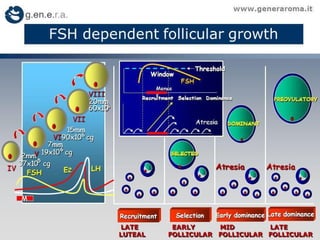
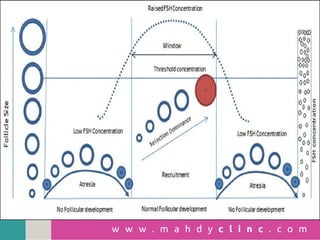
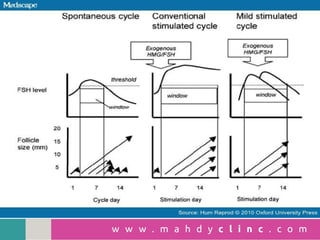
FSHwindow
Period of time that is crucial for
selection of single dominant follicle
from cyclically recruited cohort. After
that the dominant follicle continue
growing as its sensitivity to FSH is
increased.
In stimulated cycles
Increase the length of FSH window
that increase the number of
selected follicles.
Anovulation
WHO classification
• Group I: hypogonadotrophic
hypogonadism.
• Group II: predominately polycystic ovary
syndrome.
• Group III: ovarian failure.
WEIGHTREDUCTION
• Spontaneous pregnancy after weight
reduction even less than 5 % of the body
weight.
• Reduction of the CC or FSH dose
NICE 2013, SOGC
Clomiphene Citrate
• exhibits both estrogen agonist and
antagonist properties, i.e. selective
estrogen receptor modulating activity.
• Estrogenic agonist properties are
manifest only when endogenous
estrogen levels are extremely low.
Pharmacology
• CC is a mixture, in approximately a 3:2 ratio, of 2
geometric isomers, enclomiphene and
zuclomiphene
• Enclomiphene is the more potent isomer ,rises
rapidly after administration and fall to
undetectable concentrations soon thereafter.
• Half life : 5 days.
• The inactive Isomer present in blood for 6- 8
weeks.
• During CC treatment, levels of both LH and
FSH undergo a prolonged rise, compared
with a natural cycle because of the
prolonged ER depletion in the brain.
• FSH window is extended, leading to multiple
follicle growth and a higher multiple
pregnancy rate with CC than occurs in natural
cycles.
Mechanism of action of CC
• CC binds to estrogen receptors (ERs) throughout
the for an extended period of time, i.e.weeks
rather than hours as with natural estrogen.
• Depletes ER concentrations by interfering with the
normal process of ER replenishment.
• The antiestrogenic effect on the hypothalamus.
estrogen concentrations are falsely perceived as
low leading to increased GnRH production
• Actions at the pituitary level may also be involved.
x
Hypothalamus
AP
GnRH CC
LH surge
Tonic LH
Progesterone
PGF2a
Estrogens
+
FSH
Estrogen
LH
x
x
x
x
X
• In ovulatory women, CC treatment
increases GnRH pulse frequency .
• In anovulatory women with PCOS in
whom the GnRH pulse frequency is
already abnormally high, CC treatment
increases pulse amplitude but not
frequency
Contraindications
Negative progesterone challenge
test
HCG
• A meta-analysis of 7 studies comparing triggering
ovulation with hCG (1,461 patients) with urinary LH testing
to identify the endogenous LH surge (1,162 patients) for
timing IUI for women with unexplained infertility treated
with CC reported:
That there were lower odds of pregnancy when an hCG
trigger was used (139 of 1,461) compared with LH surge
monitoring (138 of 1,162; odds ratio [OR] 0.74; 95%
confidence interval [CI] 0.57–0.96) (80, 81).
Outcome of CC treatment
• induce ovulation in 60–80% of properly
selected candidates.
• cycle fecundity is approximately 15% in
women who ovulate in response to
treatment, with higher chance of pregnancy
in the first cycles .
• Amenorrheic women are more likely to
conceive than oligomenorrheic women.
pregnancy is most likely to occur in
the first 3 to 6 cycles, and therapy
beyond 6 cycles is generally not
recommended.
Routine supplementation of the luteal
phase with vaginal progesterone does not
seem to improve pregnancy rates in normo-
ovulatory women stimulated
with clomiphene citrate for IUI.
Hum Reprod. 2010 Oct;25(10):2501-6
CC failure
failure to conceive within six CC-induced
ovulatory cycles should be regarded as
• clear indication to expand the diagnostic
evaluation to exclude other factors .
• change the overall treatment strategy when
evaluation is already complete
Adverse effects
• 20% irritability and mood changes.
• 10% vasomotor symptoms.
• 6% abdominal discomfort.
• 2% breast discomfort.
• 2% nausea and vomiting.
• 1% visual symptoms.
• 1% headache.
Cervical mucus
Affect the quality or quantity of cervical
mucus.
Endometrium
• reduction in endometrial thickness in 30 % of
cases.
• Reduction in glandular density and an
increase in the number of vacuolated cells.
• Decreased uterine blood flow during the
early luteal phase and the peri implantation
stage may also explain, at least in part, the
poor outcome of CC treatment.
Follow up
(Good-practice points) used in the RCOG
and NICE guidelines, recommend the use
of US to monitor the ovaries during
stimulation with CC. (NICE 2013)
J Obstet Gynaecol 2011 Oct;31(7):566-71.
1. Weight loss, exercise, and lifestyle modifications. (II-3A) (NICE
2013)
2. Clomiphene citrate has been proven effective in ovulation induction
for women with PCOS and should be considered the first-line therapy.
(I-A)
3. Metformin combined with clomiphene citrate may increase
ovulation rates and pregnancy rates but does not significantly
improve the live birth rate over that of clomiphene citrate alone.(I-A)
4. Metformin may be added to clomiphene citrate in
women with clomiphene resistance who are older and
who have visceral obesity. (I-A)
5. Gonadotropin should be considered second-line
therapy for fertility in anovulatory women with PCOS.
The treatment requires ultrasound and laboratory
monitoring. High costs and the risk of multiple
pregnancy and ovarian hyperstimulation syndrome are
drawbacks of the treatment. (II-2A)
6. For women who are taking clomifene citrate,
do not continue treatment for longer than
6 months.
7. Do not offer oral ovarian stimulation agents
(such as clomifene citrate, anastrozole or
letrozole) to women with unexplained
infertility
Cochrane Database Syst Rev. 2009 Oct 7;
(4):CD002249.
• clomiphene plus dexamethasone treatment was effective (OR
9.46, 95% CI 5.1 to 17.7) compared to clomiphene alone.
• A significant improvement in the pregnancy rate was reported
for clomiphene plus combined oral contraceptives versus
clomiphene alone.
No improvement in pregnancy rate if
combined with
• Tamoxifen 20 mg
• Dopamine agonists
• Estradiol.
Tamoxifen
• Similar structure to clomiphene .
• Studies showed no difference as regards
ovulation , pregnancy, abortion or adverse
effects rates.
• 20- 40 mg daily for 5 days.
N acetyl cysteine
NAC as a safe and well-tolerated adjuvant to
CC for induction of ovulation can improve the
ovulation and pregnancy rates in PCOS
patients. It may also have some beneficial
impacts on endometrial thickness.
J Obstet Gynaecol Res. 2012 Sep;38(9):1182-6
Metformin
Anovulatory women with polycystic ovary
syndrome who have not responded to
clomifene citrate and who have a body mass
index of more than 25 should be offered
metformin combined with clomifene citrate
because this increases ovulation and pregnancy
rates. ( A )
Aromatase activity
• conversion of androstenedione and testosterone
to estrone and estradiol, respectively.
• ovaries, brain, adipose tissue, muscle, liver,
breast tissue, and malignant breast tumors.
• The main sources of circulating estrogens are
the ovaries in premenopausal women and
adipose tissue in postmenopausal women
Pharmacology
• AIs are completely absorbed after oral
administration with mean terminal half-life
of approximately 45 h with clearance mainly
by the liver.
• Mild gastrointestinal disturbances account
for most of the adverse events.
Indications forAIs in induction of ovulation.
• AI when used alone results in the
development of one or two mature follicles
and a significantly reduced risk for OHSS and
multiple gestation.
• To achieve multiple ovulation, the addition
of FSH to the AI is likely necessary. (augmet
FSH response due to increase intrafollicular
androgens)
CC (d 5).
Casper R F , and Mitwally M F M JCEM 2006;91:760-771
©2006 by Endocrine Society
On endometrium
Decreasing E2 levels lead to up-regulation of
ERs in the endometrium, leading to rapid
endometrial growth once estrogen secretion is
restored.
AIS Induction of ovulation after CC failure.
• failed ovulation induction or ovulation with a
very thin midcycle endometrium (≤0.5 cm)
• 75% ovulation
• 25% cumulative pregnancy rate after 3 cycles.
Optimal dose of AIs
• 5-d course of treatment is between 2.5 and
5.0 mg.
• Higher doses resulting in persistence of
aromatase inhibition and estrogen levels too
low for normal endometrial development by
the time of ovulation.
• If combined with FSH give sequential not
overlapping protocol.
Adverse effects
• Fewer than CC .
• Hot flashes .
Pregnancy outcome
Less incidence of multiple pregnancy.
Less miscarriage rate .
Congenital anomaly?????
In 2005, however, Health Canada and the
manufacturing company of letrozole issued a “Physician
Warning Letter” on the off-label use of letrozole for
fertility and the possibility of embryotoxicity,
fetotoxicity, and teratogenicity found in rats.
Health Canada Endorsed Important Safety Information on
Femara (letrozole). Published November 17, 2005.
• Tulandi et al. retrospectively evaluated 911
newborns from letrozole and CC pregnancies.
They found a 2.4% incidence of congenital
malformations and chromosomal
abnormalities in the letrozole group versus
4.8% in the CC group.
Fertil Steril 2006;85:1761–5.
Letrozole vs CC
From the available data there is no convincing
evidence that letrozole is superior to
clomiphene citrate and therefore the cost
should be taken into account when using anti-
oestrogens.
Cochrane 2011
GONADOTROPHINS
Fixed dose regimen
In the fixed dose regimen, the gonadotropin
dose is kept constant throughout the
stimulation. If the optimal staring dose has
been determined, this protocol is simple to
follow and results in good outcomes.
Step up
• Start with 150 IU for 7 days
• Increase by 75 IU if no response every 6 days
• Till response occur continue till the criteria of
HCG
150 IU
225 IU
Day 3
6 days US 6 days or HCG
Low dose step up
• start with one 75 IU of HMG from day 3 for 6
days.
• The HMG dose was increased by half an ampoule
(37.5 IU) every 6 days until the leading follicle
reached 10 mm in diameter.
• Thus the same dose (i.e. the threshold dose) was
maintained until the criteria for triggering
ovulanon (at least one follicle >18 mm in
diameter) were achieved.
RB&E, 2014
Step down
High starting dose of gonadotropins (300-450
IU) is used for the first 2 days, followed by a
dose reduction (150-225 IU/day).
Urinary orrecombinant
• Whether or not urinary gonadotrophins
should be used as first choice compared with
recombinant products is more a discussion
of purity, trace ability and costs. There is no
convincing evidence of a significant difference in
the probability of conception.
Cochrane 2011
Sequential CC Gonadotrophins
Sequential CC/gonadotropin therapy
• Standard CC treatment regimen, followed by
low-dose (hMG) or (FSH) (75–150 IU/day for
3 days).
• Treatment is individualized thereafter in the
same way as with traditional gonadotropin
therapy, on the basis of transvaginal
ultrasound examinations .
• The sequential CC/hMG regimen is as
effective as hMG regimen for ovulation
induction, produces satisfactory pregnancy
results and reduces the treatment cost.
Arch Gynecol Obstet. 2013 Mar;287(3):591-7.
Cycle fecundity
Similar to that achieved by treatment
with gonadotropins alone .
Advantages
• Reduction in the dose of Gonadotropin .
• Reduction in the associated costs of
monitoring.
• Clomiphene citrate–resistant anovulatory
women often are very sensitive to low doses
of gonadotropins.
The number of oocytes retrieved being higher
in letrozole group might indicate that letrozole might
contribute to successful ovarian stimulation with a
lower dosage of gonadotropins. Despite the lower
peak estradiol levels, pregnancy rates being similar to
other group also support the idea that letrozole can
contribute to normal potential of implantation.
Glob J Health Sci. 2015 Sep 1;8(4):45762
Conclusions
7days
75 IU 150 IU
37.5-75 IU
7 days

Ovulation induction

  • 1.
  • 2.
    Induction of ovulationSuper ovulation
  • 5.
    DOPPLER when PI was> 3.0. the uterine Doppler flow indices have a high negative predictive value and sensitivity (in the ranges of 88 to 100% and 96 to 100% respectively) Donald School Journal of Ultrasound in Obstetrics and Gynecology, April-June 2010
  • 7.
    Hypothalamus AP GnRH Hypothalamic-Pituitary- Gonadal Axis (HPG): Females LHsurge Tonic LH Progesterone PGF2a Estrogens + FSH Estrogen LH
  • 8.
    FEMALE REPRODUCTIVE SYSTEM •HORMONAL REGULATION OF OOGENSIS AND OVULATION OVULATION: sharp surge in LH with simulataneous increase in FSH Meiosis I resumes; oocyte and surrounding cumulus break away and are extruded oocyte passes into oviduct ECTOPIC IMPLANTATIONS
  • 9.
    FSHwindow Period of timethat is crucial for selection of single dominant follicle from cyclically recruited cohort. After that the dominant follicle continue growing as its sensitivity to FSH is increased.
  • 10.
    In stimulated cycles Increasethe length of FSH window that increase the number of selected follicles.
  • 14.
  • 15.
    WHO classification • GroupI: hypogonadotrophic hypogonadism. • Group II: predominately polycystic ovary syndrome. • Group III: ovarian failure.
  • 16.
    WEIGHTREDUCTION • Spontaneous pregnancyafter weight reduction even less than 5 % of the body weight. • Reduction of the CC or FSH dose NICE 2013, SOGC
  • 18.
    Clomiphene Citrate • exhibitsboth estrogen agonist and antagonist properties, i.e. selective estrogen receptor modulating activity. • Estrogenic agonist properties are manifest only when endogenous estrogen levels are extremely low.
  • 19.
    Pharmacology • CC isa mixture, in approximately a 3:2 ratio, of 2 geometric isomers, enclomiphene and zuclomiphene • Enclomiphene is the more potent isomer ,rises rapidly after administration and fall to undetectable concentrations soon thereafter. • Half life : 5 days. • The inactive Isomer present in blood for 6- 8 weeks.
  • 20.
    • During CCtreatment, levels of both LH and FSH undergo a prolonged rise, compared with a natural cycle because of the prolonged ER depletion in the brain. • FSH window is extended, leading to multiple follicle growth and a higher multiple pregnancy rate with CC than occurs in natural cycles.
  • 21.
    Mechanism of actionof CC • CC binds to estrogen receptors (ERs) throughout the for an extended period of time, i.e.weeks rather than hours as with natural estrogen. • Depletes ER concentrations by interfering with the normal process of ER replenishment. • The antiestrogenic effect on the hypothalamus. estrogen concentrations are falsely perceived as low leading to increased GnRH production • Actions at the pituitary level may also be involved.
  • 22.
    x Hypothalamus AP GnRH CC LH surge TonicLH Progesterone PGF2a Estrogens + FSH Estrogen LH x x x x X
  • 23.
    • In ovulatorywomen, CC treatment increases GnRH pulse frequency . • In anovulatory women with PCOS in whom the GnRH pulse frequency is already abnormally high, CC treatment increases pulse amplitude but not frequency
  • 24.
  • 26.
    HCG • A meta-analysisof 7 studies comparing triggering ovulation with hCG (1,461 patients) with urinary LH testing to identify the endogenous LH surge (1,162 patients) for timing IUI for women with unexplained infertility treated with CC reported: That there were lower odds of pregnancy when an hCG trigger was used (139 of 1,461) compared with LH surge monitoring (138 of 1,162; odds ratio [OR] 0.74; 95% confidence interval [CI] 0.57–0.96) (80, 81).
  • 27.
    Outcome of CCtreatment • induce ovulation in 60–80% of properly selected candidates. • cycle fecundity is approximately 15% in women who ovulate in response to treatment, with higher chance of pregnancy in the first cycles . • Amenorrheic women are more likely to conceive than oligomenorrheic women.
  • 28.
    pregnancy is mostlikely to occur in the first 3 to 6 cycles, and therapy beyond 6 cycles is generally not recommended.
  • 29.
    Routine supplementation ofthe luteal phase with vaginal progesterone does not seem to improve pregnancy rates in normo- ovulatory women stimulated with clomiphene citrate for IUI. Hum Reprod. 2010 Oct;25(10):2501-6
  • 30.
    CC failure failure toconceive within six CC-induced ovulatory cycles should be regarded as • clear indication to expand the diagnostic evaluation to exclude other factors . • change the overall treatment strategy when evaluation is already complete
  • 31.
    Adverse effects • 20%irritability and mood changes. • 10% vasomotor symptoms. • 6% abdominal discomfort. • 2% breast discomfort. • 2% nausea and vomiting. • 1% visual symptoms. • 1% headache.
  • 32.
    Cervical mucus Affect thequality or quantity of cervical mucus.
  • 33.
    Endometrium • reduction inendometrial thickness in 30 % of cases. • Reduction in glandular density and an increase in the number of vacuolated cells. • Decreased uterine blood flow during the early luteal phase and the peri implantation stage may also explain, at least in part, the poor outcome of CC treatment.
  • 35.
    Follow up (Good-practice points)used in the RCOG and NICE guidelines, recommend the use of US to monitor the ovaries during stimulation with CC. (NICE 2013) J Obstet Gynaecol 2011 Oct;31(7):566-71.
  • 36.
    1. Weight loss,exercise, and lifestyle modifications. (II-3A) (NICE 2013) 2. Clomiphene citrate has been proven effective in ovulation induction for women with PCOS and should be considered the first-line therapy. (I-A) 3. Metformin combined with clomiphene citrate may increase ovulation rates and pregnancy rates but does not significantly improve the live birth rate over that of clomiphene citrate alone.(I-A)
  • 37.
    4. Metformin maybe added to clomiphene citrate in women with clomiphene resistance who are older and who have visceral obesity. (I-A) 5. Gonadotropin should be considered second-line therapy for fertility in anovulatory women with PCOS. The treatment requires ultrasound and laboratory monitoring. High costs and the risk of multiple pregnancy and ovarian hyperstimulation syndrome are drawbacks of the treatment. (II-2A)
  • 38.
    6. For womenwho are taking clomifene citrate, do not continue treatment for longer than 6 months. 7. Do not offer oral ovarian stimulation agents (such as clomifene citrate, anastrozole or letrozole) to women with unexplained infertility
  • 39.
    Cochrane Database SystRev. 2009 Oct 7; (4):CD002249. • clomiphene plus dexamethasone treatment was effective (OR 9.46, 95% CI 5.1 to 17.7) compared to clomiphene alone. • A significant improvement in the pregnancy rate was reported for clomiphene plus combined oral contraceptives versus clomiphene alone.
  • 40.
    No improvement inpregnancy rate if combined with • Tamoxifen 20 mg • Dopamine agonists • Estradiol.
  • 41.
    Tamoxifen • Similar structureto clomiphene . • Studies showed no difference as regards ovulation , pregnancy, abortion or adverse effects rates. • 20- 40 mg daily for 5 days.
  • 42.
    N acetyl cysteine NACas a safe and well-tolerated adjuvant to CC for induction of ovulation can improve the ovulation and pregnancy rates in PCOS patients. It may also have some beneficial impacts on endometrial thickness. J Obstet Gynaecol Res. 2012 Sep;38(9):1182-6
  • 43.
    Metformin Anovulatory women withpolycystic ovary syndrome who have not responded to clomifene citrate and who have a body mass index of more than 25 should be offered metformin combined with clomifene citrate because this increases ovulation and pregnancy rates. ( A )
  • 44.
    Aromatase activity • conversionof androstenedione and testosterone to estrone and estradiol, respectively. • ovaries, brain, adipose tissue, muscle, liver, breast tissue, and malignant breast tumors. • The main sources of circulating estrogens are the ovaries in premenopausal women and adipose tissue in postmenopausal women
  • 46.
    Pharmacology • AIs arecompletely absorbed after oral administration with mean terminal half-life of approximately 45 h with clearance mainly by the liver. • Mild gastrointestinal disturbances account for most of the adverse events.
  • 47.
    Indications forAIs ininduction of ovulation. • AI when used alone results in the development of one or two mature follicles and a significantly reduced risk for OHSS and multiple gestation. • To achieve multiple ovulation, the addition of FSH to the AI is likely necessary. (augmet FSH response due to increase intrafollicular androgens)
  • 49.
    CC (d 5). CasperR F , and Mitwally M F M JCEM 2006;91:760-771 ©2006 by Endocrine Society
  • 50.
    On endometrium Decreasing E2levels lead to up-regulation of ERs in the endometrium, leading to rapid endometrial growth once estrogen secretion is restored.
  • 51.
    AIS Induction ofovulation after CC failure. • failed ovulation induction or ovulation with a very thin midcycle endometrium (≤0.5 cm) • 75% ovulation • 25% cumulative pregnancy rate after 3 cycles.
  • 52.
    Optimal dose ofAIs • 5-d course of treatment is between 2.5 and 5.0 mg. • Higher doses resulting in persistence of aromatase inhibition and estrogen levels too low for normal endometrial development by the time of ovulation. • If combined with FSH give sequential not overlapping protocol.
  • 53.
    Adverse effects • Fewerthan CC . • Hot flashes .
  • 54.
    Pregnancy outcome Less incidenceof multiple pregnancy. Less miscarriage rate . Congenital anomaly?????
  • 55.
    In 2005, however,Health Canada and the manufacturing company of letrozole issued a “Physician Warning Letter” on the off-label use of letrozole for fertility and the possibility of embryotoxicity, fetotoxicity, and teratogenicity found in rats. Health Canada Endorsed Important Safety Information on Femara (letrozole). Published November 17, 2005.
  • 56.
    • Tulandi etal. retrospectively evaluated 911 newborns from letrozole and CC pregnancies. They found a 2.4% incidence of congenital malformations and chromosomal abnormalities in the letrozole group versus 4.8% in the CC group. Fertil Steril 2006;85:1761–5.
  • 57.
    Letrozole vs CC Fromthe available data there is no convincing evidence that letrozole is superior to clomiphene citrate and therefore the cost should be taken into account when using anti- oestrogens. Cochrane 2011
  • 58.
  • 59.
    Fixed dose regimen Inthe fixed dose regimen, the gonadotropin dose is kept constant throughout the stimulation. If the optimal staring dose has been determined, this protocol is simple to follow and results in good outcomes.
  • 60.
    Step up • Startwith 150 IU for 7 days • Increase by 75 IU if no response every 6 days • Till response occur continue till the criteria of HCG
  • 61.
    150 IU 225 IU Day3 6 days US 6 days or HCG
  • 62.
    Low dose stepup • start with one 75 IU of HMG from day 3 for 6 days. • The HMG dose was increased by half an ampoule (37.5 IU) every 6 days until the leading follicle reached 10 mm in diameter. • Thus the same dose (i.e. the threshold dose) was maintained until the criteria for triggering ovulanon (at least one follicle >18 mm in diameter) were achieved.
  • 63.
  • 64.
    Step down High startingdose of gonadotropins (300-450 IU) is used for the first 2 days, followed by a dose reduction (150-225 IU/day).
  • 65.
    Urinary orrecombinant • Whetheror not urinary gonadotrophins should be used as first choice compared with recombinant products is more a discussion of purity, trace ability and costs. There is no convincing evidence of a significant difference in the probability of conception. Cochrane 2011
  • 66.
  • 67.
    Sequential CC/gonadotropin therapy •Standard CC treatment regimen, followed by low-dose (hMG) or (FSH) (75–150 IU/day for 3 days). • Treatment is individualized thereafter in the same way as with traditional gonadotropin therapy, on the basis of transvaginal ultrasound examinations .
  • 69.
    • The sequentialCC/hMG regimen is as effective as hMG regimen for ovulation induction, produces satisfactory pregnancy results and reduces the treatment cost. Arch Gynecol Obstet. 2013 Mar;287(3):591-7.
  • 70.
    Cycle fecundity Similar tothat achieved by treatment with gonadotropins alone .
  • 71.
    Advantages • Reduction inthe dose of Gonadotropin . • Reduction in the associated costs of monitoring. • Clomiphene citrate–resistant anovulatory women often are very sensitive to low doses of gonadotropins.
  • 72.
    The number ofoocytes retrieved being higher in letrozole group might indicate that letrozole might contribute to successful ovarian stimulation with a lower dosage of gonadotropins. Despite the lower peak estradiol levels, pregnancy rates being similar to other group also support the idea that letrozole can contribute to normal potential of implantation.
  • 73.
    Glob J HealthSci. 2015 Sep 1;8(4):45762
  • 74.
  • 75.
    7days 75 IU 150IU 37.5-75 IU 7 days

Editor's Notes

  • #8 <number>
  • #9 <number> ova that fail to enter the oviduct usually degenerate in the peritoneal cavity. Occasionally, however, one of these may become fertilized and implant on the surface of the ovary, the intestine, or in the rectouterine pouch. Such ectopic implantations usually do not progress beyond early fetal stages but must be removed surgically.
  • #23 <number>
  • #50 CC (d 5). Administration of CC from d 3 to 7 results in ER depletion at the level of the pituitary and mediobasal hypothalamus. As a result, estrogen-negative feedback centrally is interrupted and FSH secretion increases from the anterior pituitary leading to multiple follicular growth. D 10, By the late follicular phase, because of the long tissue retention of CC, there continues to be ER depletion centrally, and increased E2 secretion from the ovary is not capable of normal negative feedback on FSH. The result is multiple dominant follicle growth and multiple ovulation. AI (d 5), Administration of an AI from d 3 to 7 results in suppression of ovarian E2 secretion and reduction in estrogen-negative feedback at the pituitary and mediobasal hypothalamus. Increased FSH secretion from the anterior pituitary results in stimulation of multiple ovarian follicle growth. D 10, Later in the follicular phase, the effect of the AI is reduced and E2 levels increase as a result of follicular growth. Because AIs do not affect ERs centrally, the increased E2 levels result in normal negative feedback on FSH secretion, and follicles less than dominant follicle size undergo atresia, with resultant monofollicular ovulation in most cases. [Reproduced with permission from R. F. Casper: Fertil Steril 80:1335–1337, 2003 (106 ). © The American Society for Reproductive Medicine.]