Real-time Machine Learning Analytics
Using Structured Streaming and Kinesis
Firehose
Caryl Yuhas (@ckred)
Myles Baker (@mydpy)
June 6th, 2017
1
#SFexp6
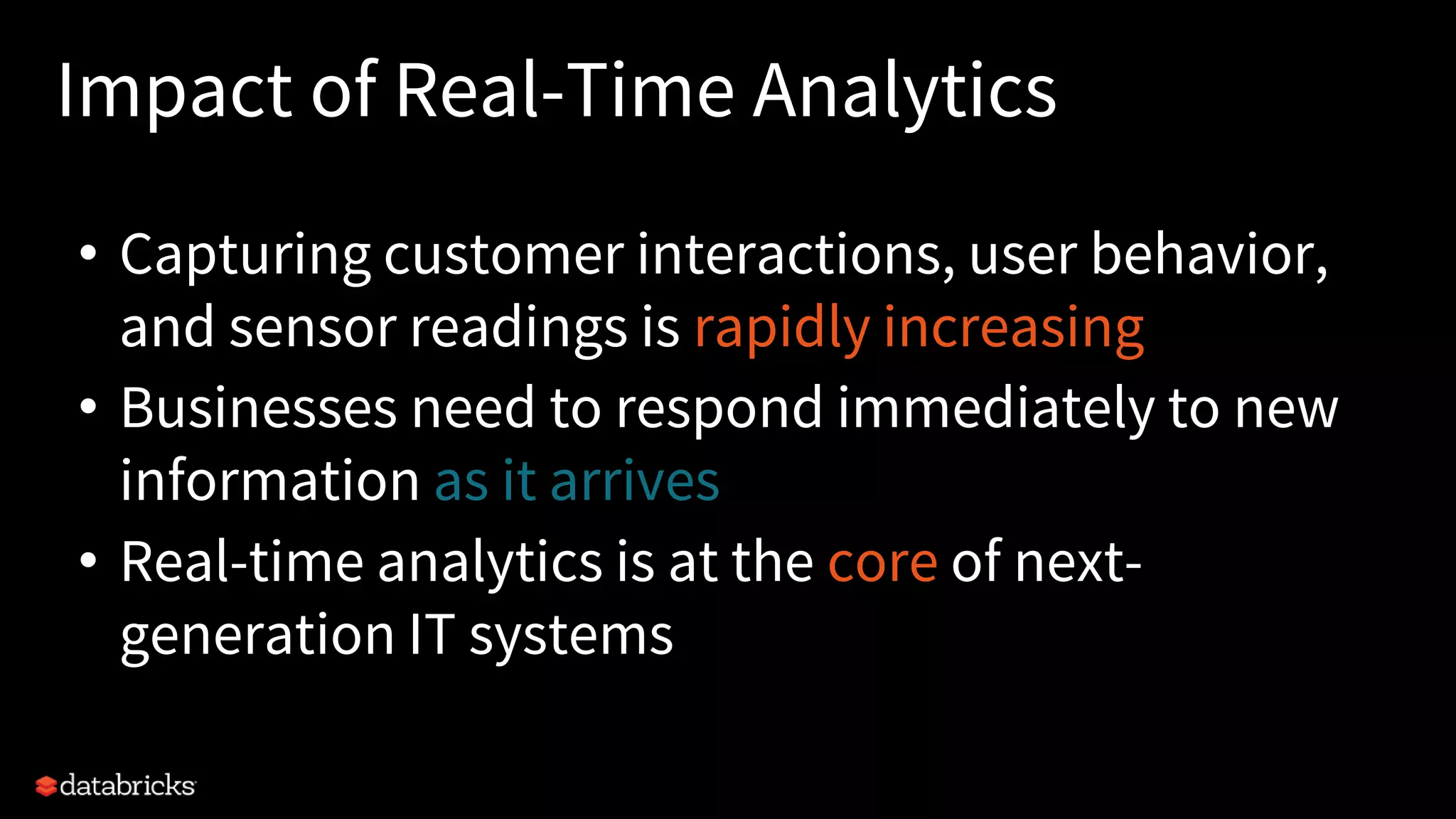
Impact of Real-Time Analytics
• Capturing customer interactions, user behavior,
and sensor readings is rapidly increasing
• Businesses need to respond immediately to new
information as it arrives
• Real-time analytics is at the core of next-
generation IT systems
2
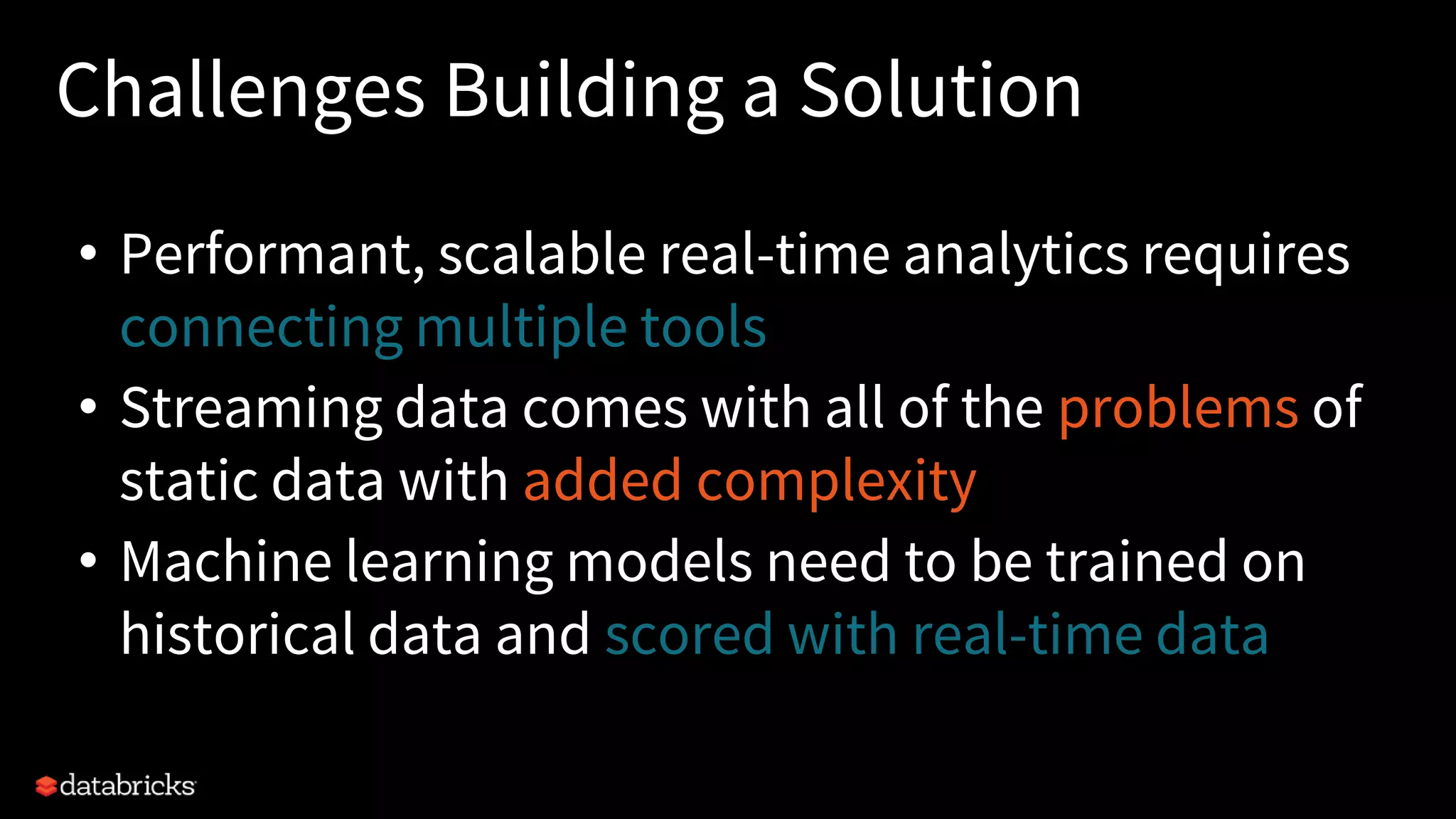
Challenges Building a Solution
• Performant, scalable real-time analytics requires
connecting multiple tools
• Streaming data comes with all of the problems of
static data with added complexity
• Machine learning models need to be trained on
historical data and scored with real-time data
3
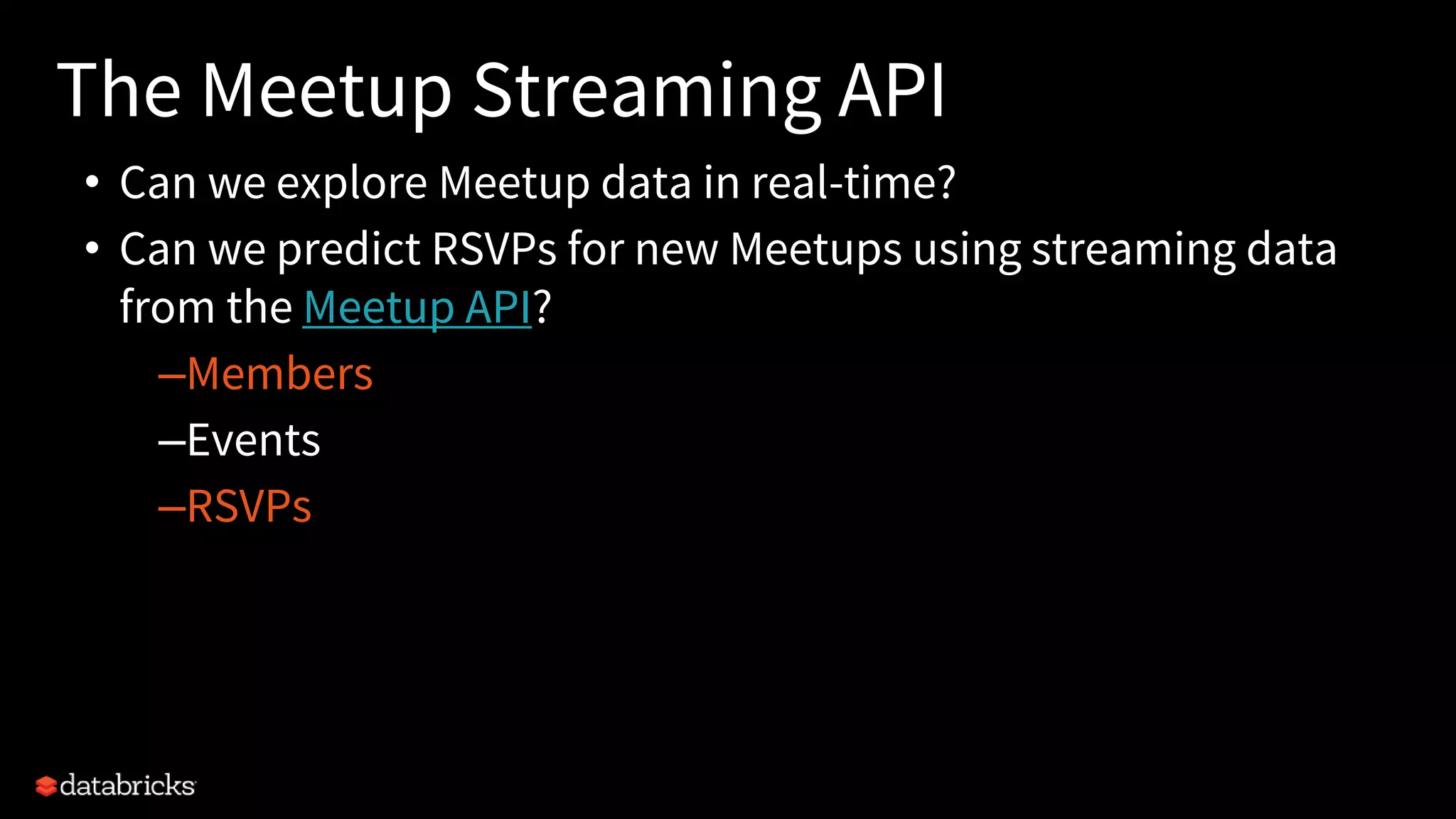
The Meetup Streaming API
• Can we explore Meetup data in real-time?
• Can we predict RSVPs for new Meetups using streaming data
from the Meetup API?
–Members
–Events
–RSVPs
4
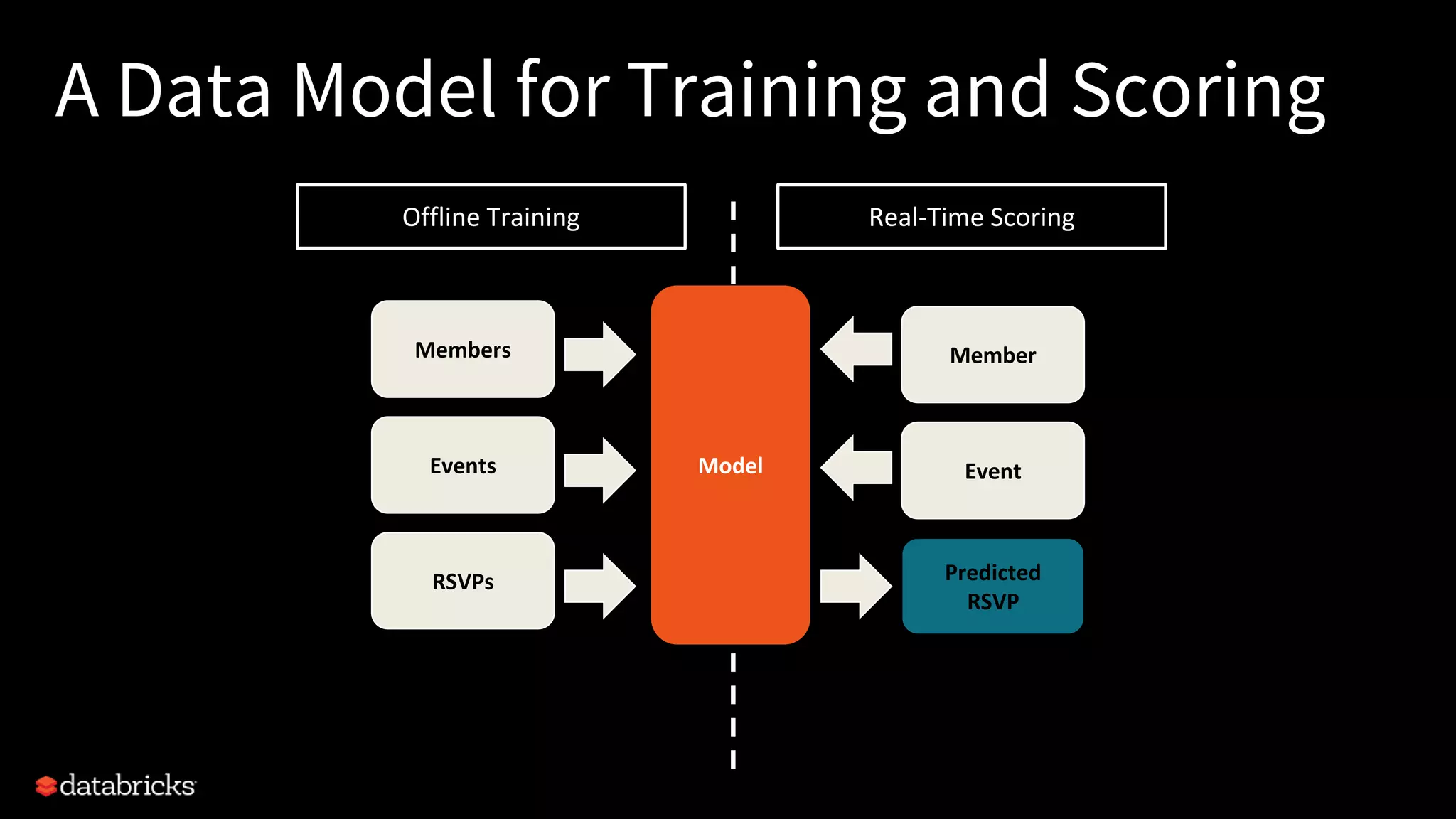
A Data Model for Training and Scoring
5
Members
Events Event
RSVPs
Model
Member
Predicted
RSVP
Offline Training Real-Time Scoring
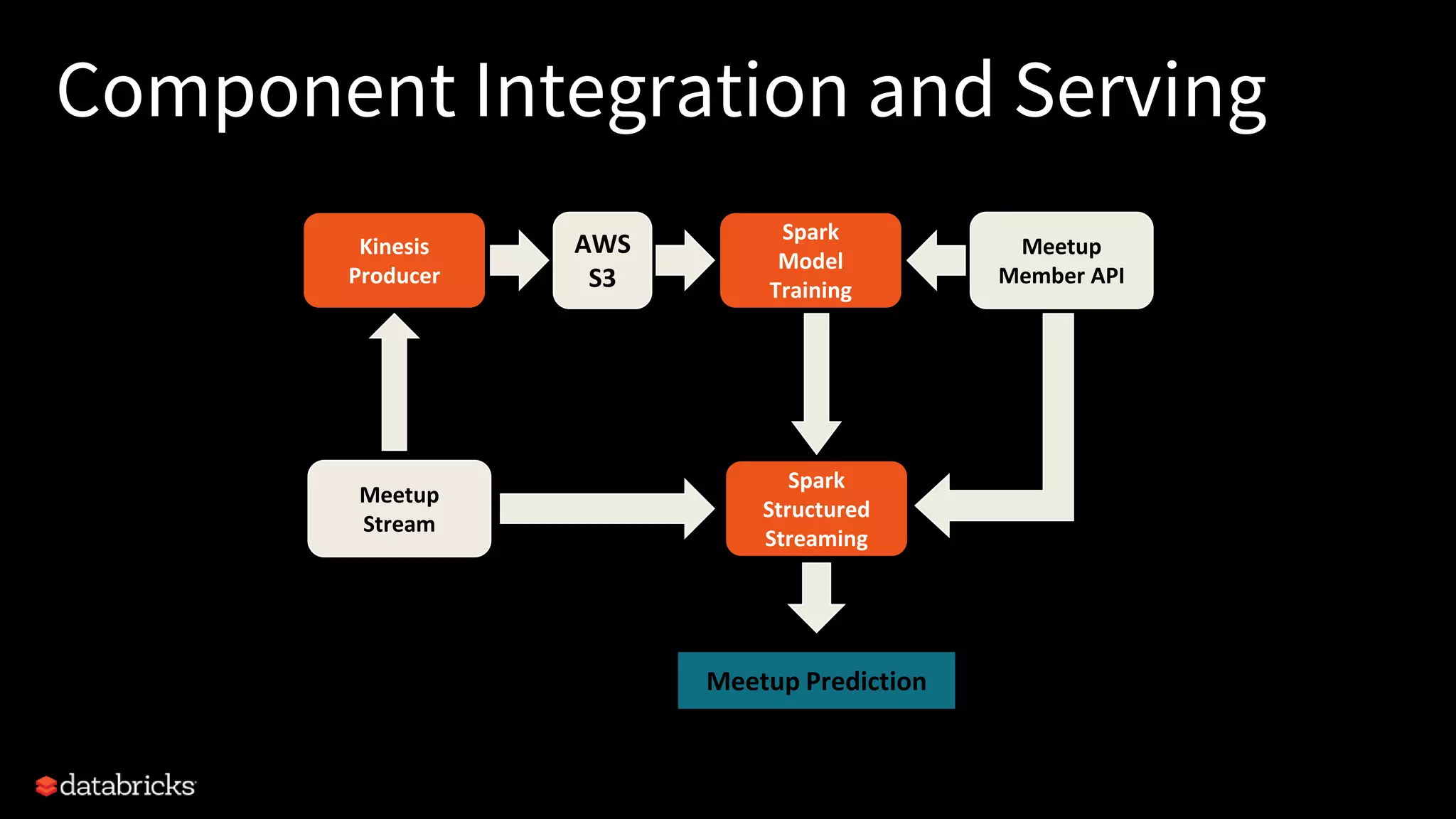
Component Integration and Serving
6
Kinesis
Producer
AWS
S3
Spark
Model
Training
Spark
Structured
Streaming
Meetup
Stream
Meetup
Member API
Meetup Prediction
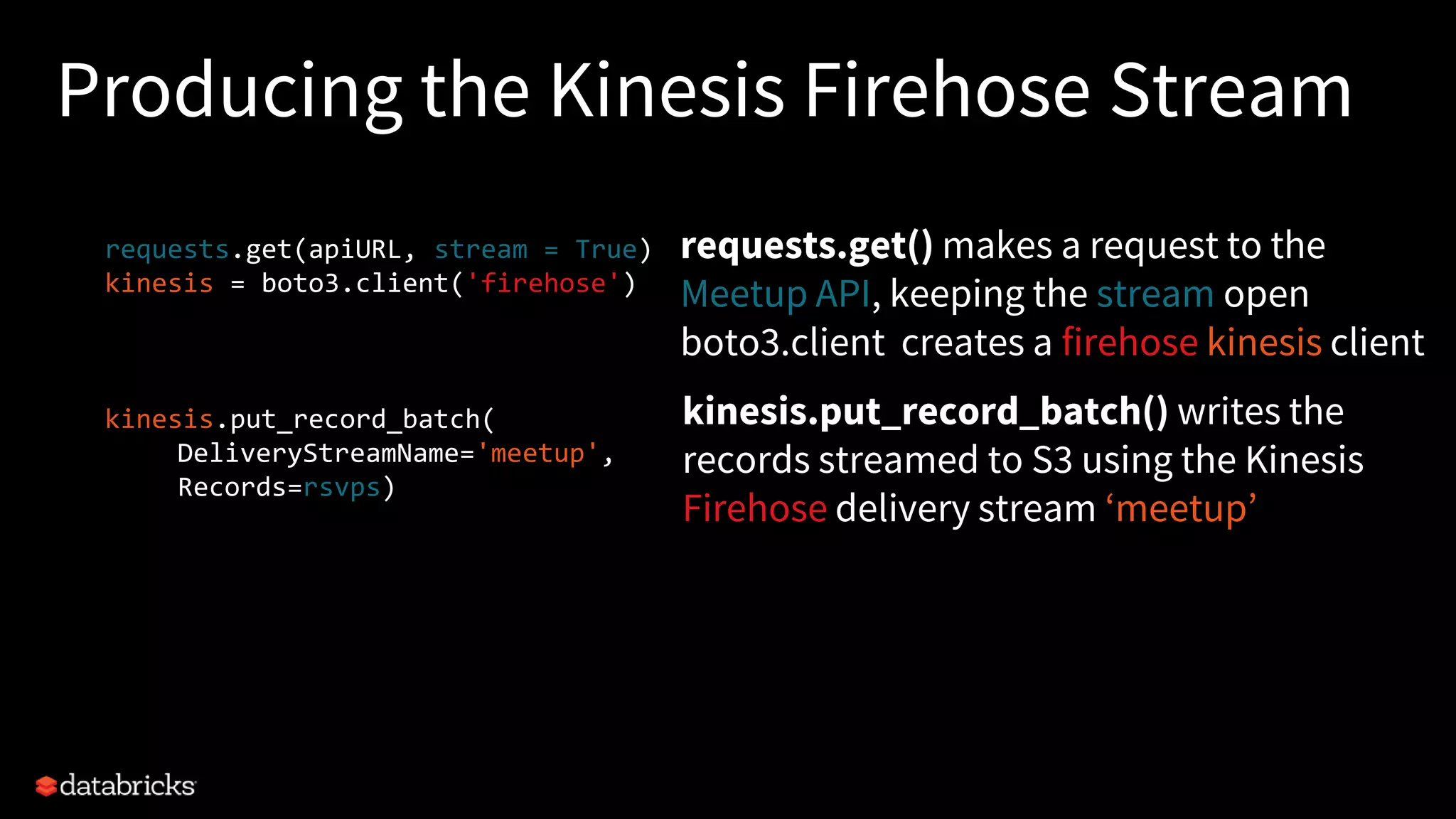
Producing the Kinesis Firehose Stream
7
requests.get() makes a request to the
Meetup API, keeping the stream open
boto3.client creates a firehose kinesis client
requests.get(apiURL, stream = True)
kinesis = boto3.client('firehose')
kinesis.put_record_batch(
DeliveryStreamName='meetup',
Records=rsvps)
kinesis.put_record_batch() writes the
records streamed to S3 using the Kinesis
Firehose delivery stream ‘meetup’
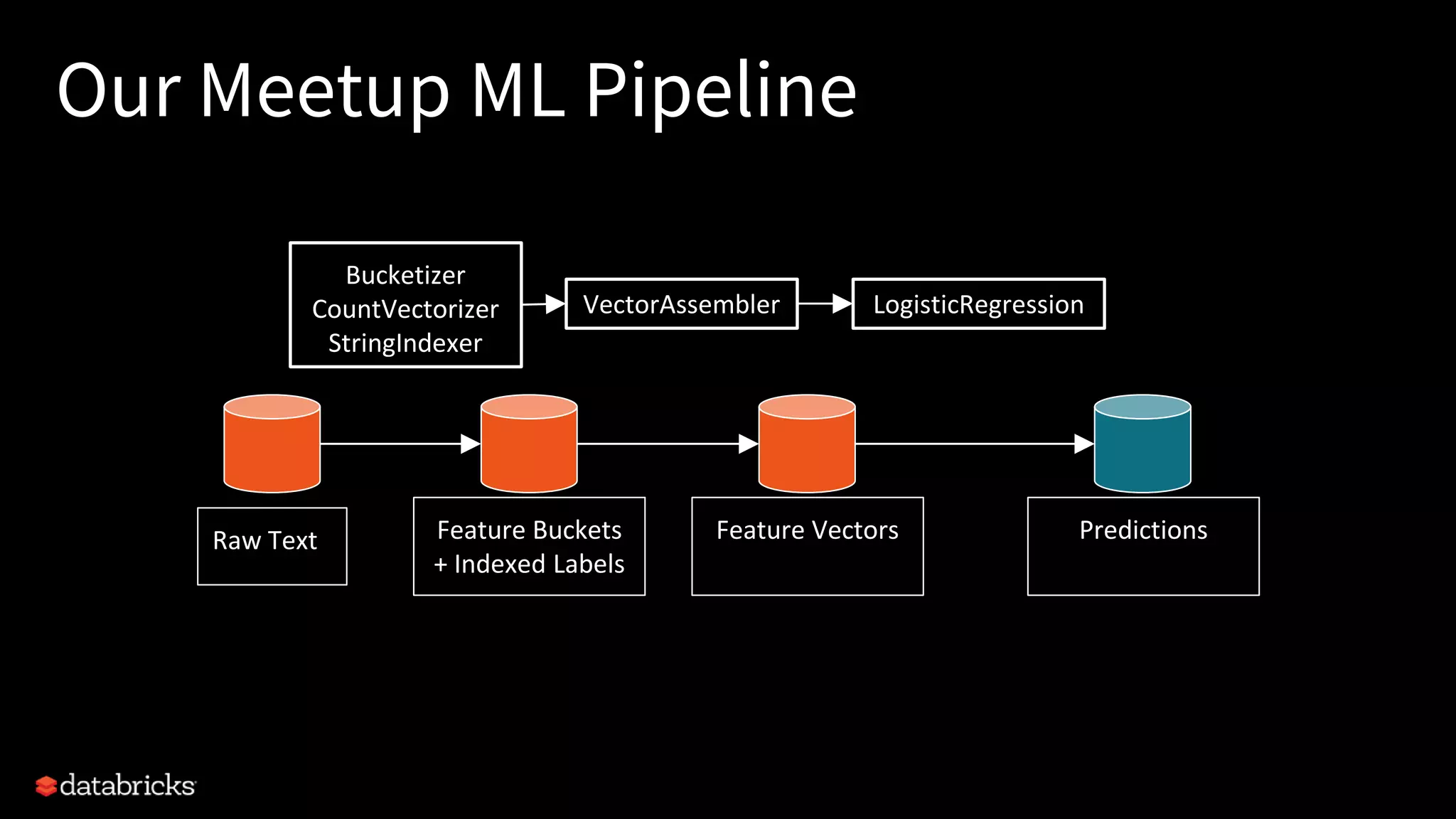
Our Meetup ML Pipeline
8
Raw Text Feature Buckets
+ Indexed Labels
Bucketizer
CountVectorizer
StringIndexer
VectorAssembler LogisticRegression
Feature Vectors Predictions
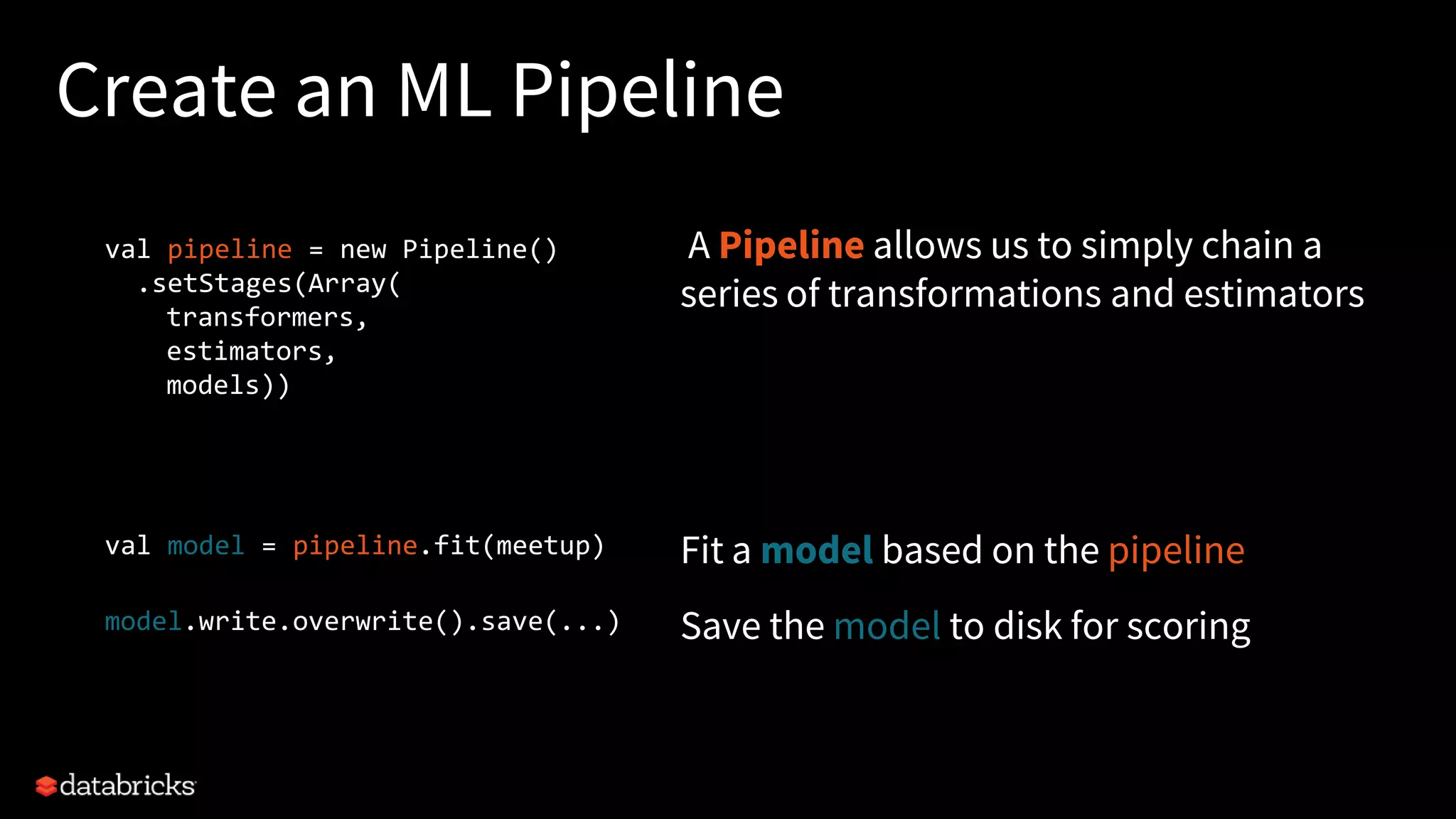
Create an ML Pipeline
9
A Pipeline allows us to simply chain a
series of transformations and estimators
val pipeline = new Pipeline()
.setStages(Array(
transformers,
estimators,
models))
Fit a model based on the pipelineval model = pipeline.fit(meetup)
Save the model to disk for scoringmodel.write.overwrite().save(...)
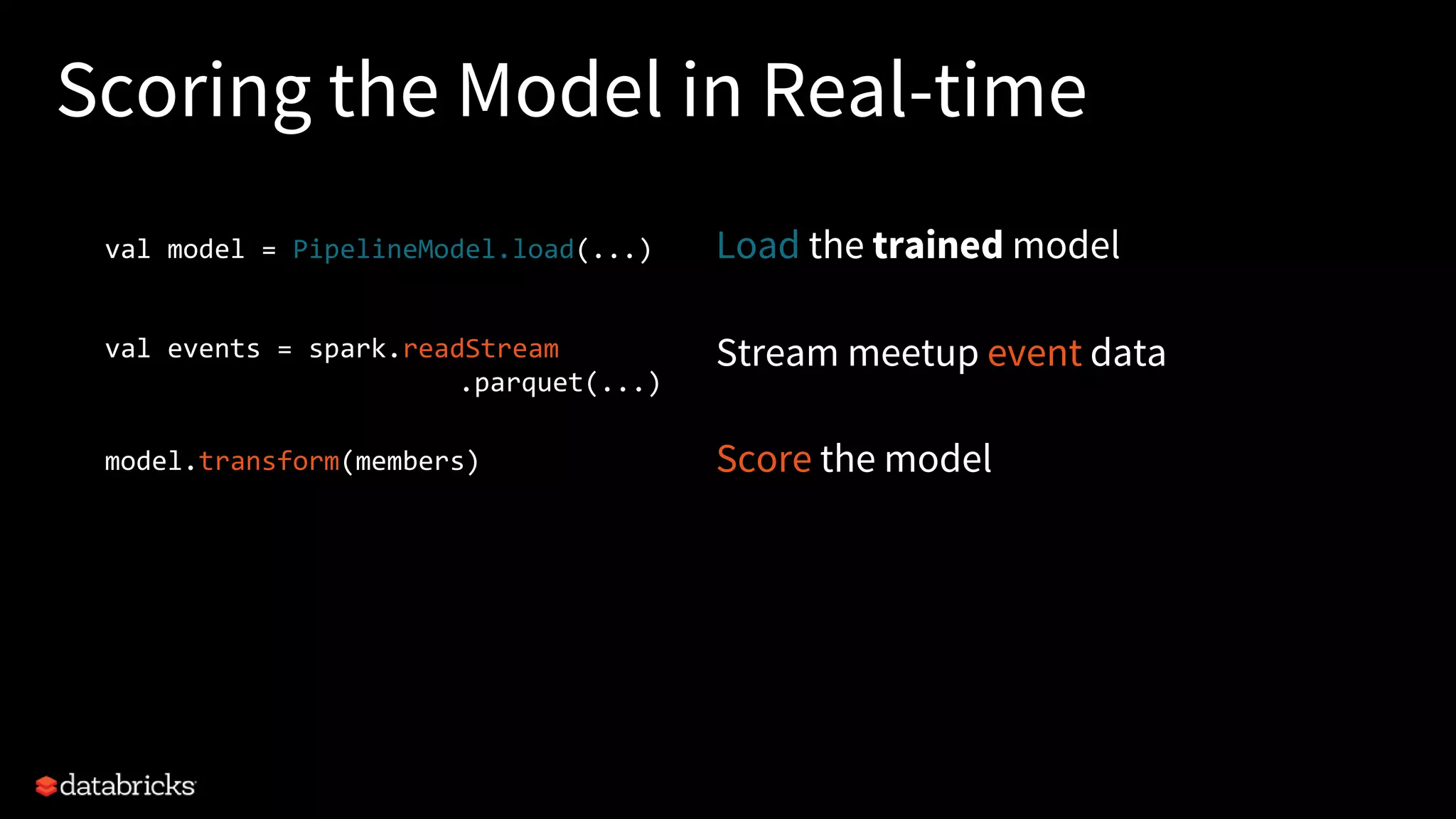
Scoring the Model in Real-time
10
Load the trained modelval model = PipelineModel.load(...)
Stream meetup event data
Score the model
val events = spark.readStream
.parquet(...)
model.transform(members)
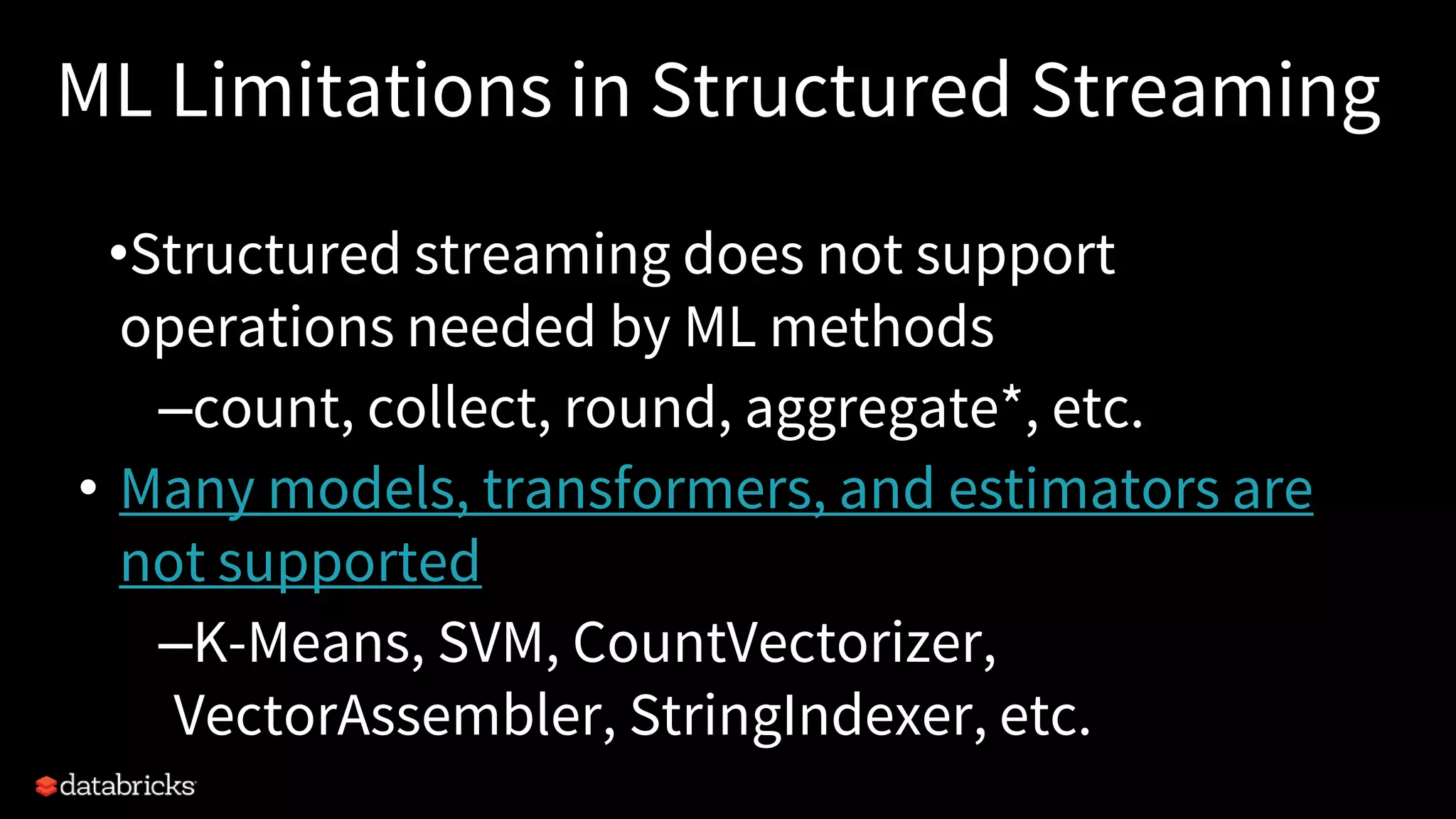
ML Limitations in Structured Streaming
11
•Structured streaming does not support
operations needed by ML methods
–count, collect, round, aggregate*, etc.
• Many models, transformers, and estimators are
not supported
–K-Means, SVM, CountVectorizer,
VectorAssembler, StringIndexer, etc.
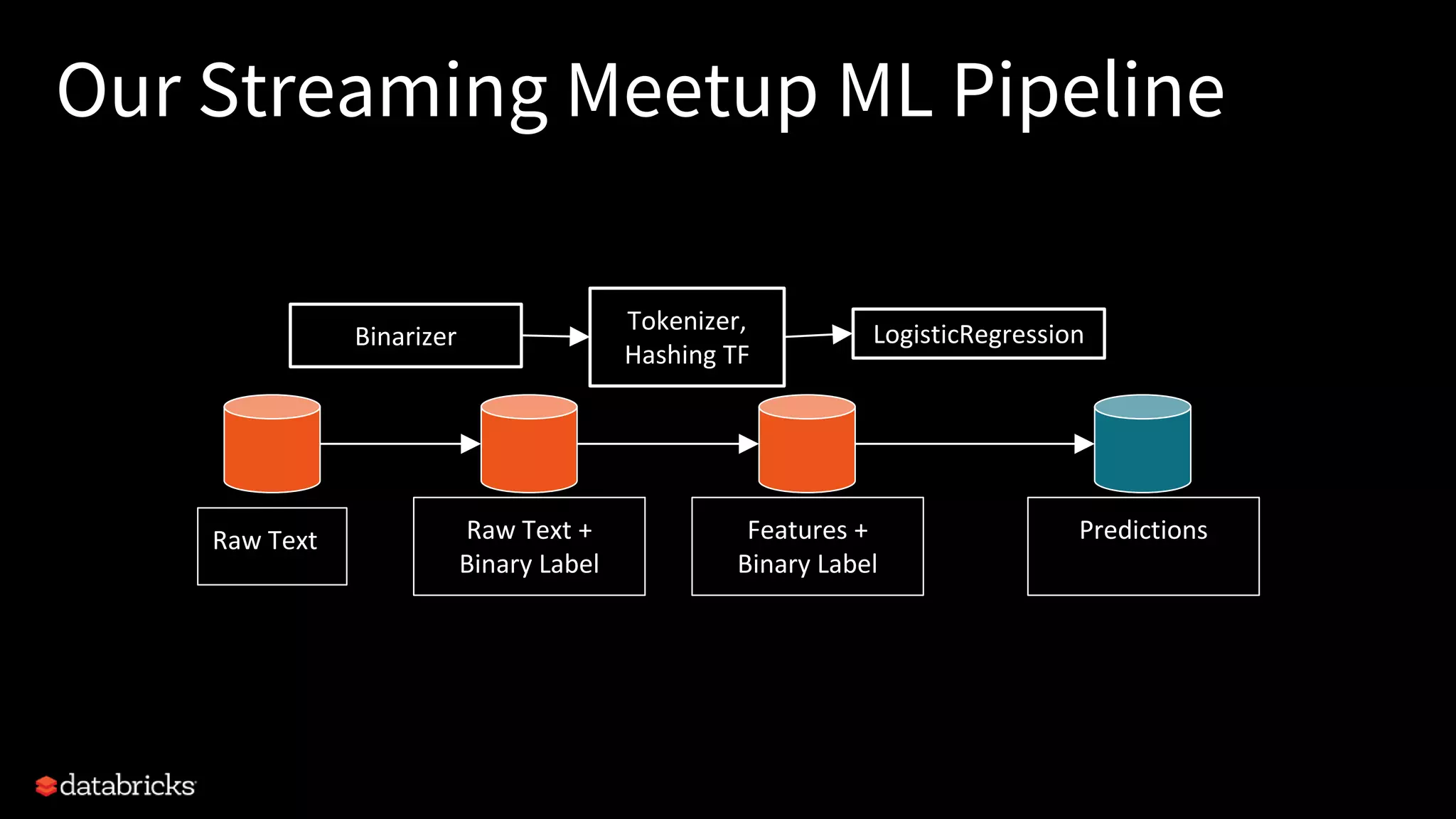
Our Streaming Meetup ML Pipeline
12
Raw Text Raw Text +
Binary Label
Binarizer
Tokenizer,
Hashing TF
LogisticRegression
Features +
Binary Label
Predictions
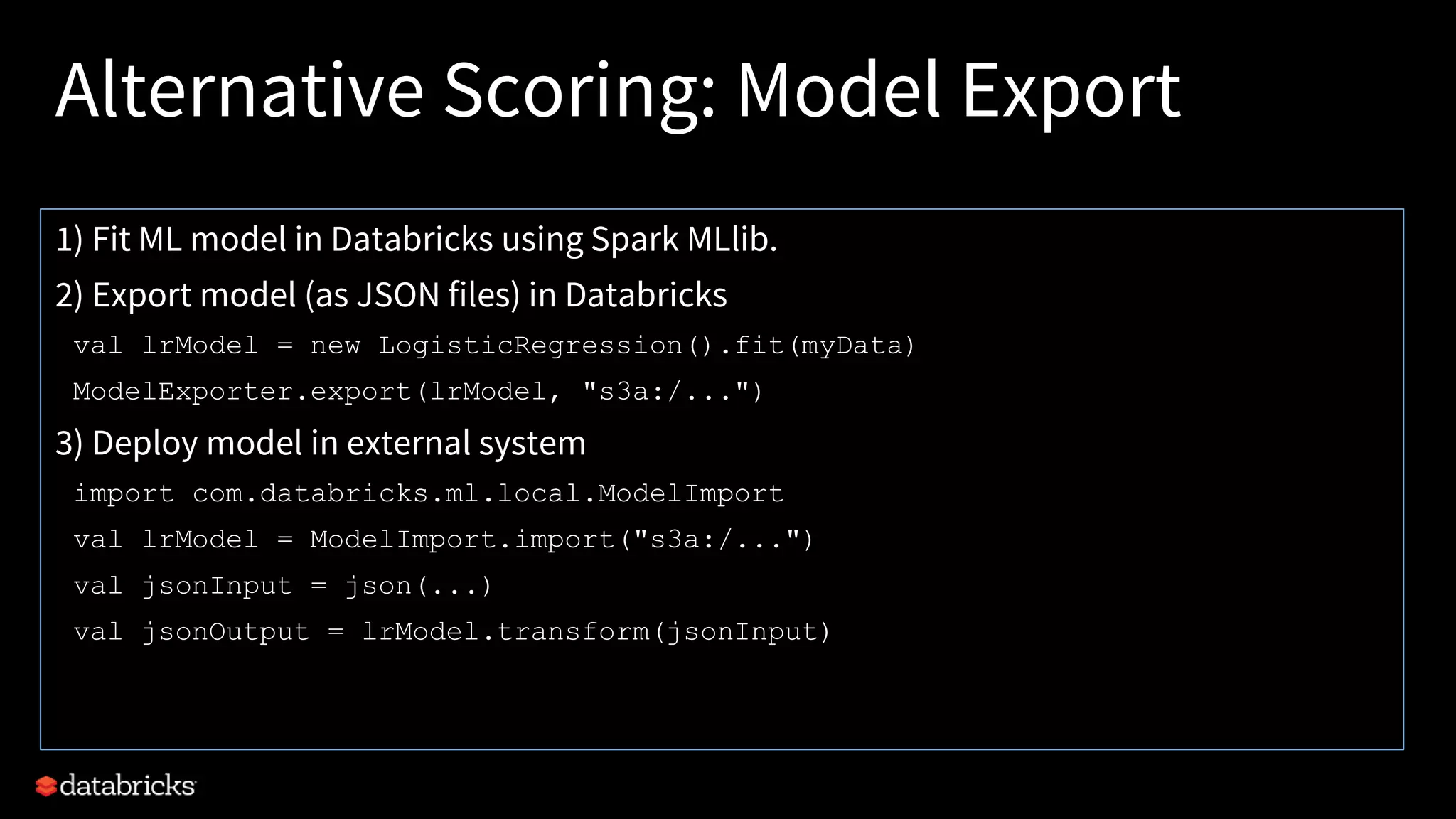
Alternative Scoring: Model Export
13
1) Fit ML model in Databricks using Spark MLlib.
2) Export model (as JSON files) in Databricks
val lrModel = new LogisticRegression().fit(myData)
ModelExporter.export(lrModel, "s3a:/...")
3) Deploy model in external system
import com.databricks.ml.local.ModelImport
val lrModel = ModelImport.import("s3a:/...")
val jsonInput = json(...)
val jsonOutput = lrModel.transform(jsonInput)
Thank you
caryl@databricks.com
mbaker@databricks.com
14
#SFexp6
mydpy/ss-2017-structured-streaming

Real-time Machine Learning Analytics Using Structured Streaming and Kinesis Firehose

  • 1.
    Real-time Machine LearningAnalytics Using Structured Streaming and Kinesis Firehose Caryl Yuhas (@ckred) Myles Baker (@mydpy) June 6th, 2017 1 #SFexp6
  • 2.
    Impact of Real-TimeAnalytics • Capturing customer interactions, user behavior, and sensor readings is rapidly increasing • Businesses need to respond immediately to new information as it arrives • Real-time analytics is at the core of next- generation IT systems 2
  • 3.
    Challenges Building aSolution • Performant, scalable real-time analytics requires connecting multiple tools • Streaming data comes with all of the problems of static data with added complexity • Machine learning models need to be trained on historical data and scored with real-time data 3
  • 4.
    The Meetup StreamingAPI • Can we explore Meetup data in real-time? • Can we predict RSVPs for new Meetups using streaming data from the Meetup API? –Members –Events –RSVPs 4
  • 5.
    A Data Modelfor Training and Scoring 5 Members Events Event RSVPs Model Member Predicted RSVP Offline Training Real-Time Scoring
  • 6.
    Component Integration andServing 6 Kinesis Producer AWS S3 Spark Model Training Spark Structured Streaming Meetup Stream Meetup Member API Meetup Prediction
  • 7.
    Producing the KinesisFirehose Stream 7 requests.get() makes a request to the Meetup API, keeping the stream open boto3.client creates a firehose kinesis client requests.get(apiURL, stream = True) kinesis = boto3.client('firehose') kinesis.put_record_batch( DeliveryStreamName='meetup', Records=rsvps) kinesis.put_record_batch() writes the records streamed to S3 using the Kinesis Firehose delivery stream ‘meetup’
  • 8.
    Our Meetup MLPipeline 8 Raw Text Feature Buckets + Indexed Labels Bucketizer CountVectorizer StringIndexer VectorAssembler LogisticRegression Feature Vectors Predictions
  • 9.
    Create an MLPipeline 9 A Pipeline allows us to simply chain a series of transformations and estimators val pipeline = new Pipeline() .setStages(Array( transformers, estimators, models)) Fit a model based on the pipelineval model = pipeline.fit(meetup) Save the model to disk for scoringmodel.write.overwrite().save(...)
  • 10.
    Scoring the Modelin Real-time 10 Load the trained modelval model = PipelineModel.load(...) Stream meetup event data Score the model val events = spark.readStream .parquet(...) model.transform(members)
  • 11.
    ML Limitations inStructured Streaming 11 •Structured streaming does not support operations needed by ML methods –count, collect, round, aggregate*, etc. • Many models, transformers, and estimators are not supported –K-Means, SVM, CountVectorizer, VectorAssembler, StringIndexer, etc.
  • 12.
    Our Streaming MeetupML Pipeline 12 Raw Text Raw Text + Binary Label Binarizer Tokenizer, Hashing TF LogisticRegression Features + Binary Label Predictions
  • 13.
    Alternative Scoring: ModelExport 13 1) Fit ML model in Databricks using Spark MLlib. 2) Export model (as JSON files) in Databricks val lrModel = new LogisticRegression().fit(myData) ModelExporter.export(lrModel, "s3a:/...") 3) Deploy model in external system import com.databricks.ml.local.ModelImport val lrModel = ModelImport.import("s3a:/...") val jsonInput = json(...) val jsonOutput = lrModel.transform(jsonInput)
  • 14.