© University of Reading 2014 www.reading.ac.uk 
Go to View > Master > Slide Master 
to put your unit name here 
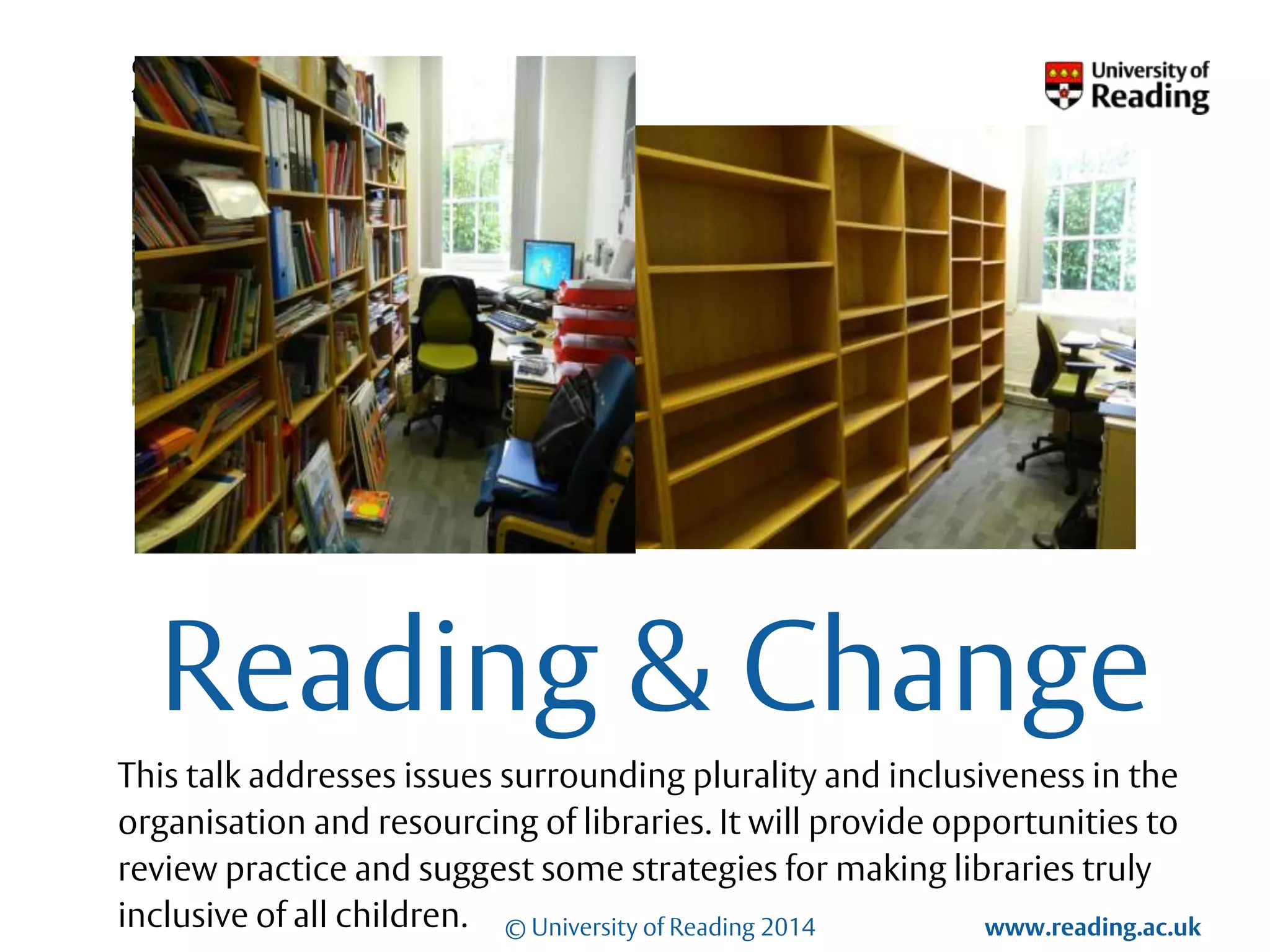
Reading & Change 
This talk addresses issues surrounding plurality and inclusiveness in the 
organisation and resourcing of libraries. It will provide opportunities to 
review practice and suggest some strategies for making libraries truly 
inclusive of all children.
2
Inclusive Libraries 
• Libraries provide children with a vast resource of 
knowledge whereby they can access books, newspapers, 
journals and digital formats. 
1: ALL children should be able to see themselves 
2: Children with disabilities. 
3:Thereby, through a library we can make a substantial 
impact on the education of all children. 
3
Why is Inclusion Important? 
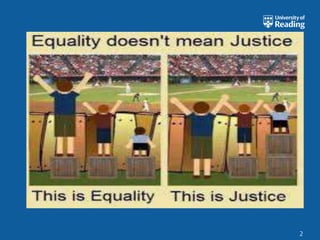
• By making libraries accessible and inclusive, we will not 
only address the needs of children with disabilities, but 
support all children. 
• We need to be aware of diversity in all its forms, 
including issues relating to culture, gender, disability, 
age, sexual identity, family structure and socio-economic 
background. 
• Activity. “How do you decide which resources to include, 
and which to exclude”. Discuss this with a colleague. 
4
How can we make an Inclusive Library? 
• We must make sure that we don’t see this as simply an 
accommodation issue. We need to think about wide-ranging 
changes to the library so that it facilitates the 
‘presence, participation and achievement’ of all children 
• Activity. Discuss this with a colleague the elements that 
are essential to creating an inclusive space: for example, 
Part of a strategy 
5
Six elements 
• Part of a strategy 
• As a potential for training 
• Facilitates constructive relationships 
• Exploits existing resources e.g expertise 
• Environment 
• Communication 
6
Strategy 
• With the help of the disabilities act of 2010, libraries 
should be starting points to help all children reach their 
goals. 
• The Disability Discrimination Act (April 2005) includes a 
new duty on public bodies, including primary schools, to 
actively promote disability equality. The Disability 
Equality Duty (DED) is not only about changes to 
buildings or making adjustments for individuals, it is 
about weaving equality for disabled children and adults 
into the culture of schools in practical ways. 
7
Potential for Training 
• Staff expertise. 
•Perceptions. 
•Conscious and unconscious 
8
Relationships 
• Hopefully the changes currently being experienced 
by libraries will encourage librarians to look for 
new ways in which they can engage their users. 
• Readers can help disseminate ideas and encourage 
further changes in libraries. 
9
Resources 
• Links. 
•Magnification 
• Colour contrast 
• Adaptation 
• Choice . 
• Books in different formats/languages 
10
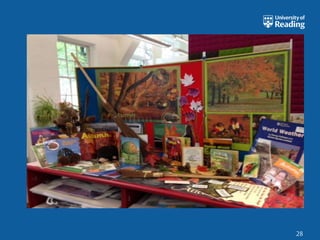
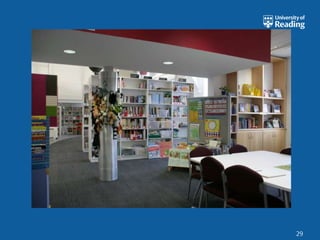
Environment 
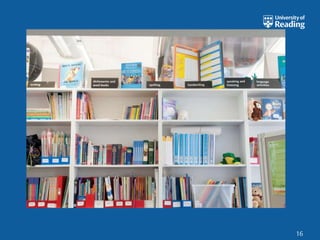
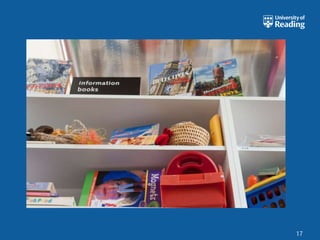
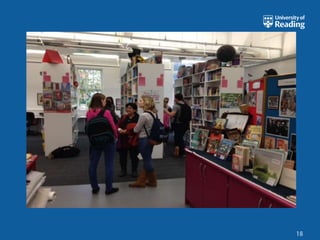
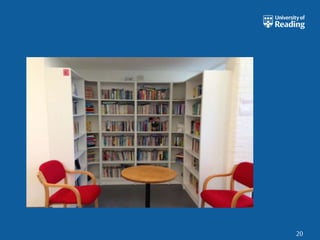
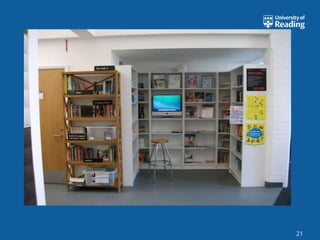
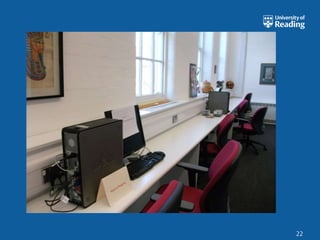
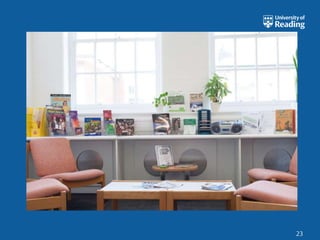
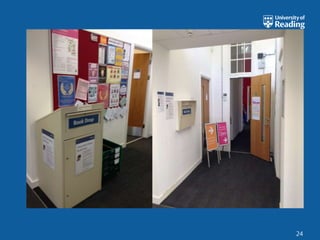
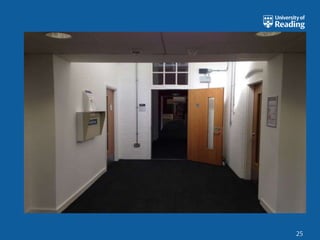
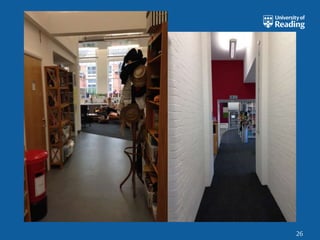
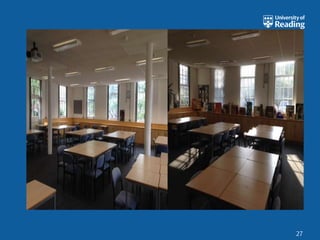
• Physical: 
• Bright colours and interactive displays. 
• Space 
• Shelves 
• Labelling 
• Visual 
• symbols and pictures 
• Pictorial guide 
• Audio 
• Listening post 
11
Communication 
• Signage 
•Needs gap 
• Training 
• Bespoke services 
• Promotion 
12
13
14
15
16
17
18
19
20
21
22
23
24
25
26
27
28
29

Reading and Change (Karen Goulding)

  • 1.
    © University ofReading 2014 www.reading.ac.uk Go to View > Master > Slide Master to put your unit name here Reading & Change This talk addresses issues surrounding plurality and inclusiveness in the organisation and resourcing of libraries. It will provide opportunities to review practice and suggest some strategies for making libraries truly inclusive of all children.
  • 2.
  • 3.
    Inclusive Libraries •Libraries provide children with a vast resource of knowledge whereby they can access books, newspapers, journals and digital formats. 1: ALL children should be able to see themselves 2: Children with disabilities. 3:Thereby, through a library we can make a substantial impact on the education of all children. 3
  • 4.
    Why is InclusionImportant? • By making libraries accessible and inclusive, we will not only address the needs of children with disabilities, but support all children. • We need to be aware of diversity in all its forms, including issues relating to culture, gender, disability, age, sexual identity, family structure and socio-economic background. • Activity. “How do you decide which resources to include, and which to exclude”. Discuss this with a colleague. 4
  • 5.
    How can wemake an Inclusive Library? • We must make sure that we don’t see this as simply an accommodation issue. We need to think about wide-ranging changes to the library so that it facilitates the ‘presence, participation and achievement’ of all children • Activity. Discuss this with a colleague the elements that are essential to creating an inclusive space: for example, Part of a strategy 5
  • 6.
    Six elements •Part of a strategy • As a potential for training • Facilitates constructive relationships • Exploits existing resources e.g expertise • Environment • Communication 6
  • 7.
    Strategy • Withthe help of the disabilities act of 2010, libraries should be starting points to help all children reach their goals. • The Disability Discrimination Act (April 2005) includes a new duty on public bodies, including primary schools, to actively promote disability equality. The Disability Equality Duty (DED) is not only about changes to buildings or making adjustments for individuals, it is about weaving equality for disabled children and adults into the culture of schools in practical ways. 7
  • 8.
    Potential for Training • Staff expertise. •Perceptions. •Conscious and unconscious 8
  • 9.
    Relationships • Hopefullythe changes currently being experienced by libraries will encourage librarians to look for new ways in which they can engage their users. • Readers can help disseminate ideas and encourage further changes in libraries. 9
  • 10.
    Resources • Links. •Magnification • Colour contrast • Adaptation • Choice . • Books in different formats/languages 10
  • 11.
    Environment • Physical: • Bright colours and interactive displays. • Space • Shelves • Labelling • Visual • symbols and pictures • Pictorial guide • Audio • Listening post 11
  • 12.
    Communication • Signage •Needs gap • Training • Bespoke services • Promotion 12
  • 13.
  • 14.
  • 15.
  • 16.
  • 17.
  • 18.
  • 19.
  • 20.
  • 21.
  • 22.
  • 23.
  • 24.
  • 25.
  • 26.
  • 27.
  • 28.
  • 29.