FERTILIZATION  & DEVELOPMENT
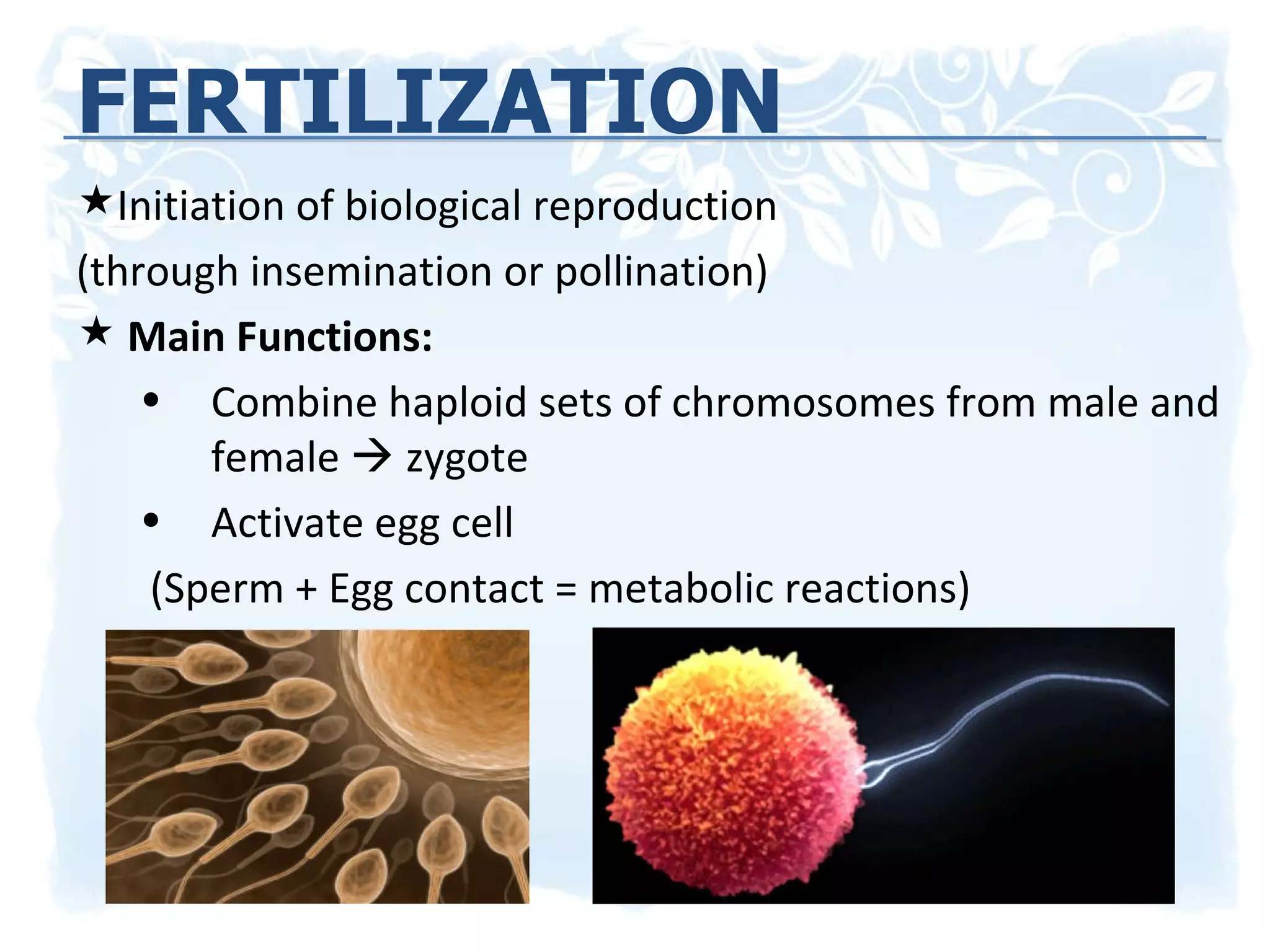
FERTILIZATION Initiation of biological reproduction  (through insemination or pollination) Main Functions: Combine haploid sets of chromosomes from male and female    zygote Activate egg cell (Sperm + Egg contact = metabolic reactions)
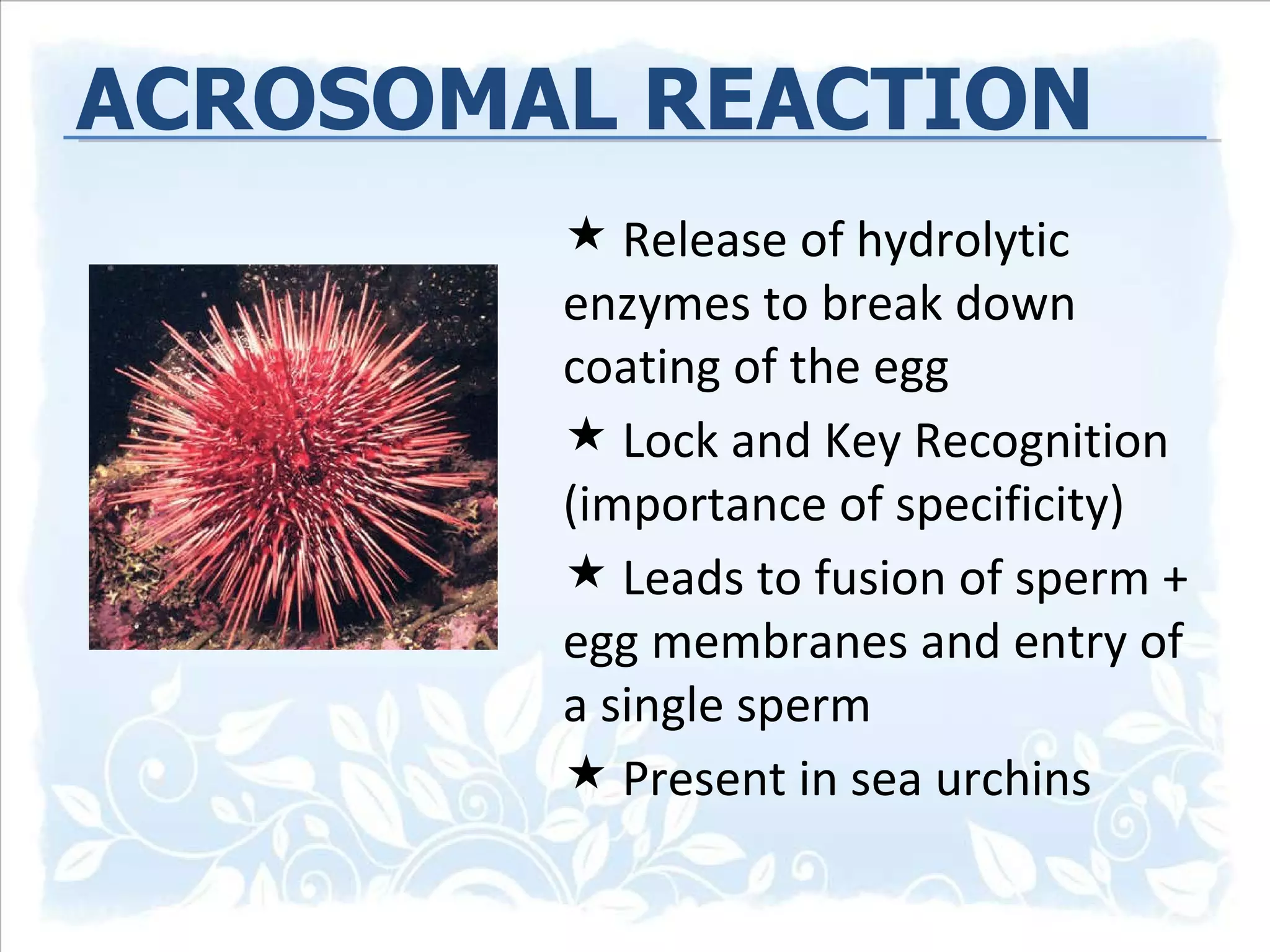
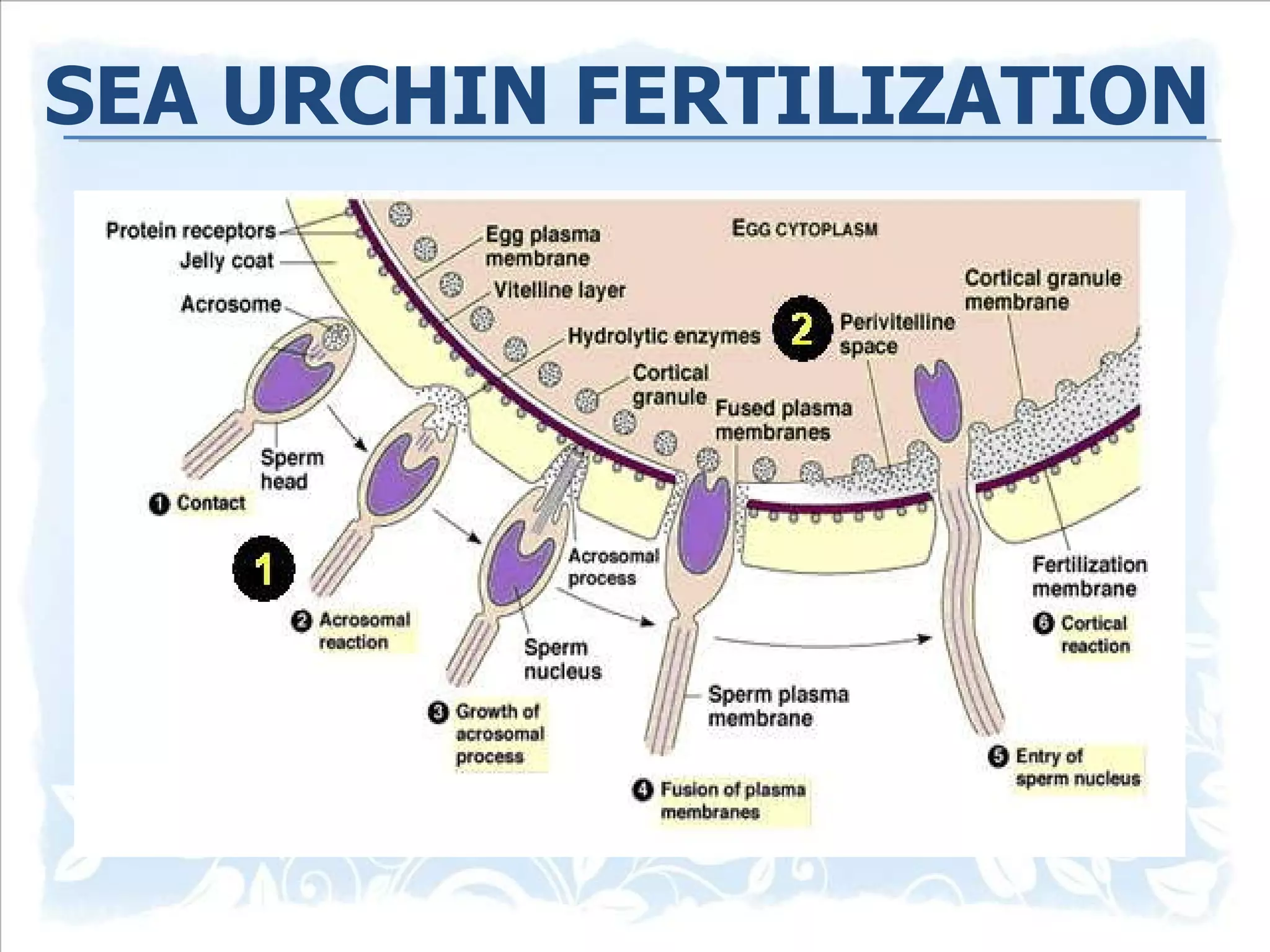
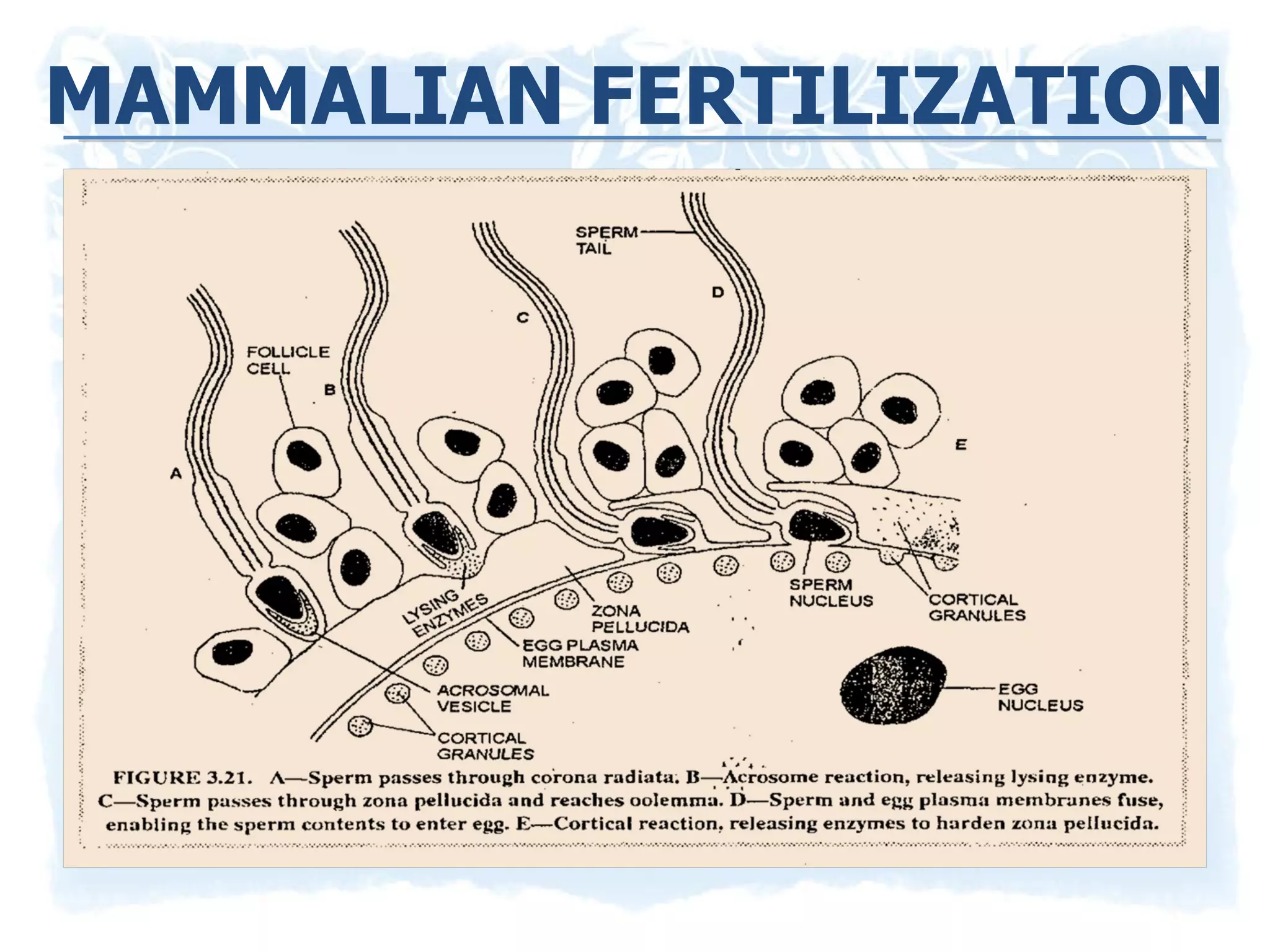
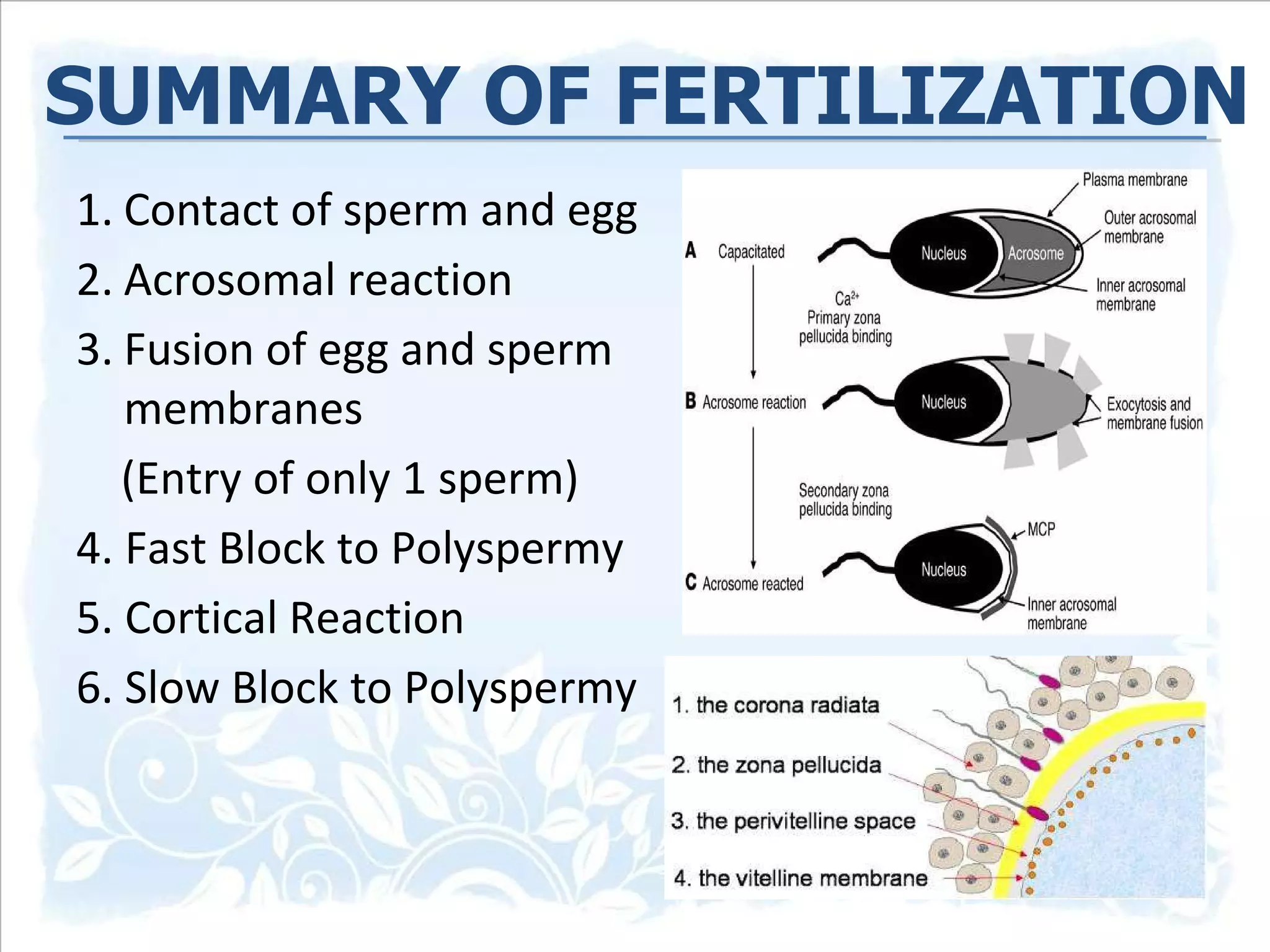
ACROSOMAL REACTION Release of hydrolytic enzymes to break down coating of the egg Lock and Key Recognition (importance of specificity) Leads to fusion of sperm + egg membranes and entry of a single sperm Present in sea urchins
SEA URCHIN FERTILIZATION
MAMMALIAN FERTILIZATION
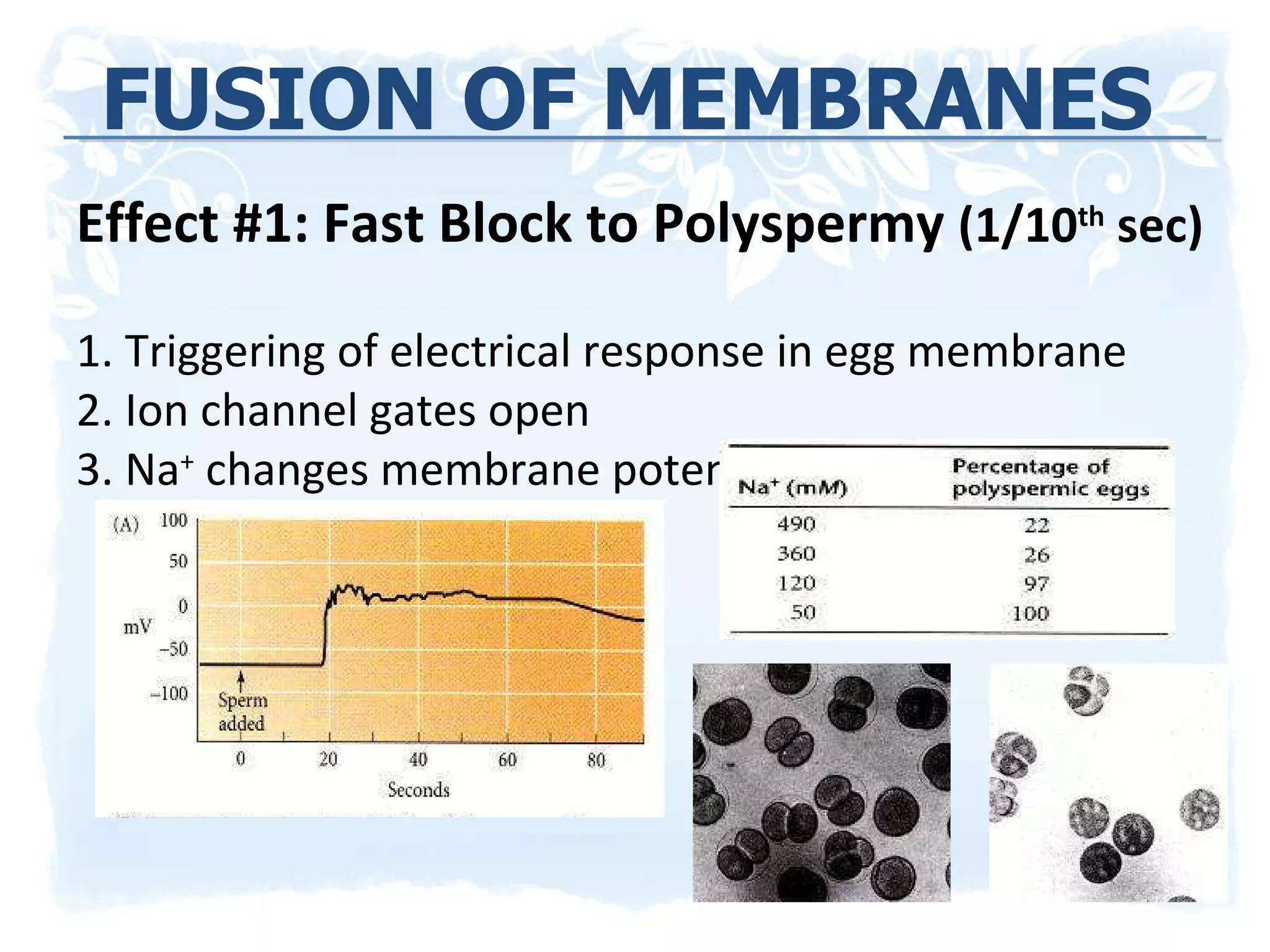
FUSION OF MEMBRANES Effect #1: Fast Block to Polyspermy  (1/10 th  sec)  1. Triggering of electrical response in egg membrane 2. Ion channel gates open 3. Na +  changes membrane potential (depolarization)
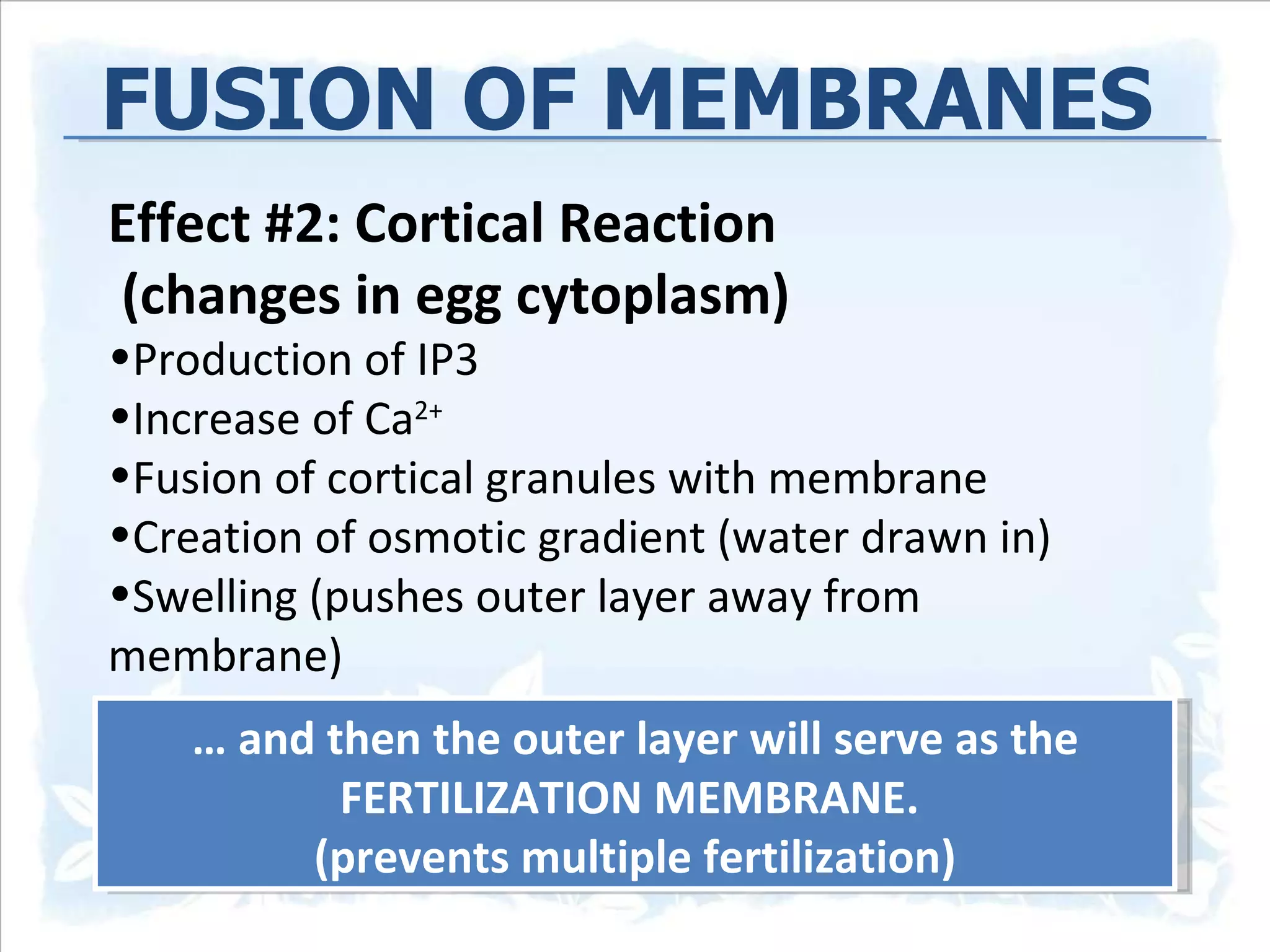
Effect #2: Cortical Reaction (changes in egg cytoplasm) Production of IP3 Increase of Ca 2+ Fusion of cortical granules with membrane Creation of osmotic gradient (water drawn in) Swelling (pushes outer layer away from membrane) FUSION OF MEMBRANES …  and then the outer layer will serve as the FERTILIZATION MEMBRANE.  (prevents multiple fertilization)
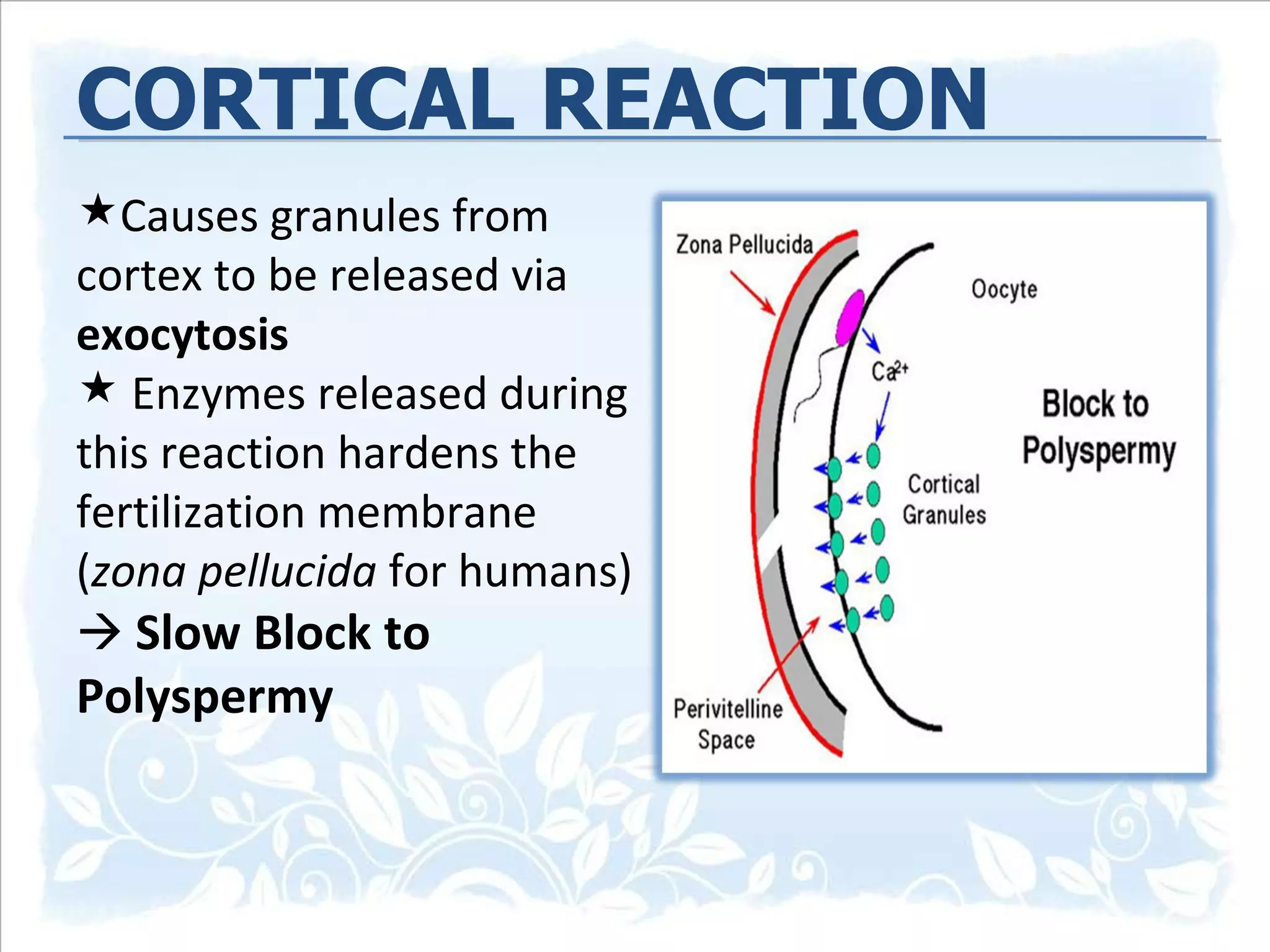
CORTICAL REACTION Causes granules from cortex to be released via  exocytosis Enzymes released during this reaction hardens the fertilization membrane ( zona pellucida  for humans)     Slow Block to Polyspermy
SUMMARY OF FERTILIZATION Contact of sperm and egg  Acrosomal reaction Fusion of egg and sperm membranes (Entry of only 1 sperm) 4. Fast Block to Polyspermy 5. Cortical Reaction  6. Slow Block to Polyspermy
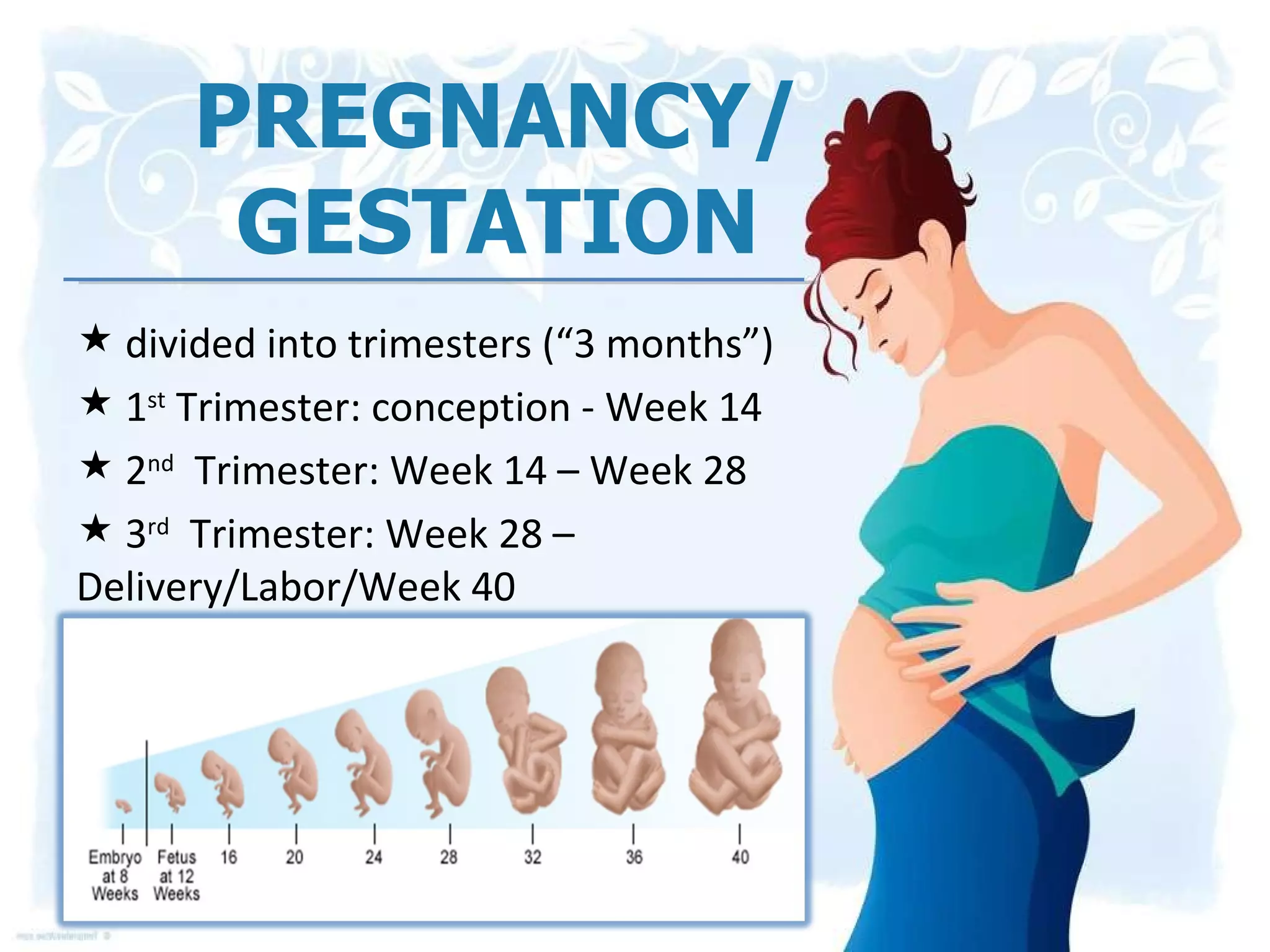
PREGNANCY/ GESTATION divided into trimesters (“3 months”) 1 st  Trimester: conception - Week 14 2 nd   Trimester: Week 14 – Week 28 3 rd   Trimester: Week 28 – Delivery/Labor/Week 40
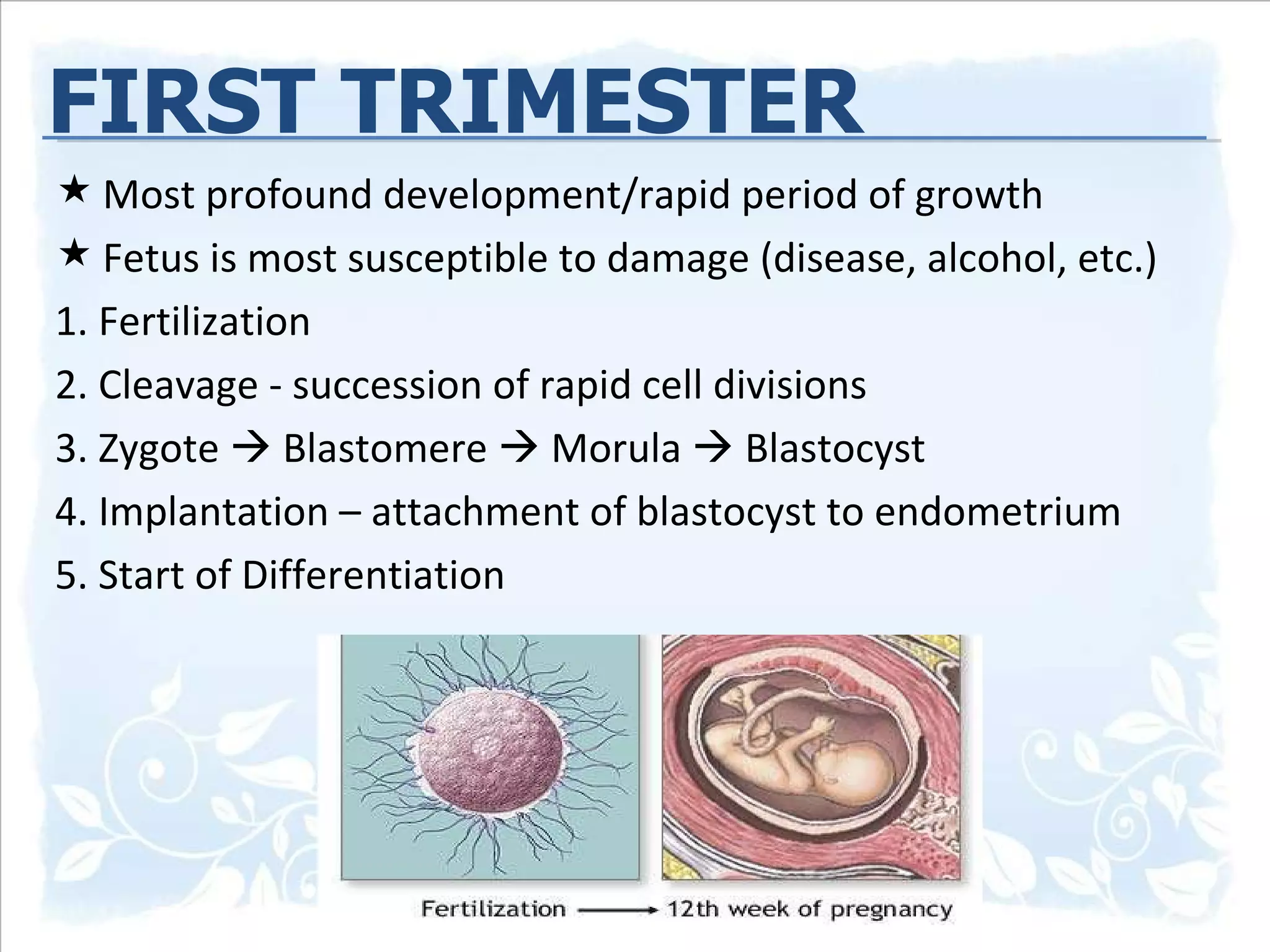
PREGNANCY/ GESTATION FIRST TRIMESTER Most profound development/rapid period of growth Fetus is most susceptible to damage (disease, alcohol, etc.) 1. Fertilization 2. Cleavage - succession of rapid cell divisions 3. Zygote    Blastomere    Morula    Blastocyst  4. Implantation – attachment of blastocyst to endometrium 5. Start of Differentiation
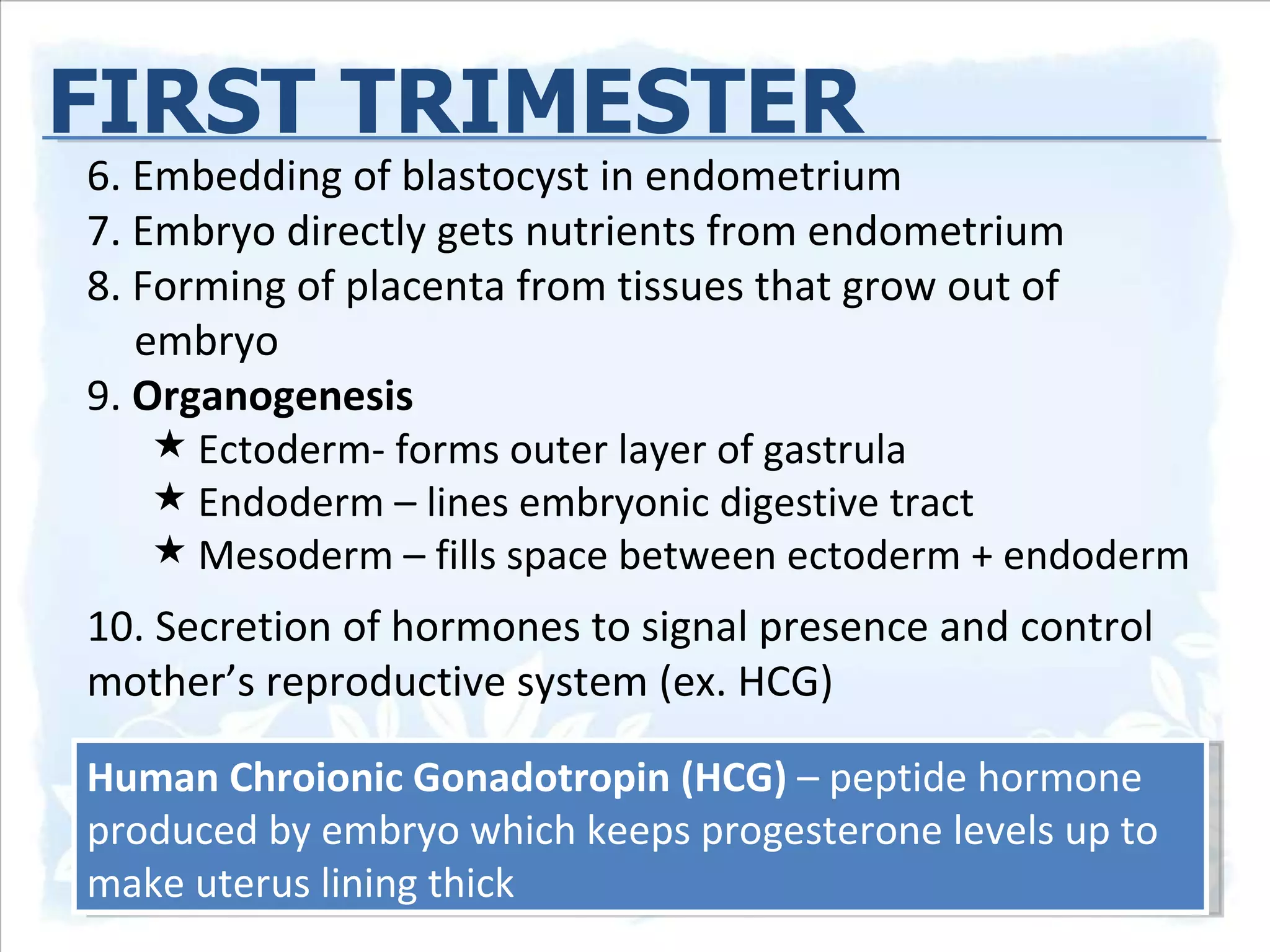
6. Embedding of blastocyst in endometrium 7. Embryo directly gets nutrients from endometrium  8. Forming of placenta from tissues that grow out of embryo 9.  Organogenesis Ectoderm- forms outer layer of gastrula Endoderm – lines embryonic digestive tract Mesoderm – fills space between ectoderm + endoderm  10. Secretion of hormones to signal presence and control mother’s reproductive system (ex. HCG) FIRST TRIMESTER Human Chroionic Gonadotropin (HCG)  – peptide hormone produced by embryo which keeps progesterone levels up to make uterus lining thick
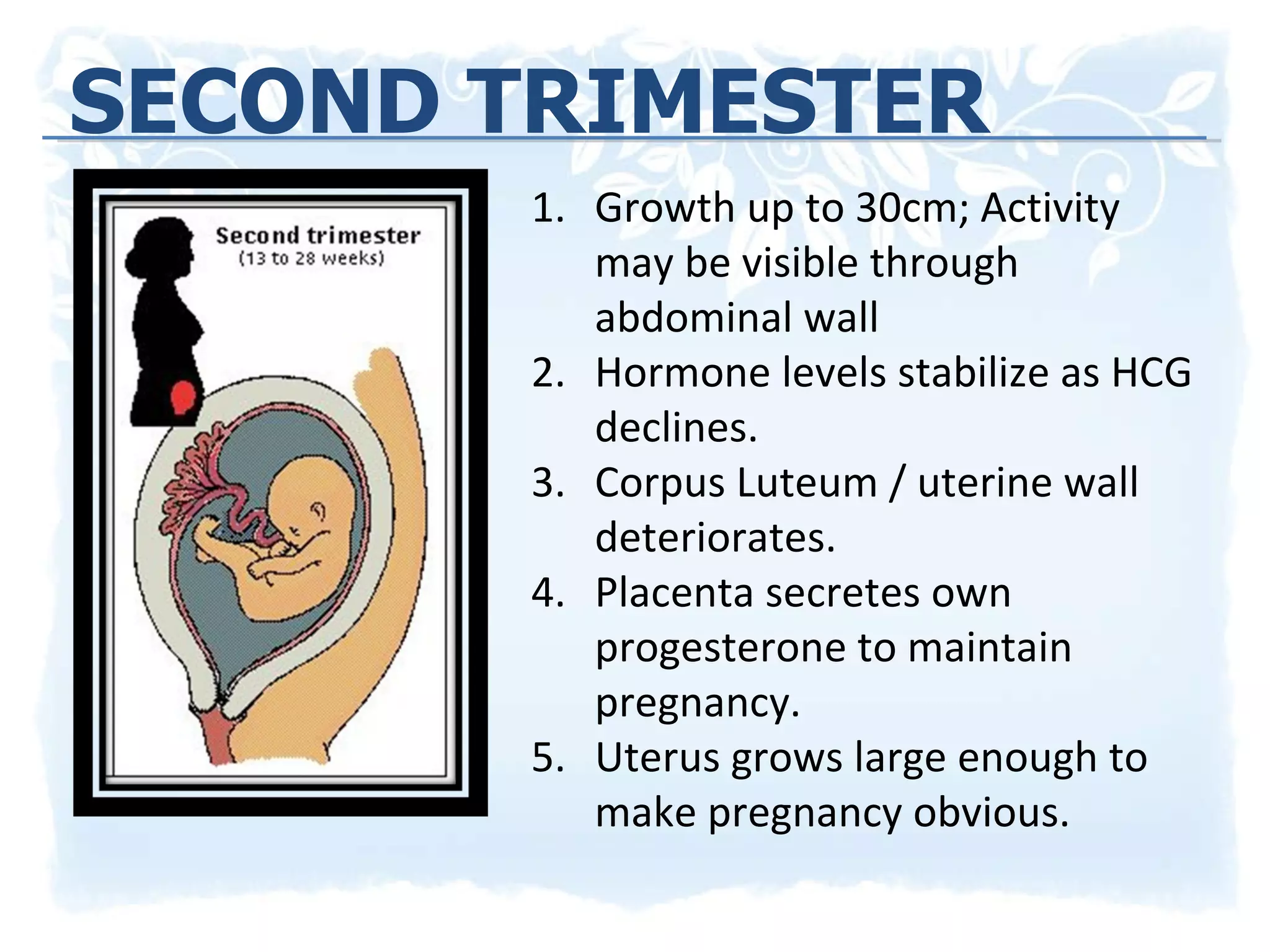
SECOND TRIMESTER Growth up to 30cm; Activity may be visible through abdominal wall Hormone levels stabilize as HCG declines. Corpus Luteum / uterine wall deteriorates. Placenta secretes own progesterone to maintain pregnancy. Uterus grows large enough to make pregnancy obvious.
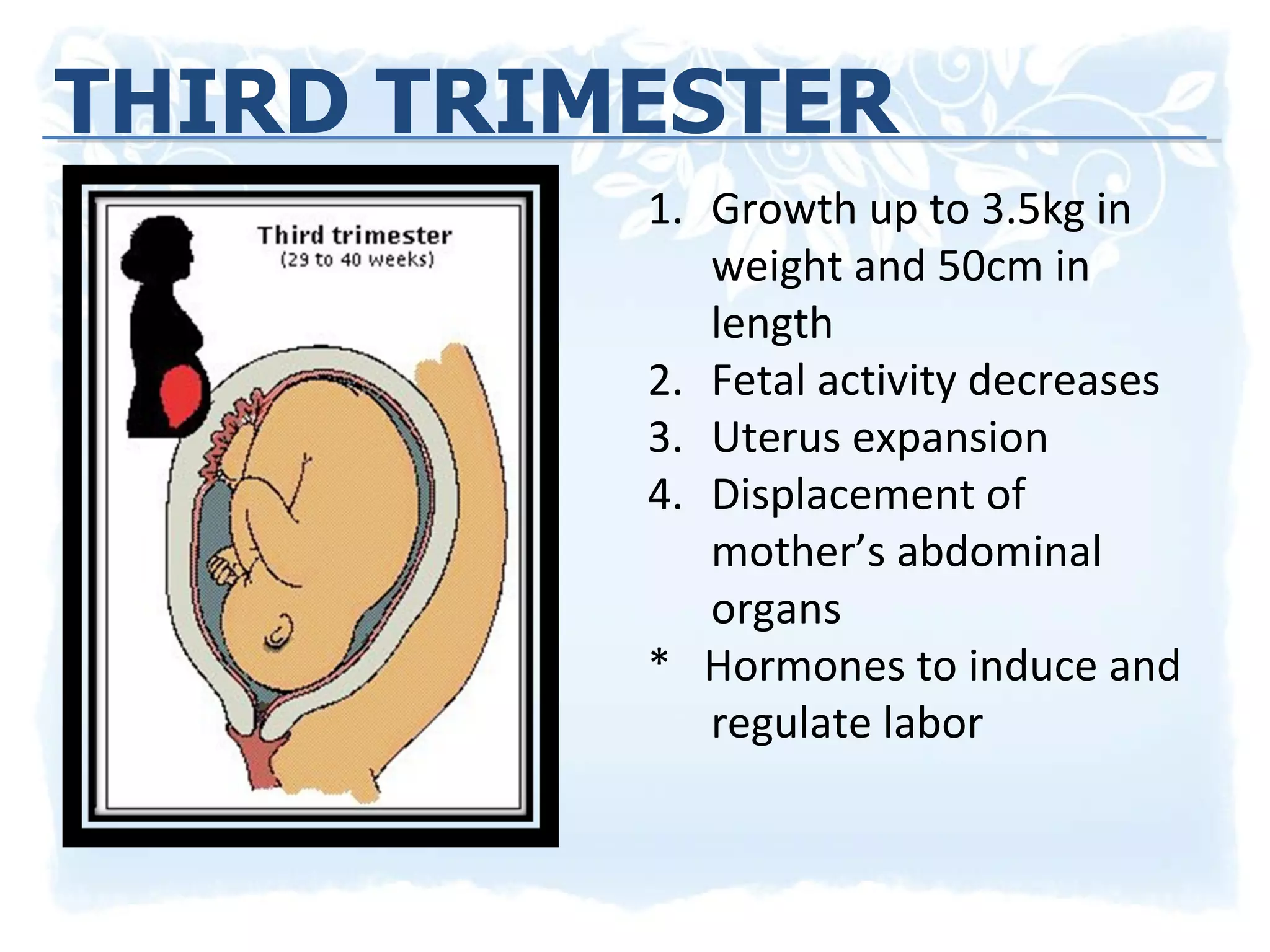
THIRD TRIMESTER Growth up to 3.5kg in weight and 50cm in length Fetal activity decreases Uterus expansion Displacement of mother’s abdominal organs *  Hormones to induce and regulate labor
HORMONES  TO INDUCE AND REGULATE LABOR Highest level of  estrogen    formation of oxytocin Oxytocin   - stimulates powerful contractions through smooth muscles of the uterus - stimulates placenta to secrete  prostaglandins  to enhance contraction 3.  Positive Feedback : Physical and emotional stress associated with contractions stimulate release of more oxytocin and prostaglandins
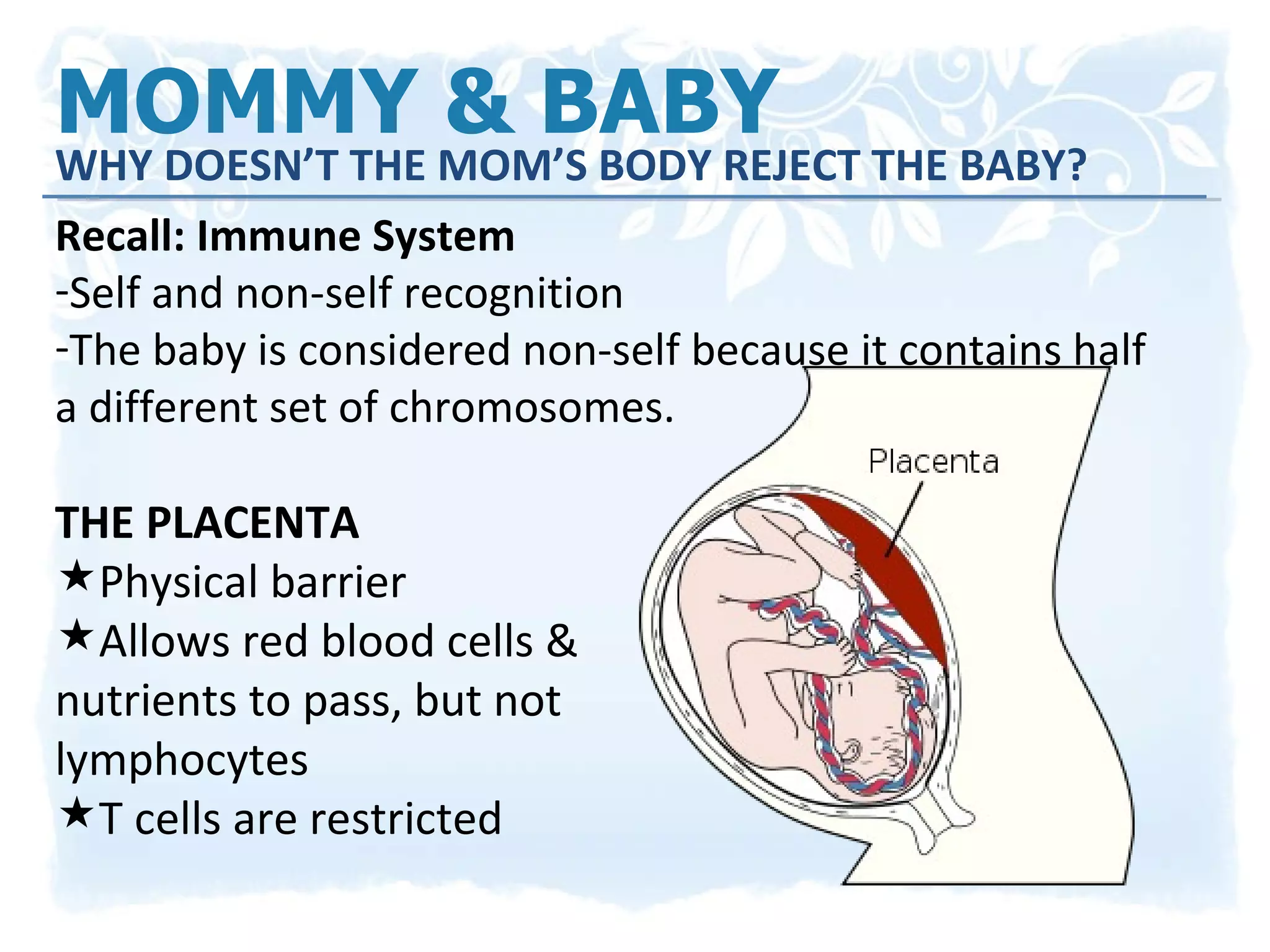
MOMMY & BABY  WHY DOESN’T THE MOM’S BODY REJECT THE BABY? Recall: Immune System Self and non-self recognition The baby is considered non-self because it contains half a different set of chromosomes. THE PLACENTA Physical barrier Allows red blood cells &  nutrients to pass, but not  lymphocytes T cells are restricted
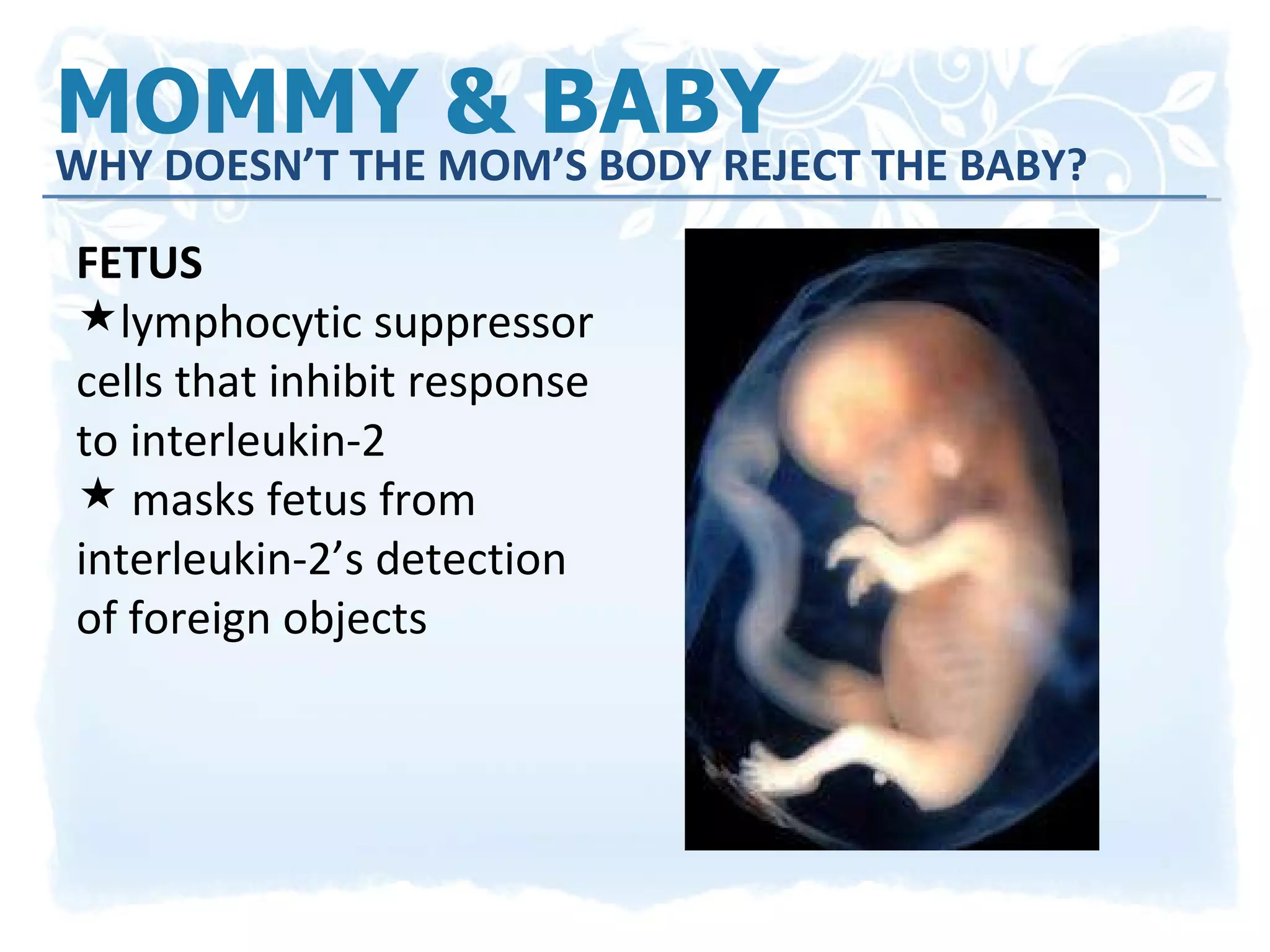
MOMMY & BABY  WHY DOESN’T THE MOM’S BODY REJECT THE BABY? FETUS lymphocytic suppressor cells that inhibit response to interleukin-2 masks fetus from interleukin-2’s detection of foreign objects
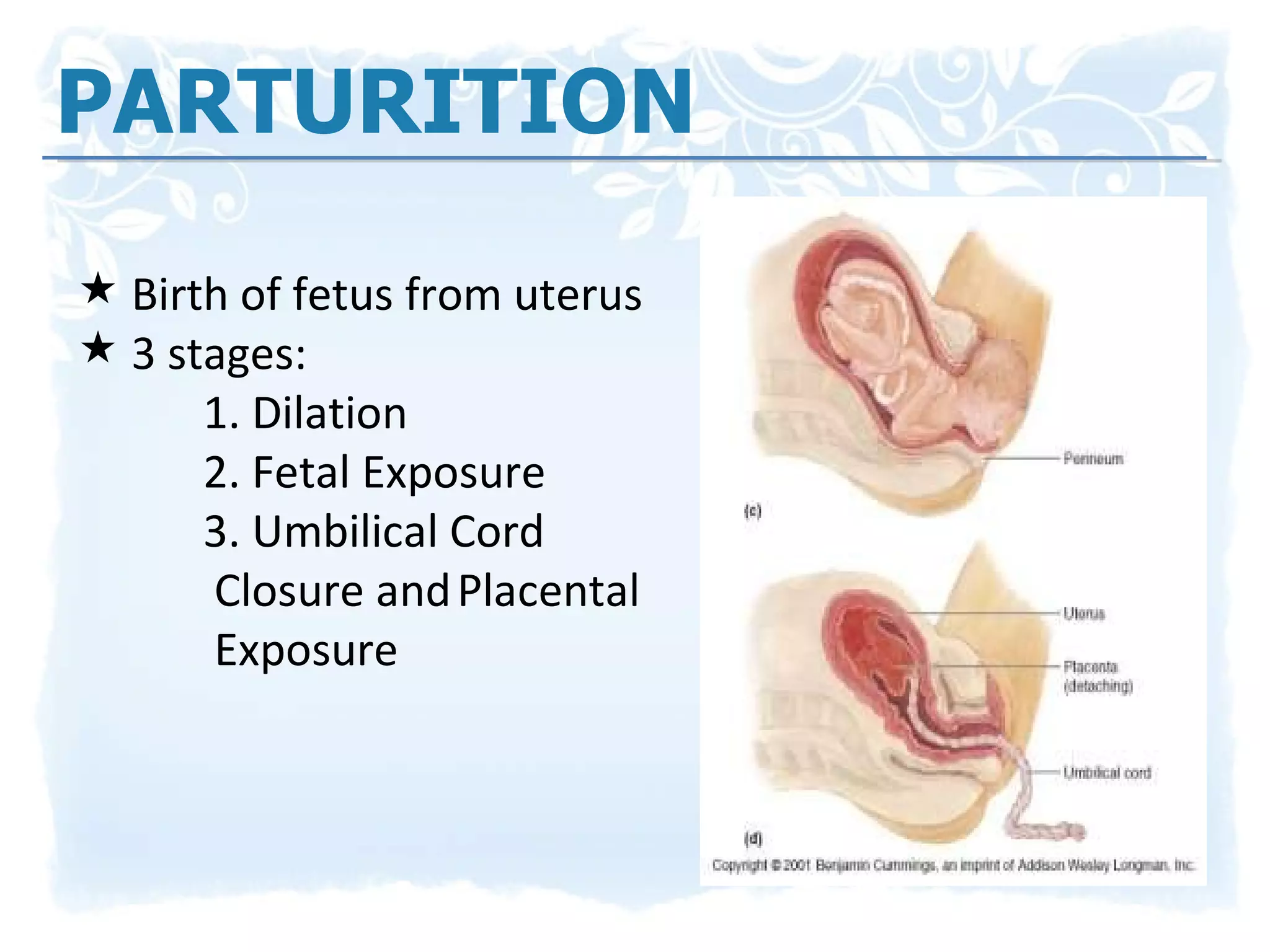
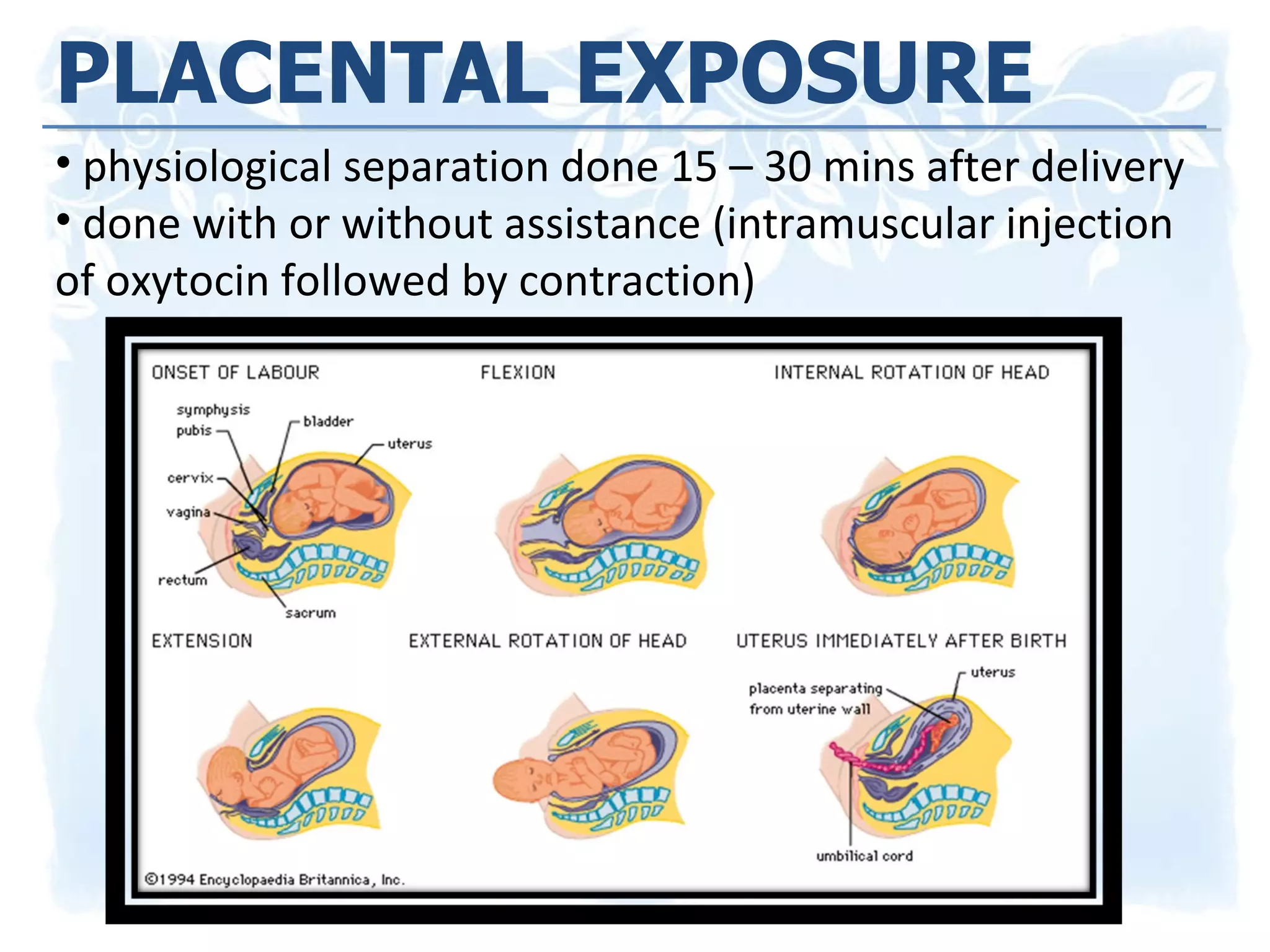
PARTURITION Birth of fetus from uterus 3 stages: 1. Dilation 2. Fetal Exposure 3. Umbilical Cord   Closure and Placental   Exposure
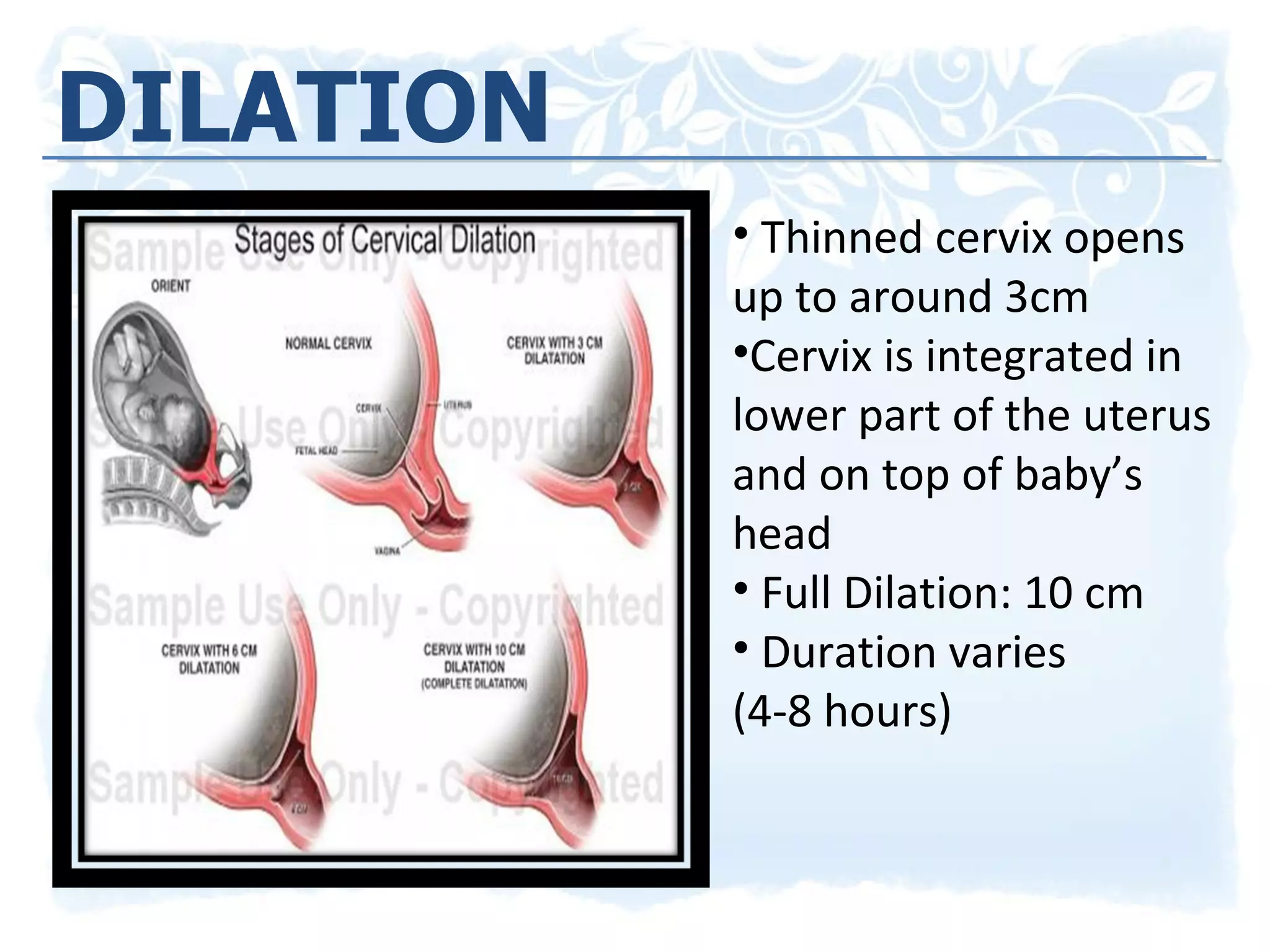
DILATION Thinned cervix opens up to around 3cm Cervix is integrated in lower part of the uterus and on top of baby’s head Full Dilation: 10 cm Duration varies (4-8 hours)
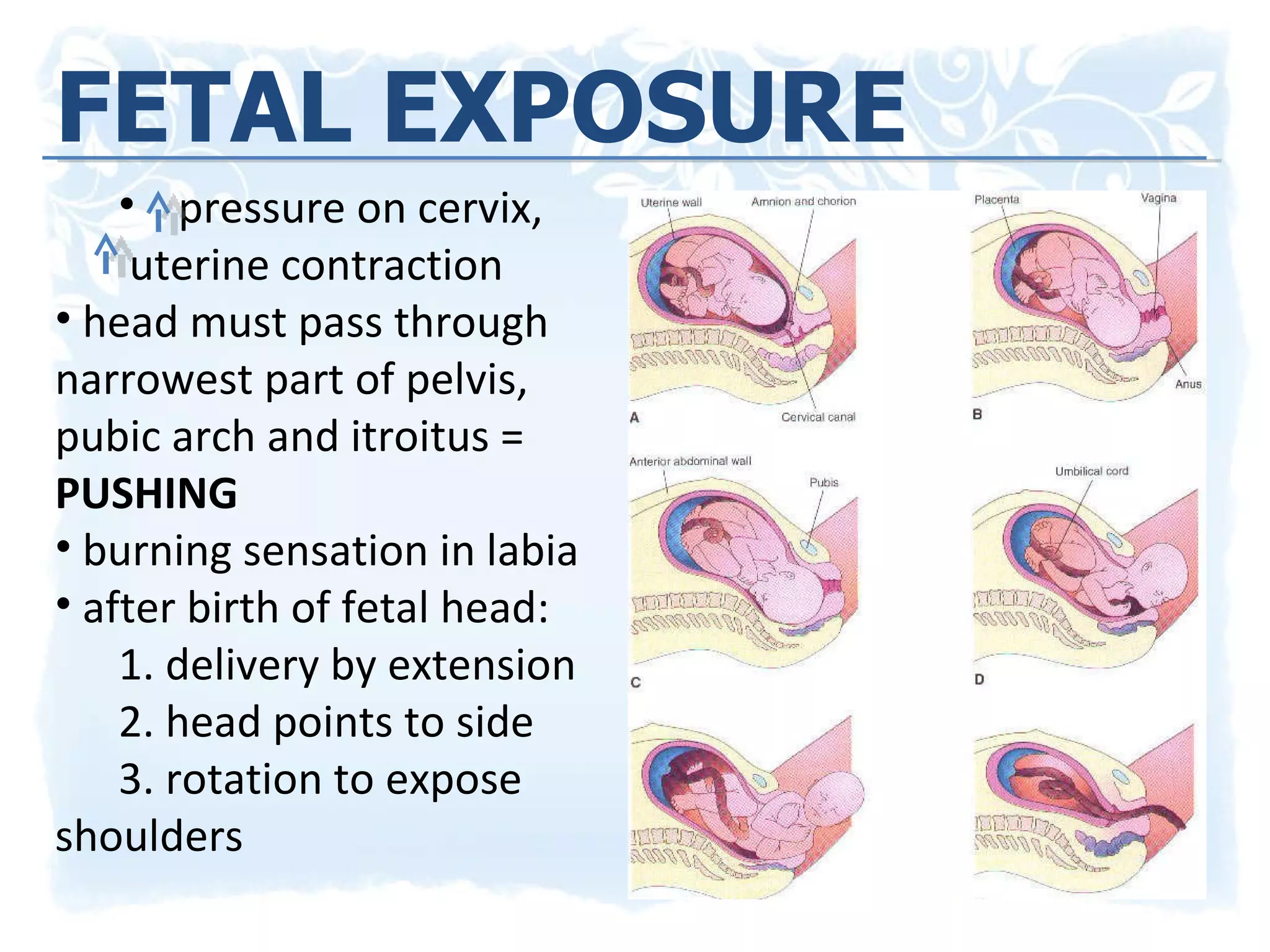
FETAL EXPOSURE pressure on cervix,  uterine contraction head must pass through narrowest part of pelvis, pubic arch and itroitus =  PUSHING burning sensation in labia after birth of fetal head: 1. delivery by extension 2. head points to side 3. rotation to expose  shoulders
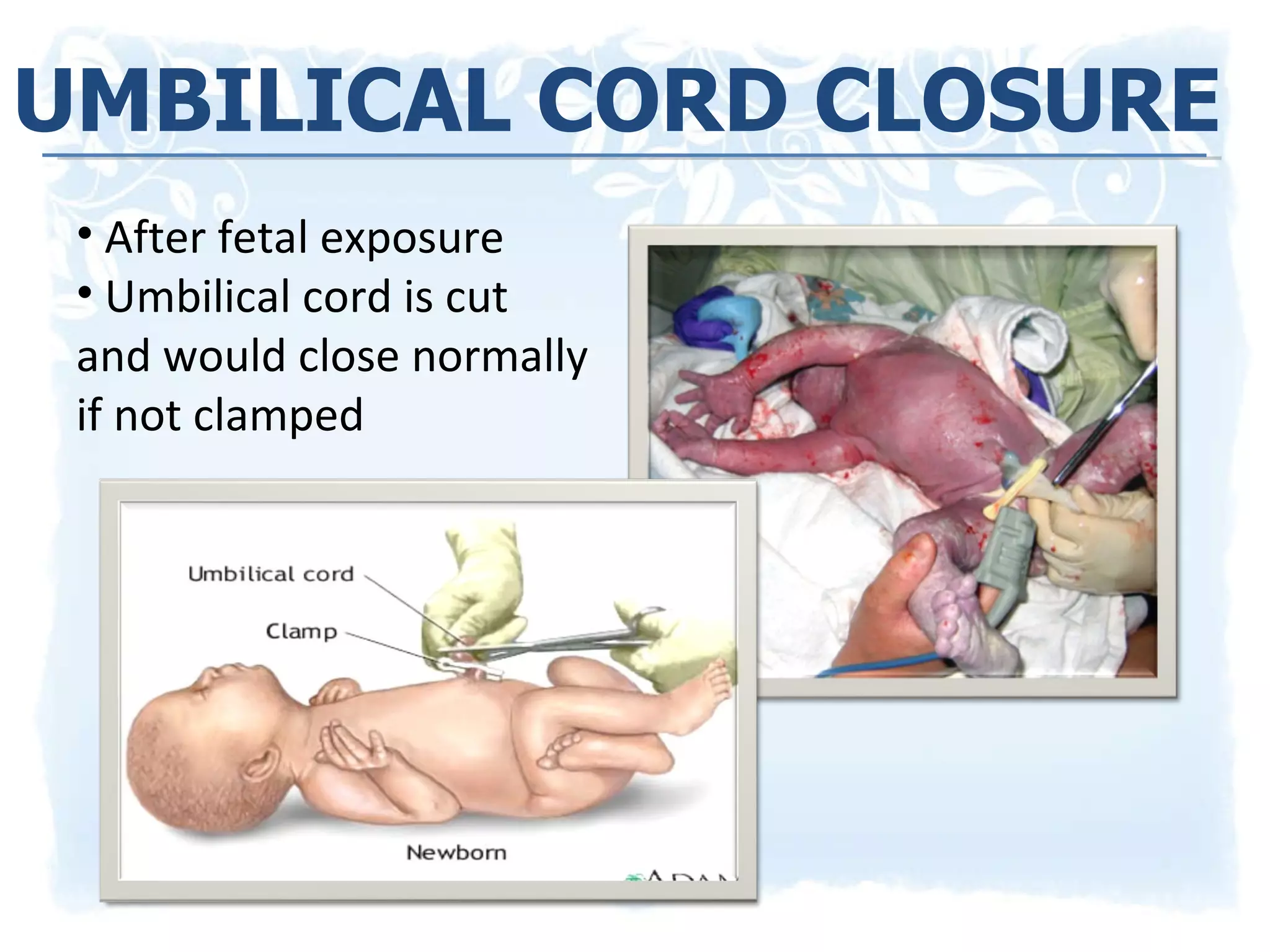
UMBILICAL CORD CLOSURE After fetal exposure Umbilical cord is cut and would close normally if not clamped
PLACENTAL EXPOSURE physiological separation done 15 – 30 mins after delivery  done with or without assistance (intramuscular injection of oxytocin followed by contraction)
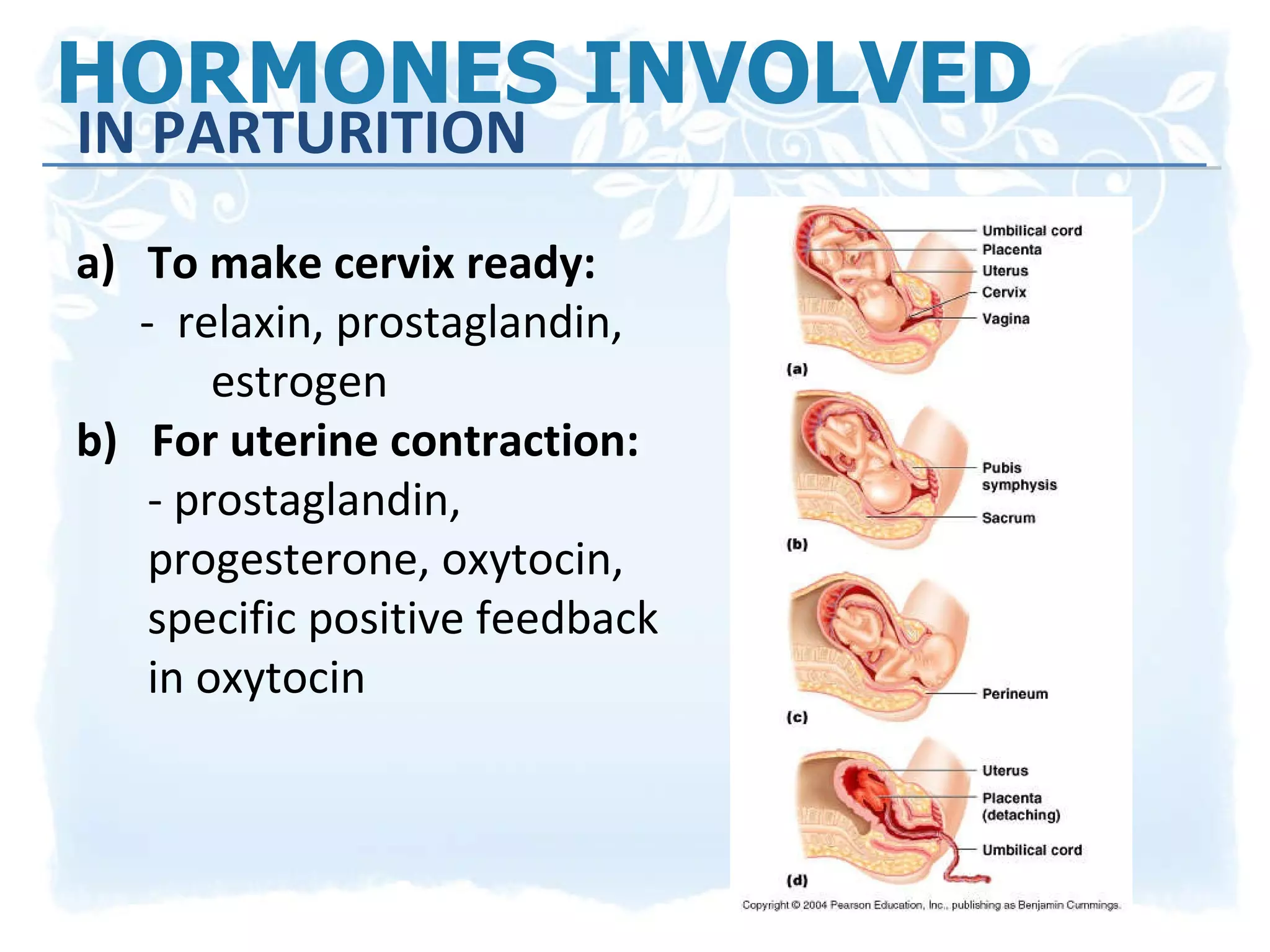
HORMONES INVOLVED IN PARTURITION To make cervix ready:  -  relaxin, prostaglandin, estrogen b)  For uterine contraction:  - prostaglandin, progesterone, oxytocin, specific positive feedback in oxytocin
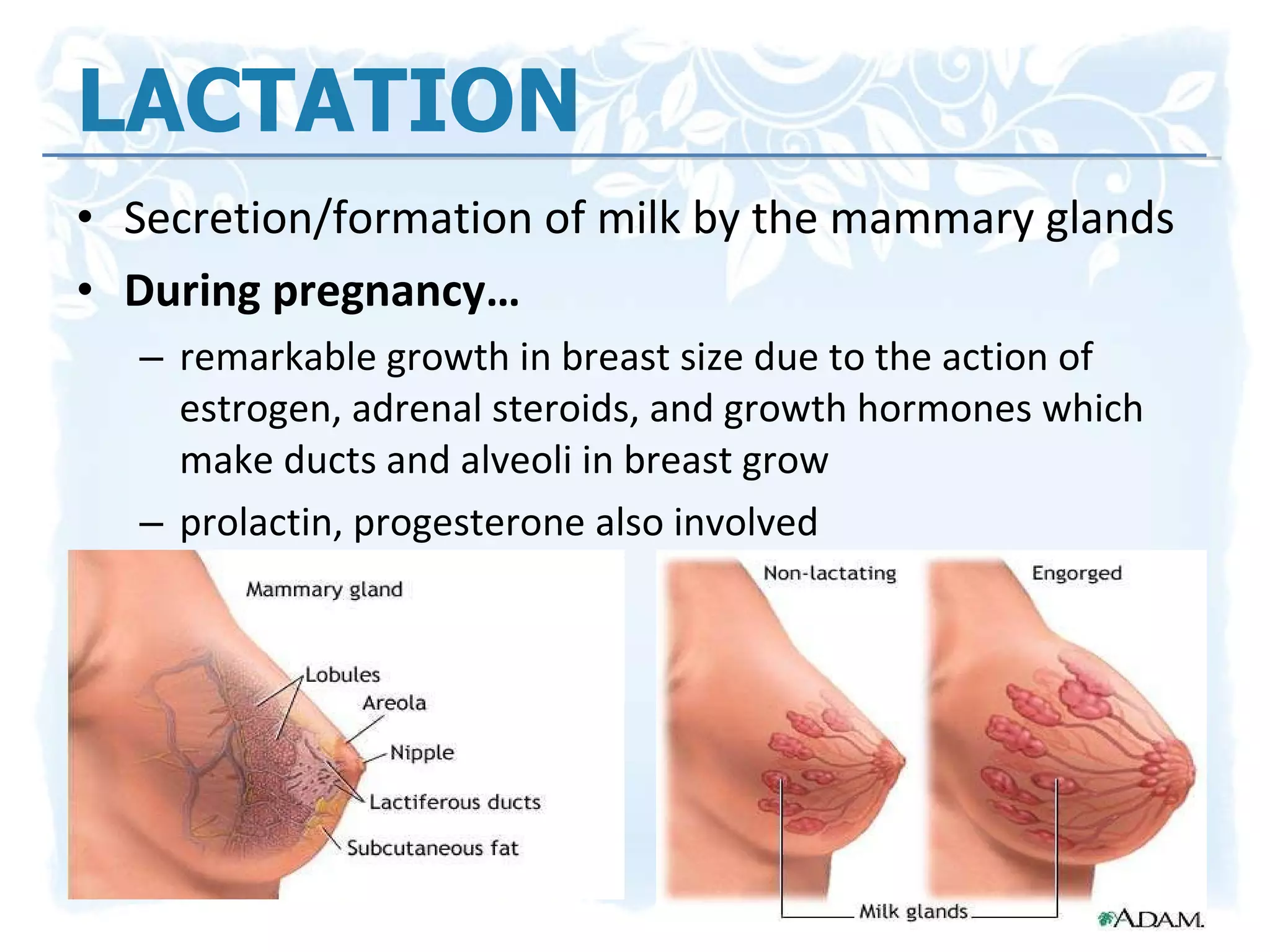
LACTATION Secretion/formation of milk by the mammary glands During pregnancy… remarkable growth in breast size due to the action of estrogen, adrenal steroids, and growth hormones which  make ducts and alveoli in breast grow prolactin, progesterone also involved
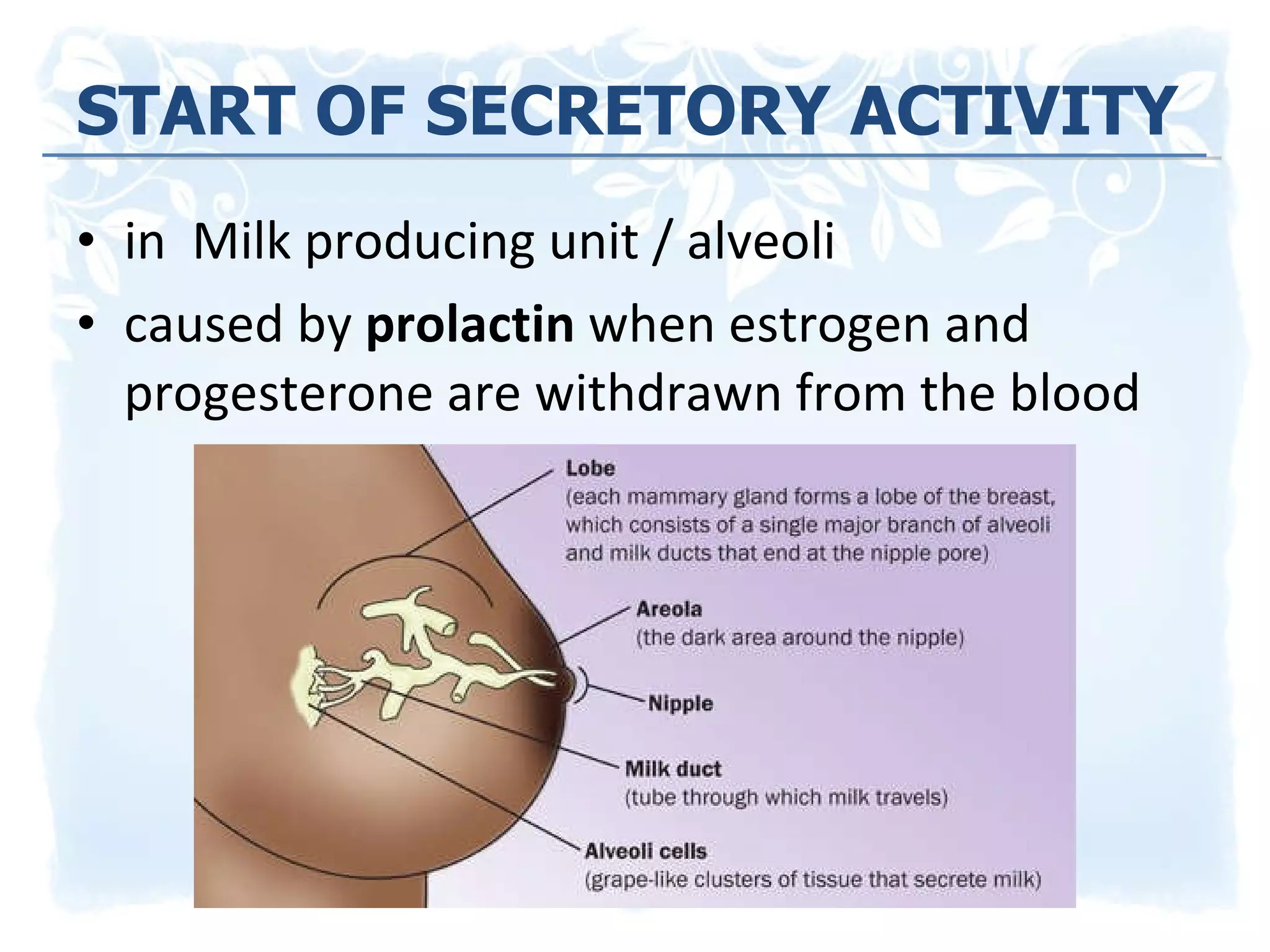
START OF SECRETORY ACTIVITY in  Milk producing unit / alveoli caused by  prolactin  when estrogen and progesterone are withdrawn from the blood
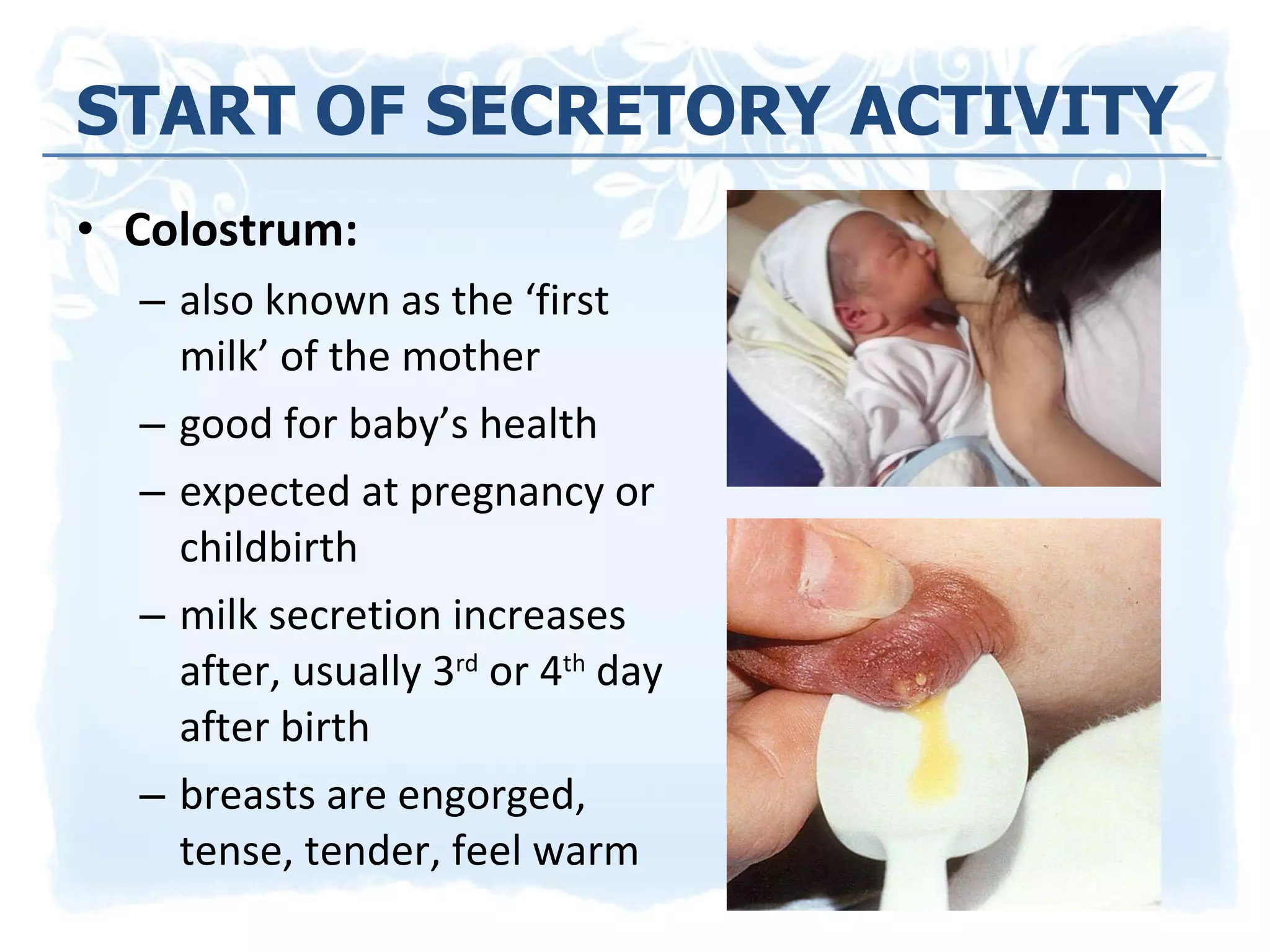
Colostrum:  also known as the ‘first milk’ of the mother good for baby’s health expected at pregnancy or childbirth milk secretion increases after, usually 3 rd  or 4 th  day after birth  breasts are engorged, tense, tender, feel warm START OF SECRETORY ACTIVITY
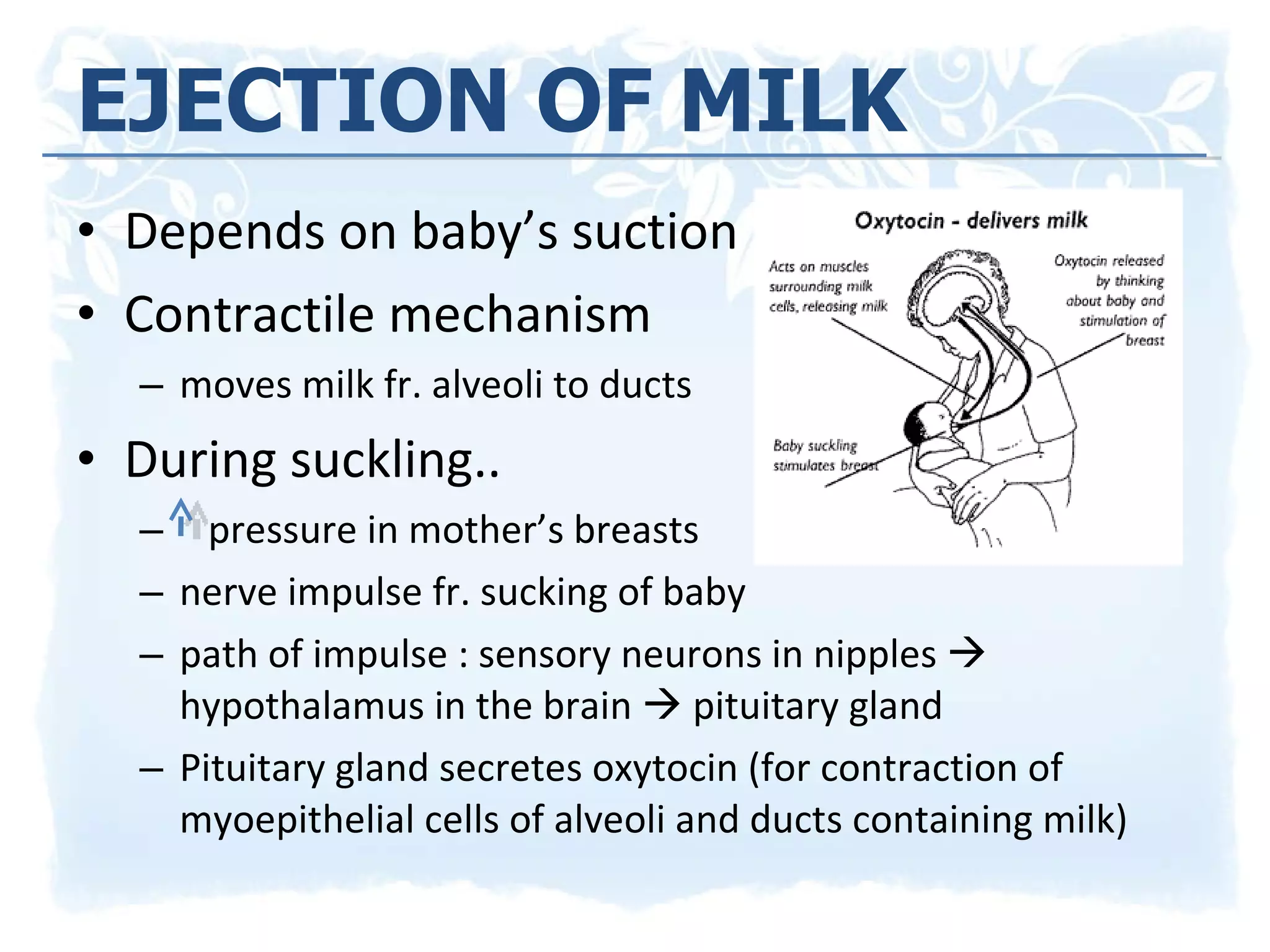
Depends on baby’s suction Contractile mechanism moves milk fr. alveoli to ducts During suckling.. pressure in mother’s breasts nerve impulse fr. sucking of baby path of impulse : sensory neurons in nipples    hypothalamus in the brain    pituitary gland Pituitary gland secretes oxytocin (for contraction of myoepithelial cells of alveoli and ducts containing milk) EJECTION OF MILK
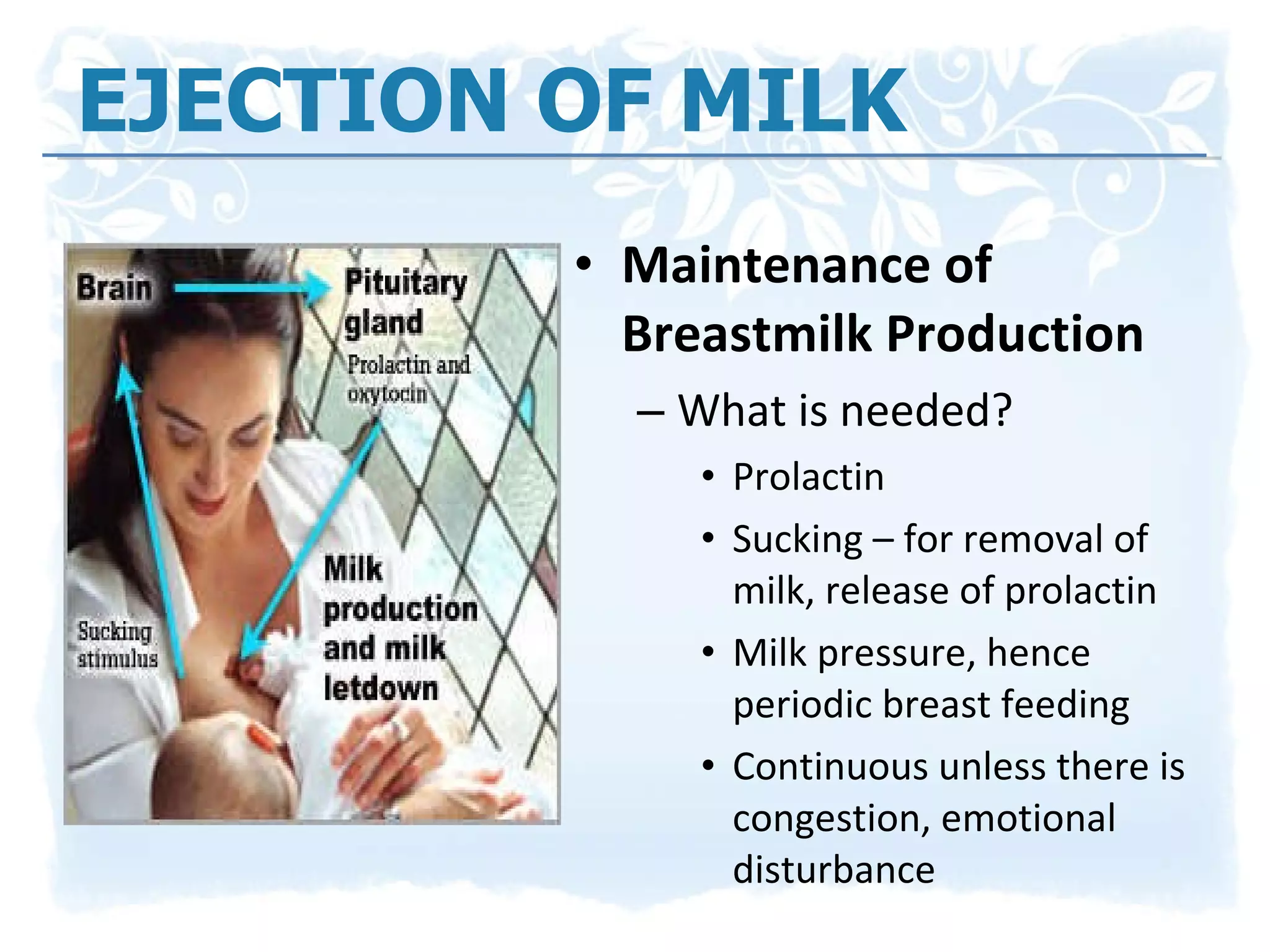
EJECTION OF MILK Maintenance of Breastmilk Production What is needed? Prolactin Sucking – for removal of milk, release of prolactin Milk pressure, hence periodic breast feeding Continuous unless there is congestion, emotional disturbance

Rb3 - Fertilization and Dev't

  • 1.
    FERTILIZATION &DEVELOPMENT
  • 2.
    FERTILIZATION Initiation ofbiological reproduction (through insemination or pollination) Main Functions: Combine haploid sets of chromosomes from male and female  zygote Activate egg cell (Sperm + Egg contact = metabolic reactions)
  • 3.
    ACROSOMAL REACTION Releaseof hydrolytic enzymes to break down coating of the egg Lock and Key Recognition (importance of specificity) Leads to fusion of sperm + egg membranes and entry of a single sperm Present in sea urchins
  • 4.
  • 5.
  • 6.
    FUSION OF MEMBRANESEffect #1: Fast Block to Polyspermy (1/10 th sec) 1. Triggering of electrical response in egg membrane 2. Ion channel gates open 3. Na + changes membrane potential (depolarization)
  • 7.
    Effect #2: CorticalReaction (changes in egg cytoplasm) Production of IP3 Increase of Ca 2+ Fusion of cortical granules with membrane Creation of osmotic gradient (water drawn in) Swelling (pushes outer layer away from membrane) FUSION OF MEMBRANES … and then the outer layer will serve as the FERTILIZATION MEMBRANE. (prevents multiple fertilization)
  • 8.
    CORTICAL REACTION Causesgranules from cortex to be released via exocytosis Enzymes released during this reaction hardens the fertilization membrane ( zona pellucida for humans)  Slow Block to Polyspermy
  • 9.
    SUMMARY OF FERTILIZATIONContact of sperm and egg Acrosomal reaction Fusion of egg and sperm membranes (Entry of only 1 sperm) 4. Fast Block to Polyspermy 5. Cortical Reaction 6. Slow Block to Polyspermy
  • 10.
    PREGNANCY/ GESTATION dividedinto trimesters (“3 months”) 1 st Trimester: conception - Week 14 2 nd Trimester: Week 14 – Week 28 3 rd Trimester: Week 28 – Delivery/Labor/Week 40
  • 11.
    PREGNANCY/ GESTATION FIRSTTRIMESTER Most profound development/rapid period of growth Fetus is most susceptible to damage (disease, alcohol, etc.) 1. Fertilization 2. Cleavage - succession of rapid cell divisions 3. Zygote  Blastomere  Morula  Blastocyst 4. Implantation – attachment of blastocyst to endometrium 5. Start of Differentiation
  • 12.
    6. Embedding ofblastocyst in endometrium 7. Embryo directly gets nutrients from endometrium 8. Forming of placenta from tissues that grow out of embryo 9. Organogenesis Ectoderm- forms outer layer of gastrula Endoderm – lines embryonic digestive tract Mesoderm – fills space between ectoderm + endoderm 10. Secretion of hormones to signal presence and control mother’s reproductive system (ex. HCG) FIRST TRIMESTER Human Chroionic Gonadotropin (HCG) – peptide hormone produced by embryo which keeps progesterone levels up to make uterus lining thick
  • 13.
    SECOND TRIMESTER Growthup to 30cm; Activity may be visible through abdominal wall Hormone levels stabilize as HCG declines. Corpus Luteum / uterine wall deteriorates. Placenta secretes own progesterone to maintain pregnancy. Uterus grows large enough to make pregnancy obvious.
  • 14.
    THIRD TRIMESTER Growthup to 3.5kg in weight and 50cm in length Fetal activity decreases Uterus expansion Displacement of mother’s abdominal organs * Hormones to induce and regulate labor
  • 15.
    HORMONES TOINDUCE AND REGULATE LABOR Highest level of estrogen  formation of oxytocin Oxytocin - stimulates powerful contractions through smooth muscles of the uterus - stimulates placenta to secrete prostaglandins to enhance contraction 3. Positive Feedback : Physical and emotional stress associated with contractions stimulate release of more oxytocin and prostaglandins
  • 16.
    MOMMY & BABY WHY DOESN’T THE MOM’S BODY REJECT THE BABY? Recall: Immune System Self and non-self recognition The baby is considered non-self because it contains half a different set of chromosomes. THE PLACENTA Physical barrier Allows red blood cells & nutrients to pass, but not lymphocytes T cells are restricted
  • 17.
    MOMMY & BABY WHY DOESN’T THE MOM’S BODY REJECT THE BABY? FETUS lymphocytic suppressor cells that inhibit response to interleukin-2 masks fetus from interleukin-2’s detection of foreign objects
  • 18.
    PARTURITION Birth offetus from uterus 3 stages: 1. Dilation 2. Fetal Exposure 3. Umbilical Cord Closure and Placental Exposure
  • 19.
    DILATION Thinned cervixopens up to around 3cm Cervix is integrated in lower part of the uterus and on top of baby’s head Full Dilation: 10 cm Duration varies (4-8 hours)
  • 20.
    FETAL EXPOSURE pressureon cervix, uterine contraction head must pass through narrowest part of pelvis, pubic arch and itroitus = PUSHING burning sensation in labia after birth of fetal head: 1. delivery by extension 2. head points to side 3. rotation to expose shoulders
  • 21.
    UMBILICAL CORD CLOSUREAfter fetal exposure Umbilical cord is cut and would close normally if not clamped
  • 22.
    PLACENTAL EXPOSURE physiologicalseparation done 15 – 30 mins after delivery done with or without assistance (intramuscular injection of oxytocin followed by contraction)
  • 23.
    HORMONES INVOLVED INPARTURITION To make cervix ready: - relaxin, prostaglandin, estrogen b) For uterine contraction: - prostaglandin, progesterone, oxytocin, specific positive feedback in oxytocin
  • 24.
    LACTATION Secretion/formation ofmilk by the mammary glands During pregnancy… remarkable growth in breast size due to the action of estrogen, adrenal steroids, and growth hormones which make ducts and alveoli in breast grow prolactin, progesterone also involved
  • 25.
    START OF SECRETORYACTIVITY in Milk producing unit / alveoli caused by prolactin when estrogen and progesterone are withdrawn from the blood
  • 26.
    Colostrum: alsoknown as the ‘first milk’ of the mother good for baby’s health expected at pregnancy or childbirth milk secretion increases after, usually 3 rd or 4 th day after birth breasts are engorged, tense, tender, feel warm START OF SECRETORY ACTIVITY
  • 27.
    Depends on baby’ssuction Contractile mechanism moves milk fr. alveoli to ducts During suckling.. pressure in mother’s breasts nerve impulse fr. sucking of baby path of impulse : sensory neurons in nipples  hypothalamus in the brain  pituitary gland Pituitary gland secretes oxytocin (for contraction of myoepithelial cells of alveoli and ducts containing milk) EJECTION OF MILK
  • 28.
    EJECTION OF MILKMaintenance of Breastmilk Production What is needed? Prolactin Sucking – for removal of milk, release of prolactin Milk pressure, hence periodic breast feeding Continuous unless there is congestion, emotional disturbance