Ratio analysis is one of the powerful tools of financial
analysis. It refers to the systematic use of ratios to
interpret the financial statements in terms of the
operating performance and financial position of a firm. It
involves comparison for a meaningful interpretation of
the financial statements. Financial statement ratio
analysis focuses on three key aspects of a business:
liquidity, profitability, and solvency.
Types of Ratio
     In view of the needs of various uses of ratios the
     ratios, which can be calculated from the accounting
     data are classified into the following broad categories:

A. Liquidity Ratio
B.     Turnover Ratio
A. LIQUIDITY RATIO

  It measures the ability of the firm to meet its short-term obligations,
  that is capacity of the firm to pay its current liabilities as and when they
  fall due. Thus these ratios reflect the short-term financial solvency of a
  firm. A firm should ensure that it does not suffer from lack of liquidity.
  The failure to meet obligations on due time may result in bad credit
  image, loss of creditors confidence, and even in legal proceedings
  against the firm on the other hand very high degree of liquidity is also
  not desirable since it would imply that funds are idle and earn nothing.
  So therefore it is necessary to strike a proper balance between liquidity
  and lack of liquidity.

   The various ratios that explains about the liquidity of the firm are
1.   Current Ratio
2.   Acid Test Ratio / Quick Ratio
3.   Absolute Liquid Ratio / Cash Ratio
1. CURRENT RATIO

 The current ratio measures the short-term solvency of the firm. It establishes the
 relationship between current assets and current liabilities. It is calculated by dividing
 current assets by current liabilities.

 Current Ratio = Current Asset
                   Current Liabilities

 Current assets include cash and bank balances, marketable securities(short term),
 inventory or stocks, bills receivables, short term investment, sundry debtor, work in
 progress, prepaid expenses etc. Current liabilities includes outstanding expenses or
 accrued expenses, sundry creditors, bills payable, short- term loans, income-tax payable,
 dividends payable, bank overdraft etc.

 Generally current ratio of 2:1 is considered ideal for a concern i.e., current assets should be
 twice of the current liabilities. If the current assets are two times of the current liabilities,
 there will be no adverse effect on business operations when payment of current liabilities is
 made. If the ratio is less than 2, difficulty may be experienced in payment of current
 liabilities and day-to-day operations of the business may suffer. If the ratio is higher than
 2, it is very comfortable for the creditors but, for concern, it is indicator of idle funds and a
 lack of enthusiasm for work.
2. ACID TEST RATIO / QUICK RATIO

 It has been an important indicator of the firm’s liquidity position and is
 used as a complementary ratio to the current ratio. It establishes the
 relationship between quick assets and current liabilities. It is
 calculated by dividing quick assets by the current liabilities.

 Acid Test Ratio = Quick Assets
                     Current liabilities
 Quick assets are those current assets, which can be converted into cash
 immediately or within reasonable short time without a loss of value.
 These include cash and bank balances, sundry debtors, bill’s receivables
 and short-term marketable securities.
 1:1 ratio is considered ideal ratio for a concern because it is wise to keep
 the liquid assets at least equal to the liquid liabilities at all times.
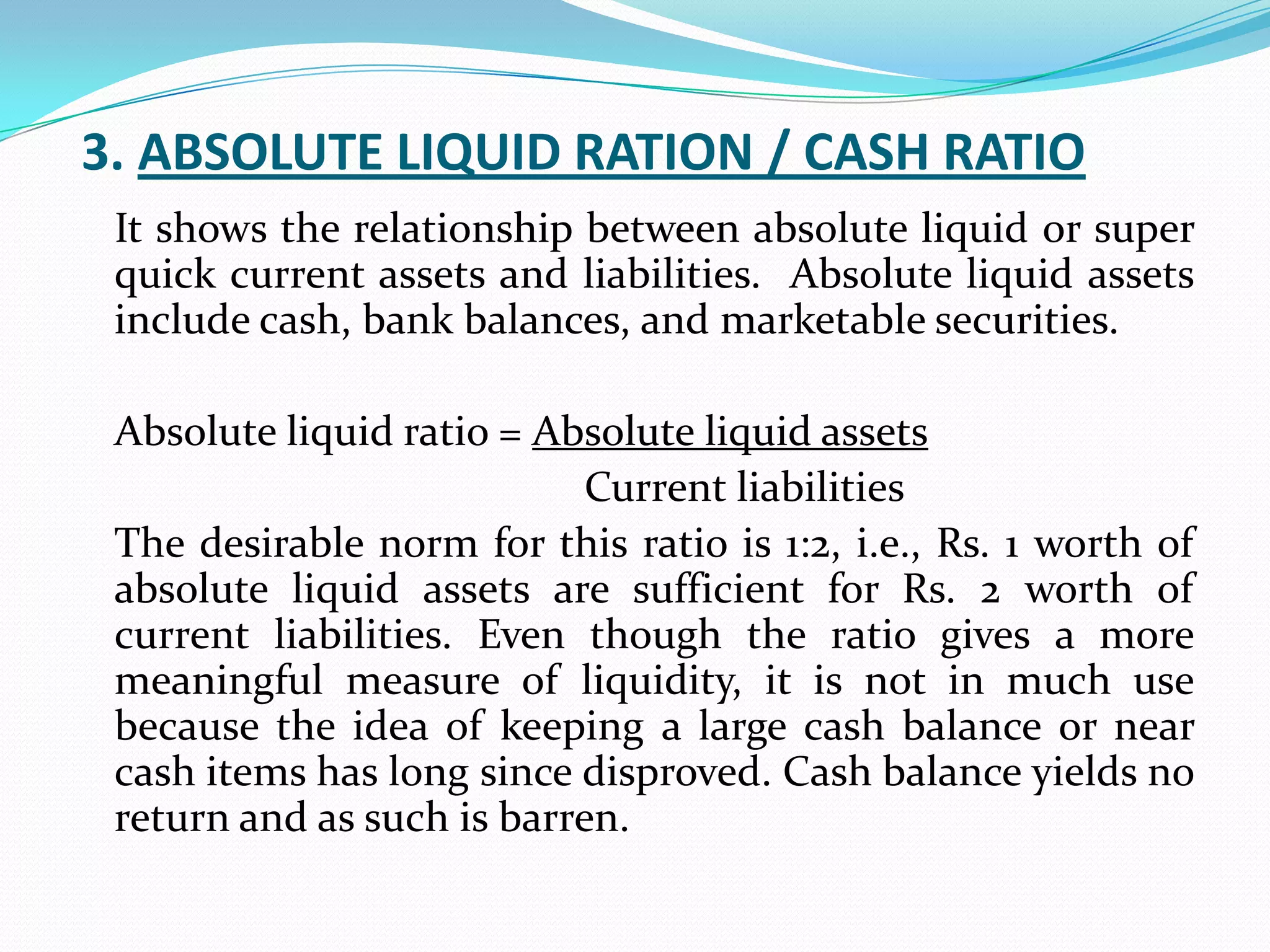
3. ABSOLUTE LIQUID RATION / CASH RATIO
 It shows the relationship between absolute liquid or super
 quick current assets and liabilities. Absolute liquid assets
 include cash, bank balances, and marketable securities.

 Absolute liquid ratio = Absolute liquid assets
                            Current liabilities
 The desirable norm for this ratio is 1:2, i.e., Rs. 1 worth of
 absolute liquid assets are sufficient for Rs. 2 worth of
 current liabilities. Even though the ratio gives a more
 meaningful measure of liquidity, it is not in much use
 because the idea of keeping a large cash balance or near
 cash items has long since disproved. Cash balance yields no
 return and as such is barren.
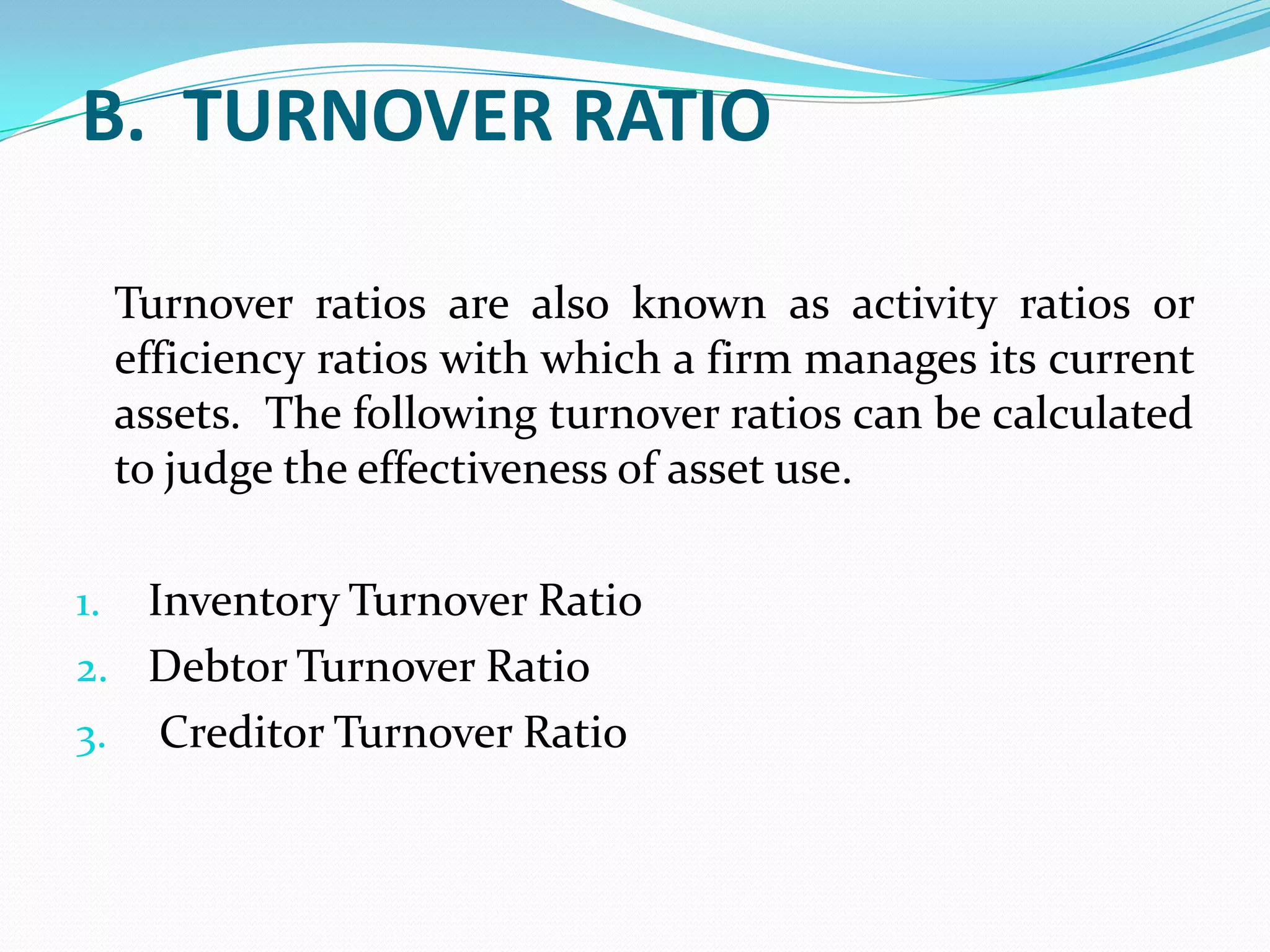
B. TURNOVER RATIO

     Turnover ratios are also known as activity ratios or
     efficiency ratios with which a firm manages its current
     assets. The following turnover ratios can be calculated
     to judge the effectiveness of asset use.

1. Inventory Turnover Ratio
2. Debtor Turnover Ratio
3. Creditor Turnover Ratio
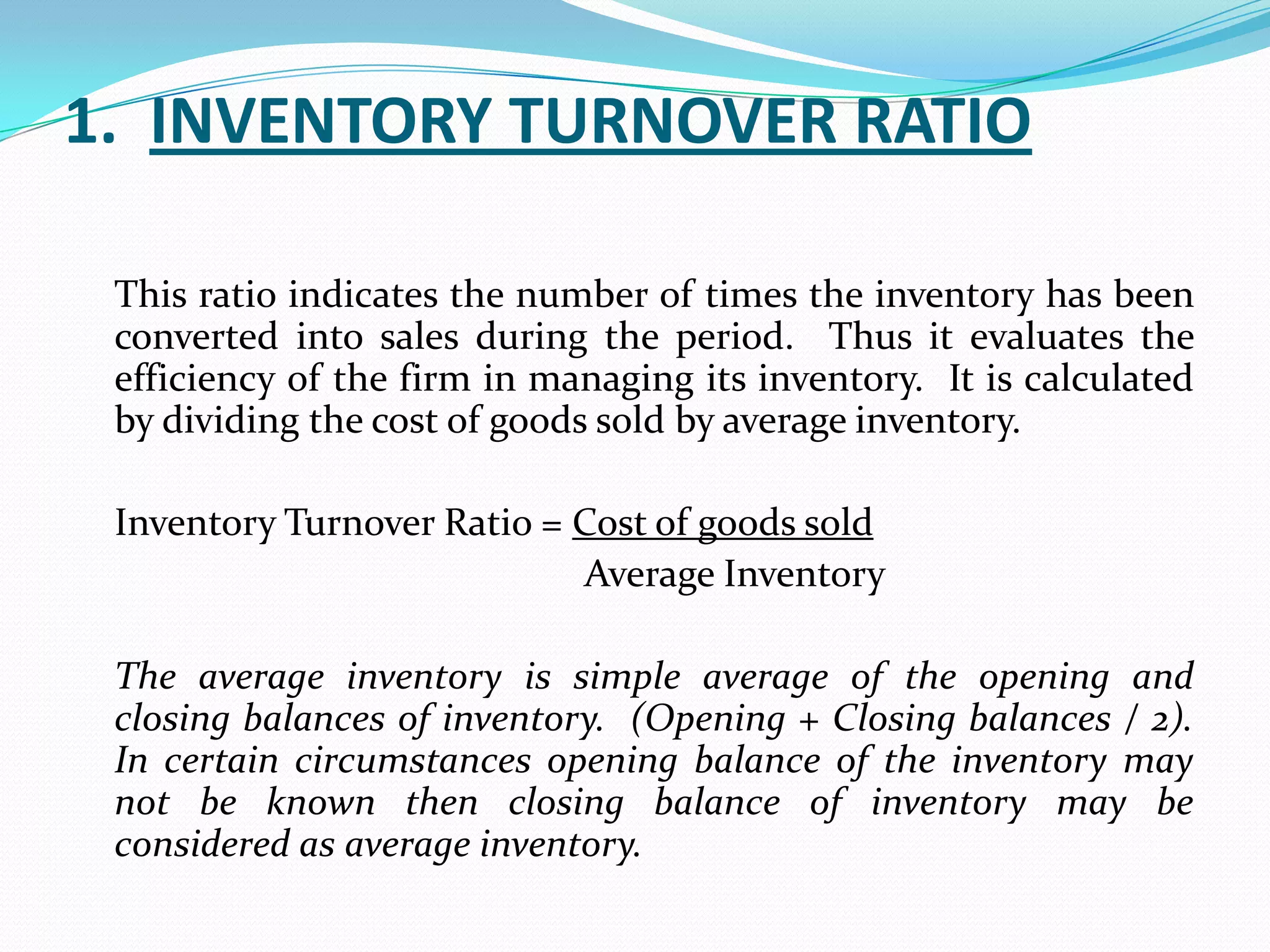
1. INVENTORY TURNOVER RATIO

 This ratio indicates the number of times the inventory has been
 converted into sales during the period. Thus it evaluates the
 efficiency of the firm in managing its inventory. It is calculated
 by dividing the cost of goods sold by average inventory.

 Inventory Turnover Ratio = Cost of goods sold
                            Average Inventory

 The average inventory is simple average of the opening and
 closing balances of inventory. (Opening + Closing balances / 2).
 In certain circumstances opening balance of the inventory may
 not be known then closing balance of inventory may be
 considered as average inventory.
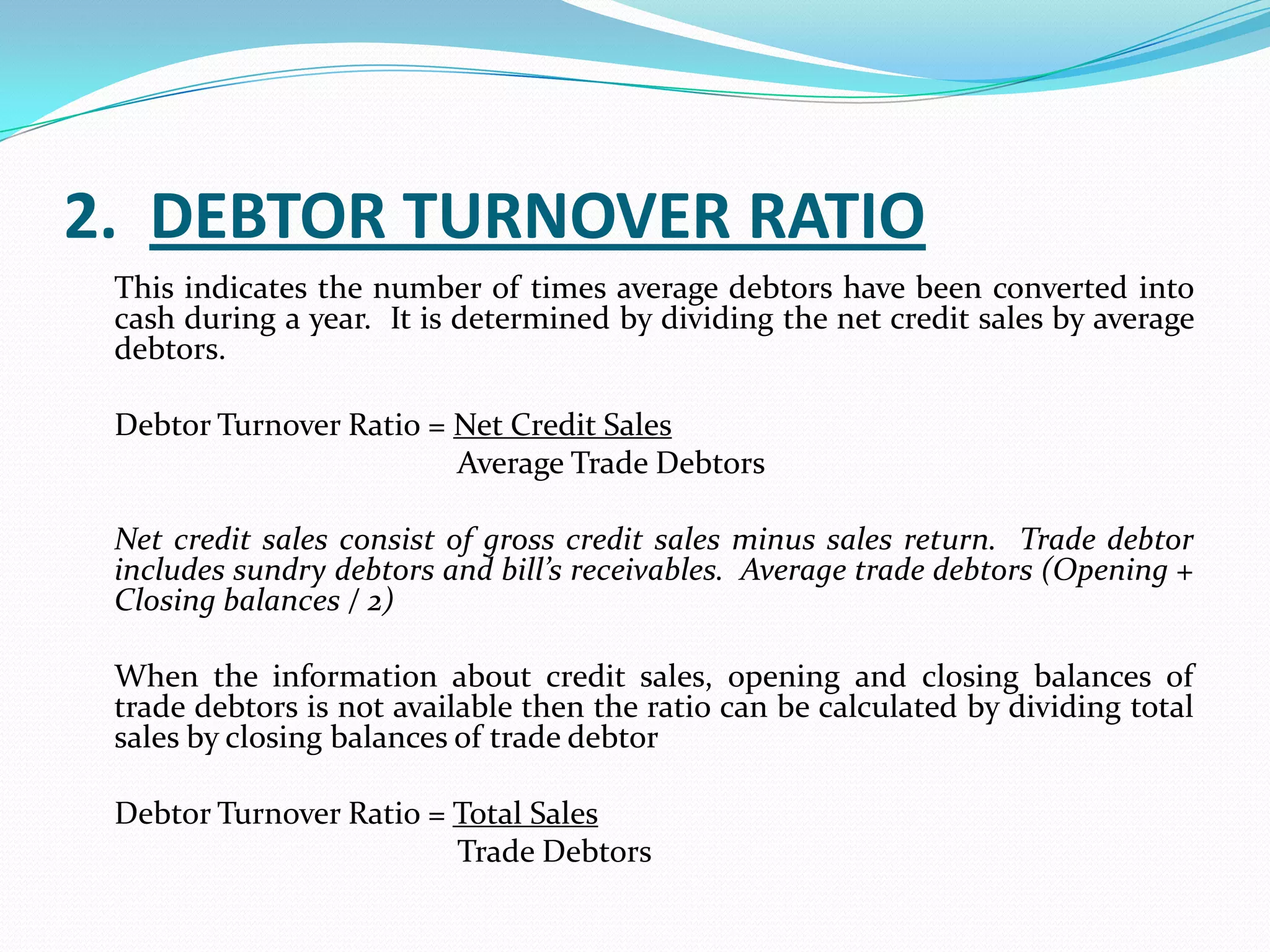
2. DEBTOR TURNOVER RATIO
 This indicates the number of times average debtors have been converted into
 cash during a year. It is determined by dividing the net credit sales by average
 debtors.

 Debtor Turnover Ratio = Net Credit Sales
                         Average Trade Debtors

 Net credit sales consist of gross credit sales minus sales return. Trade debtor
 includes sundry debtors and bill’s receivables. Average trade debtors (Opening +
 Closing balances / 2)

 When the information about credit sales, opening and closing balances of
 trade debtors is not available then the ratio can be calculated by dividing total
 sales by closing balances of trade debtor

 Debtor Turnover Ratio = Total Sales
                         Trade Debtors
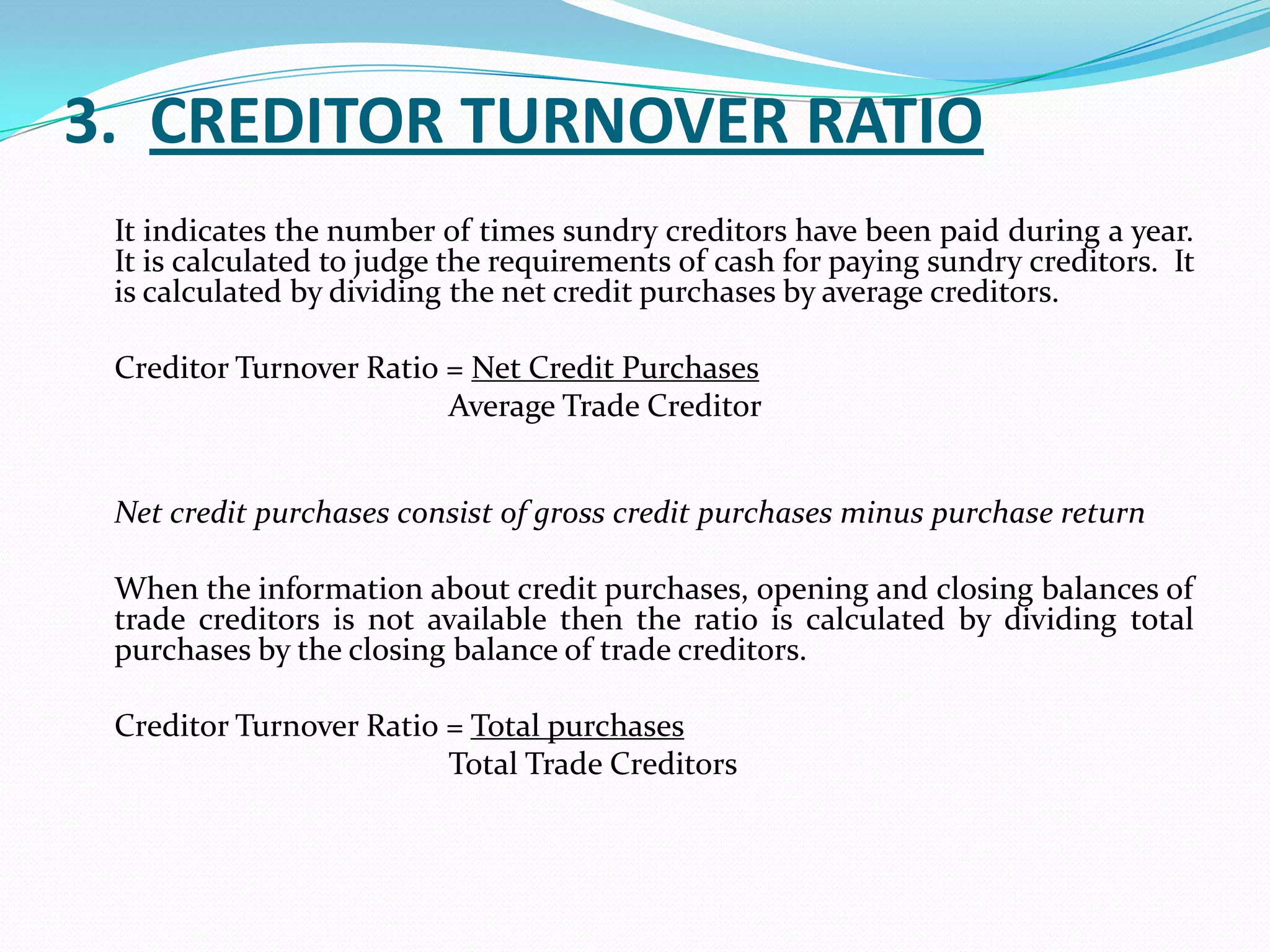
3. CREDITOR TURNOVER RATIO
 It indicates the number of times sundry creditors have been paid during a year.
 It is calculated to judge the requirements of cash for paying sundry creditors. It
 is calculated by dividing the net credit purchases by average creditors.

 Creditor Turnover Ratio = Net Credit Purchases
                         Average Trade Creditor


 Net credit purchases consist of gross credit purchases minus purchase return

 When the information about credit purchases, opening and closing balances of
 trade creditors is not available then the ratio is calculated by dividing total
 purchases by the closing balance of trade creditors.

 Creditor Turnover Ratio = Total purchases
                         Total Trade Creditors

Ratio analysis

  • 1.
    Ratio analysis isone of the powerful tools of financial analysis. It refers to the systematic use of ratios to interpret the financial statements in terms of the operating performance and financial position of a firm. It involves comparison for a meaningful interpretation of the financial statements. Financial statement ratio analysis focuses on three key aspects of a business: liquidity, profitability, and solvency.
  • 2.
    Types of Ratio In view of the needs of various uses of ratios the ratios, which can be calculated from the accounting data are classified into the following broad categories: A. Liquidity Ratio B. Turnover Ratio
  • 3.
    A. LIQUIDITY RATIO It measures the ability of the firm to meet its short-term obligations, that is capacity of the firm to pay its current liabilities as and when they fall due. Thus these ratios reflect the short-term financial solvency of a firm. A firm should ensure that it does not suffer from lack of liquidity. The failure to meet obligations on due time may result in bad credit image, loss of creditors confidence, and even in legal proceedings against the firm on the other hand very high degree of liquidity is also not desirable since it would imply that funds are idle and earn nothing. So therefore it is necessary to strike a proper balance between liquidity and lack of liquidity. The various ratios that explains about the liquidity of the firm are 1. Current Ratio 2. Acid Test Ratio / Quick Ratio 3. Absolute Liquid Ratio / Cash Ratio
  • 4.
    1. CURRENT RATIO The current ratio measures the short-term solvency of the firm. It establishes the relationship between current assets and current liabilities. It is calculated by dividing current assets by current liabilities. Current Ratio = Current Asset Current Liabilities Current assets include cash and bank balances, marketable securities(short term), inventory or stocks, bills receivables, short term investment, sundry debtor, work in progress, prepaid expenses etc. Current liabilities includes outstanding expenses or accrued expenses, sundry creditors, bills payable, short- term loans, income-tax payable, dividends payable, bank overdraft etc. Generally current ratio of 2:1 is considered ideal for a concern i.e., current assets should be twice of the current liabilities. If the current assets are two times of the current liabilities, there will be no adverse effect on business operations when payment of current liabilities is made. If the ratio is less than 2, difficulty may be experienced in payment of current liabilities and day-to-day operations of the business may suffer. If the ratio is higher than 2, it is very comfortable for the creditors but, for concern, it is indicator of idle funds and a lack of enthusiasm for work.
  • 5.
    2. ACID TESTRATIO / QUICK RATIO It has been an important indicator of the firm’s liquidity position and is used as a complementary ratio to the current ratio. It establishes the relationship between quick assets and current liabilities. It is calculated by dividing quick assets by the current liabilities. Acid Test Ratio = Quick Assets Current liabilities Quick assets are those current assets, which can be converted into cash immediately or within reasonable short time without a loss of value. These include cash and bank balances, sundry debtors, bill’s receivables and short-term marketable securities. 1:1 ratio is considered ideal ratio for a concern because it is wise to keep the liquid assets at least equal to the liquid liabilities at all times.
  • 6.
    3. ABSOLUTE LIQUIDRATION / CASH RATIO It shows the relationship between absolute liquid or super quick current assets and liabilities. Absolute liquid assets include cash, bank balances, and marketable securities. Absolute liquid ratio = Absolute liquid assets Current liabilities The desirable norm for this ratio is 1:2, i.e., Rs. 1 worth of absolute liquid assets are sufficient for Rs. 2 worth of current liabilities. Even though the ratio gives a more meaningful measure of liquidity, it is not in much use because the idea of keeping a large cash balance or near cash items has long since disproved. Cash balance yields no return and as such is barren.
  • 7.
    B. TURNOVER RATIO Turnover ratios are also known as activity ratios or efficiency ratios with which a firm manages its current assets. The following turnover ratios can be calculated to judge the effectiveness of asset use. 1. Inventory Turnover Ratio 2. Debtor Turnover Ratio 3. Creditor Turnover Ratio
  • 8.
    1. INVENTORY TURNOVERRATIO This ratio indicates the number of times the inventory has been converted into sales during the period. Thus it evaluates the efficiency of the firm in managing its inventory. It is calculated by dividing the cost of goods sold by average inventory. Inventory Turnover Ratio = Cost of goods sold Average Inventory The average inventory is simple average of the opening and closing balances of inventory. (Opening + Closing balances / 2). In certain circumstances opening balance of the inventory may not be known then closing balance of inventory may be considered as average inventory.
  • 9.
    2. DEBTOR TURNOVERRATIO This indicates the number of times average debtors have been converted into cash during a year. It is determined by dividing the net credit sales by average debtors. Debtor Turnover Ratio = Net Credit Sales Average Trade Debtors Net credit sales consist of gross credit sales minus sales return. Trade debtor includes sundry debtors and bill’s receivables. Average trade debtors (Opening + Closing balances / 2) When the information about credit sales, opening and closing balances of trade debtors is not available then the ratio can be calculated by dividing total sales by closing balances of trade debtor Debtor Turnover Ratio = Total Sales Trade Debtors
  • 10.
    3. CREDITOR TURNOVERRATIO It indicates the number of times sundry creditors have been paid during a year. It is calculated to judge the requirements of cash for paying sundry creditors. It is calculated by dividing the net credit purchases by average creditors. Creditor Turnover Ratio = Net Credit Purchases Average Trade Creditor Net credit purchases consist of gross credit purchases minus purchase return When the information about credit purchases, opening and closing balances of trade creditors is not available then the ratio is calculated by dividing total purchases by the closing balance of trade creditors. Creditor Turnover Ratio = Total purchases Total Trade Creditors