RATE CONTROLLED DRUG DELIVERY
SYSTEM
 Presented by-
 Miss Khade S.B
 M.Pharm-1 [pharmaceutics department]
 RCP , Kasegaon
10/09/2019 1Rate controlled DDS
Content-
Introduction
Need of rate controlled DDS
Advantages
Disadvantages
Classification
Mechanism CDDS
Activation modulated drug delivery system
 Effect of system parameters on controlled DDS
Applications of Rate controlled DDS
10/09/2019 2Rate controlled DDS
Introduction
“The term controlled release may be defined as a
technique or approach by which the drug is
delivered at predetermined rate , for locally or
systemically for a specified period of time”
 controlled delivery of drug or protein and
bioactive agent can be achieved by incorporating
them either in dissolved or dispersed form in
polymer.
Follow “ZERO ORDER DRUG RELEASE”
Rapidly attained required plasma concentration
and maintained for the entire period of treatment.
10/09/2019 3Rate controlled DDS
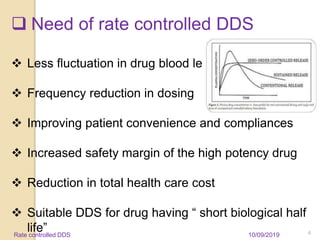
 Need of rate controlled DDS
 Less fluctuation in drug blood level
 Frequency reduction in dosing
 Improving patient convenience and compliances
 Increased safety margin of the high potency drug
 Reduction in total health care cost
 Suitable DDS for drug having “ short biological half
life” 10/09/2019 4Rate controlled DDS
 Disadvantages
 Dose dumping
 Decreased systemic availability in comparision to
immediate release conventional dosage form
Poor in vivo- in vitro correlation
Possibility of dose dumping
Difficult to optimize the accurate dose and dosing
interval
Patient variability affects release rate i.e GI emptying
rate, fasting or non fasting condition
10/09/2019 5Rate controlled DDS
Controlled Release system[Mechanism]
Controlled
release system
Dissolution
controlled
Diffusion
controlled
Chemically
controlled
Ion –
exchange
resin Hydrogel
Water
penetration
controlled
Diffusion
and
dissolution
Matrix
Encapsulation
Matrix
Reservoir
Reservoir
and
monolithic
Osmotic
pressure
controlled
system
10/09/2019 6Rate controlled DDS
 Classification
Based on their technical sophistication
1. Rate preprogrammed drug delivery system
2. Activation modulated drug delivery system
3. Feedback regulated drug delivery system
4. Site targeting drug delivery system
10/09/2019 7Rate controlled DDS
 RATE PREPROGRAMMED DDS
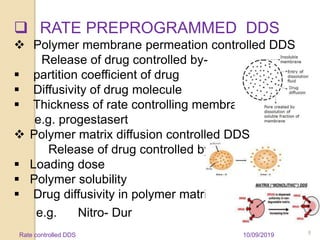
 Polymer membrane permeation controlled DDS
Release of drug controlled by-
 partition coefficient of drug
 Diffusivity of drug molecule
 Thickness of rate controlling membrane
e.g. progestasert
 Polymer matrix diffusion controlled DDS
Release of drug controlled by-
 Loading dose
 Polymer solubility
 Drug diffusivity in polymer matrix
e.g. Nitro- Dur
10/09/2019 8Rate controlled DDS
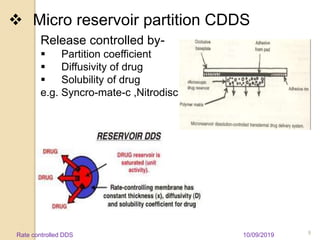
 Micro reservoir partition CDDS
Release controlled by-
 Partition coefficient
 Diffusivity of drug
 Solubility of drug
e.g. Syncro-mate-c ,Nitrodisc
10/09/2019 9Rate controlled DDS
 Activation modulated DDS
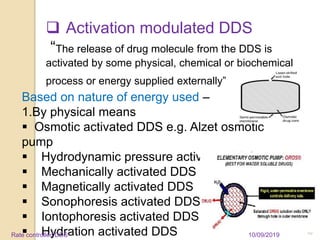
“The release of drug molecule from the DDS is
activated by some physical, chemical or biochemical
process or energy supplied externally”
Based on nature of energy used –
1.By physical means
 Osmotic activated DDS e.g. Alzet osmotic
pump
 Hydrodynamic pressure activated DDS
 Mechanically activated DDS
 Magnetically activated DDS
 Sonophoresis activated DDS
 Iontophoresis activated DDS
 Hydration activated DDS 10/09/2019 10Rate controlled DDS
2.Chemical means
 pH activated DDS e.g. Salts of citric acid ,
cellulose derivatives
 Ion activated DDS
 Hydrolysis activated DDS
3.Biochemical means
 Enzyme activated DDS
 Biochemical activated DDS
10/09/2019 11Rate controlled DDS
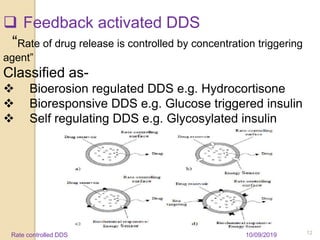
 Feedback activated DDS
“Rate of drug release is controlled by concentration triggering
agent”
Classified as-
 Bioerosion regulated DDS e.g. Hydrocortisone
 Bioresponsive DDS e.g. Glucose triggered insulin
 Self regulating DDS e.g. Glycosylated insulin
10/09/2019 12Rate controlled DDS
 Effect of system parameters-
 Physiological properties
 Polymer solubility
 solution solubility
 Partition coefficient
 Polymer diffusivity
 Solution diffusivity
 Thickness of polymer diffusional path
 Thickness of hydrodynamic diffusional layer
 Molecular size [400 Dalton] ,Drug pKa
 Drug stability , Protein binding
 Biological factors-Absorption ,Half life[2-3hrs]
Dose size, Therapeutic and Absorption window,
patient physiology
10/09/2019 13Rate controlled DDS
 Applications of CDDS
 Adsorbent of toxin
 As Antacids
 As Bile Acid binding agent
 In treatment of Liver diseases
 In Renal insufficiency
 In Ophthalmology for glaucoma
Therapeutic application
1.Cholestyramine –Reduction of elevated serum
cholesterol level in patients with hypercholesterolemia
2. Sod. Polystrene –Sulphonic cation exchange resin
used in treatment of renal failure
10/09/2019 14Rate controlled DDS
10/09/2019 Rate controlled DDS 15
Conclusion
A suitably deliberate controlled release drug delivery
system can be significant progress towards solving problems
regarding the targeting of the drug a particular organ or
tissue and controlling the rate of drug delivery to the target
site . Controlled release stuff provide an advantage over
conventional quality from by optimizing bio- pharmaceutics
pharmacokinetics and pharmacodynamics properties of
medicinal product
With improved understanding of controlled release
mechanism and improved development of technologies, it
may possible to design an appropriate method for efficient
drug delivery system at particular site
10/09/2019Rate controlled DDS 16

Rate controlled drug delivery system

  • 1.
    RATE CONTROLLED DRUGDELIVERY SYSTEM  Presented by-  Miss Khade S.B  M.Pharm-1 [pharmaceutics department]  RCP , Kasegaon 10/09/2019 1Rate controlled DDS
  • 2.
    Content- Introduction Need of ratecontrolled DDS Advantages Disadvantages Classification Mechanism CDDS Activation modulated drug delivery system  Effect of system parameters on controlled DDS Applications of Rate controlled DDS 10/09/2019 2Rate controlled DDS
  • 3.
    Introduction “The term controlledrelease may be defined as a technique or approach by which the drug is delivered at predetermined rate , for locally or systemically for a specified period of time”  controlled delivery of drug or protein and bioactive agent can be achieved by incorporating them either in dissolved or dispersed form in polymer. Follow “ZERO ORDER DRUG RELEASE” Rapidly attained required plasma concentration and maintained for the entire period of treatment. 10/09/2019 3Rate controlled DDS
  • 4.
     Need ofrate controlled DDS  Less fluctuation in drug blood level  Frequency reduction in dosing  Improving patient convenience and compliances  Increased safety margin of the high potency drug  Reduction in total health care cost  Suitable DDS for drug having “ short biological half life” 10/09/2019 4Rate controlled DDS
  • 5.
     Disadvantages  Dosedumping  Decreased systemic availability in comparision to immediate release conventional dosage form Poor in vivo- in vitro correlation Possibility of dose dumping Difficult to optimize the accurate dose and dosing interval Patient variability affects release rate i.e GI emptying rate, fasting or non fasting condition 10/09/2019 5Rate controlled DDS
  • 6.
    Controlled Release system[Mechanism] Controlled releasesystem Dissolution controlled Diffusion controlled Chemically controlled Ion – exchange resin Hydrogel Water penetration controlled Diffusion and dissolution Matrix Encapsulation Matrix Reservoir Reservoir and monolithic Osmotic pressure controlled system 10/09/2019 6Rate controlled DDS
  • 7.
     Classification Based ontheir technical sophistication 1. Rate preprogrammed drug delivery system 2. Activation modulated drug delivery system 3. Feedback regulated drug delivery system 4. Site targeting drug delivery system 10/09/2019 7Rate controlled DDS
  • 8.
     RATE PREPROGRAMMEDDDS  Polymer membrane permeation controlled DDS Release of drug controlled by-  partition coefficient of drug  Diffusivity of drug molecule  Thickness of rate controlling membrane e.g. progestasert  Polymer matrix diffusion controlled DDS Release of drug controlled by-  Loading dose  Polymer solubility  Drug diffusivity in polymer matrix e.g. Nitro- Dur 10/09/2019 8Rate controlled DDS
  • 9.
     Micro reservoirpartition CDDS Release controlled by-  Partition coefficient  Diffusivity of drug  Solubility of drug e.g. Syncro-mate-c ,Nitrodisc 10/09/2019 9Rate controlled DDS
  • 10.
     Activation modulatedDDS “The release of drug molecule from the DDS is activated by some physical, chemical or biochemical process or energy supplied externally” Based on nature of energy used – 1.By physical means  Osmotic activated DDS e.g. Alzet osmotic pump  Hydrodynamic pressure activated DDS  Mechanically activated DDS  Magnetically activated DDS  Sonophoresis activated DDS  Iontophoresis activated DDS  Hydration activated DDS 10/09/2019 10Rate controlled DDS
  • 11.
    2.Chemical means  pHactivated DDS e.g. Salts of citric acid , cellulose derivatives  Ion activated DDS  Hydrolysis activated DDS 3.Biochemical means  Enzyme activated DDS  Biochemical activated DDS 10/09/2019 11Rate controlled DDS
  • 12.
     Feedback activatedDDS “Rate of drug release is controlled by concentration triggering agent” Classified as-  Bioerosion regulated DDS e.g. Hydrocortisone  Bioresponsive DDS e.g. Glucose triggered insulin  Self regulating DDS e.g. Glycosylated insulin 10/09/2019 12Rate controlled DDS
  • 13.
     Effect ofsystem parameters-  Physiological properties  Polymer solubility  solution solubility  Partition coefficient  Polymer diffusivity  Solution diffusivity  Thickness of polymer diffusional path  Thickness of hydrodynamic diffusional layer  Molecular size [400 Dalton] ,Drug pKa  Drug stability , Protein binding  Biological factors-Absorption ,Half life[2-3hrs] Dose size, Therapeutic and Absorption window, patient physiology 10/09/2019 13Rate controlled DDS
  • 14.
     Applications ofCDDS  Adsorbent of toxin  As Antacids  As Bile Acid binding agent  In treatment of Liver diseases  In Renal insufficiency  In Ophthalmology for glaucoma Therapeutic application 1.Cholestyramine –Reduction of elevated serum cholesterol level in patients with hypercholesterolemia 2. Sod. Polystrene –Sulphonic cation exchange resin used in treatment of renal failure 10/09/2019 14Rate controlled DDS
  • 15.
    10/09/2019 Rate controlledDDS 15 Conclusion A suitably deliberate controlled release drug delivery system can be significant progress towards solving problems regarding the targeting of the drug a particular organ or tissue and controlling the rate of drug delivery to the target site . Controlled release stuff provide an advantage over conventional quality from by optimizing bio- pharmaceutics pharmacokinetics and pharmacodynamics properties of medicinal product With improved understanding of controlled release mechanism and improved development of technologies, it may possible to design an appropriate method for efficient drug delivery system at particular site
  • 16.