Rancidity
• Rancidity is a term generally used to denote
unpleasant odours and flavours in foods
resulting from deterioration in the fat or oil
portion of a food.
• There are two basic types or causes of
rancidity that cause and/or contribute to the
degradation of stored edible oils: oxidative
and hydrolytic
Rancidification
Types
•Oxidative Rancidity
•Hydrolytic Rancidity
a.Enzymatic Rancidity
b.Microbial rancidity
Oxidative rancidity
Autoxidation, occurs
when oxygen is absorbed
from the environment
Oxidation of fat
• Oil oxidation is an undesirable series of
chemical reactions involving oxygen that
degrades the quality of an oil.
• Oxidation eventually produces rancidity in oil,
with accompanying off flavours, foul-tasting
and horrible smells.
• All oil is in a state of oxidation - you cannot
stop it completely - but there are ways to
reduce it.
Oxidation of fat
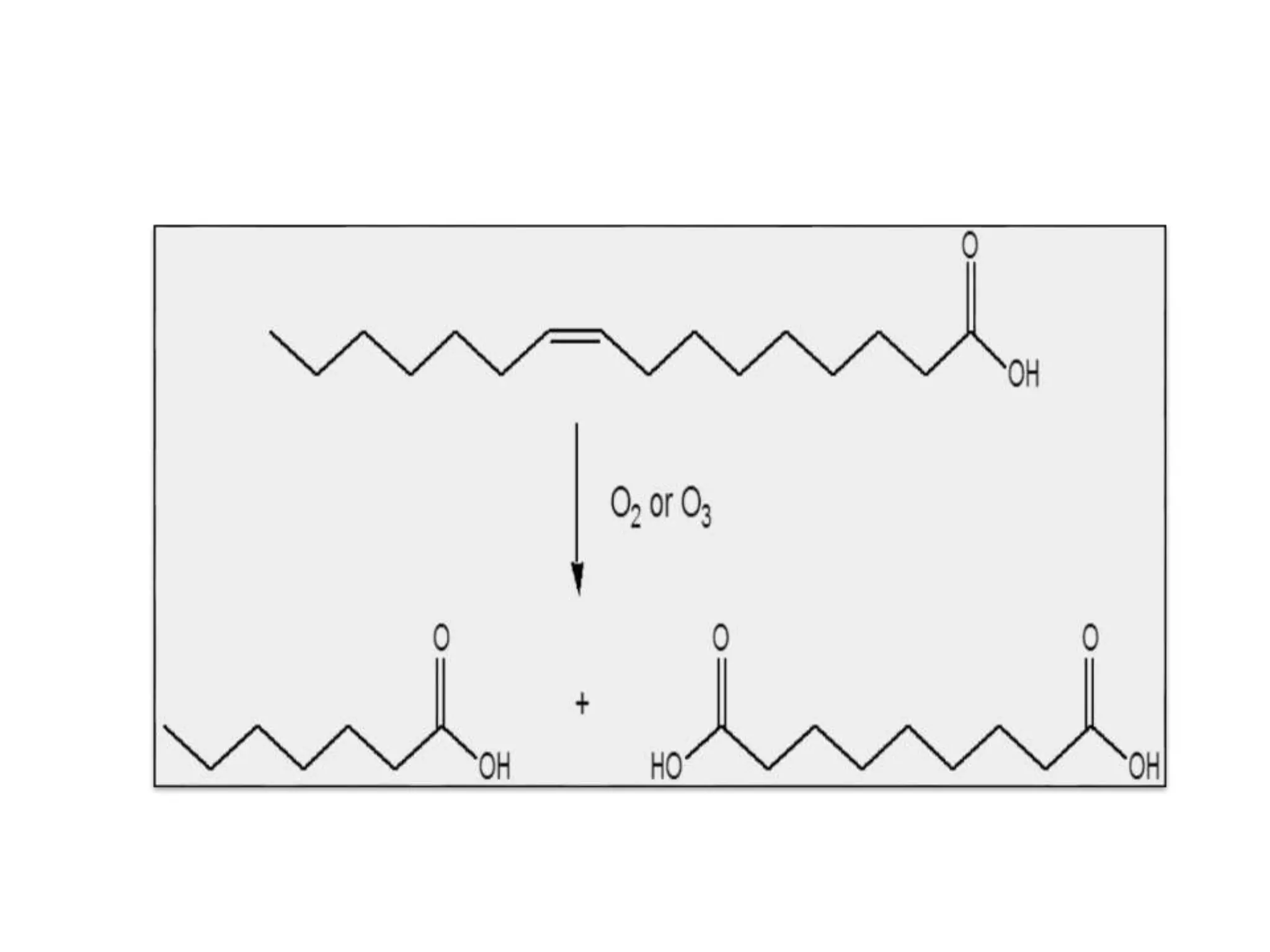
• Oxidation of fatty acid alkenes involves
cleavage of the double bonds to form short-
chain carboxylic acids.
• When oil oxidises it produces a series of
breakdown products in stages, starting with
primary oxidation products (peroxides, dienes,
free fatty acids), then secondary products
(carbonyls, aldehydes, trienes) and finally
tertiary products.
Auto-oxidation
The process of oxidation induced by air at room
temperature referred to as “autoxidation”.
Oxidation progresses at different rates depending
on factors such as
• Temperature,
• Light,
• Availability of oxygen,
• Presence of moisture and metals (such as iron) .
Auto-oxidation
Ordinarily, this is a slow process which occurs
only to a limited degree.
However, factors such as the presence of light
can increase the rate of oxidation.
Metals, such as copper or iron, present at low
levels in fats and oils can also promote
autoxidation.
Prevent oxidation
Several different factors can be controlled to reduce the
amount of oxidation that occurs in your oil.
• Temperature - the number one contributing factor of
oxidation in oil. If possible reduce the temperature to
the lowest possible throughout processing, shipping
and manufacture.
• Oxygen exposure (in the air) will be a catalyst for
production of free radicals. To reduce oxidation, seal all
containers with the smallest possible headspace,
reduce the area of the oil in contact with air and/or
cover the oil with an inert gas (like nitrogen) at all
possible points.
Prevent oxidation
• Light (UV) can trigger the oxidative
degenerative cascade. Reduce the exposure of
the oil to direct light by using brown
glass/plastic containers or black plastic bags.
• Moisture in combination with these other
factors can accelerate oxidation. If possible
limit the amount of water in the oil to less
than 0.2%.
Prevent oxidation
• Transition metals, in particular transition metals
like iron and copper, can act as pro-oxidants.
• Fats and oils are normally treated with chelating
agents such as citric acid to complex these trace
metals (thus inactivating their prooxidant effect).
• If possible, you may need to change equipment
(e.g. no brass valves),
• limit time in contact with and/or
• remove transition metals from the oil to reduce
oxidation.
Antioxidants
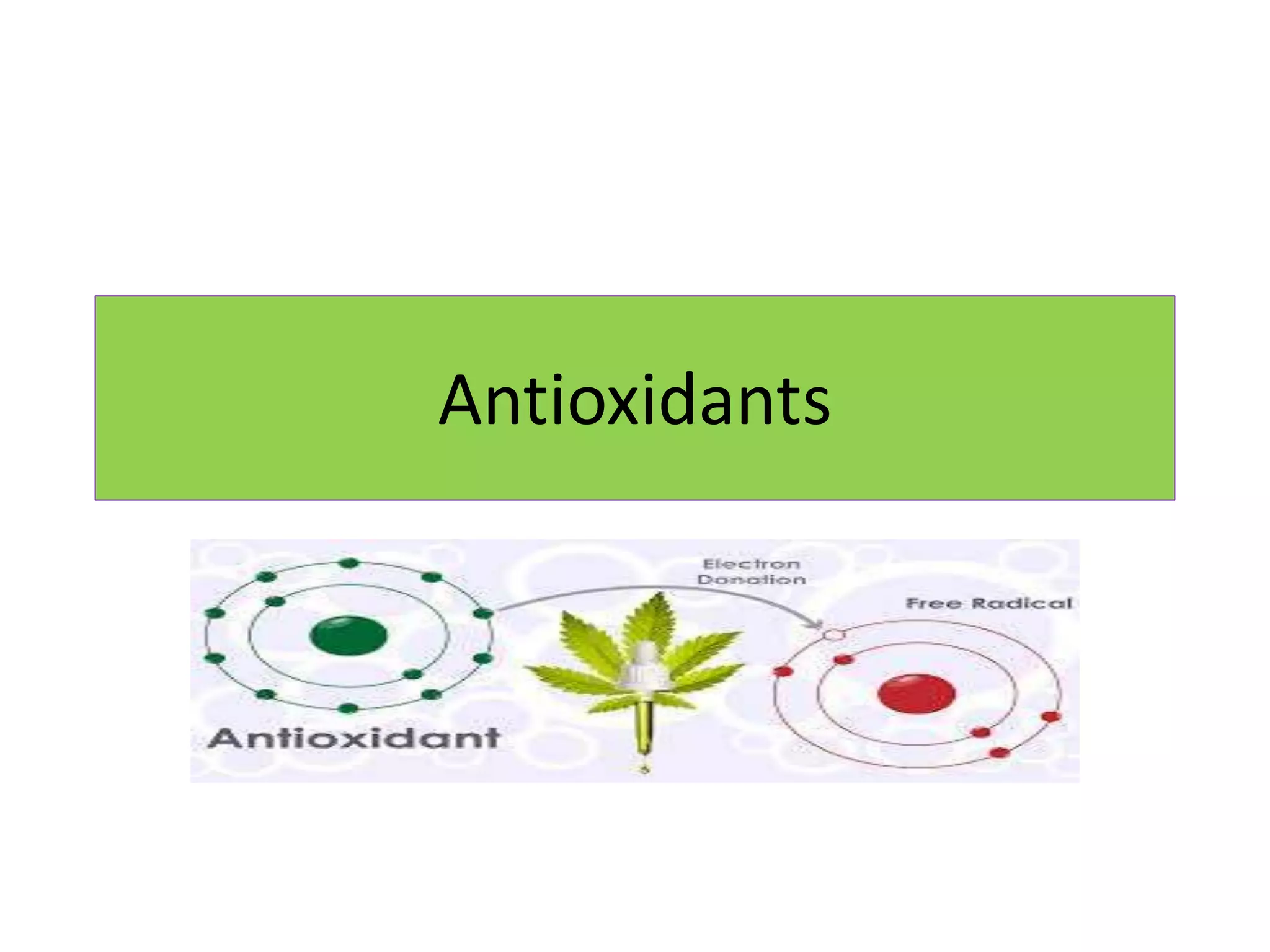
Antioxidants (AOX)
• Antioxidants (AOX) terminate the oxidation
chain reactions and inhibit other oxidation
reactions by being oxidised themselves. AOX
do not stop oxidation, but do slow down the
rate at which oxidation occurs.
• There are many different ways AOX can
reduce oxidation, so it is important to choose
the right AOX for your application/product.
• AOX can be synthetic or extracted from
natural plant sources.
Common AOX are:
• Tocopherols (vitamin E)
• Carotenoids β-carotene
• Phospholipids
• Retinol (vitamin A)
Synthetic Antioxidant
• BHT- butylated hydroxytoluene
• BHA - butylated hydroxyanisole
• TBHQ - tert-Butylhydroquinone
• Propyl gallate
• Ethoxyquin
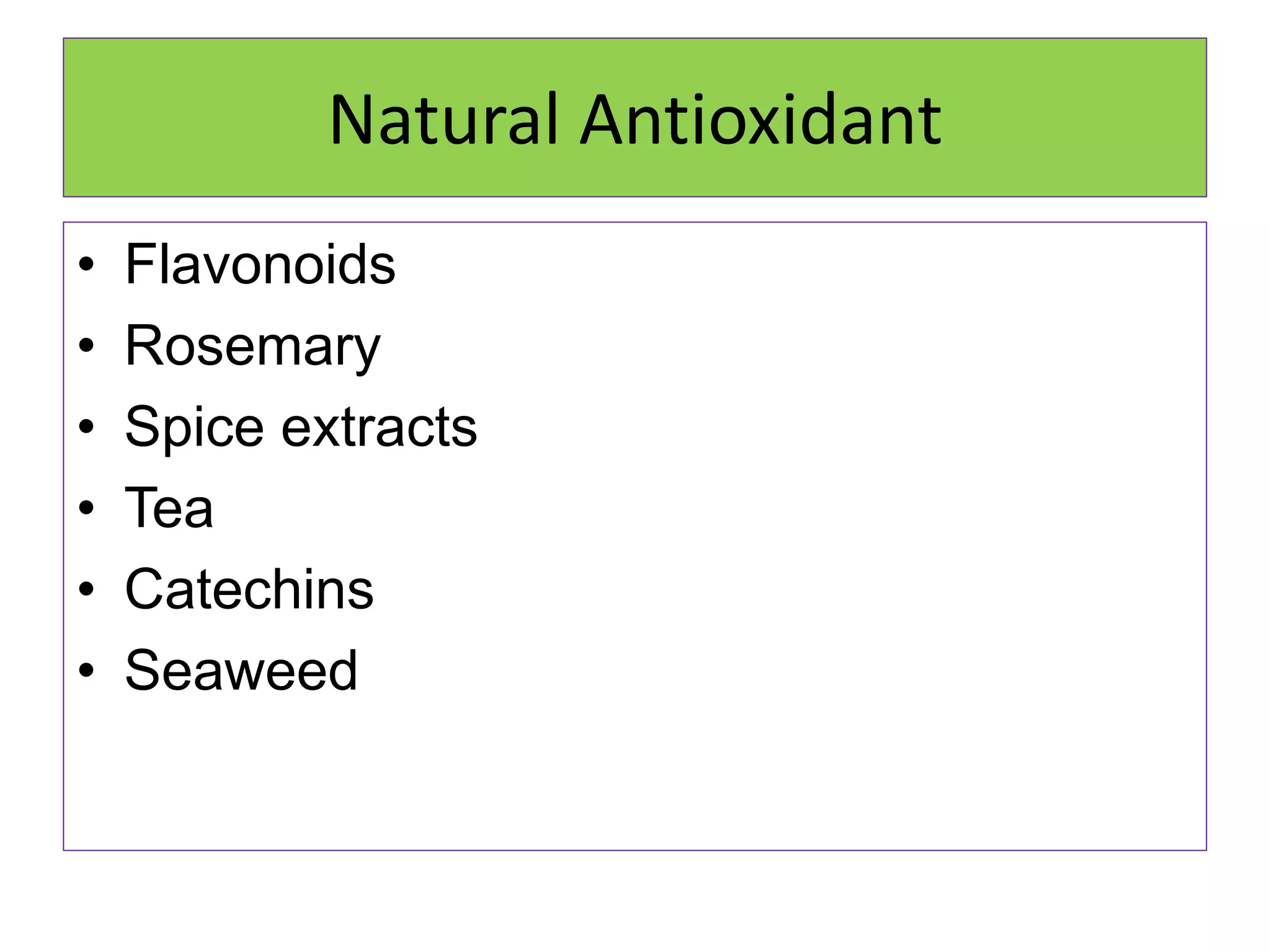
Natural Antioxidant
• Flavonoids
• Rosemary
• Spice extracts
• Tea
• Catechins
• Seaweed
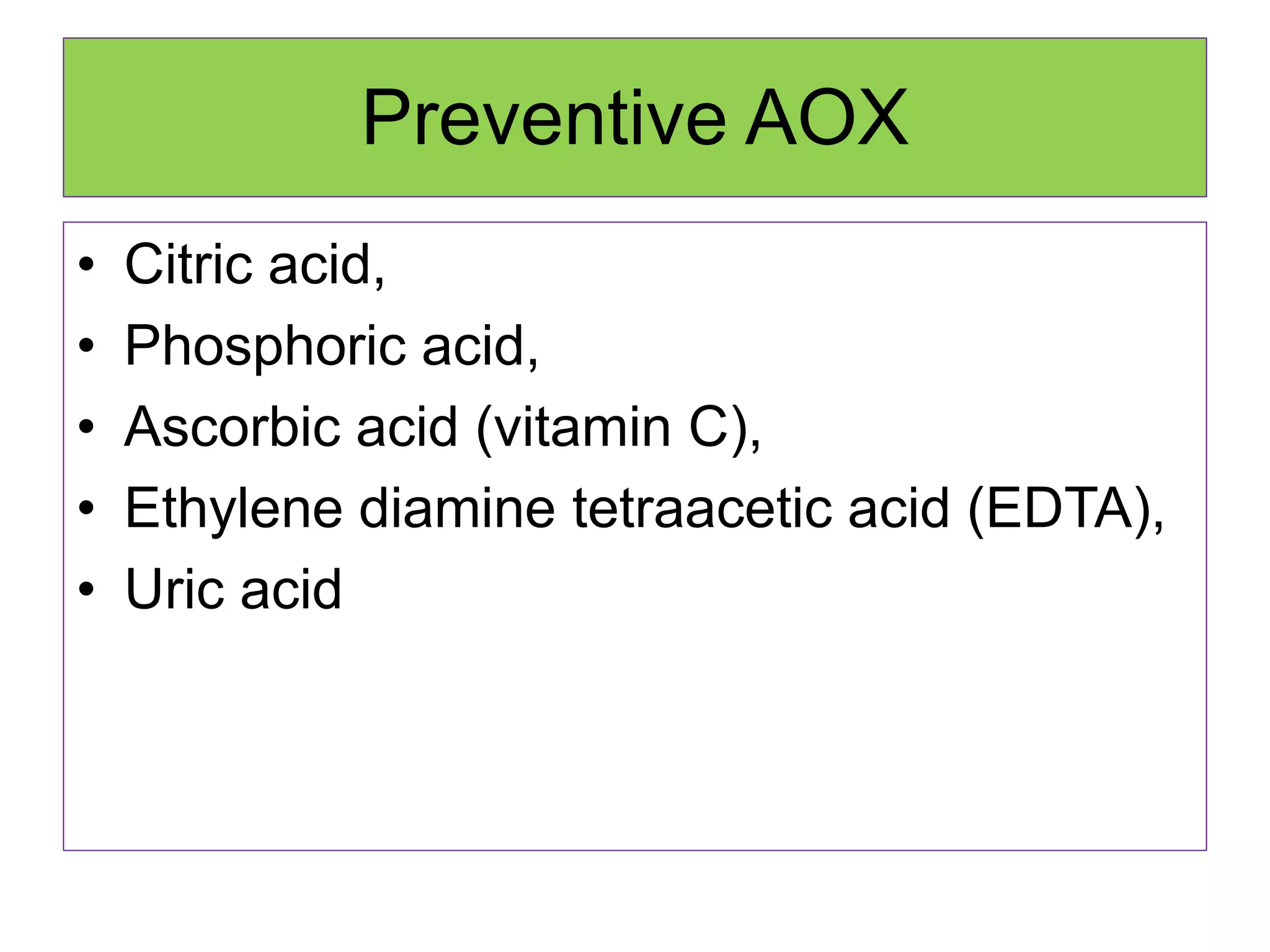
Preventive AOX
• Citric acid,
• Phosphoric acid,
• Ascorbic acid (vitamin C),
• Ethylene diamine tetraacetic acid (EDTA),
• Uric acid
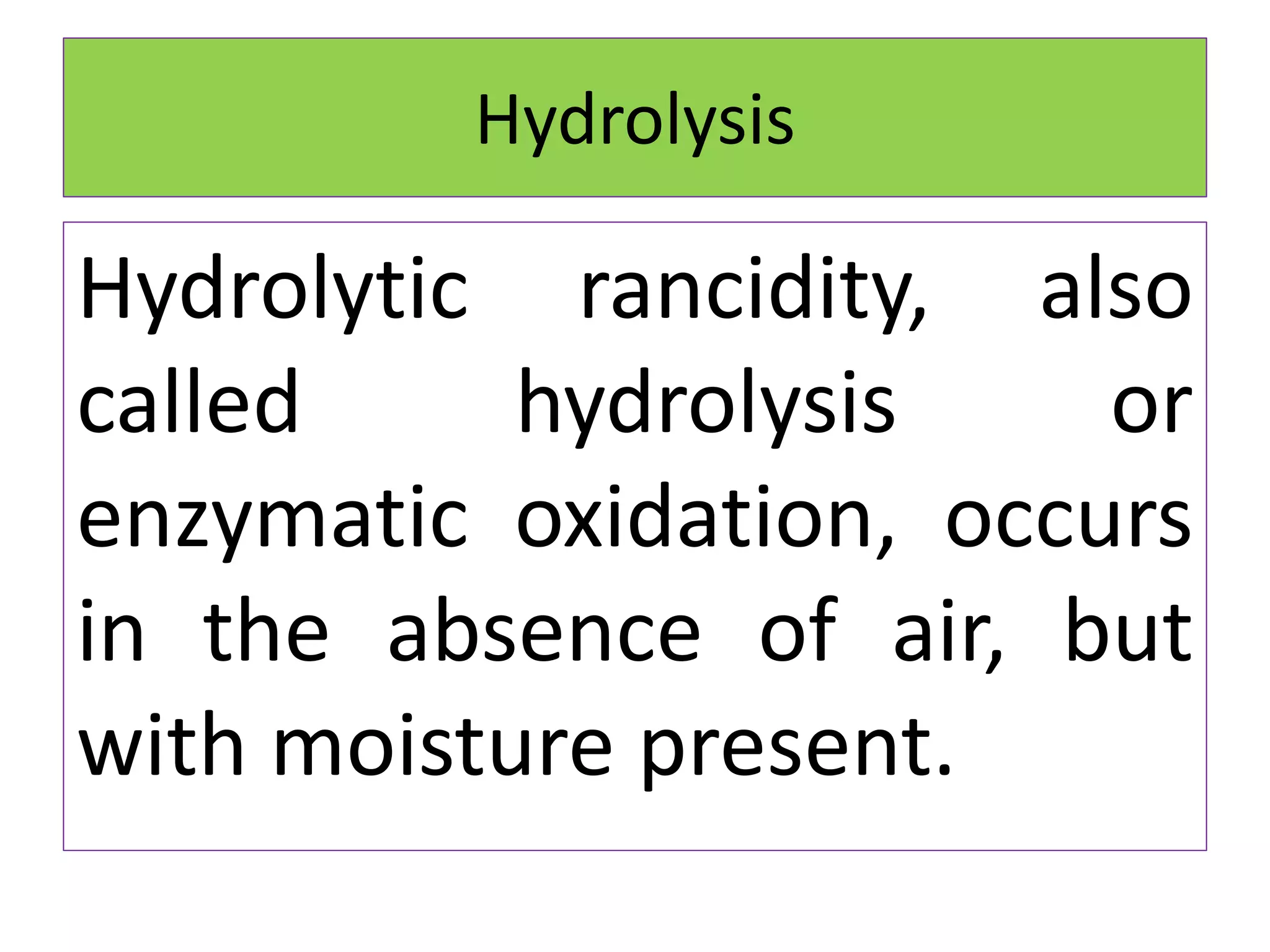
Hydrolysis
Hydrolysis
Hydrolytic rancidity, also
called hydrolysis or
enzymatic oxidation, occurs
in the absence of air, but
with moisture present.
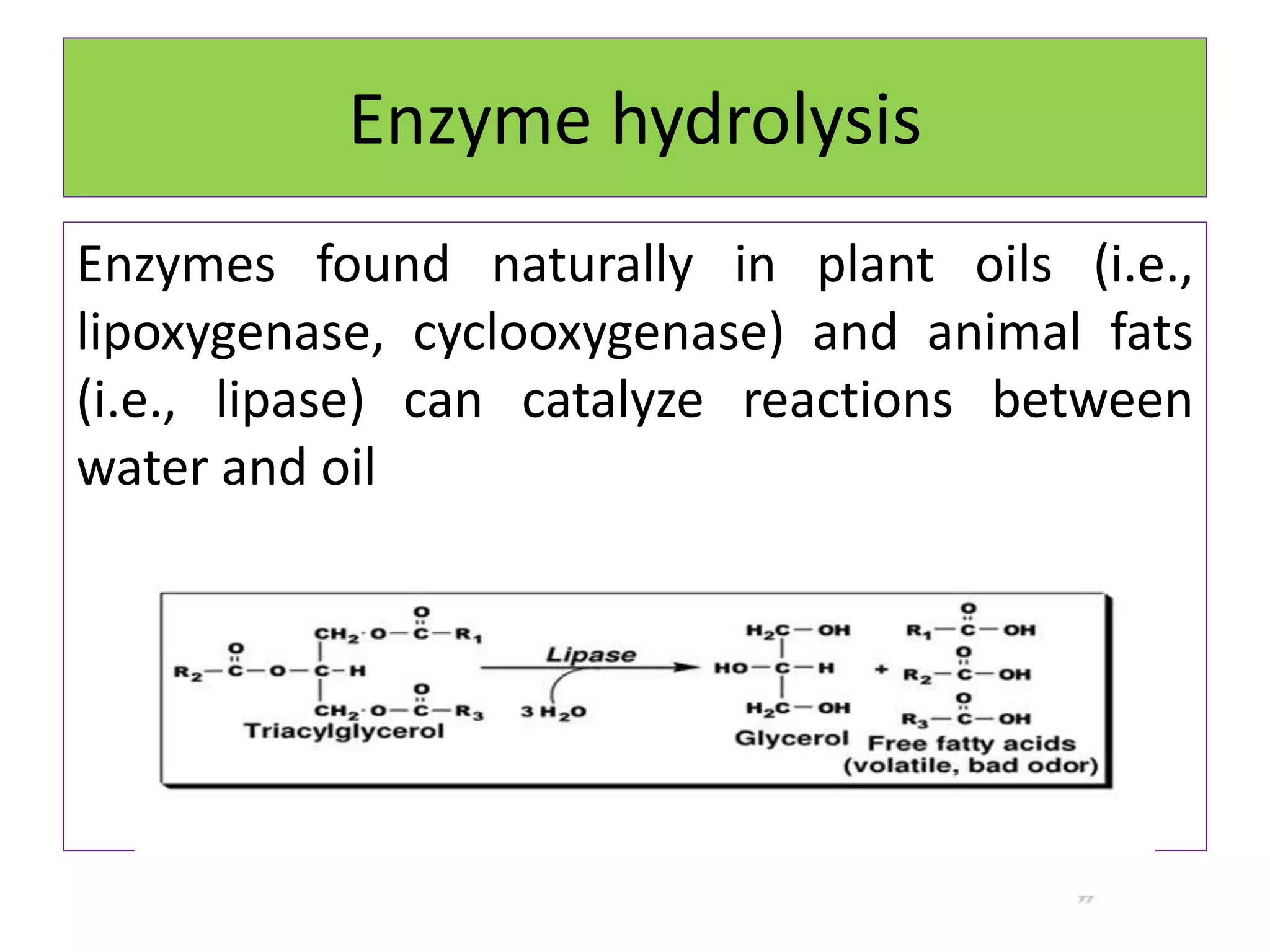
Enzyme hydrolysis
Enzymes found naturally in plant oils (i.e.,
lipoxygenase, cyclooxygenase) and animal fats
(i.e., lipase) can catalyze reactions between
water and oil
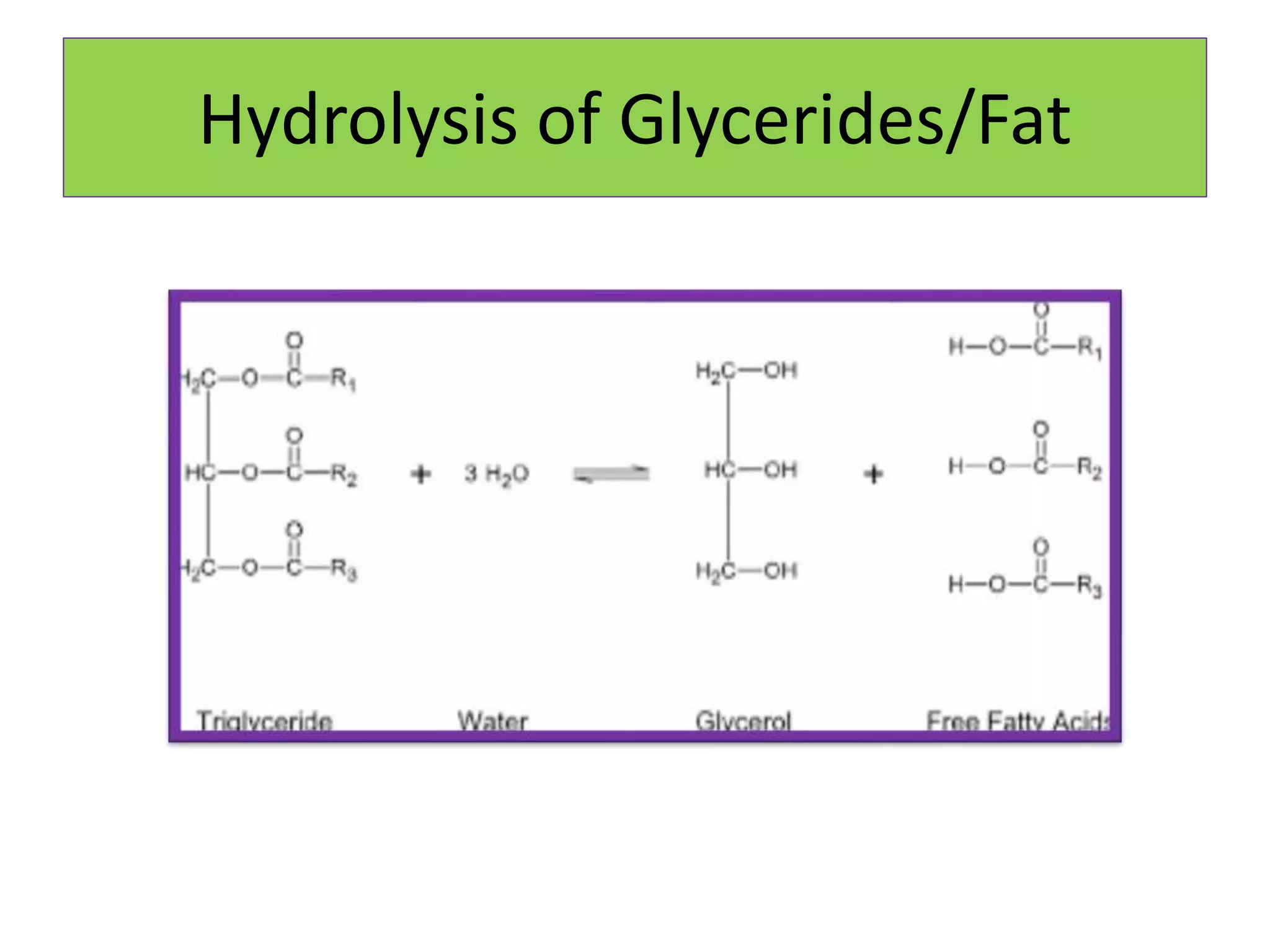
Hydrolysis of Glycerides/Fat
Microbial rancidity
Microbial rancidity, in which micro-
organisms such as bacteria, molds and
yeast use their enzymes to break down
chemical structures in the oil,
producing unwanted odors and
flavors. Water needs to be present for
microbial growth to occur.

Rancidity and hydrolysis18.07.2020

  • 1.
    Rancidity • Rancidity isa term generally used to denote unpleasant odours and flavours in foods resulting from deterioration in the fat or oil portion of a food. • There are two basic types or causes of rancidity that cause and/or contribute to the degradation of stored edible oils: oxidative and hydrolytic
  • 2.
  • 3.
  • 4.
    Oxidative rancidity Autoxidation, occurs whenoxygen is absorbed from the environment
  • 5.
    Oxidation of fat •Oil oxidation is an undesirable series of chemical reactions involving oxygen that degrades the quality of an oil. • Oxidation eventually produces rancidity in oil, with accompanying off flavours, foul-tasting and horrible smells. • All oil is in a state of oxidation - you cannot stop it completely - but there are ways to reduce it.
  • 6.
    Oxidation of fat •Oxidation of fatty acid alkenes involves cleavage of the double bonds to form short- chain carboxylic acids. • When oil oxidises it produces a series of breakdown products in stages, starting with primary oxidation products (peroxides, dienes, free fatty acids), then secondary products (carbonyls, aldehydes, trienes) and finally tertiary products.
  • 8.
    Auto-oxidation The process ofoxidation induced by air at room temperature referred to as “autoxidation”. Oxidation progresses at different rates depending on factors such as • Temperature, • Light, • Availability of oxygen, • Presence of moisture and metals (such as iron) .
  • 9.
    Auto-oxidation Ordinarily, this isa slow process which occurs only to a limited degree. However, factors such as the presence of light can increase the rate of oxidation. Metals, such as copper or iron, present at low levels in fats and oils can also promote autoxidation.
  • 10.
    Prevent oxidation Several differentfactors can be controlled to reduce the amount of oxidation that occurs in your oil. • Temperature - the number one contributing factor of oxidation in oil. If possible reduce the temperature to the lowest possible throughout processing, shipping and manufacture. • Oxygen exposure (in the air) will be a catalyst for production of free radicals. To reduce oxidation, seal all containers with the smallest possible headspace, reduce the area of the oil in contact with air and/or cover the oil with an inert gas (like nitrogen) at all possible points.
  • 11.
    Prevent oxidation • Light(UV) can trigger the oxidative degenerative cascade. Reduce the exposure of the oil to direct light by using brown glass/plastic containers or black plastic bags. • Moisture in combination with these other factors can accelerate oxidation. If possible limit the amount of water in the oil to less than 0.2%.
  • 12.
    Prevent oxidation • Transitionmetals, in particular transition metals like iron and copper, can act as pro-oxidants. • Fats and oils are normally treated with chelating agents such as citric acid to complex these trace metals (thus inactivating their prooxidant effect). • If possible, you may need to change equipment (e.g. no brass valves), • limit time in contact with and/or • remove transition metals from the oil to reduce oxidation.
  • 13.
  • 14.
    Antioxidants (AOX) • Antioxidants(AOX) terminate the oxidation chain reactions and inhibit other oxidation reactions by being oxidised themselves. AOX do not stop oxidation, but do slow down the rate at which oxidation occurs. • There are many different ways AOX can reduce oxidation, so it is important to choose the right AOX for your application/product. • AOX can be synthetic or extracted from natural plant sources.
  • 15.
    Common AOX are: •Tocopherols (vitamin E) • Carotenoids β-carotene • Phospholipids • Retinol (vitamin A)
  • 16.
    Synthetic Antioxidant • BHT-butylated hydroxytoluene • BHA - butylated hydroxyanisole • TBHQ - tert-Butylhydroquinone • Propyl gallate • Ethoxyquin
  • 17.
    Natural Antioxidant • Flavonoids •Rosemary • Spice extracts • Tea • Catechins • Seaweed
  • 18.
    Preventive AOX • Citricacid, • Phosphoric acid, • Ascorbic acid (vitamin C), • Ethylene diamine tetraacetic acid (EDTA), • Uric acid
  • 19.
  • 20.
    Hydrolysis Hydrolytic rancidity, also calledhydrolysis or enzymatic oxidation, occurs in the absence of air, but with moisture present.
  • 21.
    Enzyme hydrolysis Enzymes foundnaturally in plant oils (i.e., lipoxygenase, cyclooxygenase) and animal fats (i.e., lipase) can catalyze reactions between water and oil
  • 22.
  • 23.
    Microbial rancidity Microbial rancidity,in which micro- organisms such as bacteria, molds and yeast use their enzymes to break down chemical structures in the oil, producing unwanted odors and flavors. Water needs to be present for microbial growth to occur.