Design and Analysis of Algorithm
 Heap sort
 Quick sort
 Radix sort
 Bucket sort
 Counting sort
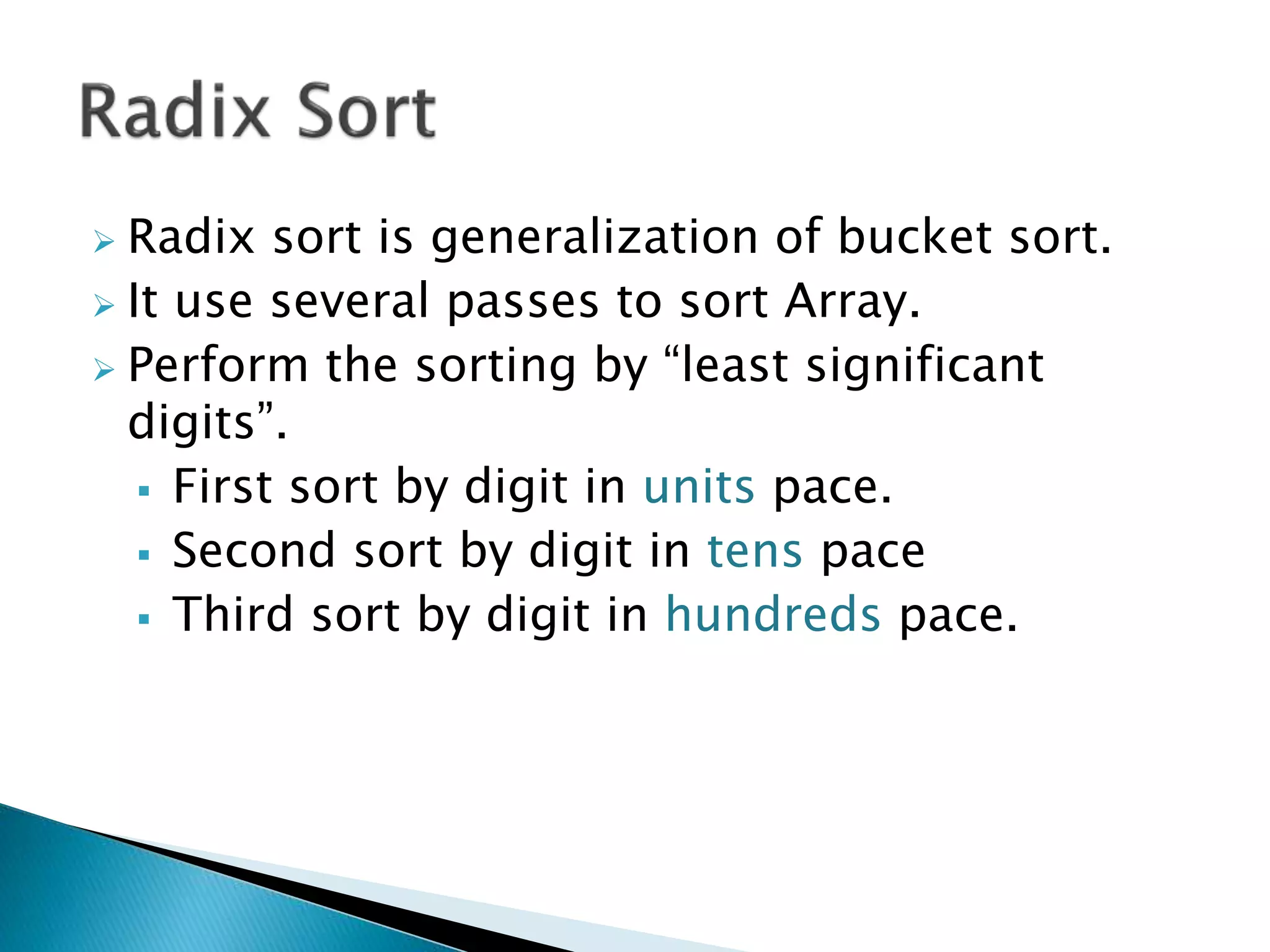
 Radix sort is generalization of bucket sort.
 It use several passes to sort Array.
 Perform the sorting by “least significant
digits”.
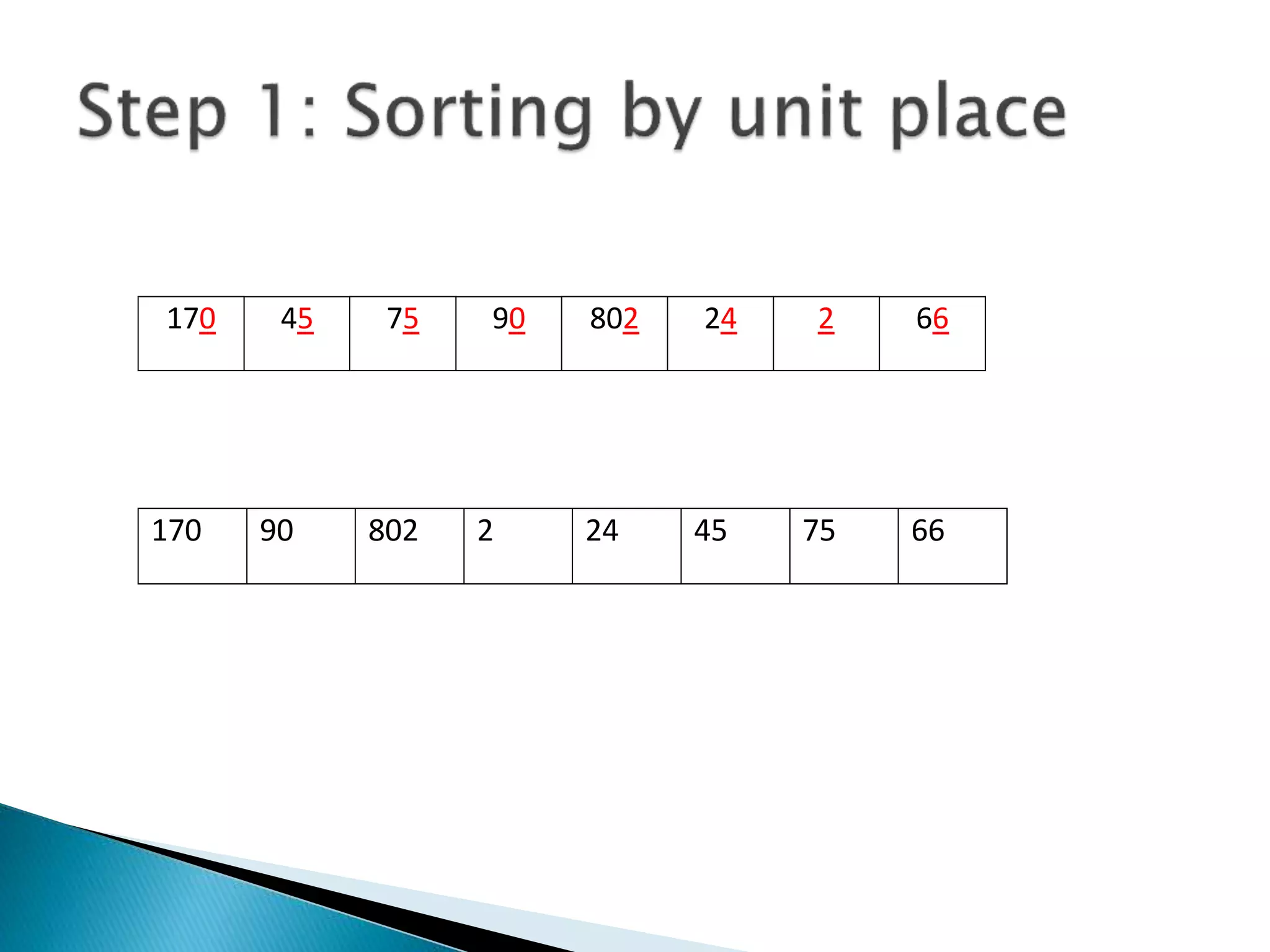
 First sort by digit in units pace.
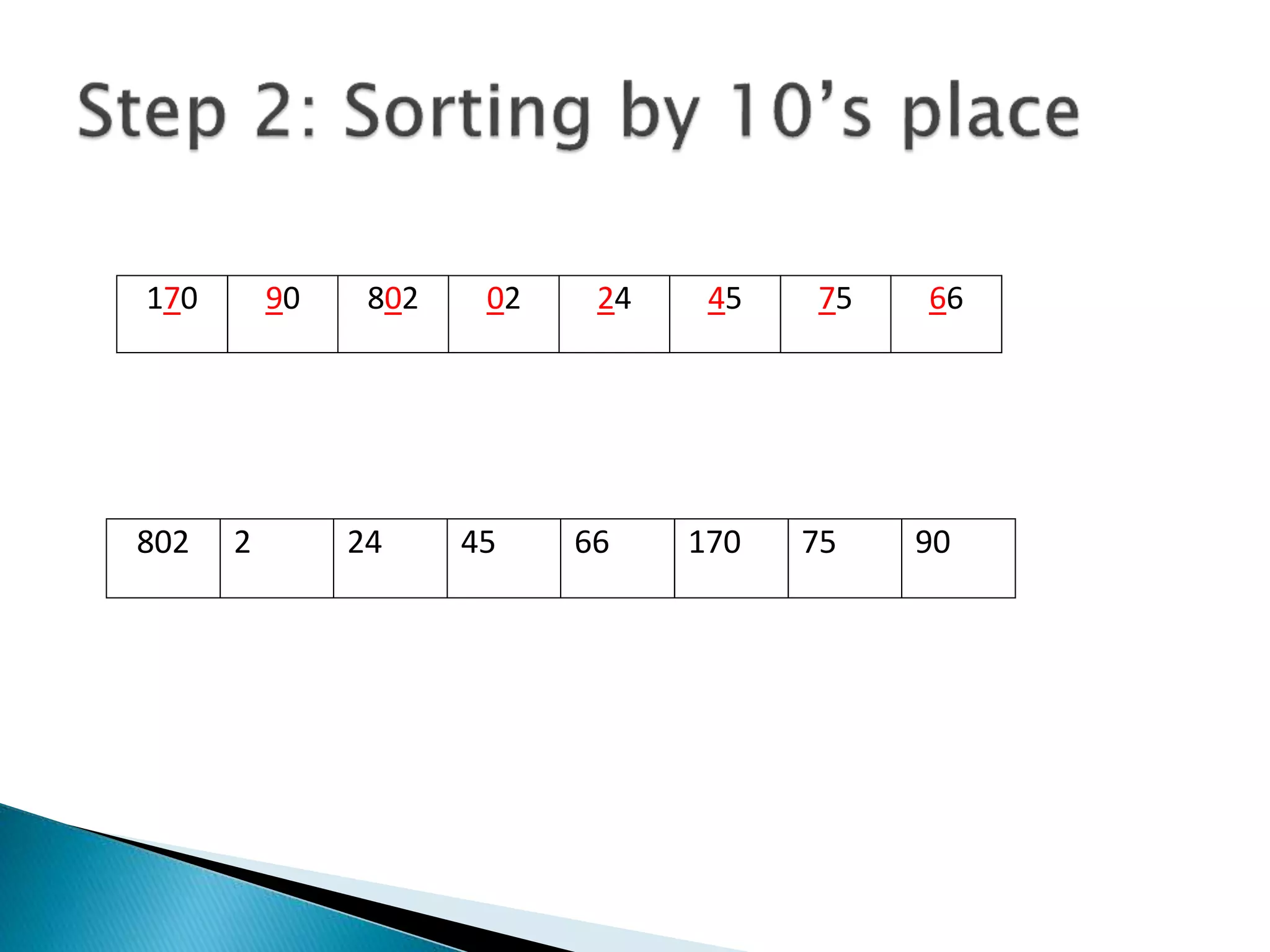
 Second sort by digit in tens pace
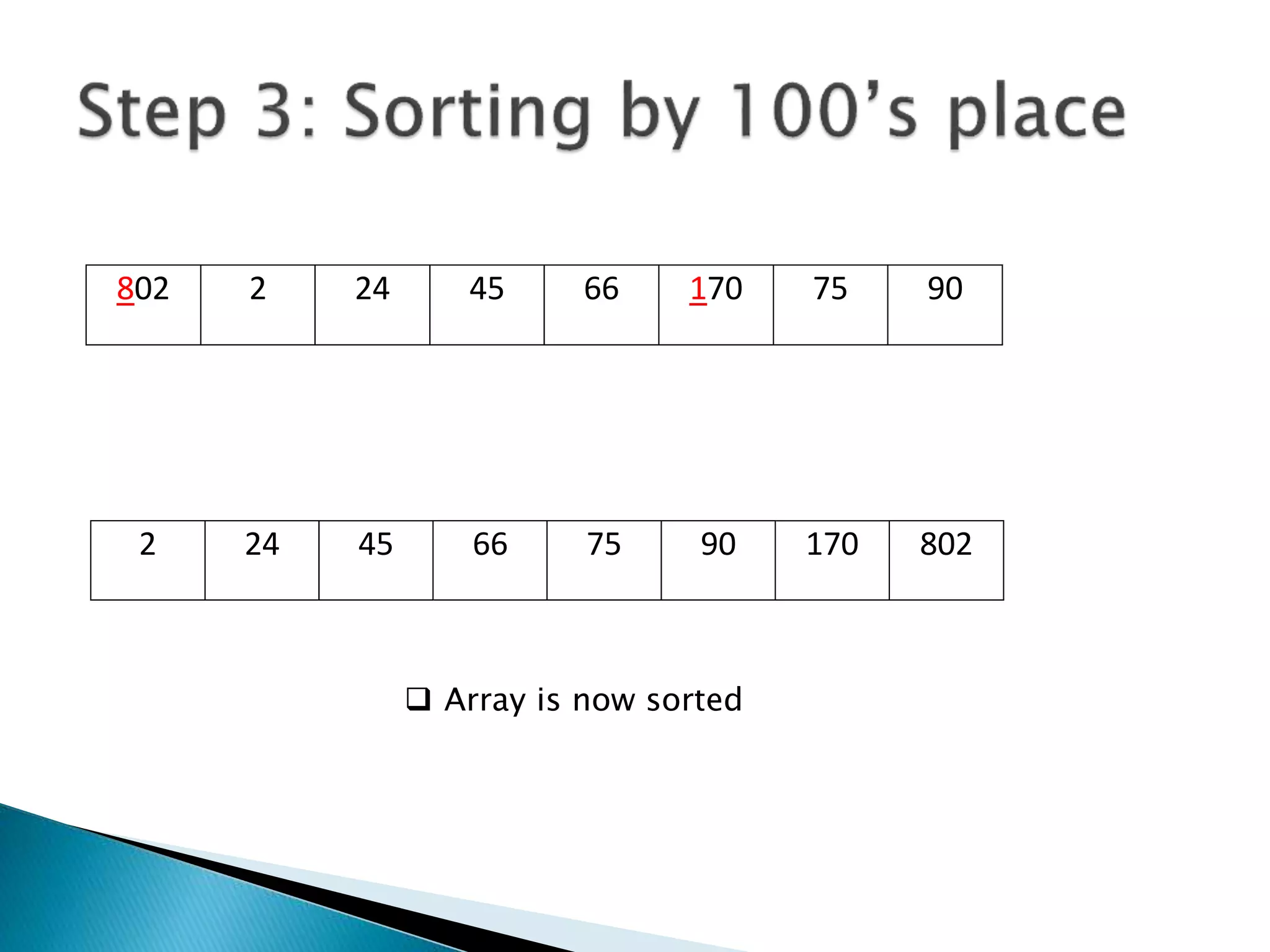
 Third sort by digit in hundreds pace.
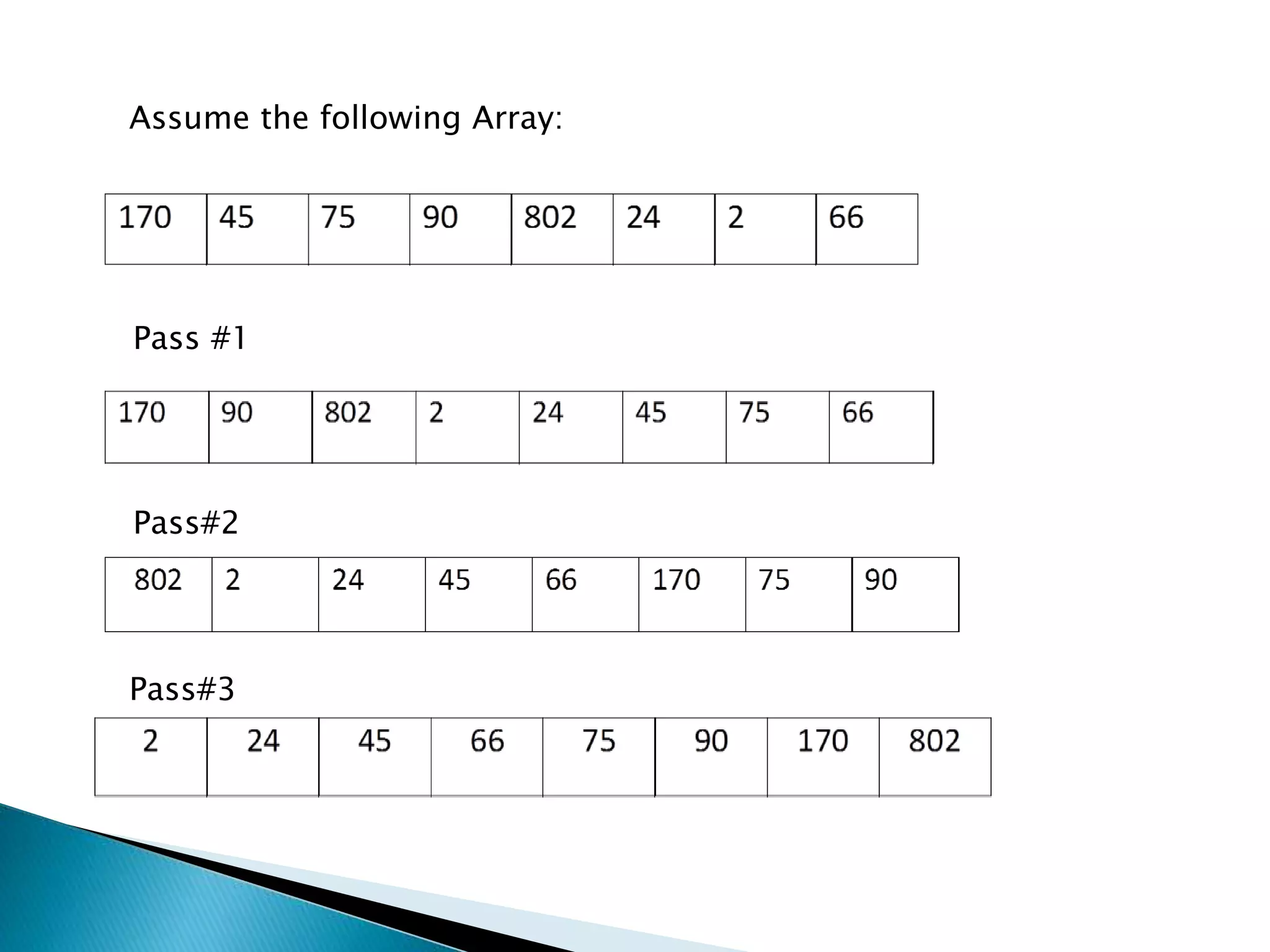
Assume the following Array:
Pass #1
Pass#2
Pass#3
170 90 802 2 24 45 75 66
170 45 75 90 802 24 2 66
2 24 45 66 75 90 170 802
 Array is now sorted
802 2 24 45 66 170 75 90
802 2 24 45 66 170 75 90
170 90 802 02 24 45 75 66
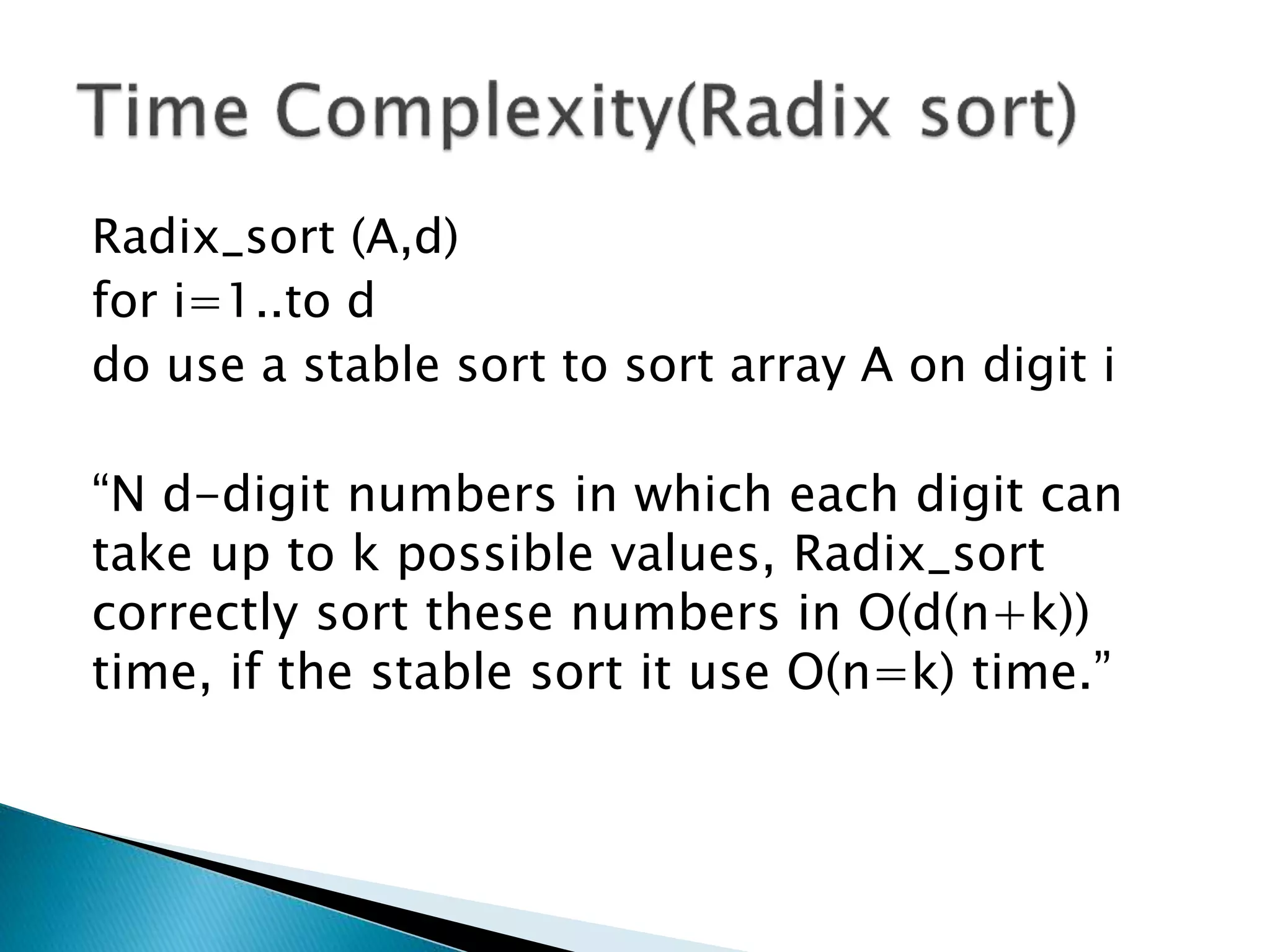
Radix_sort (A,d)
for i=1..to d
do use a stable sort to sort array A on digit i
“N d-digit numbers in which each digit can
take up to k possible values, Radix_sort
correctly sort these numbers in O(d(n+k))
time, if the stable sort it use O(n=k) time.”

Radix Sort

  • 1.
    Design and Analysisof Algorithm
  • 2.
     Heap sort Quick sort  Radix sort  Bucket sort  Counting sort
  • 3.
     Radix sortis generalization of bucket sort.  It use several passes to sort Array.  Perform the sorting by “least significant digits”.  First sort by digit in units pace.  Second sort by digit in tens pace  Third sort by digit in hundreds pace.
  • 4.
    Assume the followingArray: Pass #1 Pass#2 Pass#3
  • 5.
    170 90 8022 24 45 75 66 170 45 75 90 802 24 2 66
  • 6.
    2 24 4566 75 90 170 802  Array is now sorted 802 2 24 45 66 170 75 90
  • 7.
    802 2 2445 66 170 75 90 170 90 802 02 24 45 75 66
  • 8.
    Radix_sort (A,d) for i=1..tod do use a stable sort to sort array A on digit i “N d-digit numbers in which each digit can take up to k possible values, Radix_sort correctly sort these numbers in O(d(n+k)) time, if the stable sort it use O(n=k) time.”