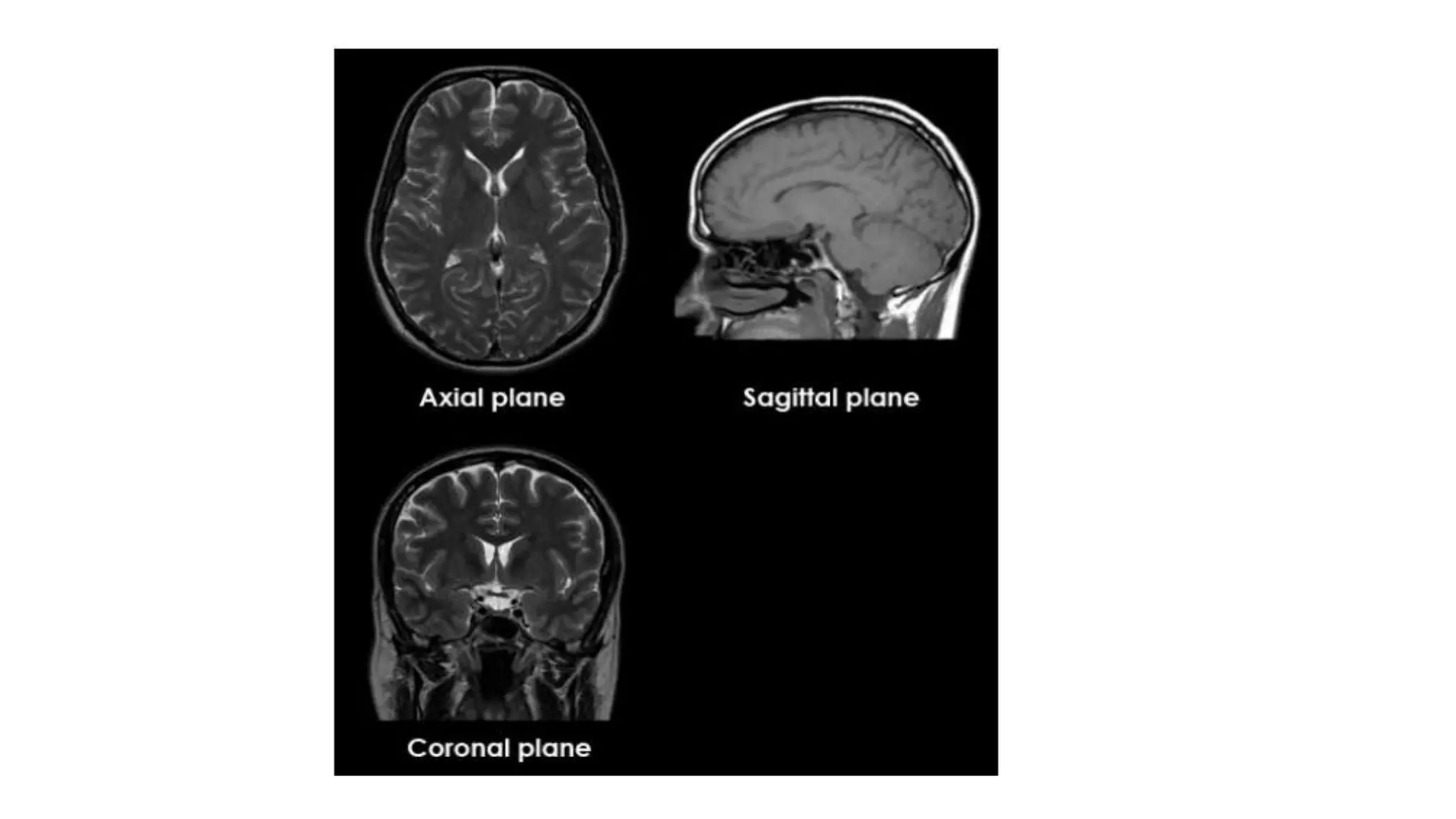
Radiology meet:
MRI BRAIN: Basics and spectrum
in Dengue encephalitis
Presenter: Dr teenu singh
Moderator: Prof Banani poddar
Introduction
• MRI is the most sensitive imaging method
• Hyperintense and hypointense, with the gray matter being the
reference point
• Routine MRI sequences
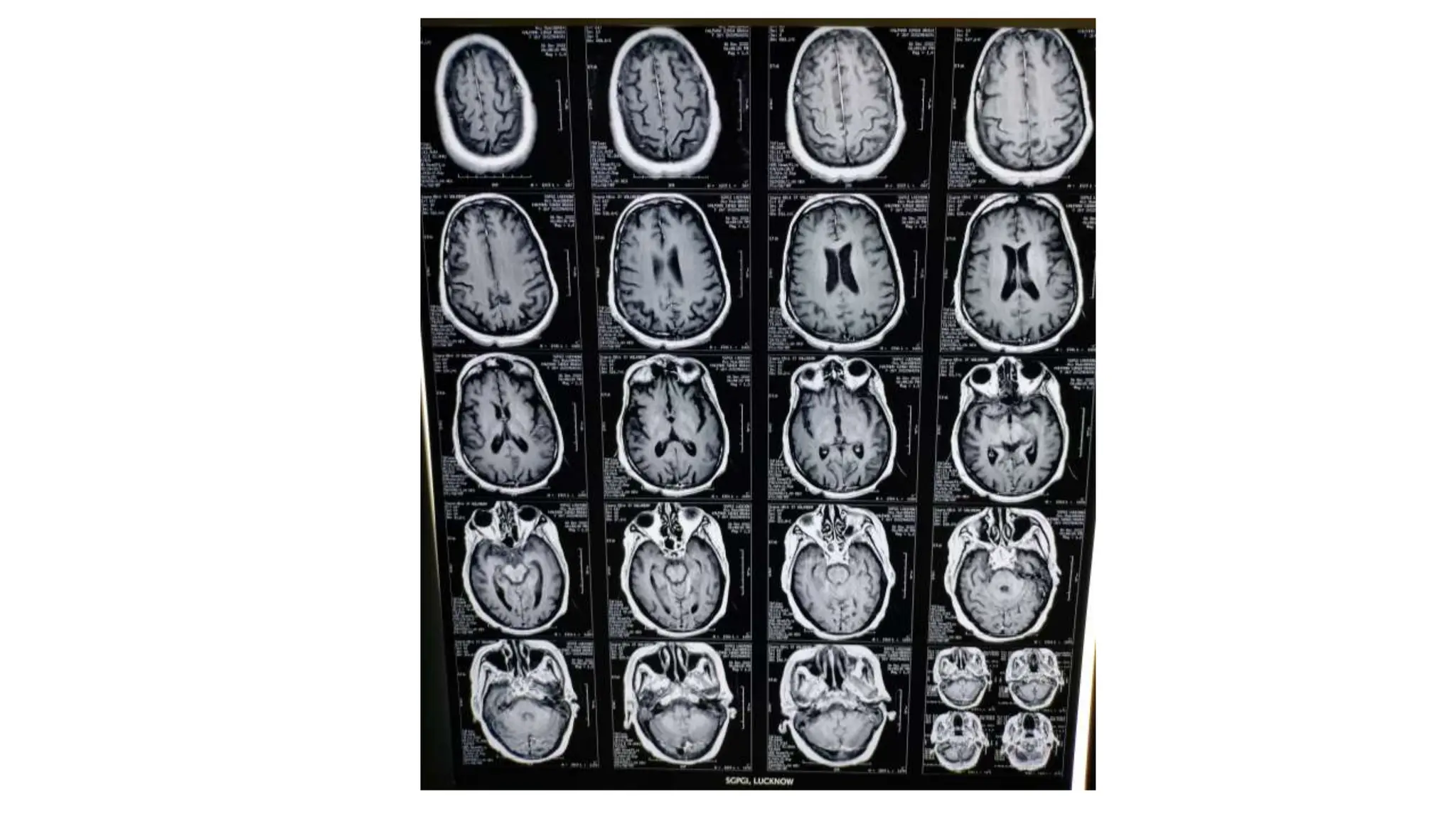
• T1 weighted image
• T2 weighted image
• FLAIR
• DWI/ADC
• SWI
• Post contrast images
How to recognise a sequence
• Fat –Subcutaneous fat
• Fluid – CSF
• Gray –white matter differentiation
• Contrast- look at nasal mucosa
• To see anatomy- T1 weighted image
• To see pathology – T2 weighted image
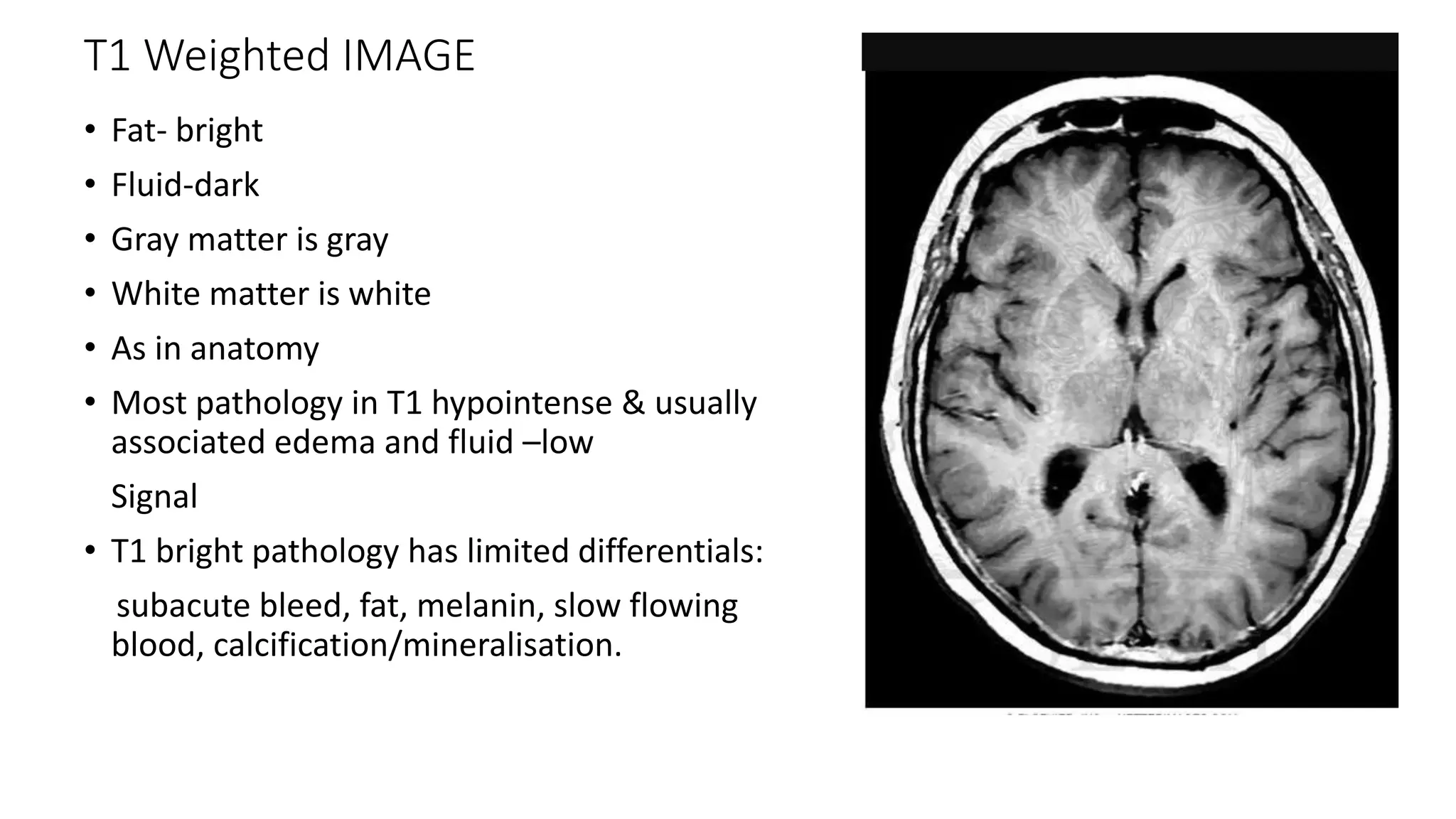
T1 Weighted IMAGE
• Fat- bright
• Fluid-dark
• Gray matter is gray
• White matter is white
• As in anatomy
• Most pathology in T1 hypointense & usually
associated edema and fluid –low
Signal
• T1 bright pathology has limited differentials:
subacute bleed, fat, melanin, slow flowing
blood, calcification/mineralisation.
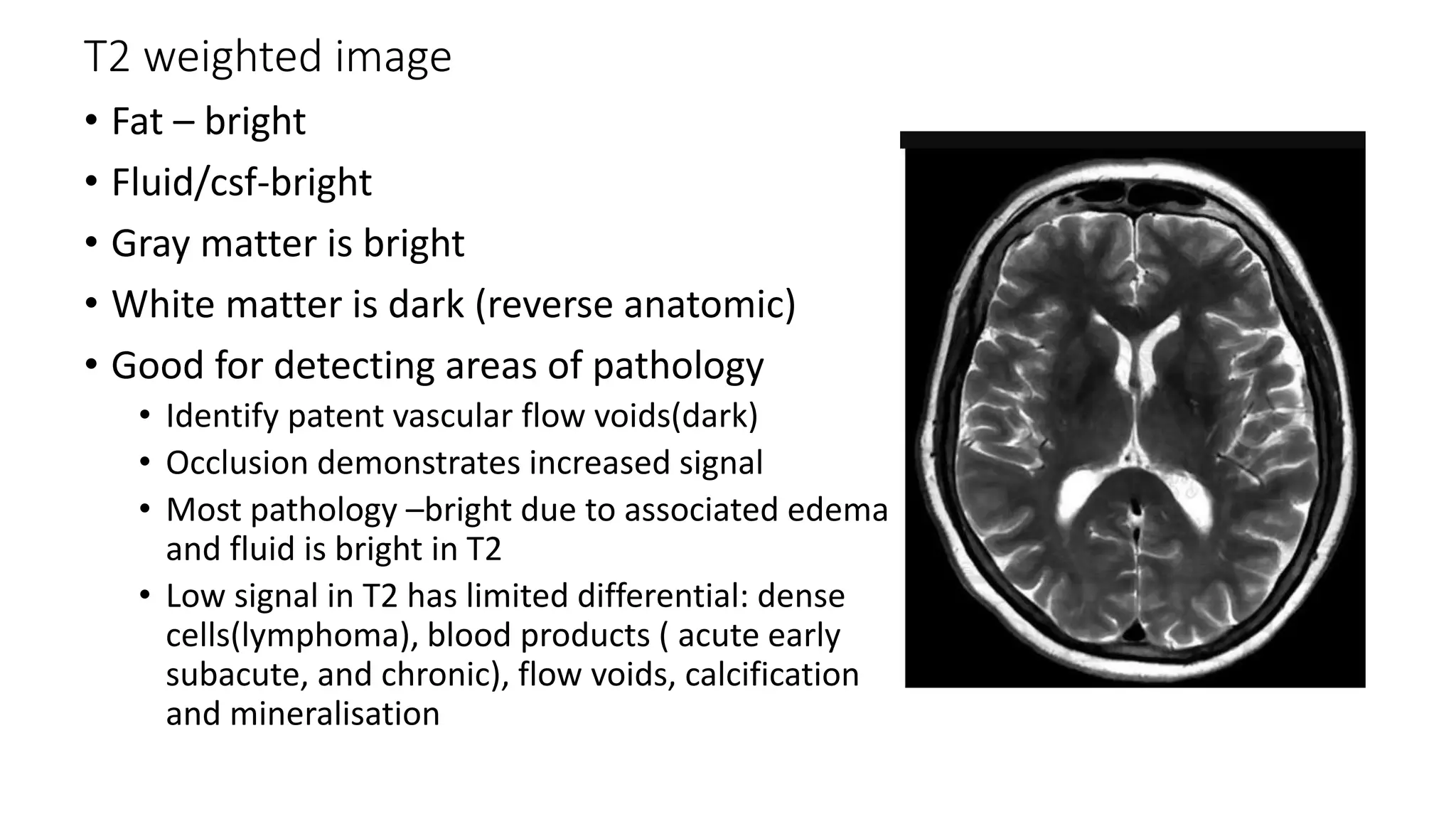
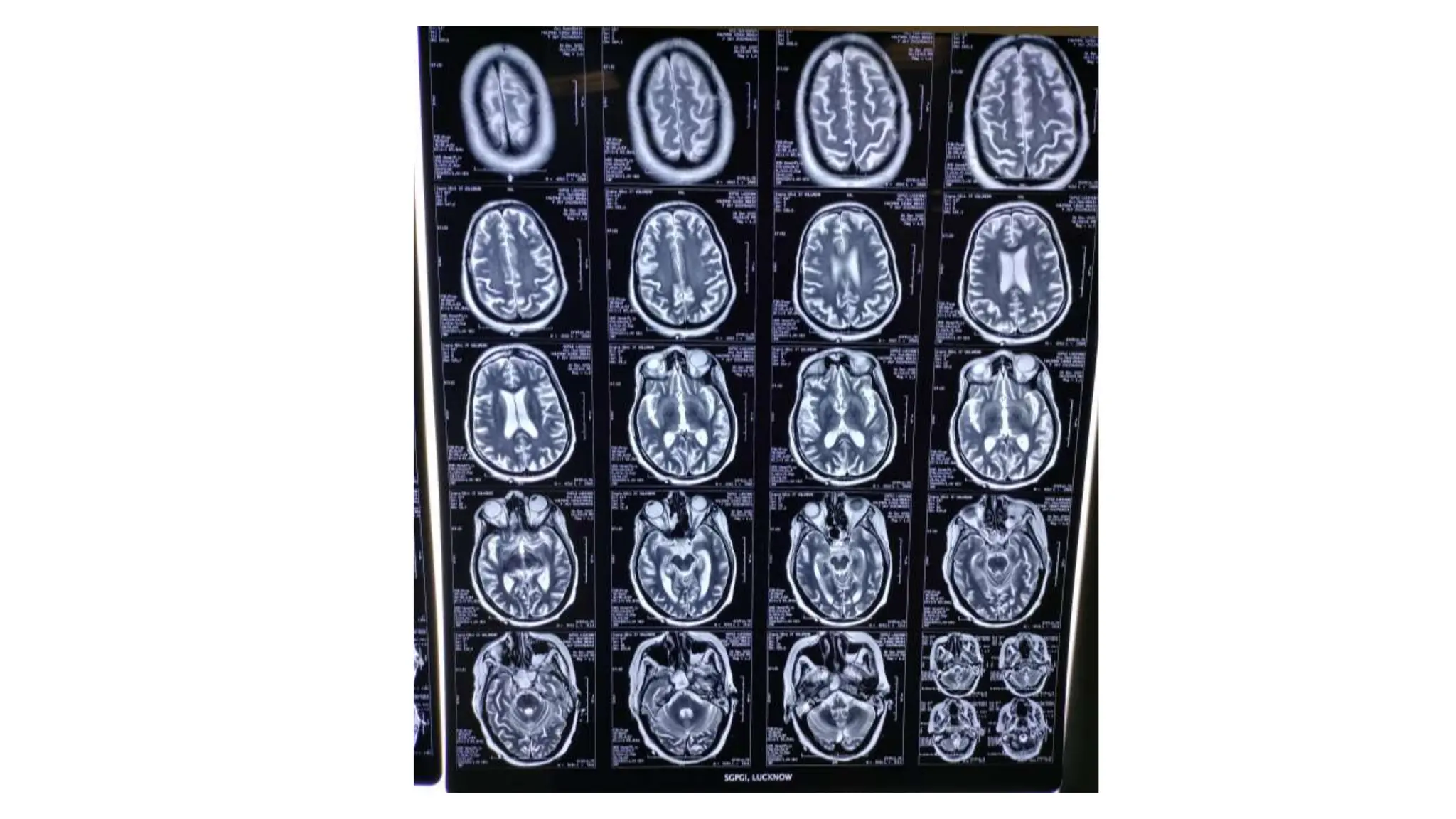
T2 weighted image
• Fat – bright
• Fluid/csf-bright
• Gray matter is bright
• White matter is dark (reverse anatomic)
• Good for detecting areas of pathology
• Identify patent vascular flow voids(dark)
• Occlusion demonstrates increased signal
• Most pathology –bright due to associated edema
and fluid is bright in T2
• Low signal in T2 has limited differential: dense
cells(lymphoma), blood products ( acute early
subacute, and chronic), flow voids, calcification
and mineralisation
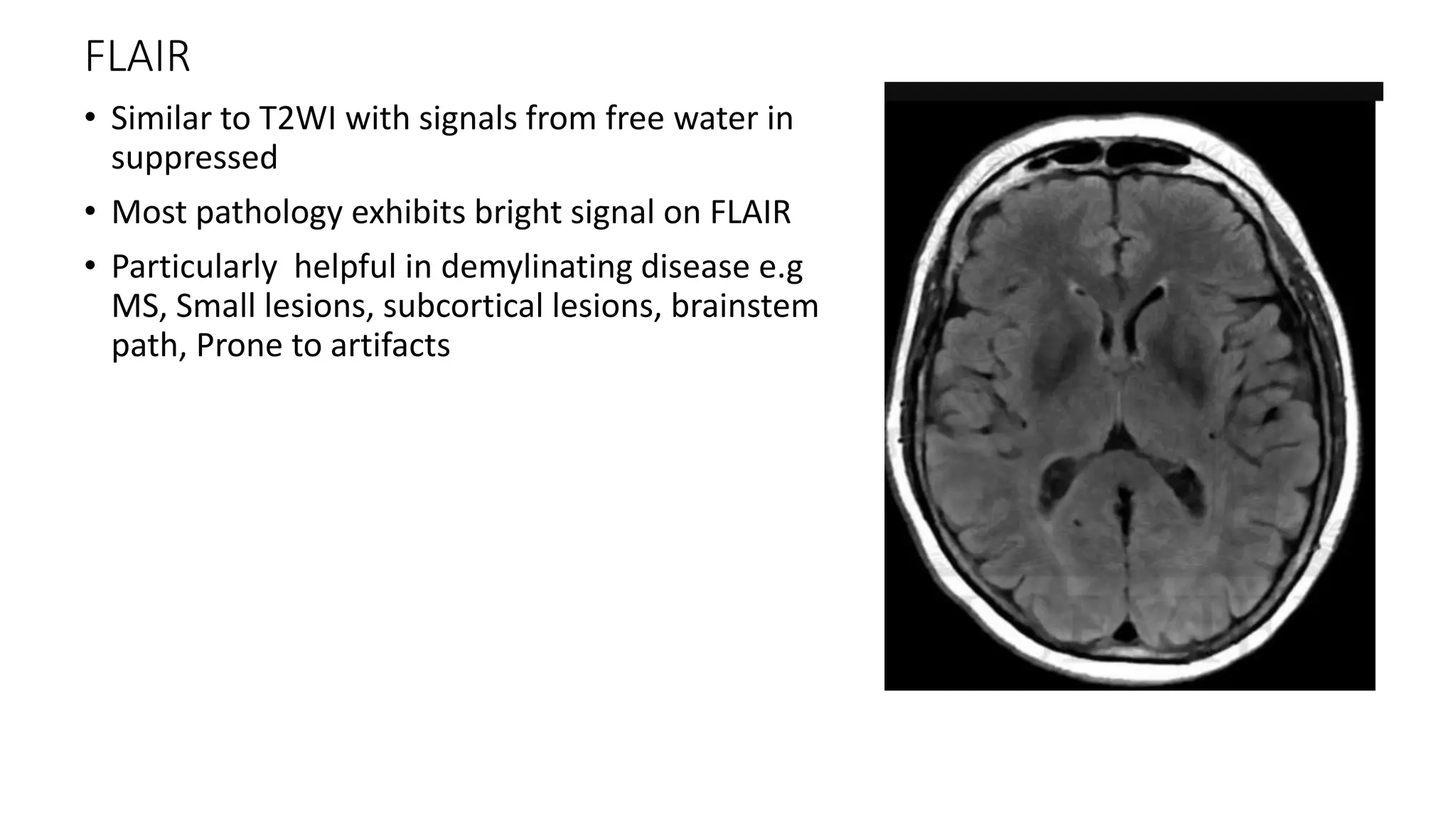
FLAIR
• Similar to T2WI with signals from free water in
suppressed
• Most pathology exhibits bright signal on FLAIR
• Particularly helpful in demylinating disease e.g
MS, Small lesions, subcortical lesions, brainstem
path, Prone to artifacts
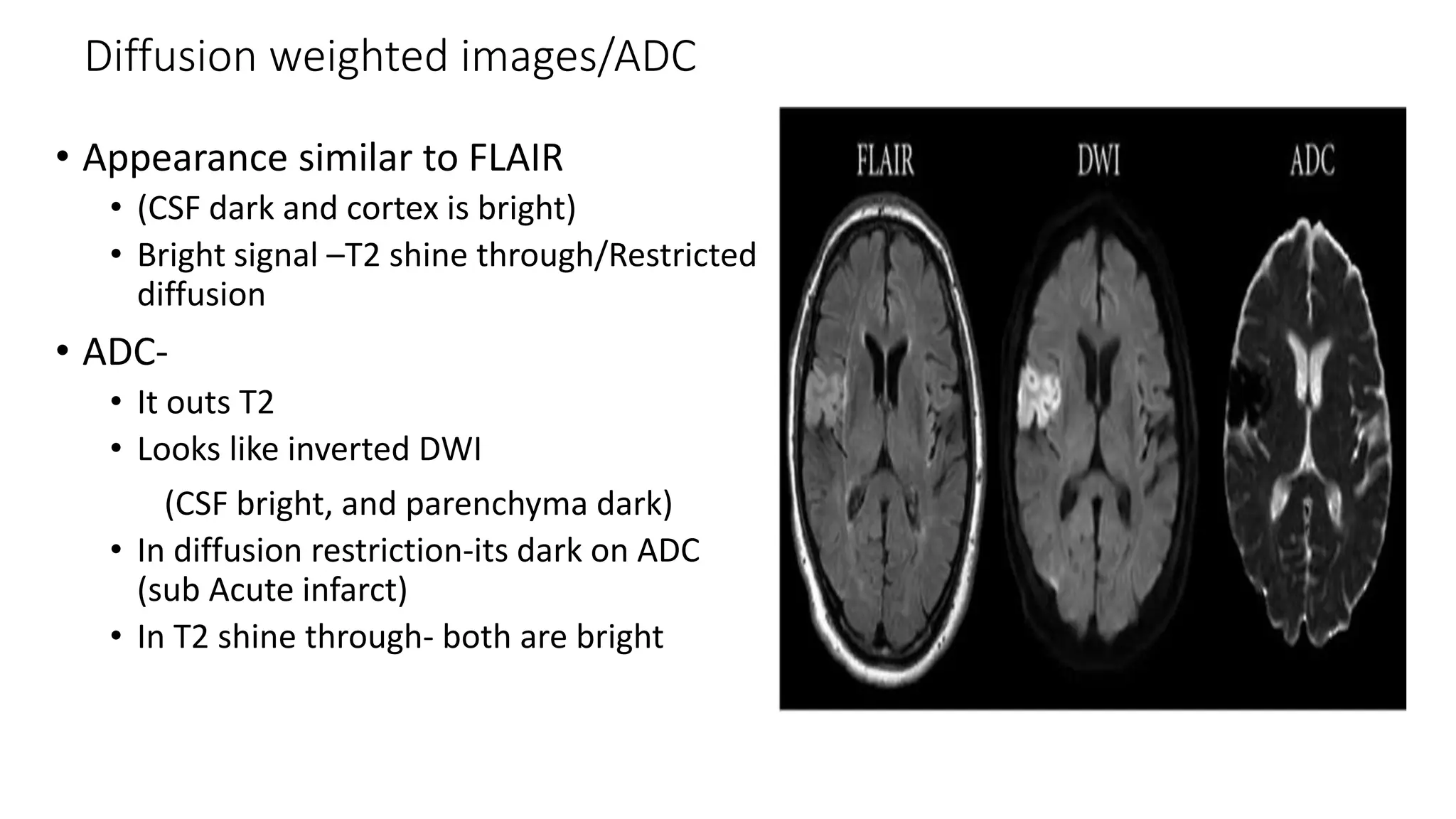
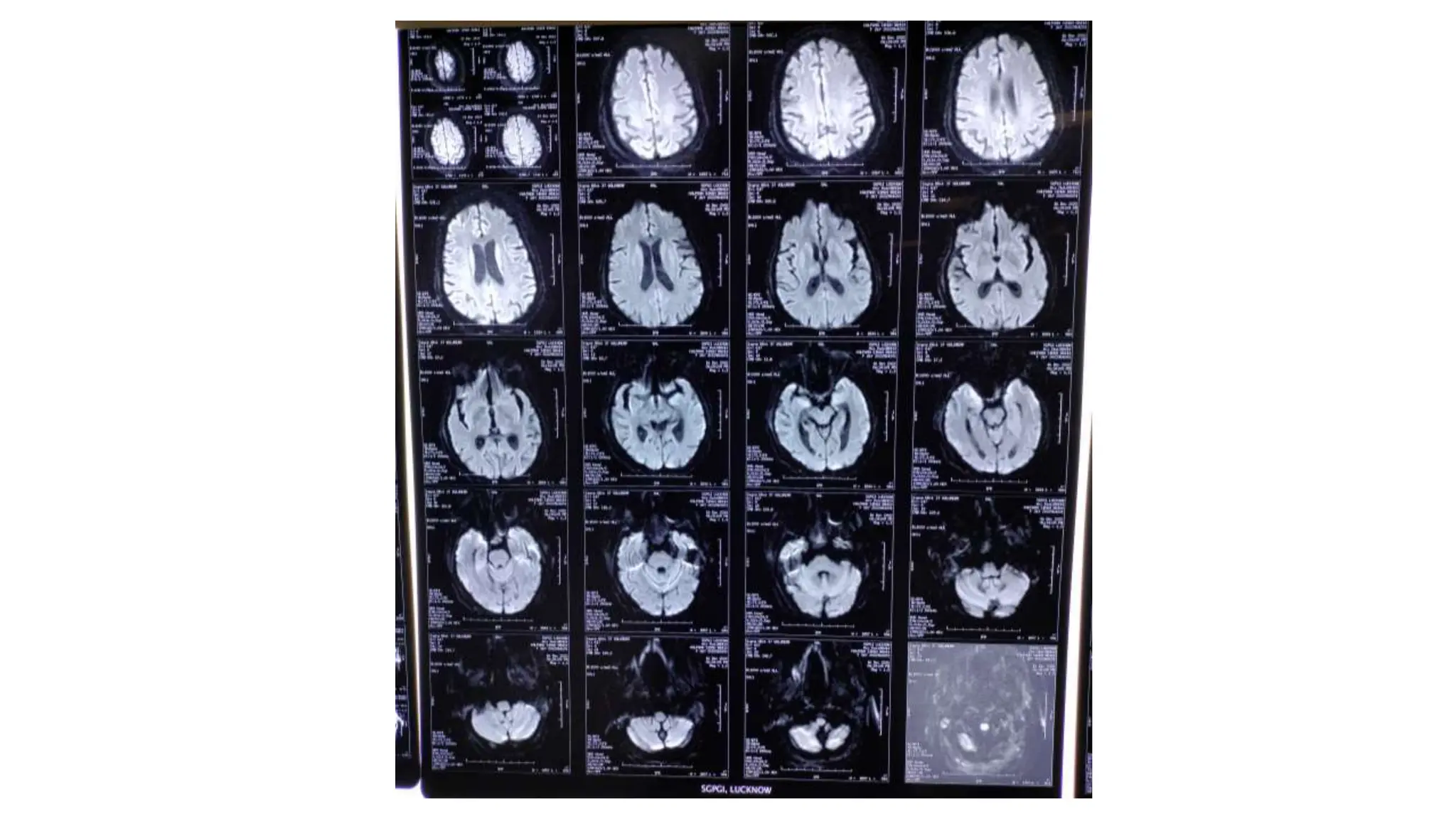
Diffusion weighted images/ADC
• Appearance similar to FLAIR
• (CSF dark and cortex is bright)
• Bright signal –T2 shine through/Restricted
diffusion
• ADC-
• It outs T2
• Looks like inverted DWI
(CSF bright, and parenchyma dark)
• In diffusion restriction-its dark on ADC
(sub Acute infarct)
• In T2 shine through- both are bright
Susceptibility weighted image
• Identifies small foci of calcification and microbleed
Post contrast images
• Typically uses T1 WI
• Gadolinium is the contrast agent
• T1- low signal csf and high signal fat
• Normal enhancement of nasal turbinates
• Contrast with sulcal vessels and venous sinuses are unreliable
• Always compare with pre-contrast to make sure that increased signal is due to actual
enhancement
• Always look for leptomningeal enhancement- too much enhancement along surface
of cerebral sulci, cerebellar folia and surrounding brainstem. FLAIR post contrast has
more sensitIvity.
Identifiable patterns
• T1 –fluid dark, fat bright, G-W anatomic
• T2- fluid bright G-W reverse anatomic
• FLAIR- fluid dark, G-W reverse anatomic
• DWI- looks like FLAIR, no visualised calvarium/scalp
• ADC- Fluid bright , brain dark, very low resolution
• SWI- prominent dark vessels
• T1 Post contrast- T1WI with increased signal in vessels and nasal turbinates
Sequences for specific pathology
• T1 -anatomic localisation , T1 signal subacute blood and fat
• T2 – flow voids, T2 signal aging blood, dense cells and vascularity
• FLAIR – identify and localise pathology
• DWI/ADC-evaluated for restricted diffusion
• SWI-most sensitive sequence for hge , calcification
• Post contrast- evaluate for enhancement (intra-axial and extra axial)
• Heavily T2WI- evaluate cranial nerve pathology
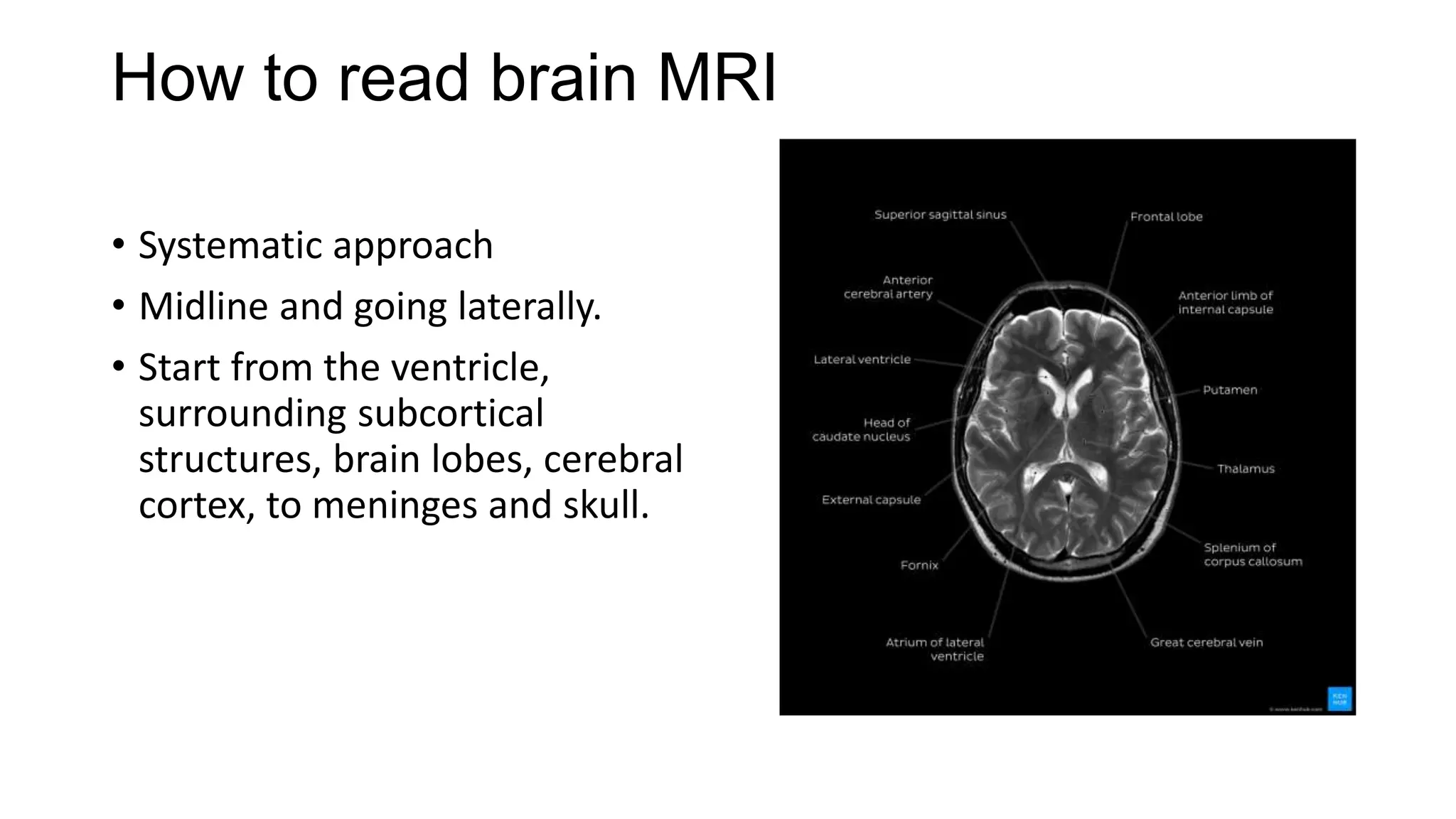
How to read brain MRI
• Systematic approach
• Midline and going laterally.
• Start from the ventricle,
surrounding subcortical
structures, brain lobes, cerebral
cortex, to meninges and skull.
Lateral ventricle:
• The lateral ventricles are the two irregularly shaped cavities, frontal horn, body,
occipital and temporal horns.
Third ventricle
• The third ventricle is located between the
thalami and below the fornix of the brain.
• Communicate with the lateral ventricles
through the foramina of Monro (anteriorly),
and with the 4th ventricle via the aqueduct of
Sylvius (posteriorly).
• Squashing: Tumors, abscesses or hematomas
• Enlarging of the ventricles :hydrocephalus
• Any asymmetry, midline shift or displacement
Thalamus and basal ganglia
• Lateral from the
ventricles: subcortical
structures; thalamus and
basal ganglia.
• The caudate nucleus is
an elongated C-shaped
nucleus that consists of
the head, body and tail.
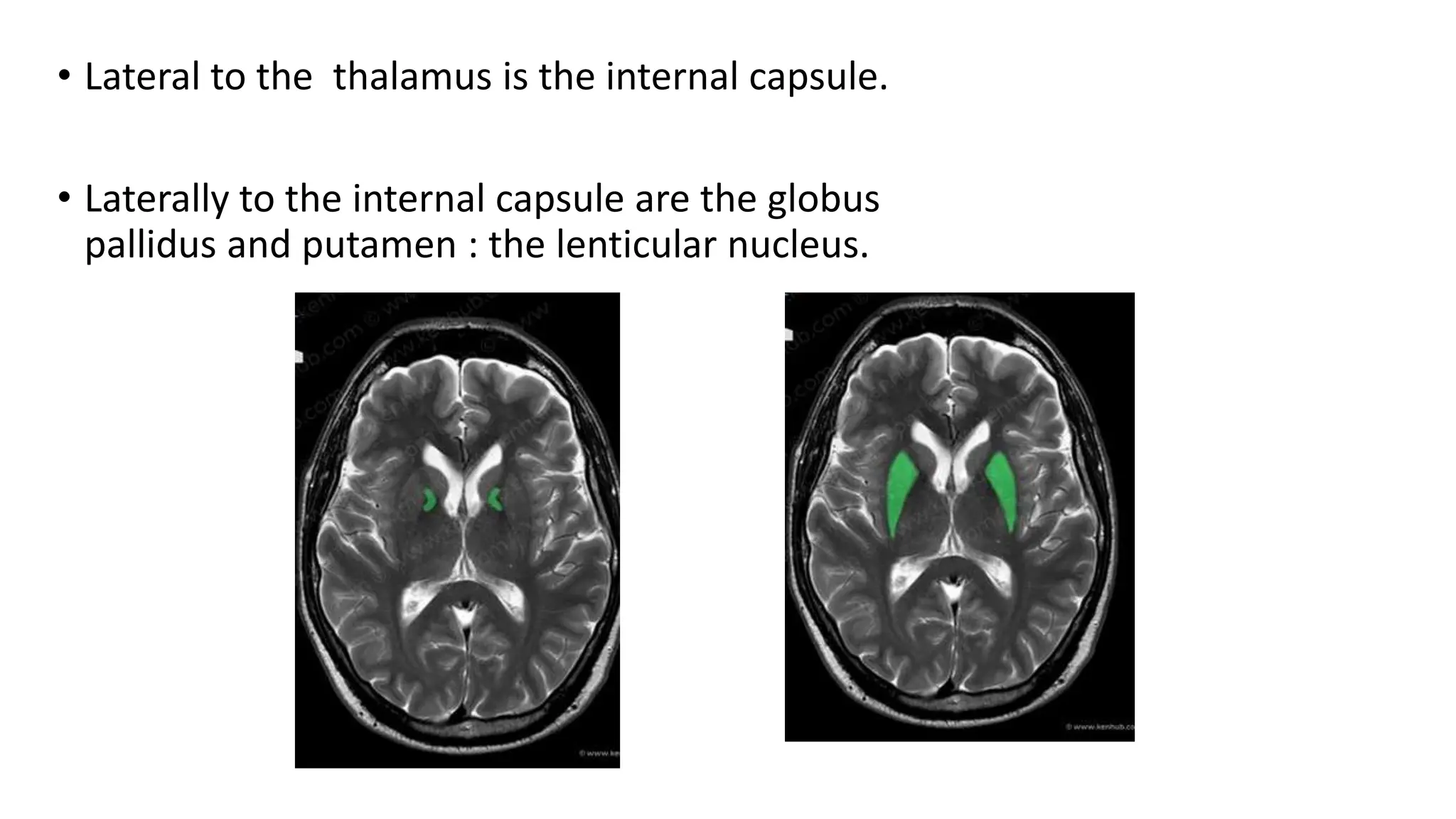
• Lateral to the thalamus is the internal capsule.
• Laterally to the internal capsule are the globus
pallidus and putamen : the lenticular nucleus.
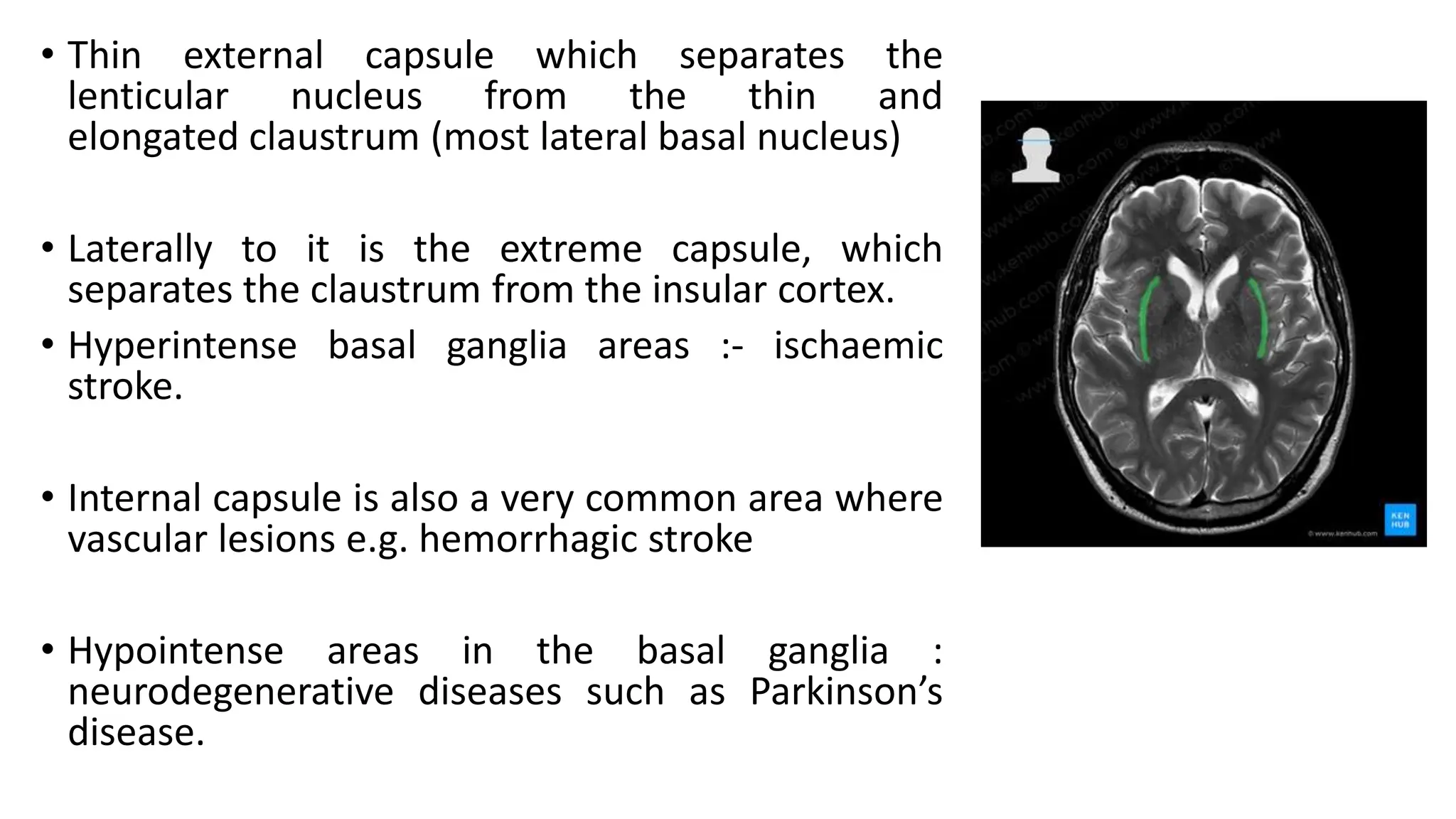
• Thin external capsule which separates the
lenticular nucleus from the thin and
elongated claustrum (most lateral basal nucleus)
• Laterally to it is the extreme capsule, which
separates the claustrum from the insular cortex.
• Hyperintense basal ganglia areas :- ischaemic
stroke.
• Internal capsule is also a very common area where
vascular lesions e.g. hemorrhagic stroke
• Hypointense areas in the basal ganglia :
neurodegenerative diseases such as Parkinson’s
disease.
Brain lobes:
• Six lobes of the brain; frontal, temporal,
limbic, parietal, insular and occipital lobes.
• The insular and limbic lobes are the ones of
particular interest in the brain MRI.
• The insular lobe lies just lateral to the extreme
capsule of basal ganglia, deep to the meeting
point of the frontal, temporal and parietal lobes.
• The limbic lobe lies deep to the parietal and
frontal lobes. The limbic lobe is composed of the
hippocampal formation, amygdala, subcallosal
area and cingulate gyri.
Cerebral cortex
• Cerebral cortex: alteration of demarcation between the white and
gray matter.
• The loss of gray-white matter differentiation : cytotoxic oedema
(cerebral ischemia or hypoxic-ischemic encephalopathy)
• The reverse, (The accentuation of demarcation between the masses) :
vasogenic edema (blood-brain barrier disruption in the cerebral tissue
that surrounds the tumors) :-> the extracellular edema that enhances
the signal intensity emitted from the white matter.
• Appearance of the gyri of the cerebral cortex : Wider sulci between
the gyri may indicate neurodegenerative diseases, such as alzheimer's
disease.
Meninges
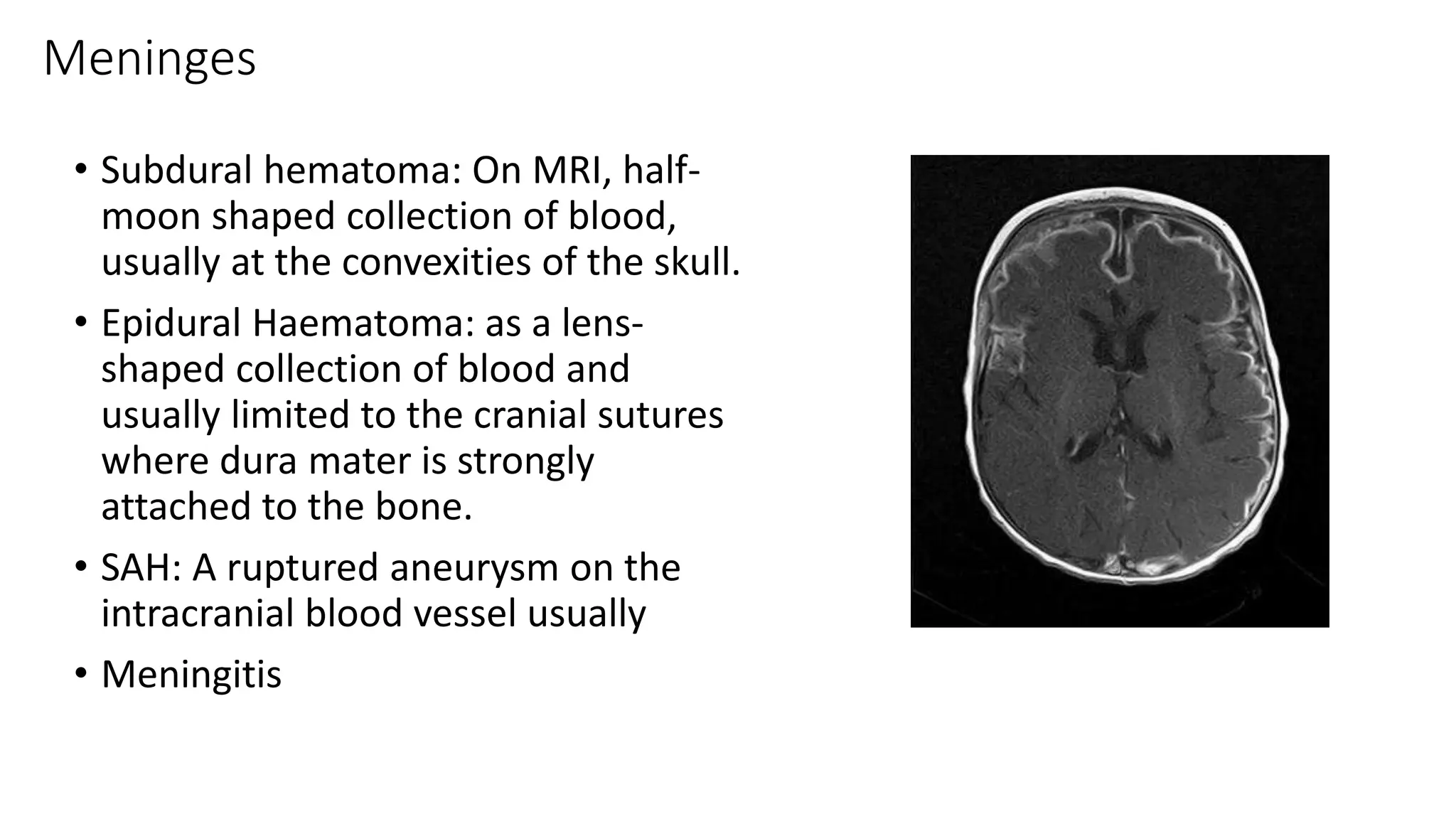
• Subdural hematoma: On MRI, half-
moon shaped collection of blood,
usually at the convexities of the skull.
• Epidural Haematoma: as a lens-
shaped collection of blood and
usually limited to the cranial sutures
where dura mater is strongly
attached to the bone.
• SAH: A ruptured aneurysm on the
intracranial blood vessel usually
• Meningitis
Brainstem
• Midbrain, pons, medulla
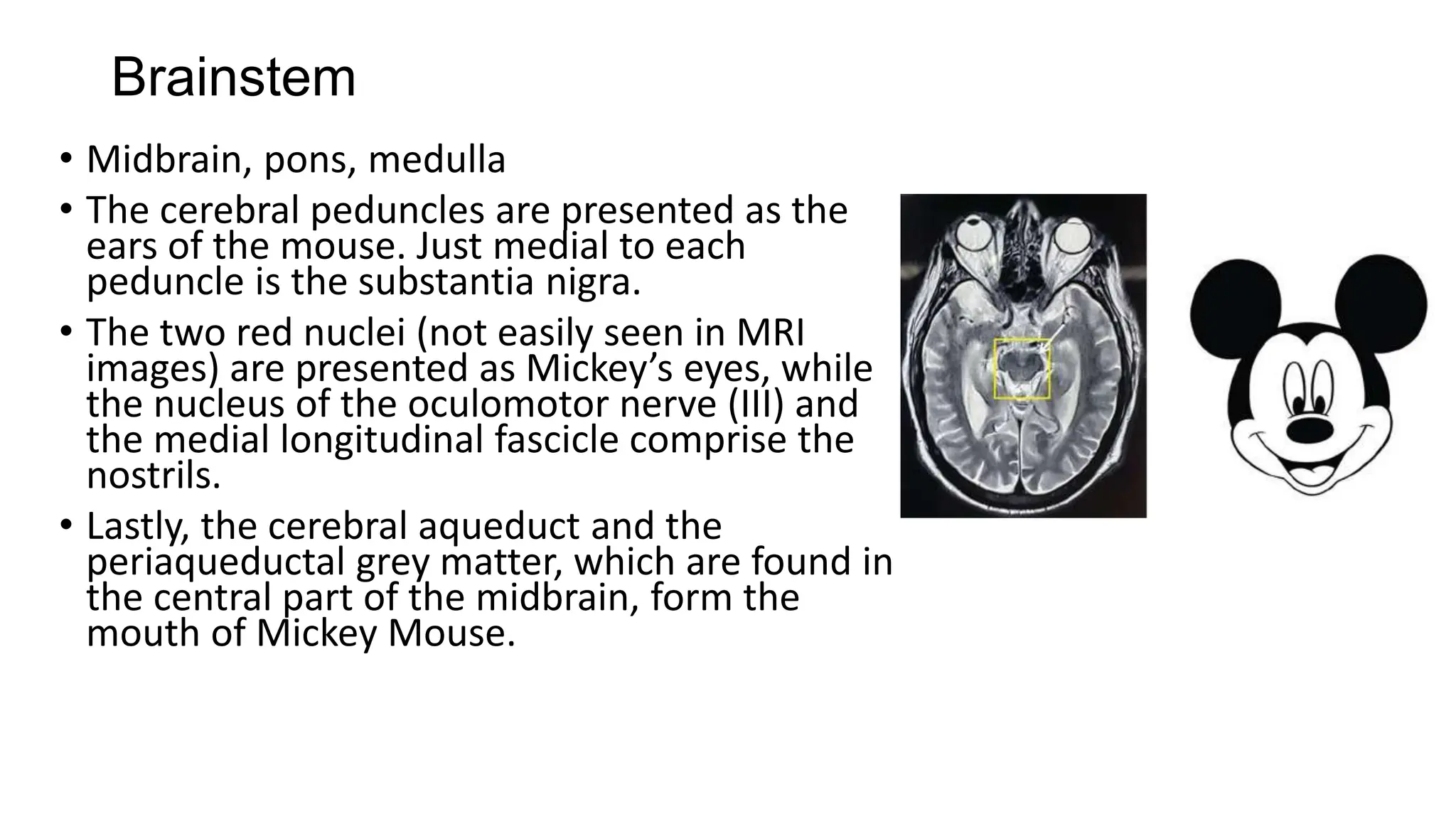
• The cerebral peduncles are presented as the
ears of the mouse. Just medial to each
peduncle is the substantia nigra.
• The two red nuclei (not easily seen in MRI
images) are presented as Mickey’s eyes, while
the nucleus of the oculomotor nerve (III) and
the medial longitudinal fascicle comprise the
nostrils.
• Lastly, the cerebral aqueduct and the
periaqueductal grey matter, which are found in
the central part of the midbrain, form the
mouth of Mickey Mouse.
Cerebellum
• The cerebellum lies below the
occipital lobe of the brain,
occupying the posterior cranial
fossa.
• It consists of the right and left
hemispheres that are
interconnected by a midline area
called the vermis. The
cerebellum sits in the posterior
cranial fossa via its two
projections called the cerebellar
tonsils.
• Fever High grade & excessive sweating associated with chills and
rigors
• Pain abdomen 2 days
• Vomiting
• Dry cough & Shortness of breath
• Respiratory distress: DOI-9-Intubated-DOI-16 tracheostomized
• Dengue NS1 antigen & Dengue IgM - positive
• CNS: GCS persistently- E1VTM3, pupils BERT
• DOI 54- No improvement in sensorium- MRI Brain was done
26-year-old female with no previous history of medical
significance
A. T1 FLAIR showing hyperintensity in bilateral basal ganglia ;B. T2 FLAIR showing hyperintensity in bilateral basal ganglia ; C. SWI image
showing anterior commural bleed and splenial bleed
Spectrum of MRI Findings in Dengue Encephalitis
• DWI and T2W images
with diffusion restriction
and axial
hyperintensities,
respectively, in both
cerebral hemispheres
and both caudate nuclei.
Diffuse areas of diffusion restriction in DWI image are seen in both cerebral
hemispheres including gray white matter, deep white matter, and basal ganglia region
with sparing of the thalami and frontal white matter (A)
Corresponding hyperintensities are seen on T2W images (black arrows in B and C).
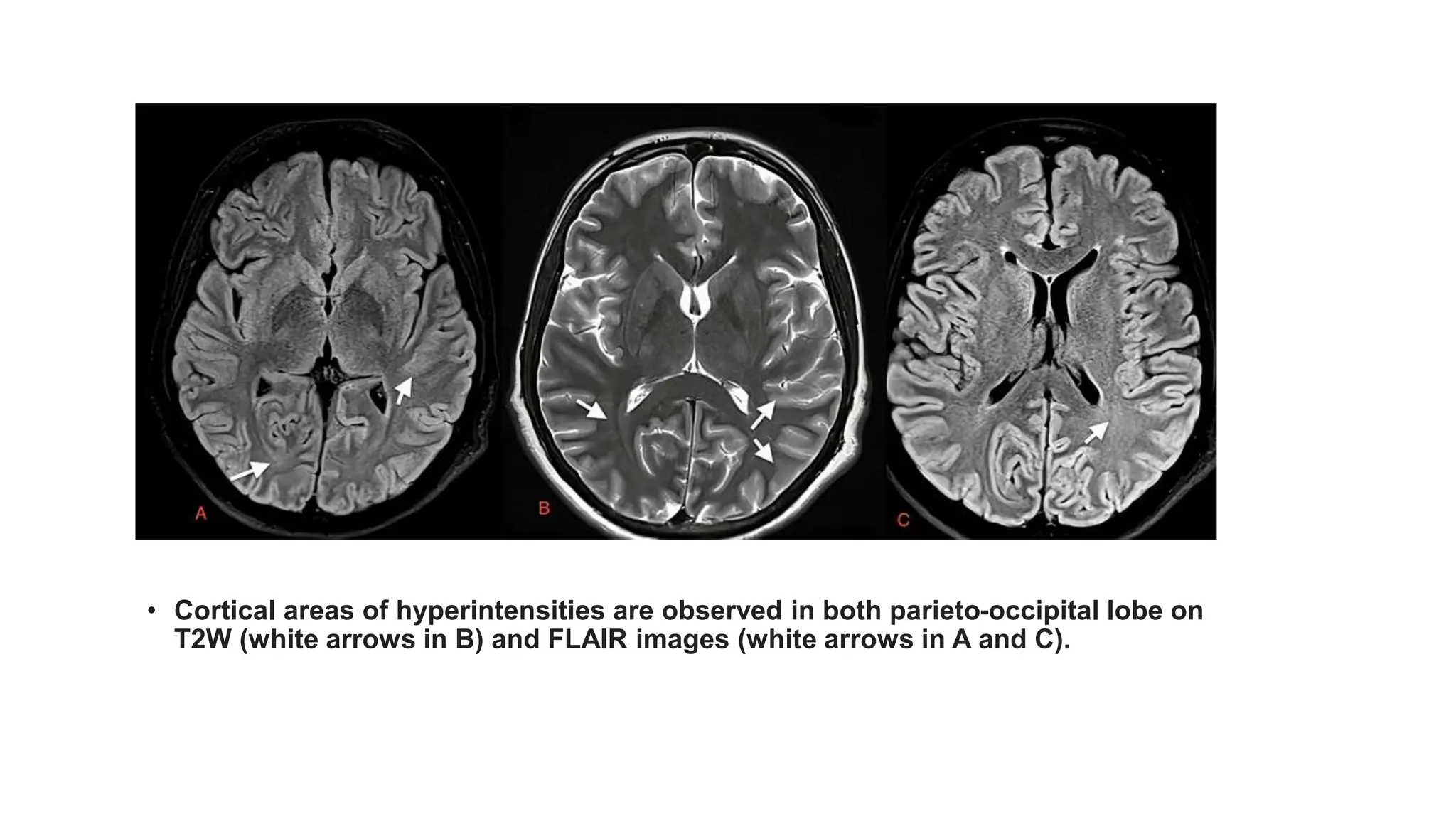
• Cortical areas of hyperintensities are observed in both parieto-occipital lobe on
T2W (white arrows in B) and FLAIR images (white arrows in A and C).
New interval increase in hyperintense areas in DWI and T2W
images are identified in both parieto-occipital lobes and thalami
(white arrows and black arrows, in A and B, respectively).
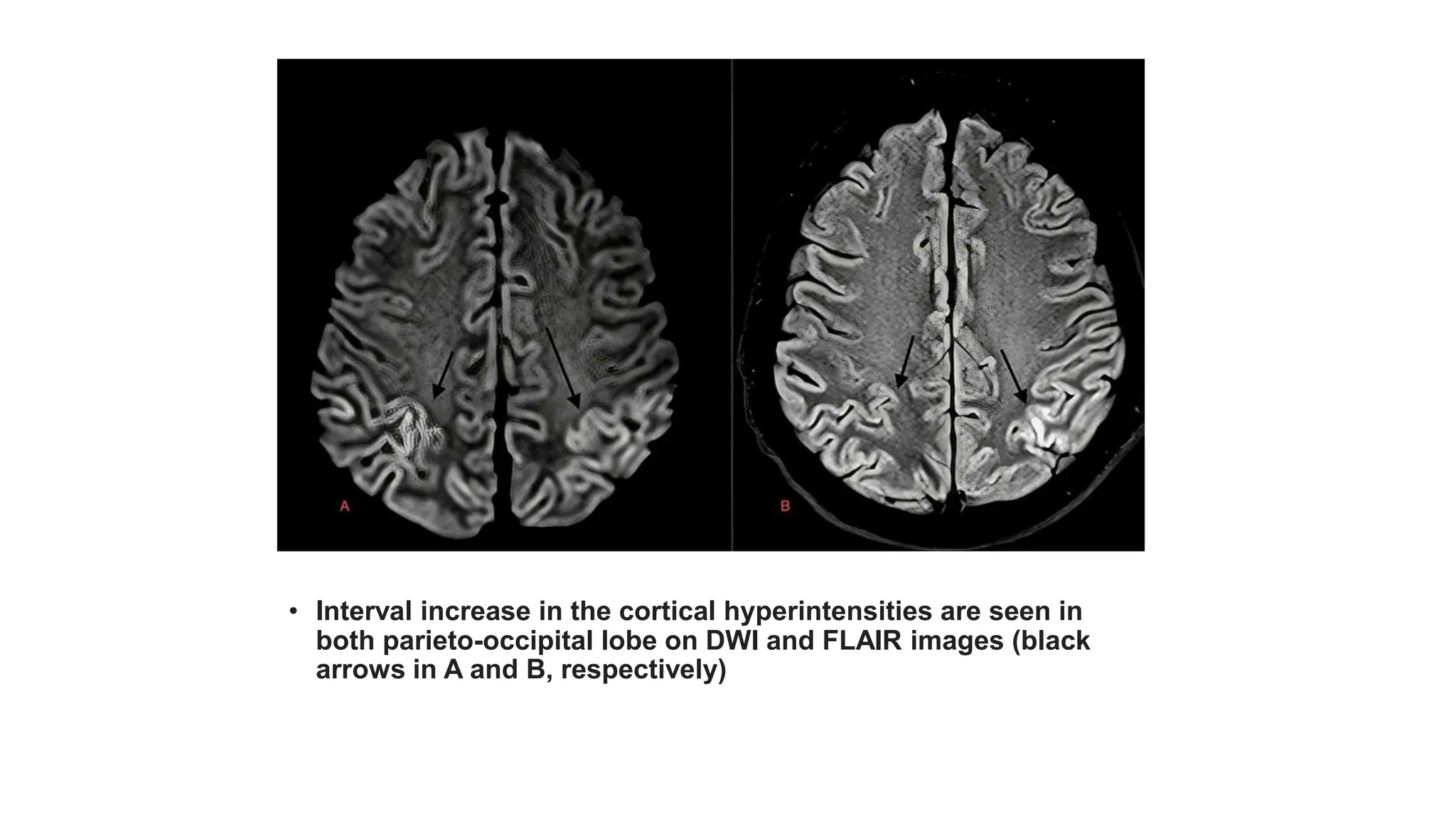
• Interval increase in the cortical hyperintensities are seen in
both parieto-occipital lobe on DWI and FLAIR images (black
arrows in A and B, respectively)
• Diffuse gyral areas of diffusion restriction are seen in both cerebral
hemispheres on DWI (white arrows in A and B), predominantly in the
temporal lobe also involving both hippocampi on day one of presentation
in a 15-year-old male patient with dengue encephalitis.
• Areas of diffusion restriction are also seen in both thalami on DWI with
corresponding hyperintensities on T2W images (white short arrows in A, B,
and C, respectively).
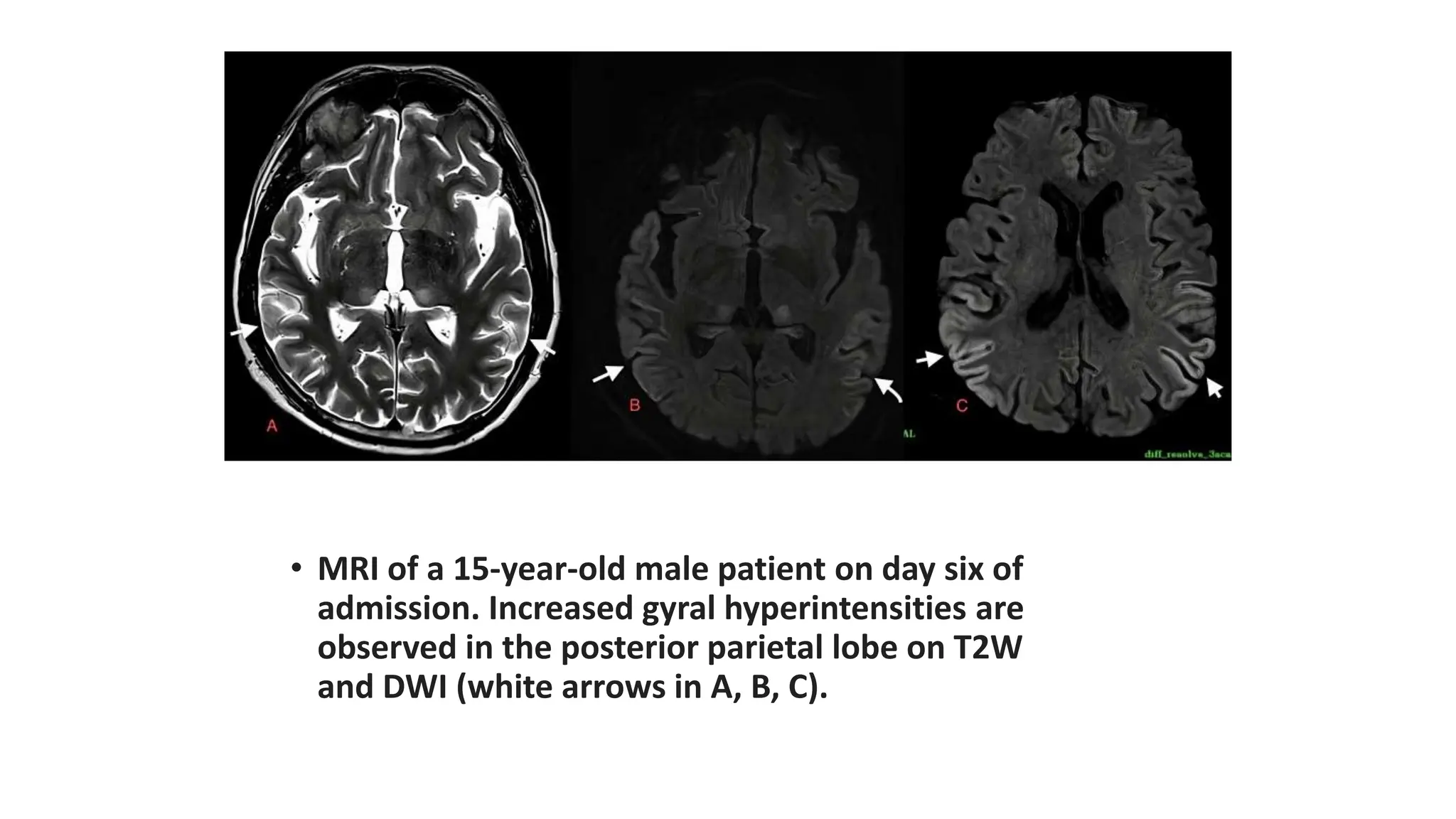
• MRI of a 15-year-old male patient on day six of
admission. Increased gyral hyperintensities are
observed in the posterior parietal lobe on T2W
and DWI (white arrows in A, B, C).
• Diffusion restriction is also
seen on DWI in the pons
(white arrows in A). Areas of
blooming are seen on SWI
(white arrow in B).
Hyperintense areas are seen
in pons T2W sagittal images
and FLAIR images (white
arrow in C and D) in a nine-
year-old male patient with
dengue encephalitis.
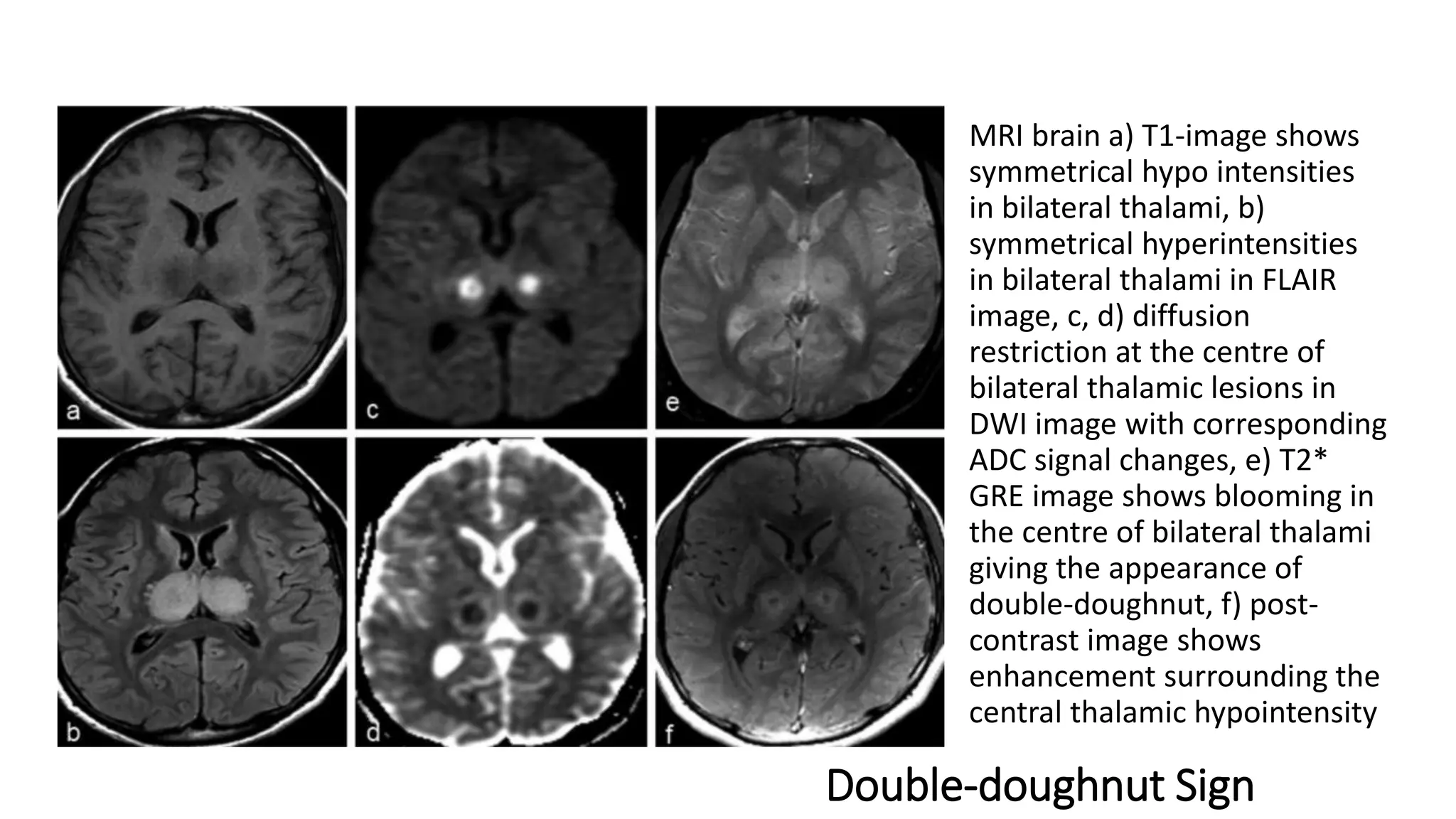
MRI brain a) T1-image shows
symmetrical hypo intensities
in bilateral thalami, b)
symmetrical hyperintensities
in bilateral thalami in FLAIR
image, c, d) diffusion
restriction at the centre of
bilateral thalamic lesions in
DWI image with corresponding
ADC signal changes, e) T2*
GRE image shows blooming in
the centre of bilateral thalami
giving the appearance of
double-doughnut, f) post-
contrast image shows
enhancement surrounding the
central thalamic hypointensity
Double-doughnut Sign
THANK YOU

radiology ppt on mri sequences how to read basic mri sequences and basic pathology

  • 1.
    Radiology meet: MRI BRAIN:Basics and spectrum in Dengue encephalitis Presenter: Dr teenu singh Moderator: Prof Banani poddar
  • 2.
    Introduction • MRI isthe most sensitive imaging method • Hyperintense and hypointense, with the gray matter being the reference point • Routine MRI sequences • T1 weighted image • T2 weighted image • FLAIR • DWI/ADC • SWI • Post contrast images
  • 4.
    How to recognisea sequence • Fat –Subcutaneous fat • Fluid – CSF • Gray –white matter differentiation • Contrast- look at nasal mucosa • To see anatomy- T1 weighted image • To see pathology – T2 weighted image
  • 5.
    T1 Weighted IMAGE •Fat- bright • Fluid-dark • Gray matter is gray • White matter is white • As in anatomy • Most pathology in T1 hypointense & usually associated edema and fluid –low Signal • T1 bright pathology has limited differentials: subacute bleed, fat, melanin, slow flowing blood, calcification/mineralisation.
  • 6.
    T2 weighted image •Fat – bright • Fluid/csf-bright • Gray matter is bright • White matter is dark (reverse anatomic) • Good for detecting areas of pathology • Identify patent vascular flow voids(dark) • Occlusion demonstrates increased signal • Most pathology –bright due to associated edema and fluid is bright in T2 • Low signal in T2 has limited differential: dense cells(lymphoma), blood products ( acute early subacute, and chronic), flow voids, calcification and mineralisation
  • 7.
    FLAIR • Similar toT2WI with signals from free water in suppressed • Most pathology exhibits bright signal on FLAIR • Particularly helpful in demylinating disease e.g MS, Small lesions, subcortical lesions, brainstem path, Prone to artifacts
  • 8.
    Diffusion weighted images/ADC •Appearance similar to FLAIR • (CSF dark and cortex is bright) • Bright signal –T2 shine through/Restricted diffusion • ADC- • It outs T2 • Looks like inverted DWI (CSF bright, and parenchyma dark) • In diffusion restriction-its dark on ADC (sub Acute infarct) • In T2 shine through- both are bright
  • 9.
    Susceptibility weighted image •Identifies small foci of calcification and microbleed
  • 10.
    Post contrast images •Typically uses T1 WI • Gadolinium is the contrast agent • T1- low signal csf and high signal fat • Normal enhancement of nasal turbinates • Contrast with sulcal vessels and venous sinuses are unreliable • Always compare with pre-contrast to make sure that increased signal is due to actual enhancement • Always look for leptomningeal enhancement- too much enhancement along surface of cerebral sulci, cerebellar folia and surrounding brainstem. FLAIR post contrast has more sensitIvity.
  • 11.
    Identifiable patterns • T1–fluid dark, fat bright, G-W anatomic • T2- fluid bright G-W reverse anatomic • FLAIR- fluid dark, G-W reverse anatomic • DWI- looks like FLAIR, no visualised calvarium/scalp • ADC- Fluid bright , brain dark, very low resolution • SWI- prominent dark vessels • T1 Post contrast- T1WI with increased signal in vessels and nasal turbinates
  • 12.
    Sequences for specificpathology • T1 -anatomic localisation , T1 signal subacute blood and fat • T2 – flow voids, T2 signal aging blood, dense cells and vascularity • FLAIR – identify and localise pathology • DWI/ADC-evaluated for restricted diffusion • SWI-most sensitive sequence for hge , calcification • Post contrast- evaluate for enhancement (intra-axial and extra axial) • Heavily T2WI- evaluate cranial nerve pathology
  • 13.
    How to readbrain MRI • Systematic approach • Midline and going laterally. • Start from the ventricle, surrounding subcortical structures, brain lobes, cerebral cortex, to meninges and skull.
  • 14.
    Lateral ventricle: • Thelateral ventricles are the two irregularly shaped cavities, frontal horn, body, occipital and temporal horns.
  • 15.
    Third ventricle • Thethird ventricle is located between the thalami and below the fornix of the brain. • Communicate with the lateral ventricles through the foramina of Monro (anteriorly), and with the 4th ventricle via the aqueduct of Sylvius (posteriorly). • Squashing: Tumors, abscesses or hematomas • Enlarging of the ventricles :hydrocephalus • Any asymmetry, midline shift or displacement
  • 16.
    Thalamus and basalganglia • Lateral from the ventricles: subcortical structures; thalamus and basal ganglia. • The caudate nucleus is an elongated C-shaped nucleus that consists of the head, body and tail.
  • 17.
    • Lateral tothe thalamus is the internal capsule. • Laterally to the internal capsule are the globus pallidus and putamen : the lenticular nucleus.
  • 18.
    • Thin externalcapsule which separates the lenticular nucleus from the thin and elongated claustrum (most lateral basal nucleus) • Laterally to it is the extreme capsule, which separates the claustrum from the insular cortex. • Hyperintense basal ganglia areas :- ischaemic stroke. • Internal capsule is also a very common area where vascular lesions e.g. hemorrhagic stroke • Hypointense areas in the basal ganglia : neurodegenerative diseases such as Parkinson’s disease.
  • 19.
    Brain lobes: • Sixlobes of the brain; frontal, temporal, limbic, parietal, insular and occipital lobes. • The insular and limbic lobes are the ones of particular interest in the brain MRI. • The insular lobe lies just lateral to the extreme capsule of basal ganglia, deep to the meeting point of the frontal, temporal and parietal lobes. • The limbic lobe lies deep to the parietal and frontal lobes. The limbic lobe is composed of the hippocampal formation, amygdala, subcallosal area and cingulate gyri.
  • 20.
    Cerebral cortex • Cerebralcortex: alteration of demarcation between the white and gray matter. • The loss of gray-white matter differentiation : cytotoxic oedema (cerebral ischemia or hypoxic-ischemic encephalopathy) • The reverse, (The accentuation of demarcation between the masses) : vasogenic edema (blood-brain barrier disruption in the cerebral tissue that surrounds the tumors) :-> the extracellular edema that enhances the signal intensity emitted from the white matter. • Appearance of the gyri of the cerebral cortex : Wider sulci between the gyri may indicate neurodegenerative diseases, such as alzheimer's disease.
  • 21.
    Meninges • Subdural hematoma:On MRI, half- moon shaped collection of blood, usually at the convexities of the skull. • Epidural Haematoma: as a lens- shaped collection of blood and usually limited to the cranial sutures where dura mater is strongly attached to the bone. • SAH: A ruptured aneurysm on the intracranial blood vessel usually • Meningitis
  • 22.
    Brainstem • Midbrain, pons,medulla • The cerebral peduncles are presented as the ears of the mouse. Just medial to each peduncle is the substantia nigra. • The two red nuclei (not easily seen in MRI images) are presented as Mickey’s eyes, while the nucleus of the oculomotor nerve (III) and the medial longitudinal fascicle comprise the nostrils. • Lastly, the cerebral aqueduct and the periaqueductal grey matter, which are found in the central part of the midbrain, form the mouth of Mickey Mouse.
  • 23.
    Cerebellum • The cerebellumlies below the occipital lobe of the brain, occupying the posterior cranial fossa. • It consists of the right and left hemispheres that are interconnected by a midline area called the vermis. The cerebellum sits in the posterior cranial fossa via its two projections called the cerebellar tonsils.
  • 24.
    • Fever Highgrade & excessive sweating associated with chills and rigors • Pain abdomen 2 days • Vomiting • Dry cough & Shortness of breath • Respiratory distress: DOI-9-Intubated-DOI-16 tracheostomized • Dengue NS1 antigen & Dengue IgM - positive • CNS: GCS persistently- E1VTM3, pupils BERT • DOI 54- No improvement in sensorium- MRI Brain was done 26-year-old female with no previous history of medical significance
  • 30.
    A. T1 FLAIRshowing hyperintensity in bilateral basal ganglia ;B. T2 FLAIR showing hyperintensity in bilateral basal ganglia ; C. SWI image showing anterior commural bleed and splenial bleed
  • 31.
    Spectrum of MRIFindings in Dengue Encephalitis
  • 32.
    • DWI andT2W images with diffusion restriction and axial hyperintensities, respectively, in both cerebral hemispheres and both caudate nuclei.
  • 33.
    Diffuse areas ofdiffusion restriction in DWI image are seen in both cerebral hemispheres including gray white matter, deep white matter, and basal ganglia region with sparing of the thalami and frontal white matter (A) Corresponding hyperintensities are seen on T2W images (black arrows in B and C).
  • 34.
    • Cortical areasof hyperintensities are observed in both parieto-occipital lobe on T2W (white arrows in B) and FLAIR images (white arrows in A and C).
  • 35.
    New interval increasein hyperintense areas in DWI and T2W images are identified in both parieto-occipital lobes and thalami (white arrows and black arrows, in A and B, respectively).
  • 36.
    • Interval increasein the cortical hyperintensities are seen in both parieto-occipital lobe on DWI and FLAIR images (black arrows in A and B, respectively)
  • 37.
    • Diffuse gyralareas of diffusion restriction are seen in both cerebral hemispheres on DWI (white arrows in A and B), predominantly in the temporal lobe also involving both hippocampi on day one of presentation in a 15-year-old male patient with dengue encephalitis. • Areas of diffusion restriction are also seen in both thalami on DWI with corresponding hyperintensities on T2W images (white short arrows in A, B, and C, respectively).
  • 38.
    • MRI ofa 15-year-old male patient on day six of admission. Increased gyral hyperintensities are observed in the posterior parietal lobe on T2W and DWI (white arrows in A, B, C).
  • 39.
    • Diffusion restrictionis also seen on DWI in the pons (white arrows in A). Areas of blooming are seen on SWI (white arrow in B). Hyperintense areas are seen in pons T2W sagittal images and FLAIR images (white arrow in C and D) in a nine- year-old male patient with dengue encephalitis.
  • 40.
    MRI brain a)T1-image shows symmetrical hypo intensities in bilateral thalami, b) symmetrical hyperintensities in bilateral thalami in FLAIR image, c, d) diffusion restriction at the centre of bilateral thalamic lesions in DWI image with corresponding ADC signal changes, e) T2* GRE image shows blooming in the centre of bilateral thalami giving the appearance of double-doughnut, f) post- contrast image shows enhancement surrounding the central thalamic hypointensity Double-doughnut Sign
  • 41.

Editor's Notes

  • #9 Long t2 signal
  • #15 The frontal horns are the largest components of the ventricular system of the brain. laterally from the midline, being separated by the genu of corpus callosum The lateral surfaces of the frontal horn : head and body of the caudate nucleus. Collateral trigone: The trigone is immediately lateral to the splenium of corpus callosum. It gives off a posterior, horizontal projection, called the occipital horn, as well as an anteroinferior projection called the temporal horn.
  • #20 The insular lobe lies just lateral to the extreme capsule of basal ganglia. It is a small portion of the cerebral cortex found deep to the meeting point of the frontal, temporal and parietal lobes. The limbic lobe lies deep to the parietal and frontal lobes. It is a functional unit often referred to as the limbic system. The limbic lobe is composed of the hippocampal formation, amygdala, subcallosal area and cingulate gyri. It is a functional unit often referred to as the limbic system
  • #21 Normally, they should be tightly packed but yet distinguishable from one another
  • #24 On each side of the vermis is the deep white matter of the cerebellum which contains the deep cerebellar nuclei. From medial to lateral, these are the fastigial, globose, emboliform and dentate nuclei. The outermost layer of the cerebellum is the cerebellar cortex. It is grooved by the deep horizontal sulci, which contribute to the unique appearance of the cerebellum on MRI scans.