PURPOSEFUL
QUESTIONING AND
BUILD PROCEDURAL
FLUENCY FROM
CONCEPTUAL
UNDERSTANDING
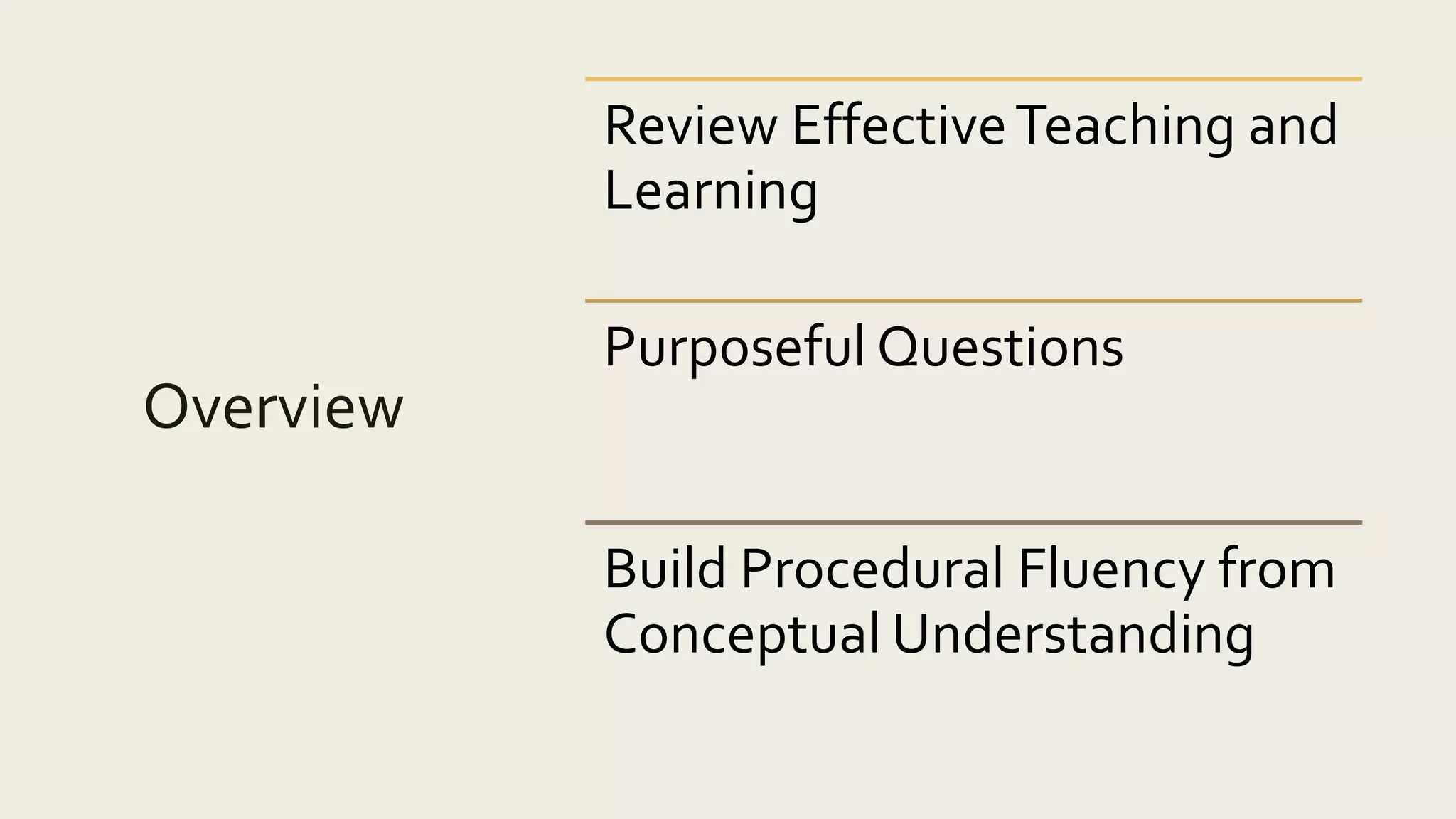
Overview
Review EffectiveTeaching and
Learning
Purposeful Questions
Build Procedural Fluency from
Conceptual Understanding
Review
Match the effective
math practice with
the definition!
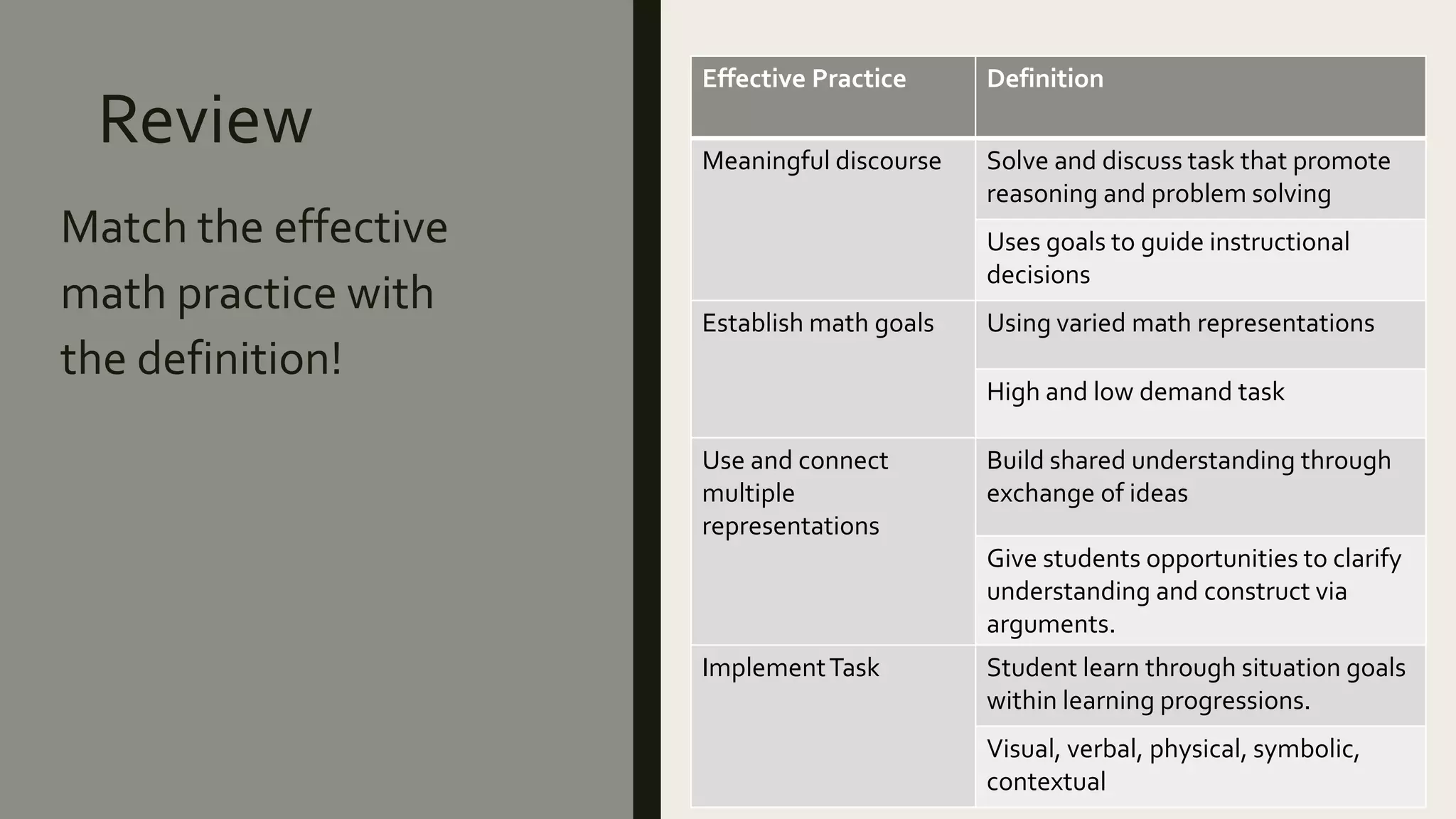
Effective Practice Definition
Meaningful discourse Solve and discuss task that promote
reasoning and problem solving
Uses goals to guide instructional
decisions
Establish math goals Using varied math representations
High and low demand task
Use and connect
multiple
representations
Build shared understanding through
exchange of ideas
Give students opportunities to clarify
understanding and construct via
arguments.
ImplementTask Student learn through situation goals
within learning progressions.
Visual, verbal, physical, symbolic,
contextual
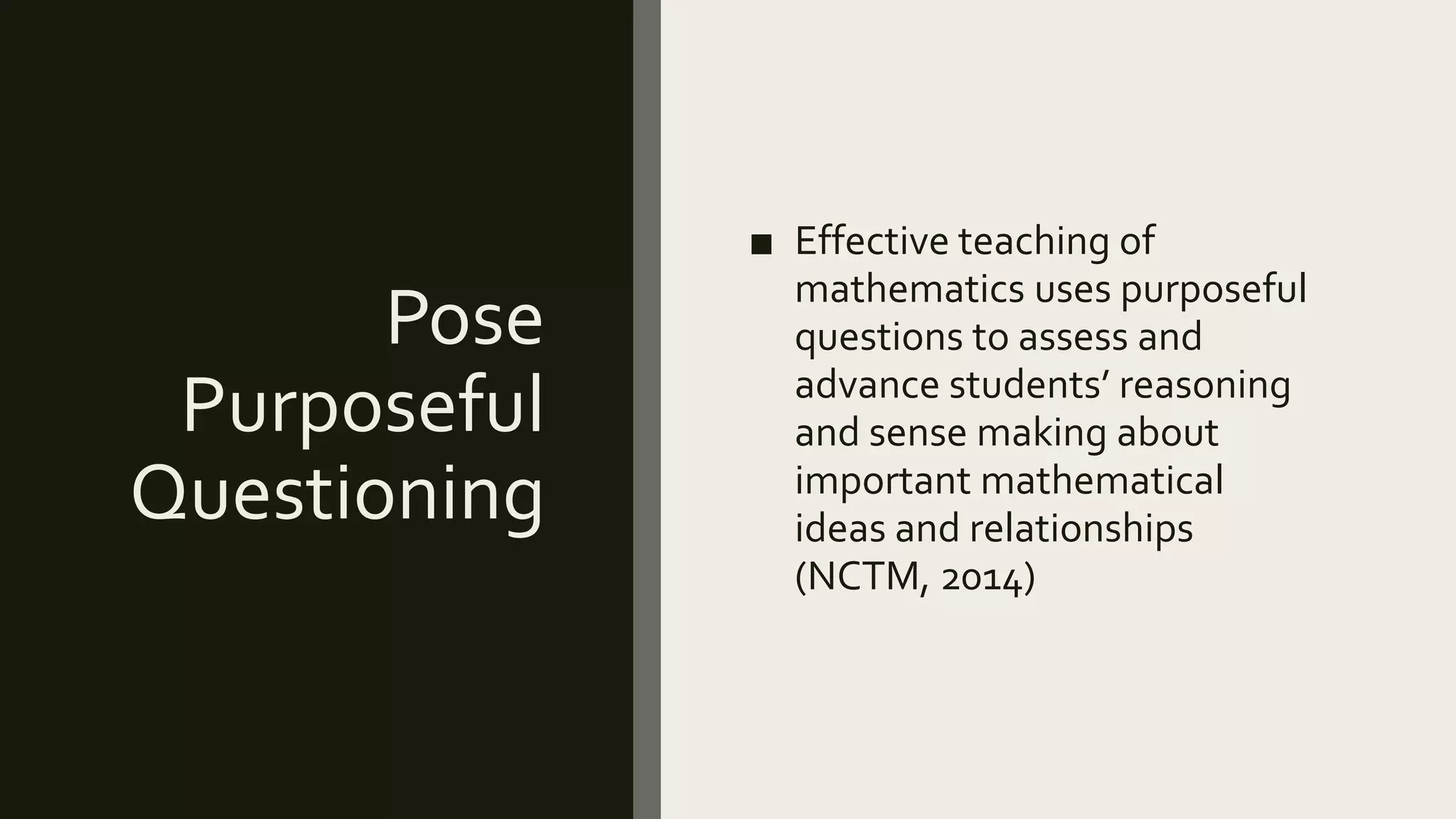
Pose
Purposeful
Questioning
■ Effective teaching of
mathematics uses purposeful
questions to assess and
advance students’ reasoning
and sense making about
important mathematical
ideas and relationships
(NCTM, 2014)
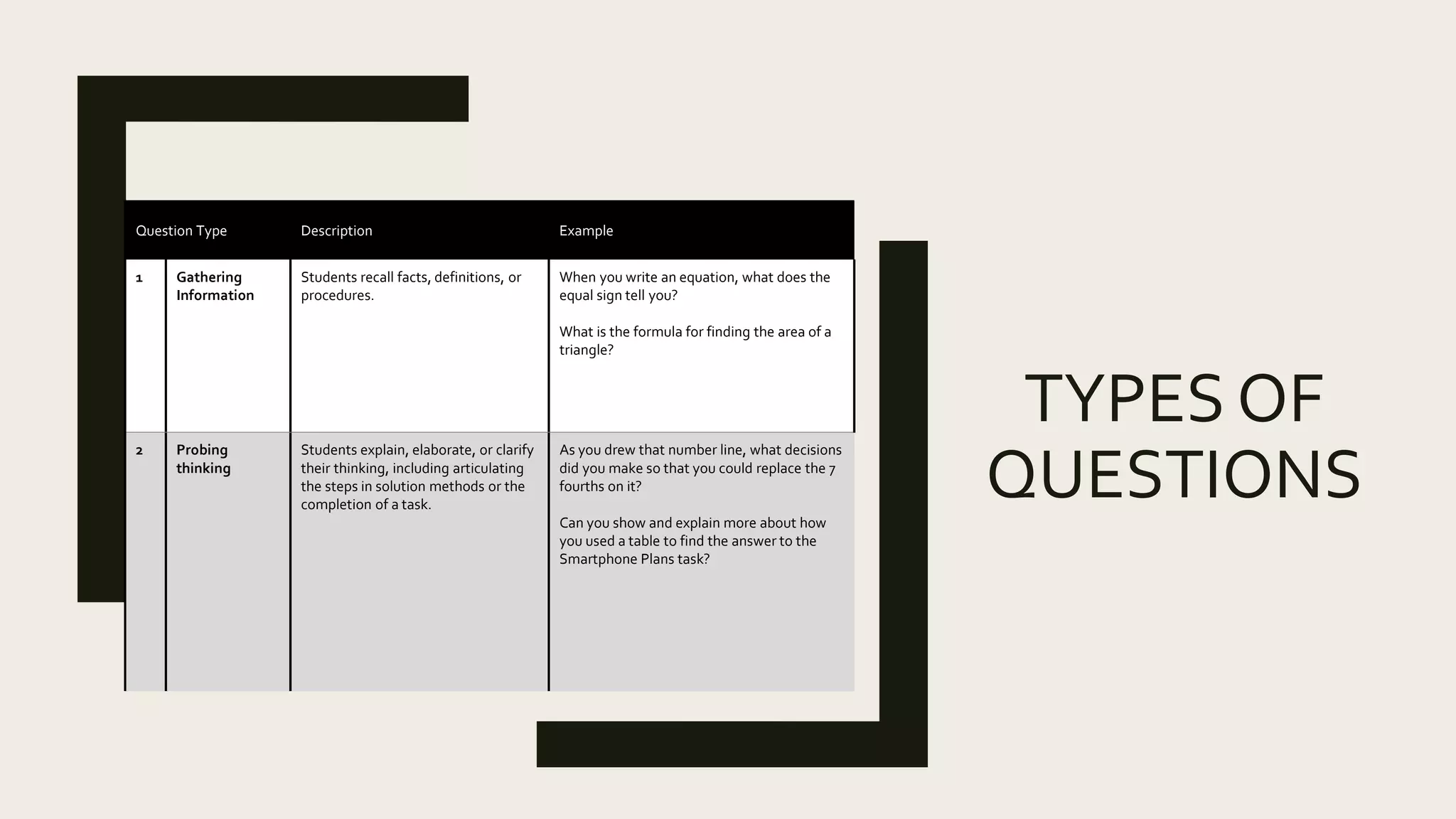
TYPES OF
QUESTIONS
Question Type Description Example
1 Gathering
Information
Students recall facts, definitions, or
procedures.
When you write an equation, what does the
equal sign tell you?
What is the formula for finding the area of a
triangle?
2 Probing
thinking
Students explain, elaborate, or clarify
their thinking, including articulating
the steps in solution methods or the
completion of a task.
As you drew that number line, what decisions
did you make so that you could replace the 7
fourths on it?
Can you show and explain more about how
you used a table to find the answer to the
Smartphone Plans task?
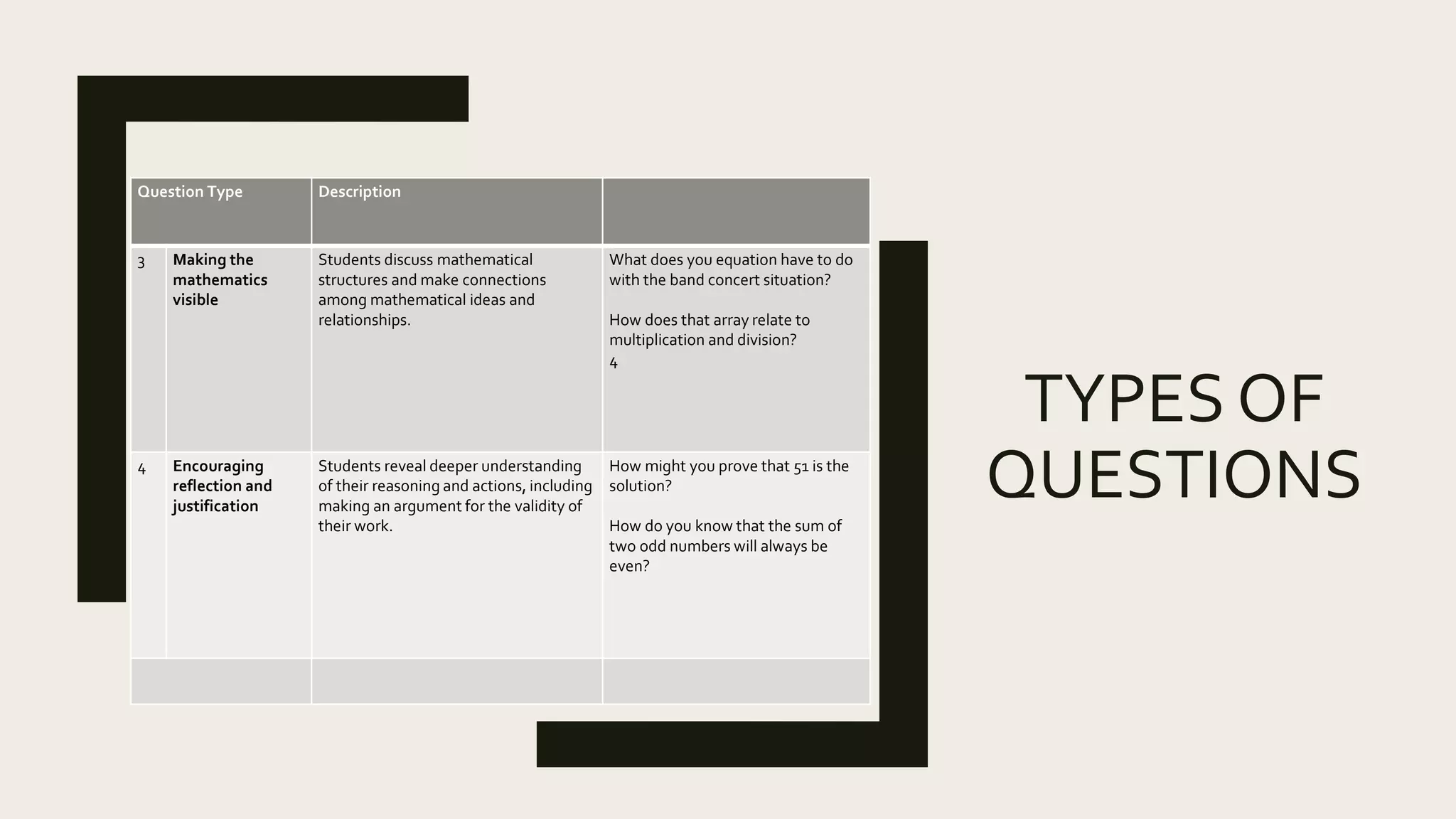
TYPES OF
QUESTIONS
Question Type Description
3 Making the
mathematics
visible
Students discuss mathematical
structures and make connections
among mathematical ideas and
relationships.
What does you equation have to do
with the band concert situation?
How does that array relate to
multiplication and division?
4
4 Encouraging
reflection and
justification
Students reveal deeper understanding
of their reasoning and actions, including
making an argument for the validity of
their work.
How might you prove that 51 is the
solution?
How do you know that the sum of
two odd numbers will always be
even?
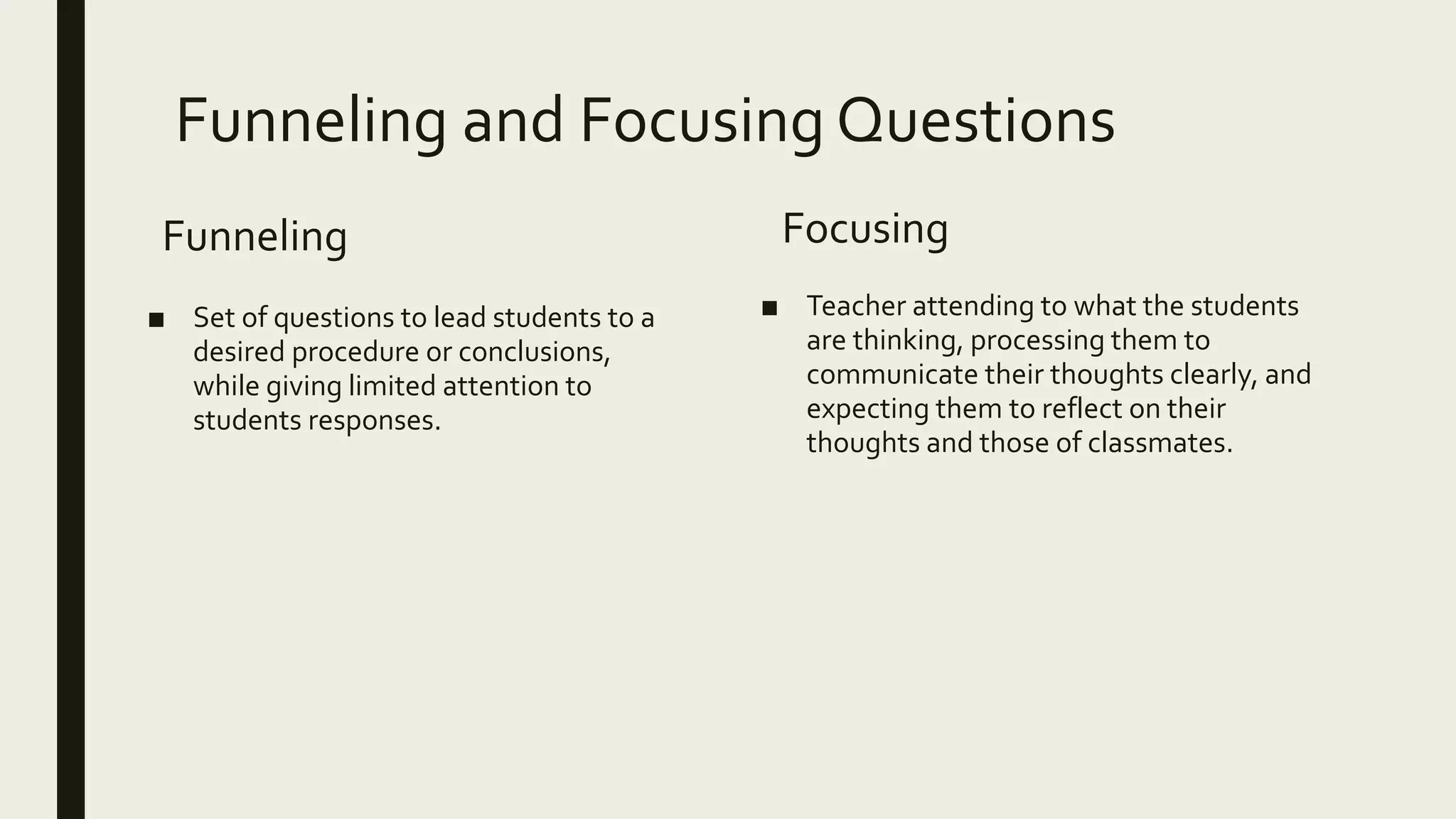
Funneling and Focusing Questions
Funneling
■ Set of questions to lead students to a
desired procedure or conclusions,
while giving limited attention to
students responses.
Focusing
■ Teacher attending to what the students
are thinking, processing them to
communicate their thoughts clearly, and
expecting them to reflect on their
thoughts and those of classmates.
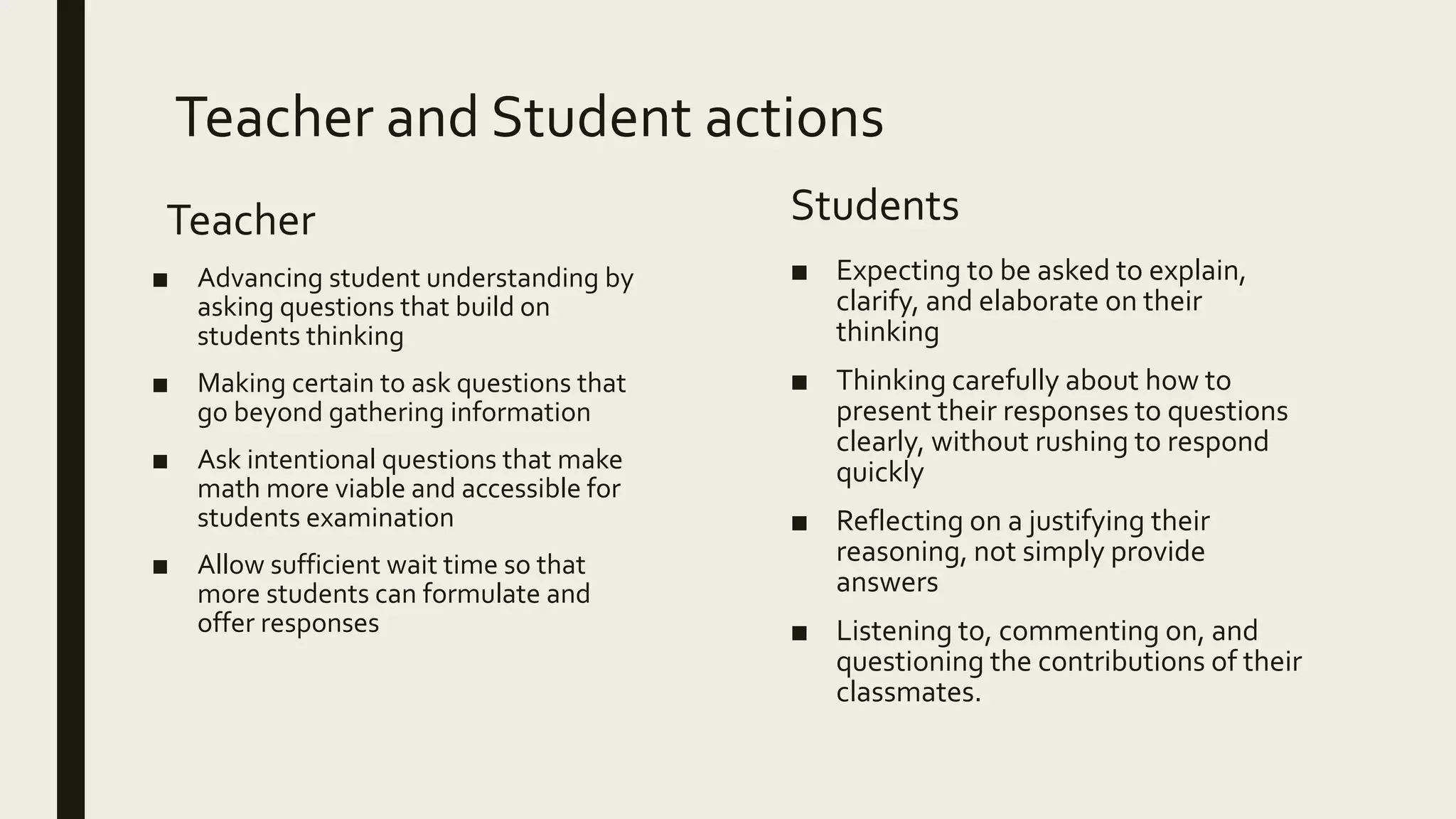
Teacher and Student actions
Teacher
■ Advancing student understanding by
asking questions that build on
students thinking
■ Making certain to ask questions that
go beyond gathering information
■ Ask intentional questions that make
math more viable and accessible for
students examination
■ Allow sufficient wait time so that
more students can formulate and
offer responses
Students
■ Expecting to be asked to explain,
clarify, and elaborate on their
thinking
■ Thinking carefully about how to
present their responses to questions
clearly, without rushing to respond
quickly
■ Reflecting on a justifying their
reasoning, not simply provide
answers
■ Listening to, commenting on, and
questioning the contributions of their
classmates.
Building
Procedural
Fluency from
Conceptual
Understanding
■ Effective teaching of
mathematics builds fluency
with procedures on a
foundation of conceptual
understanding so that
students, over time, become
skillful in using procedures
flexibly as the solve
contextual and mathematical
problems.
Fluency
■ Students are able to choose flexibly among
methods and strategies to solve contextual
and mathematical problems.
■ They understand and are able to explain their
approaches
■ They are able to produce accurate answers
efficiently.
■ Fluency builds on initial exploration and
discussion of number concepts to using
informal reasoning strategies based on
meaning and prosperities of operations
Computational Fluency
■ More than memorizing facts or procedural steps.
■ Early works with reasoning strategies is related to algebraic reasoning
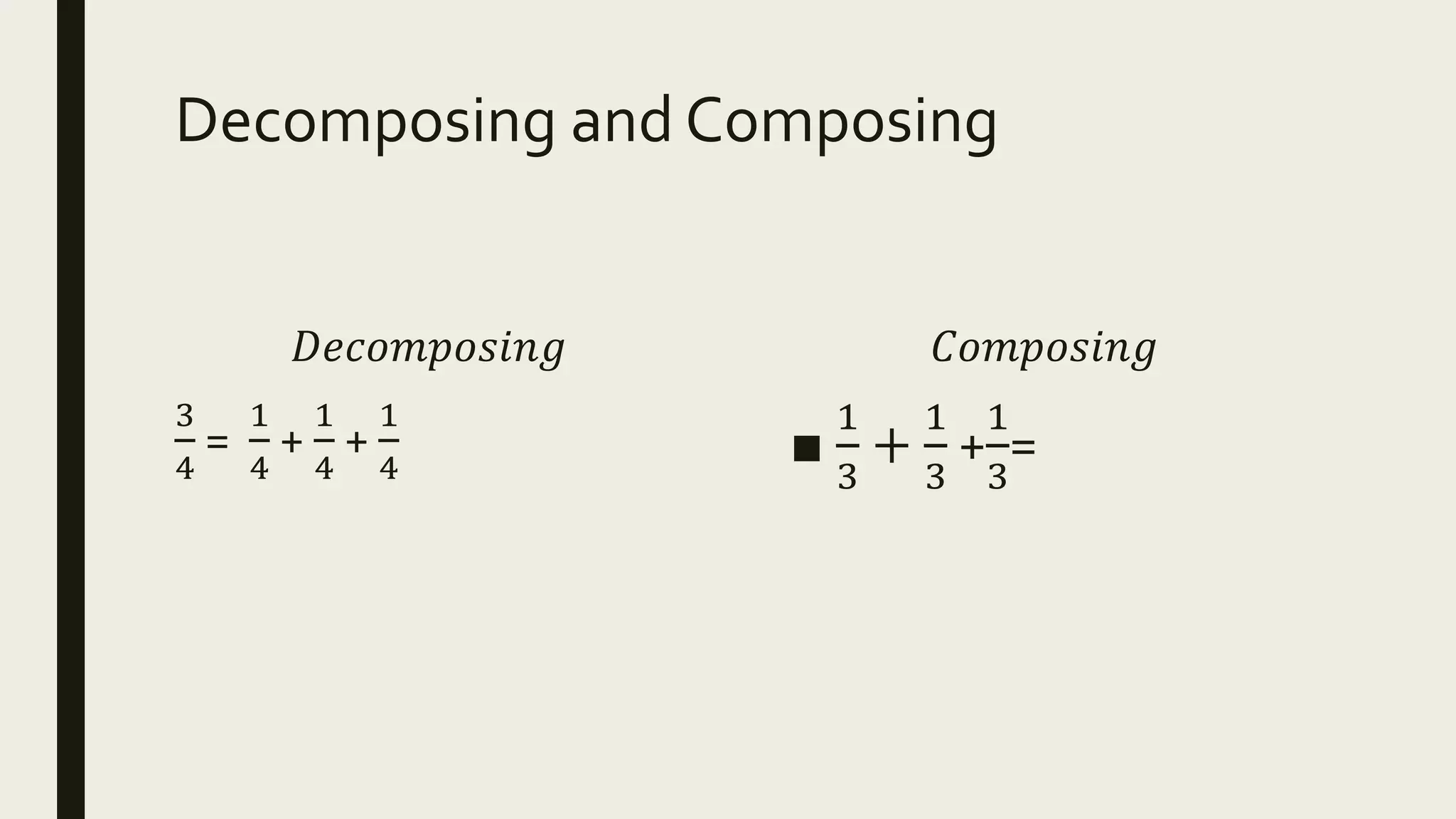
■ Composition (putting parts together) and decomposition (taking things apart)- leads
to understanding properties of operations.
Decomposing and Composing
𝐷𝑒𝑐𝑜𝑚𝑝𝑜𝑠𝑖𝑛𝑔
3
4
=
1
4
+
1
4
+
1
4
𝐶𝑜𝑚𝑝𝑜𝑠𝑖𝑛𝑔
■
1
3
+
1
3
+
1
3
=
Learning procedures for multi digit computation needs to build
from an understanding of their mathematical basis (Fuson and
Beckmann 2012/2013; Russell 2000)
Lets look-p. 43
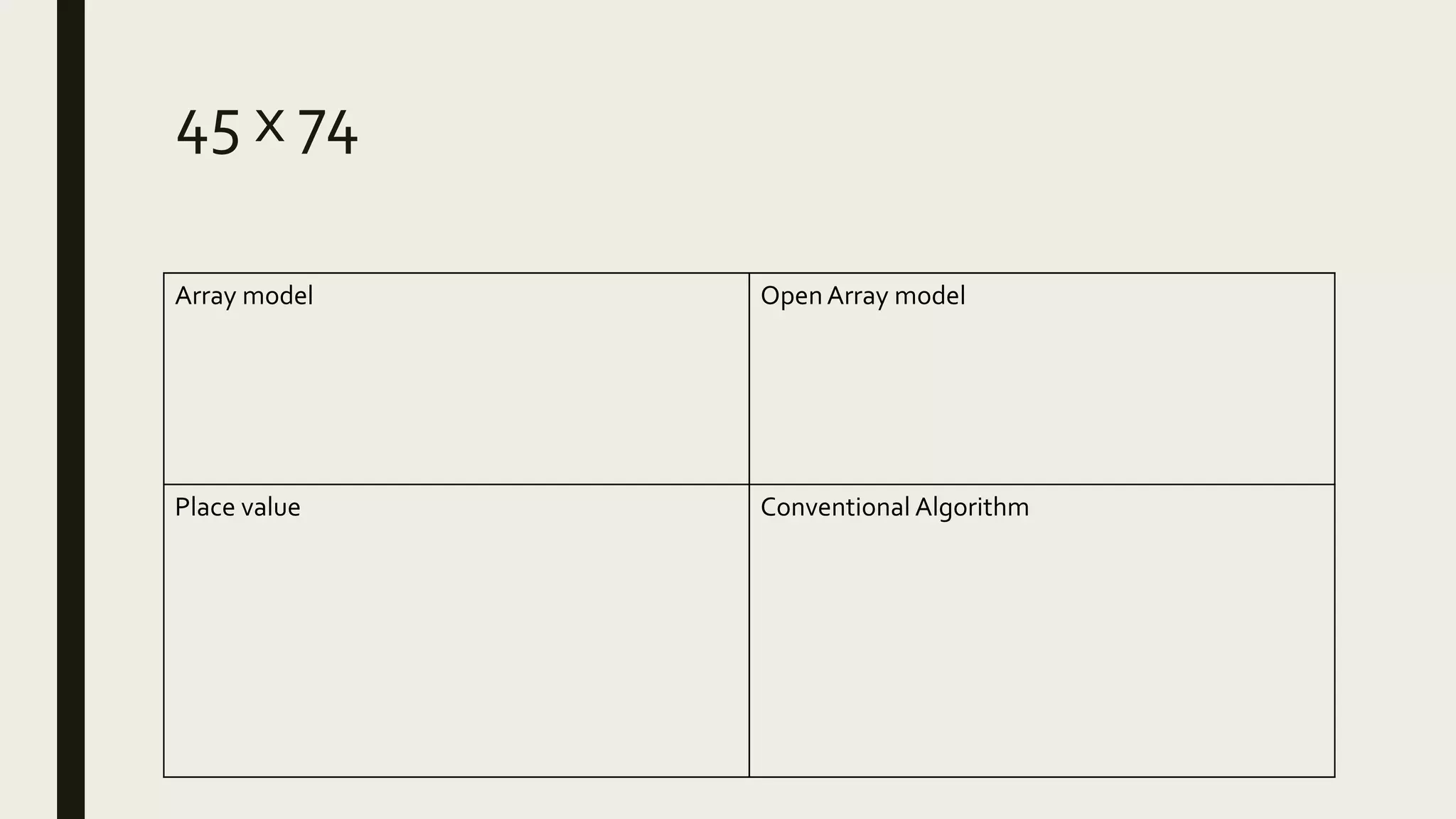
45 x 74
Array model OpenArray model
Place value Conventional Algorithm

Questioning and building procedural knowledge

  • 1.
  • 2.
    Overview Review EffectiveTeaching and Learning PurposefulQuestions Build Procedural Fluency from Conceptual Understanding
  • 3.
    Review Match the effective mathpractice with the definition! Effective Practice Definition Meaningful discourse Solve and discuss task that promote reasoning and problem solving Uses goals to guide instructional decisions Establish math goals Using varied math representations High and low demand task Use and connect multiple representations Build shared understanding through exchange of ideas Give students opportunities to clarify understanding and construct via arguments. ImplementTask Student learn through situation goals within learning progressions. Visual, verbal, physical, symbolic, contextual
  • 4.
    Pose Purposeful Questioning ■ Effective teachingof mathematics uses purposeful questions to assess and advance students’ reasoning and sense making about important mathematical ideas and relationships (NCTM, 2014)
  • 5.
    TYPES OF QUESTIONS Question TypeDescription Example 1 Gathering Information Students recall facts, definitions, or procedures. When you write an equation, what does the equal sign tell you? What is the formula for finding the area of a triangle? 2 Probing thinking Students explain, elaborate, or clarify their thinking, including articulating the steps in solution methods or the completion of a task. As you drew that number line, what decisions did you make so that you could replace the 7 fourths on it? Can you show and explain more about how you used a table to find the answer to the Smartphone Plans task?
  • 6.
    TYPES OF QUESTIONS Question TypeDescription 3 Making the mathematics visible Students discuss mathematical structures and make connections among mathematical ideas and relationships. What does you equation have to do with the band concert situation? How does that array relate to multiplication and division? 4 4 Encouraging reflection and justification Students reveal deeper understanding of their reasoning and actions, including making an argument for the validity of their work. How might you prove that 51 is the solution? How do you know that the sum of two odd numbers will always be even?
  • 7.
    Funneling and FocusingQuestions Funneling ■ Set of questions to lead students to a desired procedure or conclusions, while giving limited attention to students responses. Focusing ■ Teacher attending to what the students are thinking, processing them to communicate their thoughts clearly, and expecting them to reflect on their thoughts and those of classmates.
  • 8.
    Teacher and Studentactions Teacher ■ Advancing student understanding by asking questions that build on students thinking ■ Making certain to ask questions that go beyond gathering information ■ Ask intentional questions that make math more viable and accessible for students examination ■ Allow sufficient wait time so that more students can formulate and offer responses Students ■ Expecting to be asked to explain, clarify, and elaborate on their thinking ■ Thinking carefully about how to present their responses to questions clearly, without rushing to respond quickly ■ Reflecting on a justifying their reasoning, not simply provide answers ■ Listening to, commenting on, and questioning the contributions of their classmates.
  • 9.
    Building Procedural Fluency from Conceptual Understanding ■ Effectiveteaching of mathematics builds fluency with procedures on a foundation of conceptual understanding so that students, over time, become skillful in using procedures flexibly as the solve contextual and mathematical problems.
  • 10.
    Fluency ■ Students areable to choose flexibly among methods and strategies to solve contextual and mathematical problems. ■ They understand and are able to explain their approaches ■ They are able to produce accurate answers efficiently. ■ Fluency builds on initial exploration and discussion of number concepts to using informal reasoning strategies based on meaning and prosperities of operations
  • 11.
    Computational Fluency ■ Morethan memorizing facts or procedural steps. ■ Early works with reasoning strategies is related to algebraic reasoning ■ Composition (putting parts together) and decomposition (taking things apart)- leads to understanding properties of operations.
  • 12.
  • 13.
    Learning procedures formulti digit computation needs to build from an understanding of their mathematical basis (Fuson and Beckmann 2012/2013; Russell 2000) Lets look-p. 43
  • 14.
    45 x 74 Arraymodel OpenArray model Place value Conventional Algorithm