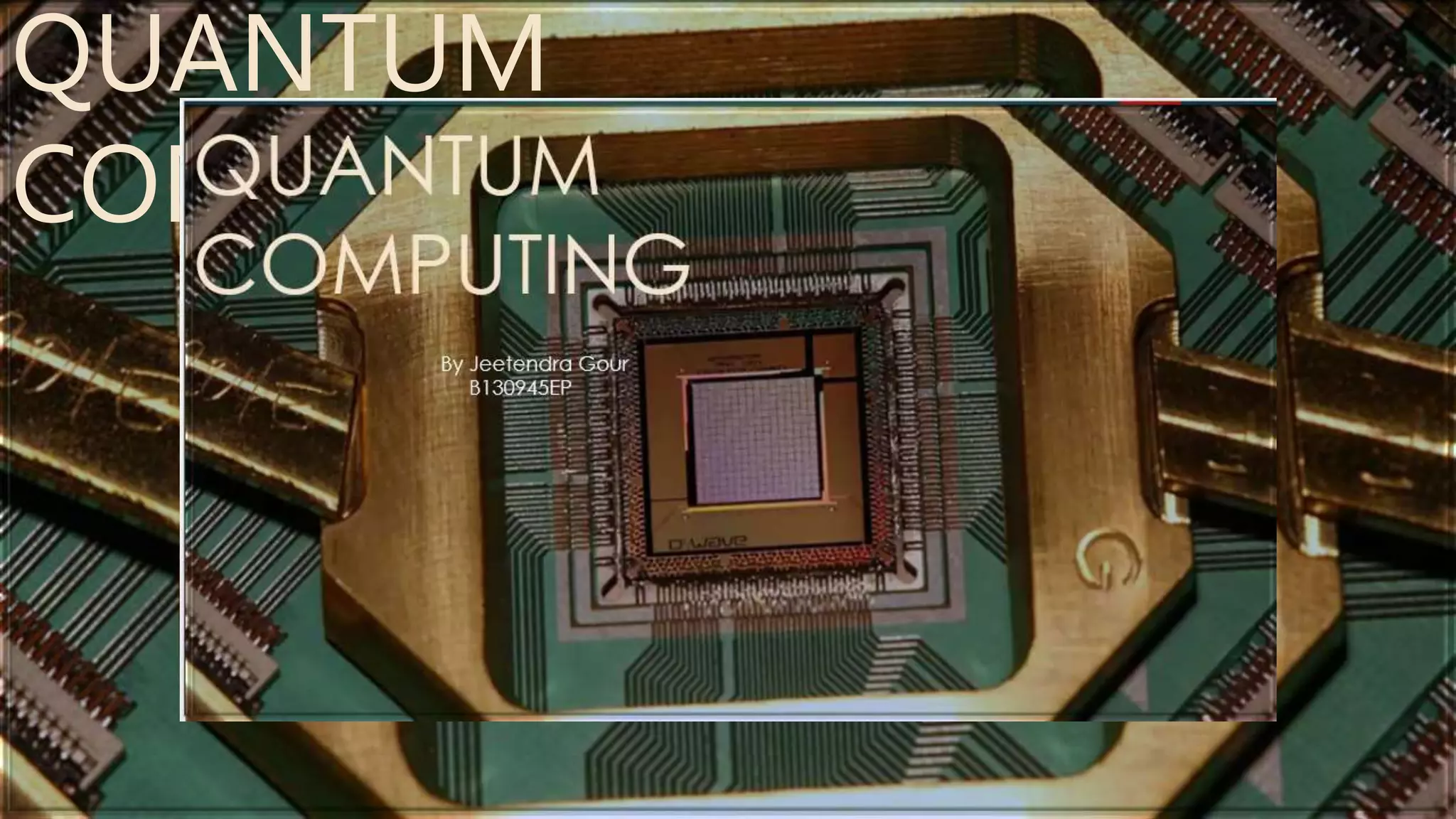
QUANTUM
COMPUTING
By Jeetendra Gour
B130945EP
Why Quantum Computers
 There are problems in our world that even a fastest computer can’t solve
them.
 Super computers consume so much power and takes lots of time.
 Problem: A salesman has to travel to many cities and want to work out that
the shortest possible routes. That sounds like an easy problem!
 For 14 cities a classical 1 GHz computer would take 100s. But what happen
for 22 cities? It would take 1600 years. That’s more than his life span.
 For 28 cities this become more complicate and the time taken will be
longer than the lifetime of the universe.
Classical vs Quantum Computer
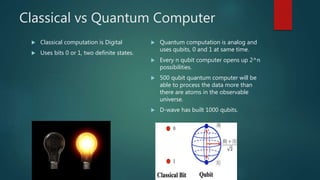
 Classical computation is Digital
 Uses bits 0 or 1, two definite states.
 Quantum computation is analog and
uses qubits, 0 and 1 at same time.
 Every n qubit computer opens up 2^n
possibilities.
 500 qubit quantum computer will be
able to process the data more than
there are atoms in the observable
universe.
 D-wave has built 1000 qubits.
How does it work?
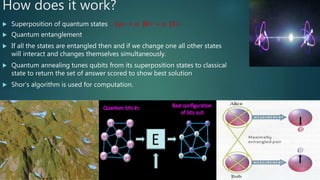
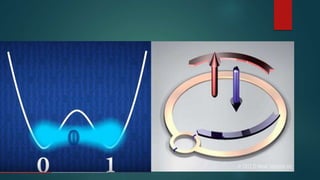
 Superposition of quantum states |> =  |0> +  |1>
 Quantum entanglement
 If all the states are entangled then and if we change one all other states
will interact and changes themselves simultaneously.
 Quantum annealing tunes qubits from its superposition states to classical
state to return the set of answer scored to show best solution
 Shor’s algorithm is used for computation.
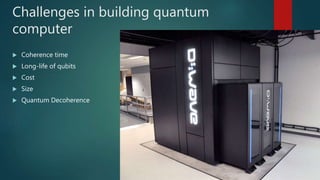
Challenges in building quantum
computer
 Coherence time
 Long-life of qubits
 Cost
 Size
 Quantum Decoherence
Applications
Optimization
Water network optimization
Radiotherapy Optimization
Protein folding
Finding solutions of new diseases
Machine Learning
Object Detection
Labelling new stories
Video compression
Artificial Intelligence
Quantum
Cryptography
Security
Data encryption
Thank you
If quantum mechanics hasn't profoundly shocked
you, you haven't understood it yet.
-Niels Bohr

Quantum computing

  • 1.
  • 2.
    Why Quantum Computers There are problems in our world that even a fastest computer can’t solve them.  Super computers consume so much power and takes lots of time.  Problem: A salesman has to travel to many cities and want to work out that the shortest possible routes. That sounds like an easy problem!  For 14 cities a classical 1 GHz computer would take 100s. But what happen for 22 cities? It would take 1600 years. That’s more than his life span.  For 28 cities this become more complicate and the time taken will be longer than the lifetime of the universe.
  • 3.
    Classical vs QuantumComputer  Classical computation is Digital  Uses bits 0 or 1, two definite states.  Quantum computation is analog and uses qubits, 0 and 1 at same time.  Every n qubit computer opens up 2^n possibilities.  500 qubit quantum computer will be able to process the data more than there are atoms in the observable universe.  D-wave has built 1000 qubits.
  • 4.
    How does itwork?  Superposition of quantum states |> =  |0> +  |1>  Quantum entanglement  If all the states are entangled then and if we change one all other states will interact and changes themselves simultaneously.  Quantum annealing tunes qubits from its superposition states to classical state to return the set of answer scored to show best solution  Shor’s algorithm is used for computation.
  • 6.
    Challenges in buildingquantum computer  Coherence time  Long-life of qubits  Cost  Size  Quantum Decoherence
  • 7.
    Applications Optimization Water network optimization RadiotherapyOptimization Protein folding Finding solutions of new diseases Machine Learning Object Detection Labelling new stories Video compression Artificial Intelligence Quantum Cryptography Security Data encryption
  • 8.
    Thank you If quantummechanics hasn't profoundly shocked you, you haven't understood it yet. -Niels Bohr