Downloaded 19 times
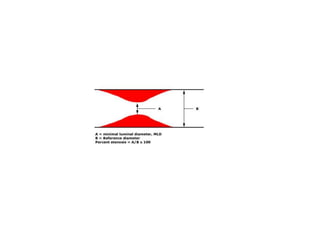
![• Densitometry — The densitometric methodology minimizes any
distorting effect of lesional eccentricities upon those geometric
assumptions that are required for area calculations by the edge-
detection methods. With densitometry, assuming homogeneous
distribution of radio-contrast in the blood pool, the errors in edge
definition are minimized since the method utilizes the
measurement of brightness profiles throughout the segmental
diameters which surround the defined center line [9]. With
application of this assumption, the difference in cross-sectional
luminal area can be compared between normal and diseased
vascular segments, using differences in the density of radio-contrast
distributed within each cross-sectional area. These derived
measurements must be corrected for radiation scatter by the
subtraction of background activity. Additional radiographic variables
can contribute to measurement inaccuracy, and convincing
validation of this technique has not yet been forthcoming](https://image.slidesharecdn.com/quantitativecag-150608065627-lva1-app6891/85/Quantitative-cag-6-320.jpg)

Quantitative coronary angiography (QCA) provides more objective interpretation of coronary arteries than visual estimation by minimizing intraobserver and interobserver variability. QCA uses edge detection and densitometry techniques to measure parameters like percent diameter stenosis, lesion length, and area of obstruction. While more accurate than visual assessment, QCA does not always correlate well with functional flow assessments and has not been widely adopted in laboratories due to limitations in accounting for factors like vessel angle and vasomotor tone.


![ONFH[AVN HIP] -TRIPLE REGIME -A NOVAL SURGICAL CONCEPT .pptx](https://cdn.slidesharecdn.com/ss_thumbnails/onfhavnhip2026koaconcalicutdrgokuldevdrmashraf-260210064517-213ec005-thumbnail.jpg?width=640&height=640&fit=bounds)


