Quality Use of Medicines A brief summary
What do we mean by “medicine” Medicine is  Prescription Non-prescription (or over-the counter) Complementary (herbal, alternative, Chinese Medicines etc)
What is Quality Use of Medicines? The key focus of QUM is to ensure that: Management options   are selected wisely Suitable medicines   are chosen if medicine is considered necessary Medicines are used   safely and effectively so that consumers get the best possible health outcomes
QUM cont’d Management options   are selected wisely: By Considering  place of medicines in treating illness and maintaining health  and Recognising   that there may be better ways than medicine to manage many disorders
QUM cont’d Suitable medicines   are chosen if medicine is considered necessary: Taking into account factors including   The individual Clinical condition  Risks and benefits  Dosage and length of treatment  Co-existing conditions  Other therapies  Monitoring conditions  Costs to individual, community and health system ? ?
QUM cont’d Medicines are used   safely and effectively To get the best possible results by: Monitoring   outcomes Minimising   misuse, over-use an under-use  and Improving  people’s ability to solve problems related to medication,  such as negative effects or managing multiple medications
National Medicines Policy 2000 Aim:   to  meet medication and related service  needs, so that optimal health outcomes  and economic objectives are achieved  for  all Australians
How does the National Medicines Policy work? Click   here  to see the National Medicines Policy again. Based on active and respectful partnerships between: Healthcare consumers Governments Health educators Health practitioners Healthcare providers and suppliers Medicines industry Media Each partner is expected to contribute to the achievement of the policy as best they can
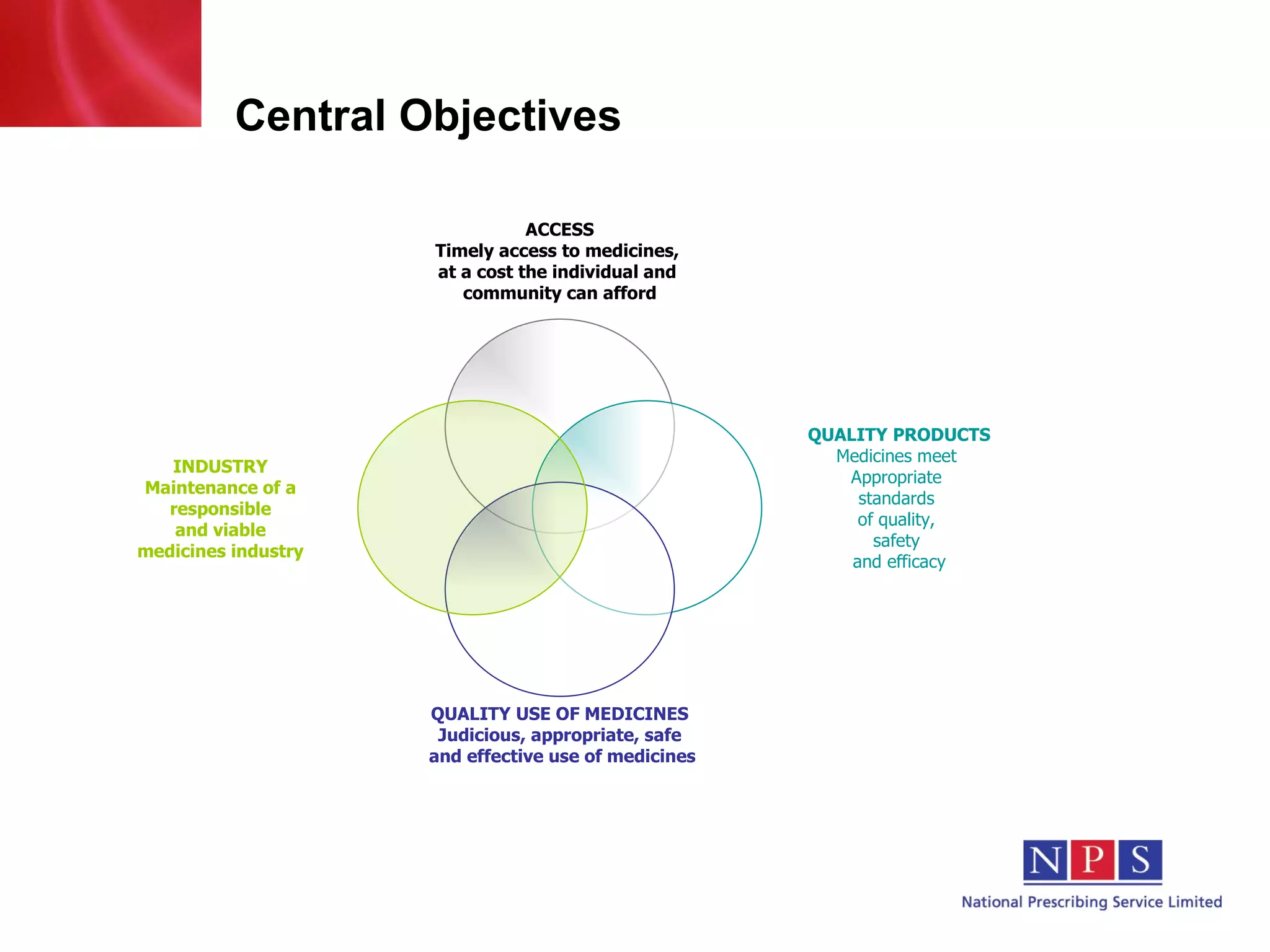
Central Objectives ACCESS Timely access to medicines,  at a cost the individual and  community can afford QUALITY PRODUCTS Medicines meet  Appropriate  standards  of quality,  safety  and efficacy QUALITY USE OF MEDICINES Judicious, appropriate, safe and effective use of medicines INDUSTRY Maintenance of a responsible  and viable medicines industry
Objectives of the National Strategy for QUM Improve QUM   among healthcare consumers and health practitioners  Gain commitment to QUM   of medicines industry and governments  Improve the commitment to working in partnership of: -  healthcare consumers - health practitioners and educators - the medicines industries - the media       - healthcare facilities   - funders and purchasers        - governments   
QUM is a process or way or working a broad movement a professional culture a vital part of the health policy landscape.
Key Partners In developing and implementing initiatives to achieve QUM include: Those who take or consider taking medicines Those who prescribe, provide and monitor the use of medicines Those who assist people to learn more about health issues and health care through information, education and discussion
Key Partners cont’d Those who provide health services within hospital and community settings Those who develop, make, market, distribute and sell medicines The Governments who, in the public interest assess, register, monitor the safety of and provide equity of access to medicines
Key Partners cont’d Those who produce, report, publish and broadcast information about medicines and health matters Those who fund and/or purchase in both the public and private sectors the range of health services within which medicines play an important part
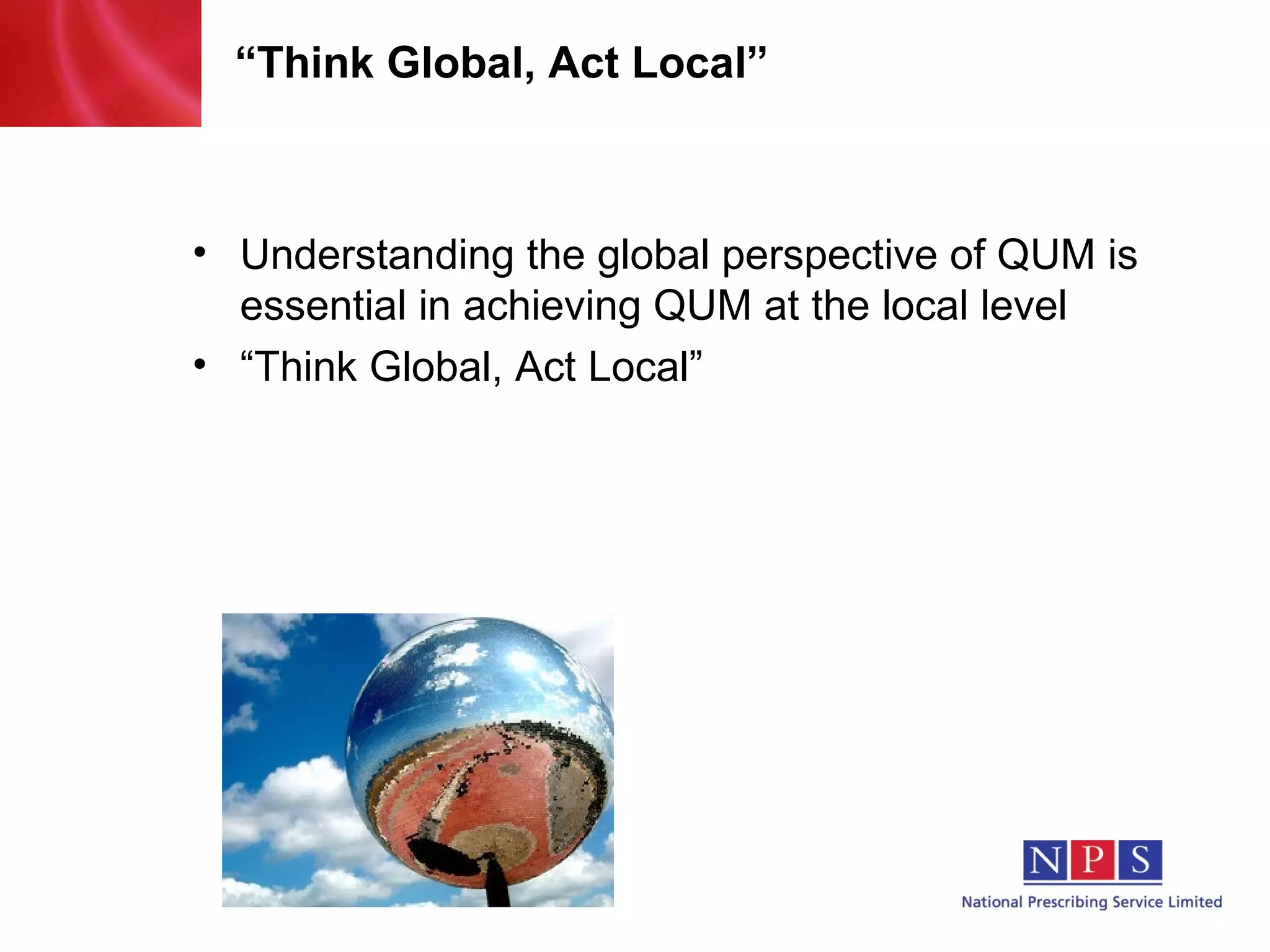
“ Think Global, Act Local” Understanding the global perspective of QUM is essential in achieving QUM at the local level “ Think Global, Act Local”

Quality Use of Medicines

  • 1.
    Quality Use ofMedicines A brief summary
  • 2.
    What do wemean by “medicine” Medicine is Prescription Non-prescription (or over-the counter) Complementary (herbal, alternative, Chinese Medicines etc)
  • 3.
    What is QualityUse of Medicines? The key focus of QUM is to ensure that: Management options are selected wisely Suitable medicines are chosen if medicine is considered necessary Medicines are used safely and effectively so that consumers get the best possible health outcomes
  • 4.
    QUM cont’d Managementoptions are selected wisely: By Considering place of medicines in treating illness and maintaining health and Recognising that there may be better ways than medicine to manage many disorders
  • 5.
    QUM cont’d Suitablemedicines are chosen if medicine is considered necessary: Taking into account factors including The individual Clinical condition Risks and benefits Dosage and length of treatment Co-existing conditions Other therapies Monitoring conditions Costs to individual, community and health system ? ?
  • 6.
    QUM cont’d Medicinesare used safely and effectively To get the best possible results by: Monitoring outcomes Minimising misuse, over-use an under-use and Improving people’s ability to solve problems related to medication, such as negative effects or managing multiple medications
  • 7.
    National Medicines Policy2000 Aim: to meet medication and related service needs, so that optimal health outcomes and economic objectives are achieved for all Australians
  • 8.
    How does theNational Medicines Policy work? Click here to see the National Medicines Policy again. Based on active and respectful partnerships between: Healthcare consumers Governments Health educators Health practitioners Healthcare providers and suppliers Medicines industry Media Each partner is expected to contribute to the achievement of the policy as best they can
  • 9.
    Central Objectives ACCESSTimely access to medicines, at a cost the individual and community can afford QUALITY PRODUCTS Medicines meet Appropriate standards of quality, safety and efficacy QUALITY USE OF MEDICINES Judicious, appropriate, safe and effective use of medicines INDUSTRY Maintenance of a responsible and viable medicines industry
  • 10.
    Objectives of theNational Strategy for QUM Improve QUM among healthcare consumers and health practitioners Gain commitment to QUM of medicines industry and governments Improve the commitment to working in partnership of: - healthcare consumers - health practitioners and educators - the medicines industries - the media       - healthcare facilities - funders and purchasers      - governments  
  • 11.
    QUM is aprocess or way or working a broad movement a professional culture a vital part of the health policy landscape.
  • 12.
    Key Partners Indeveloping and implementing initiatives to achieve QUM include: Those who take or consider taking medicines Those who prescribe, provide and monitor the use of medicines Those who assist people to learn more about health issues and health care through information, education and discussion
  • 13.
    Key Partners cont’dThose who provide health services within hospital and community settings Those who develop, make, market, distribute and sell medicines The Governments who, in the public interest assess, register, monitor the safety of and provide equity of access to medicines
  • 14.
    Key Partners cont’dThose who produce, report, publish and broadcast information about medicines and health matters Those who fund and/or purchase in both the public and private sectors the range of health services within which medicines play an important part
  • 15.
    “ Think Global,Act Local” Understanding the global perspective of QUM is essential in achieving QUM at the local level “ Think Global, Act Local”