RATIONAL DRUG THERAPY
VIGNAN PHARMACY COLLEGE
(Approved by AICTE & PCI Affiliated to JNTU KAKINADA)
VADLAMUDI, GUNTUR DIST, ANDHRA PRADESH, INDIA, PIN: 522 213
Submittd By:-
YagnaGayatahri.Kallam
16AB1T0016
Guided By:-
Mr.G.Ramesh
Pharm-D
DEFINITION
Essential medicines are the drugs that
have the best balance of quality, safety,
efficacy and cost for a given element
and are needed almost to the cure
of majority of population.
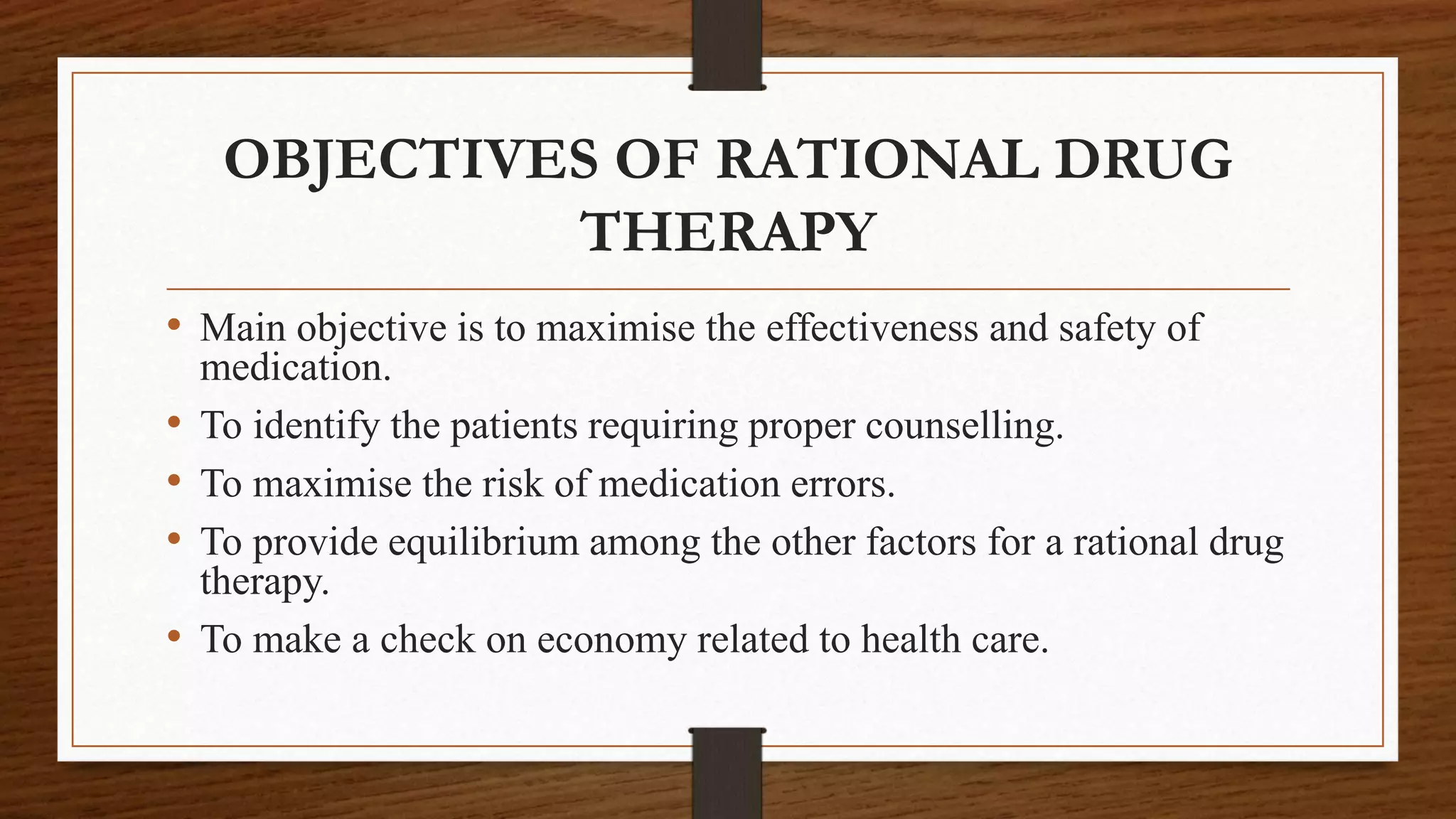
OBJECTIVES OF RATIONAL DRUG
THERAPY
• Main objective is to maximise the effectiveness and safety of
medication.
• To identify the patients requiring proper counselling.
• To maximise the risk of medication errors.
• To provide equilibrium among the other factors for a rational drug
therapy.
• To make a check on economy related to health care.
Inter-relation
of various
objectives of
rational drug
therapy
Effectiveness
Costs
Side
effects
Patients
need
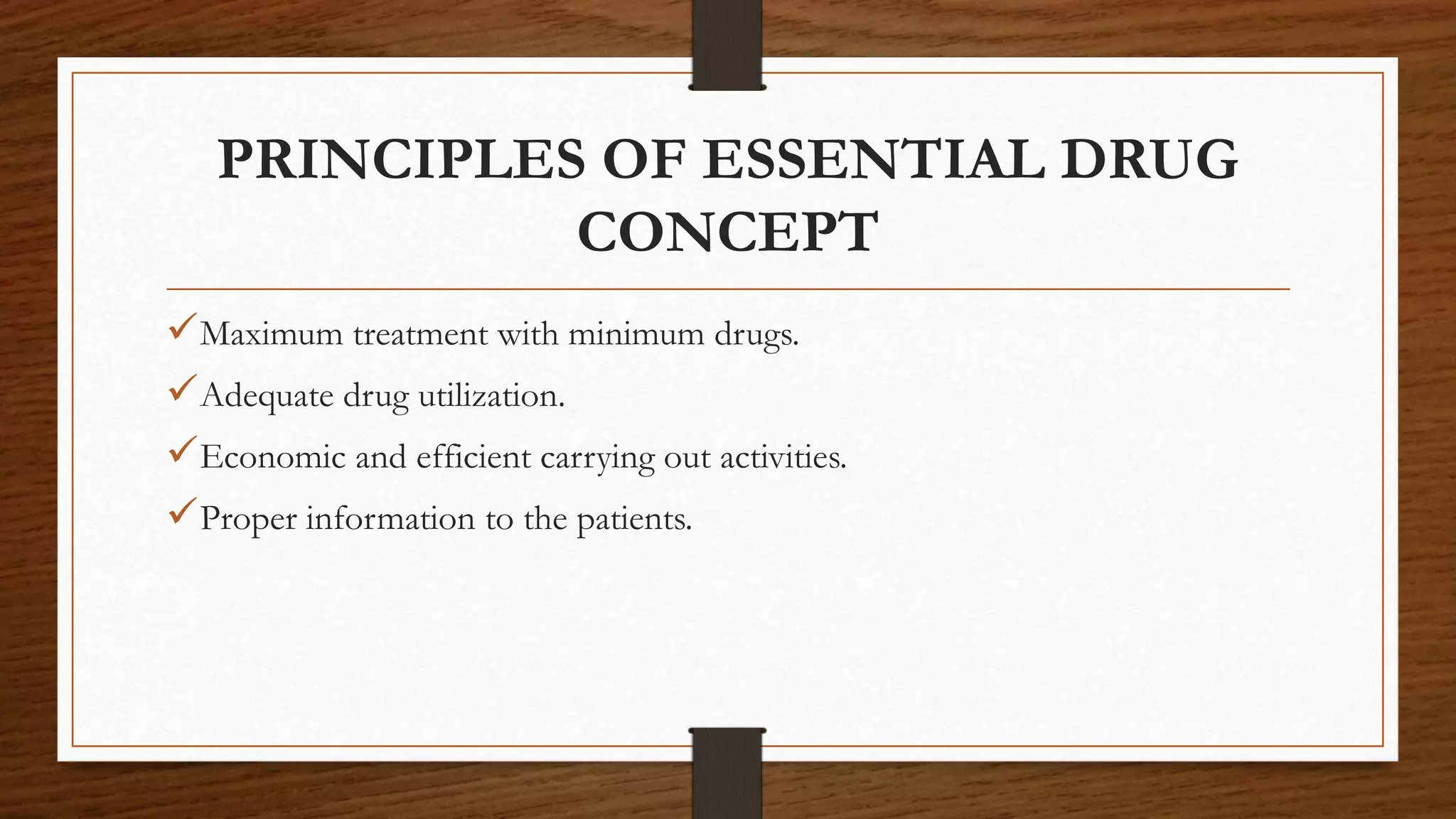
PRINCIPLES OF ESSENTIAL DRUG
CONCEPT
Maximum treatment with minimum drugs.
Adequate drug utilization.
Economic and efficient carrying out activities.
Proper information to the patients.
 Maximum treatment with maximum
drugs
Common health problems of majority of population can be treated with small
and careful selected medicines.
 Adequate drug utilization
Health professionals routinely use less than
200 medicines. Training and clinical
experience should focus on proper use of
those selected medicines.
 Economic and efficient carrying out
activities
Procurement, distribution and other
supply activities can be carried out
most economically and effectively for a
limited number of drug problems.
Proper information to the patients
Patient can be better informed and
about the effective use of medicine
by the health care professionals.
IMPORTANCE OF ESSENTIAL DRUGS
ESSENTIAL DRUG:
• Right dosage
• Right frequency
• Right route of administration
• At the right time
• For the right patient
Cost effective tools for fighting ill, healthy are available in the form
of essential drugs.
• Health impact: essential drug treatments are available for most
prevailing communicable diseases. Essential life saving drugs are
available for non-communicable diseases.
• Economic impact: in high income countries the cost of medicine is
not directly borne by the patient as 2/3rd of the medicines and pre-
paid by government and social health insurance programme.
SELECTION OF ESSENTIAL DRUGS
Pattern of disease
{communicable
/non-
communicable}
Storage conditions Cost factor
Patient compliance Treatment facilities
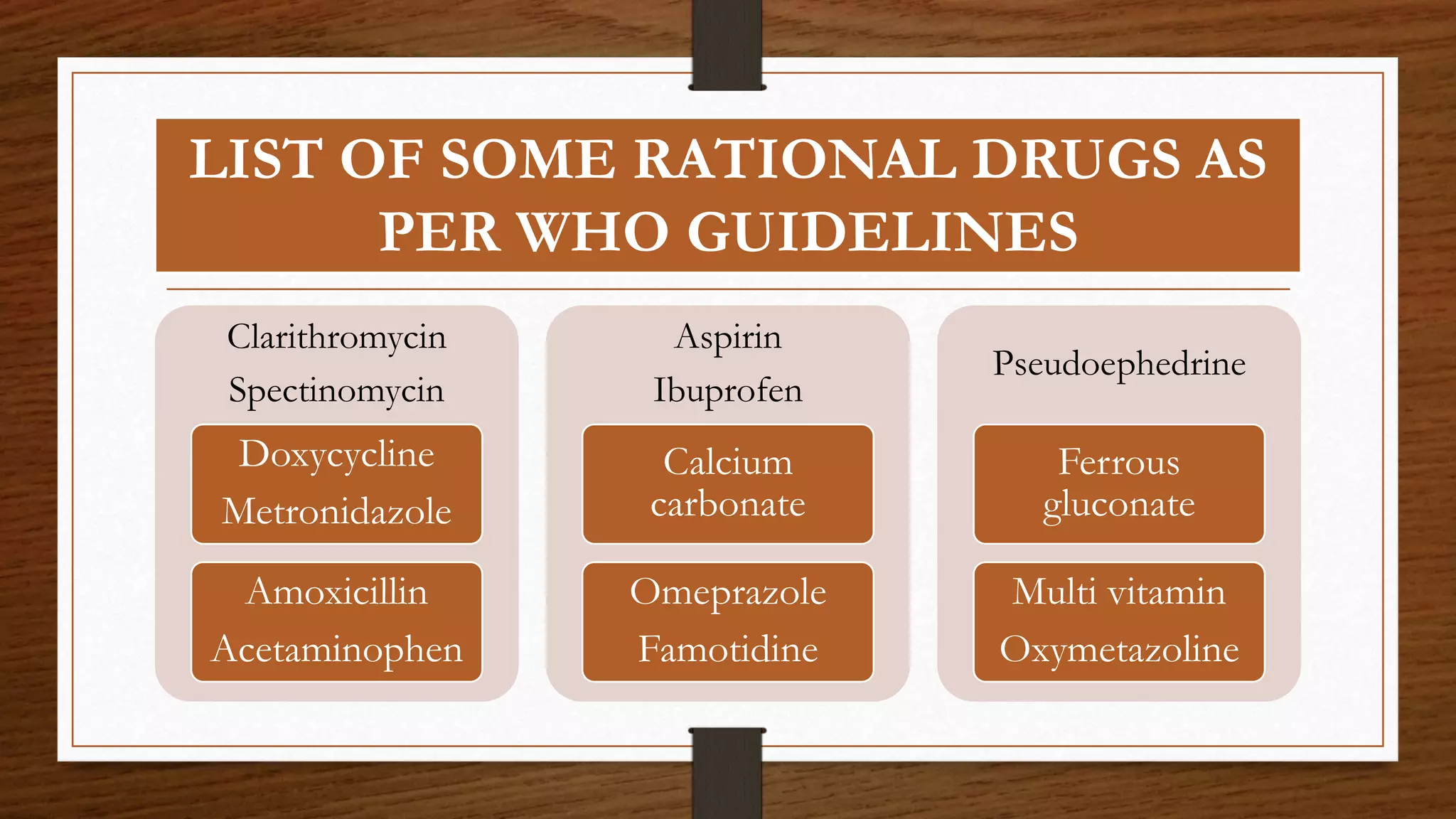
LIST OF SOME RATIONAL DRUGS AS
PER WHO GUIDELINES
Clarithromycin
Spectinomycin
Doxycycline
Metronidazole
Amoxicillin
Acetaminophen
Aspirin
Ibuprofen
Calcium
carbonate
Omeprazole
Famotidine
Pseudoephedrine
Ferrous
gluconate
Multi vitamin
Oxymetazoline
ROLE OF PHARMACIST IN RATIONAL
DRUG THERAPY
A. COUNSELING OF THE PATIENTS AND PHYSICIANS:
• The counselling about the new drugs, variations in the drug policies,
availability of drug etc., should be provided timely to the patient and
physician. Patient should be counselled against proper drug usage.
B.STATING ADVERSE DRUGS:
• Adverse drug reactions should be reported to proper monitoring centres like
hospital management, regional/ country head office.
C.DRUG PROCUREMENT:
• The section and the range of drug should be based on
essential drug concept in accordance with the needs of the
situation. Procurement must have cost effective drugs in a
right quality and there should be selection of right supplies of
right quality products.
D.LIST PREPARATION:
• Pharmacist as being a drug representative in a public state
about the physio-social requirement of the prevailing
population and can be contribute to prepare the most cost-
effective list.
E.INVENTORY CONTROL:
• Monitoring of drug stocks and minimizing the situation must
be carried out. Drug formulary should be prepared.
F.PHARMACEUTICAL CARE:
• Aim of the care is to optimize the patient heart and related
quality of life and achieve cost effective chemical outcome.
G.PROMOTION OF RATIONAL DRUG
UTILIZATIONS:
• Promotions can be done by video clipping, advertisements.
ACTIVITIES INVOLVED IN THE
PROMOTION OF RATIONAL DRUG
USAGE
• Adoption of rational drug usage
• Counselling of health care professionals
• Development of evidence based clinical guidelines
• Consumer education

Rational drug therapy

  • 1.
    RATIONAL DRUG THERAPY VIGNANPHARMACY COLLEGE (Approved by AICTE & PCI Affiliated to JNTU KAKINADA) VADLAMUDI, GUNTUR DIST, ANDHRA PRADESH, INDIA, PIN: 522 213 Submittd By:- YagnaGayatahri.Kallam 16AB1T0016 Guided By:- Mr.G.Ramesh Pharm-D
  • 2.
    DEFINITION Essential medicines arethe drugs that have the best balance of quality, safety, efficacy and cost for a given element and are needed almost to the cure of majority of population.
  • 3.
    OBJECTIVES OF RATIONALDRUG THERAPY • Main objective is to maximise the effectiveness and safety of medication. • To identify the patients requiring proper counselling. • To maximise the risk of medication errors. • To provide equilibrium among the other factors for a rational drug therapy. • To make a check on economy related to health care.
  • 4.
    Inter-relation of various objectives of rationaldrug therapy Effectiveness Costs Side effects Patients need
  • 5.
    PRINCIPLES OF ESSENTIALDRUG CONCEPT Maximum treatment with minimum drugs. Adequate drug utilization. Economic and efficient carrying out activities. Proper information to the patients.
  • 6.
     Maximum treatmentwith maximum drugs Common health problems of majority of population can be treated with small and careful selected medicines.
  • 7.
     Adequate drugutilization Health professionals routinely use less than 200 medicines. Training and clinical experience should focus on proper use of those selected medicines.
  • 8.
     Economic andefficient carrying out activities Procurement, distribution and other supply activities can be carried out most economically and effectively for a limited number of drug problems.
  • 9.
    Proper information tothe patients Patient can be better informed and about the effective use of medicine by the health care professionals.
  • 10.
    IMPORTANCE OF ESSENTIALDRUGS ESSENTIAL DRUG: • Right dosage • Right frequency • Right route of administration • At the right time • For the right patient
  • 11.
    Cost effective toolsfor fighting ill, healthy are available in the form of essential drugs. • Health impact: essential drug treatments are available for most prevailing communicable diseases. Essential life saving drugs are available for non-communicable diseases. • Economic impact: in high income countries the cost of medicine is not directly borne by the patient as 2/3rd of the medicines and pre- paid by government and social health insurance programme.
  • 12.
    SELECTION OF ESSENTIALDRUGS Pattern of disease {communicable /non- communicable} Storage conditions Cost factor Patient compliance Treatment facilities
  • 13.
    LIST OF SOMERATIONAL DRUGS AS PER WHO GUIDELINES Clarithromycin Spectinomycin Doxycycline Metronidazole Amoxicillin Acetaminophen Aspirin Ibuprofen Calcium carbonate Omeprazole Famotidine Pseudoephedrine Ferrous gluconate Multi vitamin Oxymetazoline
  • 14.
    ROLE OF PHARMACISTIN RATIONAL DRUG THERAPY A. COUNSELING OF THE PATIENTS AND PHYSICIANS: • The counselling about the new drugs, variations in the drug policies, availability of drug etc., should be provided timely to the patient and physician. Patient should be counselled against proper drug usage. B.STATING ADVERSE DRUGS: • Adverse drug reactions should be reported to proper monitoring centres like hospital management, regional/ country head office.
  • 15.
    C.DRUG PROCUREMENT: • Thesection and the range of drug should be based on essential drug concept in accordance with the needs of the situation. Procurement must have cost effective drugs in a right quality and there should be selection of right supplies of right quality products. D.LIST PREPARATION: • Pharmacist as being a drug representative in a public state about the physio-social requirement of the prevailing population and can be contribute to prepare the most cost- effective list.
  • 16.
    E.INVENTORY CONTROL: • Monitoringof drug stocks and minimizing the situation must be carried out. Drug formulary should be prepared. F.PHARMACEUTICAL CARE: • Aim of the care is to optimize the patient heart and related quality of life and achieve cost effective chemical outcome. G.PROMOTION OF RATIONAL DRUG UTILIZATIONS: • Promotions can be done by video clipping, advertisements.
  • 17.
    ACTIVITIES INVOLVED INTHE PROMOTION OF RATIONAL DRUG USAGE • Adoption of rational drug usage • Counselling of health care professionals • Development of evidence based clinical guidelines • Consumer education