INDICATIONS FOR TDM, PROTOCOL FOR TDM.
AUCoPS 1
AU COLLEGE OF PHARMACEUTICAL SCIENCES, VSKP.
Mr.S.Lahar
Reg.No: 623209530010
M.Pharm (Pharmacy Practice)
Second semester.
Seminar on
Subject: Clinical pharmacokinetics & TDM
AUCoPS 2
Therapeutic Drug Monitoring (TDM):
Therapeutic Drug Monitoring (TDM) is the clinical practice of measuring specific drug levels in a
patient’s bloodstream at designated intervals to ensure a constant therapeutic concentration. This
practice helps in optimizing individual dosage regimens, ensuring efficacy while minimizing toxicity.
AUCoPS 3
Indications for TDM:
 Narrow Therapeutic Index (NTI) Drugs:
Definition: Drugs with a small margin between therapeutic and toxic doses.
Examples:
 Digoxin: Used for heart conditions; requires careful monitoring to avoid toxicity.
 Lithium: Used for bipolar disorder; narrow range between effective and toxic levels.
 Aminoglycosides: Antibiotics like gentamicin; high risk of nephrotoxicity and ototoxicity.
 Therapeutic Failure:
Definition: When a drug does not produce the desired therapeutic effect.
Examples:
 Antiepileptic Drugs: Phenytoin and valproate; monitoring ensures levels are sufficient to
prevent seizures.
 Antidepressants: Ensuring adequate levels to achieve therapeutic effects.
AUCoPS 4
 Wide Variation in Metabolism:
Definition: Drugs that exhibit significant inter-individual variability in metabolism and clearance.
Examples:
 Warfarin: Anticoagulant with variable metabolism; requires monitoring of INR (International
Normalized Ratio).
 Cyclosporine: Immunosuppressant with variable absorption and metabolism.
 Poorly Defined Clinical Endpoint:
Definition: When the clinical response is difficult to measure.
Examples:
 Immunosuppressants: Tacrolimus; monitoring helps maintain therapeutic levels to prevent organ
rejection.
 Suspected Toxicity:
Definition: To diagnose or prevent toxicity when clinical symptoms are ambiguous.
Examples:
 Aminoglycosides: Monitoring to avoid nephrotoxicity.
 Theophylline: Used for asthma; narrow therapeutic range and risk of toxicity.
AUCoPS 5
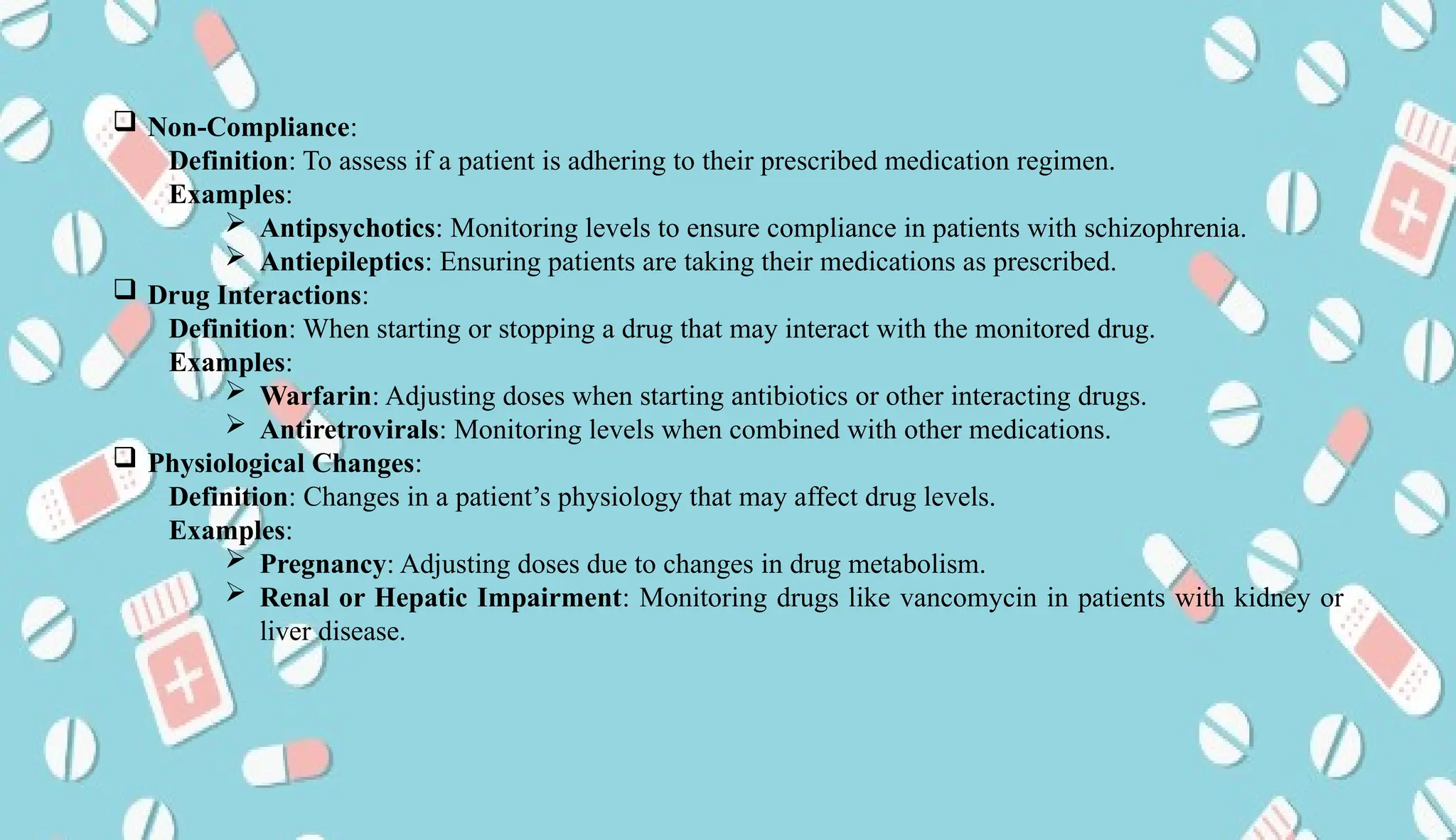
 Non-Compliance:
Definition: To assess if a patient is adhering to their prescribed medication regimen.
Examples:
 Antipsychotics: Monitoring levels to ensure compliance in patients with schizophrenia.
 Antiepileptics: Ensuring patients are taking their medications as prescribed.
 Drug Interactions:
Definition: When starting or stopping a drug that may interact with the monitored drug.
Examples:
 Warfarin: Adjusting doses when starting antibiotics or other interacting drugs.
 Antiretrovirals: Monitoring levels when combined with other medications.
 Physiological Changes:
Definition: Changes in a patient’s physiology that may affect drug levels.
Examples:
 Pregnancy: Adjusting doses due to changes in drug metabolism.
 Renal or Hepatic Impairment: Monitoring drugs like vancomycin in patients with kidney or
liver disease.
AUCoPS 6
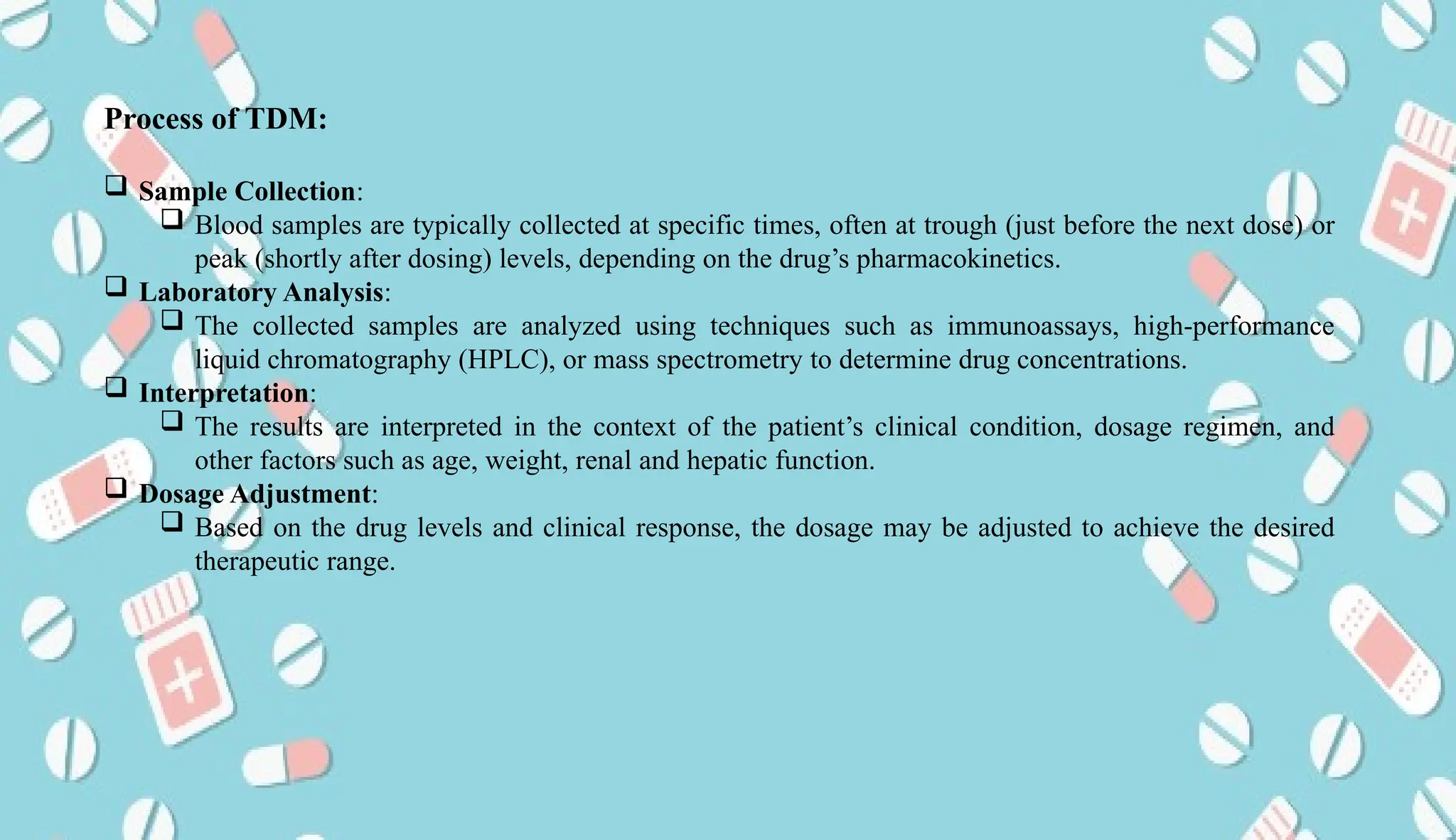
Process of TDM:
 Sample Collection:
 Blood samples are typically collected at specific times, often at trough (just before the next dose) or
peak (shortly after dosing) levels, depending on the drug’s pharmacokinetics.
 Laboratory Analysis:
 The collected samples are analyzed using techniques such as immunoassays, high-performance
liquid chromatography (HPLC), or mass spectrometry to determine drug concentrations.
 Interpretation:
 The results are interpreted in the context of the patient’s clinical condition, dosage regimen, and
other factors such as age, weight, renal and hepatic function.
 Dosage Adjustment:
 Based on the drug levels and clinical response, the dosage may be adjusted to achieve the desired
therapeutic range.
AUCoPS 7
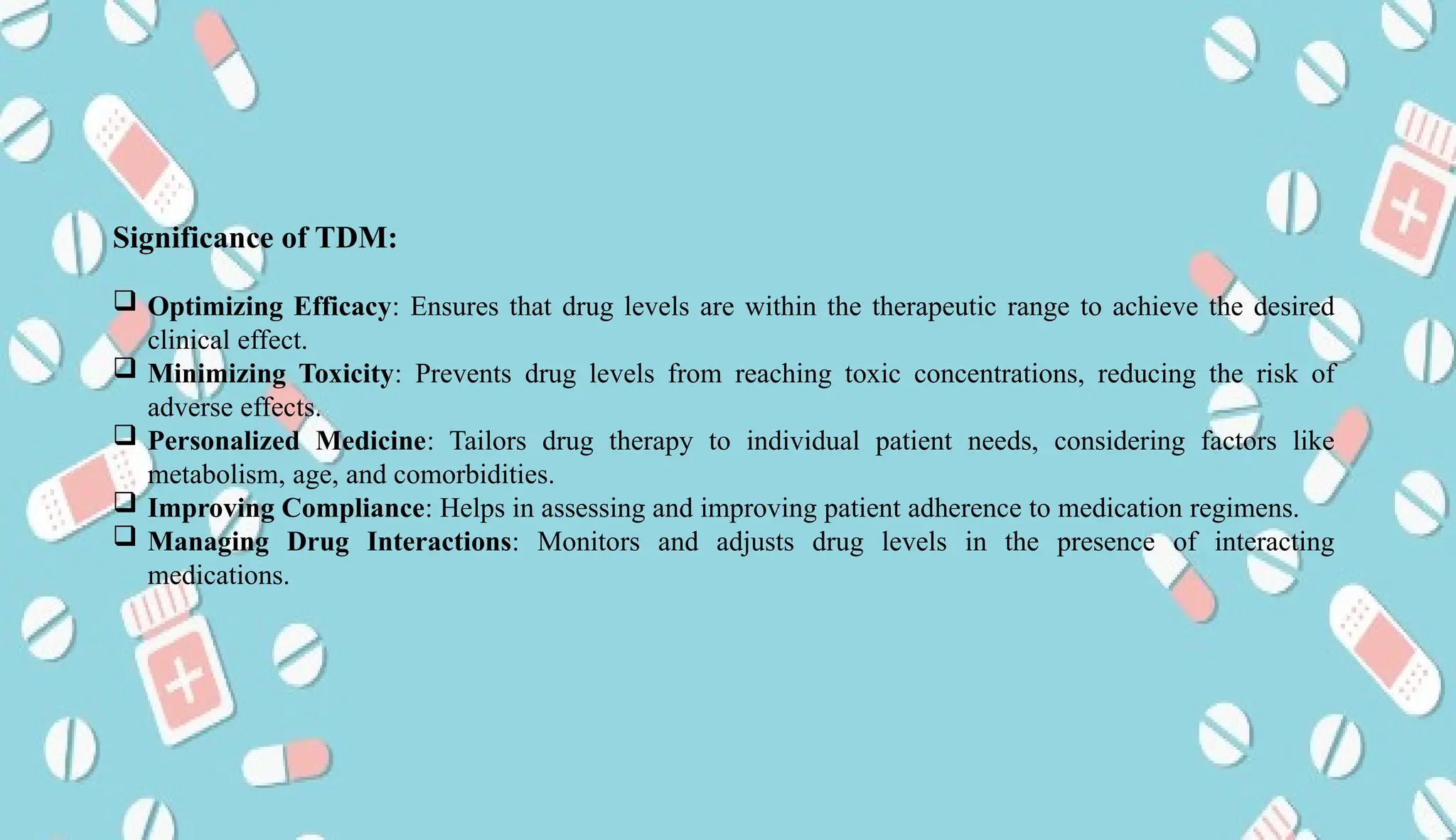
Significance of TDM:
 Optimizing Efficacy: Ensures that drug levels are within the therapeutic range to achieve the desired
clinical effect.
 Minimizing Toxicity: Prevents drug levels from reaching toxic concentrations, reducing the risk of
adverse effects.
 Personalized Medicine: Tailors drug therapy to individual patient needs, considering factors like
metabolism, age, and comorbidities.
 Improving Compliance: Helps in assessing and improving patient adherence to medication regimens.
 Managing Drug Interactions: Monitors and adjusts drug levels in the presence of interacting
medications.
AUCoPS 8
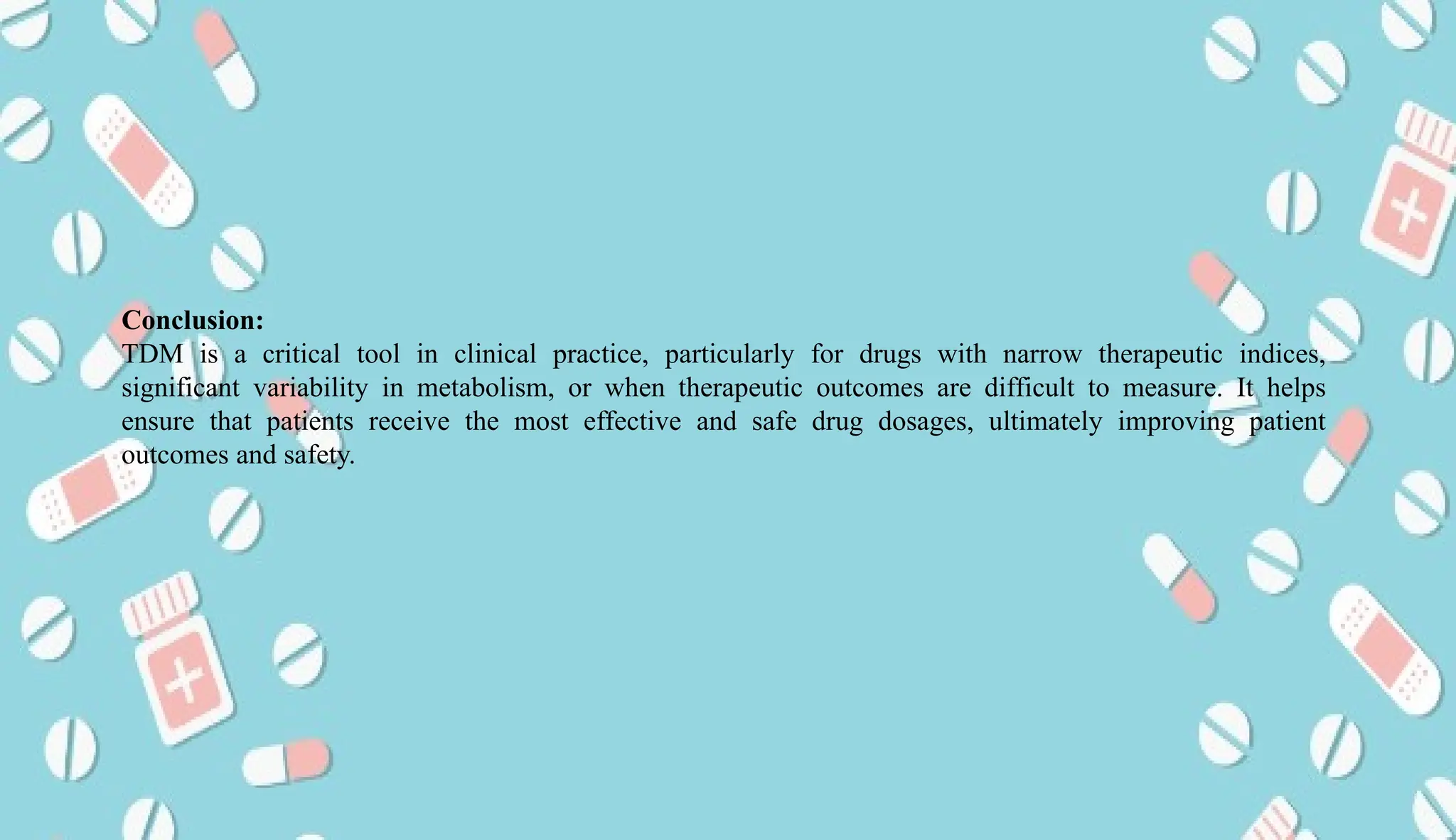
Conclusion:
TDM is a critical tool in clinical practice, particularly for drugs with narrow therapeutic indices,
significant variability in metabolism, or when therapeutic outcomes are difficult to measure. It helps
ensure that patients receive the most effective and safe drug dosages, ultimately improving patient
outcomes and safety.
AUCoPS 9
PROTOCOL FOR
THERAPEUTIC DRUG MONITORING (TDM)
AUCoPS 10
 Patient Assessment:
 Clinical Evaluation: Begin by assessing the patient’s clinical condition, medical history, and current
medications. This helps identify any factors that might influence drug levels, such as renal or hepatic
function, age, weight, and comorbidities.
 Indication for TDM: Determine the need for TDM based on specific criteria such as:
• Narrow therapeutic index
• Suspected toxicity
• Therapeutic failure
• Significant drug interactions
• Physiological changes (e.g., pregnancy, renal impairment).
 Drug Selection:
 Identify the Drug: Select the drug that requires monitoring. Commonly monitored drugs include:
• Cardiac Drugs: Digoxin
• Antiepileptics: Phenytoin, valproate
• Immunosuppressants: Cyclosporine, tacrolimus
• Antibiotics: Aminoglycosides (gentamicin, tobramycin), vancomycin
• Psychiatric Drugs: Lithium, clozapine.
AUCoPS 11
 Sample Collection:
 Timing: Collect blood samples at appropriate times to accurately reflect drug levels:
• Trough Levels: Just before the next dose, to ensure the lowest concentration is within the
therapeutic range.
• Peak Levels: Shortly after dosing, to ensure the highest concentration is not toxic.
 Sample Handling: Properly handle and store samples to prevent degradation or contamination. Use
appropriate anticoagulants if necessary and ensure timely transport to the laboratory.
 Laboratory Analysis:
 Analytical Methods: Use reliable and validated analytical techniques to measure drug
concentrations:
• Immunoassays: Commonly used for their specificity and sensitivity.
• High-Performance Liquid Chromatography (HPLC): Provides precise and accurate
measurements.
• Mass Spectrometry: Offers high specificity and sensitivity, especially for complex mixtures.
 Quality Control: Implement rigorous quality control measures to ensure the accuracy and precision
of the results. This includes using control samples and calibrators.
AUCoPS 12
 Pharmacokinetic Assessment:
 Interpretation of Results: Analyze the drug concentration data in the context of the patient’s clinical
condition, dosage regimen, and other factors such as age, weight, renal and hepatic function.
 Pharmacokinetic Parameters: Calculate relevant pharmacokinetic parameters if necessary, such as:
• Half-Life: The time it takes for the drug concentration to reduce by half.
• Clearance: The rate at which the drug is eliminated from the body.
• Volume of Distribution: The distribution of the drug within the body compartments.
 Clinical Evaluation:
 Assess Therapeutic Response: Evaluate the patient’s clinical response to the drug therapy, considering both
efficacy and potential adverse effects.
 Adjust Dosage: Based on the TDM results and clinical evaluation, adjust the drug dosage to achieve the
desired therapeutic range. This may involve increasing or decreasing the dose, changing the dosing
frequency, or switching to an alternative therapy.
AUCoPS 13
 Documentation and Communication:
 Record Keeping: Document all relevant information, including patient details, drug levels, dosage
adjustments, and clinical outcomes. This ensures a comprehensive record for future reference.
 Communication: Communicate the TDM results and any dosage adjustments to the healthcare team and
the patient. Clear communication is essential for ensuring that the patient understands the importance of
adherence to the prescribed regimen.
 Follow-Up:
 Continuous Monitoring: Schedule regular follow-up appointments to monitor drug levels and clinical
response, especially for drugs with narrow therapeutic indices or in patients with fluctuating clinical
conditions.
 Reassessment: Reassess the need for ongoing TDM based on changes in the patient’s condition,
medication regimen, or other factors. Adjust the monitoring frequency as needed.
AUCoPS 14
Conclusion:
TDM is a critical tool in optimizing drug therapy, ensuring that patients receive the most effective and
safe dosages. By following a structured protocol, healthcare providers can achieve better therapeutic
outcomes and minimize the risk of adverse effects.
AUCoPS 15
 https://clinlab.ucsf.edu/sites/g/files/tkssra1861/f/wysiwyg/Drug_level_monitoring_card.pdf
 https://www.medindia.net/health/drugs/therapeutic-drug-monitoring.htm
 https://health.ucdavis.edu/blog/lab-best-practice/introduction-to-therapeutic-drug-monitoring-and-the-
clinical-laboratorys-role/2020/09
References:
AUCoPS 16

Indications for TDM, Protocol for TDM. (Clinical pharmacokinetics)

  • 1.
    INDICATIONS FOR TDM,PROTOCOL FOR TDM. AUCoPS 1 AU COLLEGE OF PHARMACEUTICAL SCIENCES, VSKP. Mr.S.Lahar Reg.No: 623209530010 M.Pharm (Pharmacy Practice) Second semester. Seminar on Subject: Clinical pharmacokinetics & TDM
  • 2.
    AUCoPS 2 Therapeutic DrugMonitoring (TDM): Therapeutic Drug Monitoring (TDM) is the clinical practice of measuring specific drug levels in a patient’s bloodstream at designated intervals to ensure a constant therapeutic concentration. This practice helps in optimizing individual dosage regimens, ensuring efficacy while minimizing toxicity.
  • 3.
    AUCoPS 3 Indications forTDM:  Narrow Therapeutic Index (NTI) Drugs: Definition: Drugs with a small margin between therapeutic and toxic doses. Examples:  Digoxin: Used for heart conditions; requires careful monitoring to avoid toxicity.  Lithium: Used for bipolar disorder; narrow range between effective and toxic levels.  Aminoglycosides: Antibiotics like gentamicin; high risk of nephrotoxicity and ototoxicity.  Therapeutic Failure: Definition: When a drug does not produce the desired therapeutic effect. Examples:  Antiepileptic Drugs: Phenytoin and valproate; monitoring ensures levels are sufficient to prevent seizures.  Antidepressants: Ensuring adequate levels to achieve therapeutic effects.
  • 4.
    AUCoPS 4  WideVariation in Metabolism: Definition: Drugs that exhibit significant inter-individual variability in metabolism and clearance. Examples:  Warfarin: Anticoagulant with variable metabolism; requires monitoring of INR (International Normalized Ratio).  Cyclosporine: Immunosuppressant with variable absorption and metabolism.  Poorly Defined Clinical Endpoint: Definition: When the clinical response is difficult to measure. Examples:  Immunosuppressants: Tacrolimus; monitoring helps maintain therapeutic levels to prevent organ rejection.  Suspected Toxicity: Definition: To diagnose or prevent toxicity when clinical symptoms are ambiguous. Examples:  Aminoglycosides: Monitoring to avoid nephrotoxicity.  Theophylline: Used for asthma; narrow therapeutic range and risk of toxicity.
  • 5.
    AUCoPS 5  Non-Compliance: Definition:To assess if a patient is adhering to their prescribed medication regimen. Examples:  Antipsychotics: Monitoring levels to ensure compliance in patients with schizophrenia.  Antiepileptics: Ensuring patients are taking their medications as prescribed.  Drug Interactions: Definition: When starting or stopping a drug that may interact with the monitored drug. Examples:  Warfarin: Adjusting doses when starting antibiotics or other interacting drugs.  Antiretrovirals: Monitoring levels when combined with other medications.  Physiological Changes: Definition: Changes in a patient’s physiology that may affect drug levels. Examples:  Pregnancy: Adjusting doses due to changes in drug metabolism.  Renal or Hepatic Impairment: Monitoring drugs like vancomycin in patients with kidney or liver disease.
  • 6.
    AUCoPS 6 Process ofTDM:  Sample Collection:  Blood samples are typically collected at specific times, often at trough (just before the next dose) or peak (shortly after dosing) levels, depending on the drug’s pharmacokinetics.  Laboratory Analysis:  The collected samples are analyzed using techniques such as immunoassays, high-performance liquid chromatography (HPLC), or mass spectrometry to determine drug concentrations.  Interpretation:  The results are interpreted in the context of the patient’s clinical condition, dosage regimen, and other factors such as age, weight, renal and hepatic function.  Dosage Adjustment:  Based on the drug levels and clinical response, the dosage may be adjusted to achieve the desired therapeutic range.
  • 7.
    AUCoPS 7 Significance ofTDM:  Optimizing Efficacy: Ensures that drug levels are within the therapeutic range to achieve the desired clinical effect.  Minimizing Toxicity: Prevents drug levels from reaching toxic concentrations, reducing the risk of adverse effects.  Personalized Medicine: Tailors drug therapy to individual patient needs, considering factors like metabolism, age, and comorbidities.  Improving Compliance: Helps in assessing and improving patient adherence to medication regimens.  Managing Drug Interactions: Monitors and adjusts drug levels in the presence of interacting medications.
  • 8.
    AUCoPS 8 Conclusion: TDM isa critical tool in clinical practice, particularly for drugs with narrow therapeutic indices, significant variability in metabolism, or when therapeutic outcomes are difficult to measure. It helps ensure that patients receive the most effective and safe drug dosages, ultimately improving patient outcomes and safety.
  • 9.
    AUCoPS 9 PROTOCOL FOR THERAPEUTICDRUG MONITORING (TDM)
  • 10.
    AUCoPS 10  PatientAssessment:  Clinical Evaluation: Begin by assessing the patient’s clinical condition, medical history, and current medications. This helps identify any factors that might influence drug levels, such as renal or hepatic function, age, weight, and comorbidities.  Indication for TDM: Determine the need for TDM based on specific criteria such as: • Narrow therapeutic index • Suspected toxicity • Therapeutic failure • Significant drug interactions • Physiological changes (e.g., pregnancy, renal impairment).  Drug Selection:  Identify the Drug: Select the drug that requires monitoring. Commonly monitored drugs include: • Cardiac Drugs: Digoxin • Antiepileptics: Phenytoin, valproate • Immunosuppressants: Cyclosporine, tacrolimus • Antibiotics: Aminoglycosides (gentamicin, tobramycin), vancomycin • Psychiatric Drugs: Lithium, clozapine.
  • 11.
    AUCoPS 11  SampleCollection:  Timing: Collect blood samples at appropriate times to accurately reflect drug levels: • Trough Levels: Just before the next dose, to ensure the lowest concentration is within the therapeutic range. • Peak Levels: Shortly after dosing, to ensure the highest concentration is not toxic.  Sample Handling: Properly handle and store samples to prevent degradation or contamination. Use appropriate anticoagulants if necessary and ensure timely transport to the laboratory.  Laboratory Analysis:  Analytical Methods: Use reliable and validated analytical techniques to measure drug concentrations: • Immunoassays: Commonly used for their specificity and sensitivity. • High-Performance Liquid Chromatography (HPLC): Provides precise and accurate measurements. • Mass Spectrometry: Offers high specificity and sensitivity, especially for complex mixtures.  Quality Control: Implement rigorous quality control measures to ensure the accuracy and precision of the results. This includes using control samples and calibrators.
  • 12.
    AUCoPS 12  PharmacokineticAssessment:  Interpretation of Results: Analyze the drug concentration data in the context of the patient’s clinical condition, dosage regimen, and other factors such as age, weight, renal and hepatic function.  Pharmacokinetic Parameters: Calculate relevant pharmacokinetic parameters if necessary, such as: • Half-Life: The time it takes for the drug concentration to reduce by half. • Clearance: The rate at which the drug is eliminated from the body. • Volume of Distribution: The distribution of the drug within the body compartments.  Clinical Evaluation:  Assess Therapeutic Response: Evaluate the patient’s clinical response to the drug therapy, considering both efficacy and potential adverse effects.  Adjust Dosage: Based on the TDM results and clinical evaluation, adjust the drug dosage to achieve the desired therapeutic range. This may involve increasing or decreasing the dose, changing the dosing frequency, or switching to an alternative therapy.
  • 13.
    AUCoPS 13  Documentationand Communication:  Record Keeping: Document all relevant information, including patient details, drug levels, dosage adjustments, and clinical outcomes. This ensures a comprehensive record for future reference.  Communication: Communicate the TDM results and any dosage adjustments to the healthcare team and the patient. Clear communication is essential for ensuring that the patient understands the importance of adherence to the prescribed regimen.  Follow-Up:  Continuous Monitoring: Schedule regular follow-up appointments to monitor drug levels and clinical response, especially for drugs with narrow therapeutic indices or in patients with fluctuating clinical conditions.  Reassessment: Reassess the need for ongoing TDM based on changes in the patient’s condition, medication regimen, or other factors. Adjust the monitoring frequency as needed.
  • 14.
    AUCoPS 14 Conclusion: TDM isa critical tool in optimizing drug therapy, ensuring that patients receive the most effective and safe dosages. By following a structured protocol, healthcare providers can achieve better therapeutic outcomes and minimize the risk of adverse effects.
  • 15.
    AUCoPS 15  https://clinlab.ucsf.edu/sites/g/files/tkssra1861/f/wysiwyg/Drug_level_monitoring_card.pdf https://www.medindia.net/health/drugs/therapeutic-drug-monitoring.htm  https://health.ucdavis.edu/blog/lab-best-practice/introduction-to-therapeutic-drug-monitoring-and-the- clinical-laboratorys-role/2020/09 References:
  • 16.