Question 2:
How does your media
product represent
particular social groups?
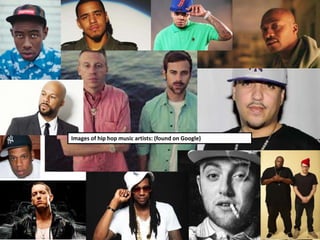
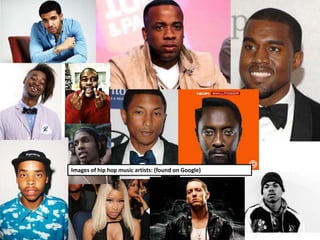
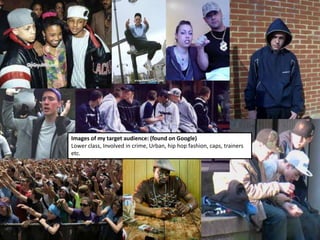
Images of hip hop music artists: (found on Google)
Images of my target audience: (found on Google)
Lower class, Involved in crime, Urban, hip hop fashion, caps, trainers
etc.
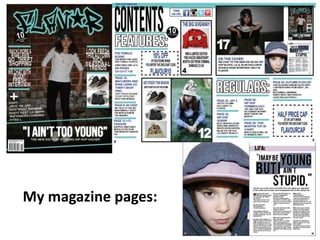
My magazine pages:
I have dressed my model in similar clothing to the clothing worn by my target audience.
This includes a cap, jewelry and chains, rings etc. She is also wearing jeans and a plain
white t shirt with white trainers.
The social group that my target audience belongs to is lower class.
I have portrayed this by using slang, including urban objects such as a brick wall in my
photo-shoots. I have also included content such as interviews with artists and slang
dictionaries to appeal to them. The clothing of hip hop artists and fans have been clearly
shown in my photography. I have used simple English and have included lots of pictures
because some hip hop fans may be uneducated or illiterate.
I have represented the social group in a positive way because I have not encouraged drug
use or crime which are issues associated with the genre of music. I have however
promoted the use of slang which may be seen as negative by some. I have used the things I
have listed above to relate to my target audience.
Some hip hop magazines show artists smoking or with weapons etc. which could be seen
as portraying the genre of music and the social class negatively. I have however challenged
this convention by not showing any drug use or violence in my magazine. The way that I
have portrayed my social class and music genre is stereotypical, however I have also
challenged dominant ideologies by not portraying crime in my magazine. I have however
supported the idea that lower class/hip hop fans are aggressive, wear stereotypical
clothing and use slang which is a dominant ideology.

Q2

  • 1.
    Question 2: How doesyour media product represent particular social groups?
  • 2.
    Images of hiphop music artists: (found on Google)
  • 3.
    Images of hiphop music artists: (found on Google)
  • 4.
    Images of mytarget audience: (found on Google) Lower class, Involved in crime, Urban, hip hop fashion, caps, trainers etc.
  • 5.
  • 6.
    I have dressedmy model in similar clothing to the clothing worn by my target audience. This includes a cap, jewelry and chains, rings etc. She is also wearing jeans and a plain white t shirt with white trainers. The social group that my target audience belongs to is lower class. I have portrayed this by using slang, including urban objects such as a brick wall in my photo-shoots. I have also included content such as interviews with artists and slang dictionaries to appeal to them. The clothing of hip hop artists and fans have been clearly shown in my photography. I have used simple English and have included lots of pictures because some hip hop fans may be uneducated or illiterate. I have represented the social group in a positive way because I have not encouraged drug use or crime which are issues associated with the genre of music. I have however promoted the use of slang which may be seen as negative by some. I have used the things I have listed above to relate to my target audience. Some hip hop magazines show artists smoking or with weapons etc. which could be seen as portraying the genre of music and the social class negatively. I have however challenged this convention by not showing any drug use or violence in my magazine. The way that I have portrayed my social class and music genre is stereotypical, however I have also challenged dominant ideologies by not portraying crime in my magazine. I have however supported the idea that lower class/hip hop fans are aggressive, wear stereotypical clothing and use slang which is a dominant ideology.