Comparing HUSTLE magazine to competitor magazines to
explore how social groups are presented.
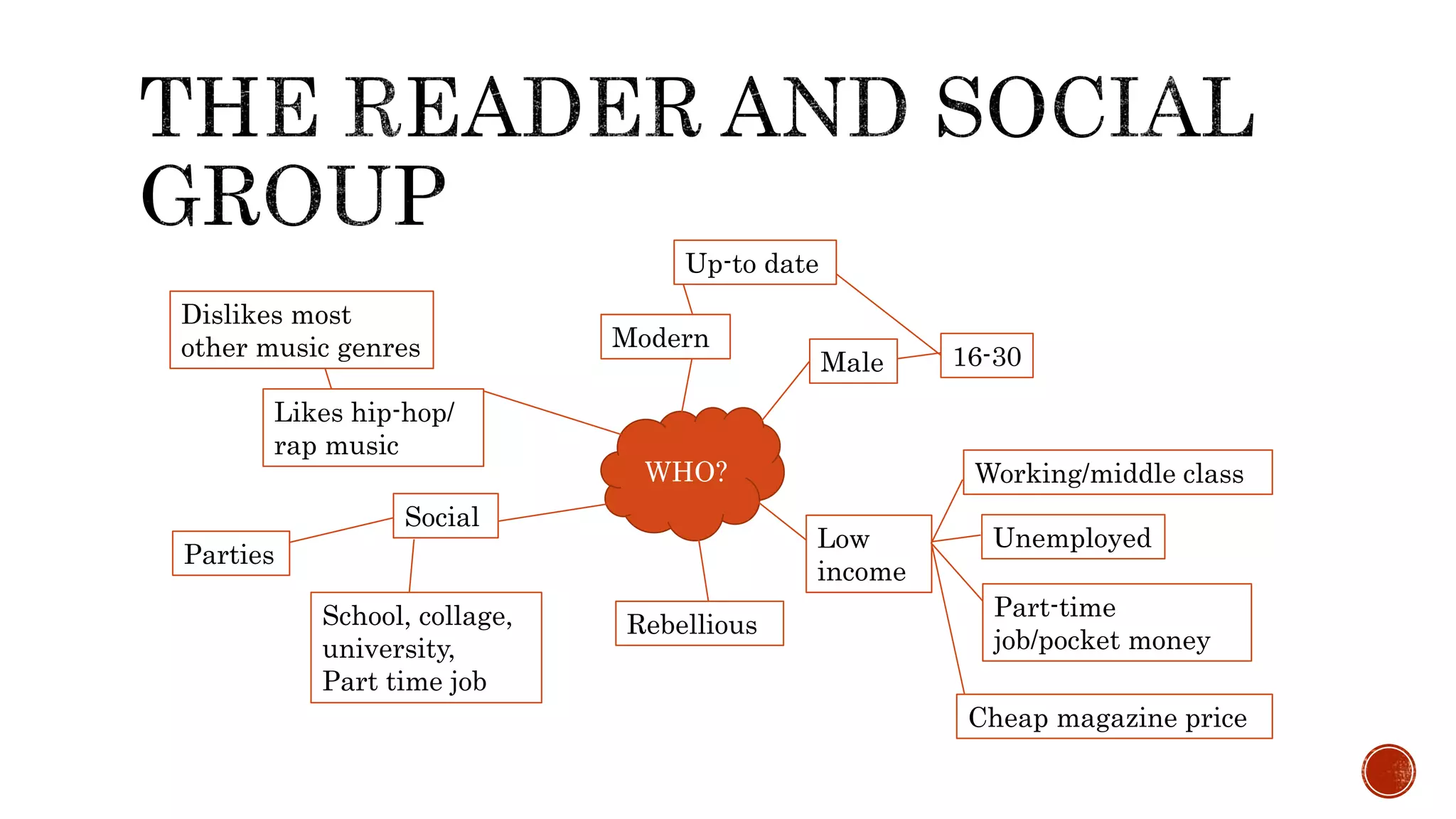
WHO?
Male 16-30
Low
income
Unemployed
Part-time
job/pocket money
Working/middle class
Modern
Up-to date
Rebellious
Likes hip-hop/
rap music
Dislikes most
other music genres
Social
Parties
School, collage,
university,
Part time job
Cheap magazine price
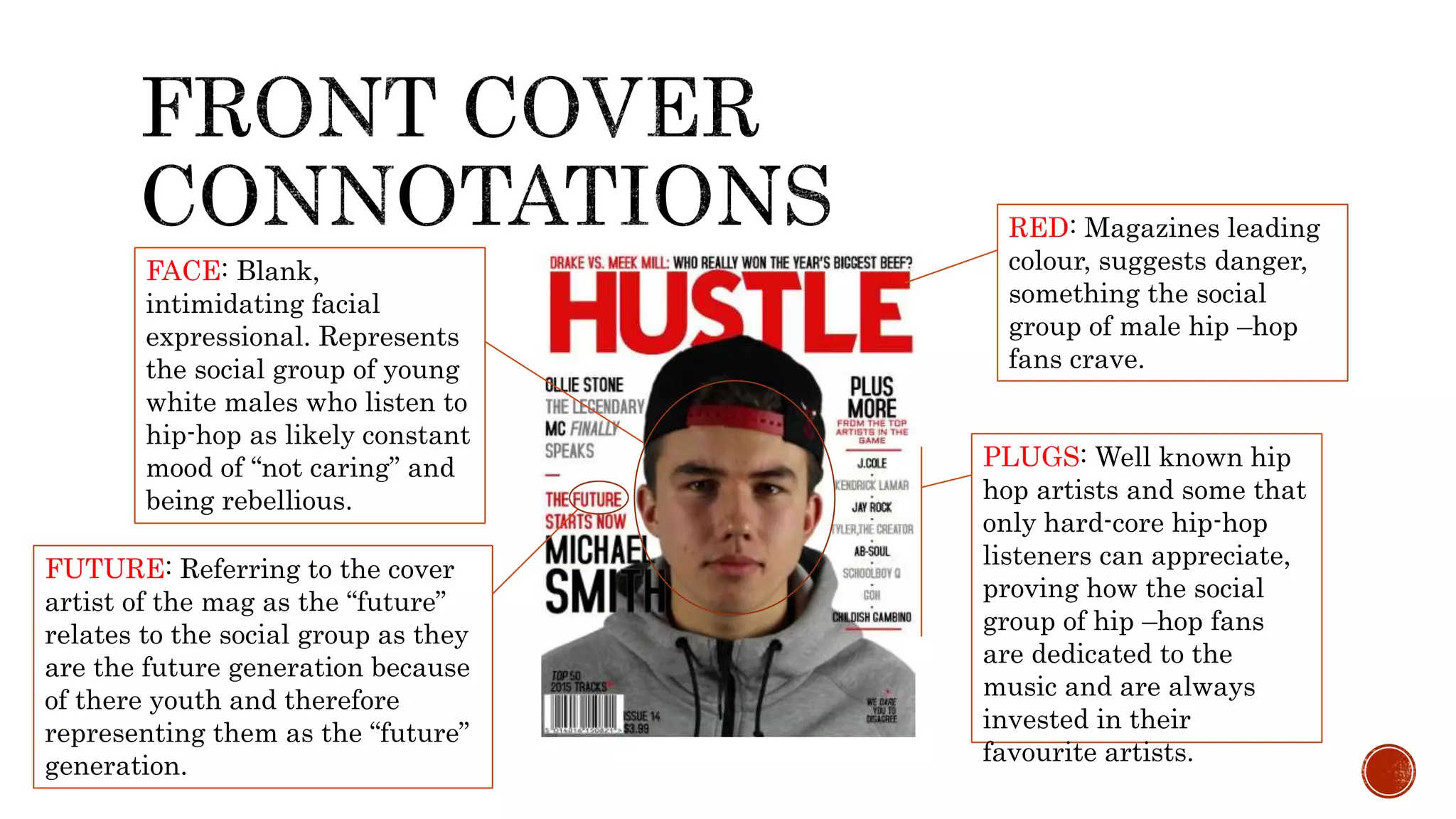
RED: Magazines leading
colour, suggests danger,
something the social
group of male hip –hop
fans crave.
FACE: Blank,
intimidating facial
expressional. Represents
the social group of young
white males who listen to
hip-hop as likely constant
mood of “not caring” and
being rebellious.
PLUGS: Well known hip
hop artists and some that
only hard-core hip-hop
listeners can appreciate,
proving how the social
group of hip –hop fans
are dedicated to the
music and are always
invested in their
favourite artists.
FUTURE: Referring to the cover
artist of the mag as the “future”
relates to the social group as they
are the future generation because
of there youth and therefore
representing them as the “future”
generation.
FASHION: The
photographs represents
what the social group
demographic would likely
wear. The image is of a
white, working class
teenager and represents
the demographic as being
laid back and chilled out
based on his attire. It
shows how the social
group of white, male hip
hop fans are laid back
and indifferent to what's
going on round them
GENDER: All the photos
on the contents page are
white, young, males. This
represents the
demographic of the
magazine being
predominantly male
representing the social
group of hip-hop/rap fans
as mainly being male
rather then female.
BRAND IDENTITY: I
have kept a consistent
house style with the logo
on the contents page,
letting readers instantly
recognise the magazine
proving how loyal the
social group is to hip-hop
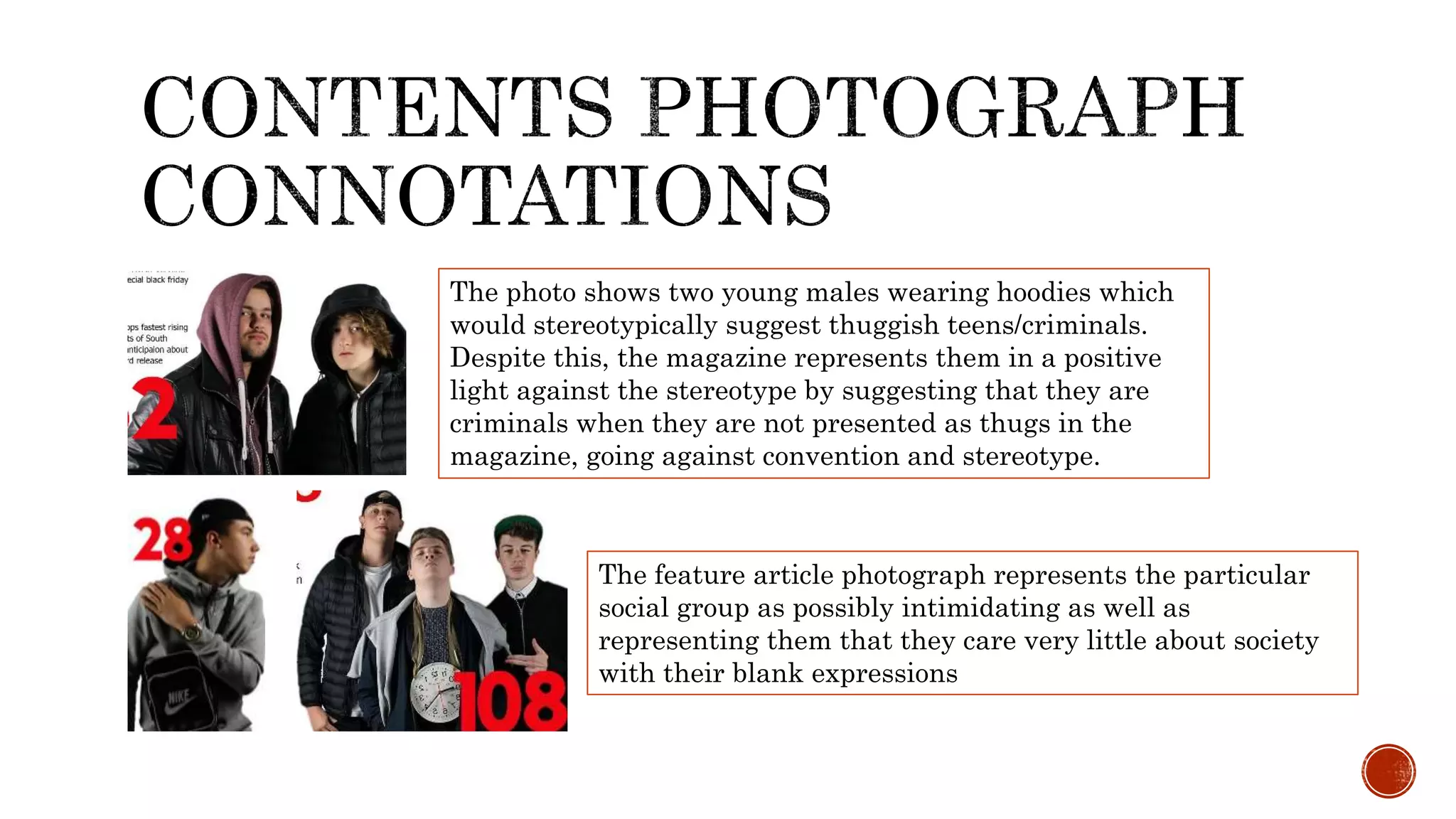
The photo shows two young males wearing hoodies which
would stereotypically suggest thuggish teens/criminals.
Despite this, the magazine represents them in a positive
light against the stereotype by suggesting that they are
criminals when they are not presented as thugs in the
magazine, going against convention and stereotype.
The feature article photograph represents the particular
social group as possibly intimidating as well as
representing them that they care very little about society
with their blank expressions
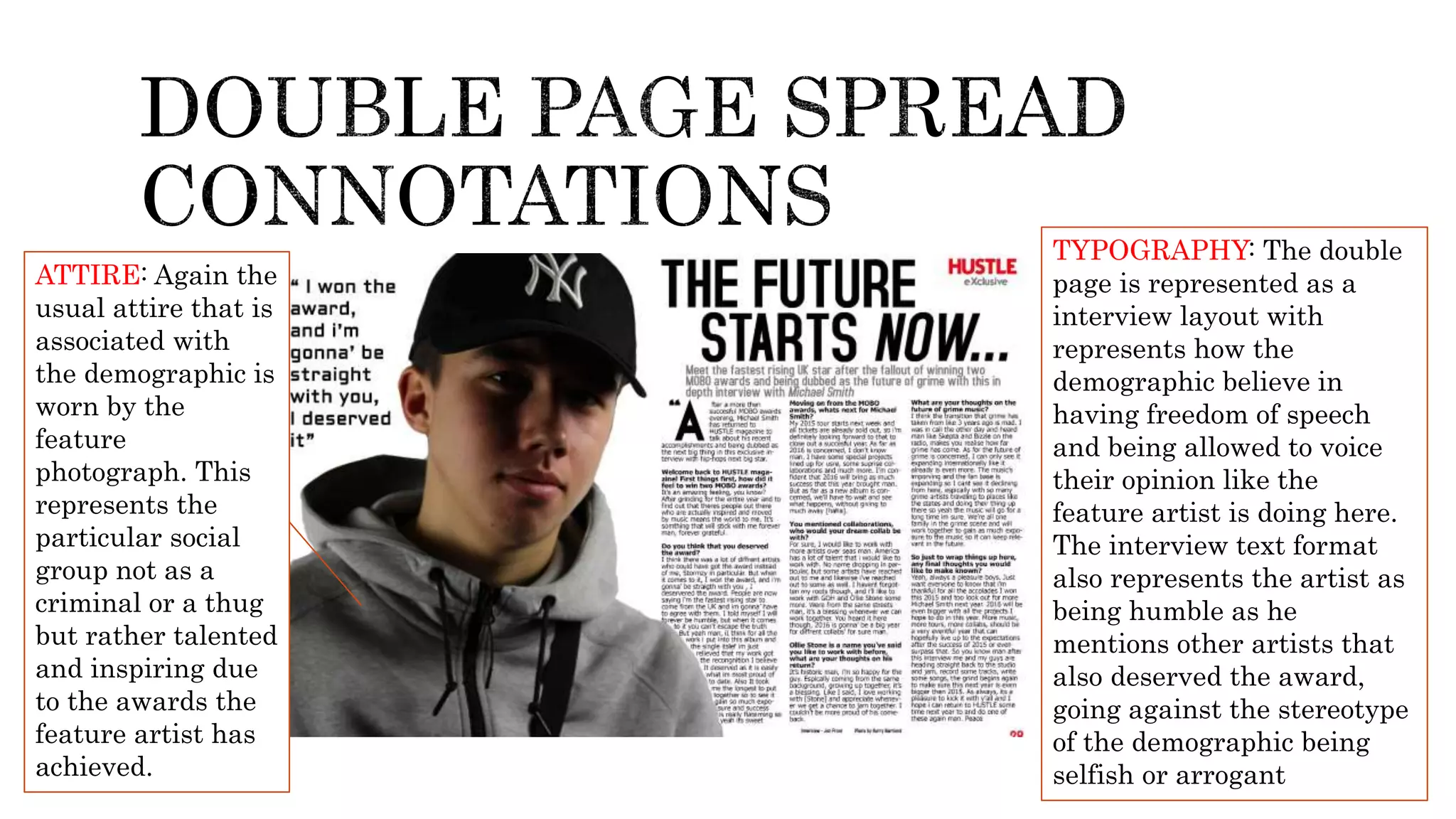
ATTIRE: Again the
usual attire that is
associated with
the demographic is
worn by the
feature
photograph. This
represents the
particular social
group not as a
criminal or a thug
but rather talented
and inspiring due
to the awards the
feature artist has
achieved.
TYPOGRAPHY: The double
page is represented as a
interview layout with
represents how the
demographic believe in
having freedom of speech
and being allowed to voice
their opinion like the
feature artist is doing here.
The interview text format
also represents the artist as
being humble as he
mentions other artists that
also deserved the award,
going against the stereotype
of the demographic being
selfish or arrogant

Question 2

  • 1.
    Comparing HUSTLE magazineto competitor magazines to explore how social groups are presented.
  • 2.
    WHO? Male 16-30 Low income Unemployed Part-time job/pocket money Working/middleclass Modern Up-to date Rebellious Likes hip-hop/ rap music Dislikes most other music genres Social Parties School, collage, university, Part time job Cheap magazine price
  • 3.
    RED: Magazines leading colour,suggests danger, something the social group of male hip –hop fans crave. FACE: Blank, intimidating facial expressional. Represents the social group of young white males who listen to hip-hop as likely constant mood of “not caring” and being rebellious. PLUGS: Well known hip hop artists and some that only hard-core hip-hop listeners can appreciate, proving how the social group of hip –hop fans are dedicated to the music and are always invested in their favourite artists. FUTURE: Referring to the cover artist of the mag as the “future” relates to the social group as they are the future generation because of there youth and therefore representing them as the “future” generation.
  • 4.
    FASHION: The photographs represents whatthe social group demographic would likely wear. The image is of a white, working class teenager and represents the demographic as being laid back and chilled out based on his attire. It shows how the social group of white, male hip hop fans are laid back and indifferent to what's going on round them GENDER: All the photos on the contents page are white, young, males. This represents the demographic of the magazine being predominantly male representing the social group of hip-hop/rap fans as mainly being male rather then female. BRAND IDENTITY: I have kept a consistent house style with the logo on the contents page, letting readers instantly recognise the magazine proving how loyal the social group is to hip-hop
  • 5.
    The photo showstwo young males wearing hoodies which would stereotypically suggest thuggish teens/criminals. Despite this, the magazine represents them in a positive light against the stereotype by suggesting that they are criminals when they are not presented as thugs in the magazine, going against convention and stereotype. The feature article photograph represents the particular social group as possibly intimidating as well as representing them that they care very little about society with their blank expressions
  • 6.
    ATTIRE: Again the usualattire that is associated with the demographic is worn by the feature photograph. This represents the particular social group not as a criminal or a thug but rather talented and inspiring due to the awards the feature artist has achieved. TYPOGRAPHY: The double page is represented as a interview layout with represents how the demographic believe in having freedom of speech and being allowed to voice their opinion like the feature artist is doing here. The interview text format also represents the artist as being humble as he mentions other artists that also deserved the award, going against the stereotype of the demographic being selfish or arrogant