Introduction to
MLFLOW
Accelerating the Machine
Learning Lifecycle
Who am I?
Fernando Ortega Gallego
Data Enginer @ Plain Concepts UK
• Interests & hobbies:
– Machine Learning and NLP
– Python, Azure and my daughter
– Honda biker
@FernanOrtega
fgallego@plainconcepts.com
Roadmap
Introduction
MLFlow Tracking
MLFlow Projects
MLFlow Models
Conclusions
Roadmap
Introduction
MLFlow Tracking
MLFlow Projects
MLFlow Models
Conclusions
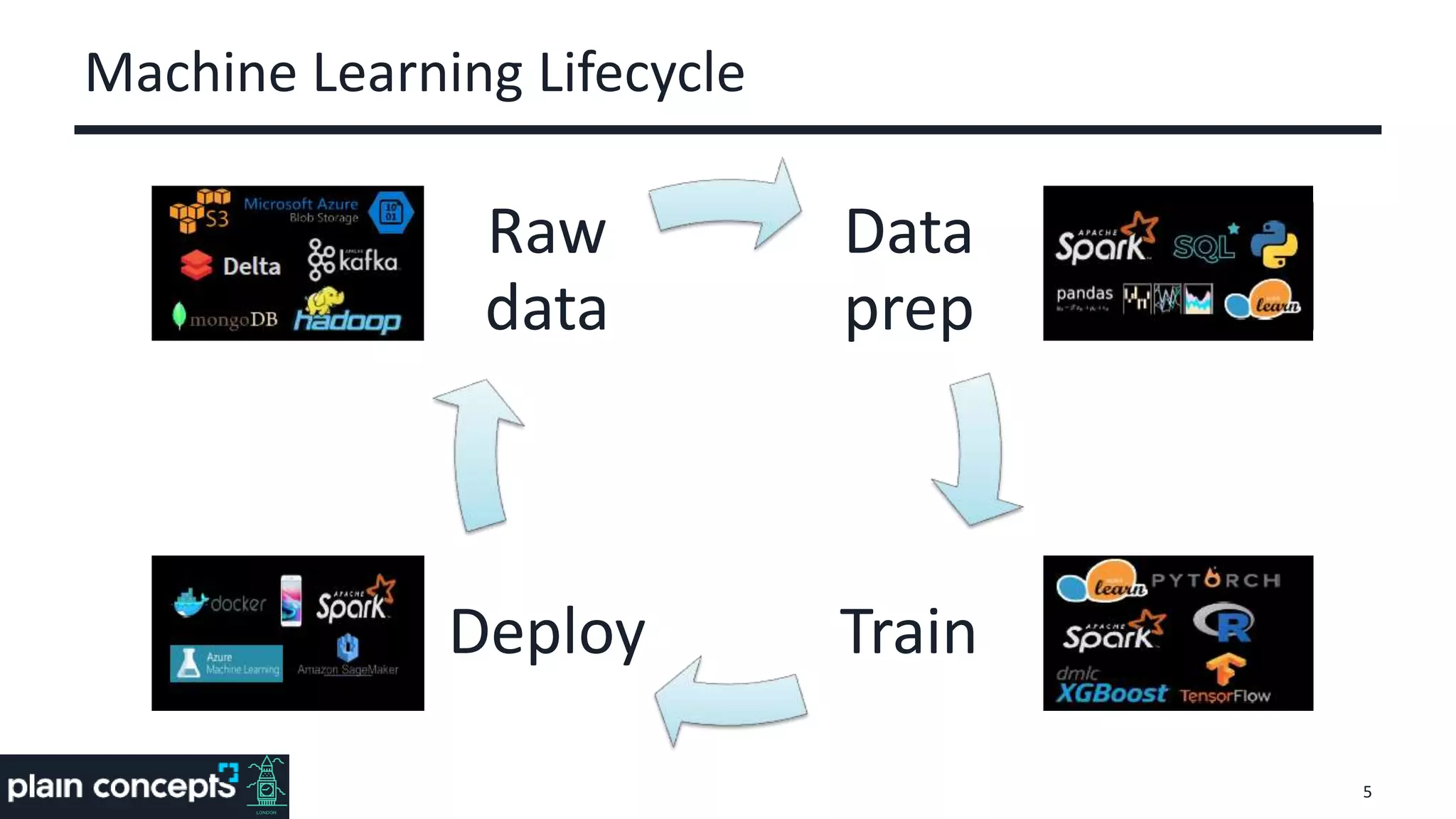
Machine Learning Lifecycle
Data
prep
TrainDeploy
Raw
data
5
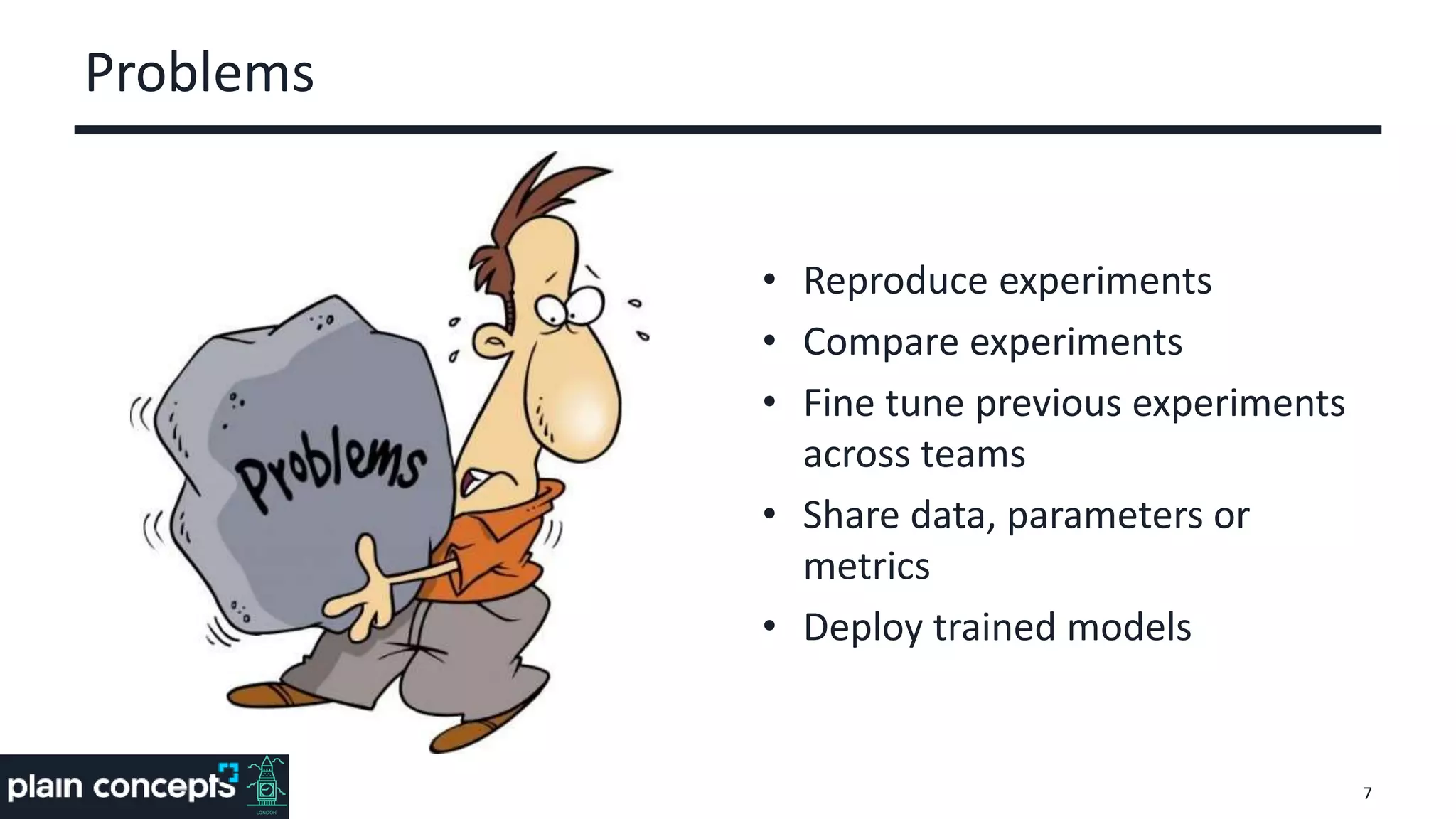
Problems
• Reproduce experiments
• Compare experiments
• Fine tune previous experiments
across teams
• Share data, parameters or
metrics
• Deploy trained models
7
It is difficult to productionize and share
8
Custom ML Platforms
• Facebook FBLearner, Google
TFX, Uber Michelangelo
• Advantages:
– Standarise the ML loop
• Disadvantages:
– Limited to a few algorithms or
frameworks
– Tied to the company’s
infrastructure
9
Are there any similar solutions in an open manner?
10
11
Introducing MLFlow
• It works with any ML library &
language
• It runs the same way anywhere
• It is designed to be useful both
for 1 person, small teams or big
teams
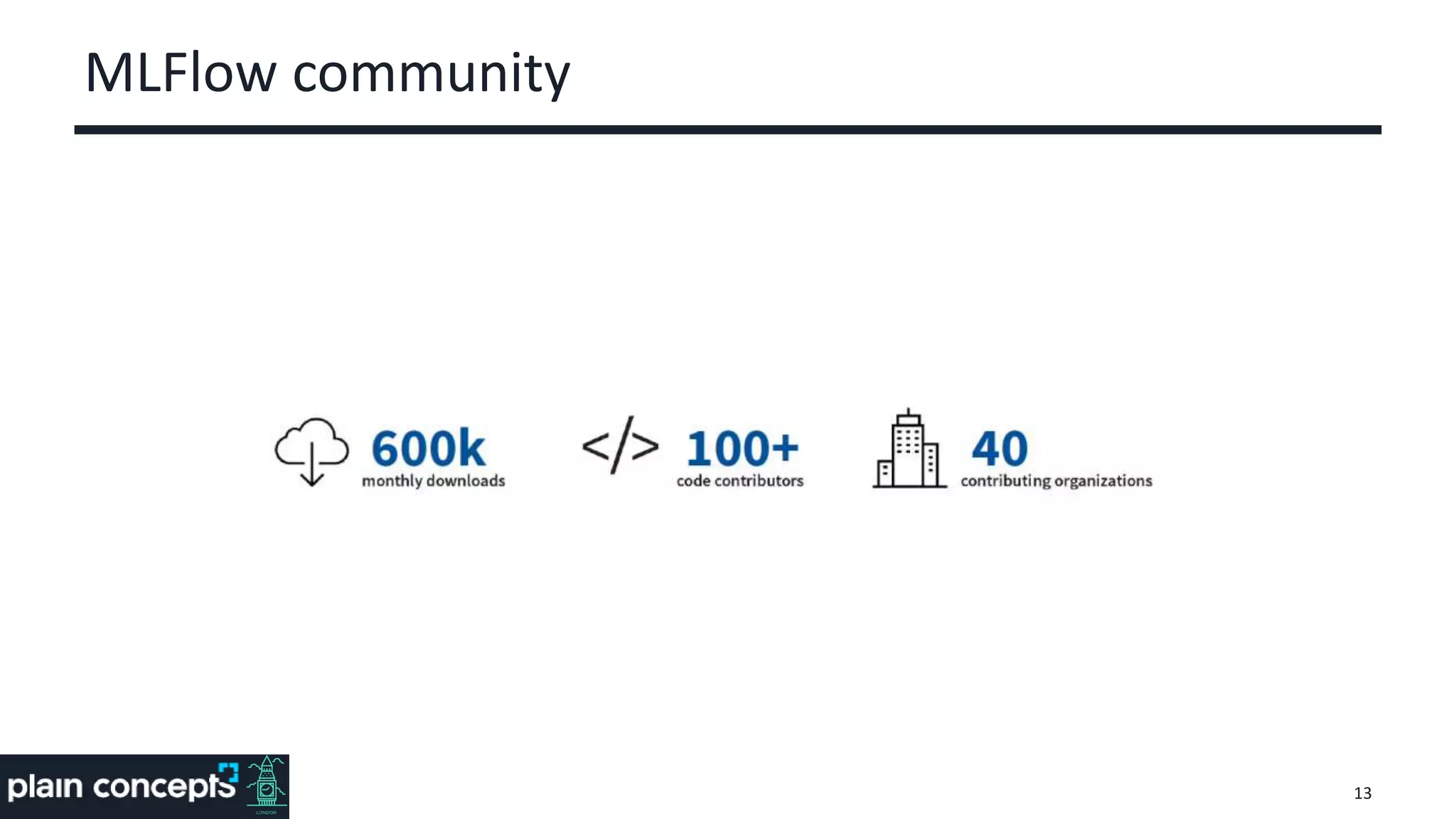
MLFlow community
13
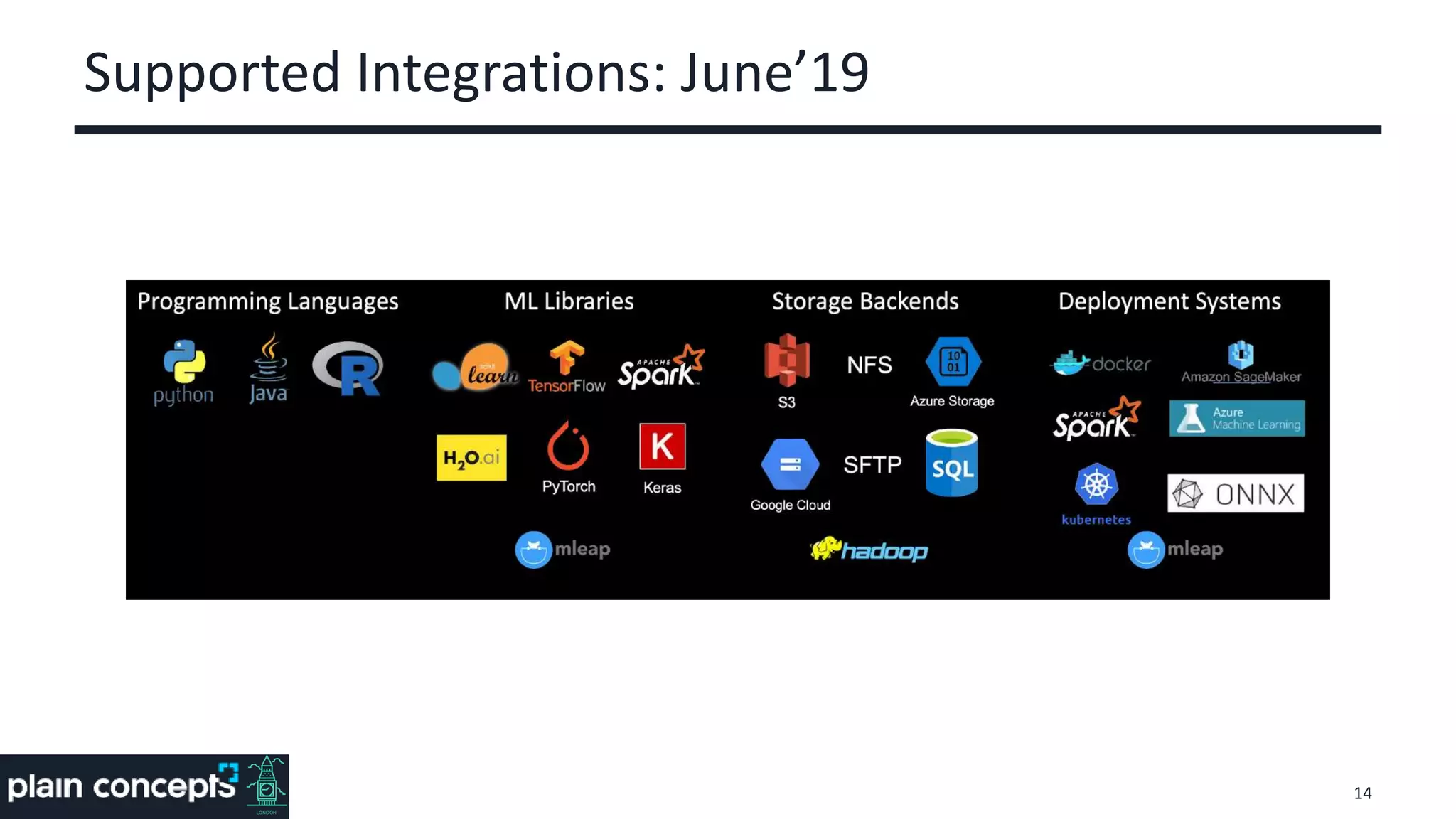
Supported Integrations: June’19
14
MLFlow components
15
Tracking Projects Models
Roadmap
Introduction
MLFlow Tracking
MLFlow Projects
MLFlow Models
Conclusions
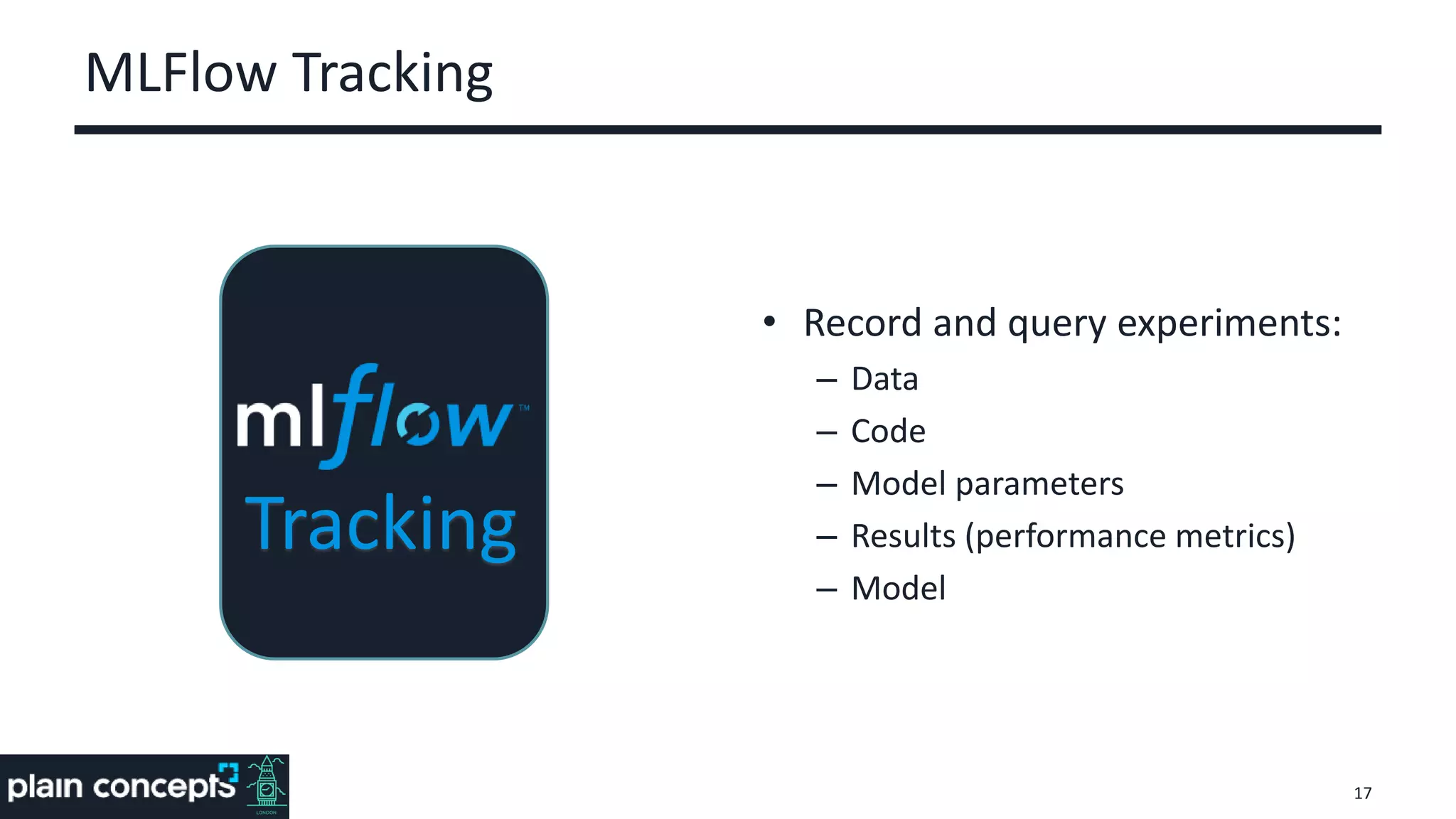
MLFlow Tracking
• Record and query experiments:
– Data
– Code
– Model parameters
– Results (performance metrics)
– Model
17
Tracking
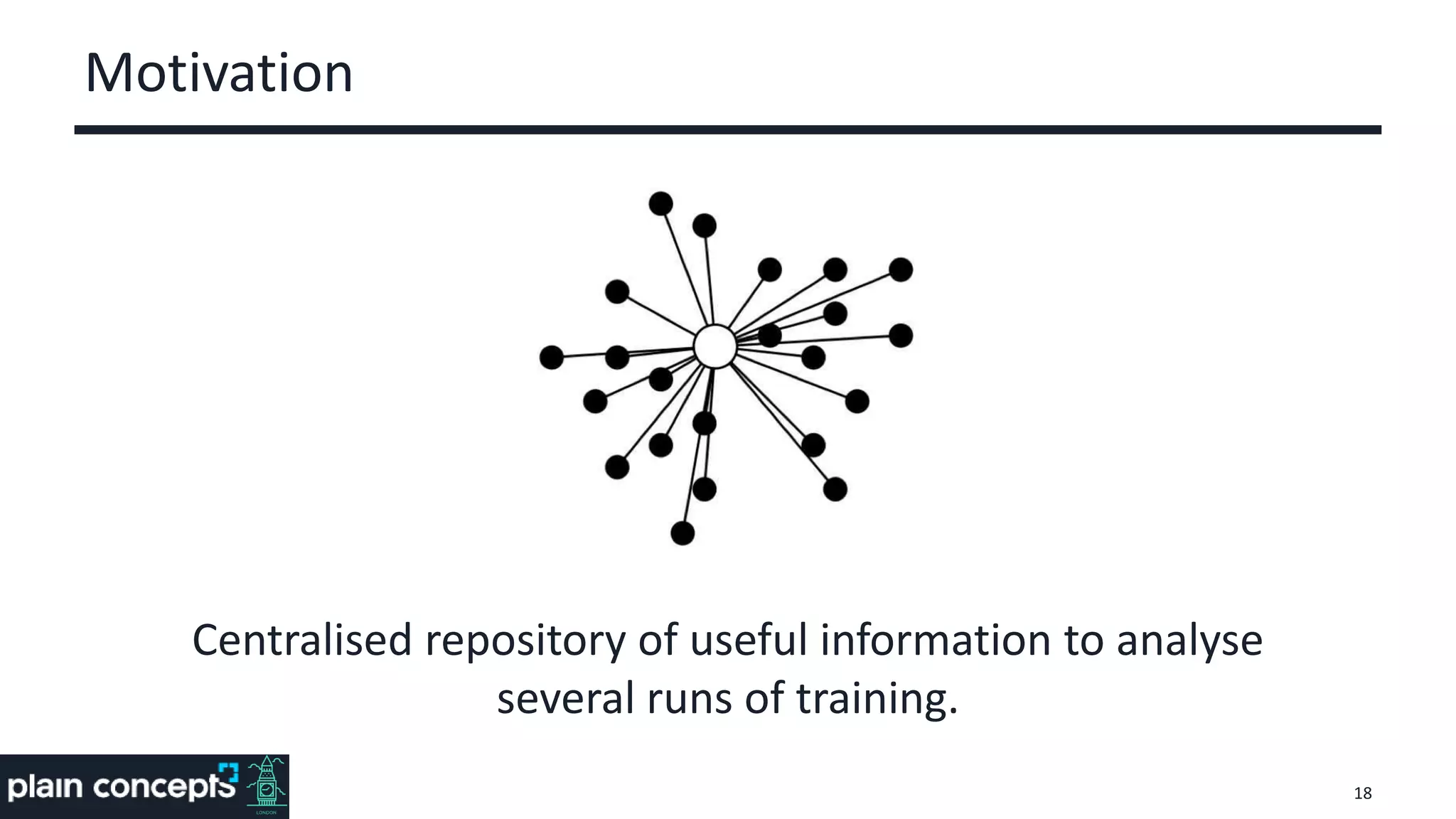
Motivation
18
Centralised repository of useful information to analyse
several runs of training.
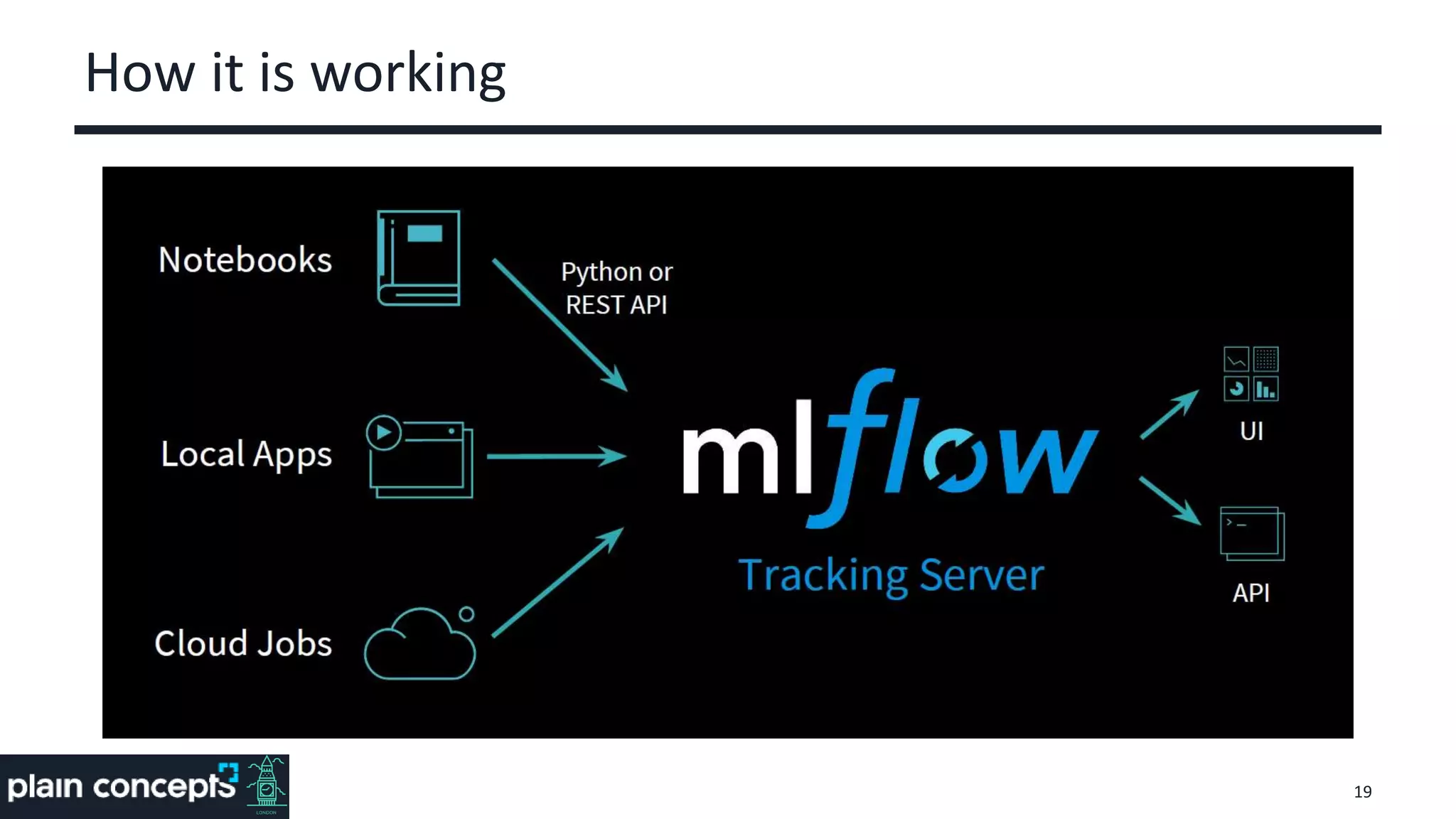
How it is working
19
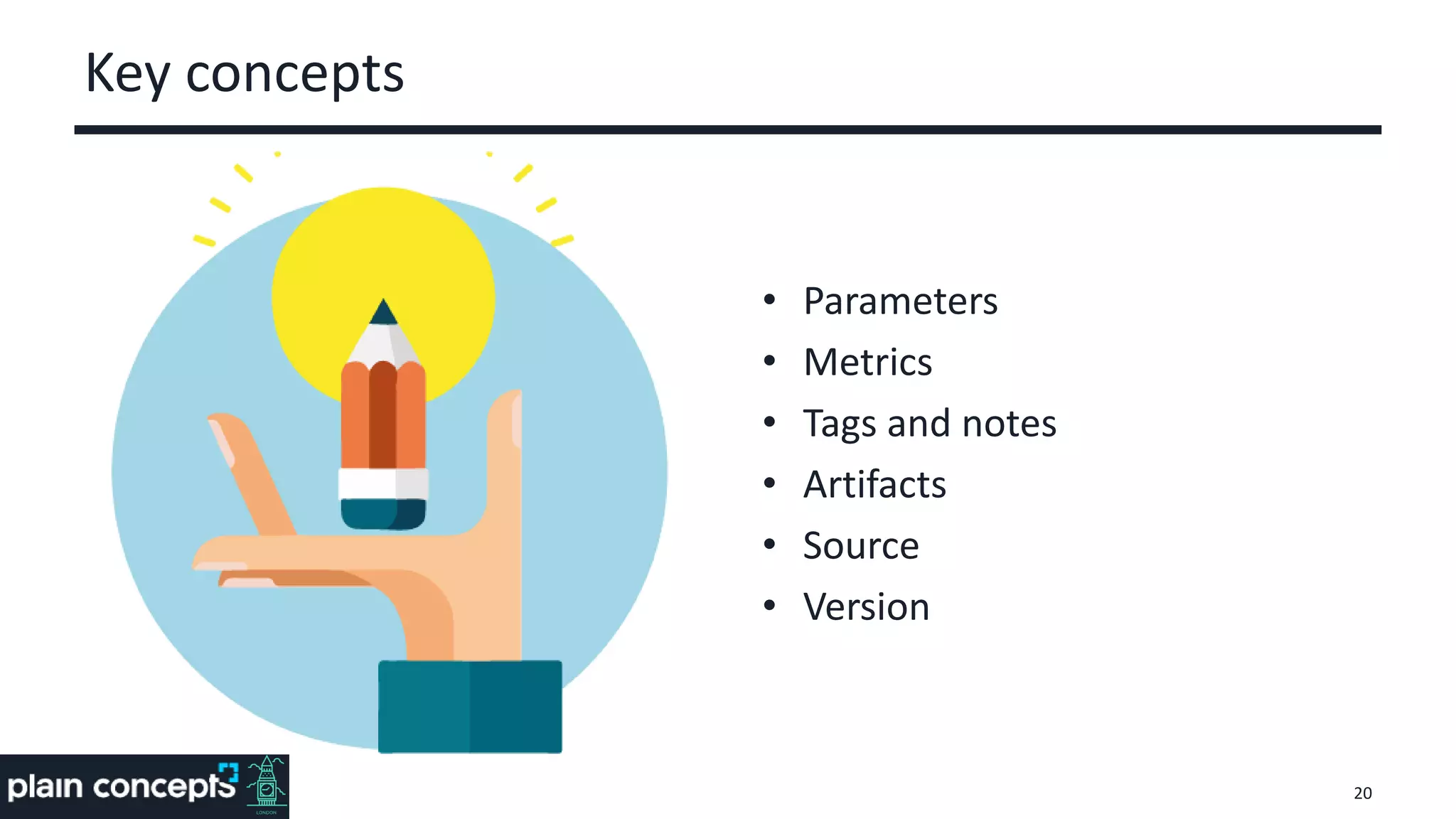
Key concepts
• Parameters
• Metrics
• Tags and notes
• Artifacts
• Source
• Version
20
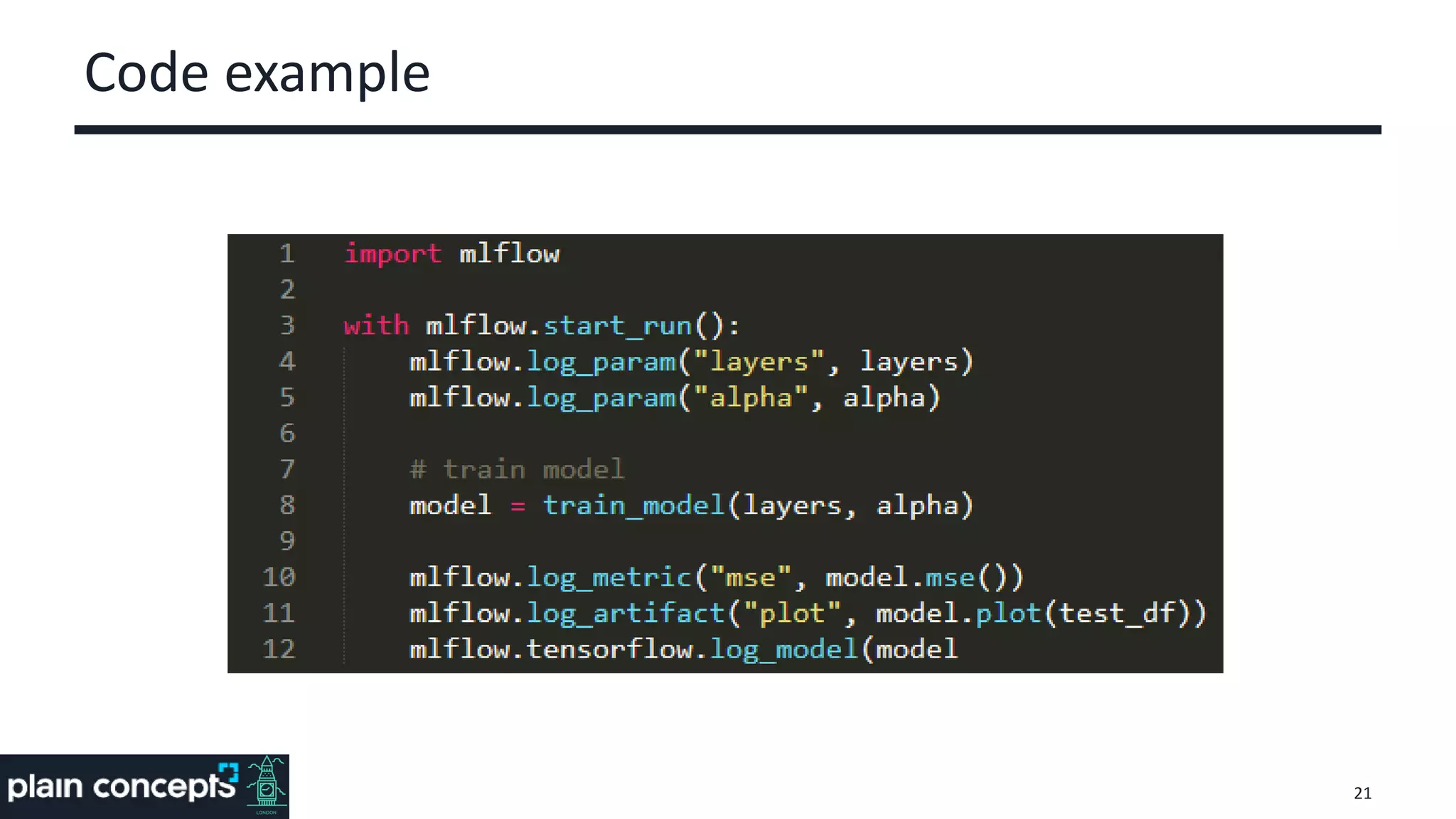
Code example
21
22
Demo
Roadmap
Introduction
MLFlow Tracking
MLFlow Projects
MLFlow Models
Conclusions
MLFlow Projects
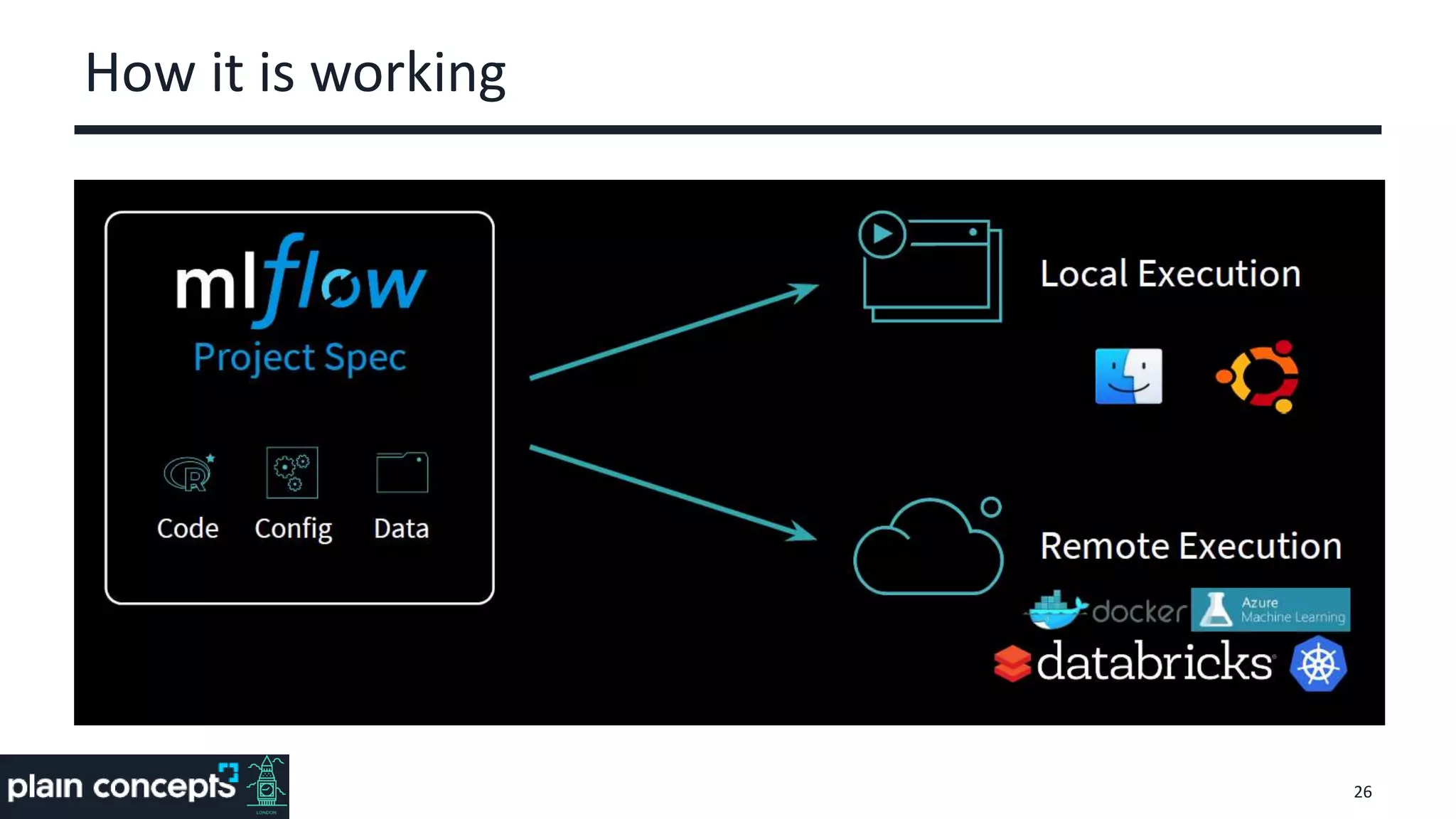
• Packaging format for
reproducible ML runs
• Defines dependencies for
reproducibility
• Execution API for running
projects locally or remote
24
Projects
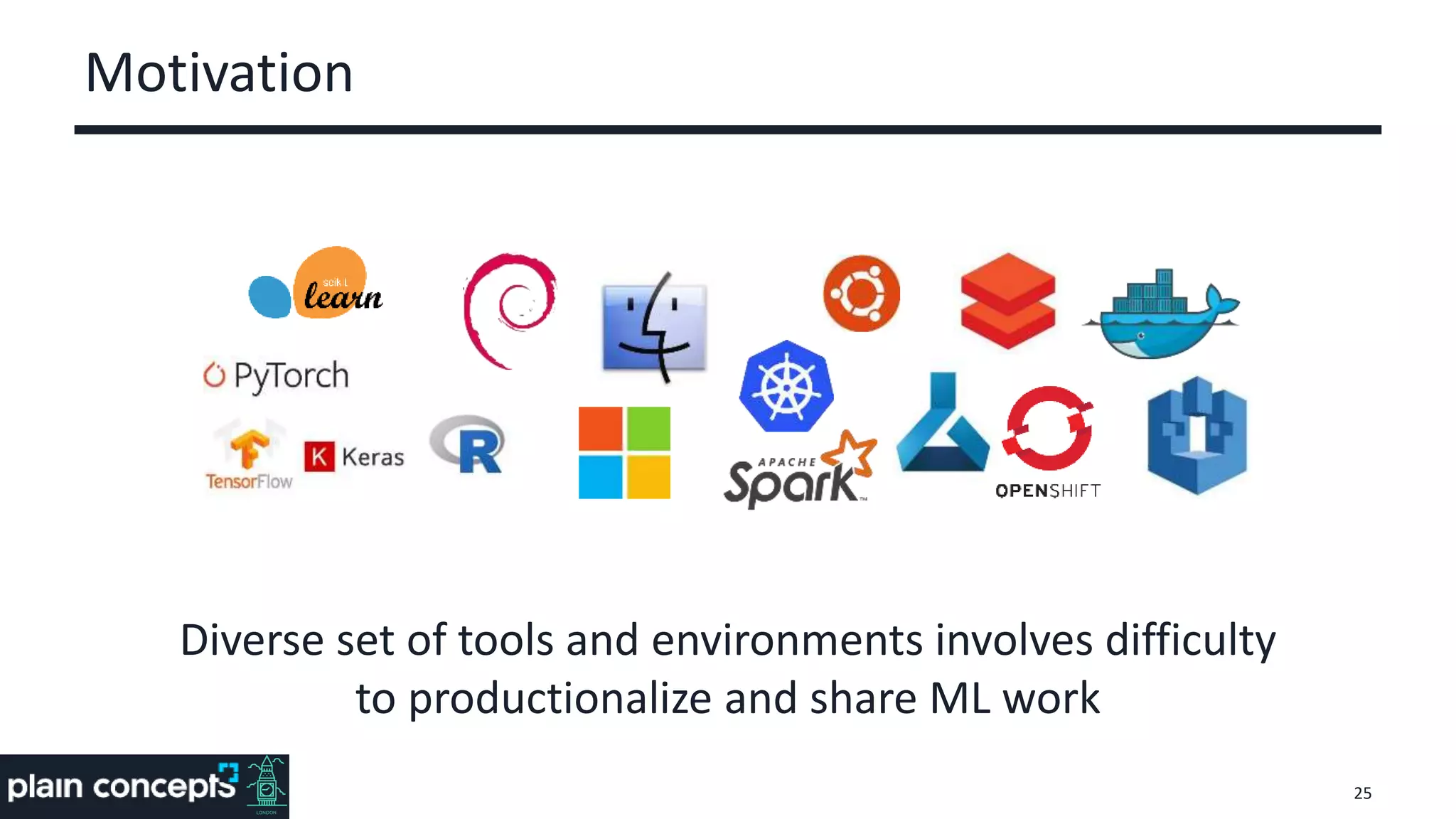
Motivation
25
Diverse set of tools and environments involves difficulty
to productionalize and share ML work
How it is working
26
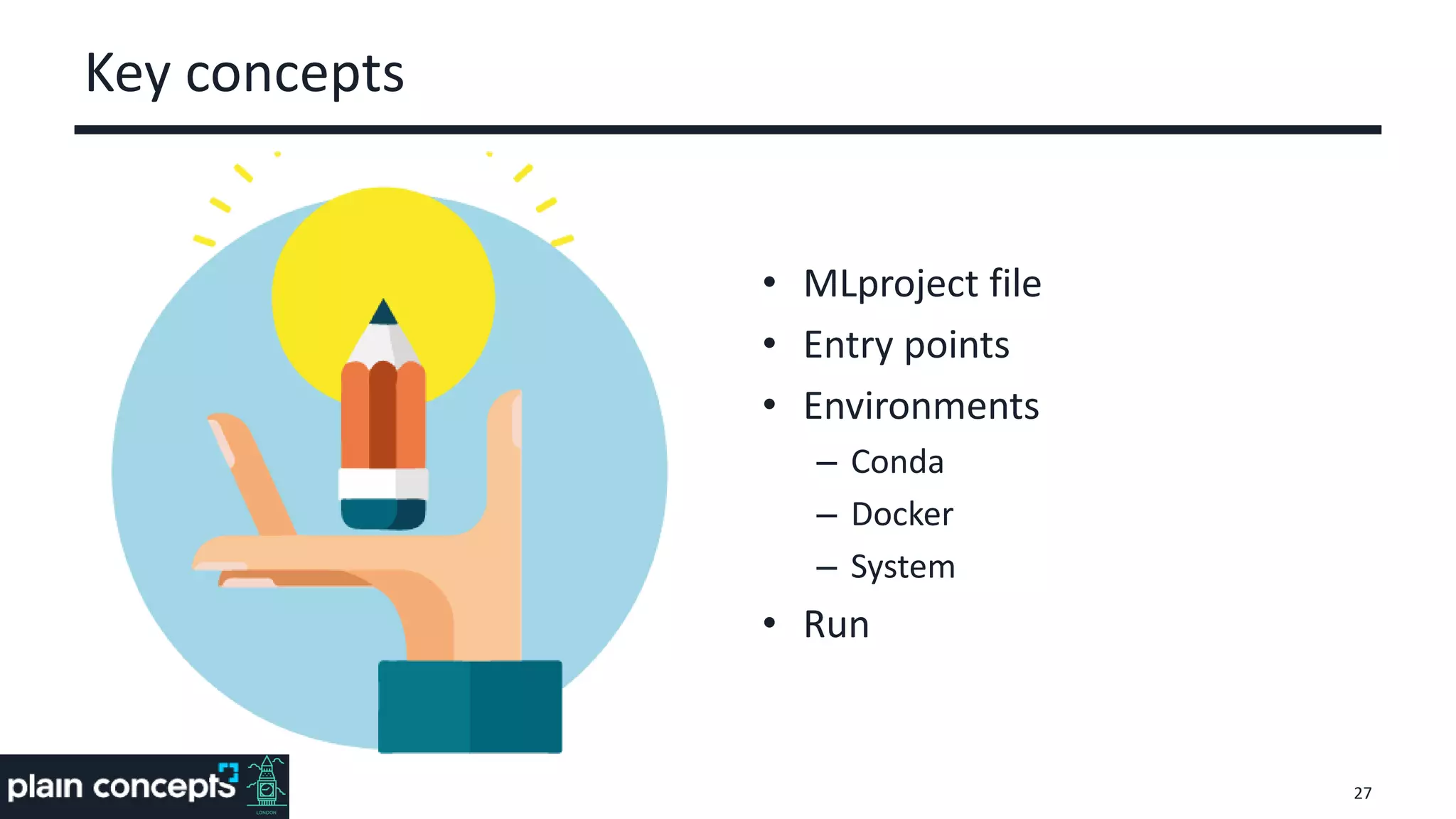
Key concepts
• MLproject file
• Entry points
• Environments
– Conda
– Docker
– System
• Run
27
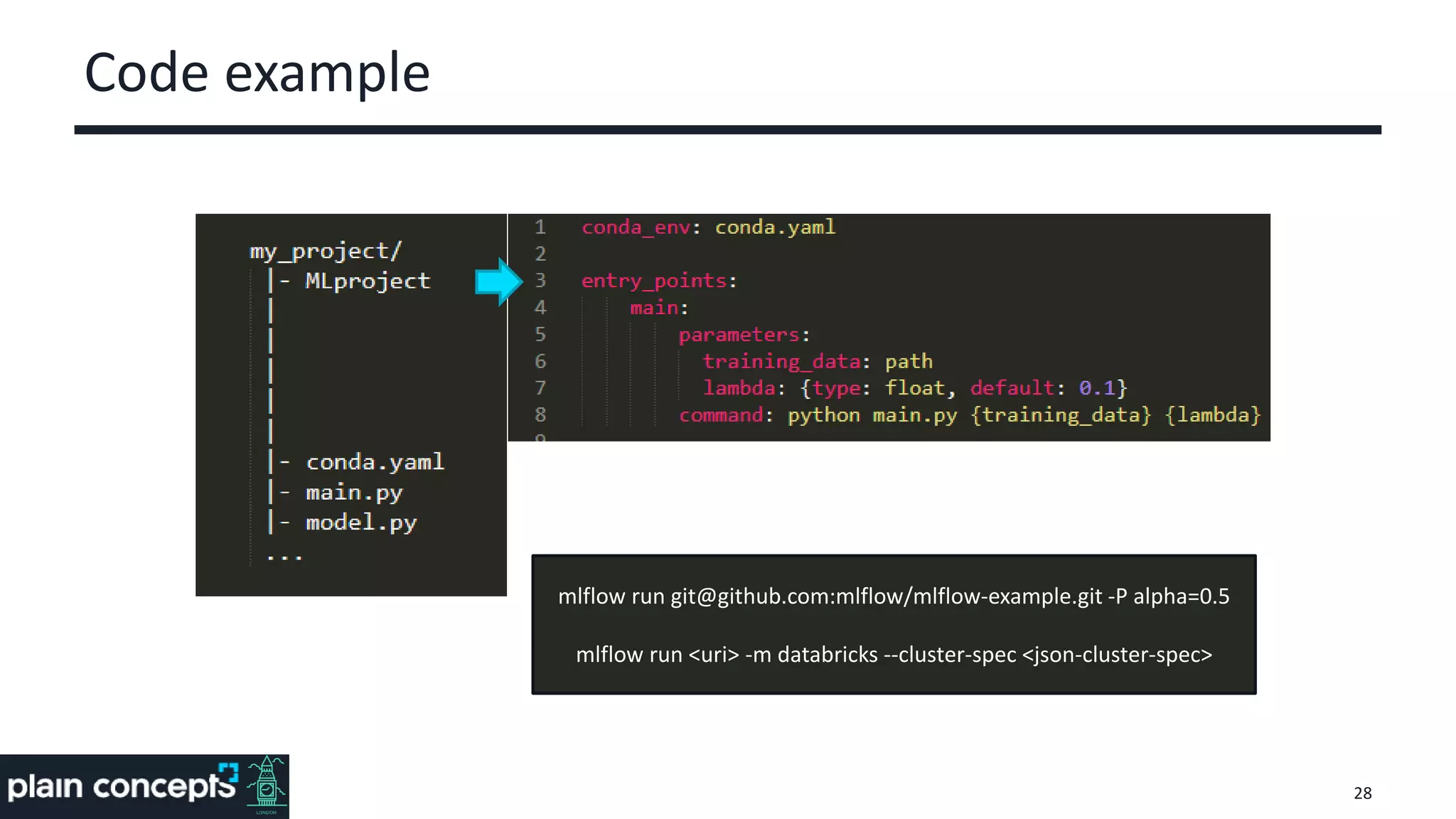
Code example
28
mlflow run git@github.com:mlflow/mlflow-example.git -P alpha=0.5
mlflow run <uri> -m databricks --cluster-spec <json-cluster-spec>
29
Demo
Roadmap
Introduction
MLFlow Tracking
MLFlow Projects
MLFlow Models
Conclusions
MLFlow Models
• Packaging format for ML Models
• Defines dependencies for
reproducibility
• Deployment APIs
31
Models
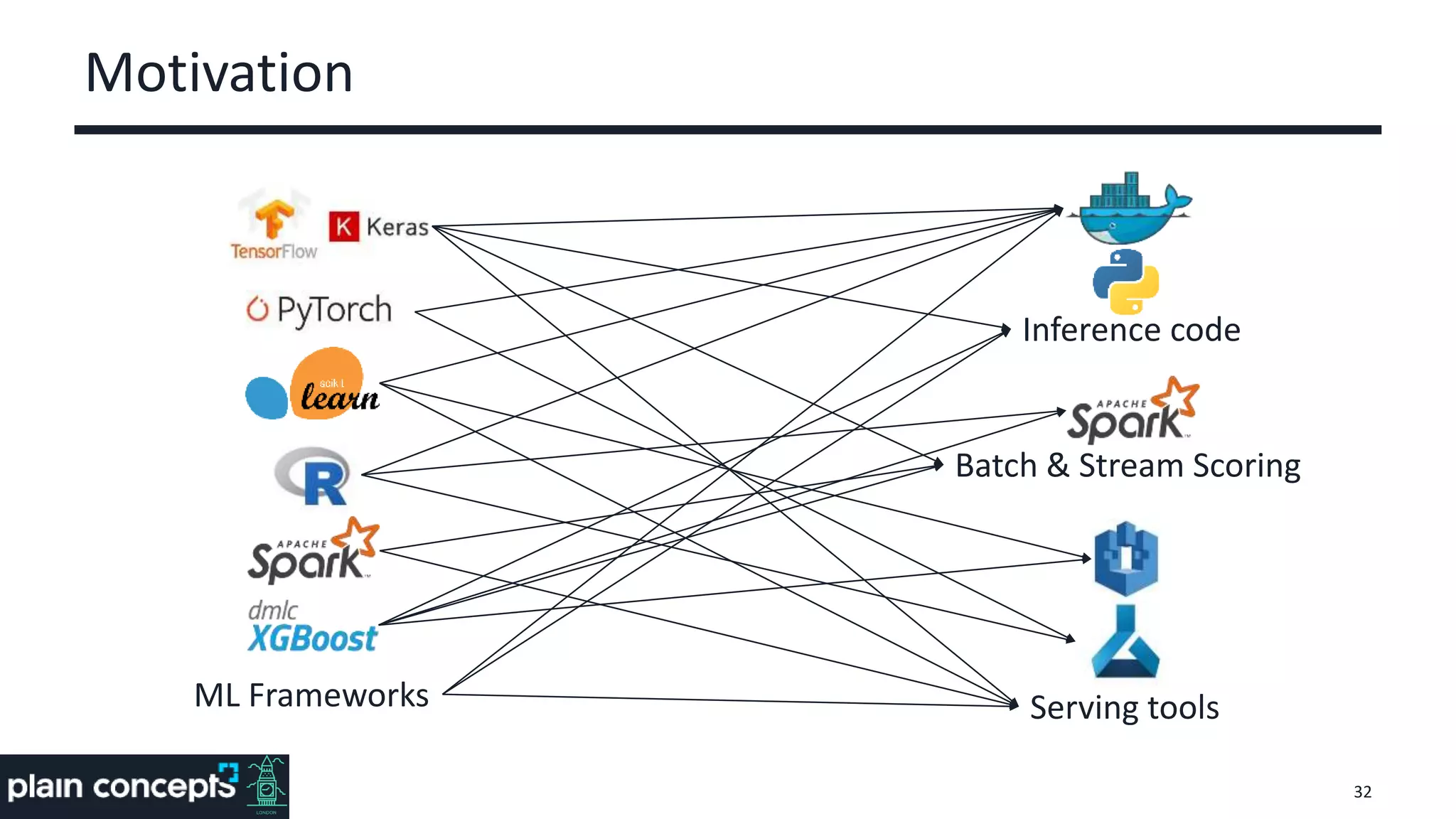
Motivation
32
ML Frameworks
Batch & Stream Scoring
Serving tools
Inference code
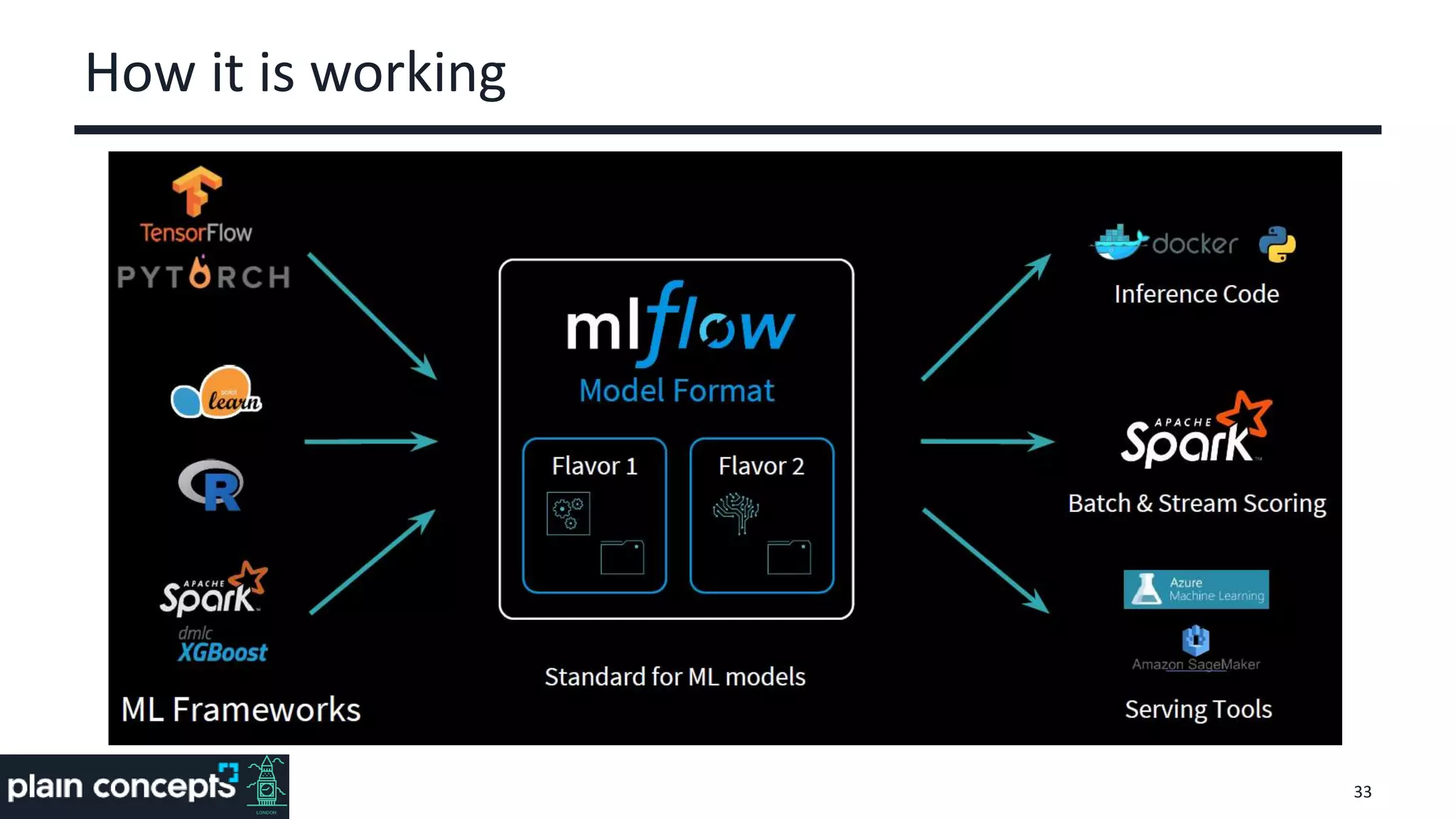
How it is working
33
Key concepts
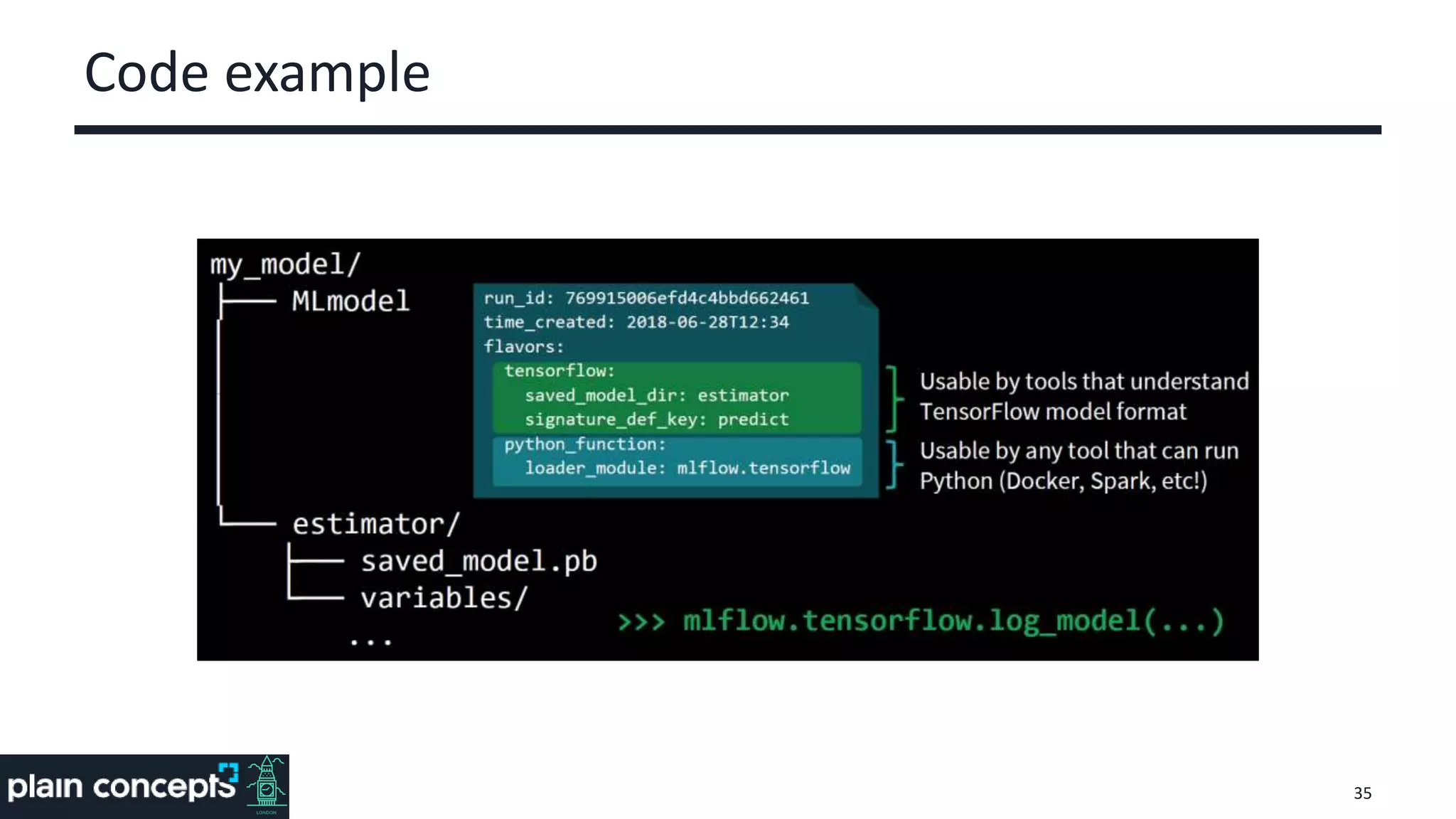
• MLmodel file
• Storage format
• Entry points
• Flavours
• Custom model
34
Code example
35
36
Demo
Roadmap
Introduction
MLFlow Tracking
MLFlow Projects
MLFlow Models
Conclusions
MLFlow rocks!
• Log important parameters,
metrics, and other data that is
important to the machine
learning model
• Track the environment a model
is run on
• Run any machine learning codes
on that environment
• Deploy and export models to
various platforms with multiple
packaging formats
38
MLFlow 1.0 (4-jun)
• Support for step tracking
• Improved Search features
• Batched logging of metrics
• Support for HDFS
• Windows support for the client
• Build Docker images to deploy
• ONNX model flavour
39
MLFlow last updates (1.4: 31-oct)
• Windows support
• Tags and descriptions
• Google Cloud run models
• Log directories as artifacts
• CLI command to export to CSV
• Keras compatibility with TF 2.0
• Model Registry in preview
40
Future of MLFlow
41
Pythonsevilla2019 - Introduction to MLFlow

Pythonsevilla2019 - Introduction to MLFlow

Editor's Notes

  • #20 Backend stores are entity store (filestore and database) and artifact repository (s3, azure blob, Google cloud, dbfs)
  • #21 Parameters: key-value inputs to your code Metrics: numeric values Tags and notes: additional information about a run Artifacts: arbitrary files, including data and models Source: code Version: version of the code
  • #27 Backend stores are entity store (filestore and database) and artifact repository (s3, azure blob, Google cloud, dbfs)
  • #34 Backend stores are entity store (filestore and database) and artifact repository (s3, azure blob, Google cloud, dbfs)
  • #39 Conclusion Workflow tools can greatly simplify the ML lifecycle • Improve usability for both data scientists and engineers • Same way software dev lifecycle tools simplify development Learn more about MLflow at mlflow.org