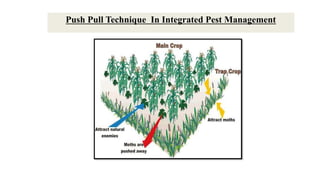
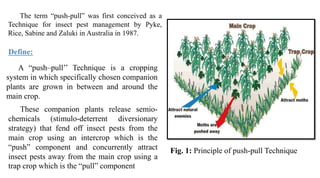
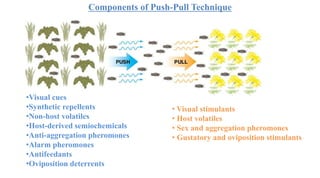
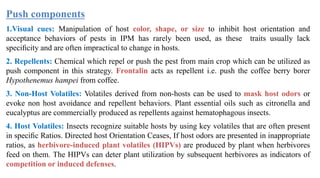
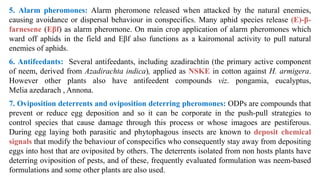
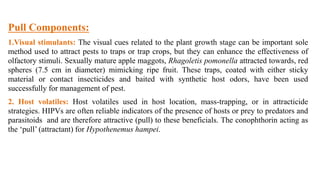
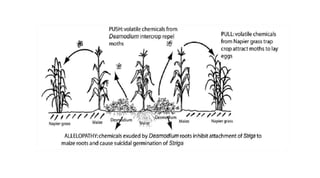
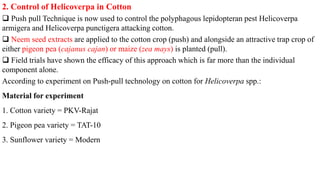
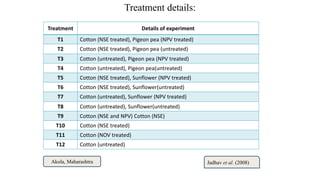
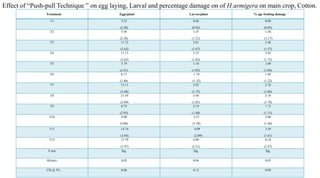
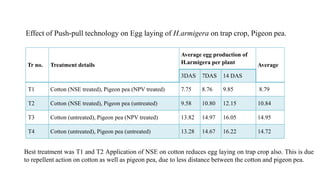
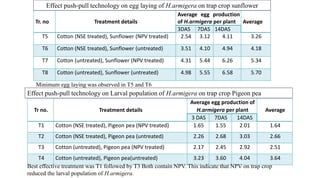
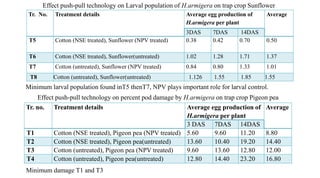
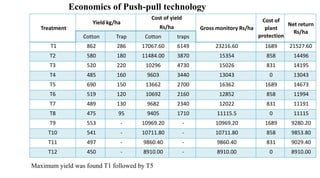
Push-pull technique was developed in the 1990s in Kenya to manage pest populations through intercropping and trap crops that release semiochemicals. It involves intercropping a main crop with a repellent plant ("push") and bordering the field with an attractive trap crop ("pull") that concentrates pests away from the main crop. For cereal stem borers in East Africa, the technique uses desmodium as the push intercrop and Napier grass as the pull trap crop, with Napier grass attracting and killing over 80% of stem borer larvae through its sticky sap. This reduces pest damage to the main cereal crop while increasing yields by up to 2 tons/hectare.