

Plethysmography
Pandian M
Dept of Physiology
DYPMCKOP
 Aim
 Principle
 Apparatus
 Procedure
 Precaution
Plethysmography
A plethysmograph is an
instrument for measuring changes
in volume within an organ or
whole body
What Is Plethysmography?
Plethysmography measures changes in
volume in different areas of your body.
It measures these changes with blood
pressure cuffs or other sensors.
These are attached to a machine called a
plethysmograph.
Plethysmography is especially effective in
detecting changes caused by blood flow.
It can help your doctor determine if you
have a blood clot in your arm or leg.
It can also help your doctor calculate the
volume of air your lungs can hold.
When Is Plethysmography Ordered?
 Your doctor may order a limb plethysmography if you
show signs of blood clots in your legs.
 Symptoms of blood clots include redness, warmth,
swelling, and tenderness.
 Plethysmography is not as accurate as an arteriogram,
which is more commonly used to identify blood clots.
 But it’s non invasive and less expensive.
 These factors make it more appealing to many
individuals.
 You doctor may order a lung plethysmography if you
have symptoms of upper respiratory problems.
 These symptoms include pain or discomfort while
breathing and shortness of breath.
 Your doctor can’t diagnose the underlying cause of
your problem from plethysmography alone.
 However, an abnormal test result can confirm if
something is preventing your lungs from holding as
much air as they should.
Types of Plethysmography
Limb Plethysmography
Lung Plethysmography
Procedure for a Plethysmography
Limb Plethysmography
 A limb plethysmography can be performed in a
doctor’s office or hospital.
 If you’re wearing pants or a long-sleeved shirt,
your doctor will ask you to undress and put on a
hospital gown.
 They’ll ask you to keep one leg and one arm bare.
 You will recline in a comfortable position on an
examination table, cot, or gurney.
 Your doctor will then place blood pressure cuffs
on your leg and arm.
 They’ll be most interested in checking your systolic blood
pressure.
 That’s the pressure of blood in your arm and leg when your
heart contracts.
 You may feel a little uncomfortable when the blood pressure
cuffs tighten around your arm and leg, but you won’t feel
any real pain.
 The test usually lasts about 20 to 30 minutes. During this
time, you’ll be asked to move as little as possible.
 Limb plethysmography is not associated with any risks or side
effects.
 Unless your doctor tells you otherwise, you can resume your
regular schedule immediately after the test.
Interpreting the Tests
 Limb Plethysmography
 Normally, the systolic blood pressure in your arm and leg are similar.
 The ankle-brachial index (ABI) is a measurement used to check for
potential problems.
 To calculate your ABI, divide the highest systolic blood pressure
reading from your leg by the highest reading from your arm.
 A normal ABI falls between 0.90 and 1.30, according to the National
Heart, Lung, and Blood InstituteTrusted Source. If your ABI falls
outside this range, you may have a narrow or blocked artery.
 Your doctor can order additional tests to determine the exact nature
of the problem.
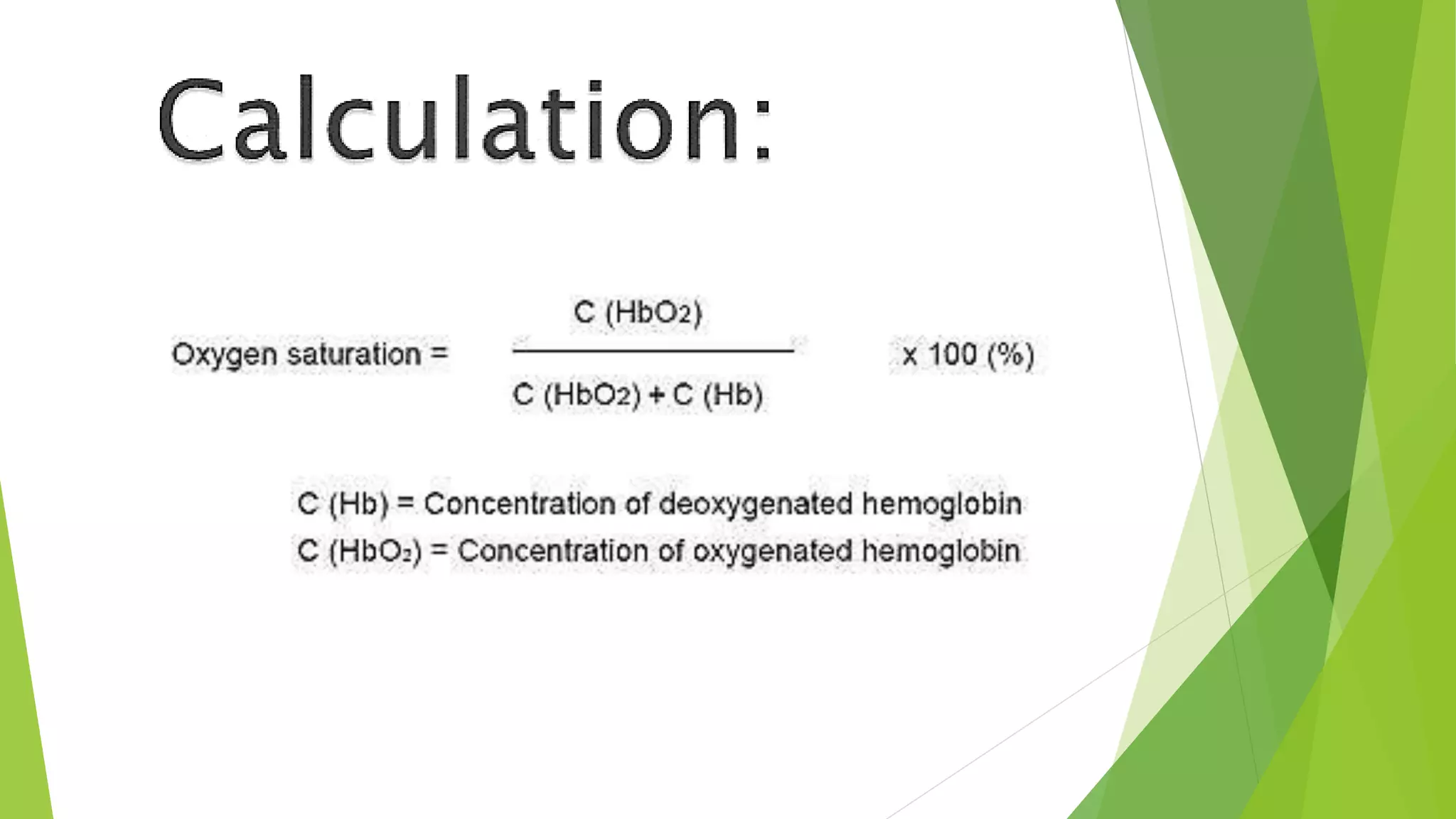
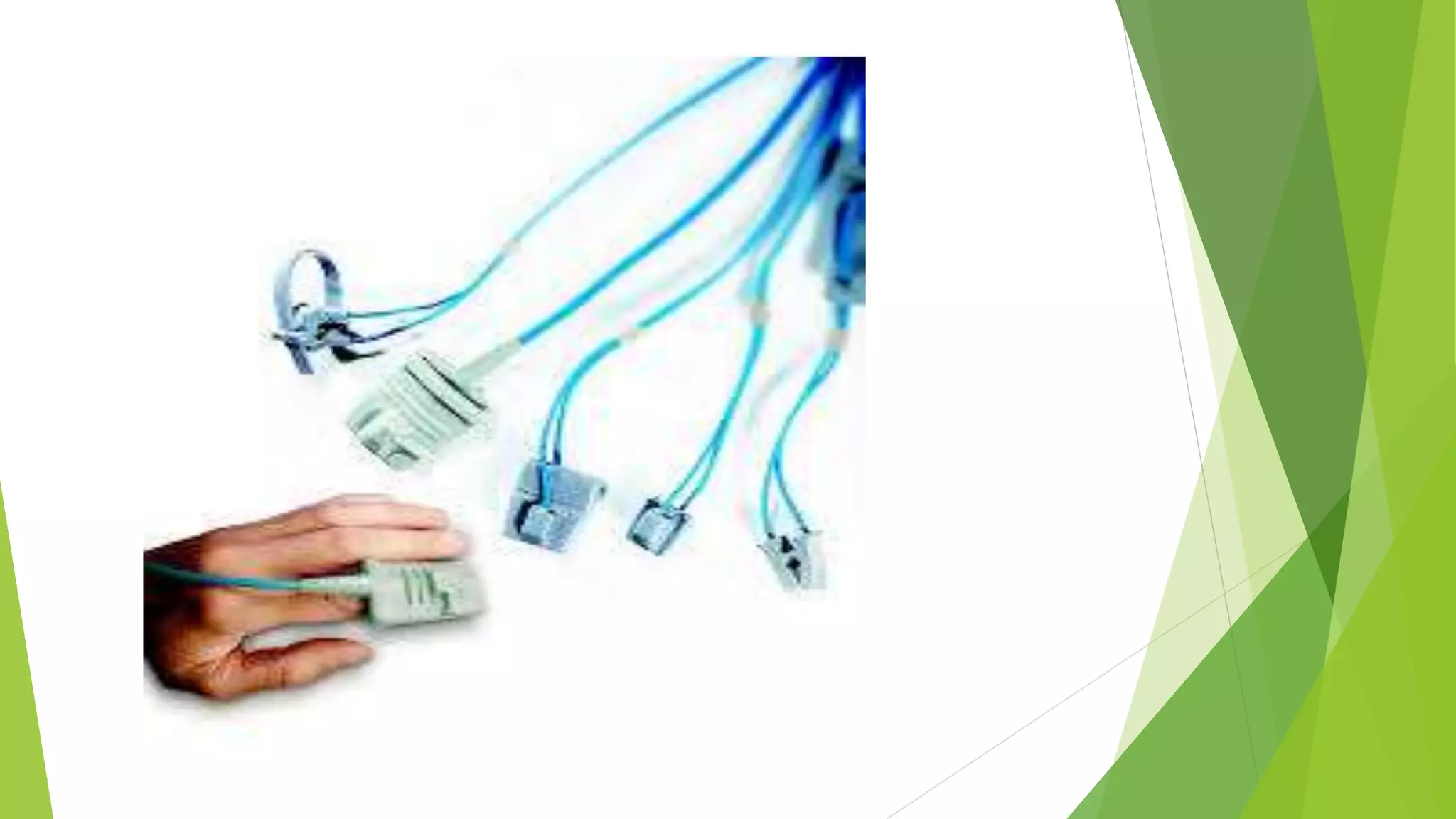
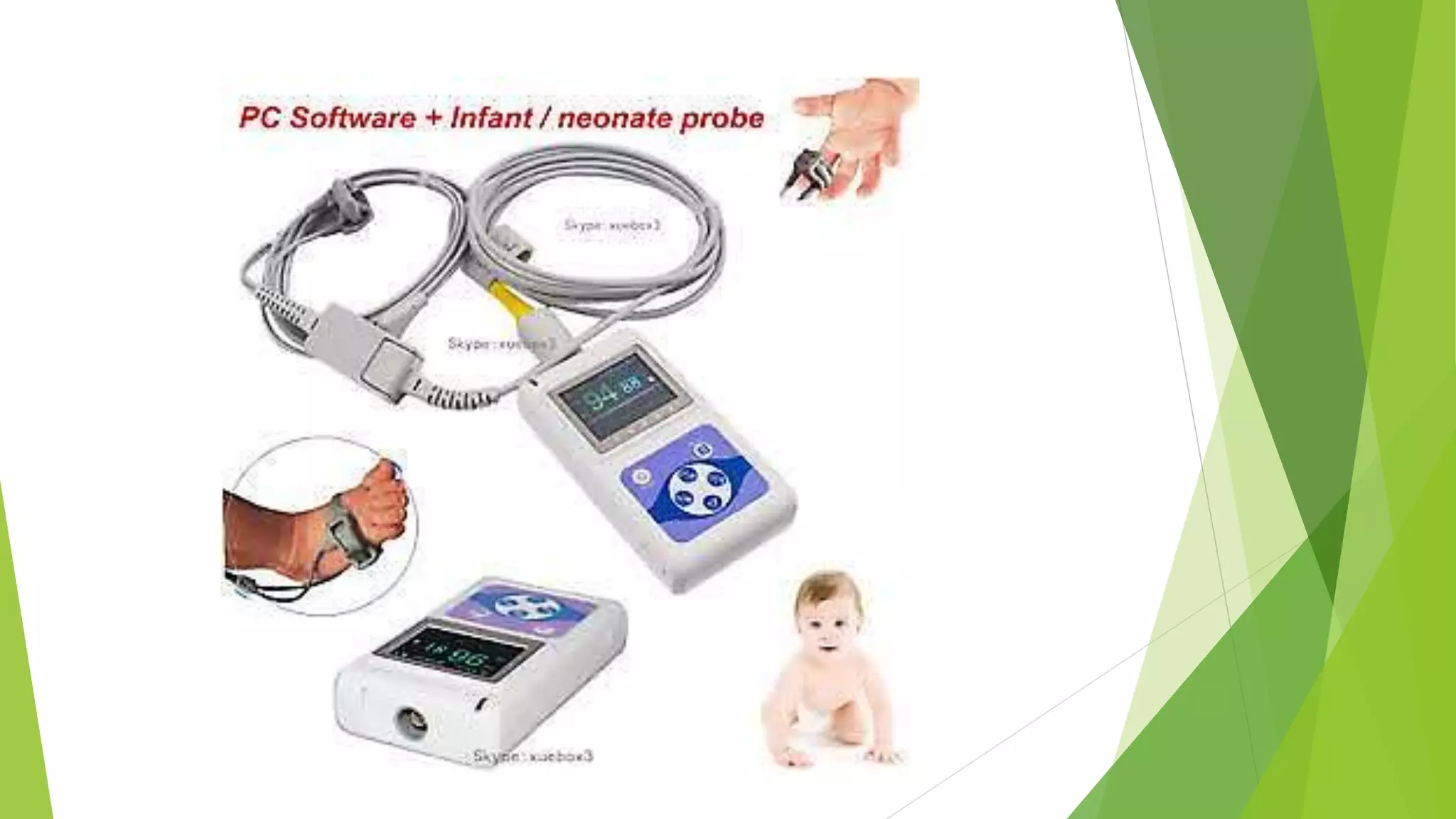
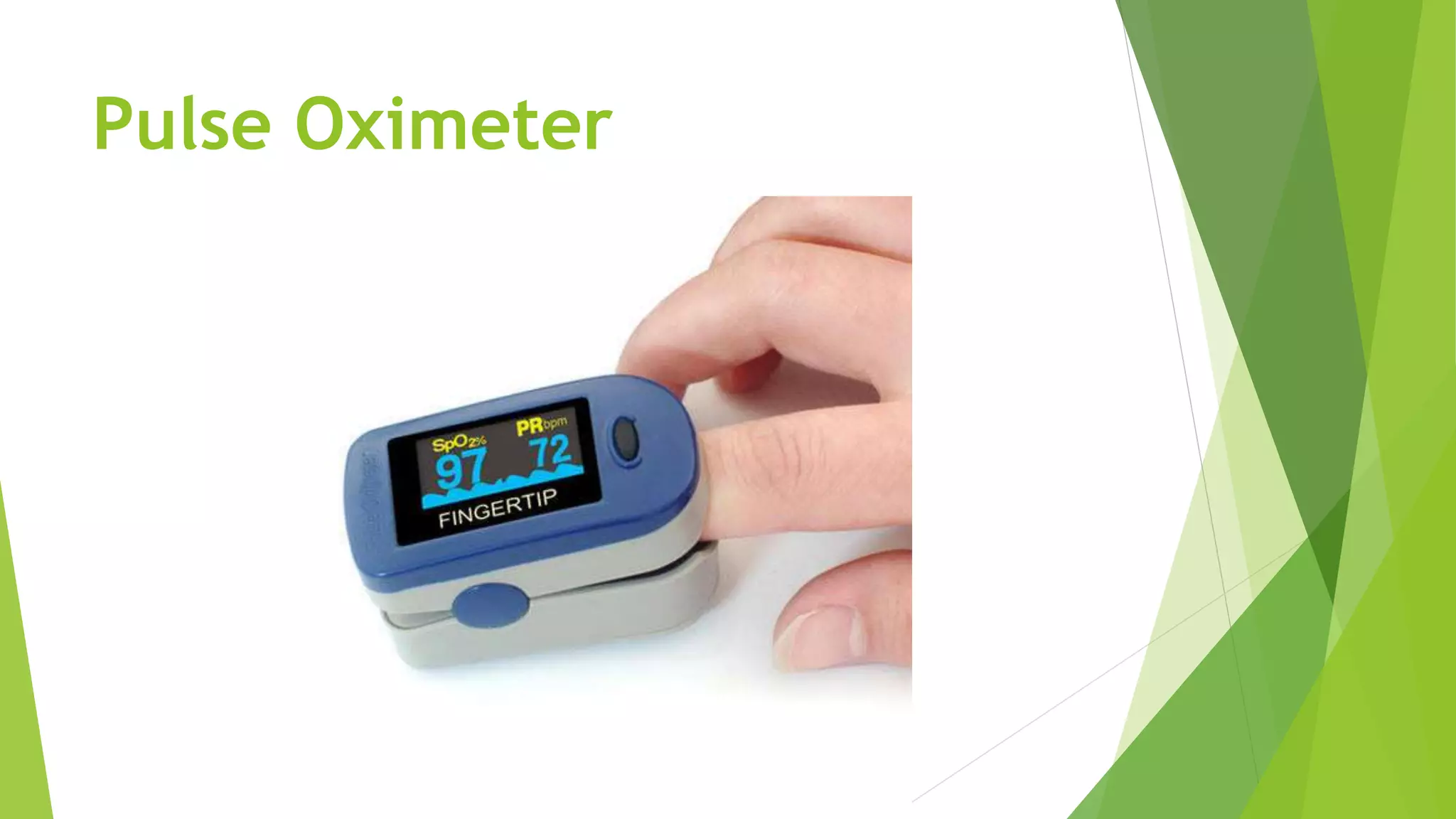
Pulse Oximeter used to measure oxygen
saturation in the body i.e how much of the
hemoglobin in the blood is carrying the
oxygen.
Oxygen enters the lungs and then is passed on into blood.
The blood carries the oxygen to the various organs in our
body. The main way oxygen is carried in our blood is by
means of hemoglobin.
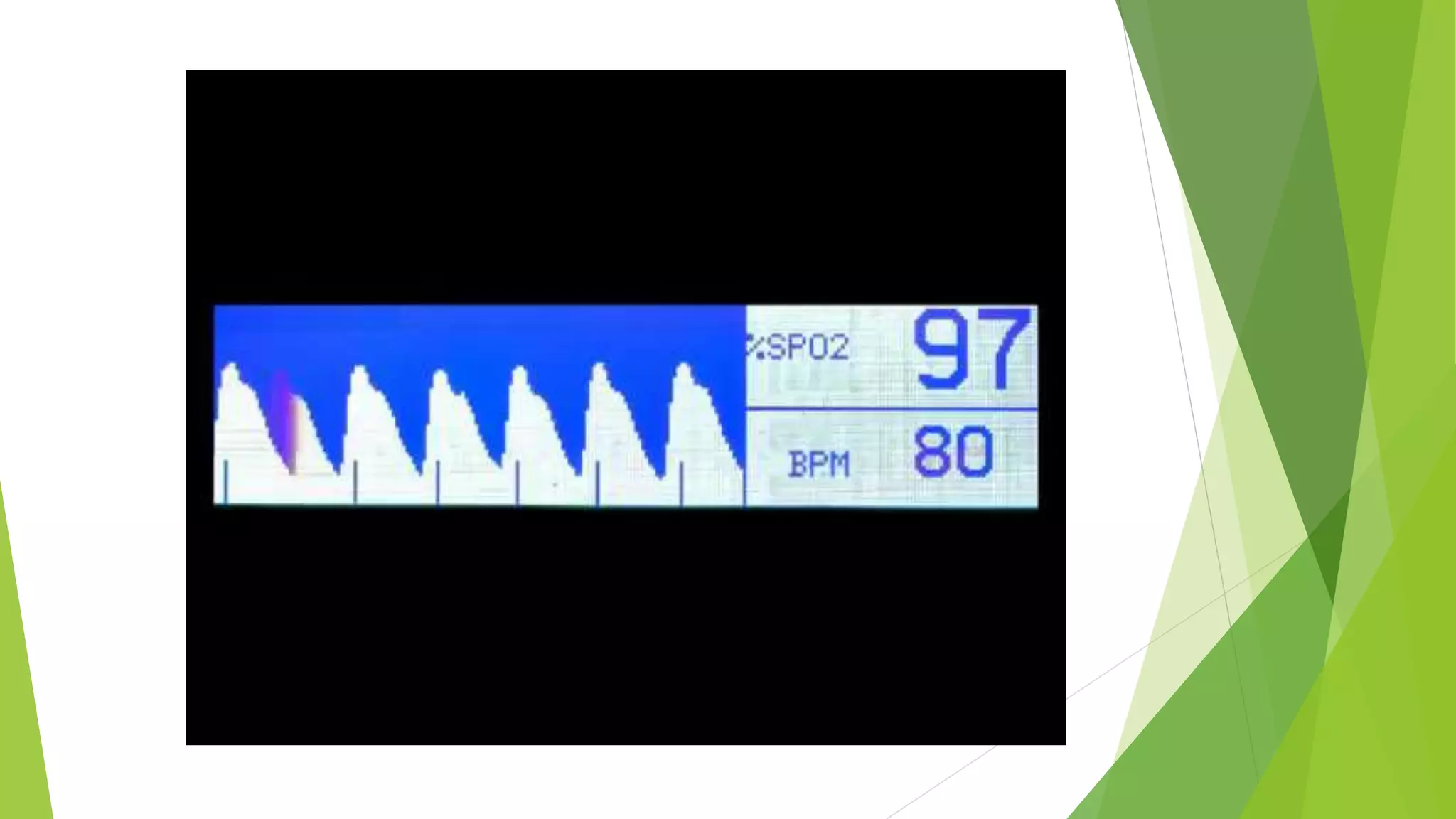
Normal oxygen saturation values are 97% to 99% in a
healthy individual on room air.
Ratio of saturation:
Oxygenated and deoxygenated hemoglobin
have different light absorption rate.
* Oxygenated hemoglobin absorbs more infrared light
* Deoxygenated hemoglobin absorbs more red light
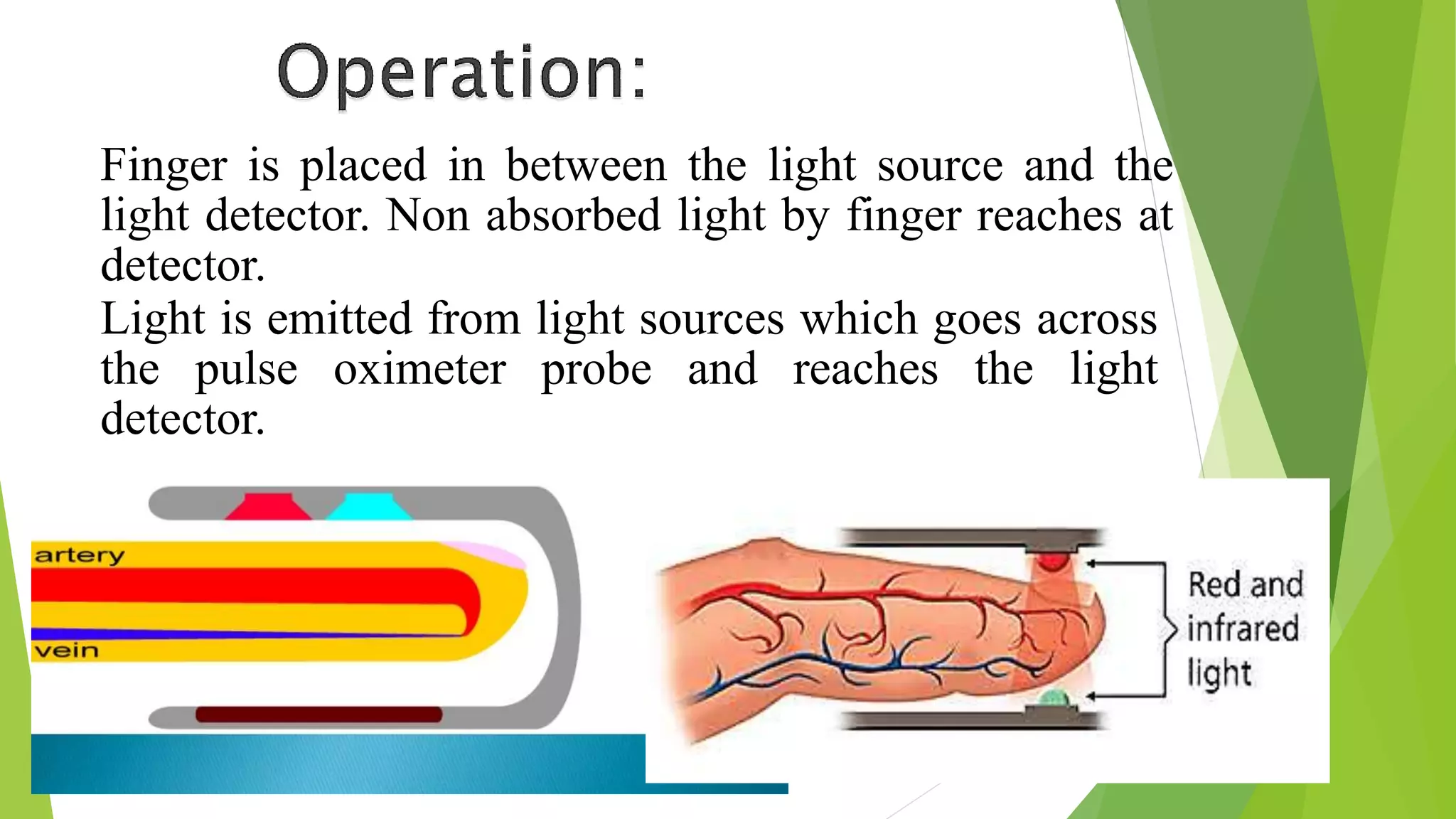
Pulse Oximetry consists of Red(R) and Infrared(IR)
light emitting LEDs and a photo detector.
Finger is placed in between the light source and the
light detector. Non absorbed light by finger reaches at
detector.
Light is emitted from light sources which goes across
the pulse oximeter probe and reaches the light
detector.
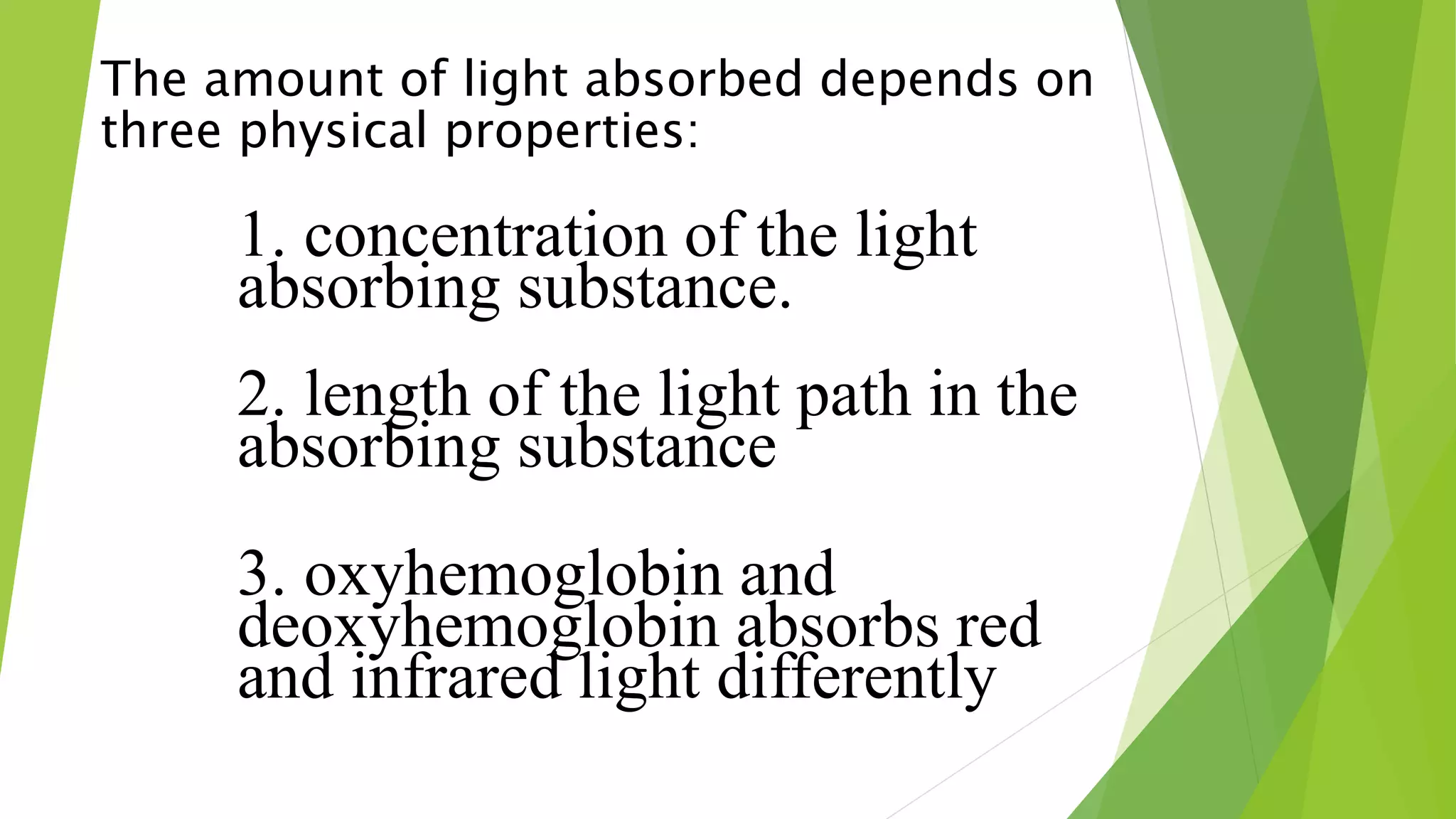
The amount of light absorbed depends on
three physical properties:
1. concentration of the light
absorbing substance.
2. length of the light path in the
absorbing substance
3. oxyhemoglobin and
deoxyhemoglobin absorbs red
and infrared light differently
Amount of light absorbed is proportional to
the concentration of the light absorbing
substance.
Amount of light absorbed is proportional to the
length of the light path.
oxyhemoglobin absorbs more infrared light
than red light & deoxyhemoglobin absorbs
more red light than infrared light.
Using this ratio, the pulse oximeter can then work
out the oxygen saturation.









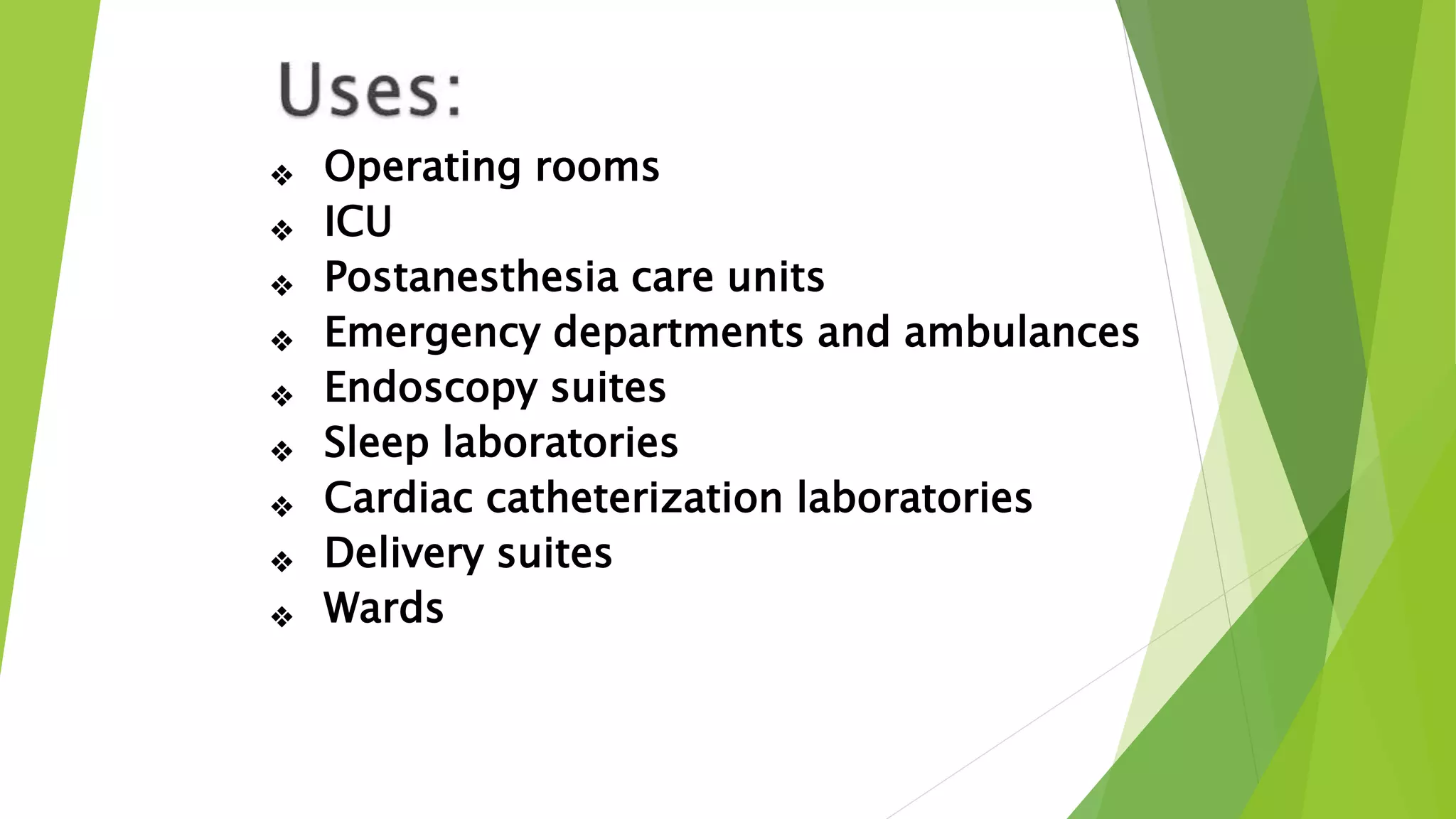
Operating rooms
ICU
Postanesthesia care units
Emergency departments and ambulances
Endoscopy suites
Sleep laboratories
Cardiac catheterization laboratories
Delivery suites
Wards
Pulse Oximeter
Precaution
Reference
Textbook of Practical Physiology
A.K. Jain
C.L. Ghai
G.K.Pal
Textbook of Medical Physiology
By Guyton & Hall, A.K. Jain
Net sources
THANK YOU . . .

Pulseoximeter and Plethysmography by Pandian M

  • 1.
  • 2.
     Aim  Principle Apparatus  Procedure  Precaution
  • 3.
    Plethysmography A plethysmograph isan instrument for measuring changes in volume within an organ or whole body
  • 4.
    What Is Plethysmography? Plethysmographymeasures changes in volume in different areas of your body. It measures these changes with blood pressure cuffs or other sensors. These are attached to a machine called a plethysmograph.
  • 5.
    Plethysmography is especiallyeffective in detecting changes caused by blood flow. It can help your doctor determine if you have a blood clot in your arm or leg. It can also help your doctor calculate the volume of air your lungs can hold.
  • 6.
    When Is PlethysmographyOrdered?  Your doctor may order a limb plethysmography if you show signs of blood clots in your legs.  Symptoms of blood clots include redness, warmth, swelling, and tenderness.  Plethysmography is not as accurate as an arteriogram, which is more commonly used to identify blood clots.  But it’s non invasive and less expensive.  These factors make it more appealing to many individuals.
  • 7.
     You doctormay order a lung plethysmography if you have symptoms of upper respiratory problems.  These symptoms include pain or discomfort while breathing and shortness of breath.  Your doctor can’t diagnose the underlying cause of your problem from plethysmography alone.  However, an abnormal test result can confirm if something is preventing your lungs from holding as much air as they should.
  • 8.
    Types of Plethysmography LimbPlethysmography Lung Plethysmography
  • 9.
    Procedure for aPlethysmography Limb Plethysmography  A limb plethysmography can be performed in a doctor’s office or hospital.  If you’re wearing pants or a long-sleeved shirt, your doctor will ask you to undress and put on a hospital gown.  They’ll ask you to keep one leg and one arm bare.  You will recline in a comfortable position on an examination table, cot, or gurney.  Your doctor will then place blood pressure cuffs on your leg and arm.
  • 10.
     They’ll bemost interested in checking your systolic blood pressure.  That’s the pressure of blood in your arm and leg when your heart contracts.  You may feel a little uncomfortable when the blood pressure cuffs tighten around your arm and leg, but you won’t feel any real pain.  The test usually lasts about 20 to 30 minutes. During this time, you’ll be asked to move as little as possible.  Limb plethysmography is not associated with any risks or side effects.  Unless your doctor tells you otherwise, you can resume your regular schedule immediately after the test.
  • 11.
    Interpreting the Tests Limb Plethysmography  Normally, the systolic blood pressure in your arm and leg are similar.  The ankle-brachial index (ABI) is a measurement used to check for potential problems.  To calculate your ABI, divide the highest systolic blood pressure reading from your leg by the highest reading from your arm.  A normal ABI falls between 0.90 and 1.30, according to the National Heart, Lung, and Blood InstituteTrusted Source. If your ABI falls outside this range, you may have a narrow or blocked artery.  Your doctor can order additional tests to determine the exact nature of the problem.
  • 13.
    Pulse Oximeter usedto measure oxygen saturation in the body i.e how much of the hemoglobin in the blood is carrying the oxygen.
  • 14.
    Oxygen enters thelungs and then is passed on into blood. The blood carries the oxygen to the various organs in our body. The main way oxygen is carried in our blood is by means of hemoglobin. Normal oxygen saturation values are 97% to 99% in a healthy individual on room air.
  • 15.
  • 16.
    Oxygenated and deoxygenatedhemoglobin have different light absorption rate. * Oxygenated hemoglobin absorbs more infrared light * Deoxygenated hemoglobin absorbs more red light Pulse Oximetry consists of Red(R) and Infrared(IR) light emitting LEDs and a photo detector.
  • 18.
    Finger is placedin between the light source and the light detector. Non absorbed light by finger reaches at detector. Light is emitted from light sources which goes across the pulse oximeter probe and reaches the light detector.
  • 19.
    The amount oflight absorbed depends on three physical properties: 1. concentration of the light absorbing substance. 2. length of the light path in the absorbing substance 3. oxyhemoglobin and deoxyhemoglobin absorbs red and infrared light differently
  • 20.
    Amount of lightabsorbed is proportional to the concentration of the light absorbing substance.
  • 21.
    Amount of lightabsorbed is proportional to the length of the light path.
  • 22.
    oxyhemoglobin absorbs moreinfrared light than red light & deoxyhemoglobin absorbs more red light than infrared light.
  • 23.
    Using this ratio,the pulse oximeter can then work out the oxygen saturation.
  • 25.
             Operating rooms ICU Postanesthesia careunits Emergency departments and ambulances Endoscopy suites Sleep laboratories Cardiac catheterization laboratories Delivery suites Wards
  • 30.
  • 32.
  • 35.
    Reference Textbook of PracticalPhysiology A.K. Jain C.L. Ghai G.K.Pal Textbook of Medical Physiology By Guyton & Hall, A.K. Jain Net sources
  • 36.