

Psychological Criticism Delving into the mind…
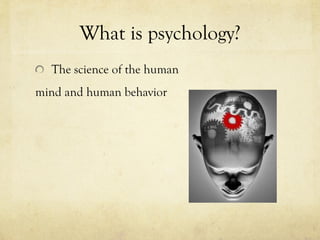
What is psychology? The science of the human mind and human behavior
How does it connect to literature? Glimpse into the mind of Characters Author Our own minds
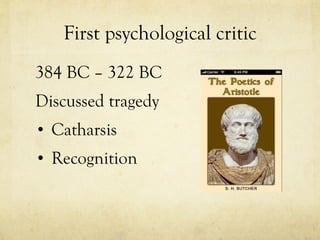
First psychological critic 384 BC – 322 BC Discussed tragedy  Catharsis Recognition
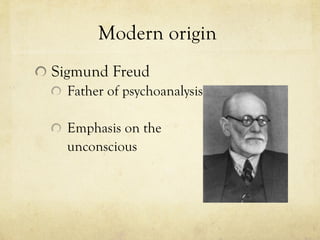
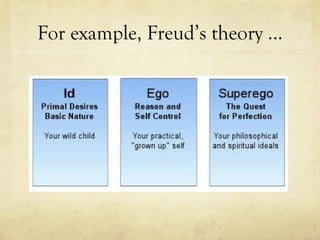
Modern origin  Sigmund Freud Father of psychoanalysis  Emphasis on the  unconscious
Many other views now exist Jung (remember archetypes?) Maslow (hierarchy of needs) Skinner (Behaviorism) Daniel Goleman (EQ) and many more…
Benefits ? A reader can explore the psychology  Of a writer as expressed in the work. Of  fictional characters In the form of the work (symbols, etc.) Of a culture or society Of the reader
Limitations Usually connected to criticisms of the psychologist and psychological theory applied rather than the critical lens as a whole Freud was a terrible sexist… Psychoanalysis is deeply personal… But, some also say it ignores the text and everything that goes with the work as a text
Warning!!!!!!! You cannot do a psychological (sometimes called psychoanalytic) criticism without knowing and applying a psychological theory. Research a theory and then apply it!
For example, Freud’s theory …
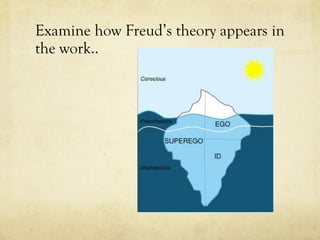
Examine how Freud’s theory appears in the work..
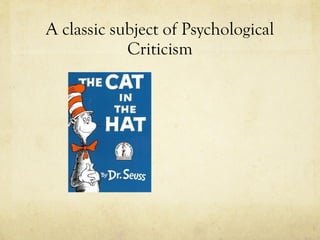
A classic subject of Psychological Criticism
Check out the website… You will find a .pdf called “Some Other Useful Psychological Theories and Frameworks for Analysing Literature” with suggestions for theories to research, A link to the explanation of Maslow’s Hierarchy of Need and; An activity matching Maslow’s Hierarchy of Needs to  Life of Pi
References Doing Literary Criticism: Helping Students Engage with Challenging Texts  by Tim Gillespie. © 2010. Stenhouse Publishers.
Brought to you by your friendly neighbourhood teacher… Liana Côté

Psychological criticism

  • 1.
  • 2.
    What is psychology?The science of the human mind and human behavior
  • 3.
    How does itconnect to literature? Glimpse into the mind of Characters Author Our own minds
  • 4.
    First psychological critic384 BC – 322 BC Discussed tragedy Catharsis Recognition
  • 5.
    Modern origin Sigmund Freud Father of psychoanalysis Emphasis on the unconscious
  • 6.
    Many other viewsnow exist Jung (remember archetypes?) Maslow (hierarchy of needs) Skinner (Behaviorism) Daniel Goleman (EQ) and many more…
  • 7.
    Benefits ? Areader can explore the psychology Of a writer as expressed in the work. Of fictional characters In the form of the work (symbols, etc.) Of a culture or society Of the reader
  • 8.
    Limitations Usually connectedto criticisms of the psychologist and psychological theory applied rather than the critical lens as a whole Freud was a terrible sexist… Psychoanalysis is deeply personal… But, some also say it ignores the text and everything that goes with the work as a text
  • 9.
    Warning!!!!!!! You cannotdo a psychological (sometimes called psychoanalytic) criticism without knowing and applying a psychological theory. Research a theory and then apply it!
  • 10.
  • 11.
    Examine how Freud’stheory appears in the work..
  • 12.
    A classic subjectof Psychological Criticism
  • 13.
    Check out thewebsite… You will find a .pdf called “Some Other Useful Psychological Theories and Frameworks for Analysing Literature” with suggestions for theories to research, A link to the explanation of Maslow’s Hierarchy of Need and; An activity matching Maslow’s Hierarchy of Needs to Life of Pi
  • 14.
    References Doing LiteraryCriticism: Helping Students Engage with Challenging Texts by Tim Gillespie. © 2010. Stenhouse Publishers.
  • 15.
    Brought to youby your friendly neighbourhood teacher… Liana Côté