Literary Theory
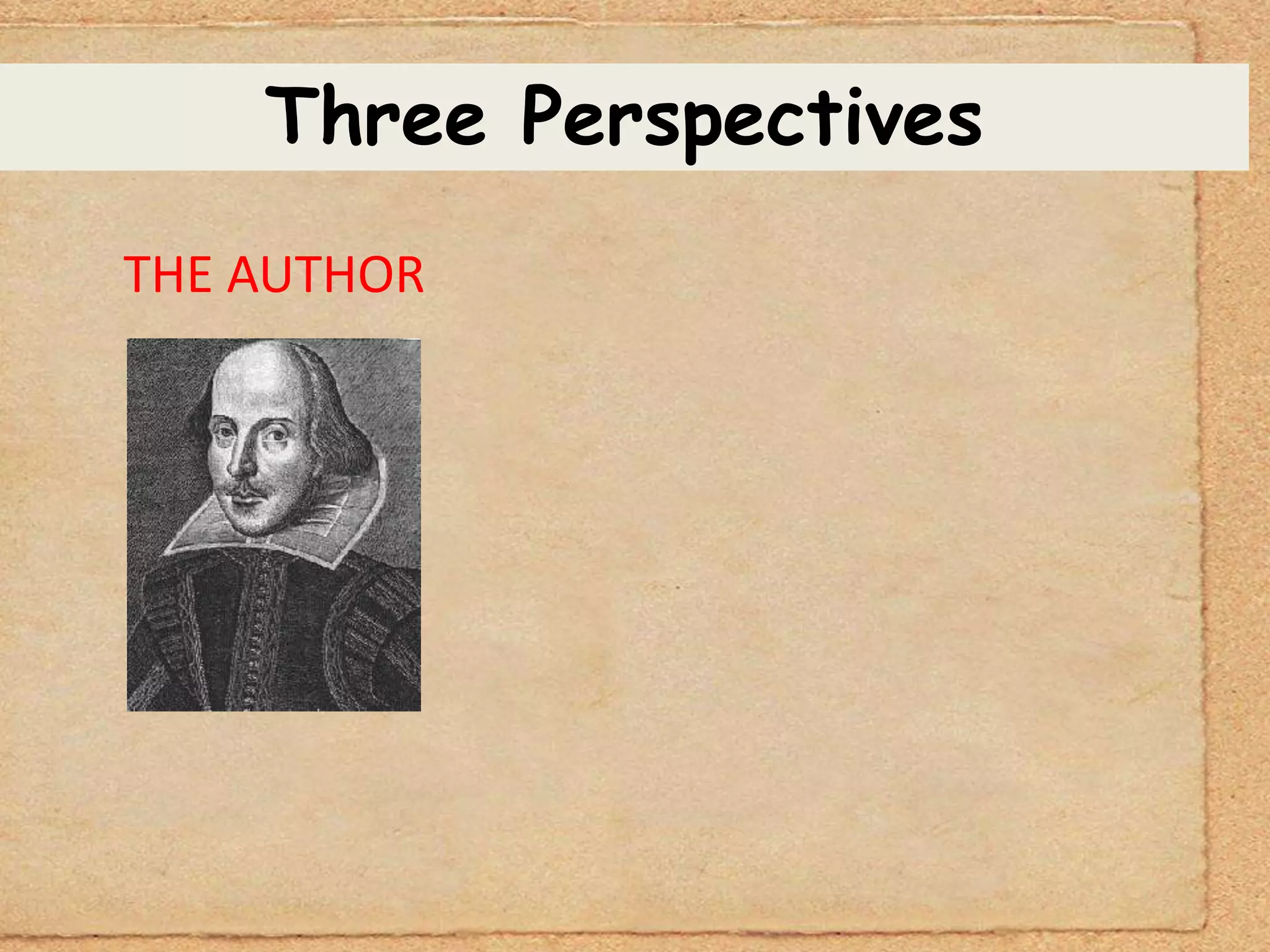
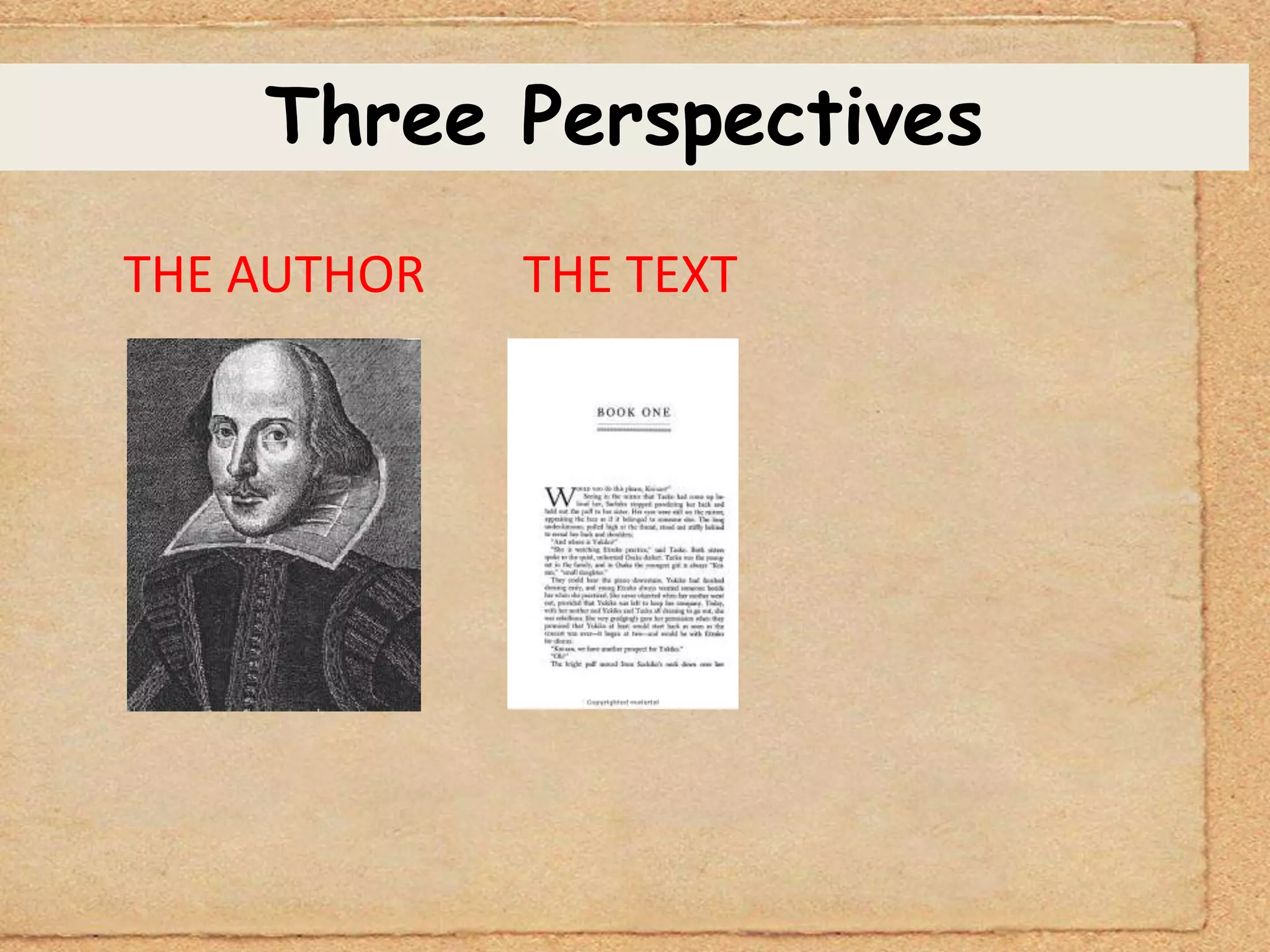
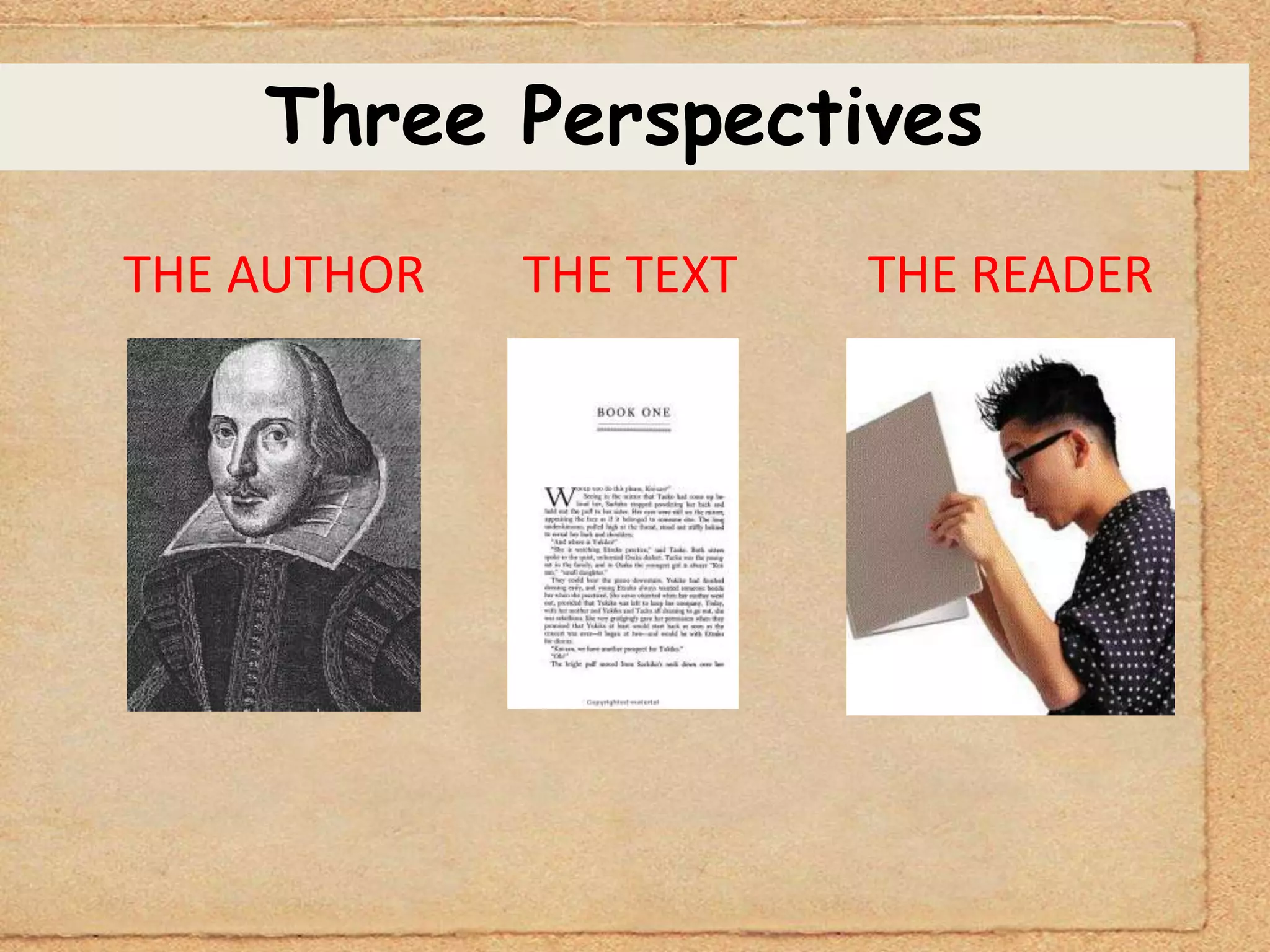
Three Perspectives
THE AUTHOR
Three Perspectives
THE AUTHOR   THE TEXT
Three Perspectives
THE AUTHOR   THE TEXT   THE READER
What is Literary Criticism?
---- Literary criticism is the evaluation,
analysis, description, or interpretation of
literary works.
---- It is usually in the form of a critical
essay, but in-depth book reviews can
sometimes be considered literary criticism.
---- Criticism may examine a particular
literary work, or may look at an author's
writings as a whole.
---- Finding literary criticism can be
challenging.
Archetypal Criticism
         It is a type of critical
theory that interprets a text by
focusing on recurring myths and
archetypes     in   the   narrative,
symbols, images, and character
types in a literary work.
According to Carl Jung, these
patterns are embedded deep in the
"collective unconscious" and involve
"racial memories" of situations,
events, relationships from time
immemorial,
The “collective unconscious” is a set
of primal memories common to the human
race, existing below each person's
conscious mind. Archetypal criticism
assumes that there is a collection of
symbols, images, characters, and motifs
that suggest basically the same response
in all people.
Archetype
 An archetype is a generic idealized
model of a person, object, or concept
from which similar instances are
derived, copied, patterned, or
emulated.

 In psychology, an archetype is a
model of a person, personality, or
behavior. This article is about
personality archetypes, as described
in literature analysis and the study of
 Archetypal criticism is an attempt to
bring    psychological    analysis  and
reflection to bear upon the imaginative
experience communicated by literature,
and to examine those forms or patterns
in which the universal forces of human
nature find objectification.
Archetypal images and story patterns
can encourage readers to participate in
basic beliefs, fears, and anxieties of
their age. These archetypes constitute
the clearness of the text but also tap
into a level of desires and anxieties of
people.
Archetypal criticism helps in the
deepening of events into experiences.
It provides a universalistic approach to
literature. It works well with works
that are highly symbolic
Proponents
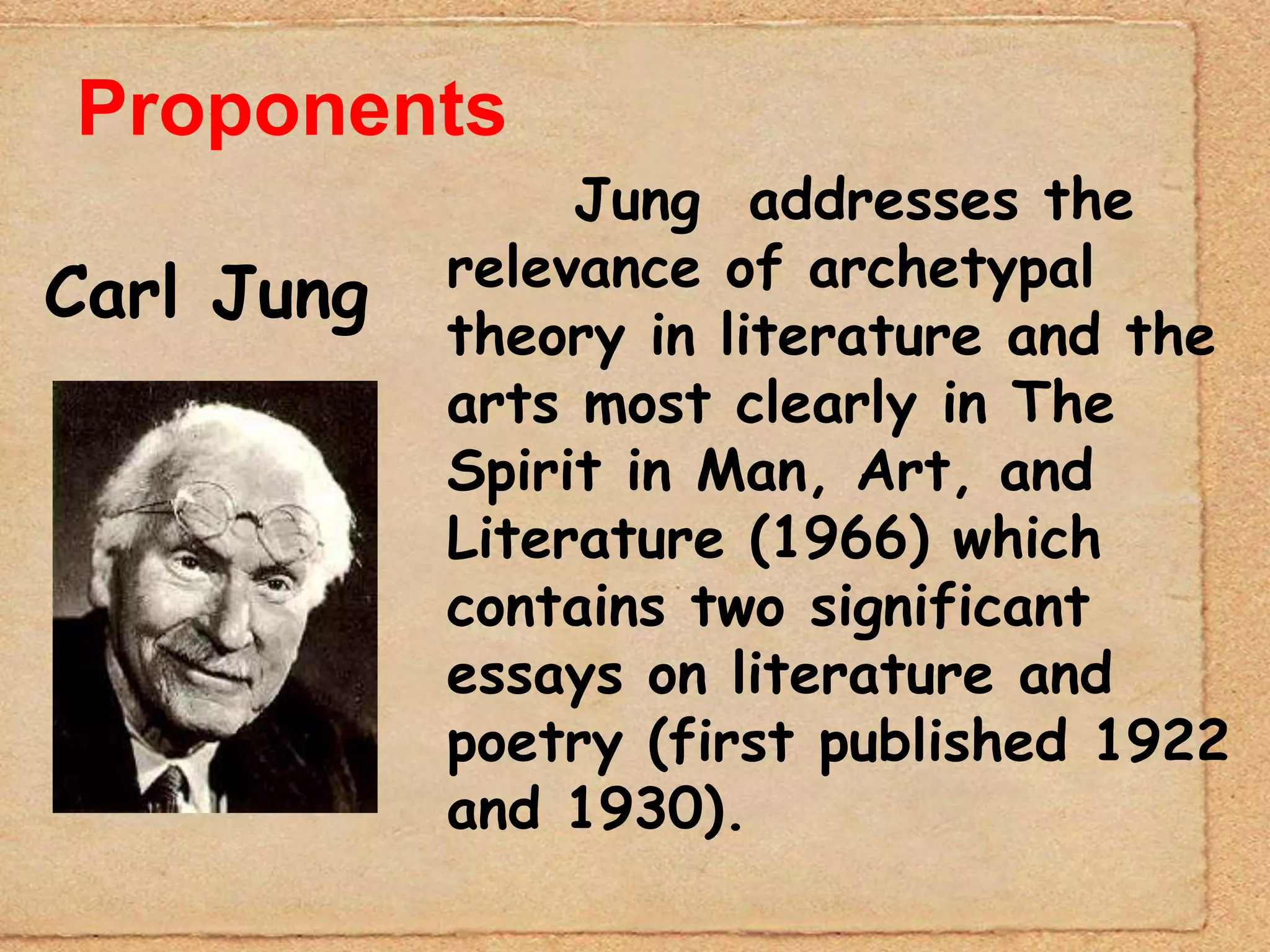
                 Jung addresses the
            relevance of archetypal
Carl Jung
            theory in literature and the
            arts most clearly in The
            Spirit in Man, Art, and
            Literature (1966) which
            contains two significant
            essays on literature and
            poetry (first published 1922
            and 1930).
In Jung’s archetypal theory, the
unconscious mind plays a profound
role, and it has a purpose, which is to
assist individuals in maintaining a
balanced psychological state.
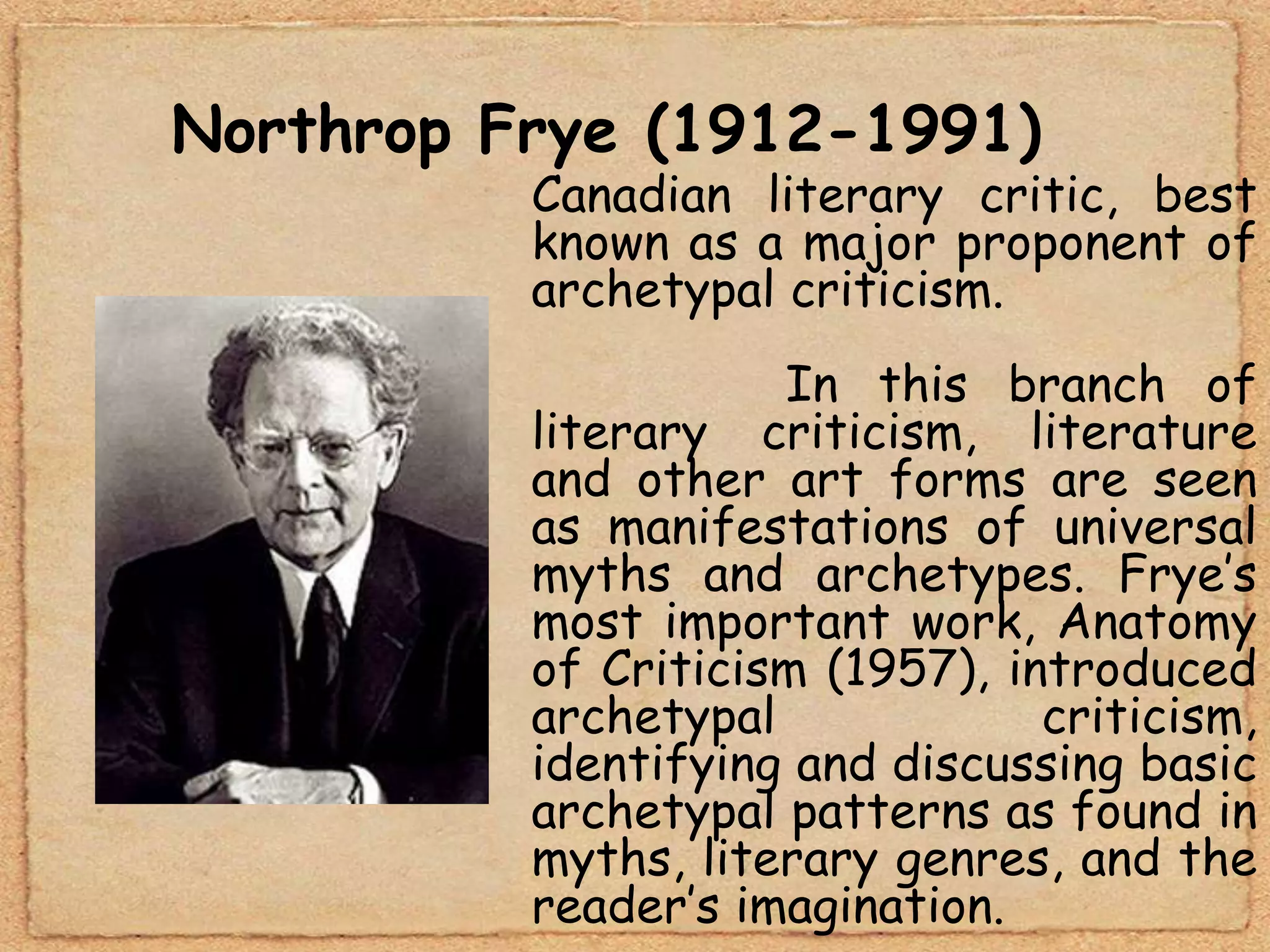
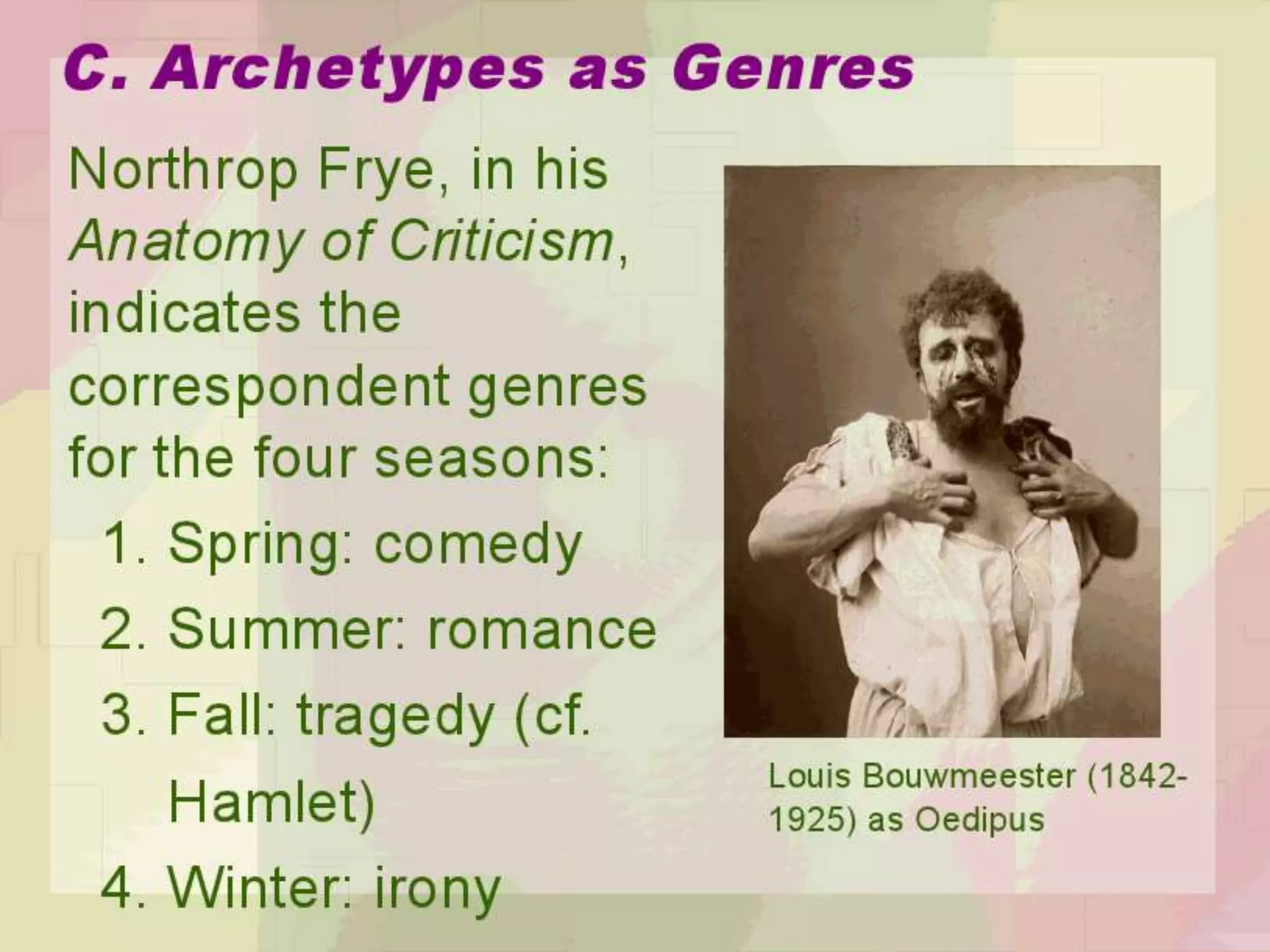
Northrop Frye (1912-1991)
          Canadian literary critic, best
          known as a major proponent of
          archetypal criticism.
                     In this branch of
          literary criticism, literature
          and other art forms are seen
          as manifestations of universal
          myths and archetypes. Frye’s
          most important work, Anatomy
          of Criticism (1957), introduced
          archetypal             criticism,
          identifying and discussing basic
          archetypal patterns as found in
          myths, literary genres, and the
          reader’s imagination.
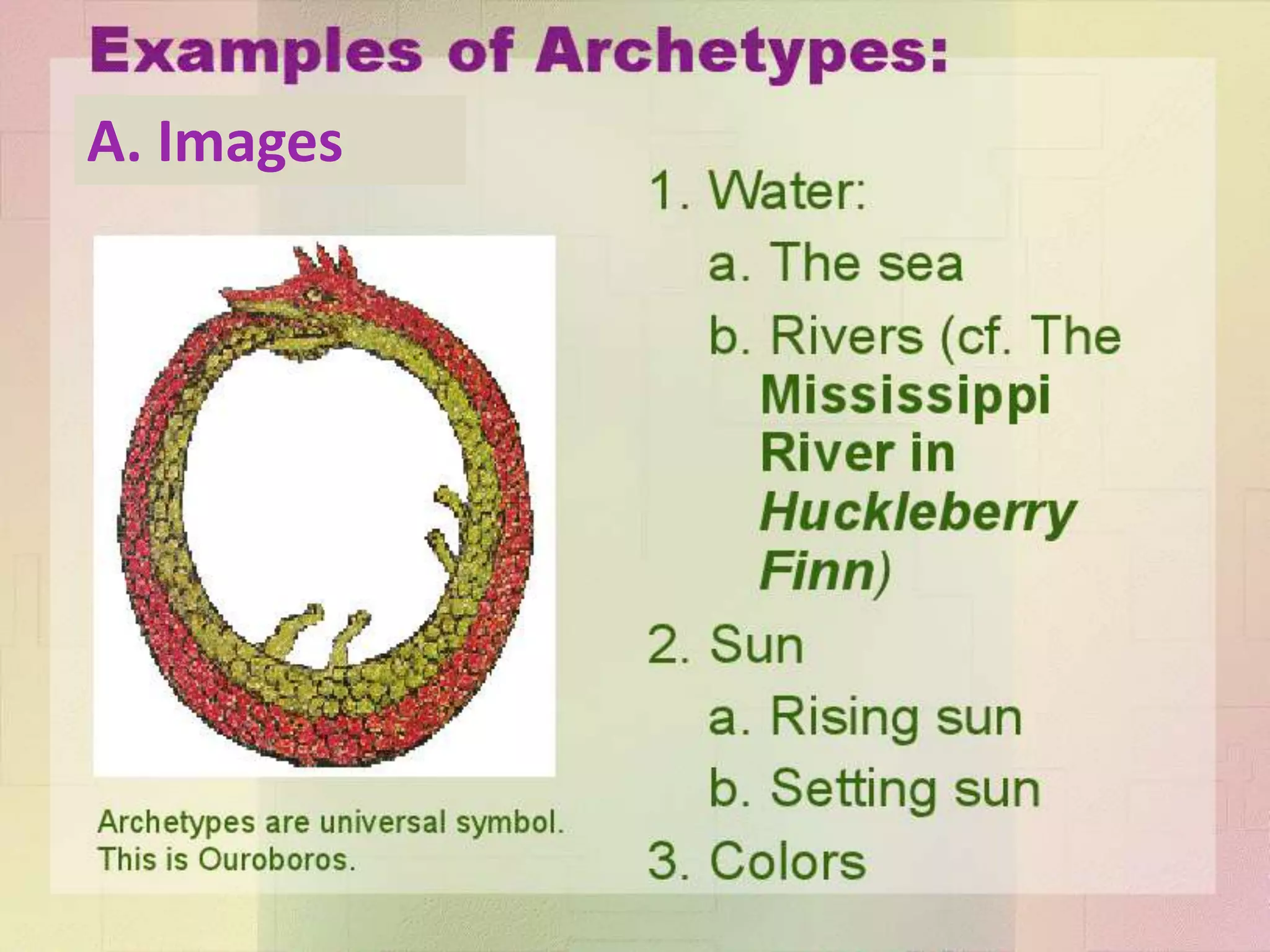
A. Images
Mythological and archetypal criticism

Mythological and archetypal criticism

  • 1.
  • 2.
  • 3.
  • 4.
    Three Perspectives THE AUTHOR THE TEXT THE READER
  • 5.
    What is LiteraryCriticism? ---- Literary criticism is the evaluation, analysis, description, or interpretation of literary works. ---- It is usually in the form of a critical essay, but in-depth book reviews can sometimes be considered literary criticism. ---- Criticism may examine a particular literary work, or may look at an author's writings as a whole. ---- Finding literary criticism can be challenging.
  • 7.
    Archetypal Criticism It is a type of critical theory that interprets a text by focusing on recurring myths and archetypes in the narrative, symbols, images, and character types in a literary work.
  • 8.
    According to CarlJung, these patterns are embedded deep in the "collective unconscious" and involve "racial memories" of situations, events, relationships from time immemorial,
  • 9.
    The “collective unconscious”is a set of primal memories common to the human race, existing below each person's conscious mind. Archetypal criticism assumes that there is a collection of symbols, images, characters, and motifs that suggest basically the same response in all people.
  • 10.
    Archetype  An archetypeis a generic idealized model of a person, object, or concept from which similar instances are derived, copied, patterned, or emulated.  In psychology, an archetype is a model of a person, personality, or behavior. This article is about personality archetypes, as described in literature analysis and the study of
  • 11.
     Archetypal criticismis an attempt to bring psychological analysis and reflection to bear upon the imaginative experience communicated by literature, and to examine those forms or patterns in which the universal forces of human nature find objectification.
  • 12.
    Archetypal images andstory patterns can encourage readers to participate in basic beliefs, fears, and anxieties of their age. These archetypes constitute the clearness of the text but also tap into a level of desires and anxieties of people. Archetypal criticism helps in the deepening of events into experiences. It provides a universalistic approach to literature. It works well with works that are highly symbolic
  • 13.
    Proponents Jung addresses the relevance of archetypal Carl Jung theory in literature and the arts most clearly in The Spirit in Man, Art, and Literature (1966) which contains two significant essays on literature and poetry (first published 1922 and 1930).
  • 14.
    In Jung’s archetypaltheory, the unconscious mind plays a profound role, and it has a purpose, which is to assist individuals in maintaining a balanced psychological state.
  • 15.
    Northrop Frye (1912-1991) Canadian literary critic, best known as a major proponent of archetypal criticism. In this branch of literary criticism, literature and other art forms are seen as manifestations of universal myths and archetypes. Frye’s most important work, Anatomy of Criticism (1957), introduced archetypal criticism, identifying and discussing basic archetypal patterns as found in myths, literary genres, and the reader’s imagination.
  • 16.