Proximal femoral fractures
Evidence based approach
Mohamed Abulsoud (M.D)
Lecturer of orthopedic surgery
Faculty of medicine – Al-Azhar university
Cairo- Egypt
• ILO
• Decision making
• Preoperative planning
• Post operative Program
• Evidence based guidelines
Introduction
• Hip fractures comprise 20% of the operative
workload of an orthopedic trauma unit
• Singer BR et al. J Bone Joint Surg Br. 1998
• The mortality rate in the elderly patients
during the first year after hip fracture from
24% to 36%
• Vestergaard P. Osteoporos Int. 2007
• Proximal femoral fractures is a challenge
– Bone mass
– Blood supply
– Biomechanics
– Co morbidities
Introduction
Introduction
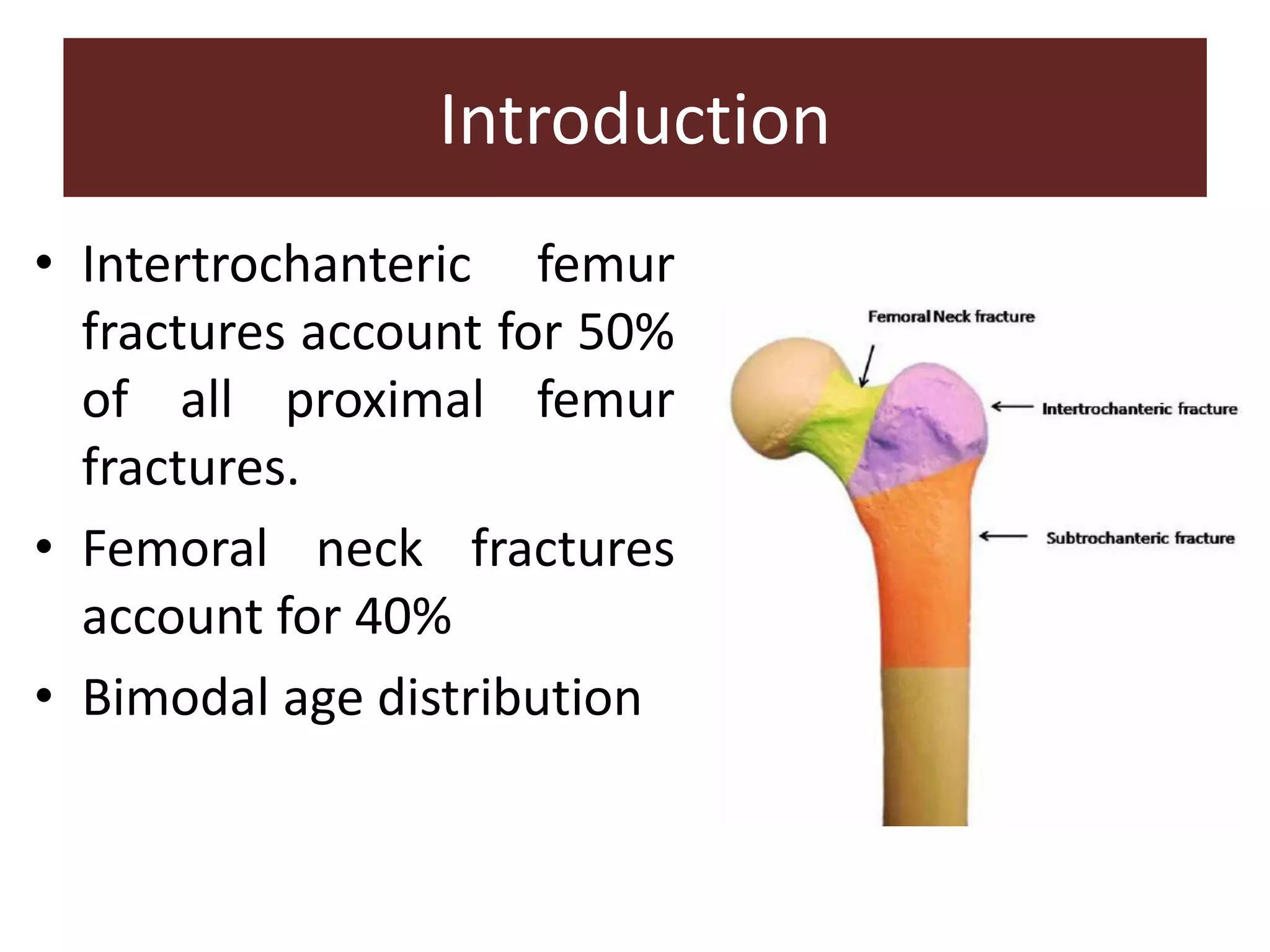
• Intertrochanteric femur
fractures account for 50%
of all proximal femur
fractures.
• Femoral neck fractures
account for 40%
• Bimodal age distribution
Introduction
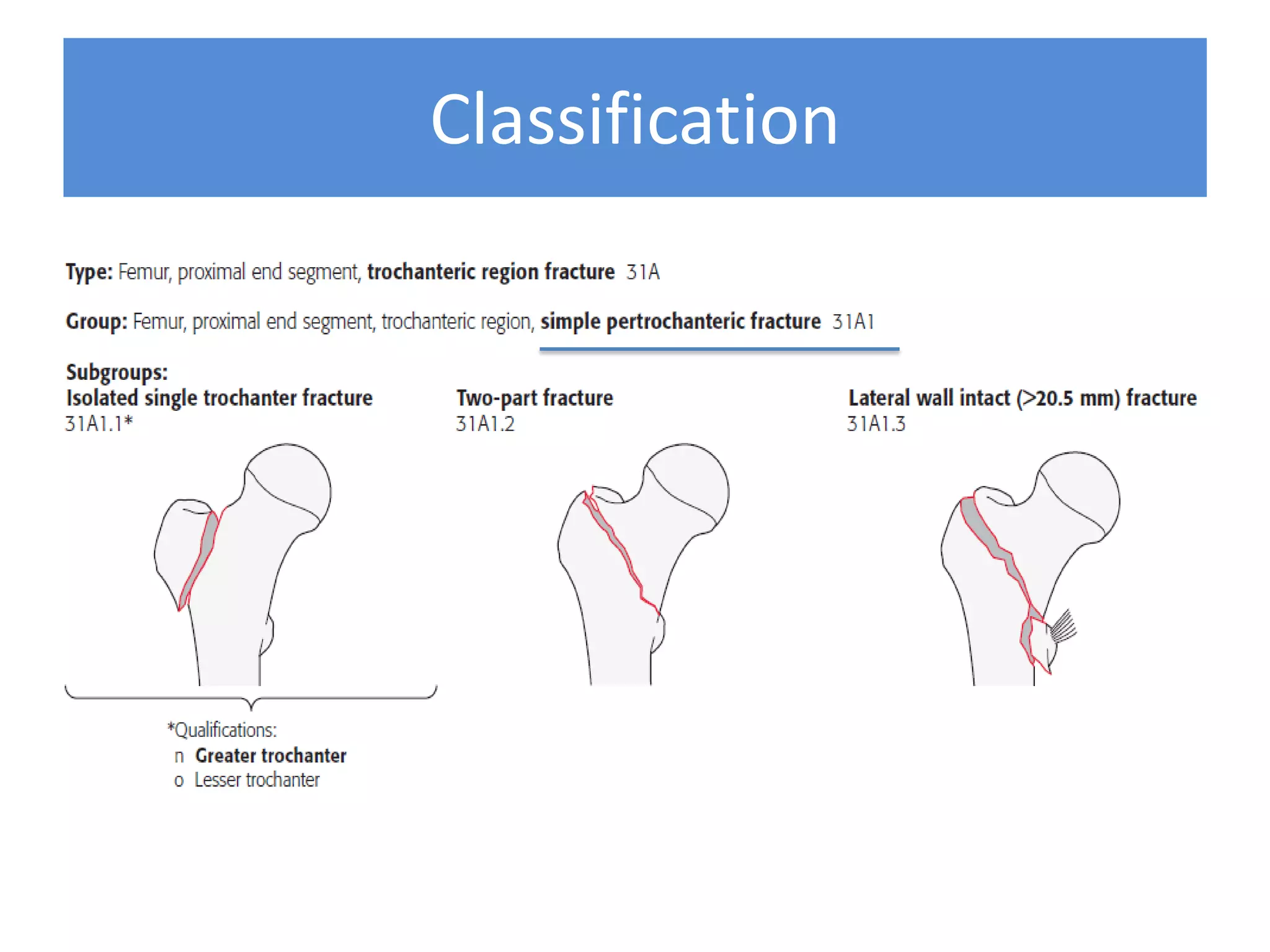
• AO Fracture and Dislocation
Classification Compendium
2018
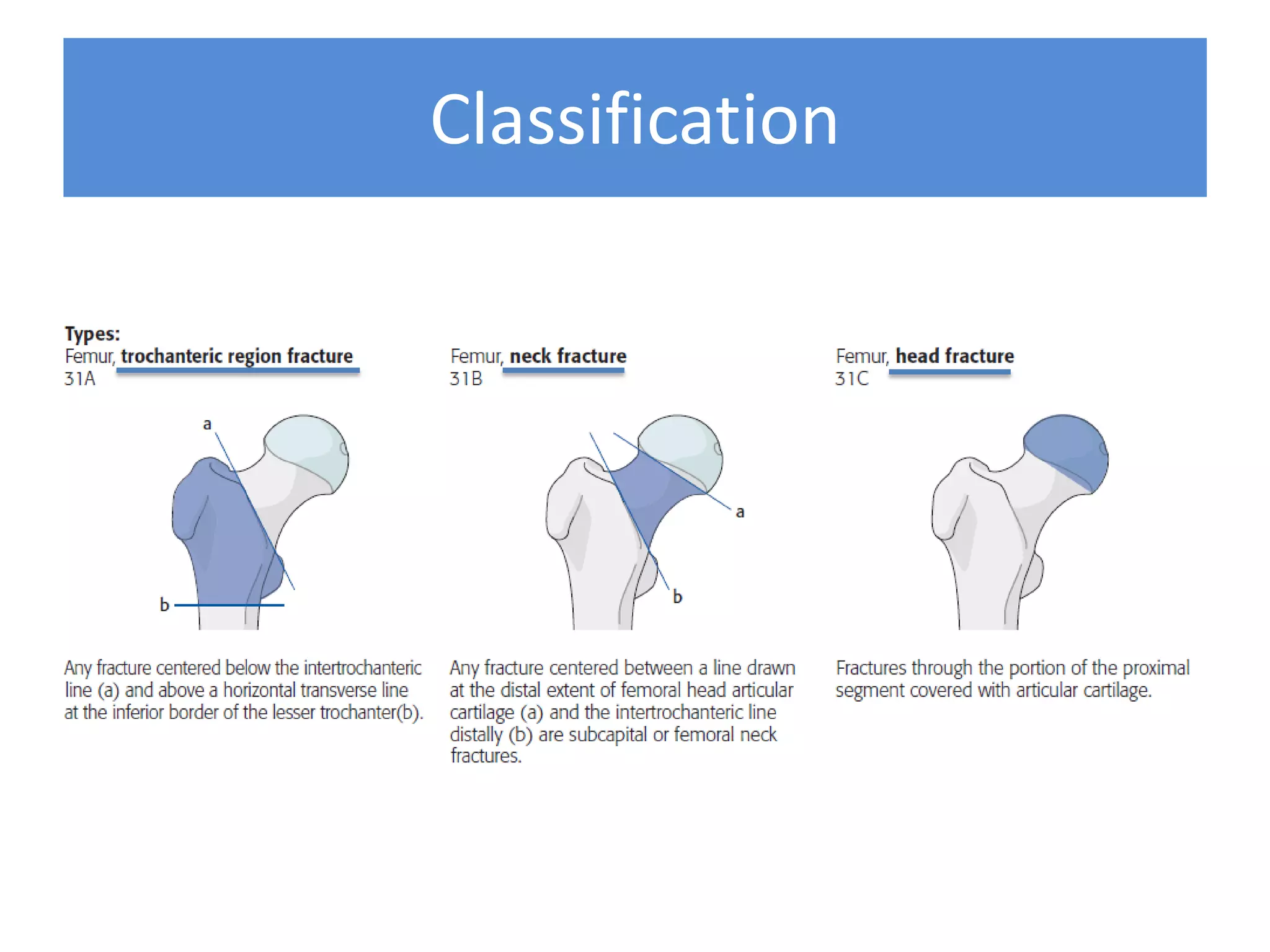
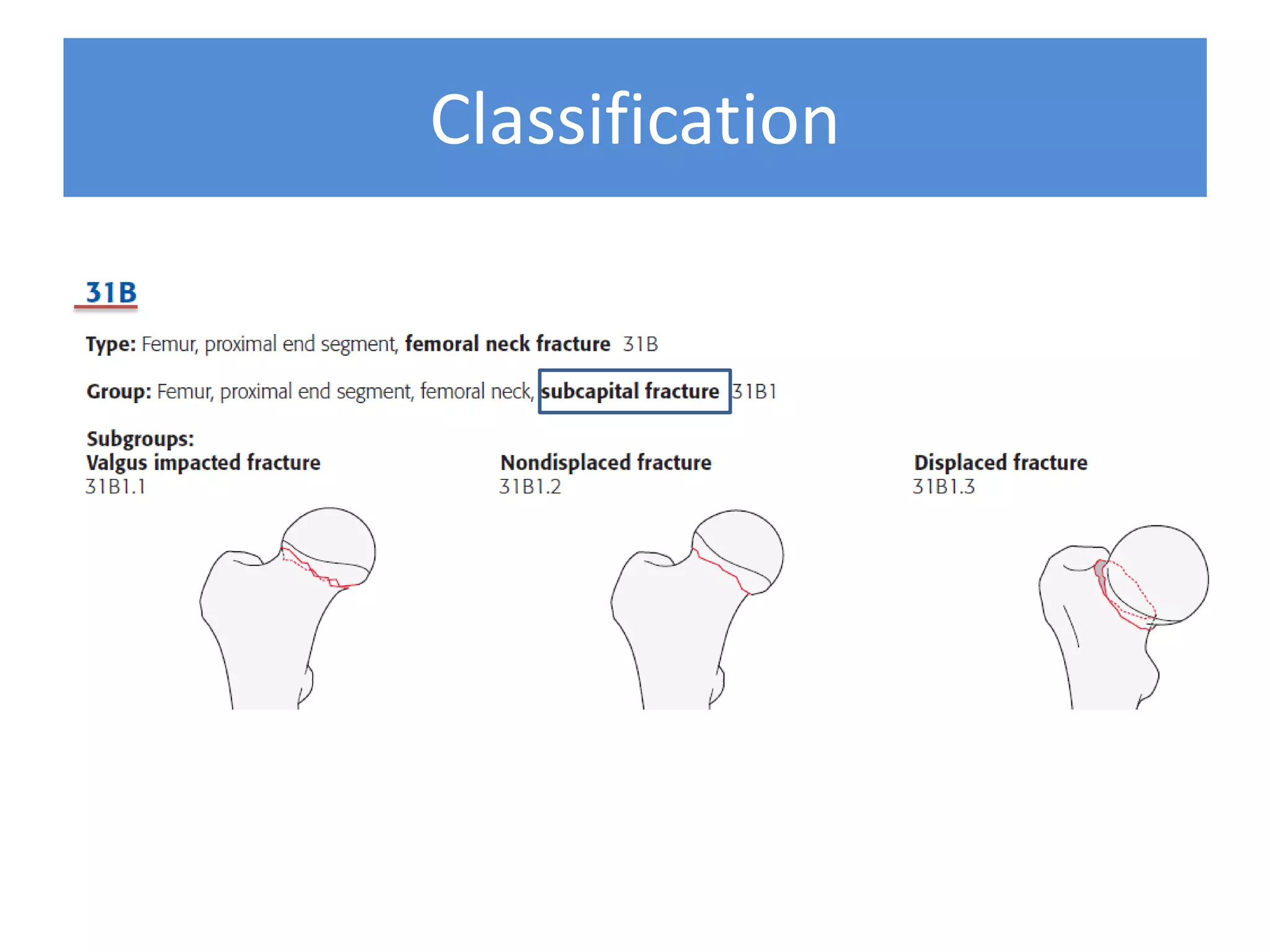
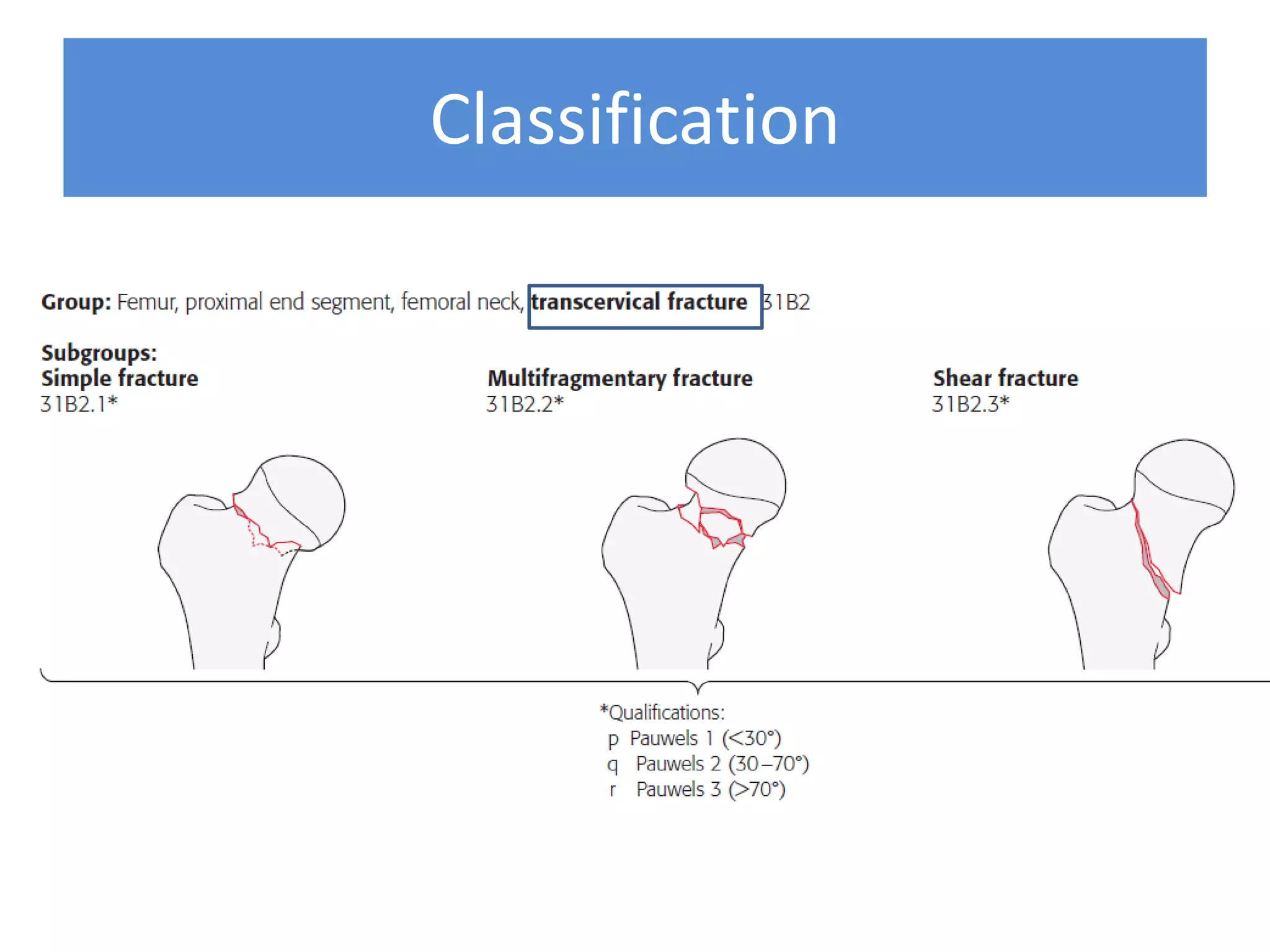
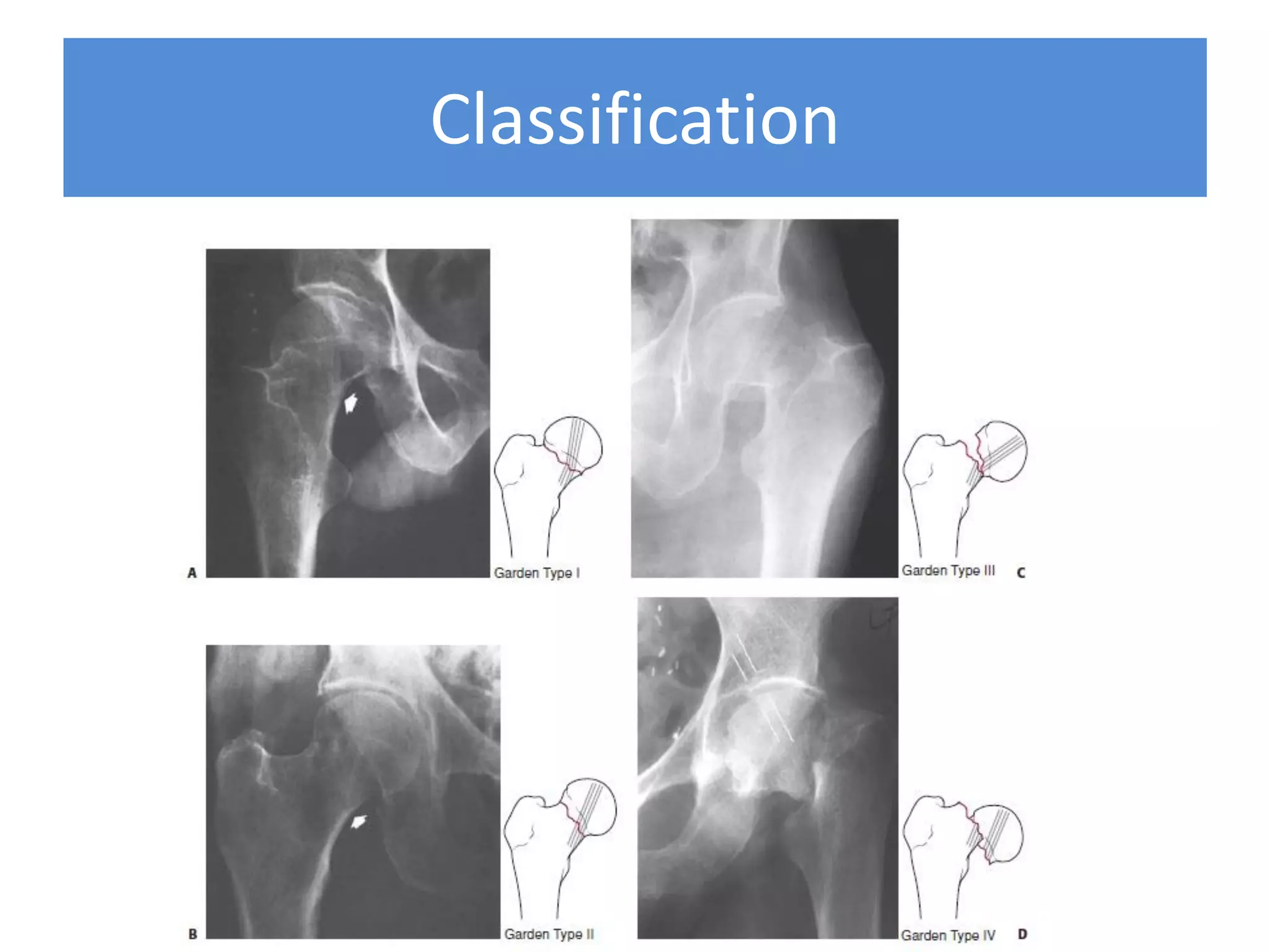
Classification
Classification
Classification
Classification
Lateral Wall thickness
• Using the traction
view with the leg in
neutral rotation
• Innominate tubercle
• 135°
• Should be >20.5 mm
Classification
Classification
Classification
Classification
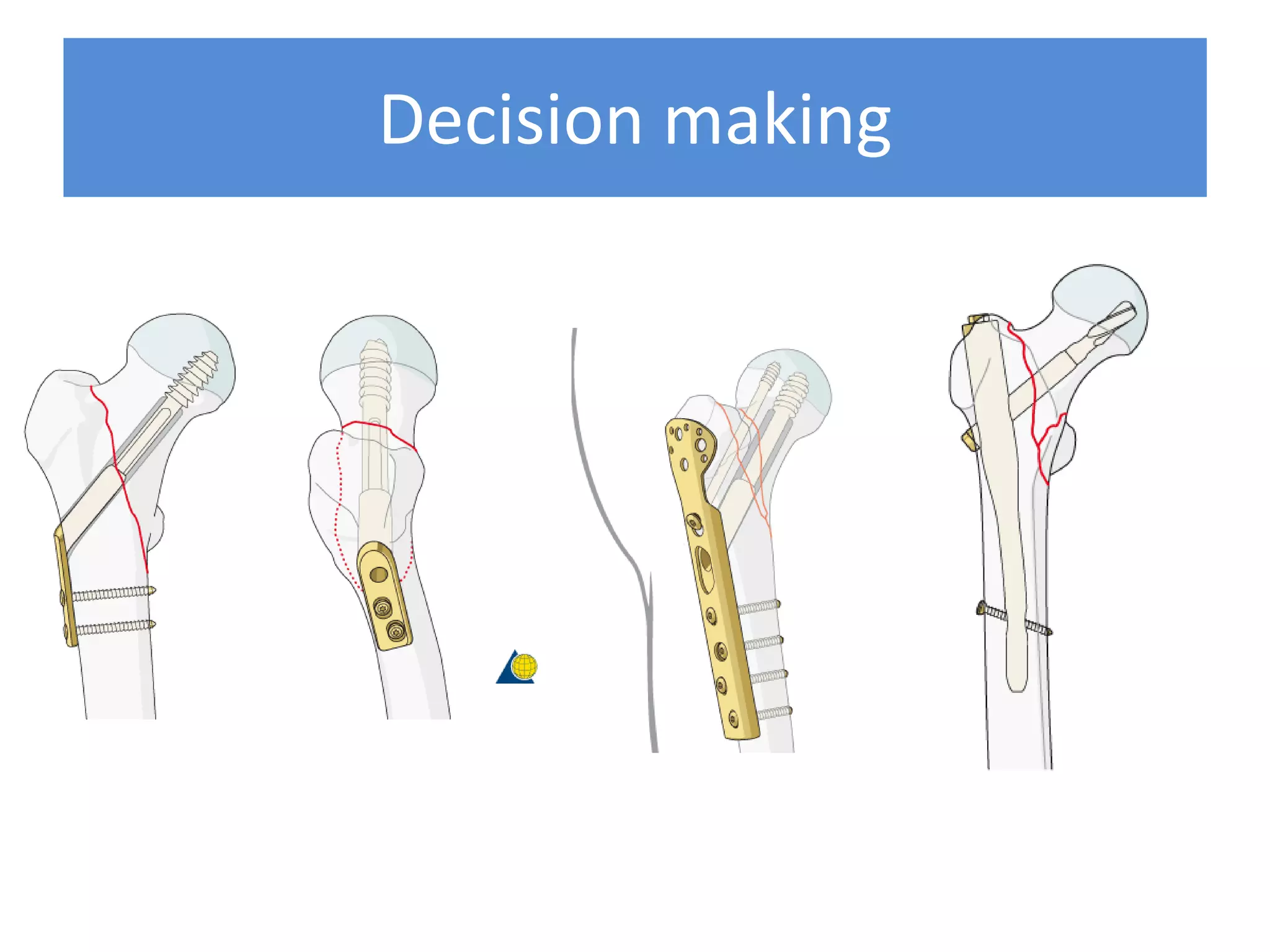
Decision making
Decision making
Decision making
Decision making
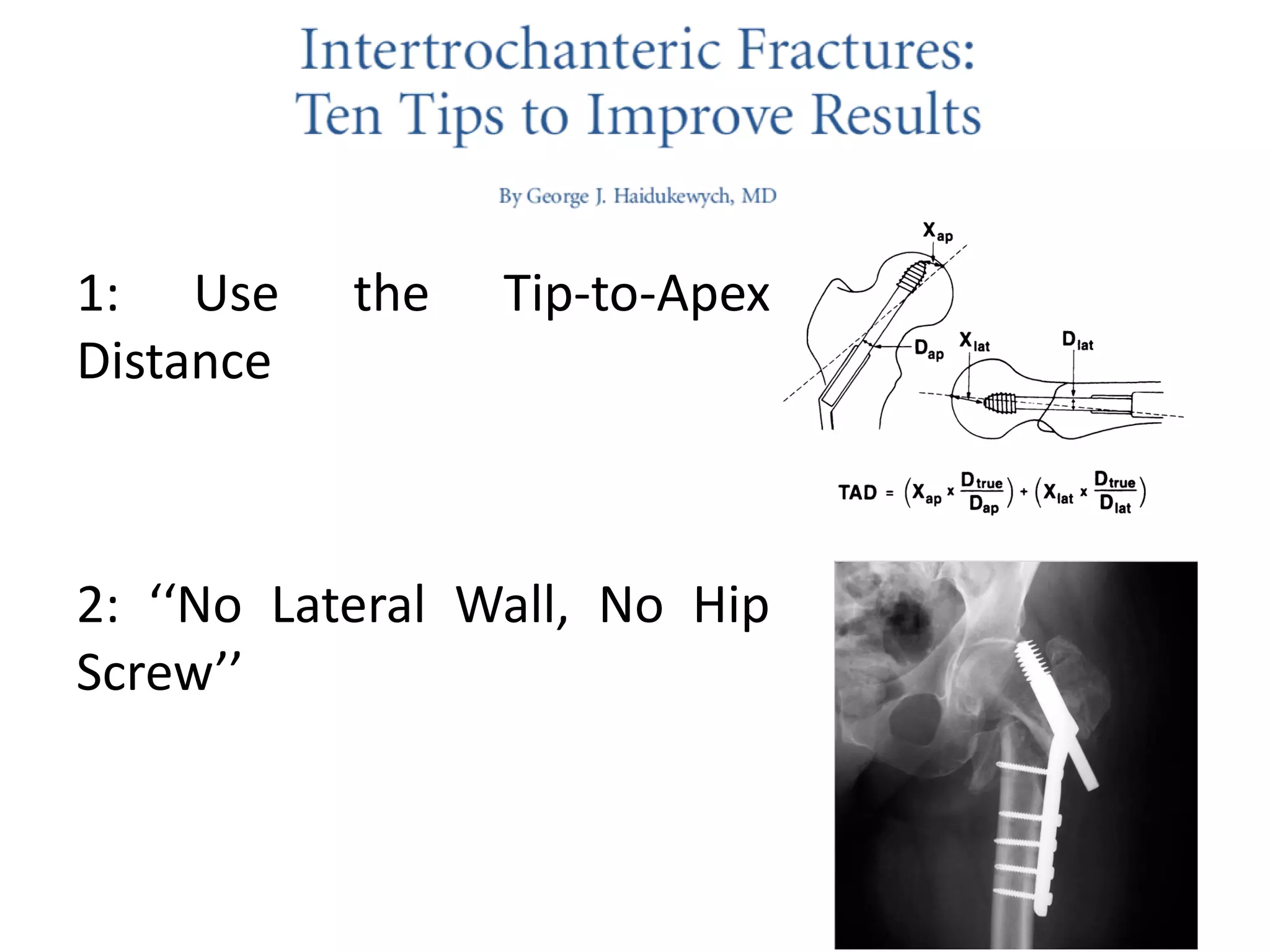
1: Use the Tip-to-Apex
Distance
2: ‘‘No Lateral Wall, No Hip
Screw’’
3: Know the Unstable Intertrochanteric Fracture
Patterns, and Nail Them
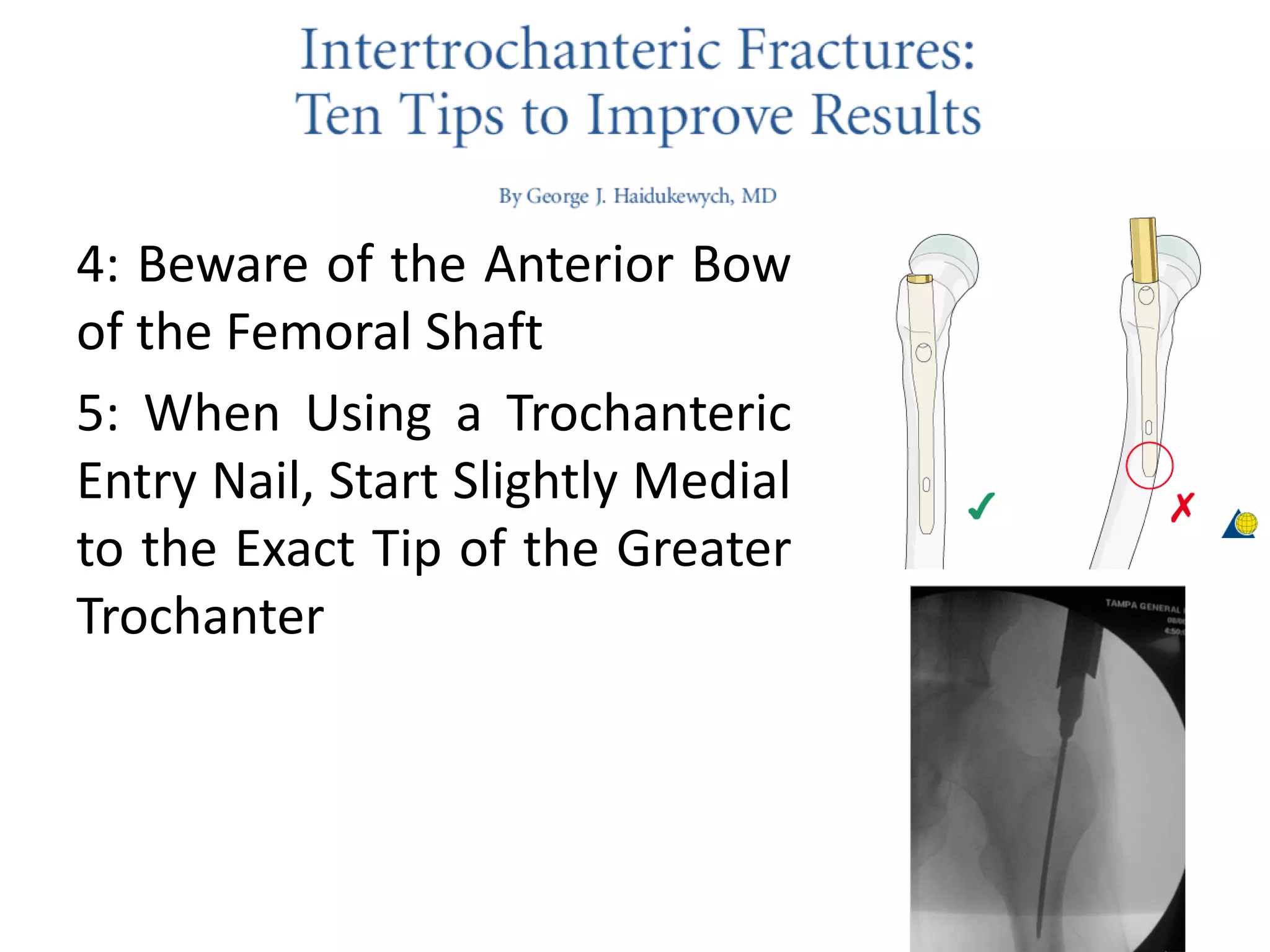
4: Beware of the Anterior Bow
of the Femoral Shaft
5: When Using a Trochanteric
Entry Nail, Start Slightly Medial
to the Exact Tip of the Greater
Trochanter
6: Do Not Ream an Unreduced
Fracture.
7: Be Cautious About the Nail
Insertion Trajectory, and Do Not
Use a Hammer to Seat the Nail
8: Avoid Varus Angulation of the
Proximal Fragment—Use the
Relationship Between the Tip of
the Trochanter and the Center of
the Femoral Head
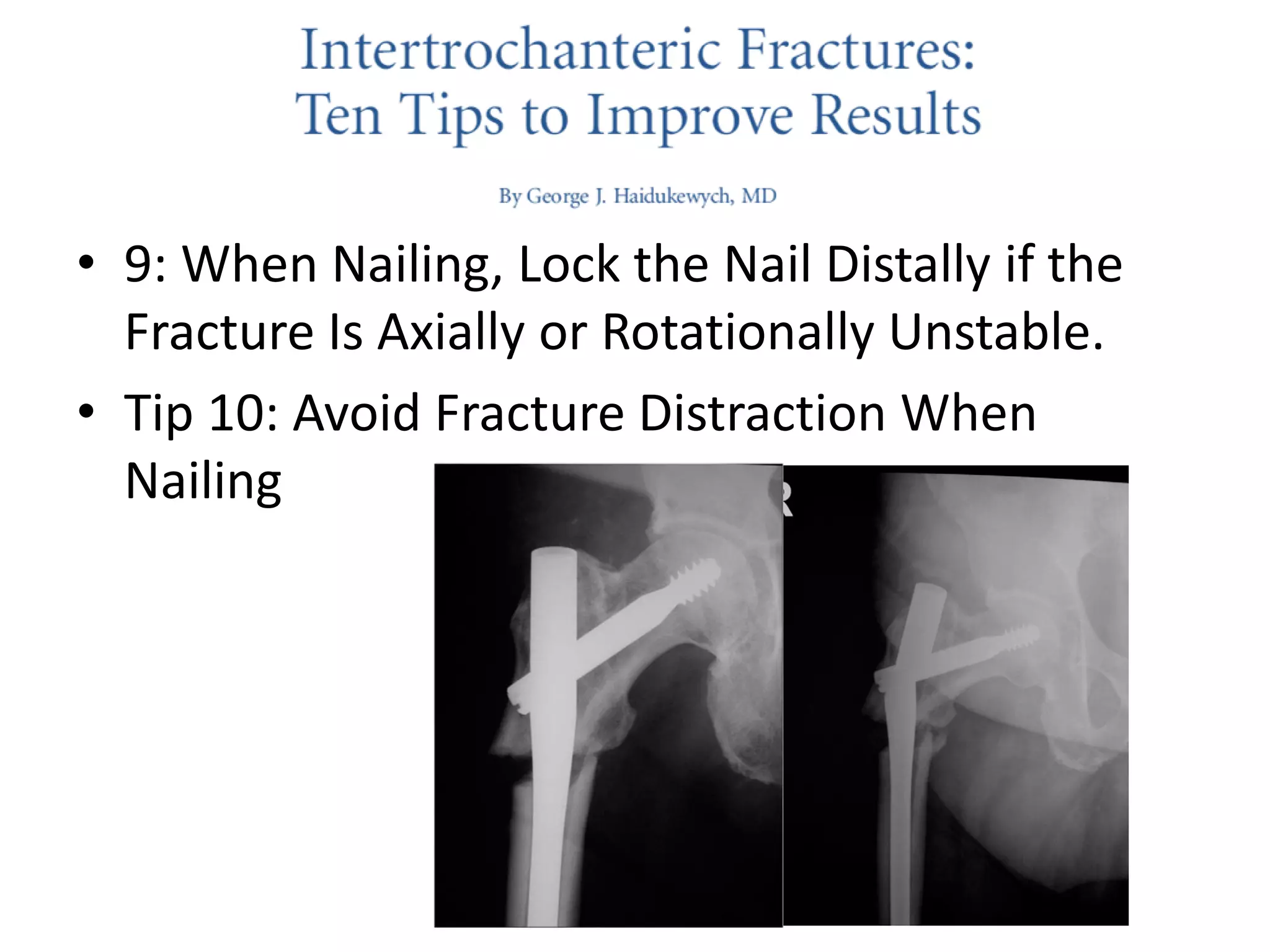
• 9: When Nailing, Lock the Nail Distally if the
Fracture Is Axially or Rotationally Unstable.
• Tip 10: Avoid Fracture Distraction When
Nailing
AAOS Guidelines
for Decision making
• Moderate evidence supports operative
fixation for patients with stable (non-
displaced) femoral neck fractures in
comparison with non operative treatment.
• Strong evidence supports arthroplasty for
patients with unstable (displaced) femoral
neck fractures.
• Moderate evidence supports that the
outcomes of unipolar and bipolar
hemiarthroplasty for unstable (displaced)
femoral neck fractures are similar.
• Moderate evidence supports a benefit to total
hip arthroplasty in properly selected patients
with unstable (displaced) femoral neck
fractures.
AAOS Guidelines
for Decision making
• Moderate evidence supports higher
dislocation rates with a posterior approach in
the treatment of displaced femoral neck
fractures with hip arthroplasty.
• Moderate evidence supports the preferential
use of cemented femoral stems in patients
undergoing arthroplasty for femoral neck
fractures.
AAOS Guidelines
for Decision making
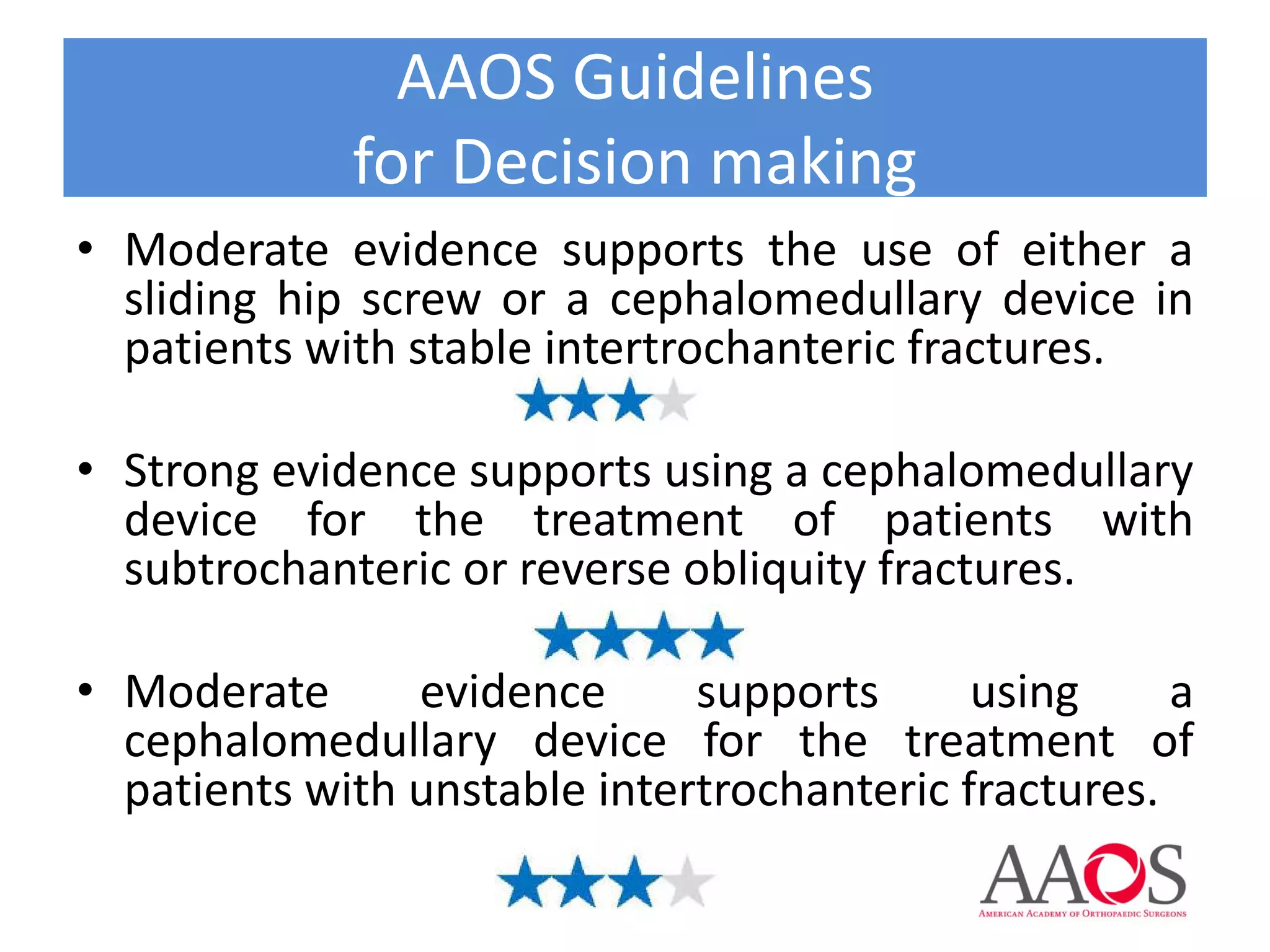
• Moderate evidence supports the use of either a
sliding hip screw or a cephalomedullary device in
patients with stable intertrochanteric fractures.
• Strong evidence supports using a cephalomedullary
device for the treatment of patients with
subtrochanteric or reverse obliquity fractures.
• Moderate evidence supports using a
cephalomedullary device for the treatment of
patients with unstable intertrochanteric fractures.
AAOS Guidelines
for Decision making
Preoperative evaluation
• Prior to an operation, the time that a surgeon devotes
to a careful preoperative plan is of critical importance
and often determines the success or failure of the
procedure
• The diagnosis alone is not enough to guide the
surgeon to the correct choice of a procedure.
• The surgeon must have a thorough knowledge of the
relevant operative procedures and the relative
dangers and success rates of each.
Detailed history
careful physical examination
Laboratory tests
Appropriate x-rays
Other imaging studies, CT scans, 3-D
reconstructions, or MRI.
Preoperative planning
History
• Deep vein thrombosis/pulmonary embolism(DVT/PE).
• Medications(Anticoagulation-Bisphosphonate-
Steroids…..).
• Immune deficiency (DM).
• Malabsorption diseases
• Angina or CVA, aortic stenosis,
• Active infection (pulmonary or genitourinary)
• Cognitive disorders (Delirium)
AMPLE
Examination
• Associated Injuries
• Low-energy fractures, associated injuries are most
commonly fractures of the distal radius or proximal
humerus, and minor head injuries.
• High-energy fractures are more commonly
associated with ipsilateral extremity trauma, head
injury, and pelvic fractures.
• Soft tissue condition
• Neurovascular state
Lab
• Calcium, phosphate, and alkaline phosphatase
• A complete blood count (CBC)
• 25-hydroxy vitamin D
• Thyroid stimulating hormone (TSH)
• parathyroid hormone (PTH )
• Protein, Albumin
• kidney function tests
• Liver function test
• Coagulation profile
• Others…….
• Foster et al. reported a 70% mortality for
patients with a serum albumin <3gm%
compared to a mortality rate of 18% in
patients with an albumin level ≥3gm% .
Lab
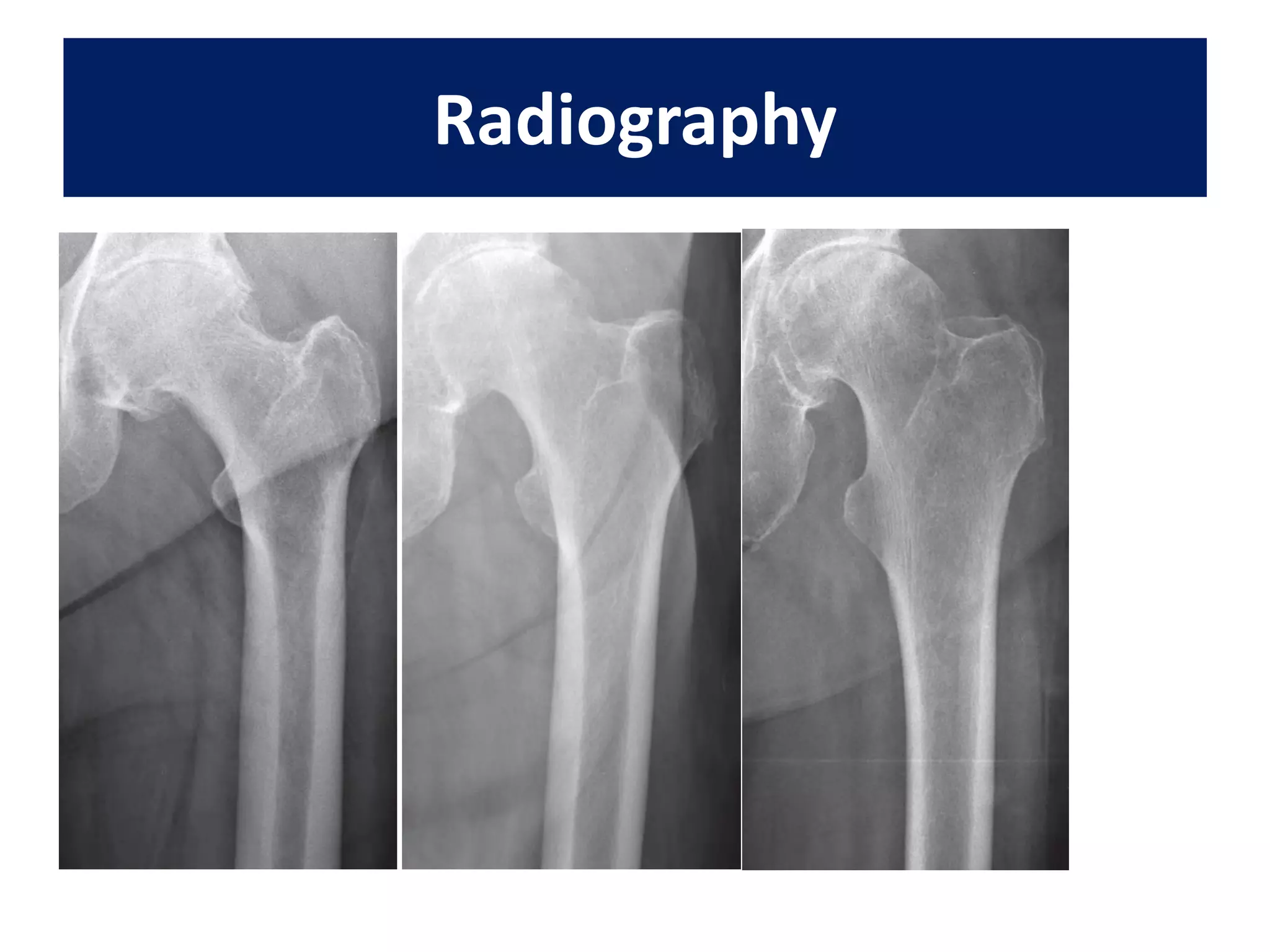
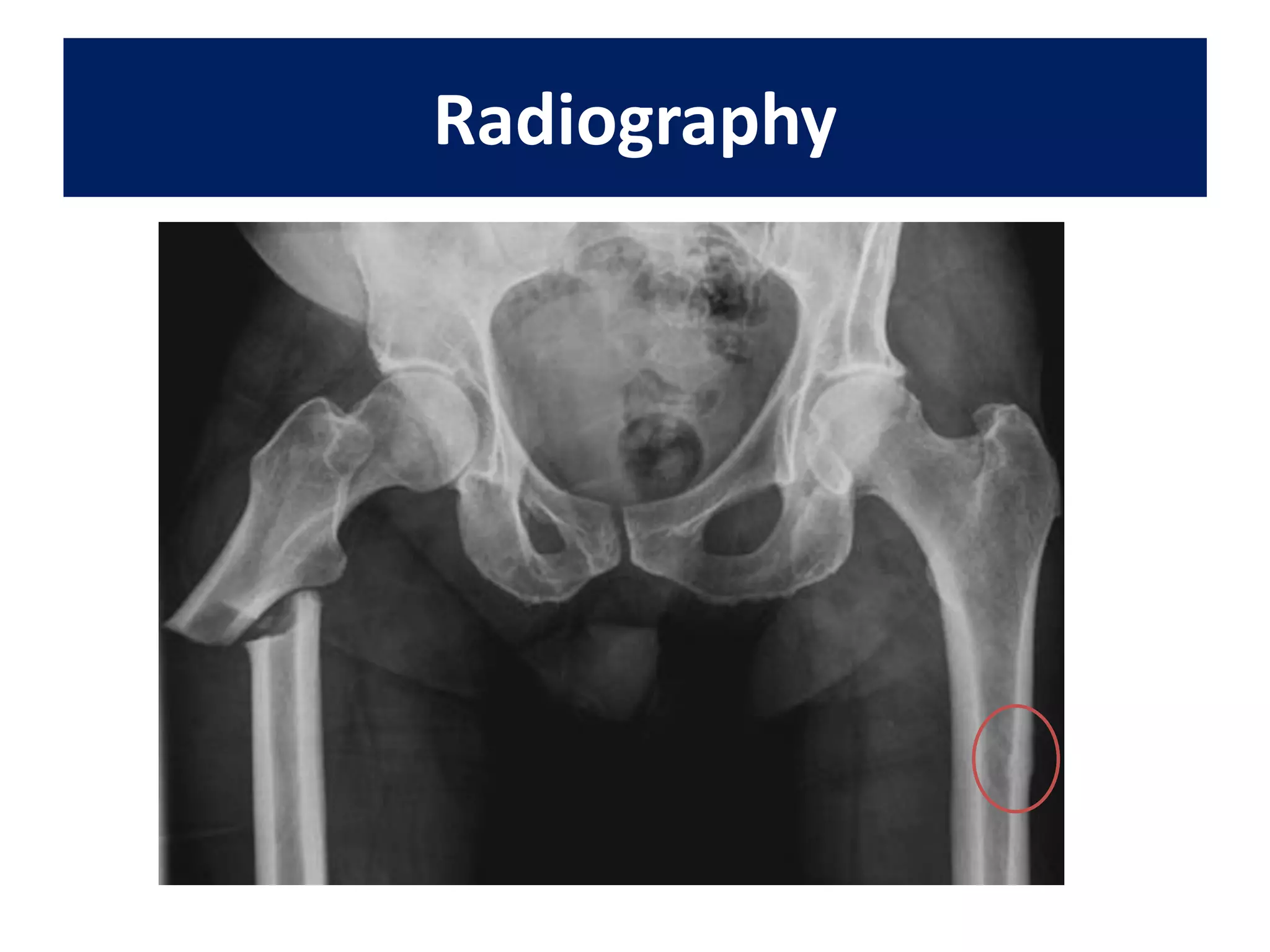
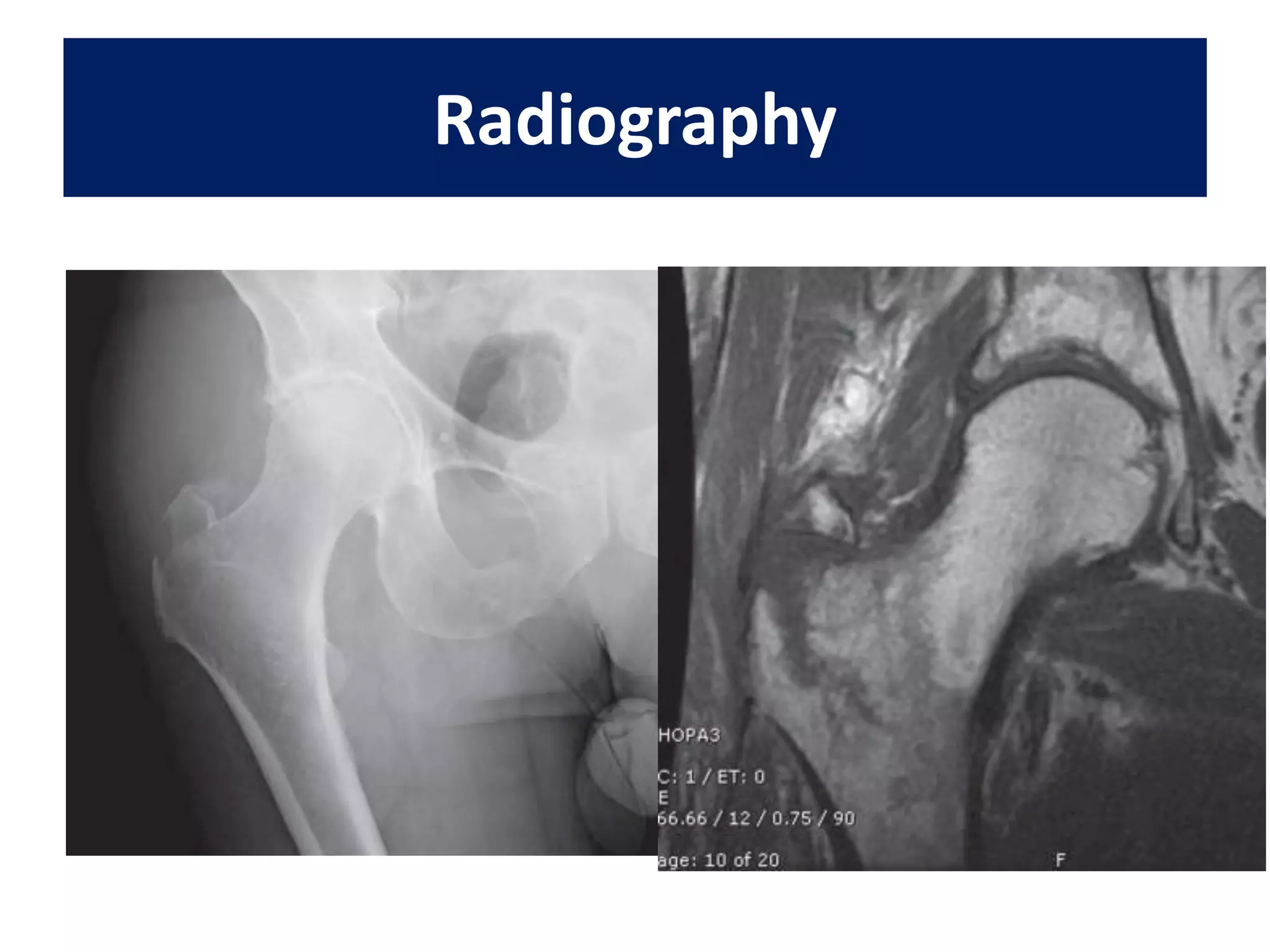
Radiographs should include
• an anteroposterior (AP) view of the pelvis,
• A full length AP and lateral films of the femur
• Traction views.
Radiography
Radiography
Radiography
Radiography
Radiography
Radiography
Radiography
• Traction film
Radiography
Radiography
AAOS Guidelines
for preoperative practice
• Moderate evidence supports MRI as the
advanced imaging of choice for diagnosis of
presumed hip fracture not apparent on initial
radiographs.
• Due to the quality of existing literature, as well as potential
harm with radiation exposure related to use of CT in this
setting, this modality was not recommended for evaluation of
occult hip fracture
• Strong evidence supports regional analgesia to
improve preoperative pain control in patients
with hip fracture.
• Moderate evidence does not support routine
use of preoperative traction for patients with
a hip fracture.
AAOS Guidelines
for preoperative practice
• Moderate evidence supports that hip fracture
surgery within 48 hours of admission is
associated with better outcomes.
• Limited evidence supports not delaying hip
fracture surgery for patients on aspirin and/or
clopidogrel. (no regional anaesthesia)
AAOS Guidelines
for preoperative practice
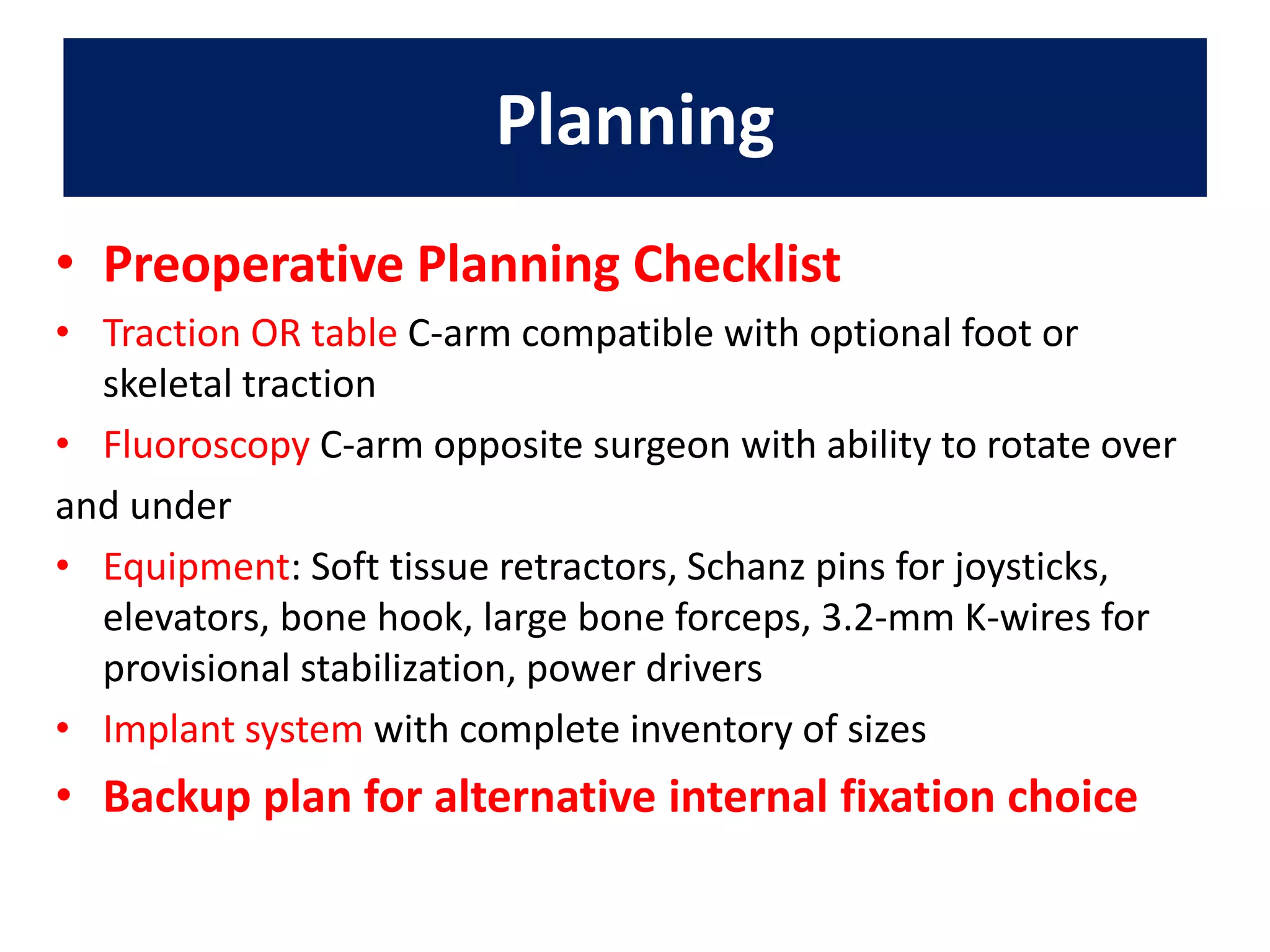
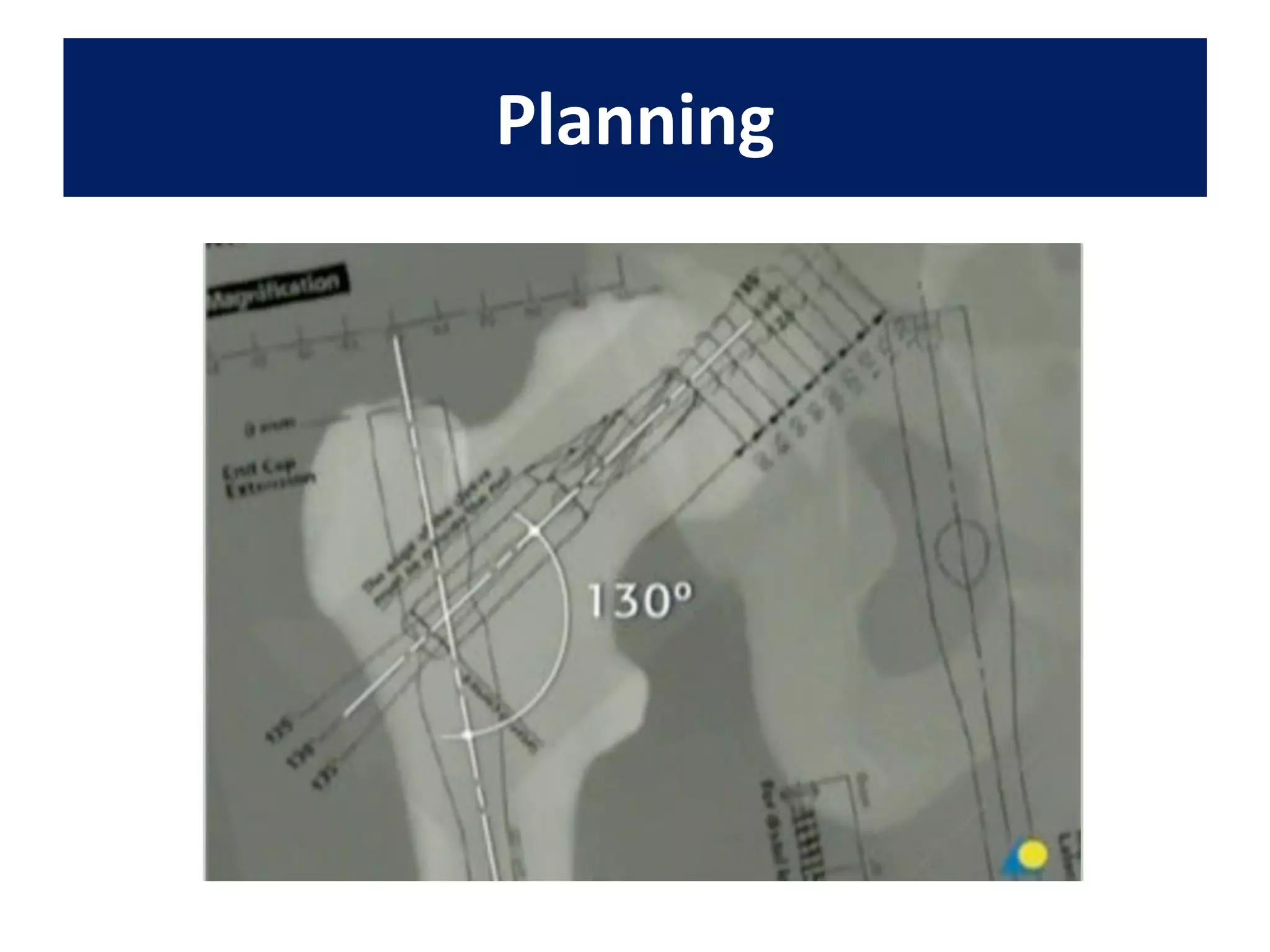
• Preoperative Planning Checklist
• Traction OR table C-arm compatible with optional foot or
skeletal traction
• Fluoroscopy C-arm opposite surgeon with ability to rotate over
and under
• Equipment: Soft tissue retractors, Schanz pins for joysticks,
elevators, bone hook, large bone forceps, 3.2-mm K-wires for
provisional stabilization, power drivers
• Implant system with complete inventory of sizes
• Backup plan for alternative internal fixation choice
Planning
Planning
Planning
Planning
Postoperative program
VTE prophylaxis
Blood transfusion
Rehabilitation
Medications
Weight bearing
• Moderate evidence supports use of venous
thromboembolism prophylaxis (VTE) in hip
fracture patients.
AAOS Guidelines
for Postoperative practice
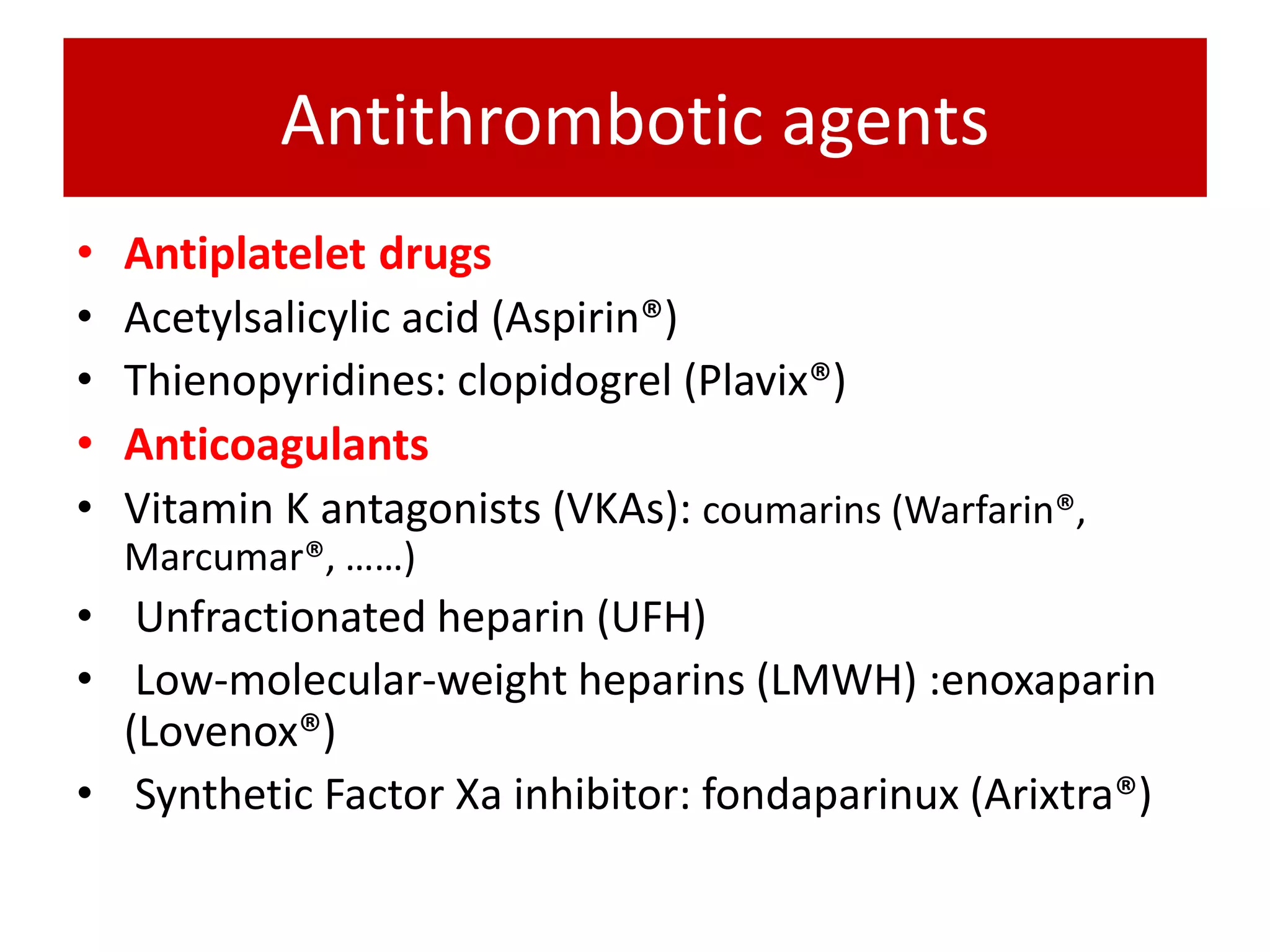
Antithrombotic agents
• Antiplatelet drugs
• Acetylsalicylic acid (Aspirin®)
• Thienopyridines: clopidogrel (Plavix®)
• Anticoagulants
• Vitamin K antagonists (VKAs): coumarins (Warfarin®,
Marcumar®, ……)
• Unfractionated heparin (UFH)
• Low-molecular-weight heparins (LMWH) :enoxaparin
(Lovenox®)
• Synthetic Factor Xa inhibitor: fondaparinux (Arixtra®)
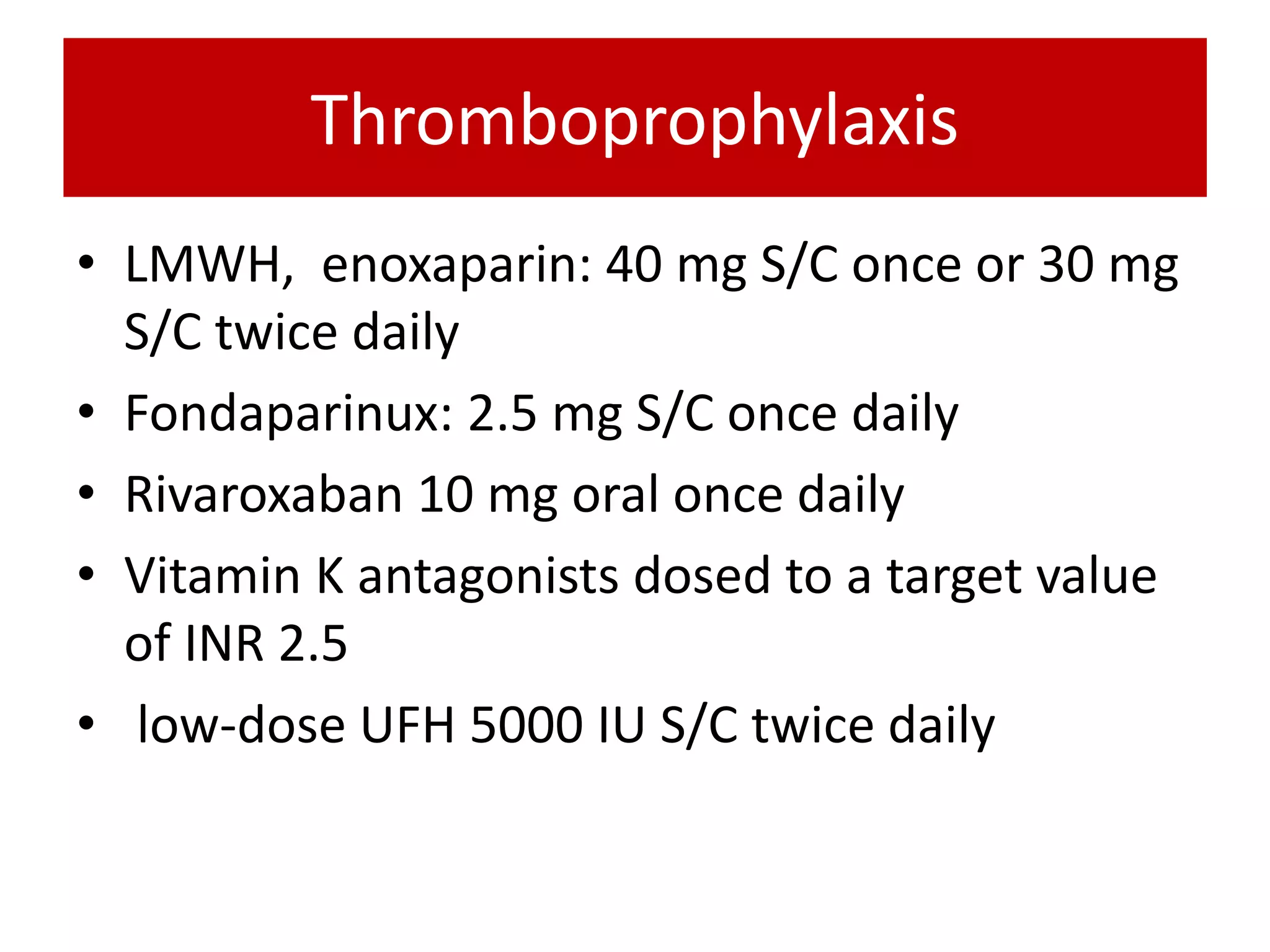
Thromboprophylaxis
• LMWH, enoxaparin: 40 mg S/C once or 30 mg
S/C twice daily
• Fondaparinux: 2.5 mg S/C once daily
• Rivaroxaban 10 mg oral once daily
• Vitamin K antagonists dosed to a target value
of INR 2.5
• low-dose UFH 5000 IU S/C twice daily
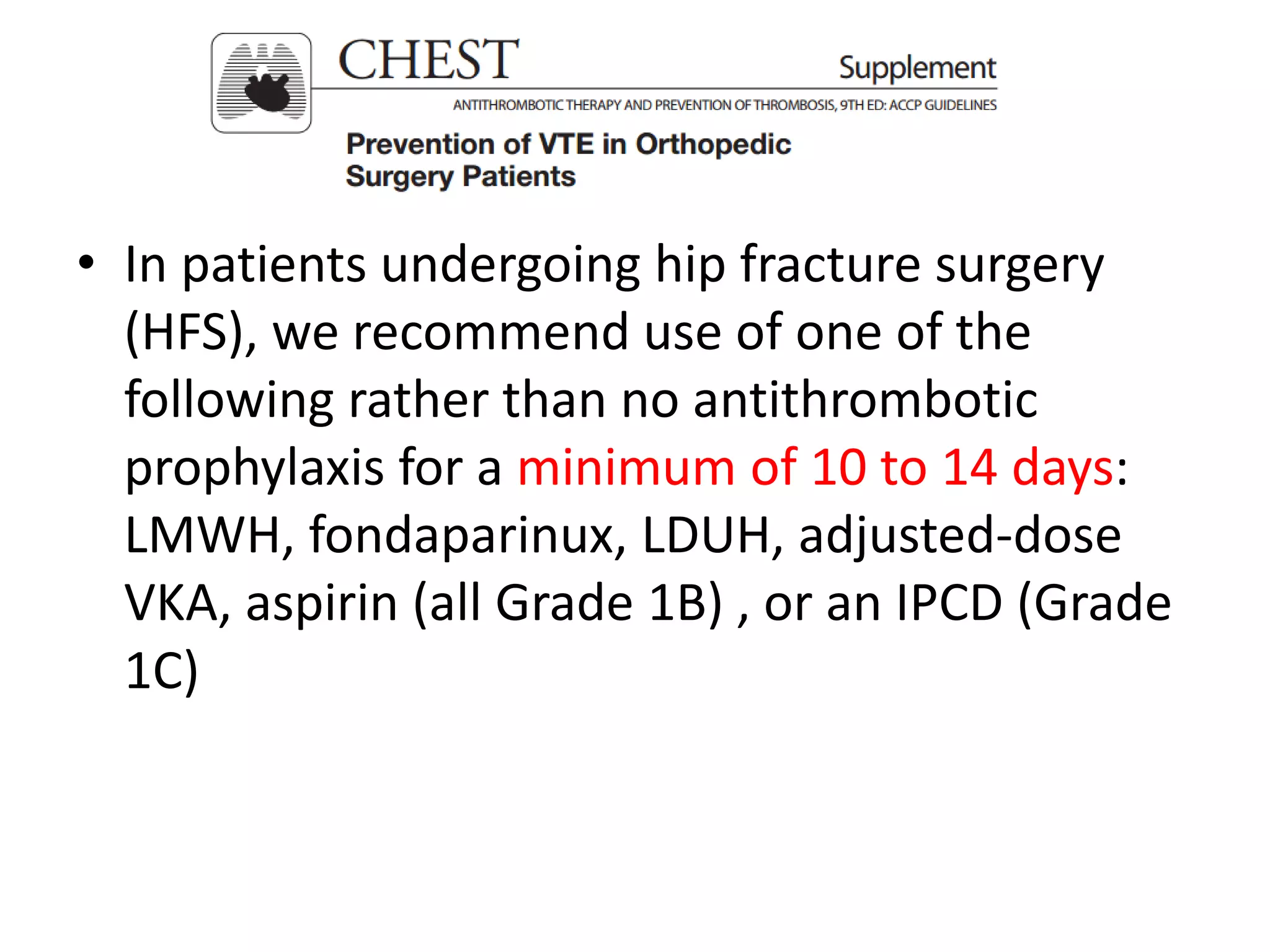
• In patients undergoing hip fracture surgery
(HFS), we recommend use of one of the
following rather than no antithrombotic
prophylaxis for a minimum of 10 to 14 days:
LMWH, fondaparinux, LDUH, adjusted-dose
VKA, aspirin (all Grade 1B) , or an IPCD (Grade
1C)
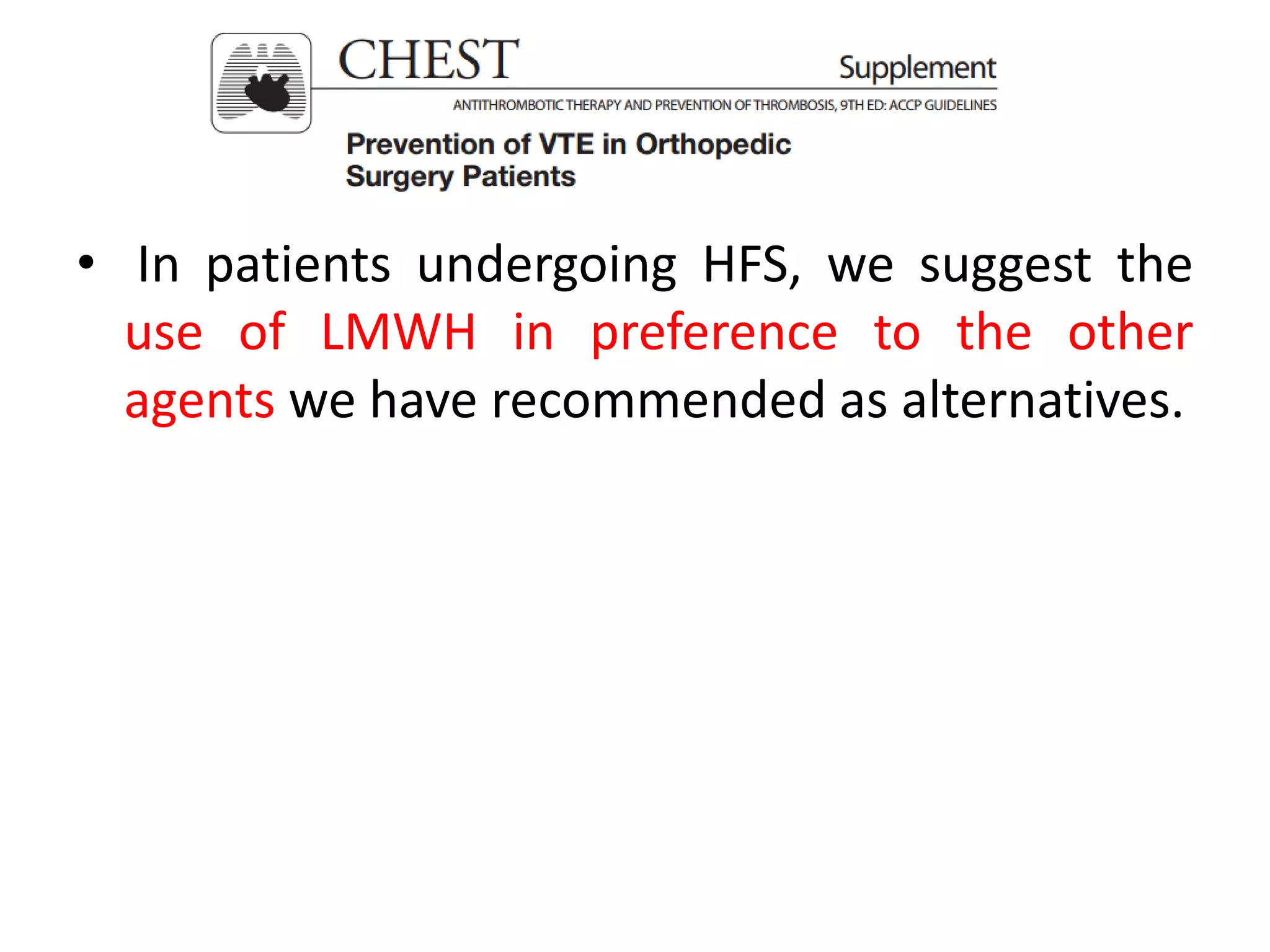
• In patients undergoing HFS, we suggest the
use of LMWH in preference to the other
agents we have recommended as alternatives.
• For patients undergoing HFS and receiving
LMWH as thromboprophylaxis,
we recommend starting either 12 h or more
preoperatively or 12 h or more postoperatively
(Grade 1B) .
• In patients undergoing HFS, we suggest using
dual prophylaxis with an antithrombotic agent
and an IPCD during the hospital stay (Grade
2C)
• In patients undergoing HFS and increased risk
of bleeding, we suggest using an IPCD or no
prophylaxis rather than pharmacologic
treatment (Grade 2C)
• For asymptomatic patients following HFS,
we recommend against Doppler (or duplex)
ultrasound screening before hospital discharge
(Grade 1B)
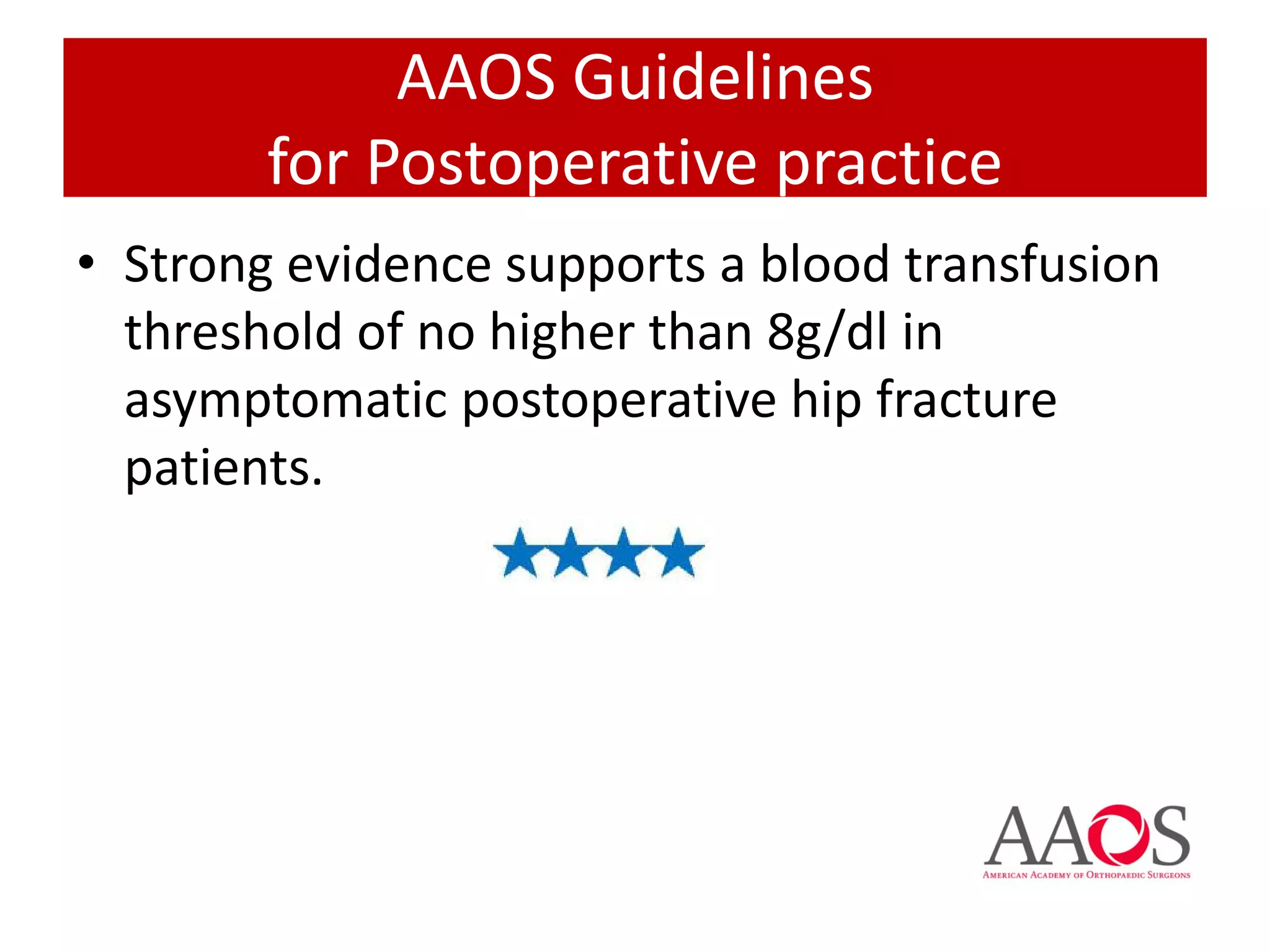
• Strong evidence supports a blood transfusion
threshold of no higher than 8g/dl in
asymptomatic postoperative hip fracture
patients.
AAOS Guidelines
for Postoperative practice
• Moderate evidence supports that supervised
occupational and physical therapy across the
continuum of care, including home, improves
functional outcomes and fall prevention.
• Strong evidence supports intensive physical
therapy post-discharge to improve functional
outcomes in hip fracture patients.
AAOS Guidelines
for Postoperative practice
• Moderate evidence supports that
postoperative nutritional supplementation
reduces mortality and improves nutritional
status in hip fracture patients.
• Moderate evidence supports use of
supplemental vitamin D and calcium in
patients following hip fracture surgery.
AAOS Guidelines
for Postoperative practice
• Moderate evidence supports that patients be
evaluated and treated for osteoporosis after
sustaining a hip fracture.
• Limited evidence supports preoperative
assessment of serum levels of albumin and
creatinine for risk assessment of hip fracture
patients.
AAOS Guidelines
for Postoperative practice
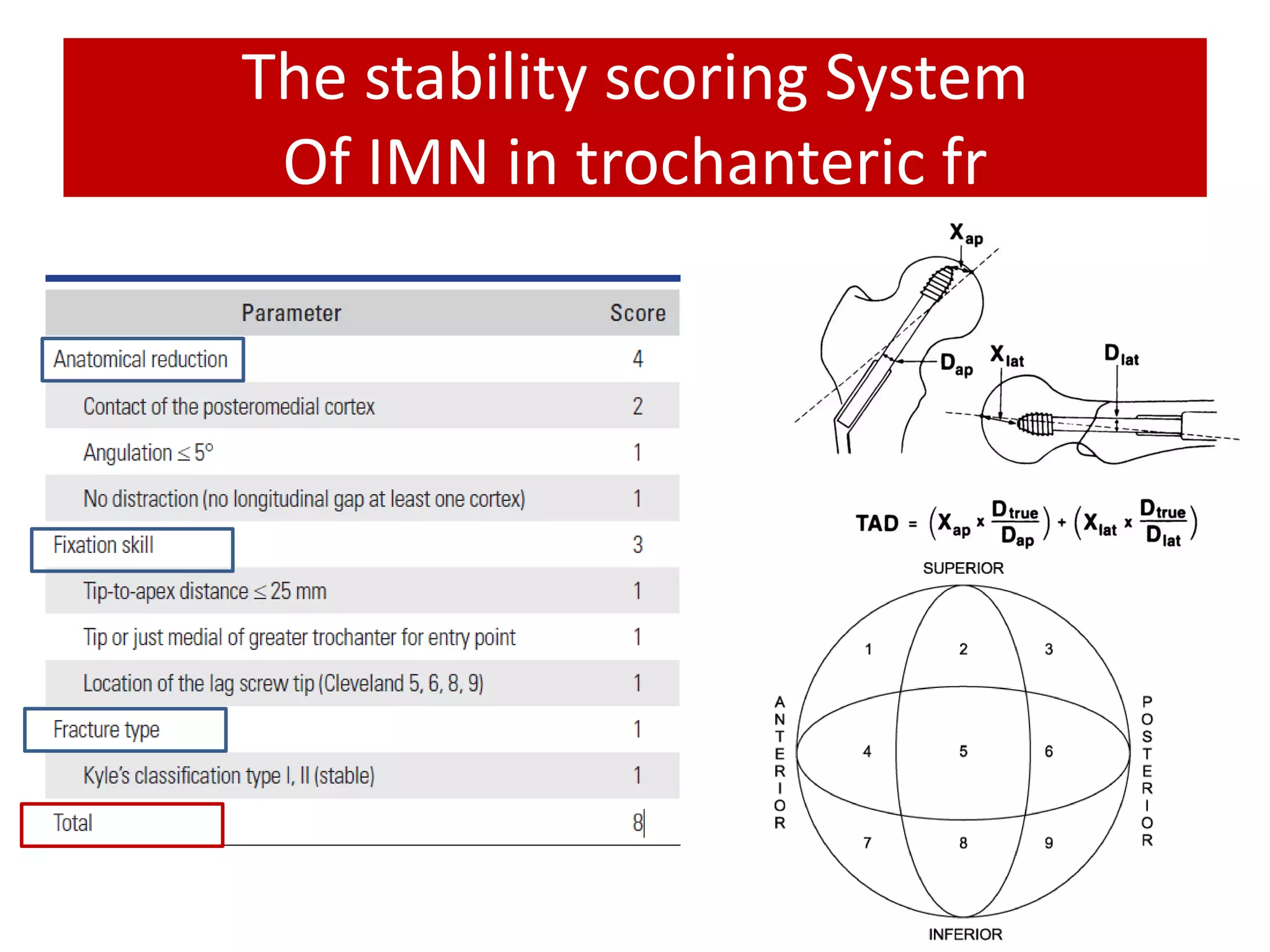
The stability scoring System
Of IMN in trochanteric fr
Maintenance of the
fracture reduction by
the stable fixation in
the patient scores over
5 could be predicted by
the postoperative
radiograms
Lee et al 2013
The stability scoring System
Of IMN in trochanteric fr
The stability scoring System
Of IMN in trochanteric fr
Proximal femoral fractures

Proximal femoral fractures

  • 1.
    Proximal femoral fractures Evidencebased approach Mohamed Abulsoud (M.D) Lecturer of orthopedic surgery Faculty of medicine – Al-Azhar university Cairo- Egypt
  • 2.
    • ILO • Decisionmaking • Preoperative planning • Post operative Program • Evidence based guidelines
  • 3.
    Introduction • Hip fracturescomprise 20% of the operative workload of an orthopedic trauma unit • Singer BR et al. J Bone Joint Surg Br. 1998 • The mortality rate in the elderly patients during the first year after hip fracture from 24% to 36% • Vestergaard P. Osteoporos Int. 2007 • Proximal femoral fractures is a challenge – Bone mass – Blood supply – Biomechanics – Co morbidities
  • 4.
  • 5.
  • 6.
    • Intertrochanteric femur fracturesaccount for 50% of all proximal femur fractures. • Femoral neck fractures account for 40% • Bimodal age distribution Introduction
  • 7.
    • AO Fractureand Dislocation Classification Compendium 2018 Classification
  • 8.
  • 9.
  • 10.
  • 11.
    Lateral Wall thickness •Using the traction view with the leg in neutral rotation • Innominate tubercle • 135° • Should be >20.5 mm
  • 13.
  • 14.
  • 15.
  • 16.
  • 17.
  • 18.
  • 19.
  • 20.
  • 21.
    1: Use theTip-to-Apex Distance 2: ‘‘No Lateral Wall, No Hip Screw’’
  • 22.
    3: Know theUnstable Intertrochanteric Fracture Patterns, and Nail Them
  • 23.
    4: Beware ofthe Anterior Bow of the Femoral Shaft 5: When Using a Trochanteric Entry Nail, Start Slightly Medial to the Exact Tip of the Greater Trochanter
  • 24.
    6: Do NotReam an Unreduced Fracture. 7: Be Cautious About the Nail Insertion Trajectory, and Do Not Use a Hammer to Seat the Nail 8: Avoid Varus Angulation of the Proximal Fragment—Use the Relationship Between the Tip of the Trochanter and the Center of the Femoral Head
  • 25.
    • 9: WhenNailing, Lock the Nail Distally if the Fracture Is Axially or Rotationally Unstable. • Tip 10: Avoid Fracture Distraction When Nailing
  • 26.
    AAOS Guidelines for Decisionmaking • Moderate evidence supports operative fixation for patients with stable (non- displaced) femoral neck fractures in comparison with non operative treatment. • Strong evidence supports arthroplasty for patients with unstable (displaced) femoral neck fractures.
  • 27.
    • Moderate evidencesupports that the outcomes of unipolar and bipolar hemiarthroplasty for unstable (displaced) femoral neck fractures are similar. • Moderate evidence supports a benefit to total hip arthroplasty in properly selected patients with unstable (displaced) femoral neck fractures. AAOS Guidelines for Decision making
  • 28.
    • Moderate evidencesupports higher dislocation rates with a posterior approach in the treatment of displaced femoral neck fractures with hip arthroplasty. • Moderate evidence supports the preferential use of cemented femoral stems in patients undergoing arthroplasty for femoral neck fractures. AAOS Guidelines for Decision making
  • 29.
    • Moderate evidencesupports the use of either a sliding hip screw or a cephalomedullary device in patients with stable intertrochanteric fractures. • Strong evidence supports using a cephalomedullary device for the treatment of patients with subtrochanteric or reverse obliquity fractures. • Moderate evidence supports using a cephalomedullary device for the treatment of patients with unstable intertrochanteric fractures. AAOS Guidelines for Decision making
  • 30.
    Preoperative evaluation • Priorto an operation, the time that a surgeon devotes to a careful preoperative plan is of critical importance and often determines the success or failure of the procedure • The diagnosis alone is not enough to guide the surgeon to the correct choice of a procedure. • The surgeon must have a thorough knowledge of the relevant operative procedures and the relative dangers and success rates of each.
  • 31.
    Detailed history careful physicalexamination Laboratory tests Appropriate x-rays Other imaging studies, CT scans, 3-D reconstructions, or MRI. Preoperative planning
  • 32.
    History • Deep veinthrombosis/pulmonary embolism(DVT/PE). • Medications(Anticoagulation-Bisphosphonate- Steroids…..). • Immune deficiency (DM). • Malabsorption diseases • Angina or CVA, aortic stenosis, • Active infection (pulmonary or genitourinary) • Cognitive disorders (Delirium) AMPLE
  • 33.
    Examination • Associated Injuries •Low-energy fractures, associated injuries are most commonly fractures of the distal radius or proximal humerus, and minor head injuries. • High-energy fractures are more commonly associated with ipsilateral extremity trauma, head injury, and pelvic fractures. • Soft tissue condition • Neurovascular state
  • 34.
    Lab • Calcium, phosphate,and alkaline phosphatase • A complete blood count (CBC) • 25-hydroxy vitamin D • Thyroid stimulating hormone (TSH) • parathyroid hormone (PTH ) • Protein, Albumin • kidney function tests • Liver function test • Coagulation profile • Others…….
  • 35.
    • Foster etal. reported a 70% mortality for patients with a serum albumin <3gm% compared to a mortality rate of 18% in patients with an albumin level ≥3gm% . Lab
  • 36.
    Radiographs should include •an anteroposterior (AP) view of the pelvis, • A full length AP and lateral films of the femur • Traction views. Radiography
  • 37.
  • 38.
  • 39.
  • 40.
  • 41.
  • 42.
  • 43.
  • 44.
  • 45.
    AAOS Guidelines for preoperativepractice • Moderate evidence supports MRI as the advanced imaging of choice for diagnosis of presumed hip fracture not apparent on initial radiographs. • Due to the quality of existing literature, as well as potential harm with radiation exposure related to use of CT in this setting, this modality was not recommended for evaluation of occult hip fracture
  • 46.
    • Strong evidencesupports regional analgesia to improve preoperative pain control in patients with hip fracture. • Moderate evidence does not support routine use of preoperative traction for patients with a hip fracture. AAOS Guidelines for preoperative practice
  • 47.
    • Moderate evidencesupports that hip fracture surgery within 48 hours of admission is associated with better outcomes. • Limited evidence supports not delaying hip fracture surgery for patients on aspirin and/or clopidogrel. (no regional anaesthesia) AAOS Guidelines for preoperative practice
  • 48.
    • Preoperative PlanningChecklist • Traction OR table C-arm compatible with optional foot or skeletal traction • Fluoroscopy C-arm opposite surgeon with ability to rotate over and under • Equipment: Soft tissue retractors, Schanz pins for joysticks, elevators, bone hook, large bone forceps, 3.2-mm K-wires for provisional stabilization, power drivers • Implant system with complete inventory of sizes • Backup plan for alternative internal fixation choice Planning
  • 49.
  • 50.
  • 51.
  • 52.
    Postoperative program VTE prophylaxis Bloodtransfusion Rehabilitation Medications Weight bearing
  • 53.
    • Moderate evidencesupports use of venous thromboembolism prophylaxis (VTE) in hip fracture patients. AAOS Guidelines for Postoperative practice
  • 54.
    Antithrombotic agents • Antiplateletdrugs • Acetylsalicylic acid (Aspirin®) • Thienopyridines: clopidogrel (Plavix®) • Anticoagulants • Vitamin K antagonists (VKAs): coumarins (Warfarin®, Marcumar®, ……) • Unfractionated heparin (UFH) • Low-molecular-weight heparins (LMWH) :enoxaparin (Lovenox®) • Synthetic Factor Xa inhibitor: fondaparinux (Arixtra®)
  • 55.
    Thromboprophylaxis • LMWH, enoxaparin:40 mg S/C once or 30 mg S/C twice daily • Fondaparinux: 2.5 mg S/C once daily • Rivaroxaban 10 mg oral once daily • Vitamin K antagonists dosed to a target value of INR 2.5 • low-dose UFH 5000 IU S/C twice daily
  • 56.
    • In patientsundergoing hip fracture surgery (HFS), we recommend use of one of the following rather than no antithrombotic prophylaxis for a minimum of 10 to 14 days: LMWH, fondaparinux, LDUH, adjusted-dose VKA, aspirin (all Grade 1B) , or an IPCD (Grade 1C)
  • 57.
    • In patientsundergoing HFS, we suggest the use of LMWH in preference to the other agents we have recommended as alternatives.
  • 58.
    • For patientsundergoing HFS and receiving LMWH as thromboprophylaxis, we recommend starting either 12 h or more preoperatively or 12 h or more postoperatively (Grade 1B) .
  • 59.
    • In patientsundergoing HFS, we suggest using dual prophylaxis with an antithrombotic agent and an IPCD during the hospital stay (Grade 2C)
  • 60.
    • In patientsundergoing HFS and increased risk of bleeding, we suggest using an IPCD or no prophylaxis rather than pharmacologic treatment (Grade 2C)
  • 61.
    • For asymptomaticpatients following HFS, we recommend against Doppler (or duplex) ultrasound screening before hospital discharge (Grade 1B)
  • 62.
    • Strong evidencesupports a blood transfusion threshold of no higher than 8g/dl in asymptomatic postoperative hip fracture patients. AAOS Guidelines for Postoperative practice
  • 63.
    • Moderate evidencesupports that supervised occupational and physical therapy across the continuum of care, including home, improves functional outcomes and fall prevention. • Strong evidence supports intensive physical therapy post-discharge to improve functional outcomes in hip fracture patients. AAOS Guidelines for Postoperative practice
  • 64.
    • Moderate evidencesupports that postoperative nutritional supplementation reduces mortality and improves nutritional status in hip fracture patients. • Moderate evidence supports use of supplemental vitamin D and calcium in patients following hip fracture surgery. AAOS Guidelines for Postoperative practice
  • 65.
    • Moderate evidencesupports that patients be evaluated and treated for osteoporosis after sustaining a hip fracture. • Limited evidence supports preoperative assessment of serum levels of albumin and creatinine for risk assessment of hip fracture patients. AAOS Guidelines for Postoperative practice
  • 66.
    The stability scoringSystem Of IMN in trochanteric fr
  • 67.
    Maintenance of the fracturereduction by the stable fixation in the patient scores over 5 could be predicted by the postoperative radiograms Lee et al 2013 The stability scoring System Of IMN in trochanteric fr
  • 68.
    The stability scoringSystem Of IMN in trochanteric fr