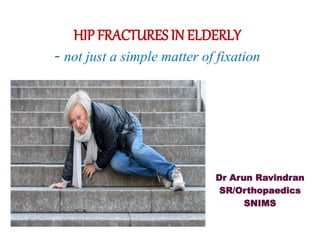
HIP FRACTURES IN ELDERLY
- not just a simple matter of fixation
Dr Arun Ravindran
SR/Orthopaedics
SNIMS
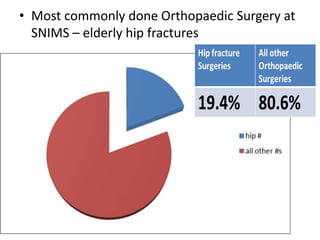
• Most commonly done Orthopaedic Surgery at
SNIMS – elderly hip fractures
• Osteoporosis (Silent killer)
• a major public health problem because of its
association with low-energy trauma or
fragility fractures
• Hip fracture has been recognized as the most
serious consequence of osteoporosis
because of its complications, which include…
chronic pain
Disability
diminished quality of life
premature death
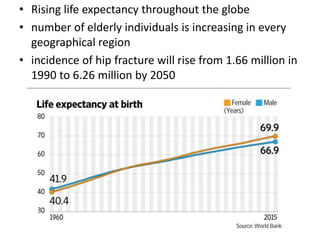
• Rising life expectancy throughout the globe
• number of elderly individuals is increasing in every
geographical region
• incidence of hip fracture will rise from 1.66 million in
1990 to 6.26 million by 2050
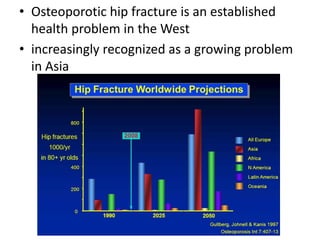
• Osteoporotic hip fracture is an established
health problem in the West
• increasingly recognized as a growing problem
in Asia
• Most common cause = Osteoporosis
Age
Sex – high incidence in females
C/c medical conditions – thyroid disorders,
intestinal disorders, neurological conditions
Some medications
Nutritional problems
Physical inactivity
Tobacco and alcohol
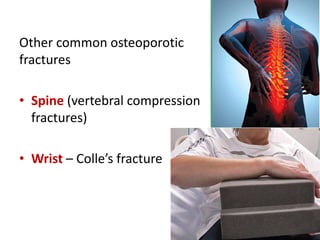
Other common osteoporotic
fractures
• Spine (vertebral compression
fractures)
• Wrist – Colle’s fracture
Why this much concern about hip
fractures???
• Making the patient non ambulant
• Complications
Quotation – We come to the world under the brim
of Pelvis and go out of the world through the
fracture neck of Femur
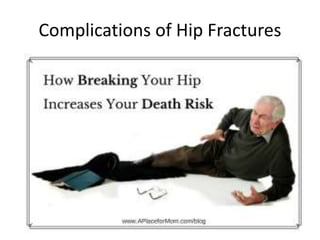
Complications of Hip Fractures
Cognitive and neurological
complications
• 10% cases - mild problems after surgery
(inability to concentrate, write, read a book,
etc) but are able to overcome activities of
daily living
• Postoperative delirium –
• 13.5% to 33% of cases
Causes –
 advanced age
 history of cognitive impairment
 history of alcohol abuse
 preoperative medication (special attention to
unrecognized benzodiazepine use)
 type of anesthetic used during surgery
 infection
 urinary retention and fluid or electrolyte disturbance
• Regional/Spinal anesthesia reduces the
incidence of delirium, compared to GA early
after surgery
• Supplemental oxygen (3-4 L/min) continually
till day 2 post-surgery, or while patient’s
oxygen saturation is not ≥ 95%
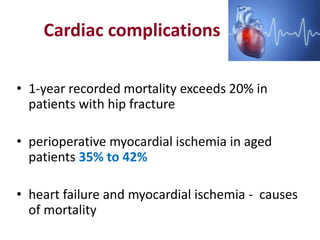
Cardiac complications
• 1-year recorded mortality exceeds 20% in
patients with hip fracture
• perioperative myocardial ischemia in aged
patients 35% to 42%
• heart failure and myocardial ischemia - causes
of mortality
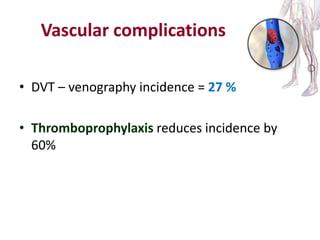
Vascular complications
• DVT – venography incidence = 27 %
• Thromboprophylaxis reduces incidence by
60%
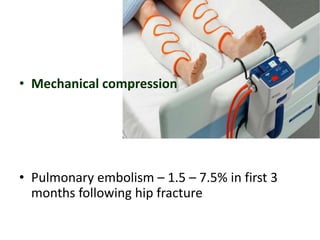
• Mechanical compression
• Pulmonary embolism – 1.5 – 7.5% in first 3
months following hip fracture
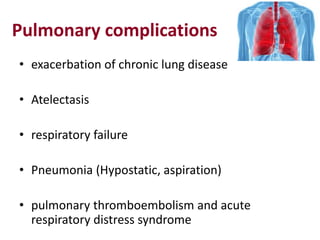
Pulmonary complications
• exacerbation of chronic lung disease
• Atelectasis
• respiratory failure
• Pneumonia (Hypostatic, aspiration)
• pulmonary thromboembolism and acute
respiratory distress syndrome
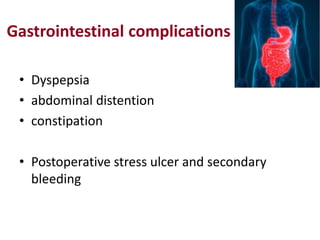
Gastrointestinal complications
• Dyspepsia
• abdominal distention
• constipation
• Postoperative stress ulcer and secondary
bleeding
Urinary tract complications
• Urinary retention, urinary infections and acute
kidney injuries
• intermittent catheterization immediately after
surgery OR catheter removed the morning after
surgery - lower rates of urinary retention
• Urinary catheters should be removed as soon as
possible
• UTI - Leading cause of nosocomial infection
• 12% to 61% of all patients with hip fractures
• important risk factor for delirium
• prolong the hospital stay for another 2-5 days
and even a higher mortality rate
• Acute Kidney injuries (16-24%)
• Age
• Dehydration
• Nephrotoxic drugs
• CKD etc….
• Maintain hydration
• i/o chart
• Avoid nephrotoxic drugs….
Hematologic complications
• blood loss from a hip fracture – about 500 mL
• intraoperative causes - comprise fluid shifting
and significant blood loss during surgery
• Postoperative anemia - repeated phlebotomy
or hemodilutional anemia
• Perioperative anemia - adverse events
• related to other medical complications
• increased hospitalization duration, rate of
readmission and death
• Hb ≤ 10 g/dL at admission - increased
mortality at 30 d in patients with hip fractures
Endocrine-metabolic
complications
• Diabetes
• Malnutrition – impairs mental, cardiac and
immune functions
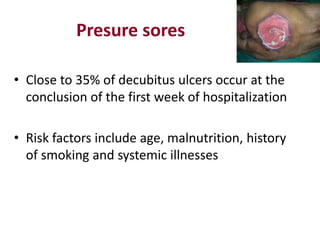
Presure sores
• Close to 35% of decubitus ulcers occur at the
conclusion of the first week of hospitalization
• Risk factors include age, malnutrition, history
of smoking and systemic illnesses
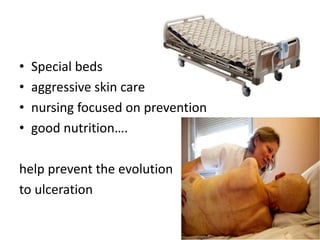
• Special beds
• aggressive skin care
• nursing focused on prevention
• good nutrition….
help prevent the evolution
to ulceration
Per and post operative
mortality
• Overall 1 year mortality rate that varies from
14% to 36% among patients aged 65 or above
• Mortality is significantly influenced by
preoperative cognitive state, medical
comorbidities and mobility
Risk factors for increased
mortality….
• Dementia
• chronic obstructive pulmonary disease
• chest infection
• heart failure
• Anemia
• abnormal sodium (low or raised)
• elevated urea, creatinine
• malignancy
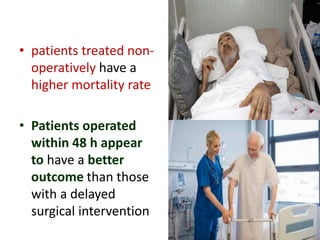
• patients treated non-
operatively have a
higher mortality rate
• Patients operated
within 48 h appear
to have a better
outcome than those
with a delayed
surgical intervention
• However, in medically unstable patients, a
delay of surgery does not result in a
statistically significant difference in mortality
compared to patients treated by early surgery
Anaesthetic complications of
hip fractures
• Arterial hypotension, defined as a
preoperative drop in mean arterial blood
pressure of more than 30%, or a presurgical
pressure reading of 60-70 mmHg
• Arterial hypotension has been reported in
15%-33% of patients during the first 20 min
after spinal anesthesia induction
• cognitive dysfunction during hospitalization –
decreased incidence with spinal anaesthesia
• recent meta-analyses recommend Spinal
anaesthesia as the technique of choice for hip
fracture repair, as long as it is not
contraindicated
Bone cement implantation syndrome
• Poorly understood syndrome
• hypoxia, hypotension, cardiac arrhythmias, lung
hypertension, decline in cardiac output
• reduced through…
modern cementing techniques
appropriate anesthesia interventions
adequate patient preparation
avoiding the use of cement altogether
• Appropriate analgesic - in most
the best analgesic is surgical
treatment
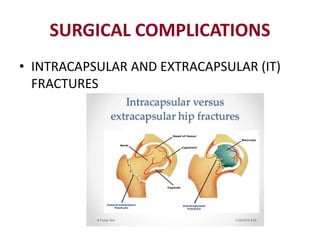
SURGICAL COMPLICATIONS
• INTRACAPSULAR AND EXTRACAPSULAR (IT)
FRACTURES
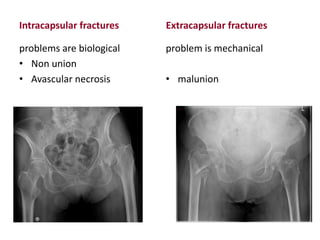
Intracapsular fractures
problems are biological
• Non union
• Avascular necrosis
Extracapsular fractures
problem is mechanical
• malunion
• Osteosynthesis – in young age, physiologically
active
• Replacement - in elderly (osteosynthesis
done in impacted fractures)
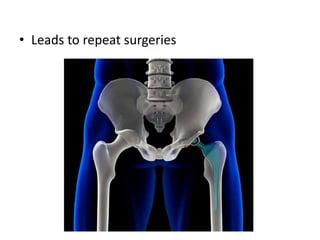
• Leads to repeat surgeries
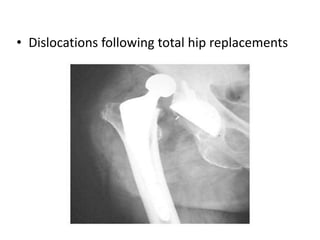
• Dislocations following total hip replacements
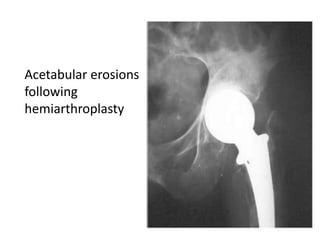
Acetabular erosions
following
hemiarthroplasty
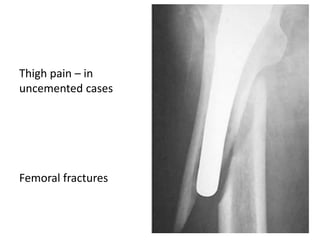
Thigh pain – in
uncemented cases
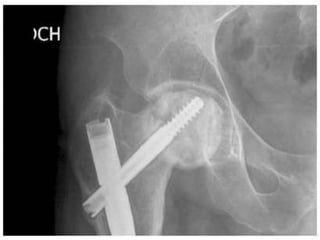
Femoral fractures
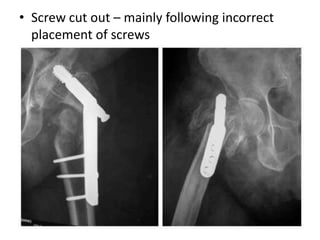
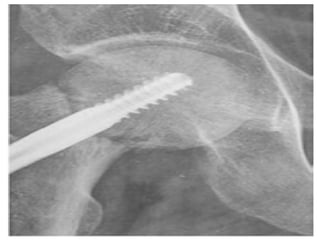
• Screw cut out – mainly following incorrect
placement of screws
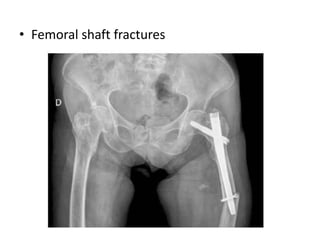
• Femoral shaft fractures
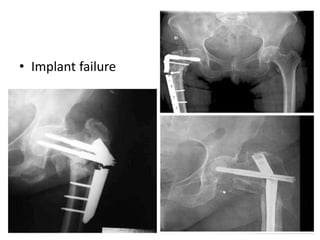
• Implant failure
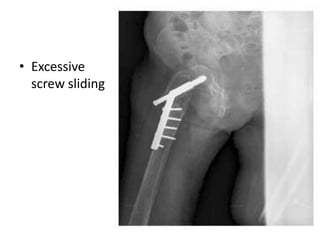
• Excessive
screw sliding
• Conservative / Operative management ????
Most frequently encountered
questions…!!!
Any conservative options??
Will surgery be a success??
Are we giving more pain to the patient by
operating??
What we are gaining by operating a very old
person of low life expecxtancy??
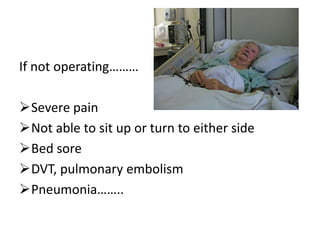
If not operating………
Severe pain
Not able to sit up or turn to either side
Bed sore
DVT, pulmonary embolism
Pneumonia……..
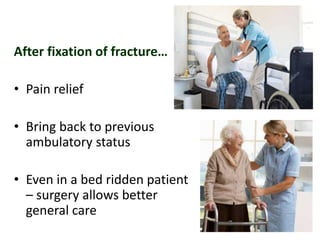
After fixation of fracture…
• Pain relief
• Bring back to previous
ambulatory status
• Even in a bed ridden patient
– surgery allows better
general care
When to operate???
• Within 48 hrs !!!
• Lesser mortality and morbidity for cases
operated within 48 hours
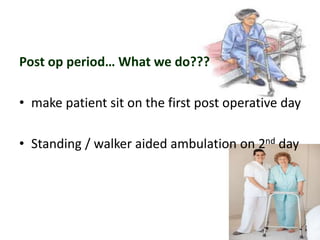
Post op period… What we do???
• make patient sit on the first post operative day
• Standing / walker aided ambulation on 2nd day
Prevention of Hip fractures in elderly
• Healthy lifestyle choices in early adulthood
build a higher peak bone mass
reduce your risk of osteoporosis in later years
• The same measures may lower your risk of
falls and improve your overall health if you
adopt them at any age
• Get enough calcium and vitamin D.
How Much Calcium Do You Need?
Women
Age 50 & younger - 1,000 mg daily
Age 51 & older - 1,200 mg daily
Men
Age 70 & younger - 1,000 mg daily
Age 71 & older - 1,200 mg daily
How Much Vitamin D Do You Need?
• Women and Men
• Under age 50 - 400-800 IU daily
• Age 50 and older - 800-1,000 IU daily
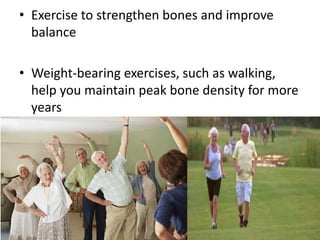
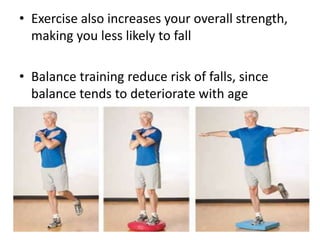
• Exercise to strengthen bones and improve
balance
• Weight-bearing exercises, such as walking,
help you maintain peak bone density for more
years
• Exercise also increases your overall strength,
making you less likely to fall
• Balance training reduce risk of falls, since
balance tends to deteriorate with age
• Avoid smoking or excessive drinking
• alcohol - impair balance - likely to fall
• Assess your home for hazards.
Remove throw rugs, keep electrical
cords against the wall, and clear
excess furniture and anything else
that could trip you
• Make sure every room and
passageway is well-lit
• Check your eyes. Have an eye
exam every other year, or more
often if you have diabetes or an
eye disease.
• Watch your medications.
Feeling weak and dizzy - side
effects of many medications
• Stand up slowly. Getting up too
quickly can cause your blood
pressure to drop and make you
feel wobbly.
• Use a walking stick or walker
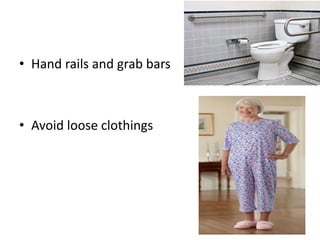
• Hand rails and grab bars
• Avoid loose clothings
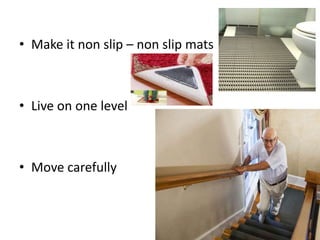
• Make it non slip – non slip mats
• Live on one level
• Move carefully
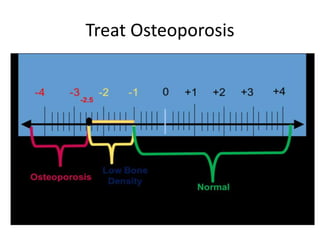
Treat Osteoporosis
Who all to be screened??? (NOF, US)
• Anyone with a fragility fracture
• All women age 65 and older
• Postmenopausal younger than 65 with risk
factors
• Men over 50 with risk factors
• Non pharmacological management
Nutrition – Calcium , protein rich food
Exercise – regular aerobic/moderate weight
bearing exercises
Avoid smoking and alcohol
Pharmacologic Treatment
• Calcium & Vit D supplements
• Bisphosphonates
Alendronate 70 mg / month
Risedronate 35 mg/ week
Ibandronate 150 mg / month
Zolendronate - once an year
• Oestrogen – blocks Osteoclastic action
• SERM
• Calcitonin – nasal spray – 200 IU
• Teriparatide – s/c - anabolic effect on trabecular bone
• Fluoride and Strontium – under clinical trial
• Denosumab – s/c every 6 months
To conclude….
• Incidence of Elderly Hip fractures is rising
• Major cause is Osteoporosis
• Complication rates are very high compared to
other fractures in the same age group
• Most of the cases are treated Surgically
• Surgery to be performed preferably within 48
hrs
• Early mobilisation and ambulation improves
the quality of life and reduce mortality rates
• Methods to prevent fall should be taken
• Adopt healthy lifestyles
• Regular exercises according to the age have
important role in maintaining bone density
and muscle power
• Create awareness about Osteoporosis
screening and treatment
Hip fractures in elderly -  general aspects

Hip fractures in elderly - general aspects

  • 1.
    HIP FRACTURES INELDERLY - not just a simple matter of fixation Dr Arun Ravindran SR/Orthopaedics SNIMS
  • 2.
    • Most commonlydone Orthopaedic Surgery at SNIMS – elderly hip fractures
  • 3.
    • Osteoporosis (Silentkiller) • a major public health problem because of its association with low-energy trauma or fragility fractures
  • 4.
    • Hip fracturehas been recognized as the most serious consequence of osteoporosis because of its complications, which include… chronic pain Disability diminished quality of life premature death
  • 5.
    • Rising lifeexpectancy throughout the globe • number of elderly individuals is increasing in every geographical region • incidence of hip fracture will rise from 1.66 million in 1990 to 6.26 million by 2050
  • 6.
    • Osteoporotic hipfracture is an established health problem in the West • increasingly recognized as a growing problem in Asia
  • 7.
    • Most commoncause = Osteoporosis Age Sex – high incidence in females C/c medical conditions – thyroid disorders, intestinal disorders, neurological conditions Some medications Nutritional problems Physical inactivity Tobacco and alcohol
  • 8.
    Other common osteoporotic fractures •Spine (vertebral compression fractures) • Wrist – Colle’s fracture
  • 9.
    Why this muchconcern about hip fractures??? • Making the patient non ambulant • Complications
  • 10.
    Quotation – Wecome to the world under the brim of Pelvis and go out of the world through the fracture neck of Femur
  • 11.
  • 12.
    Cognitive and neurological complications •10% cases - mild problems after surgery (inability to concentrate, write, read a book, etc) but are able to overcome activities of daily living
  • 13.
    • Postoperative delirium– • 13.5% to 33% of cases Causes –  advanced age  history of cognitive impairment  history of alcohol abuse  preoperative medication (special attention to unrecognized benzodiazepine use)  type of anesthetic used during surgery  infection  urinary retention and fluid or electrolyte disturbance
  • 14.
    • Regional/Spinal anesthesiareduces the incidence of delirium, compared to GA early after surgery • Supplemental oxygen (3-4 L/min) continually till day 2 post-surgery, or while patient’s oxygen saturation is not ≥ 95%
  • 15.
    Cardiac complications • 1-yearrecorded mortality exceeds 20% in patients with hip fracture • perioperative myocardial ischemia in aged patients 35% to 42% • heart failure and myocardial ischemia - causes of mortality
  • 16.
    Vascular complications • DVT– venography incidence = 27 % • Thromboprophylaxis reduces incidence by 60%
  • 17.
    • Mechanical compression •Pulmonary embolism – 1.5 – 7.5% in first 3 months following hip fracture
  • 18.
    Pulmonary complications • exacerbationof chronic lung disease • Atelectasis • respiratory failure • Pneumonia (Hypostatic, aspiration) • pulmonary thromboembolism and acute respiratory distress syndrome
  • 19.
    Gastrointestinal complications • Dyspepsia •abdominal distention • constipation • Postoperative stress ulcer and secondary bleeding
  • 20.
    Urinary tract complications •Urinary retention, urinary infections and acute kidney injuries • intermittent catheterization immediately after surgery OR catheter removed the morning after surgery - lower rates of urinary retention • Urinary catheters should be removed as soon as possible
  • 21.
    • UTI -Leading cause of nosocomial infection • 12% to 61% of all patients with hip fractures • important risk factor for delirium • prolong the hospital stay for another 2-5 days and even a higher mortality rate
  • 22.
    • Acute Kidneyinjuries (16-24%) • Age • Dehydration • Nephrotoxic drugs • CKD etc…. • Maintain hydration • i/o chart • Avoid nephrotoxic drugs….
  • 23.
    Hematologic complications • bloodloss from a hip fracture – about 500 mL • intraoperative causes - comprise fluid shifting and significant blood loss during surgery • Postoperative anemia - repeated phlebotomy or hemodilutional anemia
  • 24.
    • Perioperative anemia- adverse events • related to other medical complications • increased hospitalization duration, rate of readmission and death • Hb ≤ 10 g/dL at admission - increased mortality at 30 d in patients with hip fractures
  • 25.
    Endocrine-metabolic complications • Diabetes • Malnutrition– impairs mental, cardiac and immune functions
  • 26.
    Presure sores • Closeto 35% of decubitus ulcers occur at the conclusion of the first week of hospitalization • Risk factors include age, malnutrition, history of smoking and systemic illnesses
  • 27.
    • Special beds •aggressive skin care • nursing focused on prevention • good nutrition…. help prevent the evolution to ulceration
  • 28.
    Per and postoperative mortality • Overall 1 year mortality rate that varies from 14% to 36% among patients aged 65 or above • Mortality is significantly influenced by preoperative cognitive state, medical comorbidities and mobility
  • 29.
    Risk factors forincreased mortality…. • Dementia • chronic obstructive pulmonary disease • chest infection • heart failure • Anemia • abnormal sodium (low or raised) • elevated urea, creatinine • malignancy
  • 30.
    • patients treatednon- operatively have a higher mortality rate • Patients operated within 48 h appear to have a better outcome than those with a delayed surgical intervention
  • 31.
    • However, inmedically unstable patients, a delay of surgery does not result in a statistically significant difference in mortality compared to patients treated by early surgery
  • 32.
    Anaesthetic complications of hipfractures • Arterial hypotension, defined as a preoperative drop in mean arterial blood pressure of more than 30%, or a presurgical pressure reading of 60-70 mmHg • Arterial hypotension has been reported in 15%-33% of patients during the first 20 min after spinal anesthesia induction
  • 33.
    • cognitive dysfunctionduring hospitalization – decreased incidence with spinal anaesthesia • recent meta-analyses recommend Spinal anaesthesia as the technique of choice for hip fracture repair, as long as it is not contraindicated
  • 34.
    Bone cement implantationsyndrome • Poorly understood syndrome • hypoxia, hypotension, cardiac arrhythmias, lung hypertension, decline in cardiac output • reduced through… modern cementing techniques appropriate anesthesia interventions adequate patient preparation avoiding the use of cement altogether
  • 35.
    • Appropriate analgesic- in most the best analgesic is surgical treatment
  • 36.
    SURGICAL COMPLICATIONS • INTRACAPSULARAND EXTRACAPSULAR (IT) FRACTURES
  • 37.
    Intracapsular fractures problems arebiological • Non union • Avascular necrosis Extracapsular fractures problem is mechanical • malunion
  • 38.
    • Osteosynthesis –in young age, physiologically active • Replacement - in elderly (osteosynthesis done in impacted fractures)
  • 41.
    • Leads torepeat surgeries
  • 42.
    • Dislocations followingtotal hip replacements
  • 43.
  • 44.
    Thigh pain –in uncemented cases Femoral fractures
  • 45.
    • Screw cutout – mainly following incorrect placement of screws
  • 46.
  • 47.
  • 48.
  • 49.
    • Conservative /Operative management ????
  • 50.
    Most frequently encountered questions…!!! Anyconservative options?? Will surgery be a success?? Are we giving more pain to the patient by operating?? What we are gaining by operating a very old person of low life expecxtancy??
  • 51.
    If not operating……… Severepain Not able to sit up or turn to either side Bed sore DVT, pulmonary embolism Pneumonia……..
  • 52.
    After fixation offracture… • Pain relief • Bring back to previous ambulatory status • Even in a bed ridden patient – surgery allows better general care
  • 53.
    When to operate??? •Within 48 hrs !!! • Lesser mortality and morbidity for cases operated within 48 hours
  • 54.
    Post op period…What we do??? • make patient sit on the first post operative day • Standing / walker aided ambulation on 2nd day
  • 55.
    Prevention of Hipfractures in elderly • Healthy lifestyle choices in early adulthood build a higher peak bone mass reduce your risk of osteoporosis in later years • The same measures may lower your risk of falls and improve your overall health if you adopt them at any age
  • 56.
    • Get enoughcalcium and vitamin D. How Much Calcium Do You Need? Women Age 50 & younger - 1,000 mg daily Age 51 & older - 1,200 mg daily Men Age 70 & younger - 1,000 mg daily Age 71 & older - 1,200 mg daily
  • 57.
    How Much VitaminD Do You Need? • Women and Men • Under age 50 - 400-800 IU daily • Age 50 and older - 800-1,000 IU daily
  • 58.
    • Exercise tostrengthen bones and improve balance • Weight-bearing exercises, such as walking, help you maintain peak bone density for more years
  • 59.
    • Exercise alsoincreases your overall strength, making you less likely to fall • Balance training reduce risk of falls, since balance tends to deteriorate with age
  • 60.
    • Avoid smokingor excessive drinking • alcohol - impair balance - likely to fall • Assess your home for hazards. Remove throw rugs, keep electrical cords against the wall, and clear excess furniture and anything else that could trip you
  • 61.
    • Make sureevery room and passageway is well-lit • Check your eyes. Have an eye exam every other year, or more often if you have diabetes or an eye disease.
  • 62.
    • Watch yourmedications. Feeling weak and dizzy - side effects of many medications • Stand up slowly. Getting up too quickly can cause your blood pressure to drop and make you feel wobbly. • Use a walking stick or walker
  • 63.
    • Hand railsand grab bars • Avoid loose clothings
  • 64.
    • Make itnon slip – non slip mats • Live on one level • Move carefully
  • 65.
  • 66.
    Who all tobe screened??? (NOF, US) • Anyone with a fragility fracture • All women age 65 and older • Postmenopausal younger than 65 with risk factors • Men over 50 with risk factors
  • 67.
    • Non pharmacologicalmanagement Nutrition – Calcium , protein rich food Exercise – regular aerobic/moderate weight bearing exercises Avoid smoking and alcohol
  • 68.
    Pharmacologic Treatment • Calcium& Vit D supplements • Bisphosphonates Alendronate 70 mg / month Risedronate 35 mg/ week Ibandronate 150 mg / month Zolendronate - once an year • Oestrogen – blocks Osteoclastic action • SERM • Calcitonin – nasal spray – 200 IU • Teriparatide – s/c - anabolic effect on trabecular bone • Fluoride and Strontium – under clinical trial • Denosumab – s/c every 6 months
  • 69.
    To conclude…. • Incidenceof Elderly Hip fractures is rising • Major cause is Osteoporosis • Complication rates are very high compared to other fractures in the same age group
  • 70.
    • Most ofthe cases are treated Surgically • Surgery to be performed preferably within 48 hrs • Early mobilisation and ambulation improves the quality of life and reduce mortality rates
  • 71.
    • Methods toprevent fall should be taken • Adopt healthy lifestyles • Regular exercises according to the age have important role in maintaining bone density and muscle power • Create awareness about Osteoporosis screening and treatment