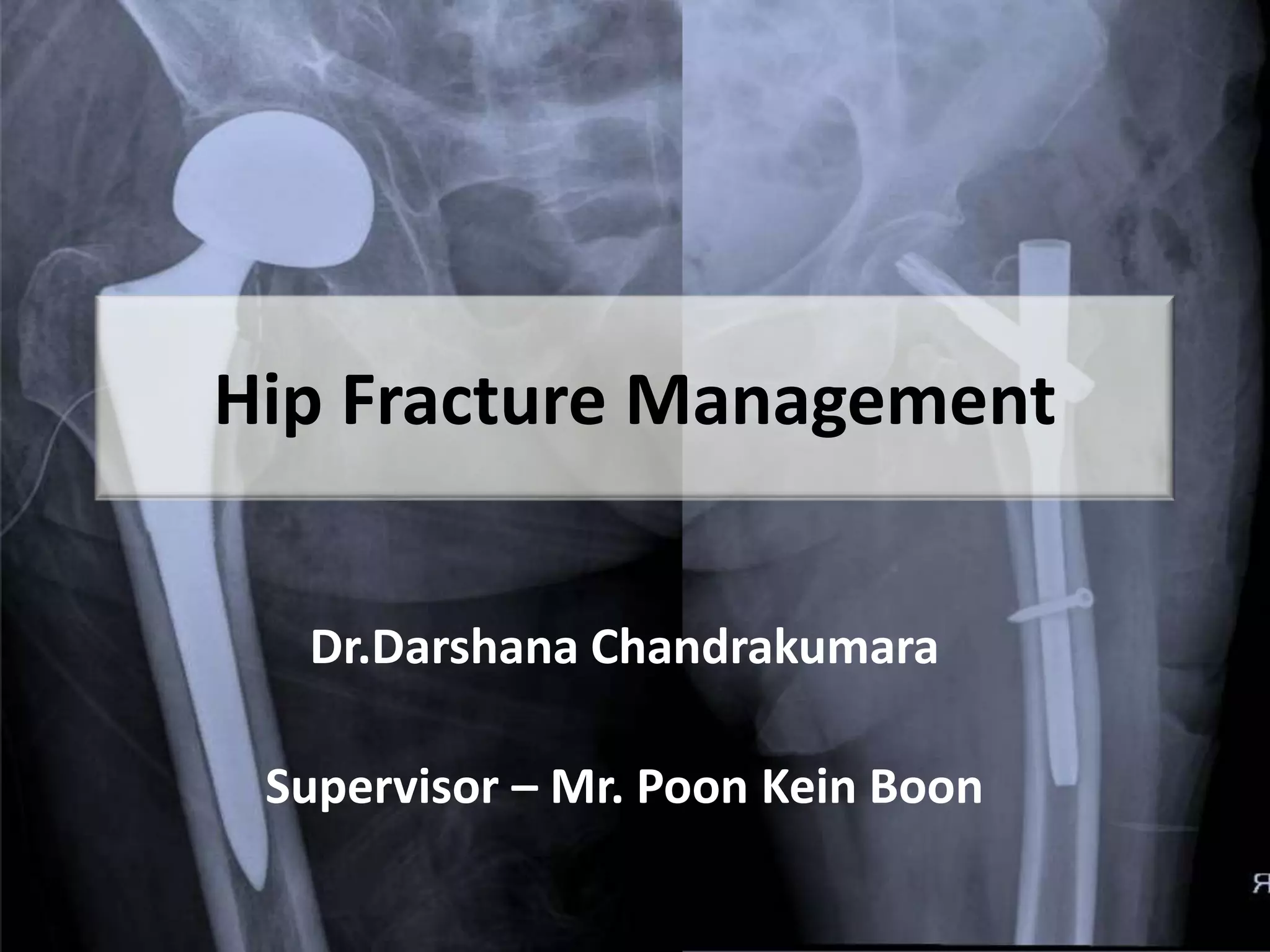



Hip Fracture Management
Dr.Darshana Chandrakumara
Supervisor – Mr. Poon Kein Boon
• The incidence of hip fractures increases with
age and consists of almost 30% of fall-related
injuries in patients aged 85 years or older.
• Early post-operative mortality is particularly
high, with reported 30-day mortality of 13.3%
• 1 year mortality of 23.8%
No more a surgical disease
• Management of patients with hip fracture is
complex and involves a wide multidisciplinary
approach across many different boundaries.
• Ambulance services
• Emergency department,
• Orthopaedic surgeons
• Geriatricians
• Acute services including operating theatre and ICU
• Rehabilitation services
• End-of-life care
• Social services
• Health services in the community
Key recommendations
1. Transport to hospital
2. Assessment in the emergency department
3. Physician or orthogeriatrician input
4. Timing of surgery
5. Anaesthetic management
6. Surgical management
7. Early mobilisation
8. Rehabilitation
9. Discharge
10.Post discharge management
1. Transport to hospital
• As quickly as possible
• If necessary pain releif
– IV opioid or entanox
• If long journey consider catheter
Communication on admission
• History and examination findings
• Concurrent medical condition and relevant
past medical history
• Current drug therapy
• Pre-morbid functional state, particularly
mobility
• Pre-morbid cognitive function
• Social circumstances and whether the patient
has a carer
2. Early assessment in ED or ward
• Hydration and nutrition
• Pain
• Core body temperature
• Continence
• Coexisting medical problems
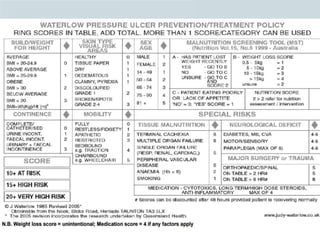
• Pressure sore risk
• Mental state AMT
• Patients should be transferred to the ward within
two hours of their arrival in the emergency
department.
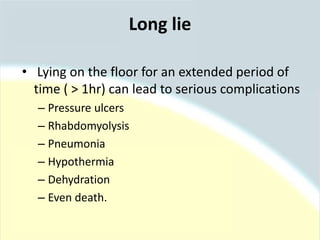
Long lie
• Lying on the floor for an extended period of
time ( > 1hr) can lead to serious complications
– Pressure ulcers
– Rhabdomyolysis
– Pneumonia
– Hypothermia
– Dehydration
– Even death.
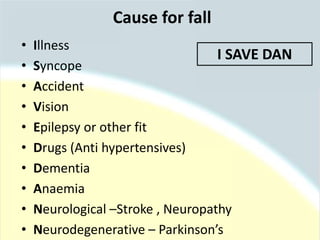
Cause for fall
• Illness
• Syncope
• Accident
• Vision
• Epilepsy or other fit
• Drugs (Anti hypertensives)
• Dementia
• Anaemia
• Neurological –Stroke , Neuropathy
• Neurodegenerative – Parkinson’s
I SAVE DAN
• Analgesia
• Hydration
• Pressure point care
– Patients judged to be at very high risk of pressure
sores should ideally be nursed on a large-cell,
alternating-pressure air mattress or similar
pressure-decreasing surface.
• Instigate early radiology
• MRI is the investigation of choice where there
is doubt regarding the diagnosis.
Immediate management
Analgesia
• Assess the patient's pain:
– immediately upon presentation at hospital
including people with cognitive impairment, and
– within 30 minutes of administering initial
analgesia, and
– hourly until settled on the ward, and
– regularly as part of routine nursing observations
throughout admission.
Analgesia
• TWO – Paracetamol 6hrly regular
–Opioid (Tramadol/ Oxynorm/Morphin)
• Ensure analgesia is sufficient to allow
movements necessary for investigations and
for nursing care and rehabilitation.
• NSAIDs are not recommended.
• Consider nerve blocks if pain relief still
insufficient
Patient information and support
• Offer (patients and family) verbal and printed
information about:
• Diagnosis
• Choice of anaesthesia
• Choice of analgesia and other medications
• Surgical procedures
• Possible complications
• Postoperative care
• Rehabilitation programme
• Long-term outcomes
• Healthcare professionals involved.
3. Physician or orthogeriatrician input
• All patients presenting with a fragility fracture
should be managed on an orthopaedic ward
with routine access to acute orthogeriatric
medical support.
• Studies reported a reduction in length of stay
• Showed no significant difference in inpatient
mortality and twelve month mortality.
Local policy
• IV fluid – NS 1L/day
• 2 analgesics regular – Para/Tram
• 2 Laxatives regular – Lactulose /senna
• Dulolax suppo if BNO x 2 days
• Fleet if BNO x 3 days or incomplete BO
• Calcium+VitD 2 tab Om for all
• Ergocalciferol weekly 8 doses if Vit D <30ug/L
• BMD if not done in past 1-2 yrs
4. Timing of surgery
• Aim op within 48hrs
• Chasing unrealistic medical goals should not
lead to delay.
– For example, it may not be appropriate to delay
surgery because of infective pulmonary
conditions, as real improvement is unlikely in the
presence of continued immobility and pain.
Local policy
• Hip fracture is an urgency and not an emergency.
• 48 hrs mean if patient is stable.
• If patient is unstable time starts when the patient
is deemed stable.
• Last patient goes to theatre by 5 pm.
• Can cross 48 hours if it is better for the patient.
• Geriatrician cover – international agreed standard
• Withholding warfarin combined with administration of
oral or intravenous vitamin K is recommended if reversal
of the anticoagulant effects of warfarin to permit earlier
surgery is deemed appropriate.
• low-dose vitamin K (1-2.5 mg) administered either
intravenously (IV) or orally, partially reverses the
anticoagulant effect of warfarin over a 24 hour period.
• The onset of reversal is quicker and change in INR value
greater in the first four hours when IV vitamin K
compared to oral.
• FFP should not be used where there is no contraindication
to the use of vitamin K.
Reversal of warfarin anticoagulation
• Surgery should not be delayed in hip fracture patients
taking antiplatelet therapy. (Aspirin, Clopidogrel,
Dipyridamole)
• Spinal or epidural anaesthesia is not recommended in
patients taking dual antiplatelet therapy.
• General anaesthesia is recommended for patients
taking dual antiplatelet therapy.
• Treatment with aspirin or dipyridamole alone does not
contraindicate spinal or epidural anaesthesia
Antiplatelet therapy
• Recommends stopping antiplatelet drugs for a
minimum of five days before elective surgery.
• When patients require emergency surgery the
recommendation is not to delay and to
transfuse platelets only in the event of
excessive surgical bleeding.
Antiplatelet therapy
• Transthoracic Echo
– Symptoms suggestive of cardiac failure
– Any new heart murmur
– No need to repeat if done within last 6months and
no change in symptoms
Preoperative cardiac investigations
• The routine use of traction (either skin or
skeletal) is not recommended prior to surgery
for a hip fracture.
• No evidence of any benefit in pain relief or
fracture reduction from the routine use of
preoperative traction.
• Cannot exclude possible advantages of
traction for specific fracture types.
Preoperative traction
• Hip fracture surgery carries a high risk of venous
thromboembolism
• Mechanical and pharmacological prophylaxis may
reduce the incidence of thrombosis.
• Heparin (UFH or LMWH) or fondaparinux may be
used for pharmacological thromboprophylaxis in
hip fracture surgery.
• Aspirin monotherapy is not recommended for
patients after hip fracture surgery.
Reducing the risk of venous thromboembolism
• Treatment of asymptomatic bacteriuria is not
appropriate in both men and women
– the organisms isolated from the urine were not
the same as those from the surgical site infection
• Treat only if symptomatic
– Uncomplicated – Ciproflox
– Complicated – IV Aug empirically
UTI
• Spinal/epidural anaesthesia should be
considered for all patients undergoing hip
fracture repair, unless contraindicated.
• Spinal or epidural anaesthesia should be
avoided in patients taking dual antiplatelet
therapy, as the risk of developing spinal
haematoma.
5. Anaesthetic management
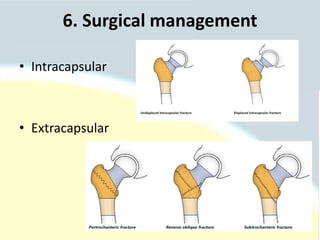
• Intracapsular
• Extracapsular
6. Surgical management
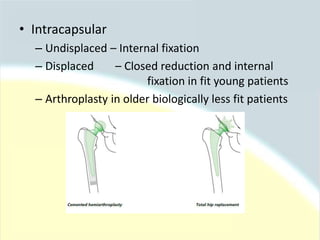
• Intracapsular
– Undisplaced – Internal fixation
– Displaced – Closed reduction and internal
fixation in fit young patients
– Arthroplasty in older biologically less fit patients
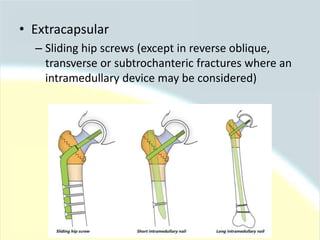
• Extracapsular
– Sliding hip screws (except in reverse oblique,
transverse or subtrochanteric fractures where an
intramedullary device may be considered)
• Pain relief – 2 regular analgesics
– Can give addon Tramadol/Oxynorm/Ketoprofen
patch
• Supplementary oxygen is recommended for at
least six hours after general or spinal/ epidural
anaesthesia, at night for 48 hours
postoperatively and for as long as hypoxaemia
persists as determined by pulse oximetry.
6. Early postoperative management
• If overall medical condition allows,
mobilisation and multidisciplinary
rehabilitation should begin within 24 hours
postoperatively.
• Weight bearing on the injured leg should be
allowed, unless there is concern about quality
of the hip fracture repair (eg poor bone stock
or comminuted fracture).
Early mobilisation
• Prevention by maintaining adequate fluid
balance and ensuring adequate pain relief.
• In women - IMC if PVRU >200ml
• In Men - IDC
Urine retention
• In general, catheterisation should be avoided,
except in
– urinary incontinence
– on a long journey
– urinary retention
– when monitoring renal/cardiac function.
• When patients are catheterised in the
postoperative period, prophylactic antibiotics
should be administered to cover the insertion
of the catheter.
Urinary catheterisation
• Acute confusional state common after a hip
fracture.
• Prevention by optimizing,
– oxygen saturation
– blood pressure
– fluid and electrolyte balance
– pain control
– medication
– bowel and bladder function
– nutritional intake
– early mobilisation
– detection and treatment of intercurrent illness
Delirium
• A multidisciplinary team should be used to
facilitate the rehabilitation process.
• The initial emphasis should be on walking and
activities of daily living (ADL)
• Supplementing the diet with high energy
protein preparations containing minerals and
vitamins should be considered.
8. Rehabilitation
• Nurse case managers assess patients on
admission, to identify those suitable for
supported discharge, to facilitate early
mobilisation and rehabilitation and arrange
appropriate support on discharge and follow
up.
• The patient should be central to discharge
planning, and their needs and appropriate
wishes taken into consideration.
9. Discharge
• TCU in 2weeks for post op patients
• TCU 4-6weeks for conservatively managed
patients
• PT is continued
• Refer falls clinic if high risk for future falls
10. Post discharge management
• Streamline and expedite the process
• For hip fracture pts over 60 years old.
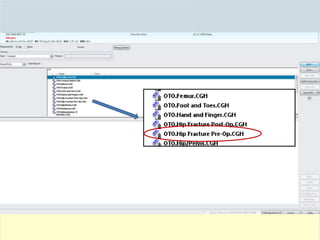
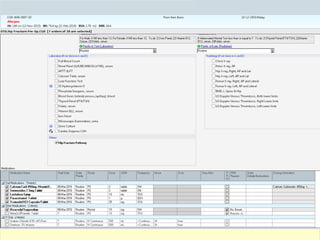
• Fill the AMT page 7
– Pre op screening checklist in page 9
– Leave blank Ortho geriatric problem list page 11
– Post op WB status and reason if NWB or PWB
(poor bone stock/comminuted fracture)
Hip fracture pathway
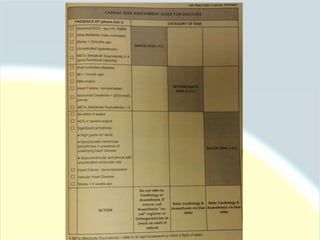
– Cardiac risk assessment guide page 45
– Clotting and analgesia guideline page 46
– Diabetic protocol page 47
– Antibiotic prohylaxis page 48
• Get enough calcium and vitamin D. Men and
women age 50 and older should consume
1,200 milligrams of calcium a day, and 600
international units of vitamin D a day.
• Exercise to strengthen bones and improve
balance.
• Avoid smoking or excessive drinking.
• Use a walking stick or walker.
Prevention of hip fracture
• Assess home for hazards. Remove throw rugs,
keep electrical cords against the wall and clear
excess furniture and anything else that could trip
you. Make sure every room and passageway is
well-lit.
• Correct poor vision
• Optimize medications
• Stand up slowly. Getting up too quickly can cause
your blood pressure to drop and make you feel
wobbly.
Prevention of hip fracture
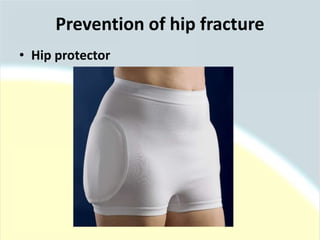
• Hip protector
Prevention of hip fracture
In summary
• IV fluid – NS 1L/day
• 2 analgesics regular – Para/Tram
• 2 Laxatives regular – Lactulose /senna
• Dulolax suppo if BNO x 2 days
• Fleet if BNO x 3 days or incomplete BO
• Calcium+VitD 2 tab Om for all
• Ergocalciferol weekly 8 doses if Vit D <30ug/L
• BMD not done in past 1-2 yrs
• Do not routinely treat asymptomatic
bacteriuria.
• Chemical DVT prophylaxis if surgery is delayed
>48hrs
• Post op FBC, RP, BMD
In summary
Hip fracture syndrome

Hip fracture syndrome

  • 1.
    Hip Fracture Management Dr.DarshanaChandrakumara Supervisor – Mr. Poon Kein Boon
  • 2.
    • The incidenceof hip fractures increases with age and consists of almost 30% of fall-related injuries in patients aged 85 years or older. • Early post-operative mortality is particularly high, with reported 30-day mortality of 13.3% • 1 year mortality of 23.8%
  • 3.
    No more asurgical disease • Management of patients with hip fracture is complex and involves a wide multidisciplinary approach across many different boundaries. • Ambulance services • Emergency department, • Orthopaedic surgeons • Geriatricians • Acute services including operating theatre and ICU • Rehabilitation services • End-of-life care • Social services • Health services in the community
  • 5.
    Key recommendations 1. Transportto hospital 2. Assessment in the emergency department 3. Physician or orthogeriatrician input 4. Timing of surgery 5. Anaesthetic management 6. Surgical management 7. Early mobilisation 8. Rehabilitation 9. Discharge 10.Post discharge management
  • 6.
    1. Transport tohospital • As quickly as possible • If necessary pain releif – IV opioid or entanox • If long journey consider catheter
  • 7.
    Communication on admission •History and examination findings • Concurrent medical condition and relevant past medical history • Current drug therapy • Pre-morbid functional state, particularly mobility • Pre-morbid cognitive function • Social circumstances and whether the patient has a carer
  • 8.
    2. Early assessmentin ED or ward • Hydration and nutrition • Pain • Core body temperature • Continence • Coexisting medical problems • Pressure sore risk • Mental state AMT • Patients should be transferred to the ward within two hours of their arrival in the emergency department.
  • 10.
    Long lie • Lyingon the floor for an extended period of time ( > 1hr) can lead to serious complications – Pressure ulcers – Rhabdomyolysis – Pneumonia – Hypothermia – Dehydration – Even death.
  • 11.
    Cause for fall •Illness • Syncope • Accident • Vision • Epilepsy or other fit • Drugs (Anti hypertensives) • Dementia • Anaemia • Neurological –Stroke , Neuropathy • Neurodegenerative – Parkinson’s I SAVE DAN
  • 12.
    • Analgesia • Hydration •Pressure point care – Patients judged to be at very high risk of pressure sores should ideally be nursed on a large-cell, alternating-pressure air mattress or similar pressure-decreasing surface. • Instigate early radiology • MRI is the investigation of choice where there is doubt regarding the diagnosis. Immediate management
  • 13.
    Analgesia • Assess thepatient's pain: – immediately upon presentation at hospital including people with cognitive impairment, and – within 30 minutes of administering initial analgesia, and – hourly until settled on the ward, and – regularly as part of routine nursing observations throughout admission.
  • 14.
    Analgesia • TWO –Paracetamol 6hrly regular –Opioid (Tramadol/ Oxynorm/Morphin) • Ensure analgesia is sufficient to allow movements necessary for investigations and for nursing care and rehabilitation. • NSAIDs are not recommended. • Consider nerve blocks if pain relief still insufficient
  • 15.
    Patient information andsupport • Offer (patients and family) verbal and printed information about: • Diagnosis • Choice of anaesthesia • Choice of analgesia and other medications • Surgical procedures • Possible complications • Postoperative care • Rehabilitation programme • Long-term outcomes • Healthcare professionals involved.
  • 16.
    3. Physician ororthogeriatrician input • All patients presenting with a fragility fracture should be managed on an orthopaedic ward with routine access to acute orthogeriatric medical support. • Studies reported a reduction in length of stay • Showed no significant difference in inpatient mortality and twelve month mortality.
  • 17.
    Local policy • IVfluid – NS 1L/day • 2 analgesics regular – Para/Tram • 2 Laxatives regular – Lactulose /senna • Dulolax suppo if BNO x 2 days • Fleet if BNO x 3 days or incomplete BO • Calcium+VitD 2 tab Om for all • Ergocalciferol weekly 8 doses if Vit D <30ug/L • BMD if not done in past 1-2 yrs
  • 18.
    4. Timing ofsurgery • Aim op within 48hrs • Chasing unrealistic medical goals should not lead to delay. – For example, it may not be appropriate to delay surgery because of infective pulmonary conditions, as real improvement is unlikely in the presence of continued immobility and pain.
  • 19.
    Local policy • Hipfracture is an urgency and not an emergency. • 48 hrs mean if patient is stable. • If patient is unstable time starts when the patient is deemed stable. • Last patient goes to theatre by 5 pm. • Can cross 48 hours if it is better for the patient. • Geriatrician cover – international agreed standard
  • 20.
    • Withholding warfarincombined with administration of oral or intravenous vitamin K is recommended if reversal of the anticoagulant effects of warfarin to permit earlier surgery is deemed appropriate. • low-dose vitamin K (1-2.5 mg) administered either intravenously (IV) or orally, partially reverses the anticoagulant effect of warfarin over a 24 hour period. • The onset of reversal is quicker and change in INR value greater in the first four hours when IV vitamin K compared to oral. • FFP should not be used where there is no contraindication to the use of vitamin K. Reversal of warfarin anticoagulation
  • 21.
    • Surgery shouldnot be delayed in hip fracture patients taking antiplatelet therapy. (Aspirin, Clopidogrel, Dipyridamole) • Spinal or epidural anaesthesia is not recommended in patients taking dual antiplatelet therapy. • General anaesthesia is recommended for patients taking dual antiplatelet therapy. • Treatment with aspirin or dipyridamole alone does not contraindicate spinal or epidural anaesthesia Antiplatelet therapy
  • 22.
    • Recommends stoppingantiplatelet drugs for a minimum of five days before elective surgery. • When patients require emergency surgery the recommendation is not to delay and to transfuse platelets only in the event of excessive surgical bleeding. Antiplatelet therapy
  • 23.
    • Transthoracic Echo –Symptoms suggestive of cardiac failure – Any new heart murmur – No need to repeat if done within last 6months and no change in symptoms Preoperative cardiac investigations
  • 25.
    • The routineuse of traction (either skin or skeletal) is not recommended prior to surgery for a hip fracture. • No evidence of any benefit in pain relief or fracture reduction from the routine use of preoperative traction. • Cannot exclude possible advantages of traction for specific fracture types. Preoperative traction
  • 26.
    • Hip fracturesurgery carries a high risk of venous thromboembolism • Mechanical and pharmacological prophylaxis may reduce the incidence of thrombosis. • Heparin (UFH or LMWH) or fondaparinux may be used for pharmacological thromboprophylaxis in hip fracture surgery. • Aspirin monotherapy is not recommended for patients after hip fracture surgery. Reducing the risk of venous thromboembolism
  • 27.
    • Treatment ofasymptomatic bacteriuria is not appropriate in both men and women – the organisms isolated from the urine were not the same as those from the surgical site infection • Treat only if symptomatic – Uncomplicated – Ciproflox – Complicated – IV Aug empirically UTI
  • 28.
    • Spinal/epidural anaesthesiashould be considered for all patients undergoing hip fracture repair, unless contraindicated. • Spinal or epidural anaesthesia should be avoided in patients taking dual antiplatelet therapy, as the risk of developing spinal haematoma. 5. Anaesthetic management
  • 29.
  • 30.
    • Intracapsular – Undisplaced– Internal fixation – Displaced – Closed reduction and internal fixation in fit young patients – Arthroplasty in older biologically less fit patients
  • 31.
    • Extracapsular – Slidinghip screws (except in reverse oblique, transverse or subtrochanteric fractures where an intramedullary device may be considered)
  • 32.
    • Pain relief– 2 regular analgesics – Can give addon Tramadol/Oxynorm/Ketoprofen patch • Supplementary oxygen is recommended for at least six hours after general or spinal/ epidural anaesthesia, at night for 48 hours postoperatively and for as long as hypoxaemia persists as determined by pulse oximetry. 6. Early postoperative management
  • 33.
    • If overallmedical condition allows, mobilisation and multidisciplinary rehabilitation should begin within 24 hours postoperatively. • Weight bearing on the injured leg should be allowed, unless there is concern about quality of the hip fracture repair (eg poor bone stock or comminuted fracture). Early mobilisation
  • 34.
    • Prevention bymaintaining adequate fluid balance and ensuring adequate pain relief. • In women - IMC if PVRU >200ml • In Men - IDC Urine retention
  • 35.
    • In general,catheterisation should be avoided, except in – urinary incontinence – on a long journey – urinary retention – when monitoring renal/cardiac function. • When patients are catheterised in the postoperative period, prophylactic antibiotics should be administered to cover the insertion of the catheter. Urinary catheterisation
  • 36.
    • Acute confusionalstate common after a hip fracture. • Prevention by optimizing, – oxygen saturation – blood pressure – fluid and electrolyte balance – pain control – medication – bowel and bladder function – nutritional intake – early mobilisation – detection and treatment of intercurrent illness Delirium
  • 37.
    • A multidisciplinaryteam should be used to facilitate the rehabilitation process. • The initial emphasis should be on walking and activities of daily living (ADL) • Supplementing the diet with high energy protein preparations containing minerals and vitamins should be considered. 8. Rehabilitation
  • 38.
    • Nurse casemanagers assess patients on admission, to identify those suitable for supported discharge, to facilitate early mobilisation and rehabilitation and arrange appropriate support on discharge and follow up. • The patient should be central to discharge planning, and their needs and appropriate wishes taken into consideration. 9. Discharge
  • 39.
    • TCU in2weeks for post op patients • TCU 4-6weeks for conservatively managed patients • PT is continued • Refer falls clinic if high risk for future falls 10. Post discharge management
  • 40.
    • Streamline andexpedite the process • For hip fracture pts over 60 years old. • Fill the AMT page 7 – Pre op screening checklist in page 9 – Leave blank Ortho geriatric problem list page 11 – Post op WB status and reason if NWB or PWB (poor bone stock/comminuted fracture) Hip fracture pathway
  • 41.
    – Cardiac riskassessment guide page 45 – Clotting and analgesia guideline page 46 – Diabetic protocol page 47 – Antibiotic prohylaxis page 48
  • 44.
    • Get enoughcalcium and vitamin D. Men and women age 50 and older should consume 1,200 milligrams of calcium a day, and 600 international units of vitamin D a day. • Exercise to strengthen bones and improve balance. • Avoid smoking or excessive drinking. • Use a walking stick or walker. Prevention of hip fracture
  • 45.
    • Assess homefor hazards. Remove throw rugs, keep electrical cords against the wall and clear excess furniture and anything else that could trip you. Make sure every room and passageway is well-lit. • Correct poor vision • Optimize medications • Stand up slowly. Getting up too quickly can cause your blood pressure to drop and make you feel wobbly. Prevention of hip fracture
  • 46.
  • 47.
    In summary • IVfluid – NS 1L/day • 2 analgesics regular – Para/Tram • 2 Laxatives regular – Lactulose /senna • Dulolax suppo if BNO x 2 days • Fleet if BNO x 3 days or incomplete BO • Calcium+VitD 2 tab Om for all • Ergocalciferol weekly 8 doses if Vit D <30ug/L • BMD not done in past 1-2 yrs
  • 48.
    • Do notroutinely treat asymptomatic bacteriuria. • Chemical DVT prophylaxis if surgery is delayed >48hrs • Post op FBC, RP, BMD In summary

Editor's Notes

  • #3 Hip fractures are a common injury in the elderly and associated with high mortality and morbidity
  • #27 adverse effect profile of LMWH is superior to UFH especially in relation to the development of heparin induced thrombocytopenia
  • #31 Patients with pre-existing joint disease, medium/high activity levels and a reasonable life expectancy, should have THR rather than hemiarthroplasty as the primary treatment.
  • #32 COMPRESSION There is limited and poor quality evidence to support the application of compression across the fracture site of a trochanteric fracture during sliding hip screw fixation.11
  • #38 Orthogeriatricians oversea PT. Every Tuesday MDM (ADL), for example, transferring, washing, dressing, and toileting. Balance and gait are essential components of mobility and are useful predictors in the assessment of functional independence.
  • #39 Patients who are mentally alert, medically well and mobile postoperatively are most likely to benefit from a supported discharge scheme,145,148,153,159 and should be identified by multidisciplinary team assessment. Such patients who have been admitted from home can be discharged directly back home, without compromising the patient’s recovery.
  • #40 As out patient PT for patients sent home and as in patient for SACH and other com hos patients.