PROTEINS
PRIMARY STRUCTURE
 Sequence of amino acids
 Polypeptide chain
Protein
SECONDARY STRUCTURE
The folding of the N-C-
C backbone of the
polypeptide chain
using weak hydrogen
bonds
Protein
SECONDARY STRUCTURE
 This produces the alpha helix and beta pleating
 The length of the helix or pleat is determined by certain
amino acids that will not participate in these structures
(e.g. proline)
Protein
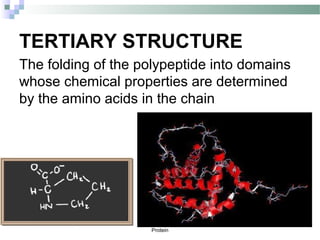
TERTIARY STRUCTURE
The folding of the polypeptide into domains
whose chemical properties are determined
by the amino acids in the chain
Protein
TERTIARY STRUCTURE
 This folding is sometimes held together by
strong covalent bonds
(e.g. cysteine-cysteine disulphide bridge)
 Bending of the chain takes place at certain
amino acids
(e.g. proline)
 Hydrophobic amino acids tend to arrange
themselves inside the molecule
 Hydrophilic amino acids arrange themselves
on the outside
Protein
QUATERNARY STRUCTURE
Some proteins are
made of several
polypeptide subunits
(e.g. haemoglobin has
four)
Protein Kinase C
Protein
QUATERNARY STRUCTURE
 These subunits fit together to form the
functional protein
 Therefore, the sequence of the amino
acids in the primary structure will influence
the protein's structure at two, three or
more levels
Protein
Protein
PROTEIN FUNCTIONS
 Protein structure determines protein
function
 Denaturation or inhibition which may
change protein structure will change its
function
 Coenzymes and cofactors in general may
enhance the protein's structure
Protein
Fibrous proteins
 Involved in structure: tendons ligaments
blood clots
(e.g. collagen and keratin)
 Contractile proteins in movement: muscle,
microtubules
(cytoskelton, mitotic spindle, cilia, flagella)
Protein
Globular proteins
 most proteins which move around (e.g.
albumen, casein in milk)
 Proteins with binding sites:
enzymes, haemoglobin, immunoglobulins,
membrane receptor sites
Protein
Proteins classified by function
 CATALYTIC: enzymes
 STORAGE: ovalbumen (in eggs), casein (in milk), zein
(in maize)
 TRANSPORT: haemoglobin
 COMMUNICATION: hormones (eg insulin) and
neurotransmitters
 CONTRACTILE: actin, myosin, dynein (in microtubules)
 PROTECTIVE: Immunoglobulin, fibrinogen, blood
clotting factors
 TOXINS: snake venom
 STRUCTURAL: cell membrane proteins, keratin (hair),
collagen
Protein
 Conjugated Proteins Yield amino acids and nonprotein
products upon hydrolysis
 Glyco- or mucoproteins : Proteins plus carbohydrates; e.g. mucin
of saliva
 Lipoproteins : Proteins plus a lipid; e.g. liporutellin of egg yolk
 Chromoproteins : Proteins plus a pigmented prosthetic group e.g.
hemoglobin, myoglobin
 Metalloproteins : Proteins plus a metal element such as iron,
magnesium, copper, or zinc; e.g. ferritin (Fe), tyrosine oxidase (Cu),
alcohol dehydrogenase (Zn).
 Nucleoproteins : Proteins plus nucleic acid; e.g. nucleohistone
 Phosphoproteins : Phosphoric acid is the prosthetic group; e.g.
Casein (milk) Protein
 Derived Proteins: Derivatives of proteins due to action of heat,
enzymes, or chemical reagents.
 Primary Derived
I. Coagulated Proteins
II. Proteans
III. Metaproteins
 Secondary Derived
Protein
 Complete protein:
A complete protein contains essential amino acids to
maintain body tissues and to promote a normal rate of growth and is
referred as having a high biological value. Examples are egg, milk and meat
(including poultry and fish) proteins wheat germ and dried yeast have a
biological value approaching that of animal source.
 Partially complete proteins:
They will maintain life, but lack sufficient amounts of some of
the essential amino acids necessary for growth. Adults under no
physiological stress can maintain satisfactory nutrition for indefinite period
when consuming sufficient amount of protein from certain cereals or
legumes- gladden of wheat.
 Totally incomplete proteins:
These type of proteins are incapable of replacing or building
new tissues and hence cannot support life and promote growth. Zein in corn
and gelatin are examples of this type.
Nutritional classification of Proteins
Protein

Protein

  • 1.
  • 2.
    PRIMARY STRUCTURE  Sequenceof amino acids  Polypeptide chain Protein
  • 3.
    SECONDARY STRUCTURE The foldingof the N-C- C backbone of the polypeptide chain using weak hydrogen bonds Protein
  • 4.
    SECONDARY STRUCTURE  Thisproduces the alpha helix and beta pleating  The length of the helix or pleat is determined by certain amino acids that will not participate in these structures (e.g. proline) Protein
  • 5.
    TERTIARY STRUCTURE The foldingof the polypeptide into domains whose chemical properties are determined by the amino acids in the chain Protein
  • 6.
    TERTIARY STRUCTURE  Thisfolding is sometimes held together by strong covalent bonds (e.g. cysteine-cysteine disulphide bridge)  Bending of the chain takes place at certain amino acids (e.g. proline)  Hydrophobic amino acids tend to arrange themselves inside the molecule  Hydrophilic amino acids arrange themselves on the outside Protein
  • 7.
    QUATERNARY STRUCTURE Some proteinsare made of several polypeptide subunits (e.g. haemoglobin has four) Protein Kinase C Protein
  • 8.
    QUATERNARY STRUCTURE  Thesesubunits fit together to form the functional protein  Therefore, the sequence of the amino acids in the primary structure will influence the protein's structure at two, three or more levels Protein
  • 9.
  • 10.
    PROTEIN FUNCTIONS  Proteinstructure determines protein function  Denaturation or inhibition which may change protein structure will change its function  Coenzymes and cofactors in general may enhance the protein's structure Protein
  • 11.
    Fibrous proteins  Involvedin structure: tendons ligaments blood clots (e.g. collagen and keratin)  Contractile proteins in movement: muscle, microtubules (cytoskelton, mitotic spindle, cilia, flagella) Protein
  • 12.
    Globular proteins  mostproteins which move around (e.g. albumen, casein in milk)  Proteins with binding sites: enzymes, haemoglobin, immunoglobulins, membrane receptor sites Protein
  • 13.
    Proteins classified byfunction  CATALYTIC: enzymes  STORAGE: ovalbumen (in eggs), casein (in milk), zein (in maize)  TRANSPORT: haemoglobin  COMMUNICATION: hormones (eg insulin) and neurotransmitters  CONTRACTILE: actin, myosin, dynein (in microtubules)  PROTECTIVE: Immunoglobulin, fibrinogen, blood clotting factors  TOXINS: snake venom  STRUCTURAL: cell membrane proteins, keratin (hair), collagen Protein
  • 14.
     Conjugated ProteinsYield amino acids and nonprotein products upon hydrolysis  Glyco- or mucoproteins : Proteins plus carbohydrates; e.g. mucin of saliva  Lipoproteins : Proteins plus a lipid; e.g. liporutellin of egg yolk  Chromoproteins : Proteins plus a pigmented prosthetic group e.g. hemoglobin, myoglobin  Metalloproteins : Proteins plus a metal element such as iron, magnesium, copper, or zinc; e.g. ferritin (Fe), tyrosine oxidase (Cu), alcohol dehydrogenase (Zn).  Nucleoproteins : Proteins plus nucleic acid; e.g. nucleohistone  Phosphoproteins : Phosphoric acid is the prosthetic group; e.g. Casein (milk) Protein
  • 15.
     Derived Proteins:Derivatives of proteins due to action of heat, enzymes, or chemical reagents.  Primary Derived I. Coagulated Proteins II. Proteans III. Metaproteins  Secondary Derived Protein
  • 16.
     Complete protein: Acomplete protein contains essential amino acids to maintain body tissues and to promote a normal rate of growth and is referred as having a high biological value. Examples are egg, milk and meat (including poultry and fish) proteins wheat germ and dried yeast have a biological value approaching that of animal source.  Partially complete proteins: They will maintain life, but lack sufficient amounts of some of the essential amino acids necessary for growth. Adults under no physiological stress can maintain satisfactory nutrition for indefinite period when consuming sufficient amount of protein from certain cereals or legumes- gladden of wheat.  Totally incomplete proteins: These type of proteins are incapable of replacing or building new tissues and hence cannot support life and promote growth. Zein in corn and gelatin are examples of this type. Nutritional classification of Proteins Protein