Subject Name : Pharmaceutical Chemistry-V
(Biochemistry)
Unit Name: Enzymes
Topic Name: Enzyme definition, Important terms
to understand enzymes
PREPRED BY :
DRx RAJVEER PRAJAPATI
ASST ; PROFERSSOR OR HOD
LUCKY HEALTHCARE MEDICAL AND GENREAL
STORE GHATKOPAR
Learning Objectives:
• Define enzymes and related terms ( active
site, apoenzyme, holoenzyme, prosthetic
group, enzyme specificity).
• Co-factor and its type.
• Introduction to activation energy.
• Describe the structure of enzymes.
• Enzyme Specificity.
Importance
• Enzymes play an important role in Metabolism, Diagnosis,
andTherapeutics.
• All biochemical reactions are enzyme catalyzed in the living
organism.
• Level of enzyme in blood are of diagnostic importance e.g. it
is a good indicator in disease such as myocardial infarction.
• Enzyme can be used therapeutically such as digestive
enzymes.
Define enzymes (Enzymes as
Biological Catalysts)
• Enzymes are proteins that increase the rate of reaction
by lowering the energy of activation
• They catalyze nearly all the chemical reactions taking
place in the cells of the body.
• Not altered or consumed during reaction.
• Reusable
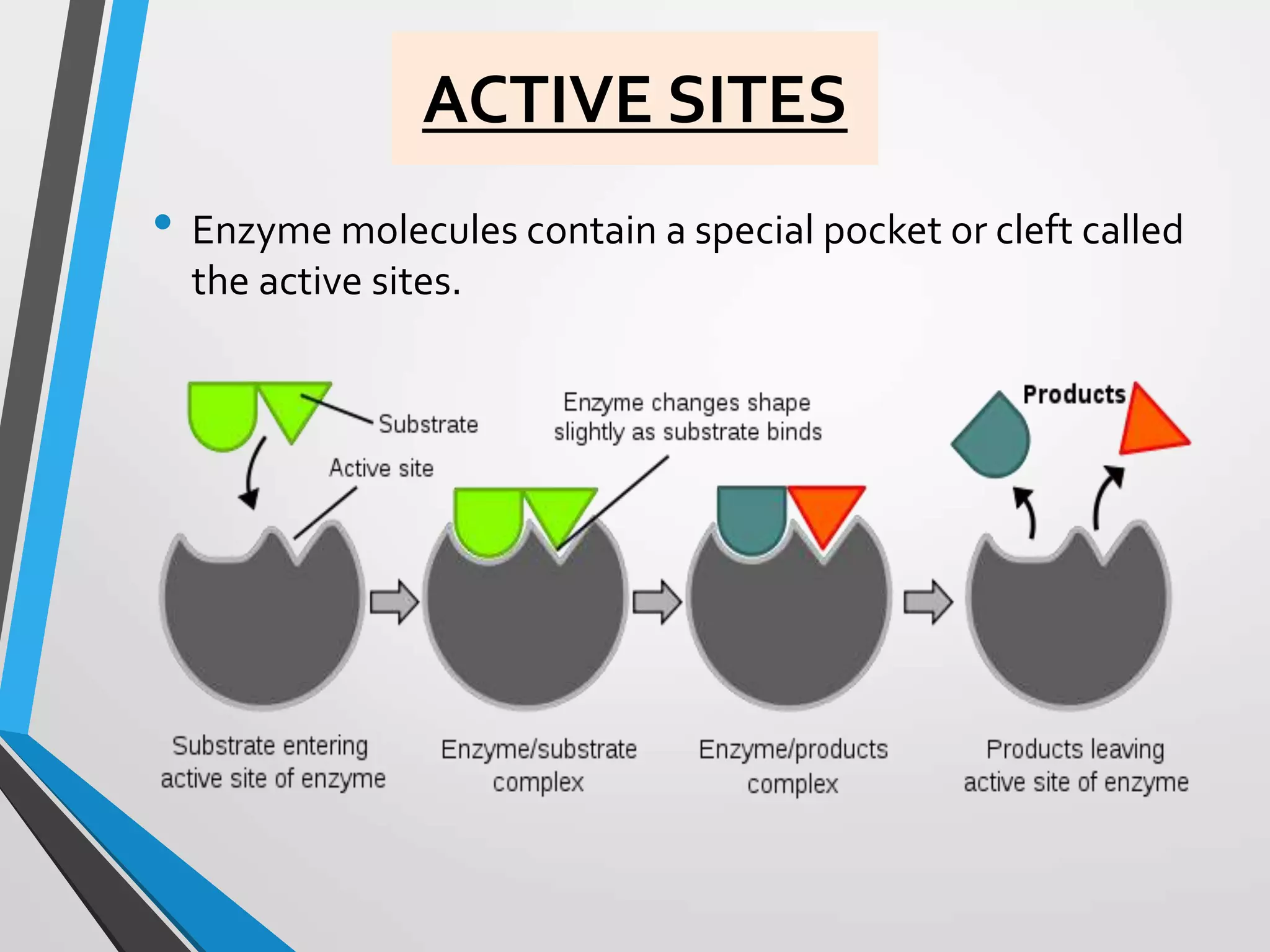
ACTIVE SITES
• Enzyme molecules contain a special pocket or cleft called
the active sites.
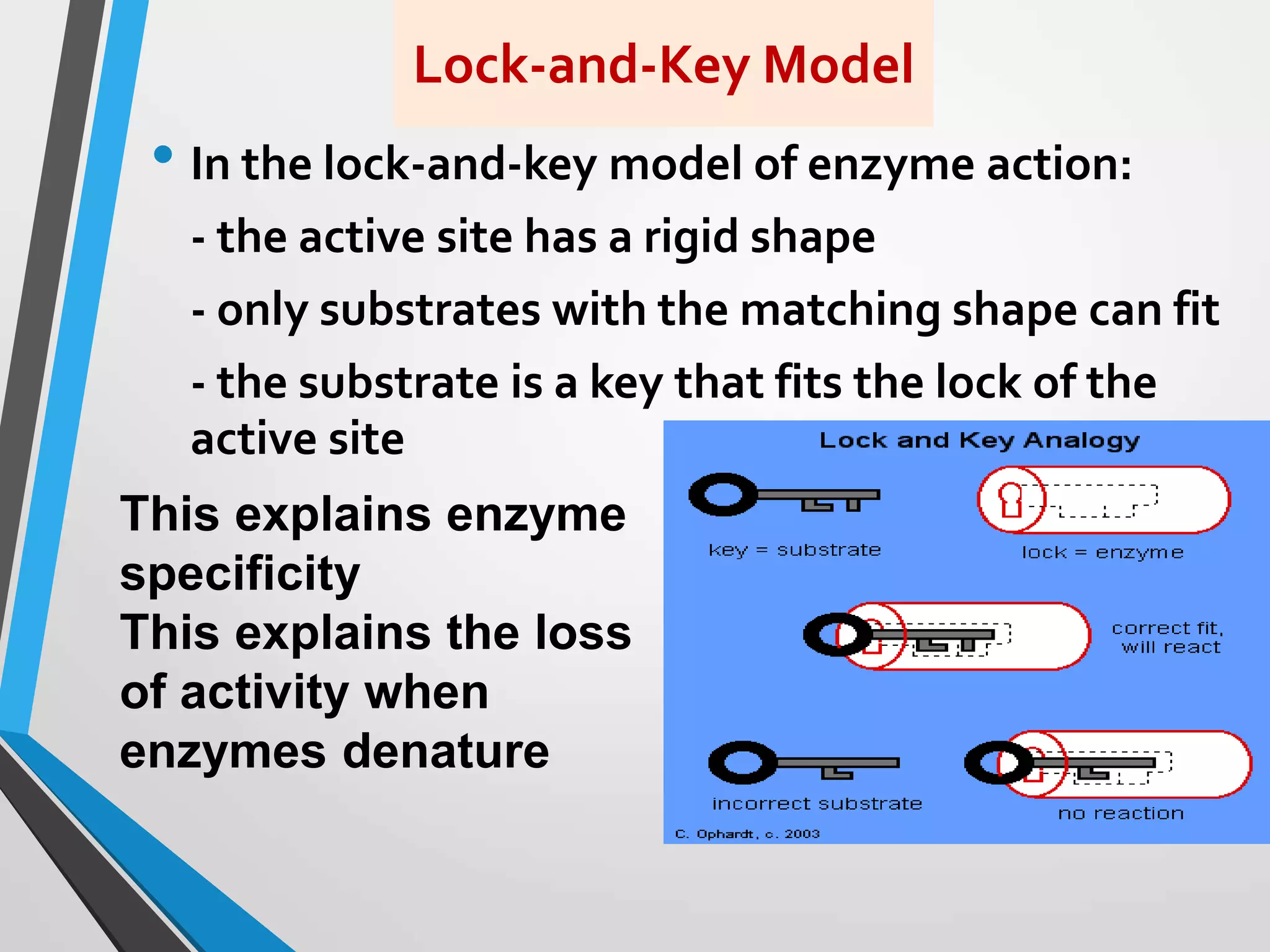
Lock-and-Key Model
• In the lock-and-key model of enzyme action:
- the active site has a rigid shape
- only substrates with the matching shape can fit
- the substrate is a key that fits the lock of the
active site
This explains enzyme
specificity
This explains the loss
of activity when
enzymes denature
APOENZYME and HOLOENZYME
• The enzyme without its non protein moiety is
termed as apoenzyme and it is inactive.
• Holoenzyme is an active enzyme with its non
protein component.
Cofactor:
•A cofactor is a non-protein chemical
compound that is bound (either tightly or
loosely) to an enzyme and is required for
catalysis.
•Types of Cofactors:
• Coenzymes.
• Prosthetic groups.
Types of Cofactors
• Coenzyme:
The non-protein component, loosely bound to apoenzyme
by non-covalent bond.
• Examples : vitamins or compound derived from vitamins.
• Prosthetic group
The non-protein component, tightly bound to the
apoenzyme by covalent bonds is called a Prosthetic group.
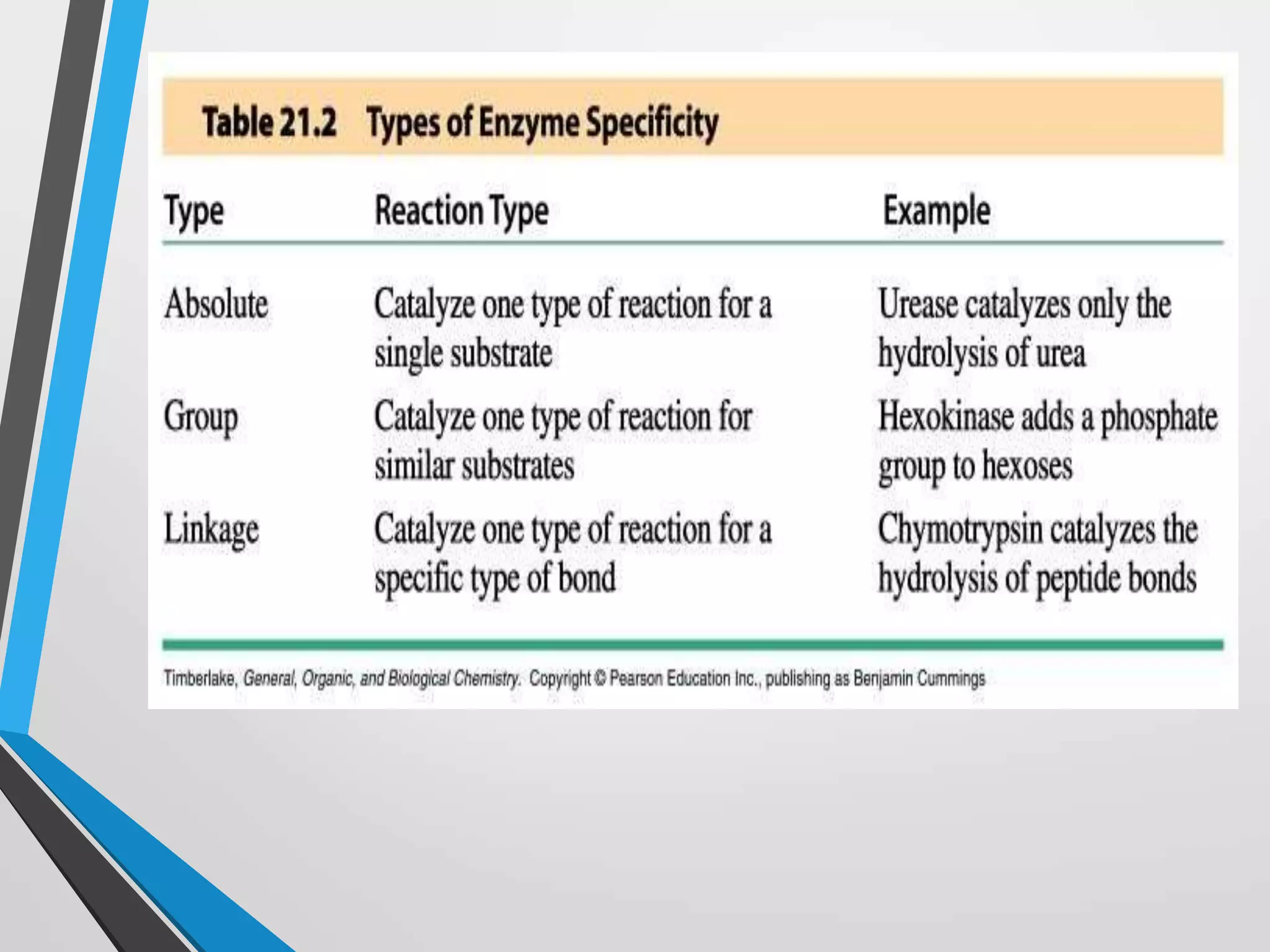
Enzyme Specificity
• Enzymes have varying degrees of specificity for substrates
• Enzymes may recognize and catalyze:
- a single substrate
- a group of similar substrates
- a particular type of bond
ImportantTerms to Understand Biochemical Nature
And Activity of Enzymes
Activation energy or Energy of Activation:
• All chemical reactions require some amount of energy to get them
started.
OR
• It is First push to start reaction.
This energy is called activation energy.
Reference
1. Harpers review of biochemistry – Martin
2. Text book of biochemistry – D.Satyanarayana
3. Principles of biochemistry -- Lehninger
4. Text book of biochemistry -- Ramarao
5. biology.tutorvista.com/biomolecules/enzymes.html
6. www.scienceclarified.com/Vol 3/Enzymes

ENZYMES, TYPE OF ENZYME, ENZYME SPECIFICITY INTRODUTION

  • 1.
    Subject Name :Pharmaceutical Chemistry-V (Biochemistry) Unit Name: Enzymes Topic Name: Enzyme definition, Important terms to understand enzymes PREPRED BY : DRx RAJVEER PRAJAPATI ASST ; PROFERSSOR OR HOD LUCKY HEALTHCARE MEDICAL AND GENREAL STORE GHATKOPAR
  • 2.
    Learning Objectives: • Defineenzymes and related terms ( active site, apoenzyme, holoenzyme, prosthetic group, enzyme specificity). • Co-factor and its type. • Introduction to activation energy. • Describe the structure of enzymes. • Enzyme Specificity.
  • 3.
    Importance • Enzymes playan important role in Metabolism, Diagnosis, andTherapeutics. • All biochemical reactions are enzyme catalyzed in the living organism. • Level of enzyme in blood are of diagnostic importance e.g. it is a good indicator in disease such as myocardial infarction. • Enzyme can be used therapeutically such as digestive enzymes.
  • 4.
    Define enzymes (Enzymesas Biological Catalysts) • Enzymes are proteins that increase the rate of reaction by lowering the energy of activation • They catalyze nearly all the chemical reactions taking place in the cells of the body. • Not altered or consumed during reaction. • Reusable
  • 5.
    ACTIVE SITES • Enzymemolecules contain a special pocket or cleft called the active sites.
  • 6.
    Lock-and-Key Model • Inthe lock-and-key model of enzyme action: - the active site has a rigid shape - only substrates with the matching shape can fit - the substrate is a key that fits the lock of the active site This explains enzyme specificity This explains the loss of activity when enzymes denature
  • 7.
    APOENZYME and HOLOENZYME •The enzyme without its non protein moiety is termed as apoenzyme and it is inactive. • Holoenzyme is an active enzyme with its non protein component.
  • 8.
    Cofactor: •A cofactor isa non-protein chemical compound that is bound (either tightly or loosely) to an enzyme and is required for catalysis. •Types of Cofactors: • Coenzymes. • Prosthetic groups.
  • 9.
    Types of Cofactors •Coenzyme: The non-protein component, loosely bound to apoenzyme by non-covalent bond. • Examples : vitamins or compound derived from vitamins. • Prosthetic group The non-protein component, tightly bound to the apoenzyme by covalent bonds is called a Prosthetic group.
  • 10.
    Enzyme Specificity • Enzymeshave varying degrees of specificity for substrates • Enzymes may recognize and catalyze: - a single substrate - a group of similar substrates - a particular type of bond
  • 12.
    ImportantTerms to UnderstandBiochemical Nature And Activity of Enzymes Activation energy or Energy of Activation: • All chemical reactions require some amount of energy to get them started. OR • It is First push to start reaction. This energy is called activation energy.
  • 13.
    Reference 1. Harpers reviewof biochemistry – Martin 2. Text book of biochemistry – D.Satyanarayana 3. Principles of biochemistry -- Lehninger 4. Text book of biochemistry -- Ramarao 5. biology.tutorvista.com/biomolecules/enzymes.html 6. www.scienceclarified.com/Vol 3/Enzymes