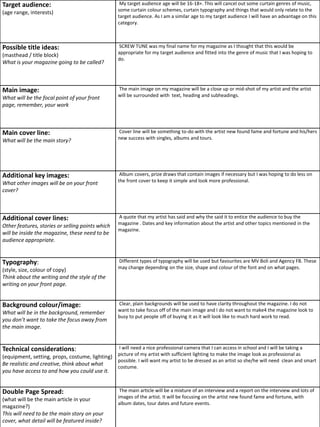
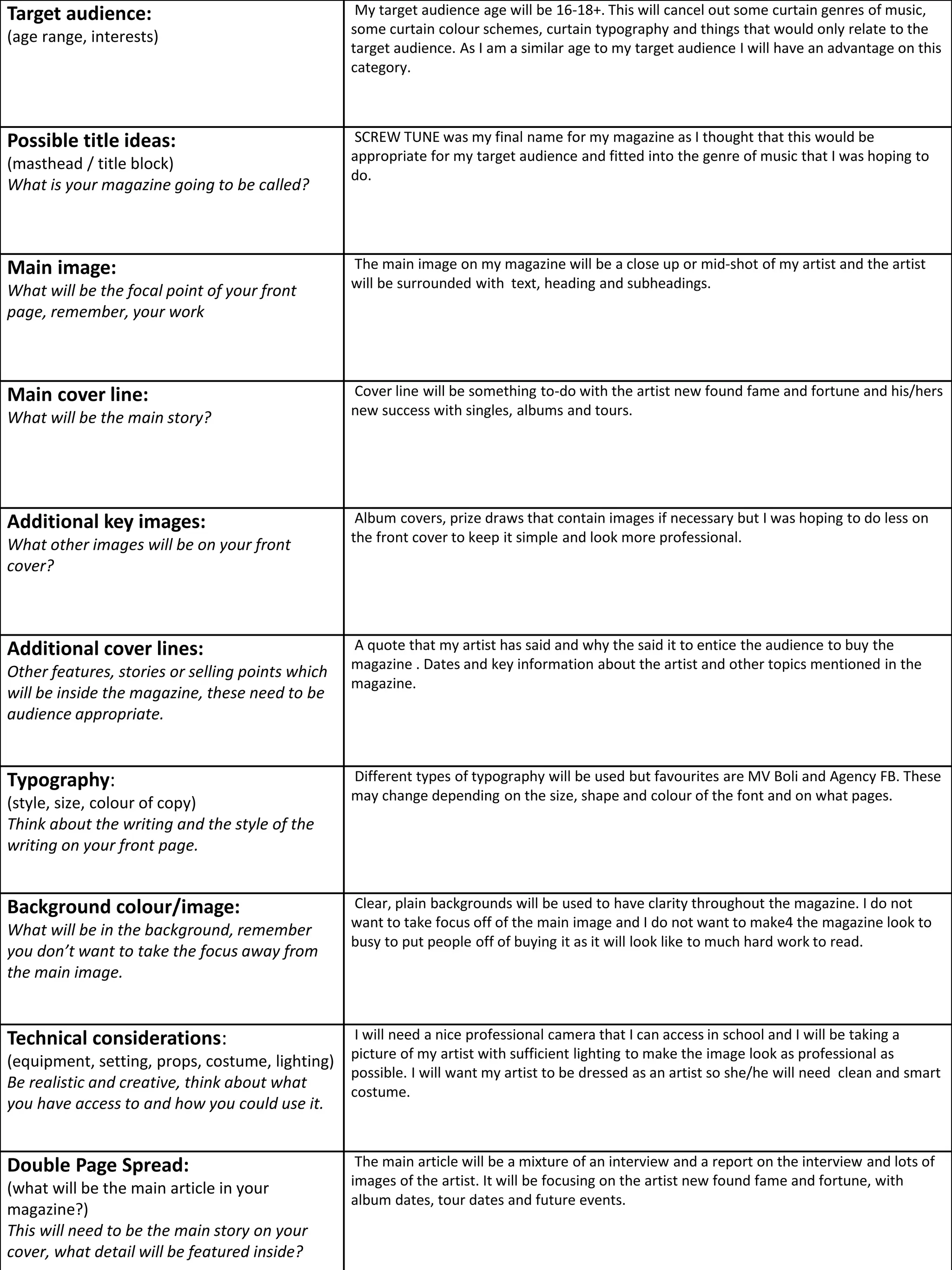
Target audience: 
(age range, interests) 
My target audience age will be 16-18+. This will cancel out some curtain genres of music, 
some curtain colour schemes, curtain typography and things that would only relate to the 
target audience. As I am a similar age to my target audience I will have an advantage on this 
category. 
Possible title ideas: 
(masthead / title block) 
What is your magazine going to be called? 
SCREWTUNE was my final name for my magazine as I thought that this would be 
appropriate for my target audience and fitted into the genre of music that I was hoping to 
do. 
Main image: 
What will be the focal point of your front 
page, remember, your work 
The main image on my magazine will be a close up or mid-shot of my artist and the artist 
will be surrounded with text, heading and subheadings. 
Main cover line: 
What will be the main story? 
Cover line will be something to-do with the artist new found fame and fortune and his/hers 
new success with singles, albums and tours. 
Additional key images: 
What other images will be on your front 
cover? 
Album covers, prize draws that contain images if necessary but I was hoping to do less on 
the front cover to keep it simple and look more professional. 
Additional cover lines: 
Other features, stories or selling points which 
will be inside the magazine, these need to be 
audience appropriate. 
A quote that my artist has said and why the said it to entice the audience to buy the 
magazine . Dates and key information about the artist and other topics mentioned in the 
magazine. 
Typography: 
(style, size, colour of copy) 
Think about the writing and the style of the 
writing on your front page. 
Different types of typography will be used but favourites are MV Boli and Agency FB. These 
may change depending on the size, shape and colour of the font and on what pages. 
Background colour/image: 
What will be in the background, remember 
you don’t want to take the focus away from 
the main image. 
Clear, plain backgrounds will be used to have clarity throughout the magazine. I do not 
want to take focus off of the main image and I do not want to make4 the magazine look to 
busy to put people off of buying it as it will look like to much hard work to read. 
Technical considerations: 
(equipment, setting, props, costume, lighting) 
Be realistic and creative, think about what 
you have access to and how you could use it. 
I will need a nice professional camera that I can access in school and I will be taking a 
picture of my artist with sufficient lighting to make the image look as professional as 
possible. I will want my artist to be dressed as an artist so she/he will need clean and smart 
costume. 
Double Page Spread: 
(what will be the main article in your 
magazine?) 
This will need to be the main story on your 
cover, what detail will be featured inside? 
The main article will be a mixture of an interview and a report on the interview and lots of 
images of the artist. It will be focusing on the artist new found fame and fortune, with 
album dates, tour dates and future events.

Proposal form

  • 1.
    Target audience: (agerange, interests) My target audience age will be 16-18+. This will cancel out some curtain genres of music, some curtain colour schemes, curtain typography and things that would only relate to the target audience. As I am a similar age to my target audience I will have an advantage on this category. Possible title ideas: (masthead / title block) What is your magazine going to be called? SCREWTUNE was my final name for my magazine as I thought that this would be appropriate for my target audience and fitted into the genre of music that I was hoping to do. Main image: What will be the focal point of your front page, remember, your work The main image on my magazine will be a close up or mid-shot of my artist and the artist will be surrounded with text, heading and subheadings. Main cover line: What will be the main story? Cover line will be something to-do with the artist new found fame and fortune and his/hers new success with singles, albums and tours. Additional key images: What other images will be on your front cover? Album covers, prize draws that contain images if necessary but I was hoping to do less on the front cover to keep it simple and look more professional. Additional cover lines: Other features, stories or selling points which will be inside the magazine, these need to be audience appropriate. A quote that my artist has said and why the said it to entice the audience to buy the magazine . Dates and key information about the artist and other topics mentioned in the magazine. Typography: (style, size, colour of copy) Think about the writing and the style of the writing on your front page. Different types of typography will be used but favourites are MV Boli and Agency FB. These may change depending on the size, shape and colour of the font and on what pages. Background colour/image: What will be in the background, remember you don’t want to take the focus away from the main image. Clear, plain backgrounds will be used to have clarity throughout the magazine. I do not want to take focus off of the main image and I do not want to make4 the magazine look to busy to put people off of buying it as it will look like to much hard work to read. Technical considerations: (equipment, setting, props, costume, lighting) Be realistic and creative, think about what you have access to and how you could use it. I will need a nice professional camera that I can access in school and I will be taking a picture of my artist with sufficient lighting to make the image look as professional as possible. I will want my artist to be dressed as an artist so she/he will need clean and smart costume. Double Page Spread: (what will be the main article in your magazine?) This will need to be the main story on your cover, what detail will be featured inside? The main article will be a mixture of an interview and a report on the interview and lots of images of the artist. It will be focusing on the artist new found fame and fortune, with album dates, tour dates and future events.