Presentation on Properties of Fabric
Presented by
Supervisor
Farhana Afroz
Sr. Lecturer
Dept. of Textile Engineering
Name ID
Md Shah Paran 110300161
Md Kamrul 120100180
Md Tarek Hasan 110300140
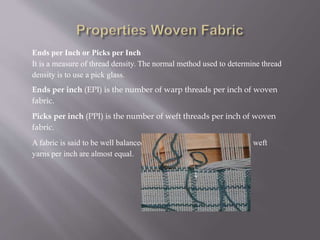
Ends per Inch or Picks per Inch
It is a measure of thread density. The normal method used to determine thread
density is to use a pick glass.
Ends per inch (EPI) is the number of warp threads per inch of woven
fabric.
Picks per inch (PPI) is the number of weft threads per inch of woven
fabric.
A fabric is said to be well balanced if the number of warp yarns and weft
yarns per inch are almost equal.
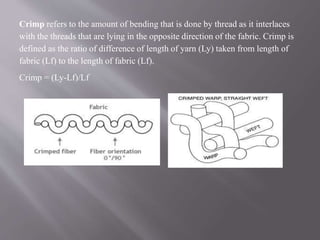
Crimp refers to the amount of bending that is done by thread as it interlaces
with the threads that are lying in the opposite direction of the fabric. Crimp is
defined as the ratio of difference of length of yarn (Ly) taken from length of
fabric (Lf) to the length of fabric (Lf).
Crimp = (Ly-Lf)/Lf
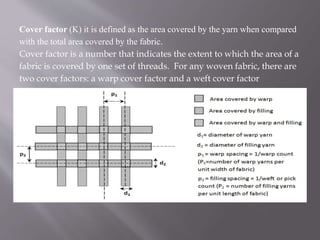
Cover factor (K) it is defined as the area covered by the yarn when compared
with the total area covered by the fabric.
Cover factor is a number that indicates the extent to which the area of a
fabric is covered by one set of threads. For any woven fabric, there are
two cover factors: a warp cover factor and a weft cover factor
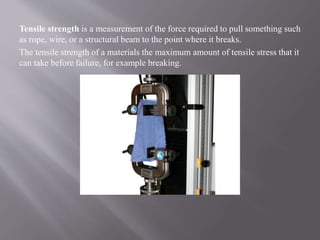
Tensile strength is a measurement of the force required to pull something such
as rope, wire, or a structural beam to the point where it breaks.
The tensile strength of a materials the maximum amount of tensile stress that it
can take before failure, for example breaking.
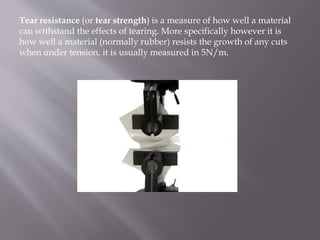
Tear resistance (or tear strength) is a measure of how well a material
can withstand the effects of tearing. More specifically however it is
how well a material (normally rubber) resists the growth of any cuts
when under tension, it is usually measured in 5N/m.
Stiffness is the rigidity of an object — the extent to which it resists deformation
in response to an applied force. The complementary concept is flexibility or
pliability: the more flexible an object is, the less stiff it is.
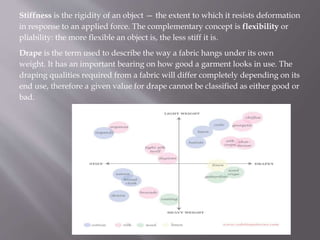
Drape is the term used to describe the way a fabric hangs under its own
weight. It has an important bearing on how good a garment looks in use. The
draping qualities required from a fabric will differ completely depending on its
end use, therefore a given value for drape cannot be classified as either good or
bad.
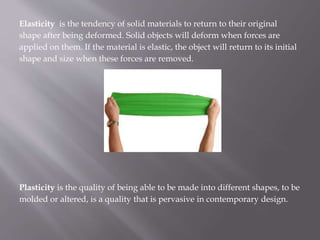
Elasticity is the tendency of solid materials to return to their original
shape after being deformed. Solid objects will deform when forces are
applied on them. If the material is elastic, the object will return to its initial
shape and size when these forces are removed.
Plasticity is the quality of being able to be made into different shapes, to be
molded or altered, is a quality that is pervasive in contemporary design.
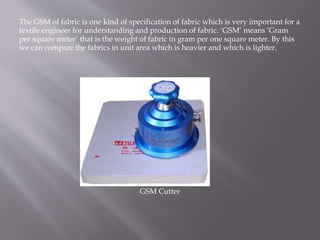
The GSM of fabric is one kind of specification of fabric which is very important for a
textile engineer for understanding and production of fabric. ‘GSM’ means ‘Gram
per square meter’ that is the weight of fabric in gram per one square meter. By this
we can compare the fabrics in unit area which is heavier and which is lighter.
GSM Cutter
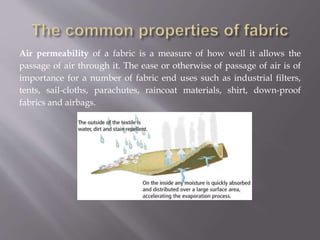
Air permeability of a fabric is a measure of how well it allows the
passage of air through it. The ease or otherwise of passage of air is of
importance for a number of fabric end uses such as industrial filters,
tents, sail-cloths, parachutes, raincoat materials, shirt, down-proof
fabrics and airbags.
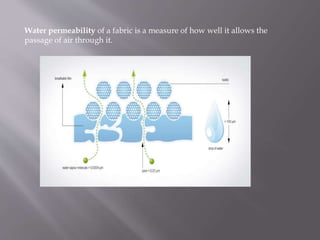
Water permeability of a fabric is a measure of how well it allows the
passage of air through it.
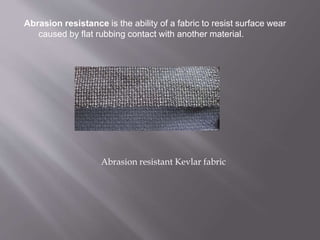
Abrasion resistance is the ability of a fabric to resist surface wear
caused by flat rubbing contact with another material.
Abrasion resistant Kevlar fabric
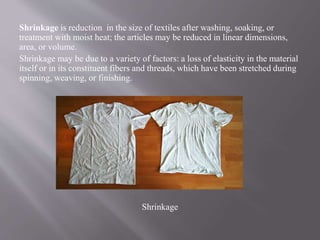
Shrinkage is reduction in the size of textiles after washing, soaking, or
treatment with moist heat; the articles may be reduced in linear dimensions,
area, or volume.
Shrinkage may be due to a variety of factors: a loss of elasticity in the material
itself or in its constituent fibers and threads, which have been stretched during
spinning, weaving, or finishing.
Shrinkage
Creases are a fold in a fabric introduced unintentionally.
Crease resistance is the ability of a material to resist, or recover from,
creasing. Crease recovery is a specific measurement of crease resistance
that determines the crease recovery angle. It is therefore a quantitative
method of analysis.
crease resistant silk crepe
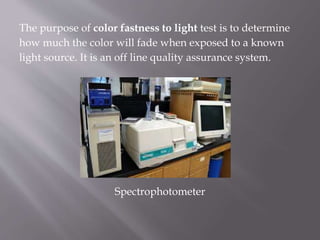
The purpose of color fastness to light test is to determine
how much the color will fade when exposed to a known
light source. It is an off line quality assurance system.
Spectrophotometer
Wash fastness is the resistance of a material to change in any of its color
characteristics, when subjected to washing is called fastness to washing.
Wash fastness of fabric
The color fastness to perspiration (acid and alkaline) shall be at
least level 3-4 (color change and staining). This criterion does not
apply to white products, to products that are neither dyed nor
printed, to furniture fabrics, curtains or similar textiles intended
for interior decoration
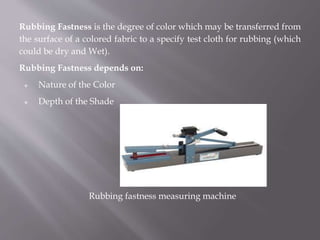
Rubbing Fastness is the degree of color which may be transferred from
the surface of a colored fabric to a specify test cloth for rubbing (which
could be dry and Wet).
Rubbing Fastness depends on:
 Nature of the Color
 Depth of the Shade
Rubbing fastness measuring machine
References
www.textileschool.com
Wikipedia
www.textilelearner.blogspot.com
Thank You all

Properties of fabric

  • 1.
    Presentation on Propertiesof Fabric Presented by Supervisor Farhana Afroz Sr. Lecturer Dept. of Textile Engineering Name ID Md Shah Paran 110300161 Md Kamrul 120100180 Md Tarek Hasan 110300140
  • 2.
    Ends per Inchor Picks per Inch It is a measure of thread density. The normal method used to determine thread density is to use a pick glass. Ends per inch (EPI) is the number of warp threads per inch of woven fabric. Picks per inch (PPI) is the number of weft threads per inch of woven fabric. A fabric is said to be well balanced if the number of warp yarns and weft yarns per inch are almost equal.
  • 3.
    Crimp refers tothe amount of bending that is done by thread as it interlaces with the threads that are lying in the opposite direction of the fabric. Crimp is defined as the ratio of difference of length of yarn (Ly) taken from length of fabric (Lf) to the length of fabric (Lf). Crimp = (Ly-Lf)/Lf
  • 4.
    Cover factor (K)it is defined as the area covered by the yarn when compared with the total area covered by the fabric. Cover factor is a number that indicates the extent to which the area of a fabric is covered by one set of threads. For any woven fabric, there are two cover factors: a warp cover factor and a weft cover factor
  • 5.
    Tensile strength isa measurement of the force required to pull something such as rope, wire, or a structural beam to the point where it breaks. The tensile strength of a materials the maximum amount of tensile stress that it can take before failure, for example breaking.
  • 6.
    Tear resistance (ortear strength) is a measure of how well a material can withstand the effects of tearing. More specifically however it is how well a material (normally rubber) resists the growth of any cuts when under tension, it is usually measured in 5N/m.
  • 7.
    Stiffness is therigidity of an object — the extent to which it resists deformation in response to an applied force. The complementary concept is flexibility or pliability: the more flexible an object is, the less stiff it is. Drape is the term used to describe the way a fabric hangs under its own weight. It has an important bearing on how good a garment looks in use. The draping qualities required from a fabric will differ completely depending on its end use, therefore a given value for drape cannot be classified as either good or bad.
  • 9.
    Elasticity is thetendency of solid materials to return to their original shape after being deformed. Solid objects will deform when forces are applied on them. If the material is elastic, the object will return to its initial shape and size when these forces are removed. Plasticity is the quality of being able to be made into different shapes, to be molded or altered, is a quality that is pervasive in contemporary design.
  • 10.
    The GSM offabric is one kind of specification of fabric which is very important for a textile engineer for understanding and production of fabric. ‘GSM’ means ‘Gram per square meter’ that is the weight of fabric in gram per one square meter. By this we can compare the fabrics in unit area which is heavier and which is lighter. GSM Cutter
  • 11.
    Air permeability ofa fabric is a measure of how well it allows the passage of air through it. The ease or otherwise of passage of air is of importance for a number of fabric end uses such as industrial filters, tents, sail-cloths, parachutes, raincoat materials, shirt, down-proof fabrics and airbags.
  • 12.
    Water permeability ofa fabric is a measure of how well it allows the passage of air through it.
  • 13.
    Abrasion resistance isthe ability of a fabric to resist surface wear caused by flat rubbing contact with another material. Abrasion resistant Kevlar fabric
  • 14.
    Shrinkage is reductionin the size of textiles after washing, soaking, or treatment with moist heat; the articles may be reduced in linear dimensions, area, or volume. Shrinkage may be due to a variety of factors: a loss of elasticity in the material itself or in its constituent fibers and threads, which have been stretched during spinning, weaving, or finishing. Shrinkage
  • 15.
    Creases are afold in a fabric introduced unintentionally. Crease resistance is the ability of a material to resist, or recover from, creasing. Crease recovery is a specific measurement of crease resistance that determines the crease recovery angle. It is therefore a quantitative method of analysis. crease resistant silk crepe
  • 16.
    The purpose ofcolor fastness to light test is to determine how much the color will fade when exposed to a known light source. It is an off line quality assurance system. Spectrophotometer
  • 17.
    Wash fastness isthe resistance of a material to change in any of its color characteristics, when subjected to washing is called fastness to washing. Wash fastness of fabric
  • 18.
    The color fastnessto perspiration (acid and alkaline) shall be at least level 3-4 (color change and staining). This criterion does not apply to white products, to products that are neither dyed nor printed, to furniture fabrics, curtains or similar textiles intended for interior decoration
  • 19.
    Rubbing Fastness isthe degree of color which may be transferred from the surface of a colored fabric to a specify test cloth for rubbing (which could be dry and Wet). Rubbing Fastness depends on:  Nature of the Color  Depth of the Shade Rubbing fastness measuring machine
  • 20.
  • 21.