Project based learning
Integrating 21st Century
Skills
PBL
ions
• Includes significant multi disciplinary content, from standards and key
concepts from curriculum.
•Real life is problem based learning
•PBL is not new but began with Socrates
•Begins with driving questions or problems leading to an extended
inquiry process. It has to be carefully planned and managed.
•Students collaborate, communicate and express themselves.
Use higher order thinking skills and experimentation
• Finally authentic products/presentations are constructed and
showcased.
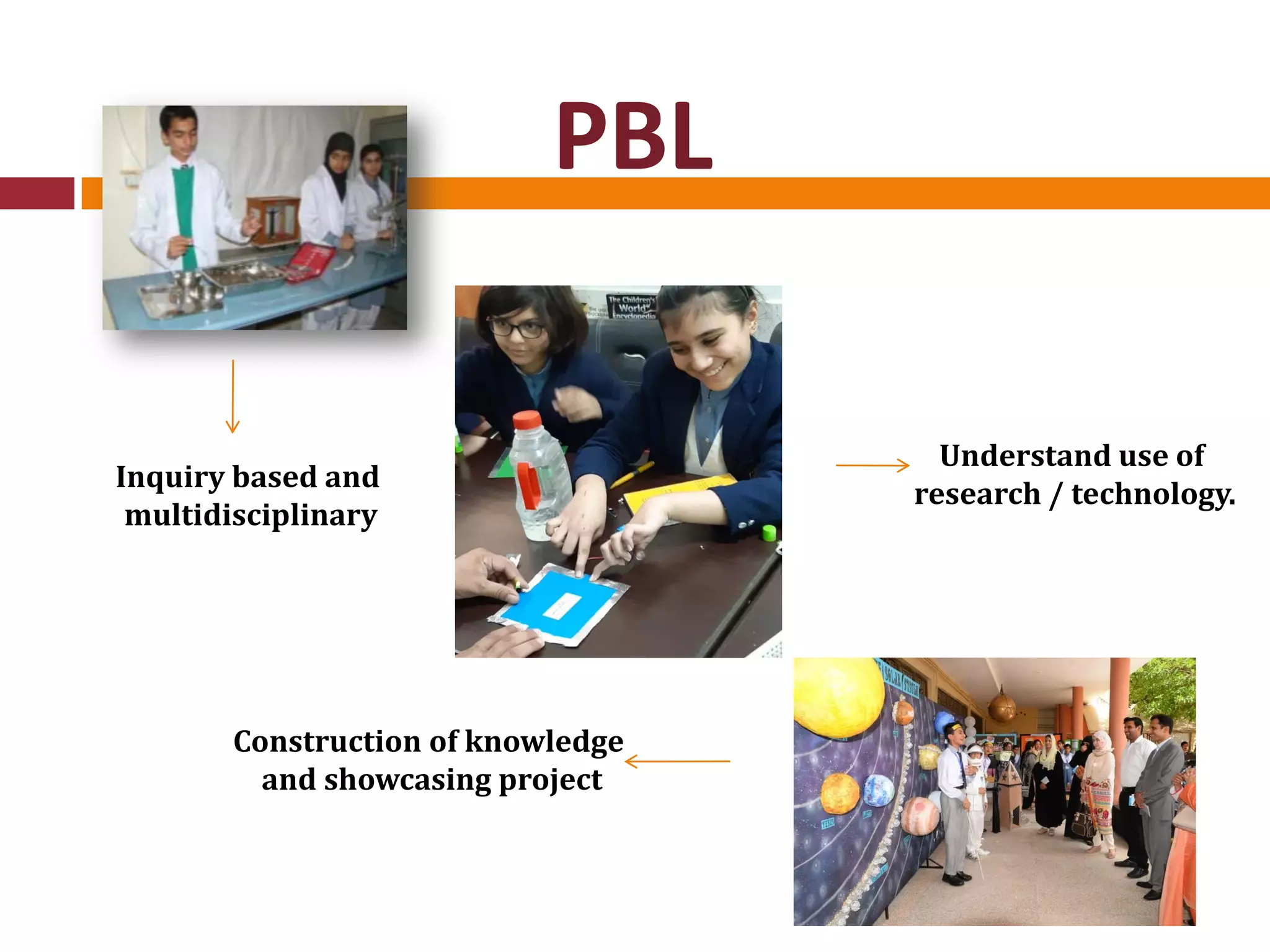
Inquiry based and
multidisciplinary
Understand use of
research / technology.
Construction of knowledge
and showcasing project
PBL
Life is Project Based Learning
What is PBL?
Video 1 Play
What is PBL?
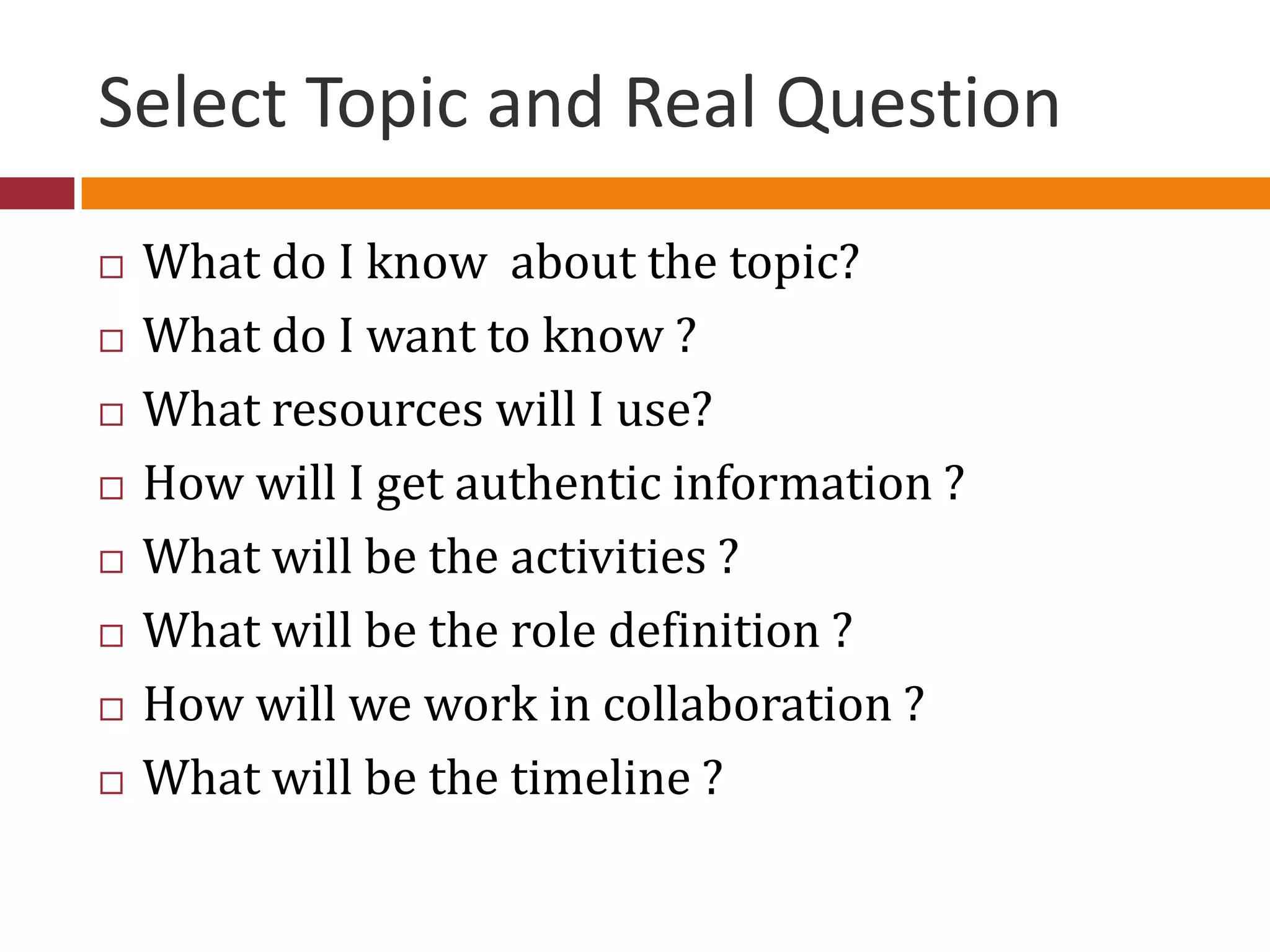
Select Topic and Real Question
 What do I know about the topic?
 What do I want to know ?
 What resources will I use?
 How will I get authentic information ?
 What will be the activities ?
 What will be the role definition ?
 How will we work in collaboration ?
 What will be the timeline ?
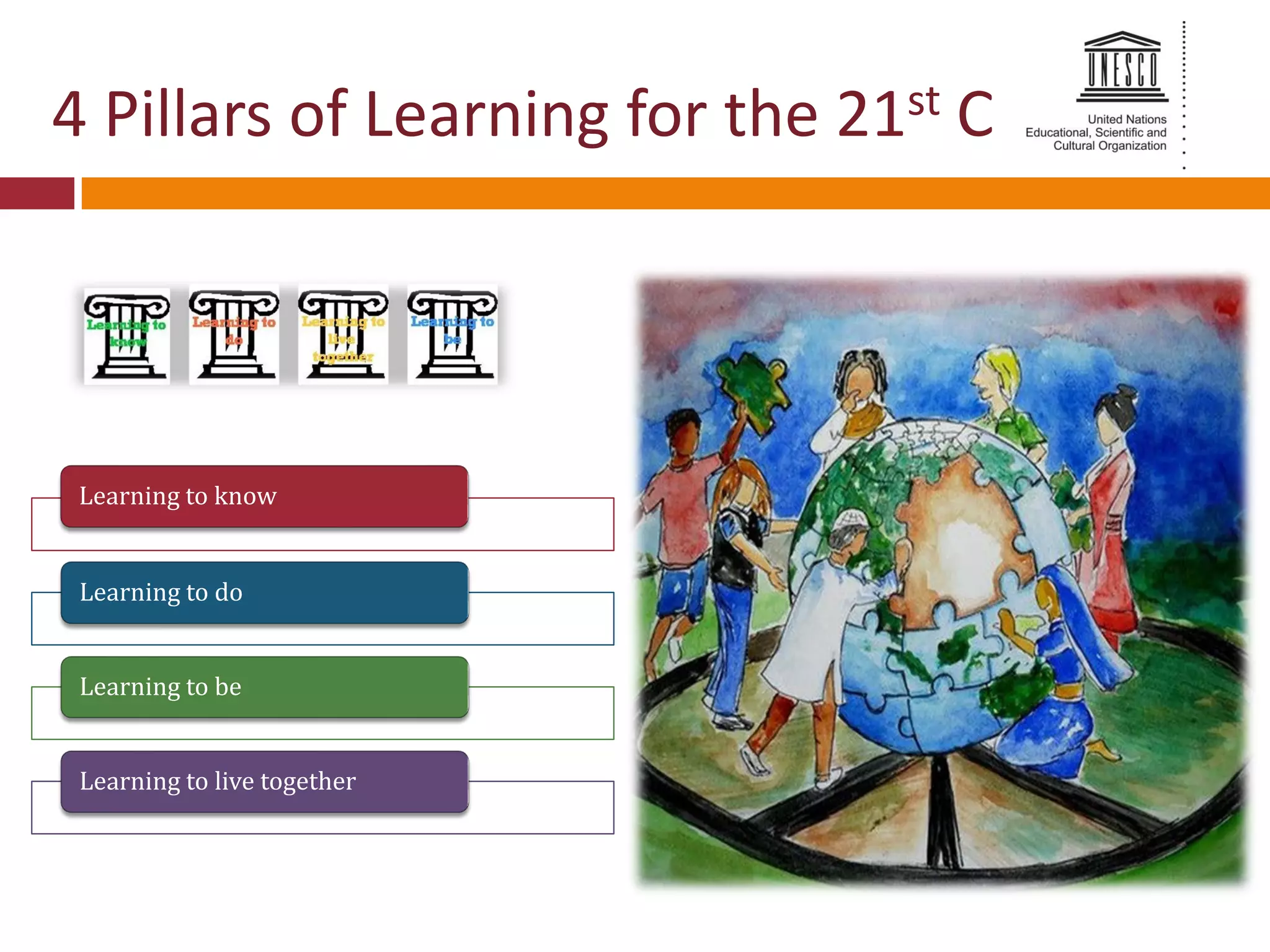
Learning to know
Learning to do
Learning to be
Learning to live together
4 Pillars of Learning for the 21st C
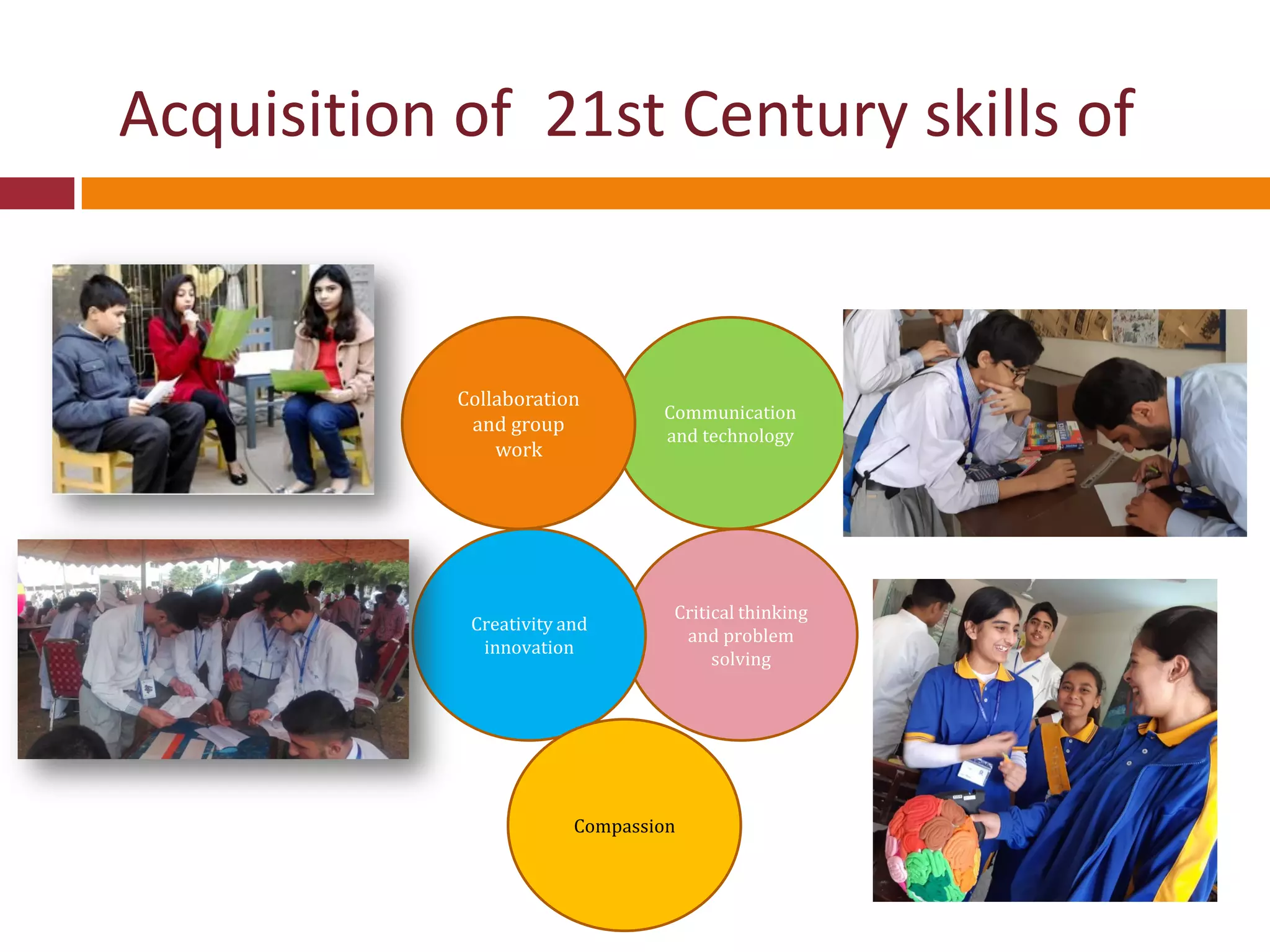
Communication
and technology
Collaboration
and group
work
Critical thinking
and problem
solving
Creativity and
innovation
Acquisition of 21st Century skills of
Compassion
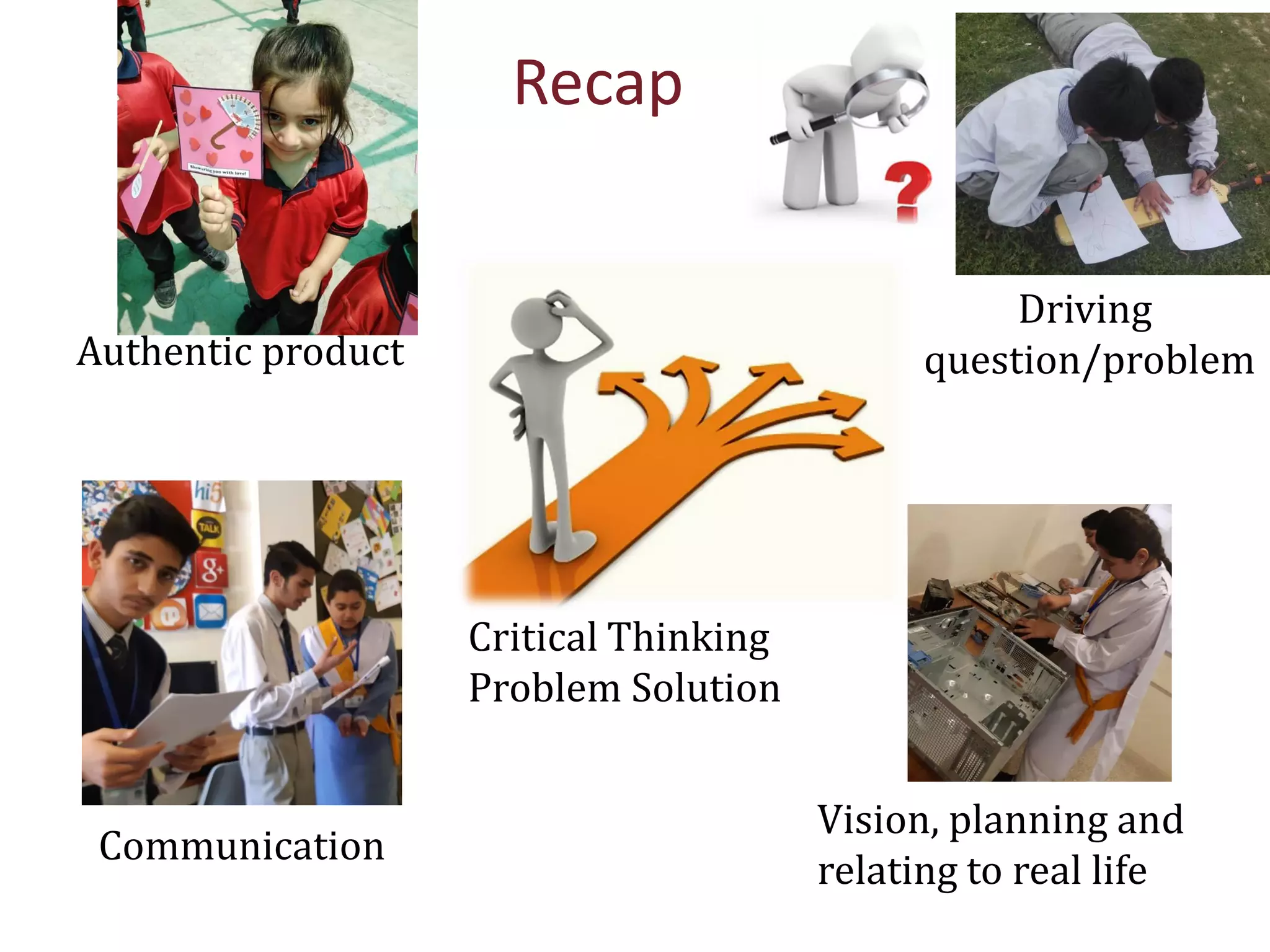
Critical Thinking
Problem Solution
Vision, planning and
relating to real life
Authentic product
Communication
Driving
question/problem
Recap
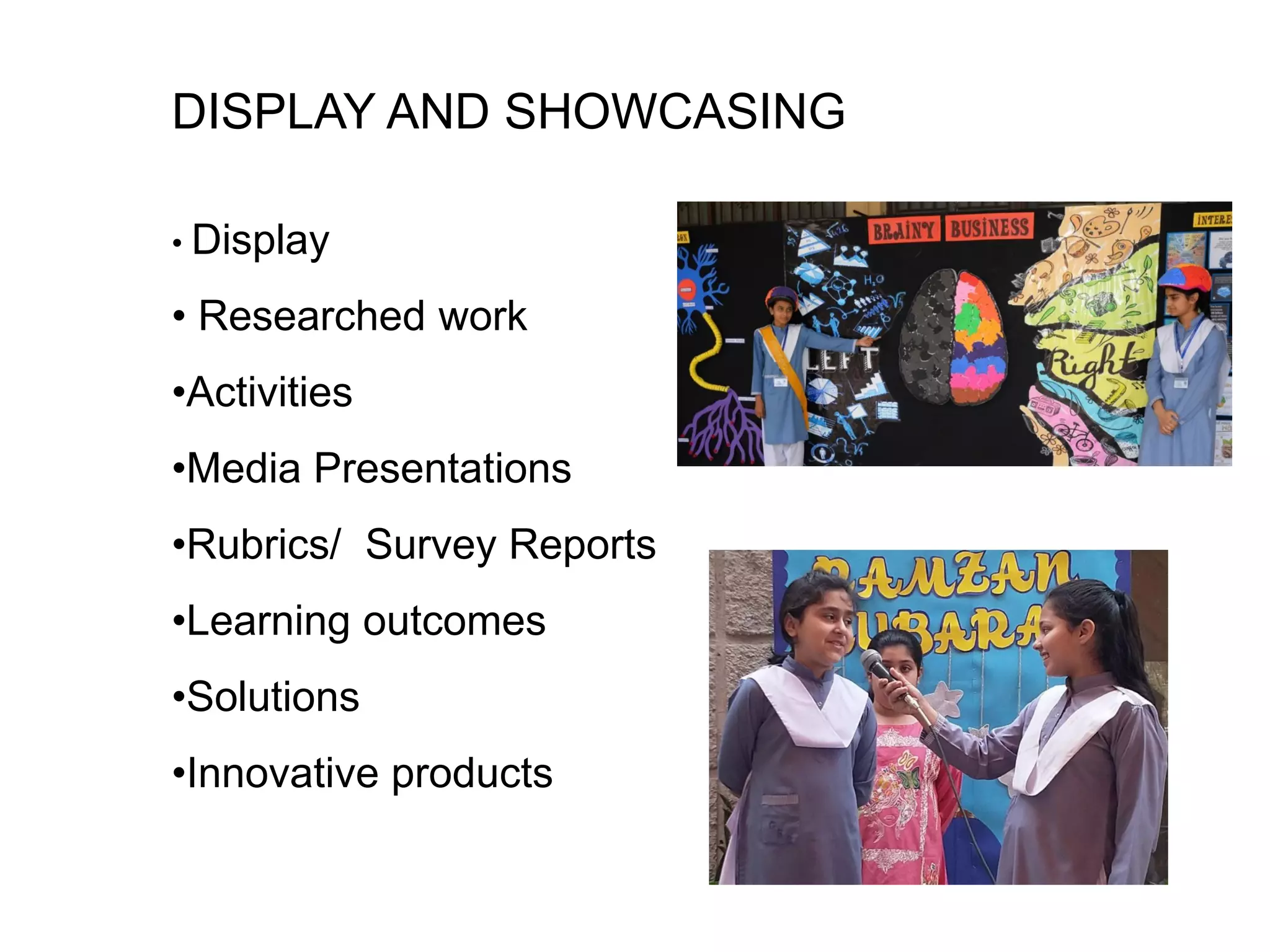
DISPLAY AND SHOWCASING
• Display
• Researched work
•Activities
•Media Presentations
•Rubrics/ Survey Reports
•Learning outcomes
•Solutions
•Innovative products
PBL is central to 21st Century
instruction
.
The project is not a traditional activity,
PBL is the main course not dessert.
Digestion explained
.
Play video 2
SIX SIMPLE STEPS
INTEGRATING TECHNOLOGY
INTO
PROJECT BASED LEARNING
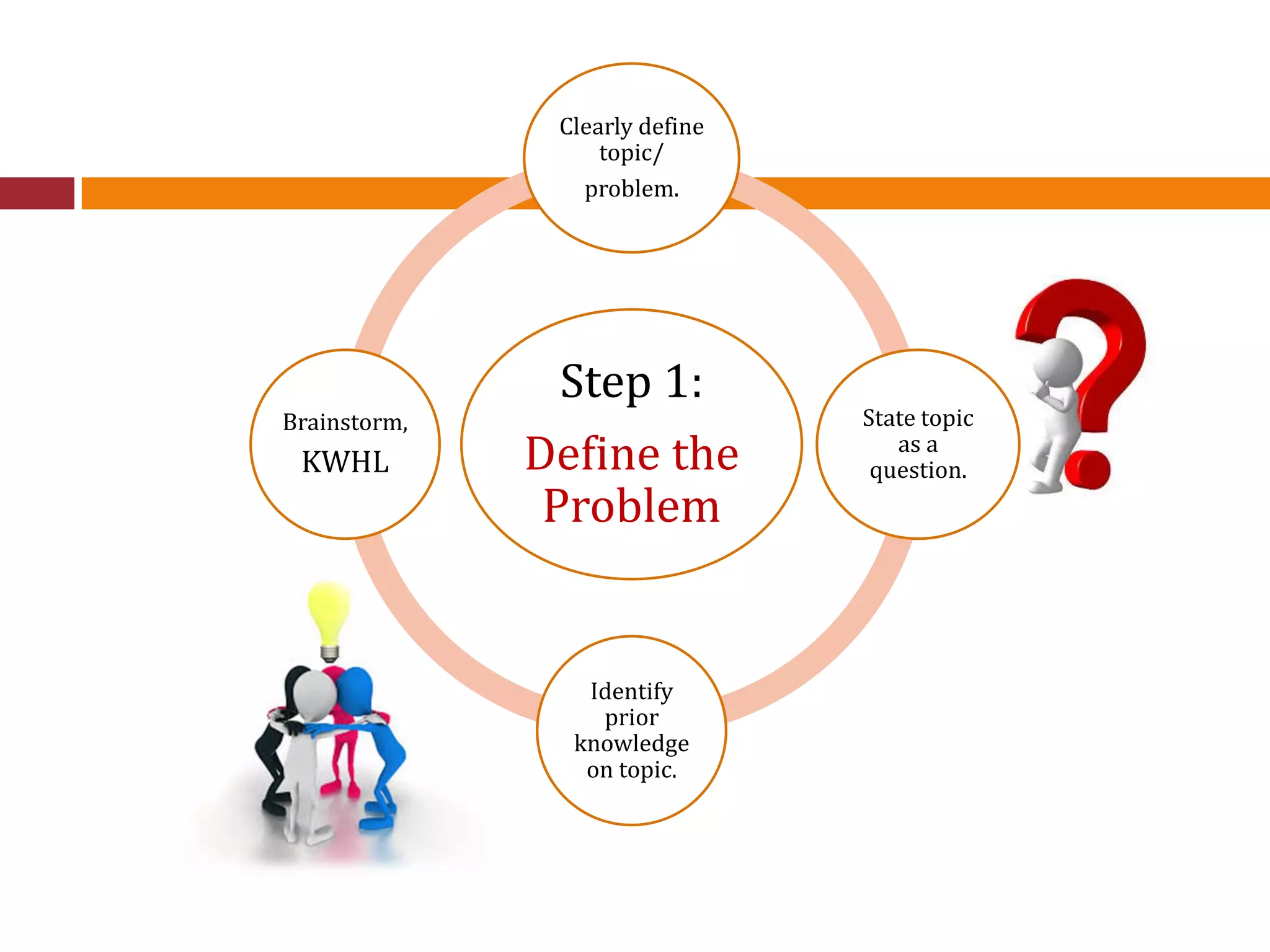
Step 1:
Define the
Problem
Clearly define
topic/
problem.
State topic
as a
question.
Identify
prior
knowledge
on topic.
Brainstorm,
KWHL
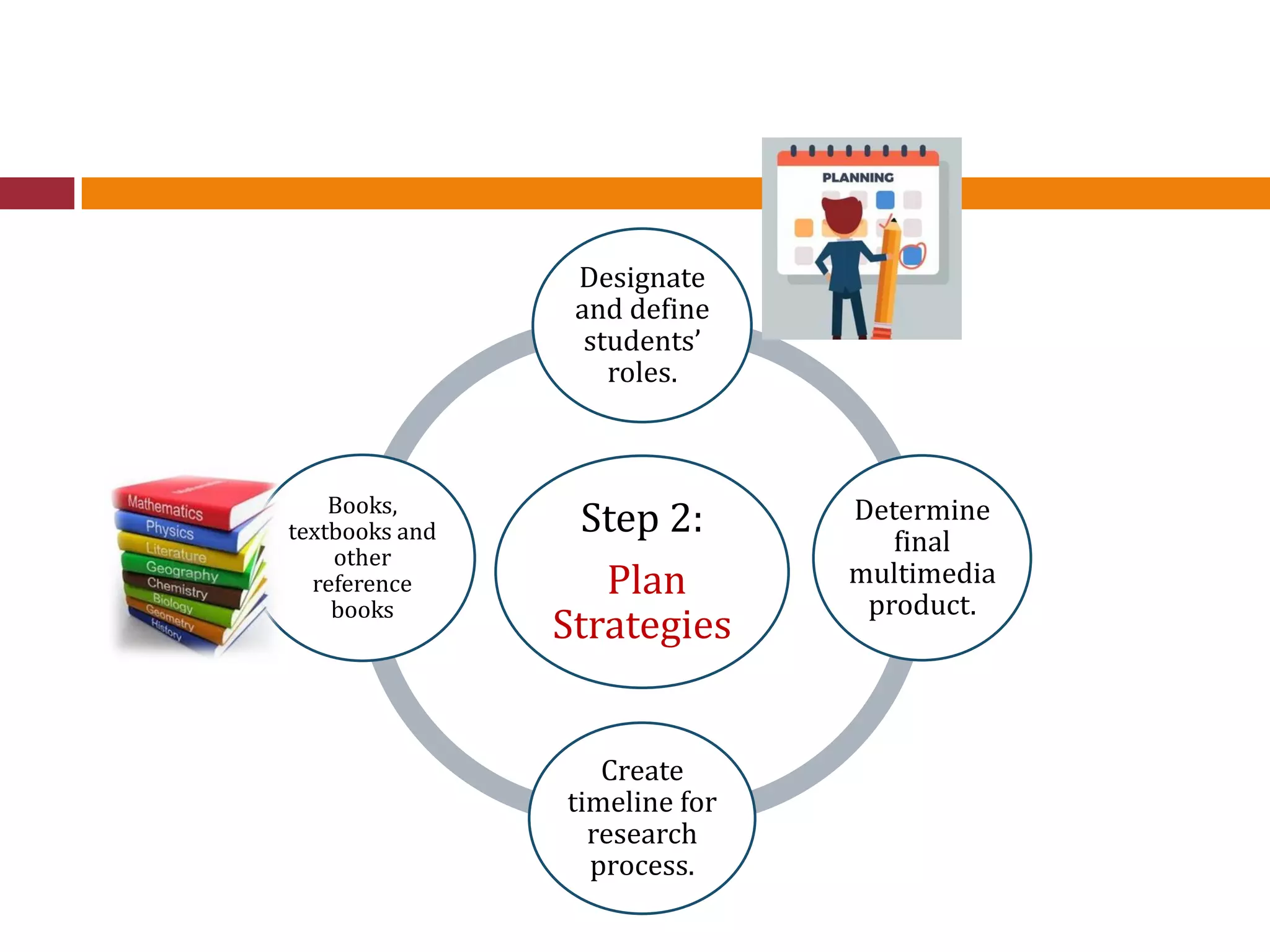
Step 2:
Plan
Strategies
Designate
and define
students’
roles.
Determine
final
multimedia
product.
Create
timeline for
research
process.
Books,
textbooks and
other
reference
books
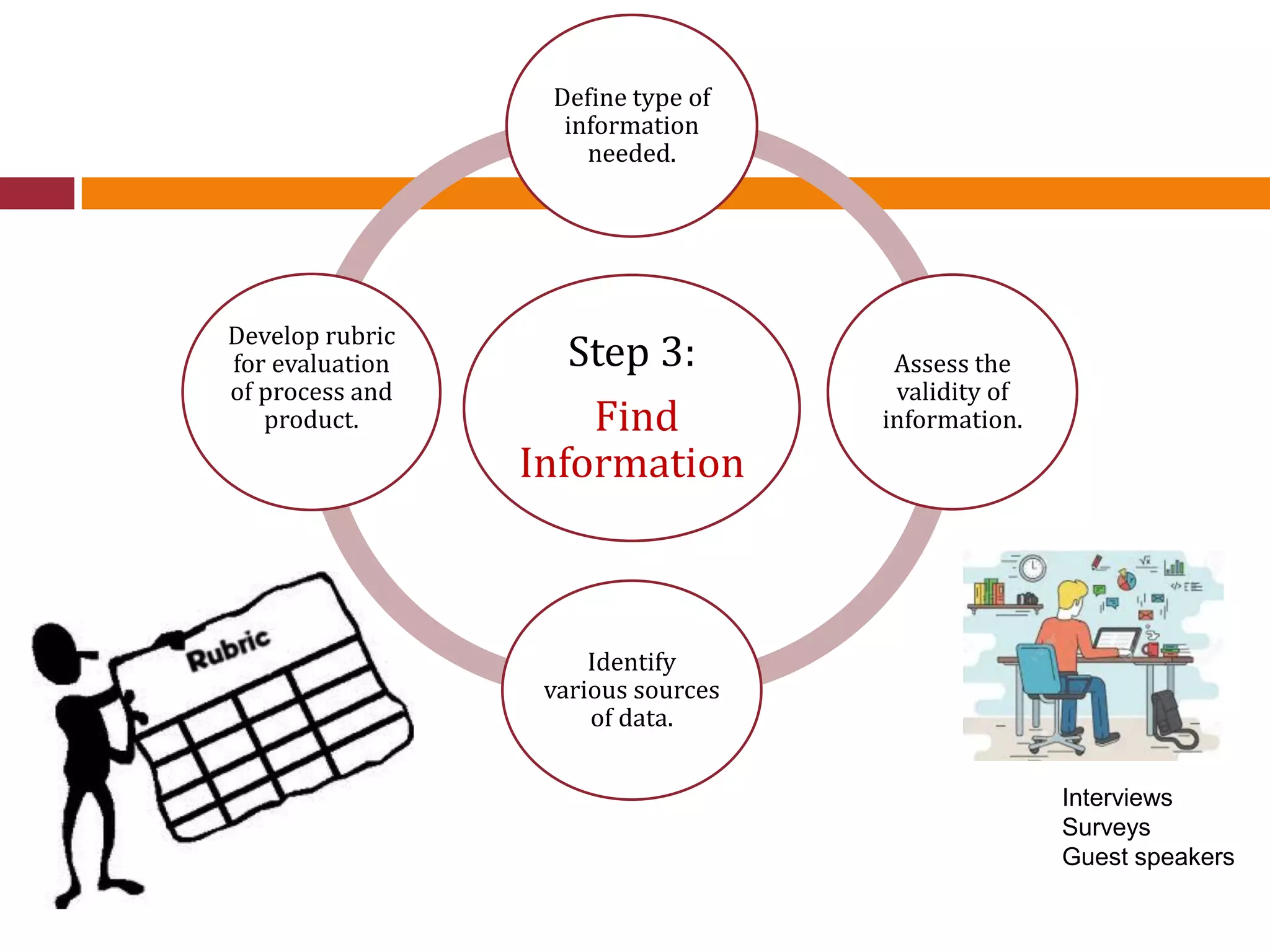
Step 3:
Find
Information
Define type of
information
needed.
Assess the
validity of
information.
Identify
various sources
of data.
Develop rubric
for evaluation
of process and
product.
Interviews
Surveys
Guest speakers
Step 4:
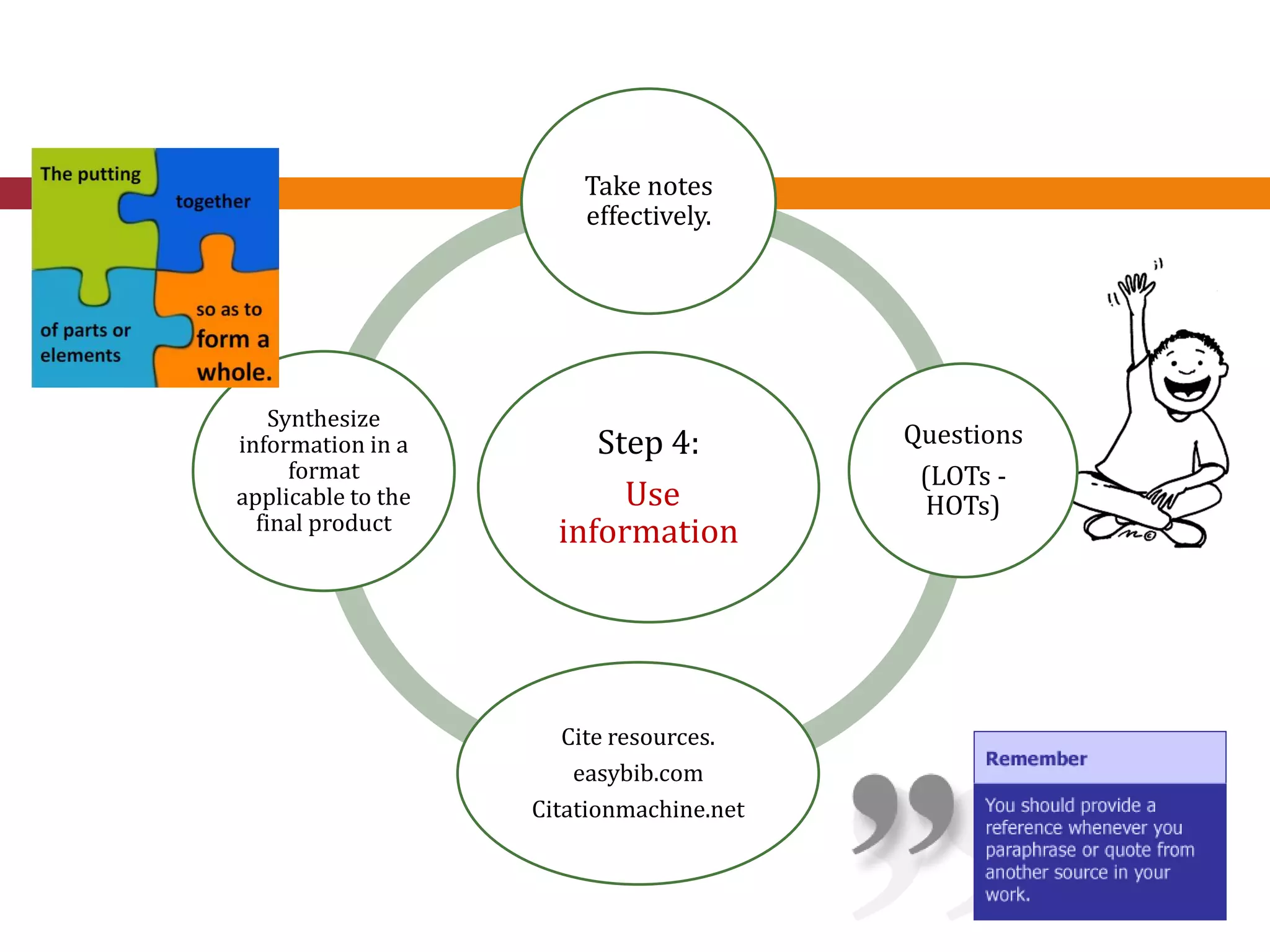
Use
information
Take notes
effectively.
Questions
(LOTs -
HOTs)
Cite resources.
easybib.com
Citationmachine.net
Synthesize
information in a
format
applicable to the
final product
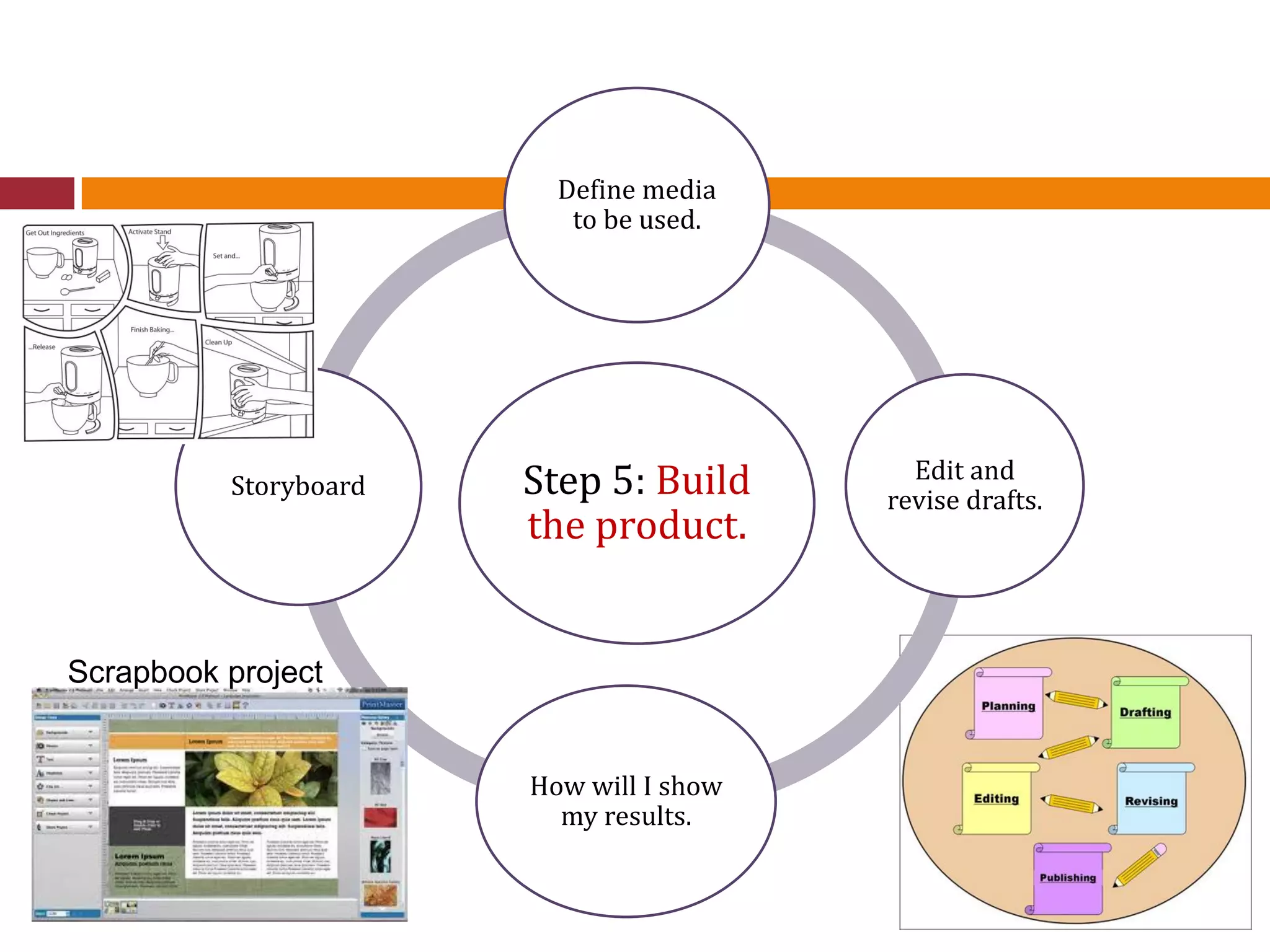
Step 5: Build
the product.
Define media
to be used.
Edit and
revise drafts.
How will I show
my results.
Storyboard
Scrapbook project
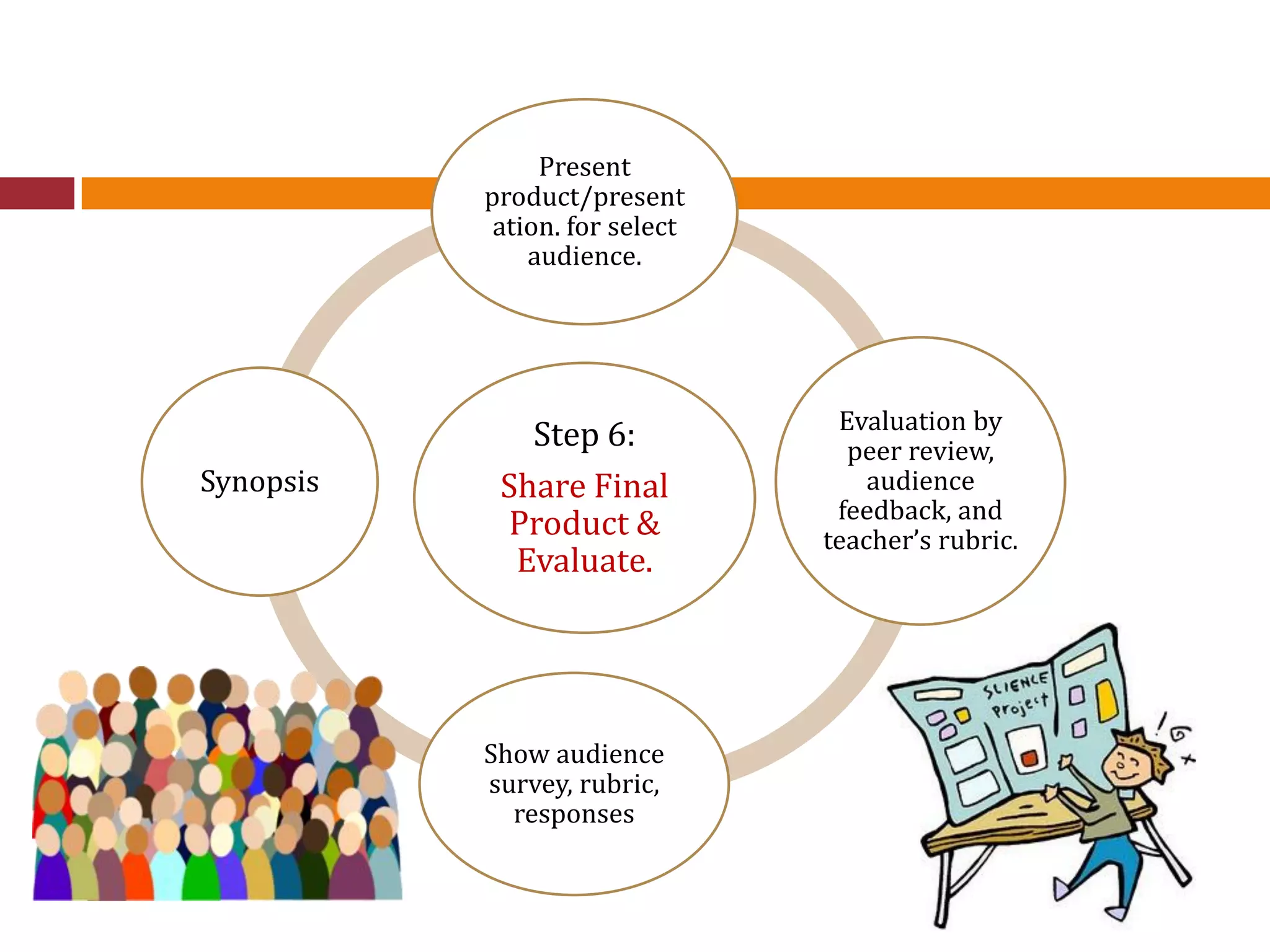
Step 6:
Share Final
Product &
Evaluate.
Present
product/present
ation. for select
audience.
Evaluation by
peer review,
audience
feedback, and
teacher’s rubric.
Show audience
survey, rubric,
responses
Synopsis
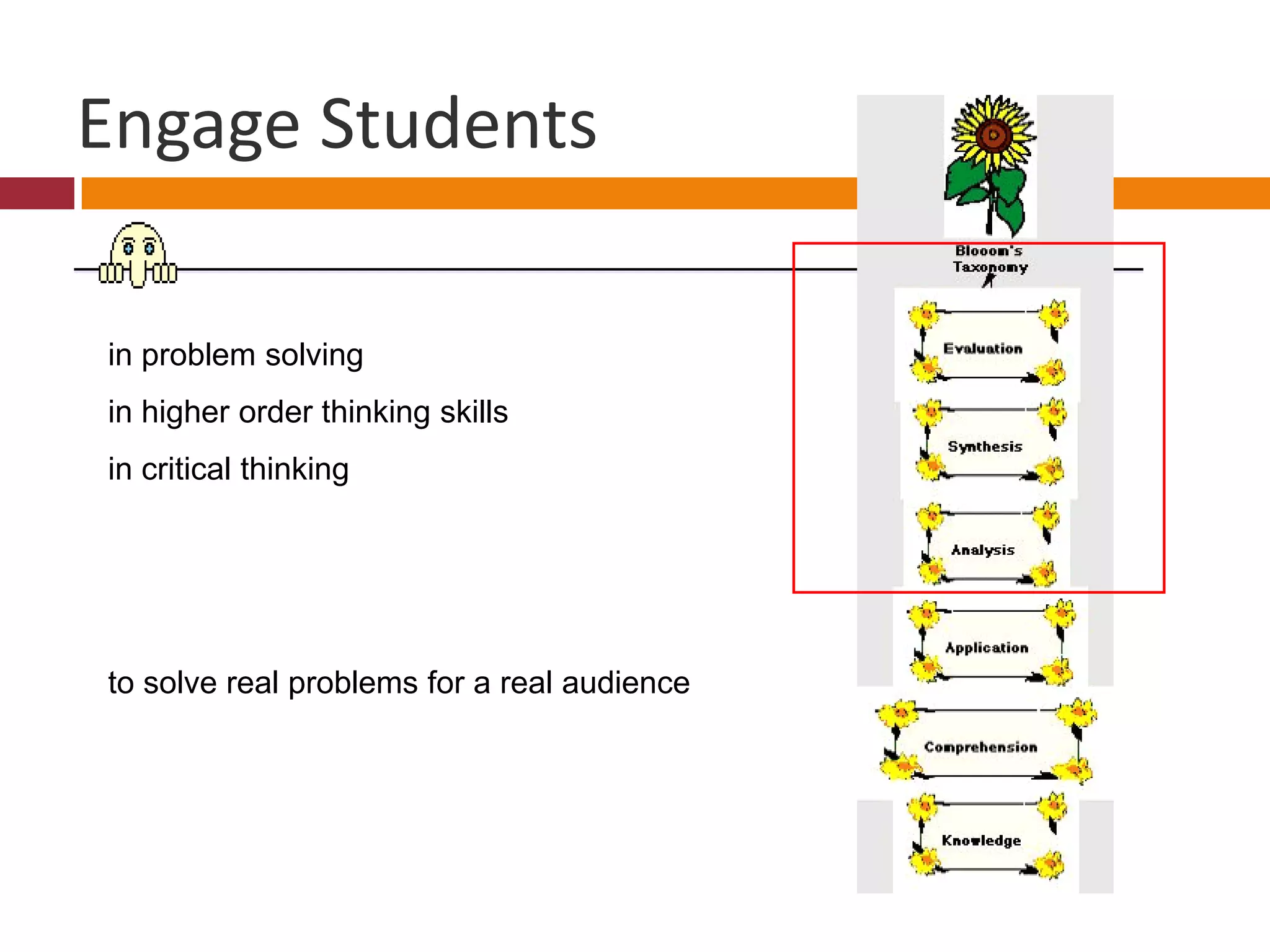
Engage Students
in problem solving
in higher order thinking skills
in critical thinking
to solve real problems for a real audience
Case Study
Project Based Learning Video
Play video 3
Thankyou

Project based learning