PROJECT ARA(MODULAR
PHONES)
PRESENTED BY....
K.V.G.SATISH
14A81A0575
CSE –B
CONTENTS
 Introduction
 History
 Core components
-Endoskeleton
-Module
 EPM
 Advantages
 Disadvantages
 Conclusion
INTRODUCTION
 Project ara is a code name for an initiative by
google that aims to develop a free open hardware
platform for creating highly modular smartphones.
 User can customize device hardware and look.
INTRODUCTION (COTND..)
 The phone is designed to be a long term
sustainable product to customers.
 It is made up of swappable and replaceable parts.
HISTORY
 The project was originally headed by the advanced
technologies and projects (ATAP) team within
Motorola.
 In sep 2013 Dutch designer DAVE HEKKENS
announced the Modular phone concept
independently.
CONTD..
 Motorola publicly announced
project Ara on oct 29 2013.
 The project Ara was lead by Paul
Eremenko .
 Although Google had sold
Motorola to lenovo in jan 2014 but
Google kept ATAP and project Ara
which became Google Ara.
CORE COMPONENTS
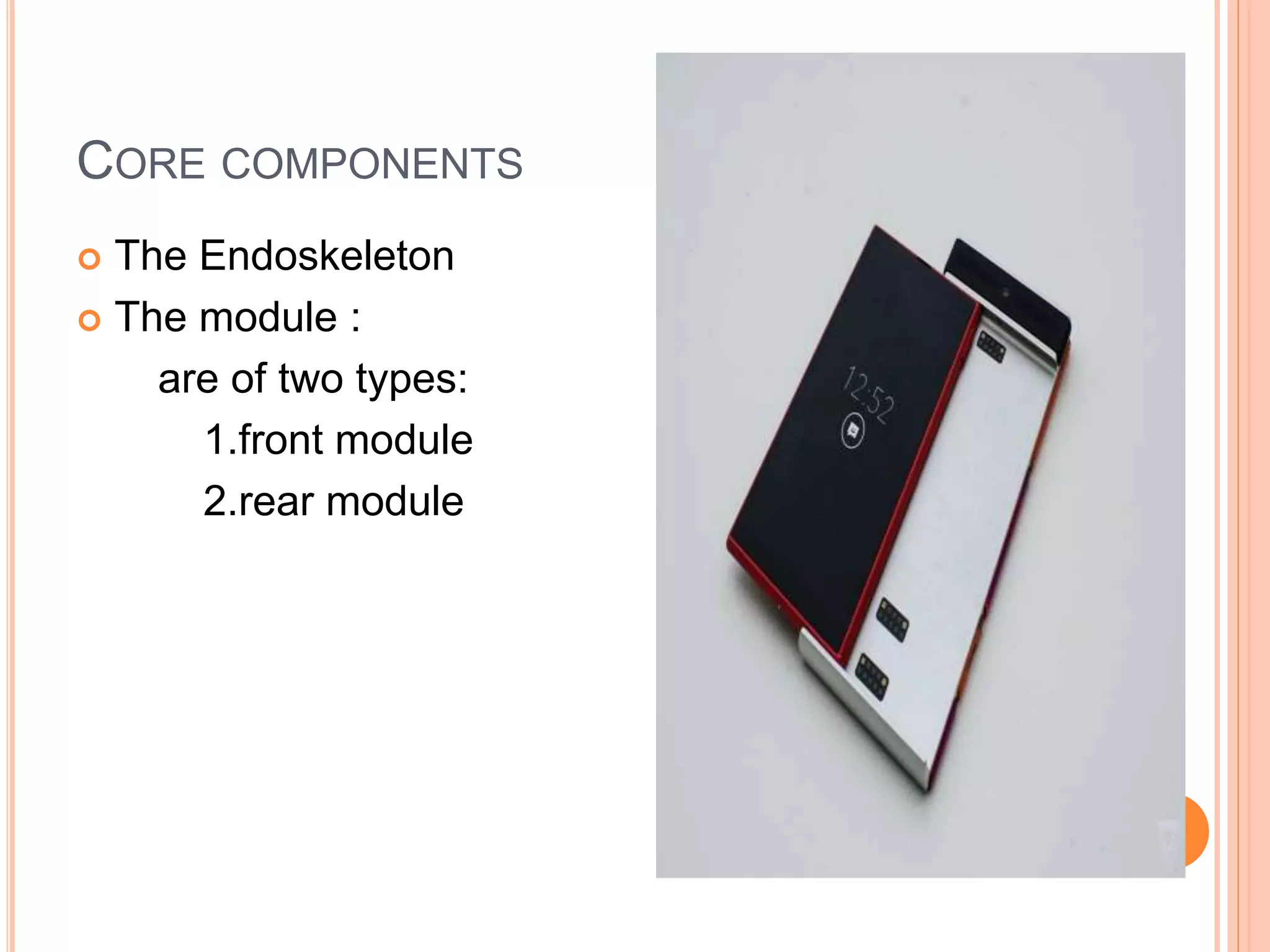
 The Endoskeleton
 The module :
are of two types:
1.front module
2.rear module
ENDOSKELETON
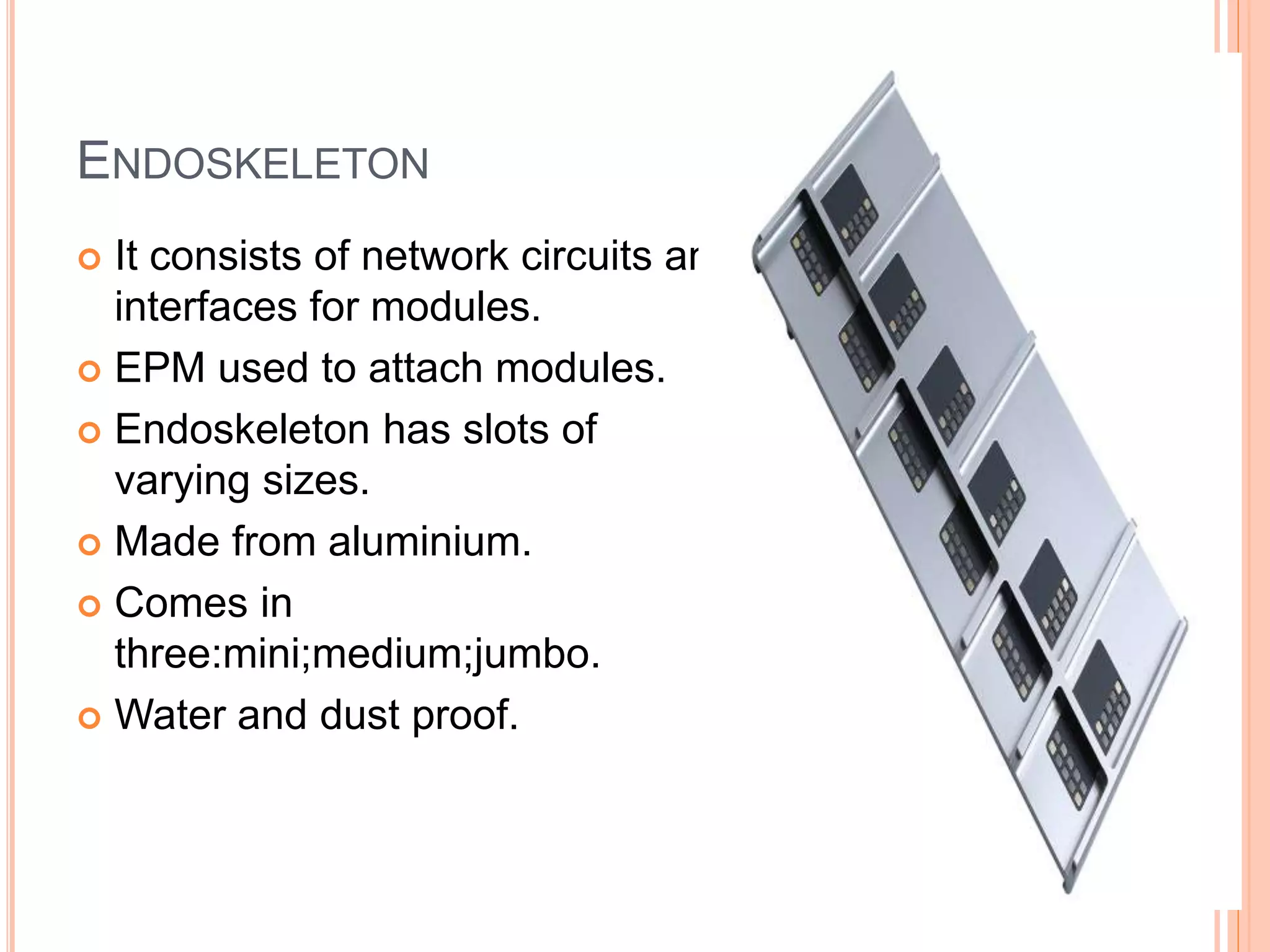
 It consists of network circuits and
interfaces for modules.
 EPM used to attach modules.
 Endoskeleton has slots of
varying sizes.
 Made from aluminium.
 Comes in
three:mini;medium;jumbo.
 Water and dust proof.
MODULES
 Independent and interchangeable.
 Can be swapped between different
phones.
 Front modules includes interface to
the users.
 Rear modules provides back end
functionality.
 Dust and water proof.
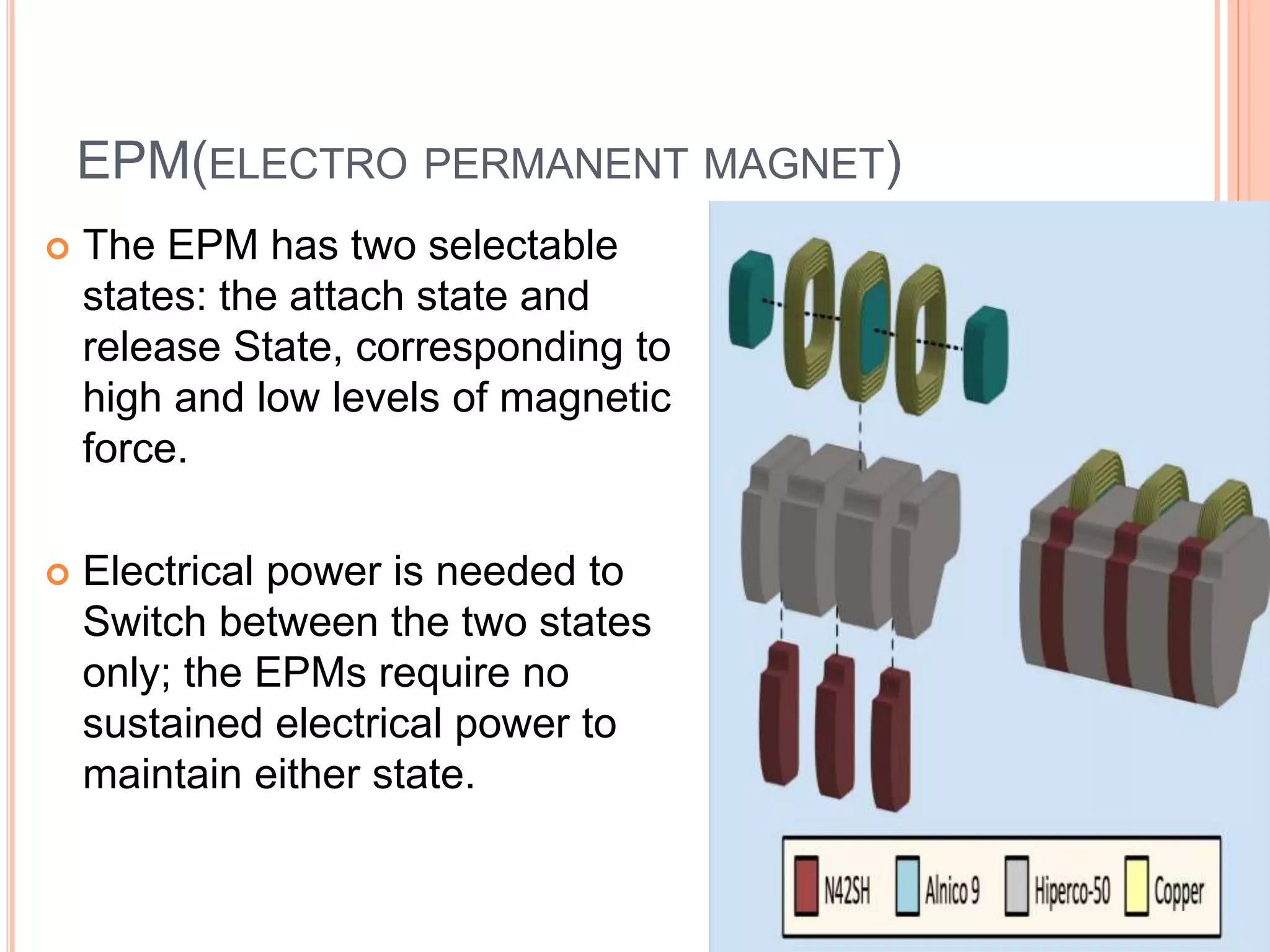
EPM(ELECTRO PERMANENT MAGNET)
 The EPM has two selectable
states: the attach state and
release State, corresponding to
high and low levels of magnetic
force.
 Electrical power is needed to
Switch between the two states
only; the EPMs require no
sustained electrical power to
maintain either state.
CONTD...
 EPMs in the attach state provide sufficient magnetic
force to secure modules into their slots on the endo.
 EPMs in the release state provide a residual
magnetic force to prevent modules from falling out
unless the user deliberately removes the Module
from the endo.
 Users should be able to remove modules with
minimal effort when the EPM is in the release state.
ADVANTAGES
 Price
 Cheaper repairs
 Customization
 Increased life
 Battery life
 Support specilization
 Employement
 Reduce electronic waste
DISADVANTAGES
 Size of the phone
 Design
 Testing issue
CONCLUSION
 Modular phone is a good way to prevent e-waste.
 Modular phones more flexible as compared to the
existing phones.
 Multiple companies work on single product unlike
single company works on multiple products and
hence produce a good product to the customer.
project ara
project ara

project ara

  • 1.
  • 2.
    CONTENTS  Introduction  History Core components -Endoskeleton -Module  EPM  Advantages  Disadvantages  Conclusion
  • 3.
    INTRODUCTION  Project arais a code name for an initiative by google that aims to develop a free open hardware platform for creating highly modular smartphones.  User can customize device hardware and look.
  • 4.
    INTRODUCTION (COTND..)  Thephone is designed to be a long term sustainable product to customers.  It is made up of swappable and replaceable parts.
  • 5.
    HISTORY  The projectwas originally headed by the advanced technologies and projects (ATAP) team within Motorola.  In sep 2013 Dutch designer DAVE HEKKENS announced the Modular phone concept independently.
  • 6.
    CONTD..  Motorola publiclyannounced project Ara on oct 29 2013.  The project Ara was lead by Paul Eremenko .  Although Google had sold Motorola to lenovo in jan 2014 but Google kept ATAP and project Ara which became Google Ara.
  • 7.
    CORE COMPONENTS  TheEndoskeleton  The module : are of two types: 1.front module 2.rear module
  • 8.
    ENDOSKELETON  It consistsof network circuits and interfaces for modules.  EPM used to attach modules.  Endoskeleton has slots of varying sizes.  Made from aluminium.  Comes in three:mini;medium;jumbo.  Water and dust proof.
  • 9.
    MODULES  Independent andinterchangeable.  Can be swapped between different phones.  Front modules includes interface to the users.  Rear modules provides back end functionality.  Dust and water proof.
  • 10.
    EPM(ELECTRO PERMANENT MAGNET) The EPM has two selectable states: the attach state and release State, corresponding to high and low levels of magnetic force.  Electrical power is needed to Switch between the two states only; the EPMs require no sustained electrical power to maintain either state.
  • 11.
    CONTD...  EPMs inthe attach state provide sufficient magnetic force to secure modules into their slots on the endo.  EPMs in the release state provide a residual magnetic force to prevent modules from falling out unless the user deliberately removes the Module from the endo.  Users should be able to remove modules with minimal effort when the EPM is in the release state.
  • 12.
    ADVANTAGES  Price  Cheaperrepairs  Customization  Increased life  Battery life  Support specilization  Employement  Reduce electronic waste
  • 13.
    DISADVANTAGES  Size ofthe phone  Design  Testing issue
  • 14.
    CONCLUSION  Modular phoneis a good way to prevent e-waste.  Modular phones more flexible as compared to the existing phones.  Multiple companies work on single product unlike single company works on multiple products and hence produce a good product to the customer.