How to Write a Dictionary 
Definition 
Here are a few ideas to make your definitions as helpful and 
as powerful as they should be. These steps are appropriate 
for a descriptive definition of how a term is actually used. 
Note that this is a more demanding process than writing a 
prescriptive definition, such as one defining how an author 
will use a term in a document. 
Steps!
1Find examples of the word in use. Google 
(and especially Google Books) are excellent 
resources for finding citations. Citations provide 
evidence that the word is in use and show how it is 
used.
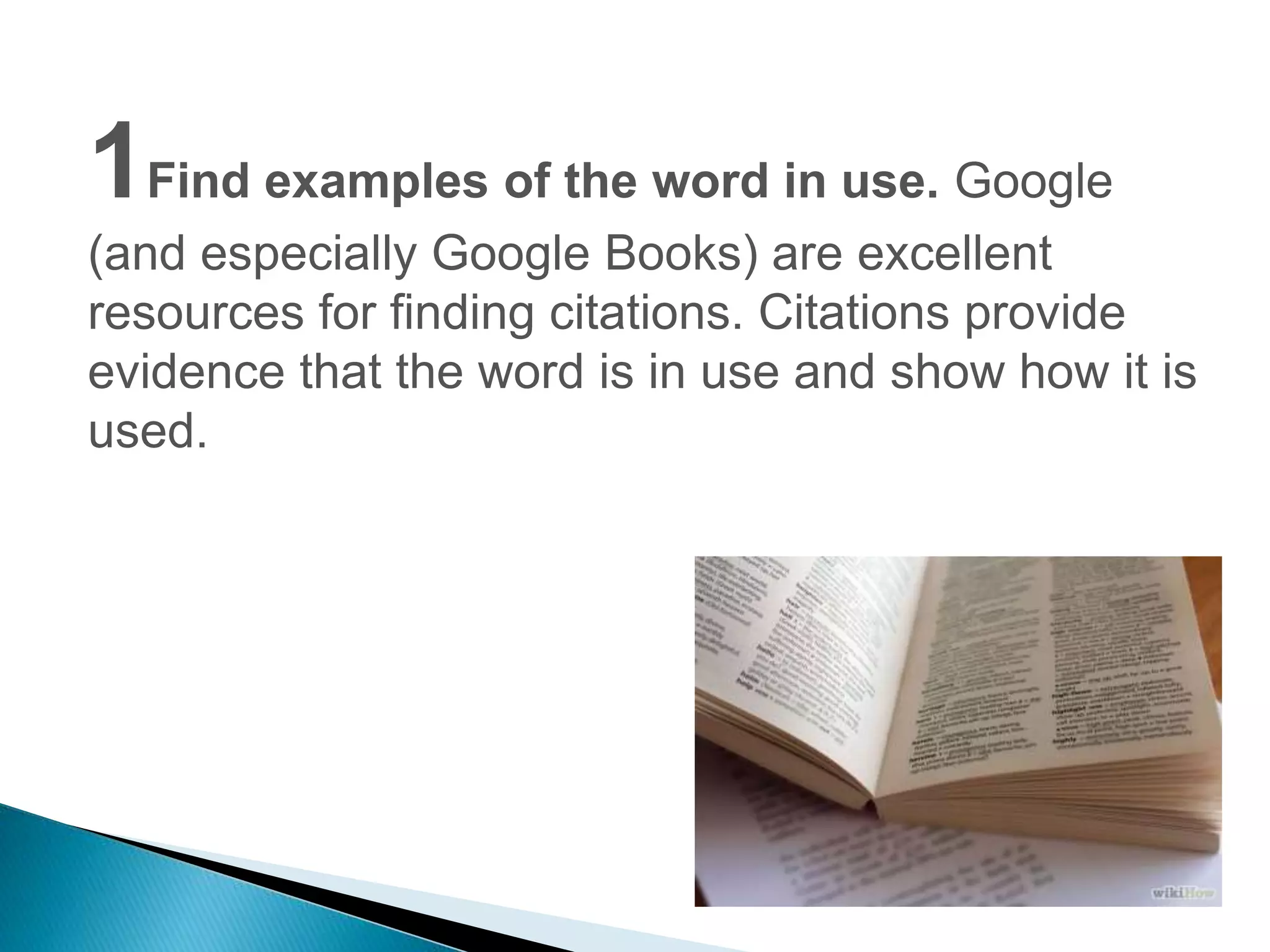
2 Examine how the word functions in the 
examples that you find. 
3 Determine the part of speech of the word, for the sense or 
senses you wish to define. This will help you write the right 
definition. 
oDevice 
oProgram 
oBrand 
oApplication
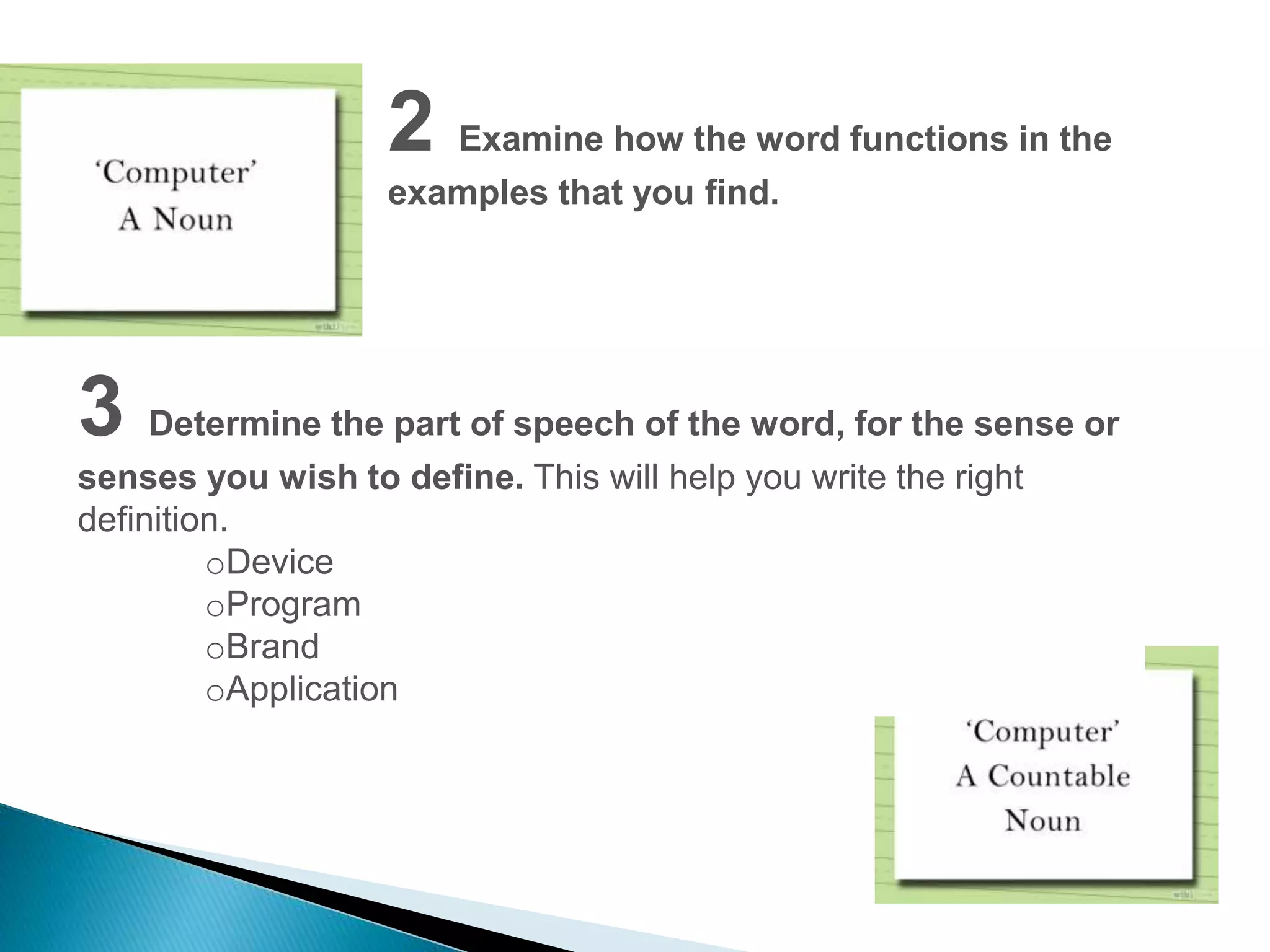
4 Make further distinctions within the parts 
of speech. Is it an application for cell phones or 
computers? Is it portable device? 
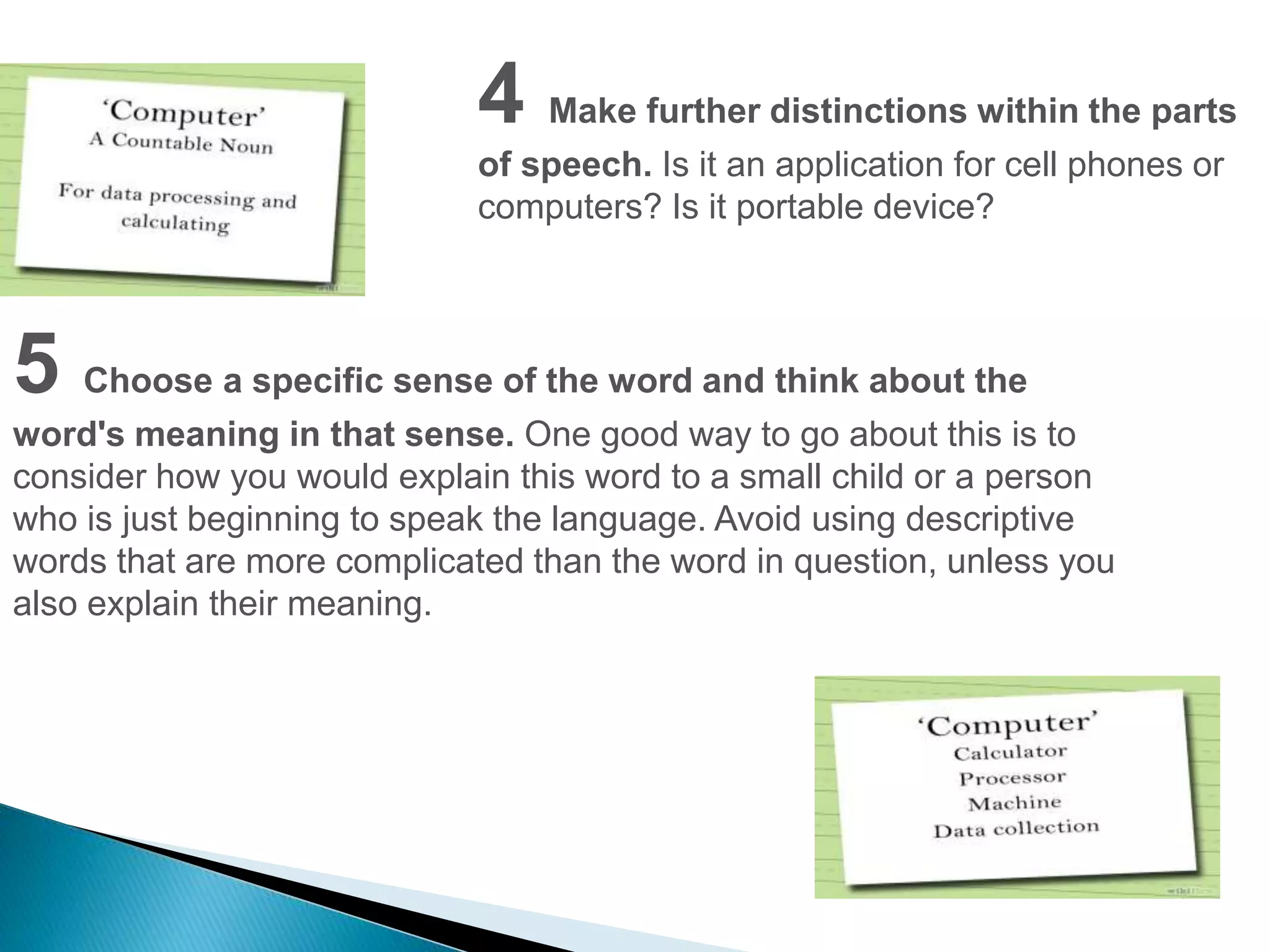
5 Choose a specific sense of the word and think about the 
word's meaning in that sense. One good way to go about this is to 
consider how you would explain this word to a small child or a person 
who is just beginning to speak the language. Avoid using descriptive 
words that are more complicated than the word in question, unless you 
also explain their meaning.
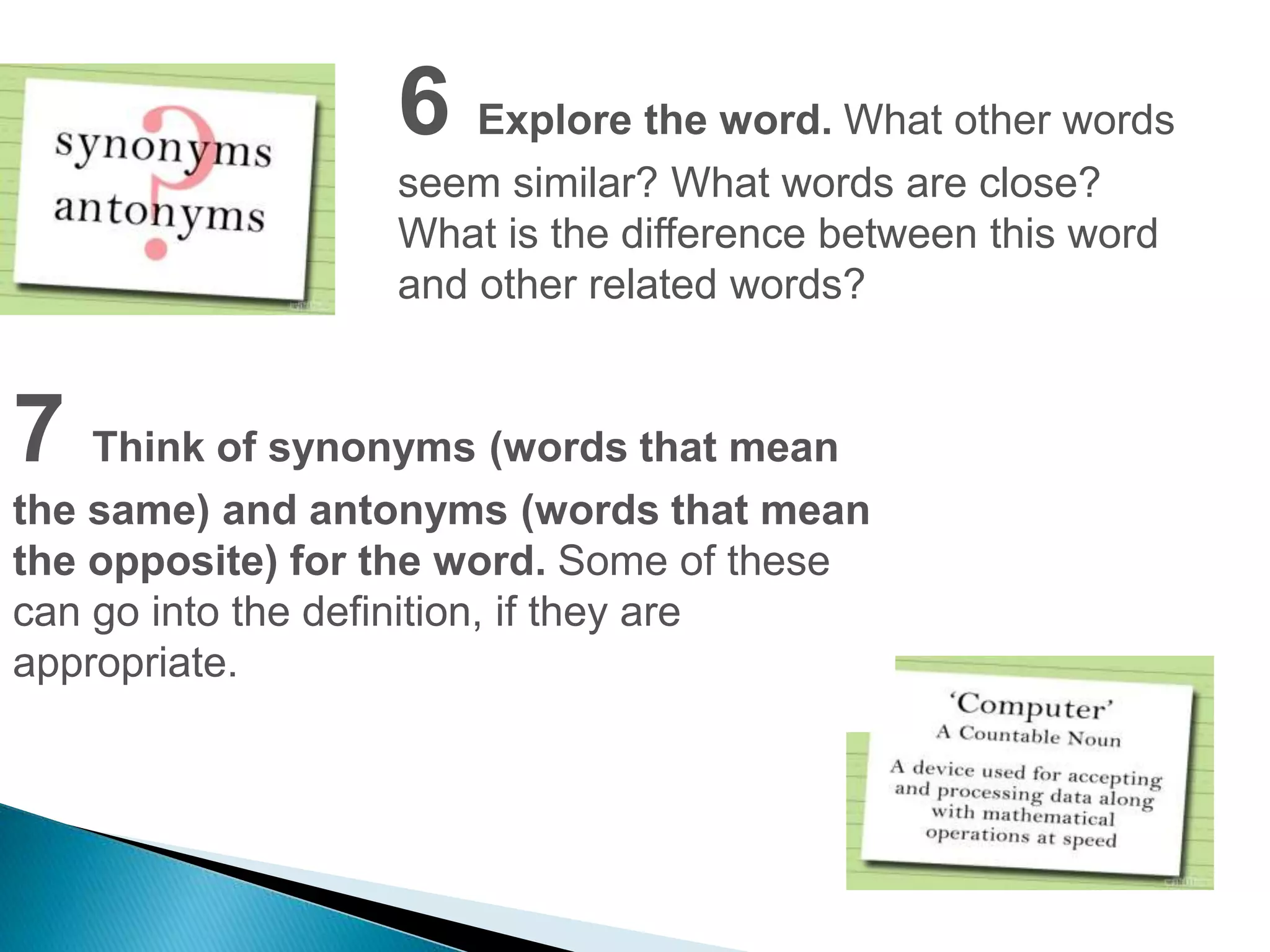
6 Explore the word. What other words 
seem similar? What words are close? 
What is the difference between this word 
and other related words? 
7 Think of synonyms (words that mean 
the same) and antonyms (words that mean 
the opposite) for the word. Some of these 
can go into the definition, if they are 
appropriate.
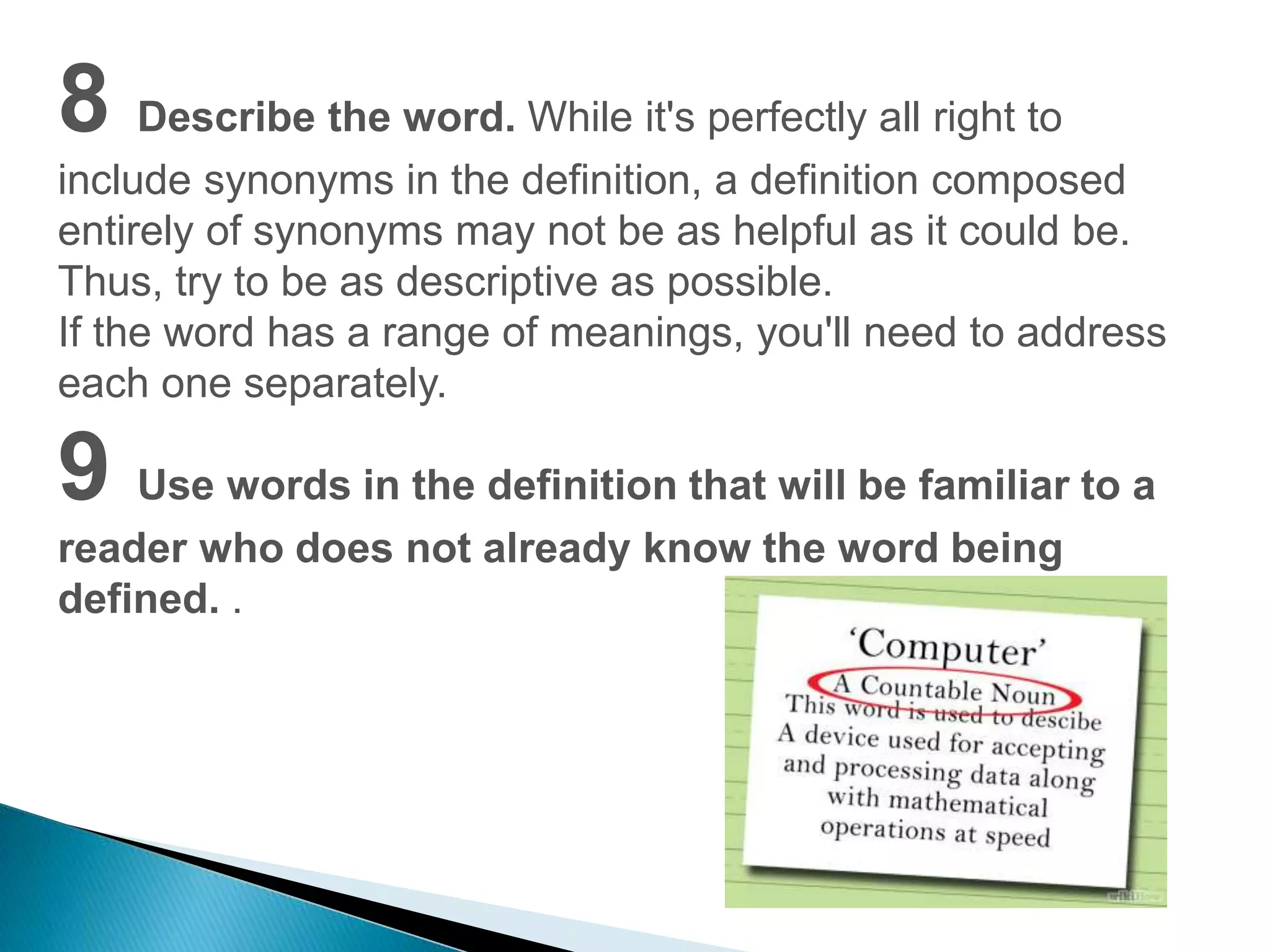
8 Describe the word. While it's perfectly all right to 
include synonyms in the definition, a definition composed 
entirely of synonyms may not be as helpful as it could be. 
Thus, try to be as descriptive as possible. 
If the word has a range of meanings, you'll need to address 
each one separately. 
9 Use words in the definition that will be familiar to a 
reader who does not already know the word being 
defined. .
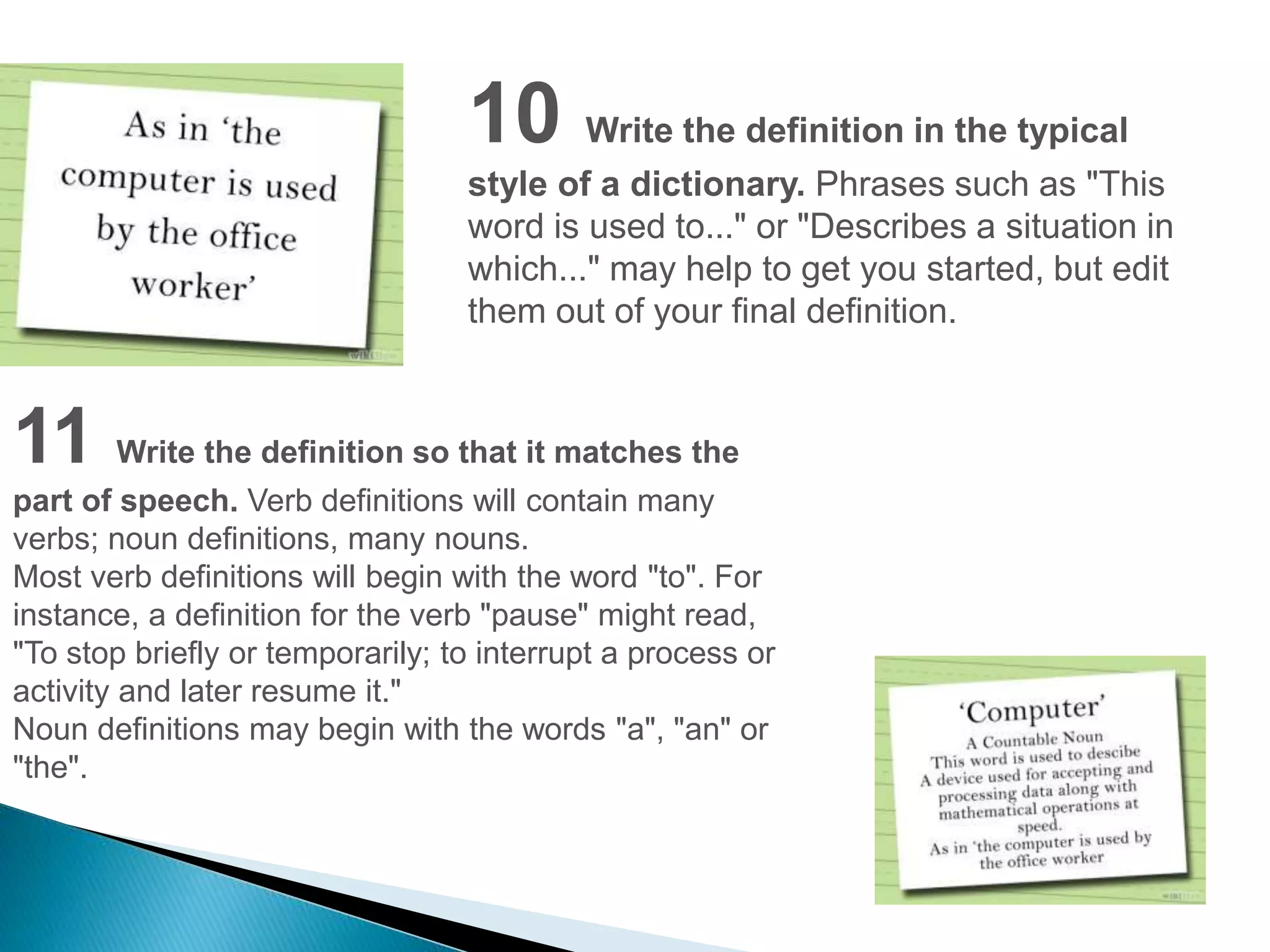
10 Write the definition in the typical 
style of a dictionary. Phrases such as "This 
word is used to..." or "Describes a situation in 
which..." may help to get you started, but edit 
them out of your final definition. 
11 Write the definition so that it matches the 
part of speech. Verb definitions will contain many 
verbs; noun definitions, many nouns. 
Most verb definitions will begin with the word "to". For 
instance, a definition for the verb "pause" might read, 
"To stop briefly or temporarily; to interrupt a process or 
activity and later resume it." 
Noun definitions may begin with the words "a", "an" or 
"the".
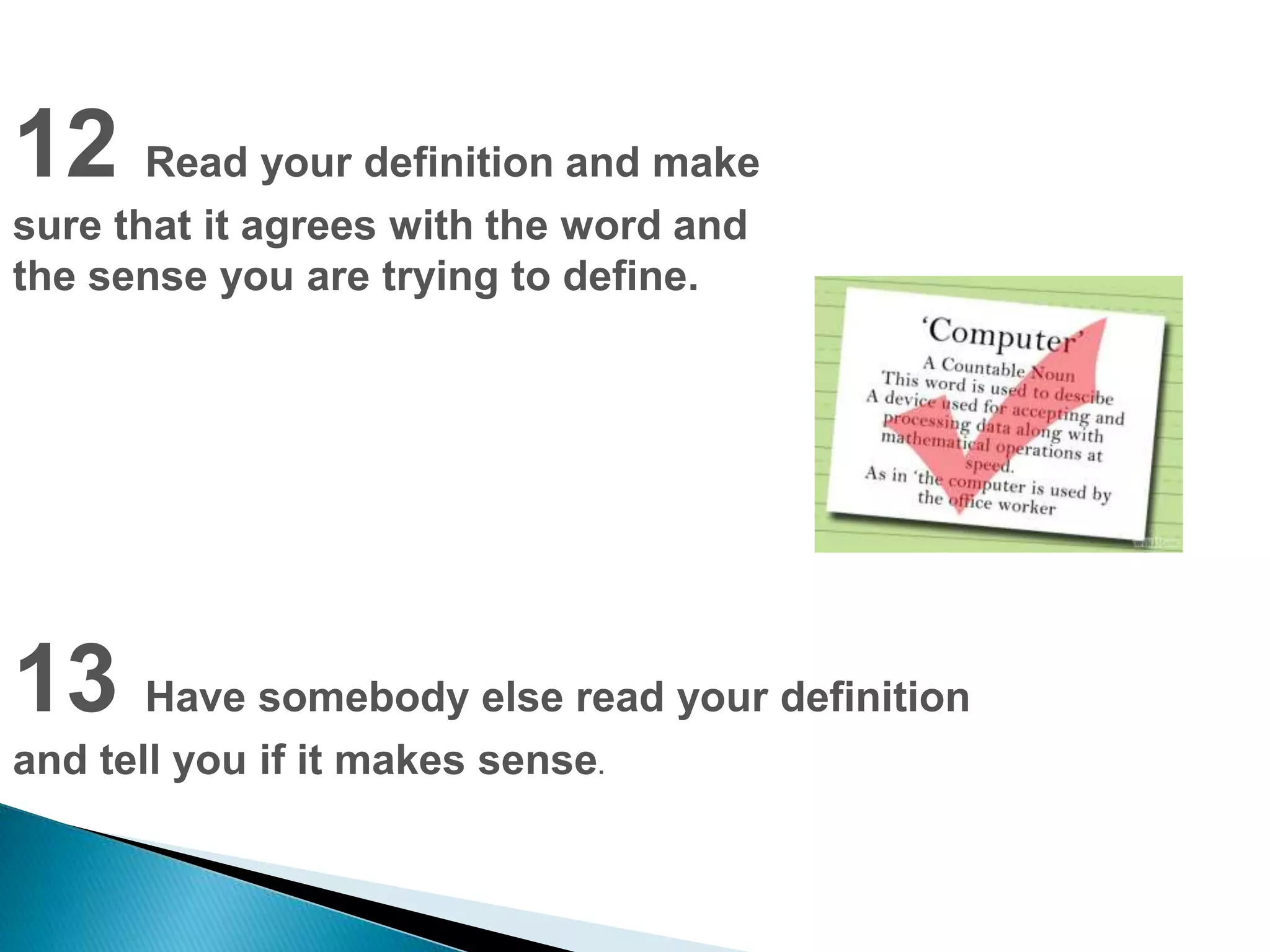
12 Read your definition and make 
sure that it agrees with the word and 
the sense you are trying to define. 
13 Have somebody else read your definition 
and tell you if it makes sense.
Tips 
•Read some entries in a dictionary or glossary 
and take note of the style in which definitions 
are written. 
•Consult other dictionaries to see what they 
have to say about your word. Synthesizing a 
selection of other definitions can help you 
write your own, or help you learn to write your 
own definitions independently. 
•Notice how you learn most words: from 
context. This is why it's important to seek out 
examples of the context of a word before 
attempting to define it.
Warnings 
Avoid describing the word by what it is not - focus on 
describing what it is. 
Avoid circular definitions, especially if you are defining 
multiple words. There is a tendency, when defining 
words, to circle back to the word or root with which 
one began. While it may be legitimate to define an 
adverb in terms of the adjective from which it has 
grown (for example, ridiculously - in a ridiculous 
manner), this sort of definition supposes that the 
word ridiculous is defined somewhere. Generally, 
avoid using variations of the word being defined in the 
definition.

Project

  • 1.
    How to Writea Dictionary Definition Here are a few ideas to make your definitions as helpful and as powerful as they should be. These steps are appropriate for a descriptive definition of how a term is actually used. Note that this is a more demanding process than writing a prescriptive definition, such as one defining how an author will use a term in a document. Steps!
  • 2.
    1Find examples ofthe word in use. Google (and especially Google Books) are excellent resources for finding citations. Citations provide evidence that the word is in use and show how it is used.
  • 3.
    2 Examine howthe word functions in the examples that you find. 3 Determine the part of speech of the word, for the sense or senses you wish to define. This will help you write the right definition. oDevice oProgram oBrand oApplication
  • 4.
    4 Make furtherdistinctions within the parts of speech. Is it an application for cell phones or computers? Is it portable device? 5 Choose a specific sense of the word and think about the word's meaning in that sense. One good way to go about this is to consider how you would explain this word to a small child or a person who is just beginning to speak the language. Avoid using descriptive words that are more complicated than the word in question, unless you also explain their meaning.
  • 5.
    6 Explore theword. What other words seem similar? What words are close? What is the difference between this word and other related words? 7 Think of synonyms (words that mean the same) and antonyms (words that mean the opposite) for the word. Some of these can go into the definition, if they are appropriate.
  • 6.
    8 Describe theword. While it's perfectly all right to include synonyms in the definition, a definition composed entirely of synonyms may not be as helpful as it could be. Thus, try to be as descriptive as possible. If the word has a range of meanings, you'll need to address each one separately. 9 Use words in the definition that will be familiar to a reader who does not already know the word being defined. .
  • 7.
    10 Write thedefinition in the typical style of a dictionary. Phrases such as "This word is used to..." or "Describes a situation in which..." may help to get you started, but edit them out of your final definition. 11 Write the definition so that it matches the part of speech. Verb definitions will contain many verbs; noun definitions, many nouns. Most verb definitions will begin with the word "to". For instance, a definition for the verb "pause" might read, "To stop briefly or temporarily; to interrupt a process or activity and later resume it." Noun definitions may begin with the words "a", "an" or "the".
  • 8.
    12 Read yourdefinition and make sure that it agrees with the word and the sense you are trying to define. 13 Have somebody else read your definition and tell you if it makes sense.
  • 9.
    Tips •Read someentries in a dictionary or glossary and take note of the style in which definitions are written. •Consult other dictionaries to see what they have to say about your word. Synthesizing a selection of other definitions can help you write your own, or help you learn to write your own definitions independently. •Notice how you learn most words: from context. This is why it's important to seek out examples of the context of a word before attempting to define it.
  • 10.
    Warnings Avoid describingthe word by what it is not - focus on describing what it is. Avoid circular definitions, especially if you are defining multiple words. There is a tendency, when defining words, to circle back to the word or root with which one began. While it may be legitimate to define an adverb in terms of the adjective from which it has grown (for example, ridiculously - in a ridiculous manner), this sort of definition supposes that the word ridiculous is defined somewhere. Generally, avoid using variations of the word being defined in the definition.