PROJECT 2
BUILDING SERVICES DIARY
- ELECTRICAL SUPPLY SYSTEM
- WATER SUPPLY SYSTEM
- SEWERAGE AND SANITARY SYSTEM
- RAINWATER/SURFACE DRAINAGE SYSTEM
BUILDING SERVICES
BLD 60903/ ARC 2423
PREPARED BY:
ANITH SYAZLIN BINTI RAMLI 0325737
TUTOR/LECTURER:
PUAN AR. SATEERAH HASSAN
TABLE OF CONTENT
CONTENT PAGE
Introduction
1.0 Water Supply
2.0 Electrical Supply
3.0 Sewerage and Sanitary System
4.0 Rainwater/ Surface Water management
In general,compileandexplainthe following:
 Introduction&Function(general info)
 Componentsof System
 Materials,fitting,equipment,components,
parts (if applicable)
 Operationof System
 *UBBL requirementorrelatedregulations
(i.e.MS1184)
 Imagesand diagramsof the system
Drawings Site plan – access (1:200)
 Ground floor plan – surface water drainage,
sewerage layout (solid/waste water), sanitary
layout (1:100)
 First floor plan/ typical floor plan – sanitary
layout, water supply (1:100)
 Roof plan – rainwater drainage system
(1:100)
 Reflected ceiling plan – electrical fittings,
points layout, meter and DB layout (1:100)
 Schematic diagram – sewerage (solid/waste
water) system, water supply system (NTS)
Summary
References
1.0 WATER SUPPLY SYSTEM
Introduction
A water supply system is a system responsible for the collection, transmission, treatment, storage and
distribution of water from the water certified source to the residential areas, commercial, industry,
irrigation facilities and many more. Water system in Selangor is run by Syarikat Bekalan Air
Selangor (SYABAS).
Components of System
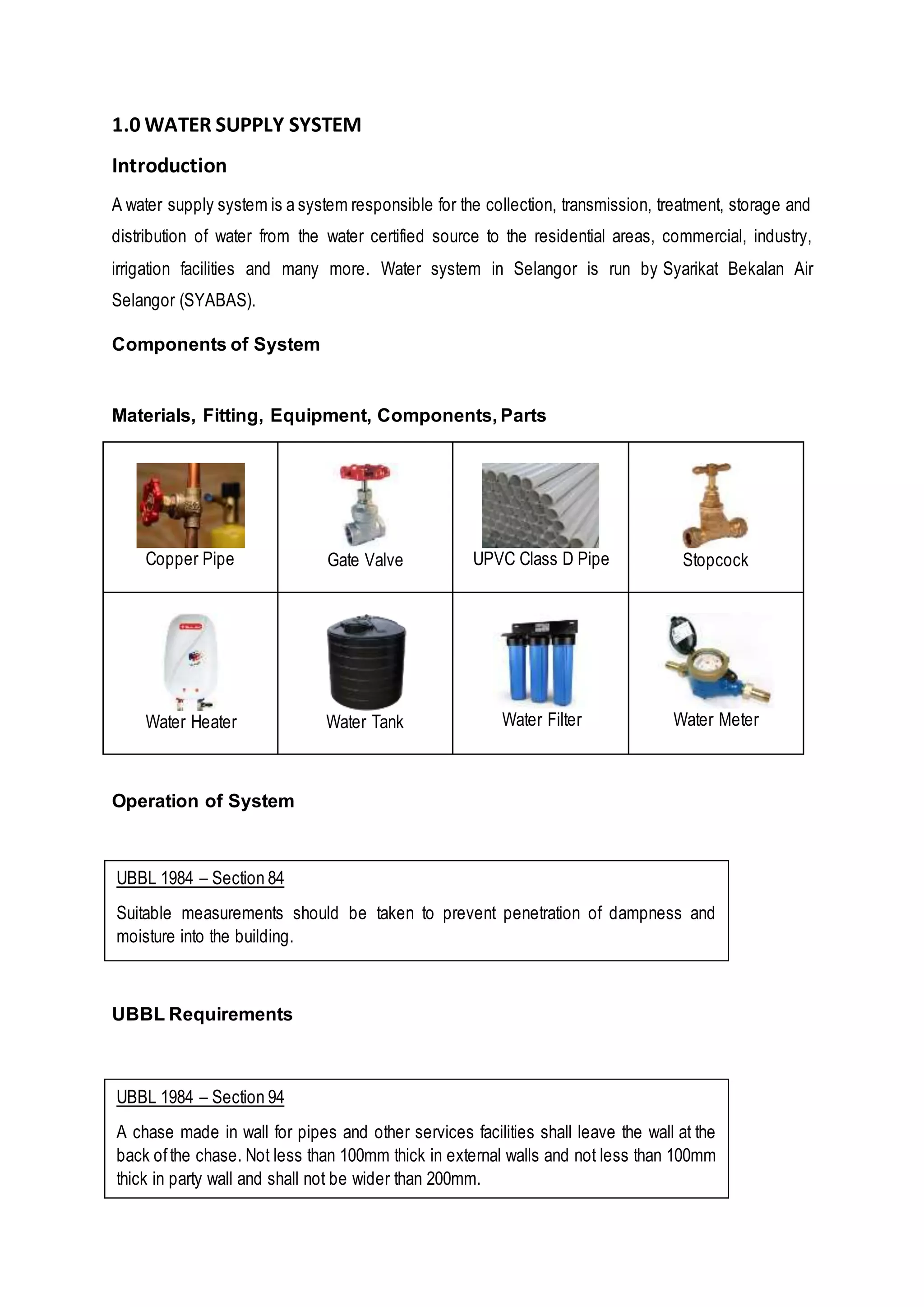
Materials, Fitting, Equipment, Components, Parts
Copper Pipe Gate Valve UPVC Class D Pipe Stopcock
Water Heater Water Tank Water Filter Water Meter
Operation of System
UBBL Requirements
UBBL 1984 – Section 84
Suitable measurements should be taken to prevent penetration of dampness and
moisture into the building.
UBBL 1984 – Section 94
A chase made in wall for pipes and other services facilities shall leave the wall at the
back ofthe chase. Not less than 100mm thick in external walls and not less than 100mm
thick in party wall and shall not be wider than 200mm.
How the system works (diagrams)
LEGEND
UBBL 1984 – Section 123
Allow adequate accommodation for pipes, stopcocks to enable repairs and access
openings to ducts or enclosure.
2.0 ELECTRICAL SUPPLY
Introduction
Electric supply system is defined as the conveyance of electric power from the main
power station to other premises. It comprises there principal components which are
the power station, the transmission lines and the distribution system.
Components of System
Materials, Fitting, Equipment, Components, Parts
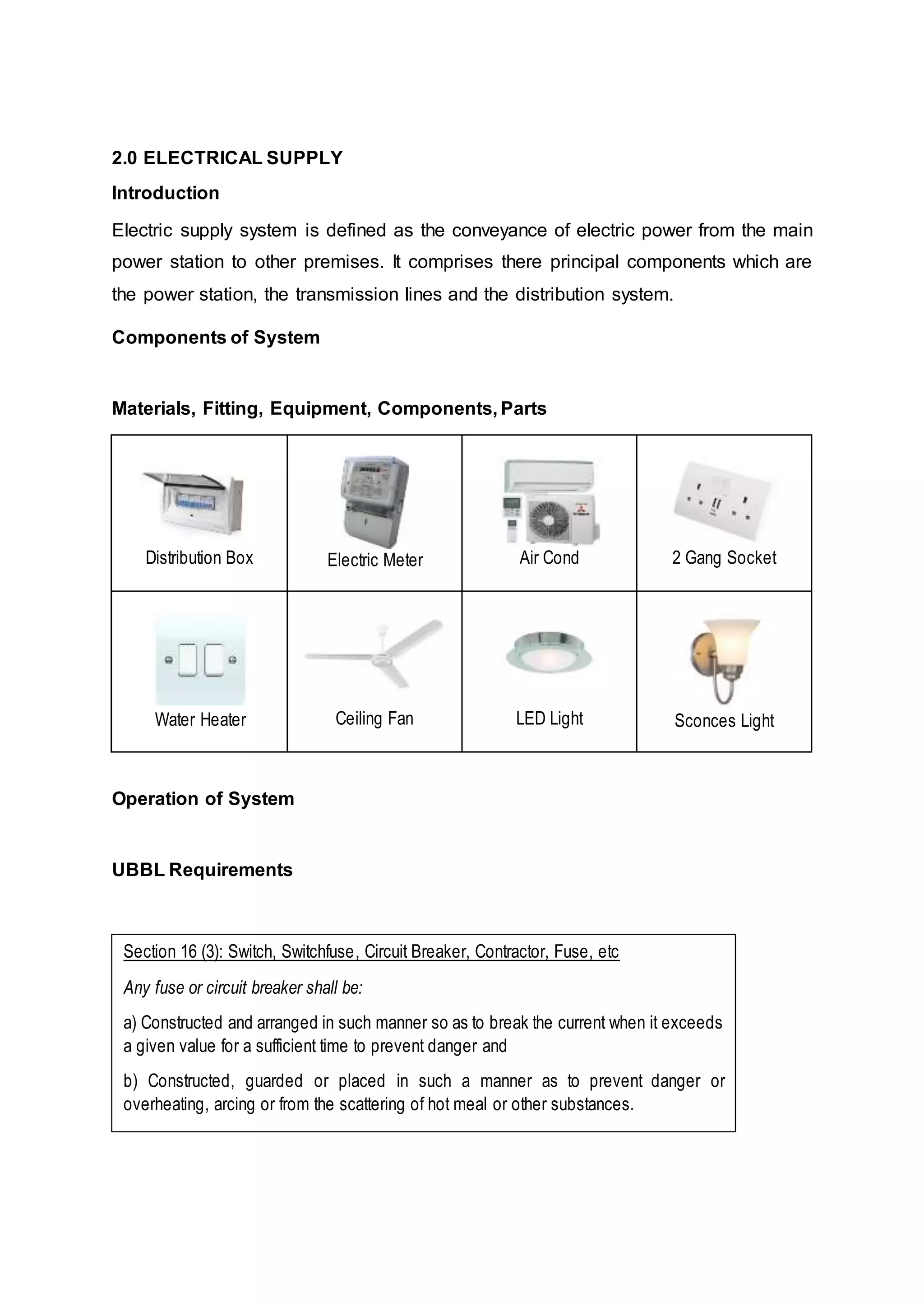
Distribution Box Electric Meter Air Cond 2 Gang Socket
Water Heater Ceiling Fan LED Light Sconces Light
Operation of System
UBBL Requirements
Section 16 (3): Switch, Switchfuse, Circuit Breaker, Contractor, Fuse, etc
Any fuse or circuit breaker shall be:
a) Constructed and arranged in such manner so as to break the current when it exceeds
a given value for a sufficient time to prevent danger and
b) Constructed, guarded or placed in such a manner as to prevent danger or
overheating, arcing or from the scattering of hot meal or other substances.
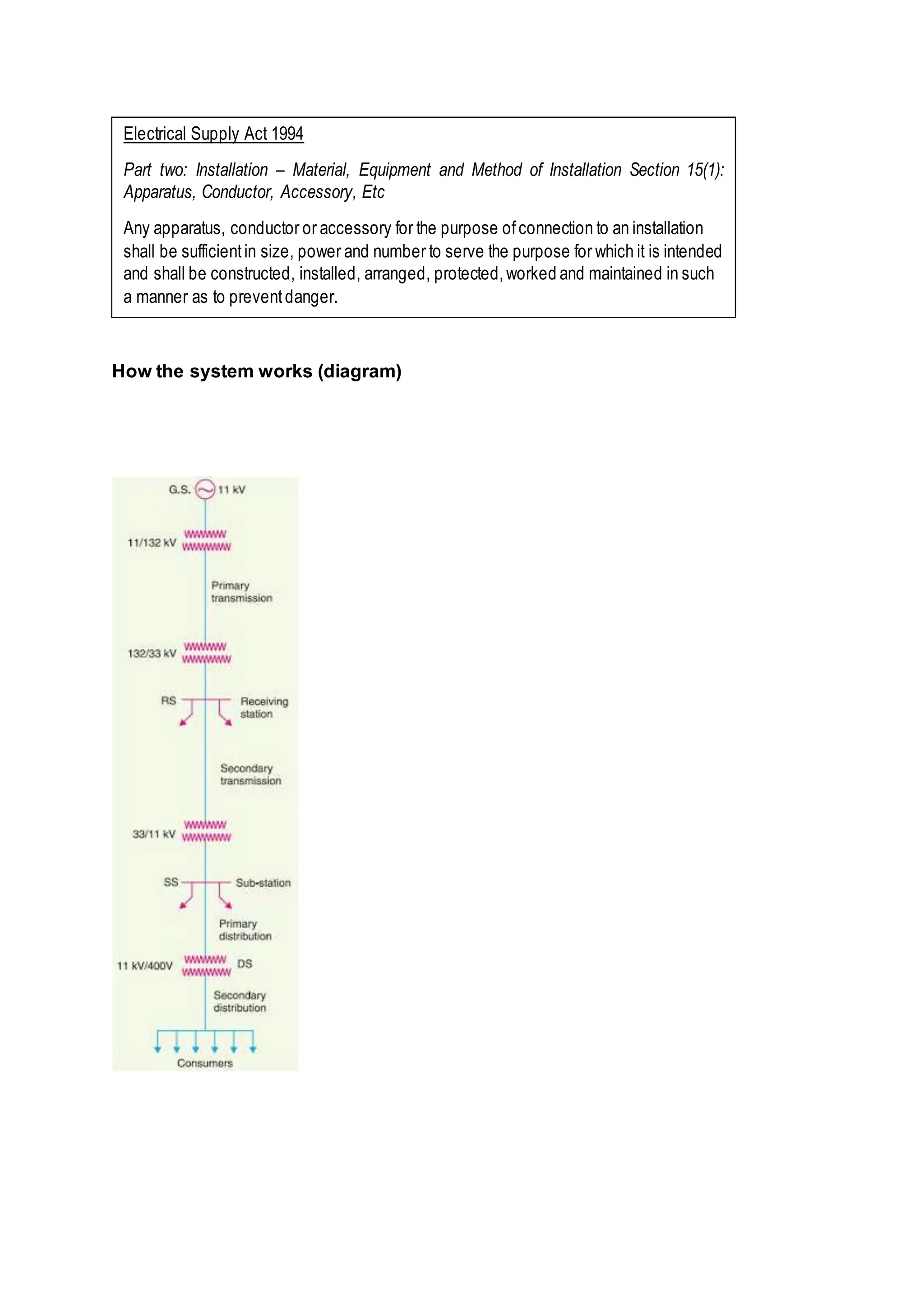
How the system works (diagram)
Electrical Supply Act 1994
Part two: Installation – Material, Equipment and Method of Installation Section 15(1):
Apparatus, Conductor, Accessory, Etc
Any apparatus, conductor or accessory for the purpose ofconnection to an installation
shall be sufficientin size, power and number to serve the purpose for which it is intended
and shall be constructed, installed, arranged, protected,worked and maintained in such
a manner as to preventdanger.
3.0 SEWERAGE AND SANITARY SYSTEM
Introduction
The sanitary sewer is a system of underground pipes that carries sewage from
bathrooms, sinks, kitchens, and other plumbing components to a wastewater
treatment plant where it is filtered, treated and discharged. Sewerage ends at the
entry to a sewage treatment plant or at the point of discharge into the environment. It
is the system of pipes, chambers, manholes, etc. that conveys the sewage or storm
water.
Components of System
Materials, Fitting, Equipment, Components, Parts
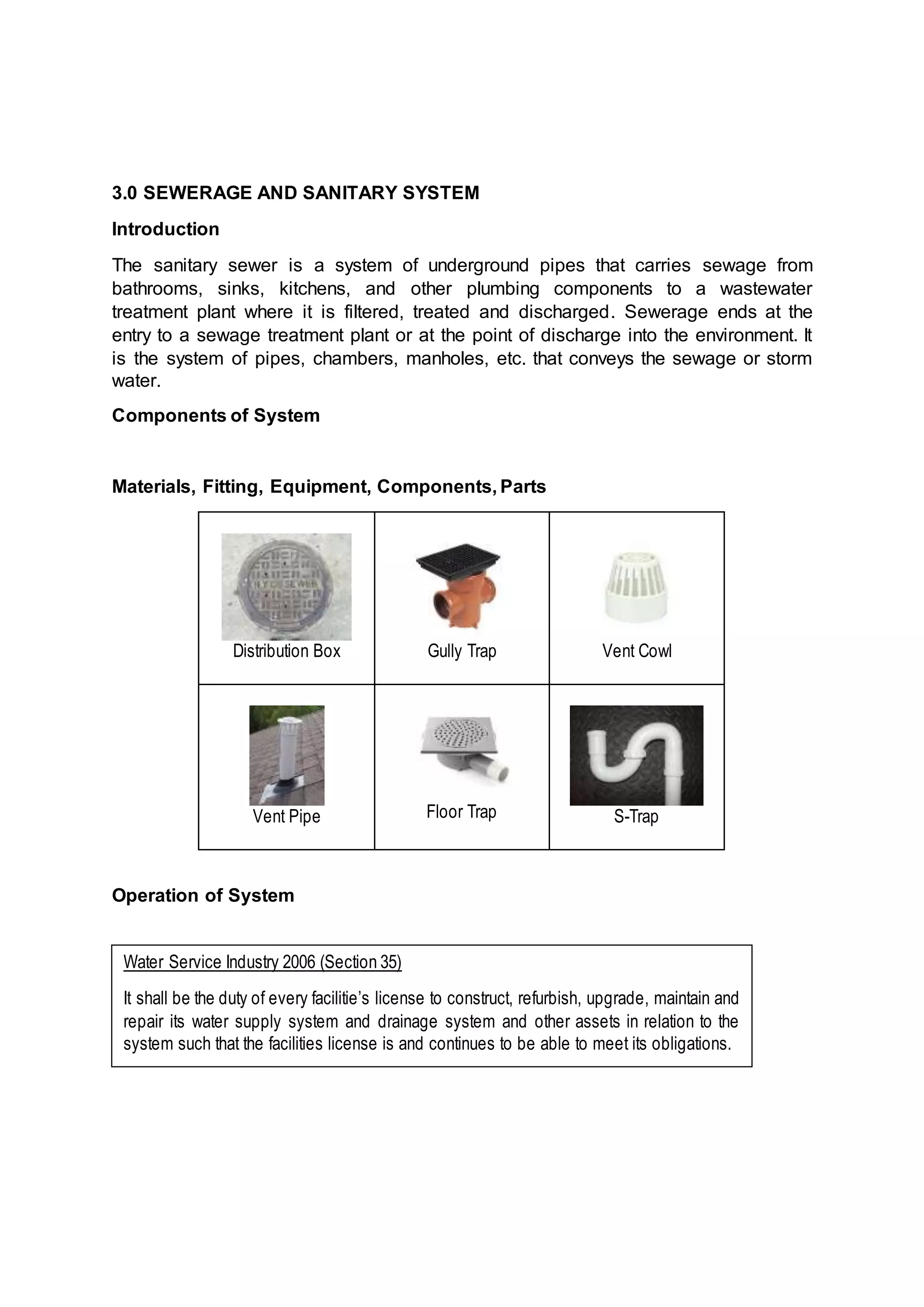
Distribution Box Gully Trap Vent Cowl
Vent Pipe Floor Trap S-Trap
Operation of System
Water Service Industry 2006 (Section 35)
It shall be the duty of every facilitie’s license to construct, refurbish, upgrade, maintain and
repair its water supply system and drainage system and other assets in relation to the
system such that the facilities license is and continues to be able to meet its obligations.
UBBL Requirements
How the system works (diagram)
Law Of Malaysia Act133
No water pipe, stack pipe or down spout used for conveying surface water from any
premises shall be used or be permitted to serve or to act as a ventilation shaft to any drain
or sewer.
4.0 RAINWATER/ SURFACE DRAINAGE SYSTEM
Introduction
Surface drainage is the removal of water that collects on the land surface. A surface
drainage system consists of shallow ditches and should include land smoothing or
land grading. This type of system is suitable for all slowly permeable soils and for
soils with frangipanes or clay subsoil. The rate at which water is removed by surface
drainage depends on several interrelated factors, including rainfall, soil properties,
and cropping patterns
Components of System
Materials, Fitting, Equipment, Components, Parts
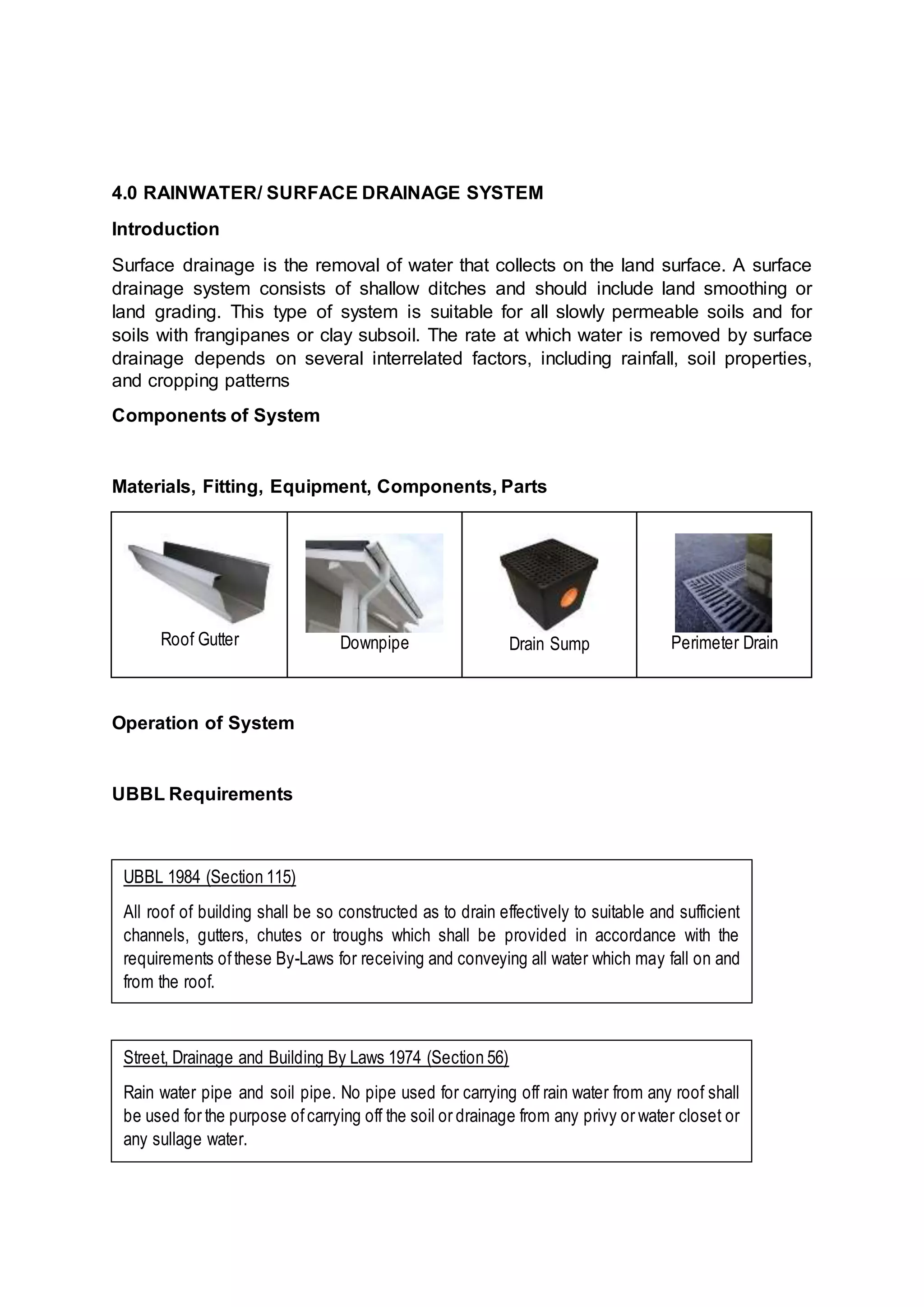
Roof Gutter Downpipe Drain Sump Perimeter Drain
Operation of System
UBBL Requirements
UBBL 1984 (Section 115)
All roof of building shall be so constructed as to drain effectively to suitable and sufficient
channels, gutters, chutes or troughs which shall be provided in accordance with the
requirements ofthese By-Laws for receiving and conveying all water which may fall on and
from the roof.
Street, Drainage and Building By Laws 1974 (Section 56)
Rain water pipe and soil pipe. No pipe used for carrying off rain water from any roof shall
be used for the purpose ofcarrying off the soil or drainage from any privy or water closet or
any sullage water.
How the system works (diagram)

Project 2 building services anith (2)

  • 1.
    PROJECT 2 BUILDING SERVICESDIARY - ELECTRICAL SUPPLY SYSTEM - WATER SUPPLY SYSTEM - SEWERAGE AND SANITARY SYSTEM - RAINWATER/SURFACE DRAINAGE SYSTEM BUILDING SERVICES BLD 60903/ ARC 2423 PREPARED BY: ANITH SYAZLIN BINTI RAMLI 0325737 TUTOR/LECTURER: PUAN AR. SATEERAH HASSAN
  • 2.
    TABLE OF CONTENT CONTENTPAGE Introduction 1.0 Water Supply 2.0 Electrical Supply 3.0 Sewerage and Sanitary System 4.0 Rainwater/ Surface Water management In general,compileandexplainthe following:  Introduction&Function(general info)  Componentsof System  Materials,fitting,equipment,components, parts (if applicable)  Operationof System  *UBBL requirementorrelatedregulations (i.e.MS1184)  Imagesand diagramsof the system Drawings Site plan – access (1:200)  Ground floor plan – surface water drainage, sewerage layout (solid/waste water), sanitary layout (1:100)  First floor plan/ typical floor plan – sanitary layout, water supply (1:100)  Roof plan – rainwater drainage system (1:100)  Reflected ceiling plan – electrical fittings, points layout, meter and DB layout (1:100)  Schematic diagram – sewerage (solid/waste water) system, water supply system (NTS) Summary References
  • 3.
    1.0 WATER SUPPLYSYSTEM Introduction A water supply system is a system responsible for the collection, transmission, treatment, storage and distribution of water from the water certified source to the residential areas, commercial, industry, irrigation facilities and many more. Water system in Selangor is run by Syarikat Bekalan Air Selangor (SYABAS). Components of System Materials, Fitting, Equipment, Components, Parts Copper Pipe Gate Valve UPVC Class D Pipe Stopcock Water Heater Water Tank Water Filter Water Meter Operation of System UBBL Requirements UBBL 1984 – Section 84 Suitable measurements should be taken to prevent penetration of dampness and moisture into the building. UBBL 1984 – Section 94 A chase made in wall for pipes and other services facilities shall leave the wall at the back ofthe chase. Not less than 100mm thick in external walls and not less than 100mm thick in party wall and shall not be wider than 200mm.
  • 4.
    How the systemworks (diagrams) LEGEND UBBL 1984 – Section 123 Allow adequate accommodation for pipes, stopcocks to enable repairs and access openings to ducts or enclosure.
  • 5.
    2.0 ELECTRICAL SUPPLY Introduction Electricsupply system is defined as the conveyance of electric power from the main power station to other premises. It comprises there principal components which are the power station, the transmission lines and the distribution system. Components of System Materials, Fitting, Equipment, Components, Parts Distribution Box Electric Meter Air Cond 2 Gang Socket Water Heater Ceiling Fan LED Light Sconces Light Operation of System UBBL Requirements Section 16 (3): Switch, Switchfuse, Circuit Breaker, Contractor, Fuse, etc Any fuse or circuit breaker shall be: a) Constructed and arranged in such manner so as to break the current when it exceeds a given value for a sufficient time to prevent danger and b) Constructed, guarded or placed in such a manner as to prevent danger or overheating, arcing or from the scattering of hot meal or other substances.
  • 6.
    How the systemworks (diagram) Electrical Supply Act 1994 Part two: Installation – Material, Equipment and Method of Installation Section 15(1): Apparatus, Conductor, Accessory, Etc Any apparatus, conductor or accessory for the purpose ofconnection to an installation shall be sufficientin size, power and number to serve the purpose for which it is intended and shall be constructed, installed, arranged, protected,worked and maintained in such a manner as to preventdanger.
  • 7.
    3.0 SEWERAGE ANDSANITARY SYSTEM Introduction The sanitary sewer is a system of underground pipes that carries sewage from bathrooms, sinks, kitchens, and other plumbing components to a wastewater treatment plant where it is filtered, treated and discharged. Sewerage ends at the entry to a sewage treatment plant or at the point of discharge into the environment. It is the system of pipes, chambers, manholes, etc. that conveys the sewage or storm water. Components of System Materials, Fitting, Equipment, Components, Parts Distribution Box Gully Trap Vent Cowl Vent Pipe Floor Trap S-Trap Operation of System Water Service Industry 2006 (Section 35) It shall be the duty of every facilitie’s license to construct, refurbish, upgrade, maintain and repair its water supply system and drainage system and other assets in relation to the system such that the facilities license is and continues to be able to meet its obligations.
  • 8.
    UBBL Requirements How thesystem works (diagram) Law Of Malaysia Act133 No water pipe, stack pipe or down spout used for conveying surface water from any premises shall be used or be permitted to serve or to act as a ventilation shaft to any drain or sewer.
  • 9.
    4.0 RAINWATER/ SURFACEDRAINAGE SYSTEM Introduction Surface drainage is the removal of water that collects on the land surface. A surface drainage system consists of shallow ditches and should include land smoothing or land grading. This type of system is suitable for all slowly permeable soils and for soils with frangipanes or clay subsoil. The rate at which water is removed by surface drainage depends on several interrelated factors, including rainfall, soil properties, and cropping patterns Components of System Materials, Fitting, Equipment, Components, Parts Roof Gutter Downpipe Drain Sump Perimeter Drain Operation of System UBBL Requirements UBBL 1984 (Section 115) All roof of building shall be so constructed as to drain effectively to suitable and sufficient channels, gutters, chutes or troughs which shall be provided in accordance with the requirements ofthese By-Laws for receiving and conveying all water which may fall on and from the roof. Street, Drainage and Building By Laws 1974 (Section 56) Rain water pipe and soil pipe. No pipe used for carrying off rain water from any roof shall be used for the purpose ofcarrying off the soil or drainage from any privy or water closet or any sullage water.
  • 10.
    How the systemworks (diagram)