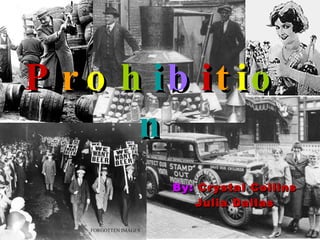
P r o h i b i t i o n By:  Crystal Collins Julia Dallas
Objectives How Prohibition began Prohibition in America How Prohibition effected American Citizens The end of Prohibition
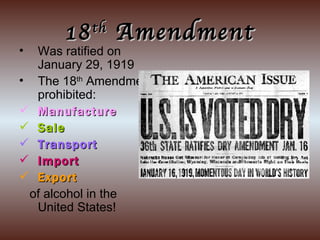
18 th  Amendment Was ratified on January 29, 1919 The 18 th  Amendment prohibited: Manufacture Sale Transport Import Export of alcohol in the United States!
Noble Experiment Prohibition was known as “The Noble Experiment” Many Government officials believed that the result of prohibition would stop:  Crime and Corruption   Cut down on Abuse   Car Accidents
Dumping  Alcohol into  the sewer.
 
President Harding One of the presidents during Prohibition FUN FACT! Kept bottles of alcohol stashed in the White House for himself to drink during Prohibition.
M e d i c a l  V a l u e Alcohol was legal when it was being used for  medical  purposes Many patients took advantage of prescriptions, and used them as a source of alcohol instead of a cure for sickness.  Alcohol was also used for  religious  beliefs.
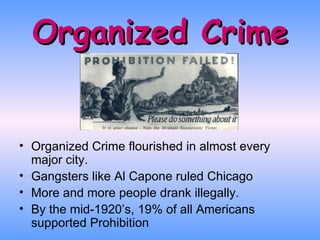
Organized Crime Organized Crime flourished in almost every major city. Gangsters like Al Capone ruled Chicago  More and more people drank illegally.  By the mid-1920’s, 19% of all Americans supported Prohibition
C A R T O O N
Home Brewing Illegal home brewing was popular during Prohibition Wine and beer were often made in peoples bathrooms called “ bathtub gin ”. Bootleggers  were people who smuggled liquor from Canada and Cuba into America.
Saloons To obtain liquor illegally, drinkers went underground to hidden saloons and nightclubs known as “ speakeasies ”
Anti-Saloon League The prohibition movement's strength grew, especially after the  Anti-Saloon League  in 1893. The Anti-Saloon League was considered “an army of the Lord to wipe away the curse of drink.”
T e m p e r a n c e   U n i o n Women’s Christian Temperance Union  was founded in 1873  Supported the Prohibition One of its methods to achieve Prohibition was education.  It was believed that if it could "get to the children" it could create a dry feeling for drinking, and  lead to prohibition.
 
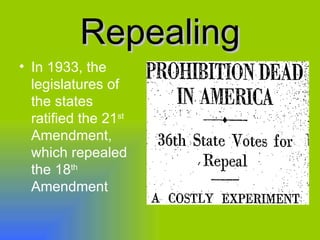
Repealing In 1933, the legislatures of the states ratified the 21 st   Amendment, which repealed the 18 th  Amendment
Conclusion Prohibition died off because it was unenforceable.  Alcohol was no longer illegal =] THE  END   !

Prohibition Fin

  • 1.
    P r oh i b i t i o n By: Crystal Collins Julia Dallas
  • 2.
    Objectives How Prohibitionbegan Prohibition in America How Prohibition effected American Citizens The end of Prohibition
  • 3.
    18 th Amendment Was ratified on January 29, 1919 The 18 th Amendment prohibited: Manufacture Sale Transport Import Export of alcohol in the United States!
  • 4.
    Noble Experiment Prohibitionwas known as “The Noble Experiment” Many Government officials believed that the result of prohibition would stop: Crime and Corruption Cut down on Abuse Car Accidents
  • 5.
    Dumping Alcoholinto the sewer.
  • 6.
  • 7.
    President Harding Oneof the presidents during Prohibition FUN FACT! Kept bottles of alcohol stashed in the White House for himself to drink during Prohibition.
  • 8.
    M e di c a l V a l u e Alcohol was legal when it was being used for medical purposes Many patients took advantage of prescriptions, and used them as a source of alcohol instead of a cure for sickness. Alcohol was also used for religious beliefs.
  • 9.
    Organized Crime OrganizedCrime flourished in almost every major city. Gangsters like Al Capone ruled Chicago More and more people drank illegally. By the mid-1920’s, 19% of all Americans supported Prohibition
  • 10.
    C A RT O O N
  • 11.
    Home Brewing Illegalhome brewing was popular during Prohibition Wine and beer were often made in peoples bathrooms called “ bathtub gin ”. Bootleggers were people who smuggled liquor from Canada and Cuba into America.
  • 12.
    Saloons To obtainliquor illegally, drinkers went underground to hidden saloons and nightclubs known as “ speakeasies ”
  • 13.
    Anti-Saloon League Theprohibition movement's strength grew, especially after the Anti-Saloon League in 1893. The Anti-Saloon League was considered “an army of the Lord to wipe away the curse of drink.”
  • 14.
    T e mp e r a n c e U n i o n Women’s Christian Temperance Union was founded in 1873 Supported the Prohibition One of its methods to achieve Prohibition was education. It was believed that if it could "get to the children" it could create a dry feeling for drinking, and lead to prohibition.
  • 15.
  • 16.
    Repealing In 1933,the legislatures of the states ratified the 21 st Amendment, which repealed the 18 th Amendment
  • 17.
    Conclusion Prohibition diedoff because it was unenforceable. Alcohol was no longer illegal =] THE END !