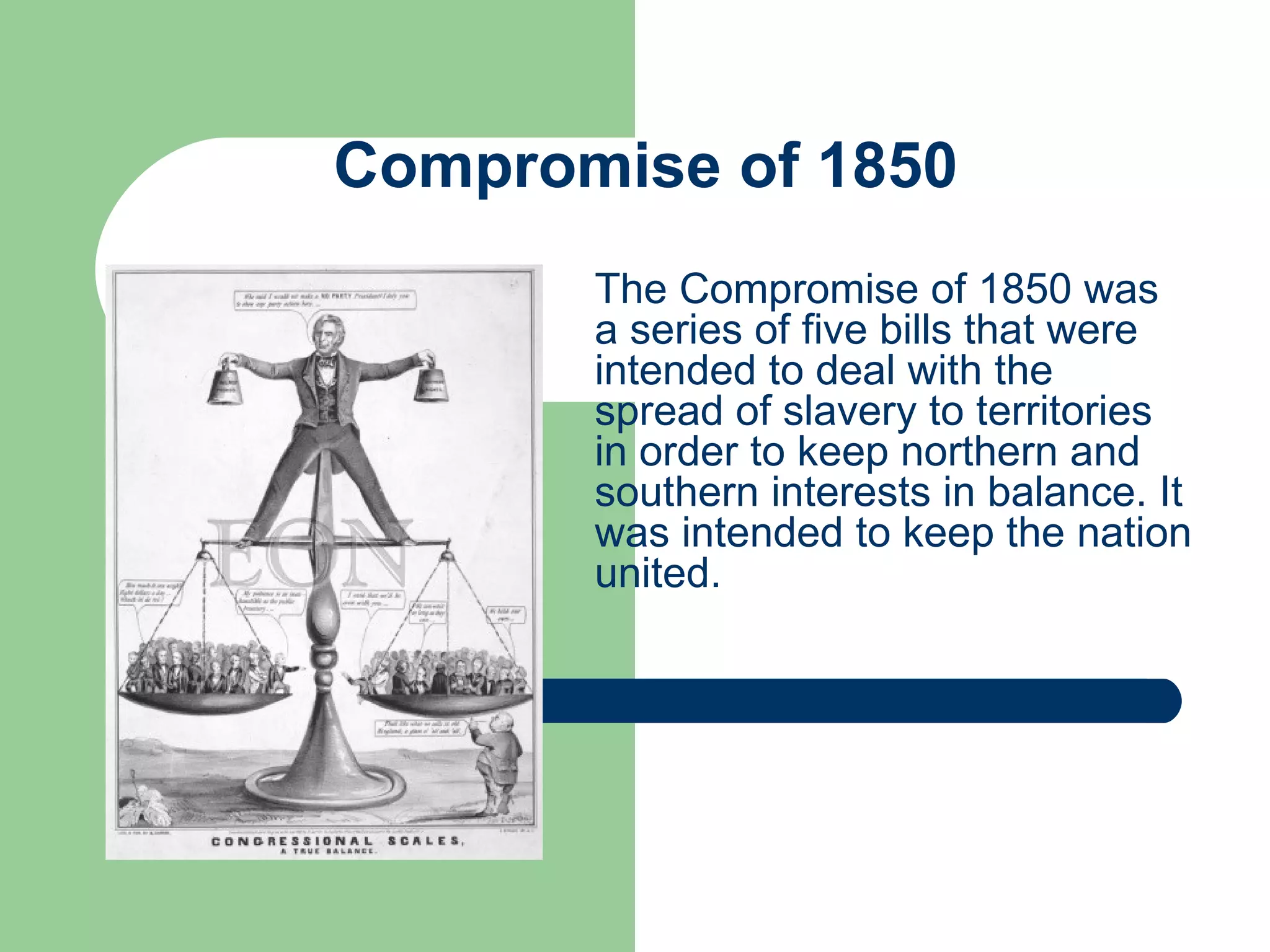
Compromise of 1850 The Compromise of 1850 was a series of five bills that were intended to deal with the spread of slavery to territories in order to keep northern and southern interests in balance. It was intended to keep the nation united.
Issues The United States had recently acquired a vast territory from Mexico. Would the new territories be entered as free or slave states? There was a dispute over land: Texas claimed that its territory extended all the way to Santa Fe.  California wished to enter the Union as a free state which would upset the balance between the number of free and slave states. Finally, there was Washington, D.C. Not only did the nation's capital allow slavery, it was home to the largest slave market in North America.
The Five Bills 1. California was entered as a free state. 2. New Mexico and Utah were each allowed to use popular sovereignty to decide the issue of slavery.  3. The Republic of Texas gave up lands that it claimed in present day New Mexico and received $10 million to pay its debt to Mexico. 4. The slave trade was abolished in the District of Columbia. 5. The Fugitive Slave Act
Fugitive Slave Act Made any federal official who did not arrest a runaway slave liable to pay a fine.  It denied a fugitive's right to a jury trial.  Caused and estimated 20,000 fugitive slaves to move to Canada Caused many abolitionists to increase their efforts against slavery.

Compromise Of 1850

  • 1.
    Compromise of 1850The Compromise of 1850 was a series of five bills that were intended to deal with the spread of slavery to territories in order to keep northern and southern interests in balance. It was intended to keep the nation united.
  • 2.
    Issues The UnitedStates had recently acquired a vast territory from Mexico. Would the new territories be entered as free or slave states? There was a dispute over land: Texas claimed that its territory extended all the way to Santa Fe. California wished to enter the Union as a free state which would upset the balance between the number of free and slave states. Finally, there was Washington, D.C. Not only did the nation's capital allow slavery, it was home to the largest slave market in North America.
  • 3.
    The Five Bills1. California was entered as a free state. 2. New Mexico and Utah were each allowed to use popular sovereignty to decide the issue of slavery. 3. The Republic of Texas gave up lands that it claimed in present day New Mexico and received $10 million to pay its debt to Mexico. 4. The slave trade was abolished in the District of Columbia. 5. The Fugitive Slave Act
  • 4.
    Fugitive Slave ActMade any federal official who did not arrest a runaway slave liable to pay a fine. It denied a fugitive's right to a jury trial. Caused and estimated 20,000 fugitive slaves to move to Canada Caused many abolitionists to increase their efforts against slavery.