Progress Toward  Topical Therapy  of AMD Rick Trevino, OD VA Outpatient Clinic Evansville, IN http://richardtrevino.net
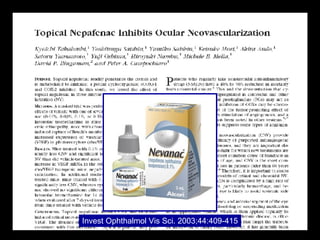
Invest Ophthalmol Vis Sci. 2003;44:409-415
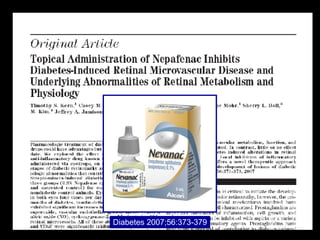
Diabetes 2007;56:373-379
 
Existing AMD Therapies 1982: Laser Photocoagulation Vision loss with subfoveal lesions High recurrence rate 2000: Photodynamic Therapy  Unable to improve vision Decline of acuity with time High recurrence rate 2004: Macugen ( anti-VEGF ) Frequent intravitreal injections 2006: Lucentis ( anti-VEGF, Current Gold Standard) Frequent intravitreal injections Tachyphylaxis
Topical Therapy of AMD Advantages Decreased risk of complication  Decreased cost  Increased convenience Disadvantages Decreased drug bioavailability at the retina (lacrimal washout)  Increased risk of systemic side effects Decreased compliance
New AMD Treatment Paradigms Prophylactic therapy of at-risk populations  Many topical drugs have demonstrated benefit in inhibiting onset as well as regression of existing CNV Contingency therapy Start therapy, then get retinal consult  Optometric Co-management Topical therapy opens the door to the optometric management of neovascular AMD Replacing invasive tests (FA) with noninvasive tests (OCT)
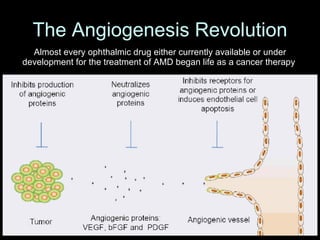
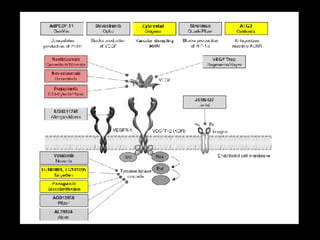
The Angiogenesis Revolution Almost every ophthalmic drug either currently available or under development for the treatment of AMD began life as a cancer therapy
FDA-Mandated Clinical Trials PHASE I Initial studies to determine the actions of drugs in humans Determine side effects associated with increasing doses Gain early evidence of effectiveness May include healthy participants PHASE II Controlled studies  Evaluate effectiveness in patients with the disease under study  Determine the common short-term side effects and risks.  PHASE III Expanded controlled and uncontrolled trials  Evaluate the overall benefit-risk relationship of the drug PHASE IV Post-marketing studies  Collect additional information about the drug's risks, benefits, and optimal use. 
 
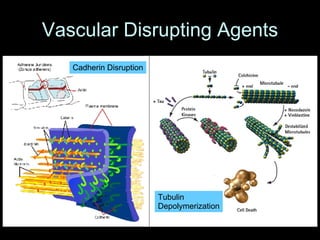
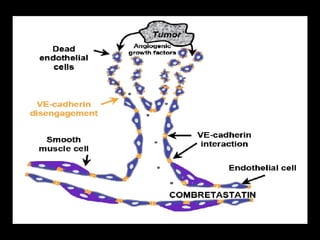
Combretastatin A4 Phosphate Trade name: Zybrestat (fosbretabulin) Company: Oxigene Mechanism of action: Vascular disrupting agent (VDA) Dual action: tubulin depolymerizing agent, cell junction disruption Upsets the physical structure of the existing blood vessels  Selective CNV shutdown suggests a structural difference of neovascular vessels compared to that of normal vessels
Vascular Disrupting Agents Cadherin Disruption Tubulin Depolymerization
Combretastatin A4 Phosphate
Combretastatin A4 Phosphate Animal Studies  Good ocular penetration after topical application Prevents development of new CNV and causes partial regression of established CNV in mice Human Study 22 subjects with CNV due to pathologic myopia  Intravenous Combretastatin A4 Phosphate   All subjects maintained VA after 3 months follow-up Decreased size and leakage of CNV   Future Plans Initiate clinical trials of topical agent next year
Mecamylamine Code Name: ATG003 Company: Comentis Mechanism of action: Nicotinic acetylcholine receptor (nAChR) antagonist Non-neuronal nAChR present on endothelial cells Involved in the regulation of vital cell functions, such as mitosis, differentiation, cell-cell contact, locomotion, and migration   By stimulating nAChR, nicotine promotes angiogenesis
Nicotine and Angiogenesis  Endogenous cholinergic angiogenesis pathway Nicotine induces morphological changes in endothelial cells identical to those induced by VEGF  Increases endothelial cell proliferation, reduces apoptosis and increases capillary network formation  Antagonists of nAChR abolish the proangiogenic effect of nicotine  nAChR and VEGF: Two distinct but interdependent angiogenesis pathways Neutralization of VEGF resulted in a significant but not complete inhibition of nAChR-mediated network formation
 
Mecamylamine Animal studies Topical delivery of ATG003 significantly inhibits laser-induced CNV in a mouse model of AMD  Phase 1 successfully completed in January 2008  Phase 2 Completed 330 subject safety and efficacy study Ongoing 60 subject study in patients receiving maintenance injections of either ranibizumab or bevacizumab
 
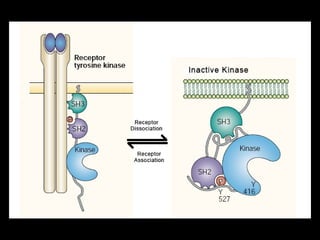
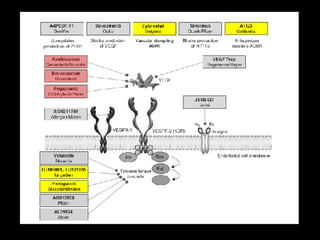
Pazopanib Code Name: GW786034 Company: Galaxo Smith Klein Mechanism of action: Multitargeted tyrosine kinase inhibitor  VEGF receptor activation triggers the tyrosine kinase cascade leading to changes in cellular behavior Inhibitors of tyrosine kinase prevent VEGF-induced vascular permeability and block angiogenesis Multitargeted: Inhibits kinases that interact with multiple receptors (VEGFR, PDGFR, c-kit)
 
 
Pazopanib Animal studies Potent inhibitor of all three VEGF receptors  Excellent antiangiogenic activity  Phase 1 good safety and tolerability in 38 healthy volunteers  Phase 2 Ongoing 99-subject dose-ranging study of safety and effectiveness of pazopanib eye drops in wet AMD Ongoing 60-subject study of efficacy of pazopanib eye drops in patients with wet AMD
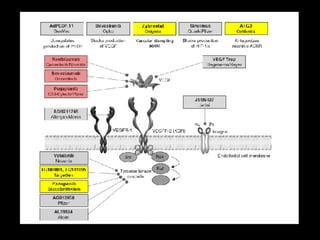
TG100801 / TG101095 Company: TargeGen Mechanism of action: Multitargeted tyrosine kinase inhibitors Prodrug: TG100801, Active drug: TG100572 Inhibits Src and Yes kinases of VEGF pathway TG101095 inhibits kinases of VEGFR and JAK2  Shuts down VEGF, PDGF, and FGF pathways  Inhibition of multiple targets simultaneously tends to result in a more robust therapeutic effect
 
TG100801 Animal studies  (TG100801/TG101095) Inhibits VEGF and CNV growth with similar efficacy as Avastin, VEGF Trap, other drugs Not detectable systemically after topical application Phase 1 Well tolerated by 42 healthy volunteers Phase 2 Ongoing 40 subject dose-ranging study of efficacy of TG100801 eye drops in patients with wet AMD
 
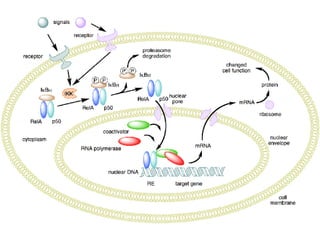
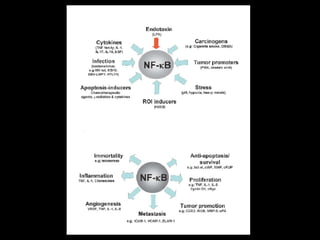
OT551 Company: Othera Mechanism of action: Down-regulate nuclear factor kappa B (NF-kB)  Transcription factor. Turns genes on and off.  Involved in regulation of about 2000 genes that fall into 4 broad categories: Immunoregulatory and inflammatory genes Anti-apoptotic genes Genes that positively regulate cell proliferation Genes that encode negative regulators of NF-kB
 
 
OT551 Animal studies Protects retina from oxidative & light-induced damage Blocks angiogenesis  - adjunctive therapy in wet AMD Phase 1  - No data publicly available Phase 2 NEI study: 10 subjects with bilateral GA OMEGA study Ongoing 198 subject dose-ranging study of safety and efficacy of OT551 eye drops in GA Primary outcome: Change in area of GA Intervention: 2gtt QID x 2yrs
Thank You!

Progress Toward Topical Therapy of AMD

  • 1.
    Progress Toward Topical Therapy of AMD Rick Trevino, OD VA Outpatient Clinic Evansville, IN http://richardtrevino.net
  • 2.
    Invest Ophthalmol VisSci. 2003;44:409-415
  • 3.
  • 4.
  • 5.
    Existing AMD Therapies1982: Laser Photocoagulation Vision loss with subfoveal lesions High recurrence rate 2000: Photodynamic Therapy Unable to improve vision Decline of acuity with time High recurrence rate 2004: Macugen ( anti-VEGF ) Frequent intravitreal injections 2006: Lucentis ( anti-VEGF, Current Gold Standard) Frequent intravitreal injections Tachyphylaxis
  • 6.
    Topical Therapy ofAMD Advantages Decreased risk of complication Decreased cost Increased convenience Disadvantages Decreased drug bioavailability at the retina (lacrimal washout) Increased risk of systemic side effects Decreased compliance
  • 7.
    New AMD TreatmentParadigms Prophylactic therapy of at-risk populations Many topical drugs have demonstrated benefit in inhibiting onset as well as regression of existing CNV Contingency therapy Start therapy, then get retinal consult Optometric Co-management Topical therapy opens the door to the optometric management of neovascular AMD Replacing invasive tests (FA) with noninvasive tests (OCT)
  • 8.
    The Angiogenesis RevolutionAlmost every ophthalmic drug either currently available or under development for the treatment of AMD began life as a cancer therapy
  • 9.
    FDA-Mandated Clinical TrialsPHASE I Initial studies to determine the actions of drugs in humans Determine side effects associated with increasing doses Gain early evidence of effectiveness May include healthy participants PHASE II Controlled studies Evaluate effectiveness in patients with the disease under study Determine the common short-term side effects and risks.  PHASE III Expanded controlled and uncontrolled trials Evaluate the overall benefit-risk relationship of the drug PHASE IV Post-marketing studies Collect additional information about the drug's risks, benefits, and optimal use. 
  • 10.
  • 11.
    Combretastatin A4 PhosphateTrade name: Zybrestat (fosbretabulin) Company: Oxigene Mechanism of action: Vascular disrupting agent (VDA) Dual action: tubulin depolymerizing agent, cell junction disruption Upsets the physical structure of the existing blood vessels Selective CNV shutdown suggests a structural difference of neovascular vessels compared to that of normal vessels
  • 12.
    Vascular Disrupting AgentsCadherin Disruption Tubulin Depolymerization
  • 13.
  • 14.
    Combretastatin A4 PhosphateAnimal Studies Good ocular penetration after topical application Prevents development of new CNV and causes partial regression of established CNV in mice Human Study 22 subjects with CNV due to pathologic myopia Intravenous Combretastatin A4 Phosphate All subjects maintained VA after 3 months follow-up Decreased size and leakage of CNV Future Plans Initiate clinical trials of topical agent next year
  • 15.
    Mecamylamine Code Name:ATG003 Company: Comentis Mechanism of action: Nicotinic acetylcholine receptor (nAChR) antagonist Non-neuronal nAChR present on endothelial cells Involved in the regulation of vital cell functions, such as mitosis, differentiation, cell-cell contact, locomotion, and migration By stimulating nAChR, nicotine promotes angiogenesis
  • 16.
    Nicotine and Angiogenesis Endogenous cholinergic angiogenesis pathway Nicotine induces morphological changes in endothelial cells identical to those induced by VEGF Increases endothelial cell proliferation, reduces apoptosis and increases capillary network formation Antagonists of nAChR abolish the proangiogenic effect of nicotine nAChR and VEGF: Two distinct but interdependent angiogenesis pathways Neutralization of VEGF resulted in a significant but not complete inhibition of nAChR-mediated network formation
  • 17.
  • 18.
    Mecamylamine Animal studiesTopical delivery of ATG003 significantly inhibits laser-induced CNV in a mouse model of AMD Phase 1 successfully completed in January 2008 Phase 2 Completed 330 subject safety and efficacy study Ongoing 60 subject study in patients receiving maintenance injections of either ranibizumab or bevacizumab
  • 19.
  • 20.
    Pazopanib Code Name:GW786034 Company: Galaxo Smith Klein Mechanism of action: Multitargeted tyrosine kinase inhibitor VEGF receptor activation triggers the tyrosine kinase cascade leading to changes in cellular behavior Inhibitors of tyrosine kinase prevent VEGF-induced vascular permeability and block angiogenesis Multitargeted: Inhibits kinases that interact with multiple receptors (VEGFR, PDGFR, c-kit)
  • 21.
  • 22.
  • 23.
    Pazopanib Animal studiesPotent inhibitor of all three VEGF receptors Excellent antiangiogenic activity Phase 1 good safety and tolerability in 38 healthy volunteers Phase 2 Ongoing 99-subject dose-ranging study of safety and effectiveness of pazopanib eye drops in wet AMD Ongoing 60-subject study of efficacy of pazopanib eye drops in patients with wet AMD
  • 24.
    TG100801 / TG101095Company: TargeGen Mechanism of action: Multitargeted tyrosine kinase inhibitors Prodrug: TG100801, Active drug: TG100572 Inhibits Src and Yes kinases of VEGF pathway TG101095 inhibits kinases of VEGFR and JAK2 Shuts down VEGF, PDGF, and FGF pathways Inhibition of multiple targets simultaneously tends to result in a more robust therapeutic effect
  • 25.
  • 26.
    TG100801 Animal studies (TG100801/TG101095) Inhibits VEGF and CNV growth with similar efficacy as Avastin, VEGF Trap, other drugs Not detectable systemically after topical application Phase 1 Well tolerated by 42 healthy volunteers Phase 2 Ongoing 40 subject dose-ranging study of efficacy of TG100801 eye drops in patients with wet AMD
  • 27.
  • 28.
    OT551 Company: OtheraMechanism of action: Down-regulate nuclear factor kappa B (NF-kB) Transcription factor. Turns genes on and off. Involved in regulation of about 2000 genes that fall into 4 broad categories: Immunoregulatory and inflammatory genes Anti-apoptotic genes Genes that positively regulate cell proliferation Genes that encode negative regulators of NF-kB
  • 29.
  • 30.
  • 31.
    OT551 Animal studiesProtects retina from oxidative & light-induced damage Blocks angiogenesis - adjunctive therapy in wet AMD Phase 1 - No data publicly available Phase 2 NEI study: 10 subjects with bilateral GA OMEGA study Ongoing 198 subject dose-ranging study of safety and efficacy of OT551 eye drops in GA Primary outcome: Change in area of GA Intervention: 2gtt QID x 2yrs
  • 32.

Editor's Notes

  • #2 The dream of treating AMD with an eye drop is now a reality. Numerous drugs in eye drop from are currently undergoing clinical trials and will, hopefully, soon be available to you to prescribe for your patients with AMD We will review the AMD drug pipeline, giving you a peek at some of the drugs underdevelopment for AMD. Then, we will focus on 5 eye drops that either are or will soon be in clinical trials for AMD