Challenges in CNI inhibitor in
kidney transplantation
Dr Nahid Rahimzadeh
Pediatrics Nephrology
Rasoul-e-Akram hospital
Calcineurin inhibitors
 After the discovery and clinical use of key CNI compounds
cyclosporine and tacrolimus, graft survival in solid organ transplant
increased significantly.
 They remain a cornerstone of solid organ transplant pharmacotherapy
through inhibition of T-lymphocyte activation and impairment of
lymphocyte function and replication .
 Frequent (i.e., weekly or even twice weekly) laboratory monitoring is
often required to adjust total daily dosing to achieve goal trough
concentrations.
 In the earliest clinical kidney transplant trials using cyclosporine, a
high incidence of oliguric AKI and CNI nephrotoxicity was observed.
 The risk was greatest with prolonged ischemia time of the donated
kidney prior to transplantation .
 Subsequent trials using lower doses of cyclosporine showed that
these problems were dose related.
 Acute and chronic nephrotoxicity are generally similar with
both cyclosporine and tacrolimus .
 However, tacrolimus has less nephrotoxicity with lower doses without
compromising overall outcomes .
 In one trial, 1645 kidney transplant recipients were randomly assigned to
one of four immunosuppressive arms:
 conventional-dose cyclosporine, glucocorticoids, and MMF
 daclizumab induction therapy, MMF, and glucocorticoids with either low-dose
cyclosporine (50 to 100 ng/mL), low-dose sirolimus (4 to 8 ng/mL), or low-dose
tacrolimus (3 to 7 ng/mL).
 At one year, the low-dose tacrolimus group had the highest mean
calculated GFR compared with the other three groups (65 versus 57
to 60 mL/min).
 The tacrolimus-based regimen was also associated with the lowest
allograft rejection and highest allograft survival rates.
 At three years, the low-dose tacrolimus group continued to have the
highest mean calculated GFR (69 mL/min versus 64 to 66 mL/min) .
RISK FACTORS
 Several factors may contribute to the risk of CNI nephrotoxicity :
 ●High doses of cyclosporineor tacrolimus
 ●Older age of donated kidney
 ●Concomitant use of nephrotoxic drugs, particularly NSAIDs.
 ●Salt depletion and diuretic use
 ●Drugs that inhibit cytochrome P-450.
 ●Drugs that inhibit P-glycoprotein-mediated efflux of CNIs from tubular epithelial
cells, thereby increasing local renal exposure to CNIs ●Genetic polymorphisms in
the genes encoding CYP3A4/5 (CYP3A4/5) and P-glycoprotein (ABCB1)
 Despite their efficacy successes, the adverse effects associated with CNIs
can be substantial, including:
 Abnormal hair growth (e.g., alopecia with tacrolimus and hirsutism with
cyclosporine)
 Electrolyte and metabolic abnormalities (e.g., glucose intolerance, hyperlipidemia,
hyperkalemia)
 Gastrointestinal disturbances (e.g., anorexia, nausea, vomiting)
 Hypertension
 Neurotoxicities (e.g., tremor, headache, visual abnormalities) and nephrotoxicity
 Thrombotic microangiopathy
PREVENTION OF CHRONIC CNI NEPHROTOXICITY
 Reduced exposure to calcineurin inhibitors
 Therapies with unclear benefit
 Fish oil
 arginine and canola oil
 Calcium channel blockers
 Renin-angiotensin system inhibitors
 Therapies with no benefit:
 Pentoxifylline
 Thromboxane synthesis inhibitor
 In our center( Rasoul-e-Akram hospital), 156 pediatric kidney transplantation(
85 from living donors and 71 from deceased donors) were performed from
2011 to 2019
 The mean age of the recipients was 10.7 (SD: 3.52), ranging from 4.5 to 20
years.
 Female 83 (53.2%), male 73 (46.8%)
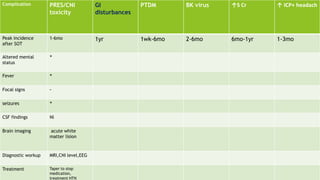
Complication PRES/CNI
toxicity
GI
disturbances
PTDM BK virus ↑S Cr ↑ ICP+ headach
Peak incidence
after SOT
1-6mo 1yr 1wk-6mo 2-6mo 6mo-1yr 1-3mo
Altered mental
status
*
Fever *
Focal signs -
seizures *
CSF findings Nl
Brain imaging acute white
matter lision
Diagnostic workup MRI,CNI level,EEG
Treatment Taper to stop
medication,
treatment HTN
Challenges in cni inhibitor

Challenges in cni inhibitor

  • 1.
    Challenges in CNIinhibitor in kidney transplantation Dr Nahid Rahimzadeh Pediatrics Nephrology Rasoul-e-Akram hospital
  • 2.
    Calcineurin inhibitors  Afterthe discovery and clinical use of key CNI compounds cyclosporine and tacrolimus, graft survival in solid organ transplant increased significantly.  They remain a cornerstone of solid organ transplant pharmacotherapy through inhibition of T-lymphocyte activation and impairment of lymphocyte function and replication .  Frequent (i.e., weekly or even twice weekly) laboratory monitoring is often required to adjust total daily dosing to achieve goal trough concentrations.
  • 3.
     In theearliest clinical kidney transplant trials using cyclosporine, a high incidence of oliguric AKI and CNI nephrotoxicity was observed.  The risk was greatest with prolonged ischemia time of the donated kidney prior to transplantation .  Subsequent trials using lower doses of cyclosporine showed that these problems were dose related.
  • 4.
     Acute andchronic nephrotoxicity are generally similar with both cyclosporine and tacrolimus .  However, tacrolimus has less nephrotoxicity with lower doses without compromising overall outcomes .  In one trial, 1645 kidney transplant recipients were randomly assigned to one of four immunosuppressive arms:  conventional-dose cyclosporine, glucocorticoids, and MMF  daclizumab induction therapy, MMF, and glucocorticoids with either low-dose cyclosporine (50 to 100 ng/mL), low-dose sirolimus (4 to 8 ng/mL), or low-dose tacrolimus (3 to 7 ng/mL).
  • 5.
     At oneyear, the low-dose tacrolimus group had the highest mean calculated GFR compared with the other three groups (65 versus 57 to 60 mL/min).  The tacrolimus-based regimen was also associated with the lowest allograft rejection and highest allograft survival rates.  At three years, the low-dose tacrolimus group continued to have the highest mean calculated GFR (69 mL/min versus 64 to 66 mL/min) .
  • 6.
    RISK FACTORS  Severalfactors may contribute to the risk of CNI nephrotoxicity :  ●High doses of cyclosporineor tacrolimus  ●Older age of donated kidney  ●Concomitant use of nephrotoxic drugs, particularly NSAIDs.  ●Salt depletion and diuretic use  ●Drugs that inhibit cytochrome P-450.  ●Drugs that inhibit P-glycoprotein-mediated efflux of CNIs from tubular epithelial cells, thereby increasing local renal exposure to CNIs ●Genetic polymorphisms in the genes encoding CYP3A4/5 (CYP3A4/5) and P-glycoprotein (ABCB1)
  • 7.
     Despite theirefficacy successes, the adverse effects associated with CNIs can be substantial, including:  Abnormal hair growth (e.g., alopecia with tacrolimus and hirsutism with cyclosporine)  Electrolyte and metabolic abnormalities (e.g., glucose intolerance, hyperlipidemia, hyperkalemia)  Gastrointestinal disturbances (e.g., anorexia, nausea, vomiting)  Hypertension  Neurotoxicities (e.g., tremor, headache, visual abnormalities) and nephrotoxicity  Thrombotic microangiopathy
  • 8.
    PREVENTION OF CHRONICCNI NEPHROTOXICITY  Reduced exposure to calcineurin inhibitors  Therapies with unclear benefit  Fish oil  arginine and canola oil  Calcium channel blockers  Renin-angiotensin system inhibitors
  • 9.
     Therapies withno benefit:  Pentoxifylline  Thromboxane synthesis inhibitor
  • 10.
     In ourcenter( Rasoul-e-Akram hospital), 156 pediatric kidney transplantation( 85 from living donors and 71 from deceased donors) were performed from 2011 to 2019  The mean age of the recipients was 10.7 (SD: 3.52), ranging from 4.5 to 20 years.  Female 83 (53.2%), male 73 (46.8%)
  • 11.
    Complication PRES/CNI toxicity GI disturbances PTDM BKvirus ↑S Cr ↑ ICP+ headach Peak incidence after SOT 1-6mo 1yr 1wk-6mo 2-6mo 6mo-1yr 1-3mo Altered mental status * Fever * Focal signs - seizures * CSF findings Nl Brain imaging acute white matter lision Diagnostic workup MRI,CNI level,EEG Treatment Taper to stop medication, treatment HTN