A
Report
On
Product Branding
submitted by:-
Annu kumari
Introduction of Product Branding:-
Branding is a strategy that is used by marketers.
A name, logo or symbol that evokes in customers, a
perception of added value for which they will pay a
premium price.
A brand is an identity that includes all sorts of components
A brand is simply a logo e.g. McDonald’s Golden Arches.
“A product with a personality.” by Chris Staples.
 Branding is a marketing term that refers to a company's efforts to build
and maintain an image or brand identity.
The concept of branding for a business is very similar to the idea of a person
building a reputation. A brand is the meaning behind the name, logo or other
symbol used to signify a company and its products.
Some companies try to establish themselves as leaders in innovation, while
others make quality, high service or low costs differentiated factors of their
brand.
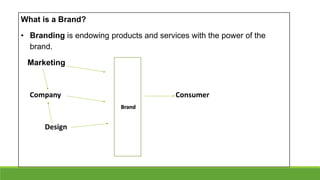
What is a Brand?
• Branding is endowing products and services with the power of the
brand.
Marketing
Company Consumer
Design
Brand
Objectives of Product Branding:-
Increase sales
Build brand awareness
Grow market share
Launch new products or services
Target new customers
Improve stakeholder relations
Enhance customer relationships
Improve internal communications
Increase profit
Benefits of Brand for the consumer:-
It helps to identify the source of manufacturer of the product and
simultaneously assigns a responsibility towards an organization for the branded
product.
Experience of customers with products of same brand help them to quickly
decide whether they will want to go with their purchase decision or not making
their decision easier.
Brands bring with them a certain level of quality assurance.
Benefits of Brand for the firm:-
For a firm, the brand provides legal protection towards unique features or
aspects of the product.
Brand loyalty helps organization to retain their existing customers when
diversifying from one line of products to other. It provides security of demand
and creates barrier for other manufactures to easily tap existing customers.
Firms can charge a premium for owning a brand boosting profit on every sale.
Product can be copied, but brand cannot. Once a brand is established, it’s the
invaluable asset for an organization.
A well established brand adds towards the overall value of the firm while
calculating its net worth.
Issues in Product Branding:-
Here is my observation of the most common brand problems are:-
The brand does not stand for anything and it does not promise anything. It is
just a name and a logo.
No one in the organization has a solid understanding of the brand’s consumers
or their needs.
The CEO and the leadership team do not understand brand management .
The brand has pursued a series of price increases at a rate that far exceeds
inflation
Growth pressures have forced the brand into new products or services that
blur the meaning of the brand.
Product Branding strategy:-
1. Significance :-A successful product and brand strategy develops brand
awareness and identity that sets your products apart from the countless others
solely based on brand name.
2. Positioning :- A brand strategy should position products relative to immediate
competition. Decide whether you want consumers to think of your product as
less expensive than the competition, higher quality than the competition or
carrying more status than the competition. These and other factors determine
your brand and product position in the market relative to your competition.
Product Branding Strategy:-
Developing Brand Vision
Establishing Brand Position
Fulfilling Brand Contract
Communicating Brand Position
Measuring ROBI
Strategy
Of
Product
Branding
Pros and Cons of Branding:-
Advantages:
Increases loyalty
Can charge HIGHER PRICES
Successful brand names CAN link to product
Can Launch complimentary products in same brand name – e.g. shampoo;
conditioner; hairspray.
Improved perceptions of product
Larger margins
Possible licensing opportunities
Drawbacks:
Complex
Expensive to design
Difficult to maintain
Negative attributes
Difficult and expensive to exchange
Cost of developing and establishing it
Can be copied/ near copied
Could get a bad name as well as a good one if quality is not kept up
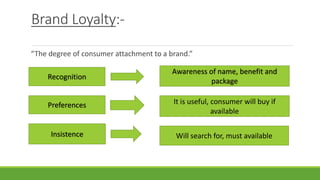
Brand Loyalty:-
“The degree of consumer attachment to a brand.”
Recognition
Preferences
Insistence
Awareness of name, benefit and
package
It is useful, consumer will buy if
available
Will search for, must available
SWOT of Product Branding:-
Strengths:-
Your new product should be built around two concepts: satisfying
the need or demand of a specific target audience and doing so with
a unique selling benefit.
Weaknesses:-
A weakness related to a new product launch doesn’t necessarily
mean you’ve done something wrong -- it might just signal that your
competition has an advantage you have to overcome.
Opportunities:-
Because you’ve got a new product, you have some built-in
opportunities. Early adopters and influencers like to be the first to
try the hottest new thing, telling the masses who follow the lead of
these groups their experience with a new product.
Threats:-
Once you enter the marketplace, your competitors will likely react.
One of the biggest threats you face is your competition changing the
playing field after you launch.
Conclusion:-
Brand value can be managed just as you manage a brand of a
product or service. Brand value is all based on image or perception,
an end-to-end experience, trust and a promise of consistent value,
and an emotional connection and relationship.
Brand really is about fact and emotion. It’s about what you deliver
and the emotional attributes associated with it. This emotional
quotient increases as the world becomes more visual, more digital,
and more connected. The ability of your personal brand to evoke a
strong, positive feeling is a key element of your brand’s equity.
Thank You

Product branding

  • 1.
  • 2.
    Introduction of ProductBranding:- Branding is a strategy that is used by marketers. A name, logo or symbol that evokes in customers, a perception of added value for which they will pay a premium price. A brand is an identity that includes all sorts of components A brand is simply a logo e.g. McDonald’s Golden Arches. “A product with a personality.” by Chris Staples.
  • 3.
     Branding isa marketing term that refers to a company's efforts to build and maintain an image or brand identity. The concept of branding for a business is very similar to the idea of a person building a reputation. A brand is the meaning behind the name, logo or other symbol used to signify a company and its products. Some companies try to establish themselves as leaders in innovation, while others make quality, high service or low costs differentiated factors of their brand.
  • 4.
    What is aBrand? • Branding is endowing products and services with the power of the brand. Marketing Company Consumer Design Brand
  • 5.
    Objectives of ProductBranding:- Increase sales Build brand awareness Grow market share Launch new products or services Target new customers Improve stakeholder relations Enhance customer relationships Improve internal communications Increase profit
  • 6.
    Benefits of Brandfor the consumer:- It helps to identify the source of manufacturer of the product and simultaneously assigns a responsibility towards an organization for the branded product. Experience of customers with products of same brand help them to quickly decide whether they will want to go with their purchase decision or not making their decision easier. Brands bring with them a certain level of quality assurance.
  • 7.
    Benefits of Brandfor the firm:- For a firm, the brand provides legal protection towards unique features or aspects of the product. Brand loyalty helps organization to retain their existing customers when diversifying from one line of products to other. It provides security of demand and creates barrier for other manufactures to easily tap existing customers. Firms can charge a premium for owning a brand boosting profit on every sale. Product can be copied, but brand cannot. Once a brand is established, it’s the invaluable asset for an organization. A well established brand adds towards the overall value of the firm while calculating its net worth.
  • 8.
    Issues in ProductBranding:- Here is my observation of the most common brand problems are:- The brand does not stand for anything and it does not promise anything. It is just a name and a logo. No one in the organization has a solid understanding of the brand’s consumers or their needs. The CEO and the leadership team do not understand brand management . The brand has pursued a series of price increases at a rate that far exceeds inflation Growth pressures have forced the brand into new products or services that blur the meaning of the brand.
  • 9.
    Product Branding strategy:- 1.Significance :-A successful product and brand strategy develops brand awareness and identity that sets your products apart from the countless others solely based on brand name. 2. Positioning :- A brand strategy should position products relative to immediate competition. Decide whether you want consumers to think of your product as less expensive than the competition, higher quality than the competition or carrying more status than the competition. These and other factors determine your brand and product position in the market relative to your competition.
  • 10.
    Product Branding Strategy:- DevelopingBrand Vision Establishing Brand Position Fulfilling Brand Contract Communicating Brand Position Measuring ROBI Strategy Of Product Branding
  • 11.
    Pros and Consof Branding:- Advantages: Increases loyalty Can charge HIGHER PRICES Successful brand names CAN link to product Can Launch complimentary products in same brand name – e.g. shampoo; conditioner; hairspray. Improved perceptions of product Larger margins Possible licensing opportunities
  • 12.
    Drawbacks: Complex Expensive to design Difficultto maintain Negative attributes Difficult and expensive to exchange Cost of developing and establishing it Can be copied/ near copied Could get a bad name as well as a good one if quality is not kept up
  • 13.
    Brand Loyalty:- “The degreeof consumer attachment to a brand.” Recognition Preferences Insistence Awareness of name, benefit and package It is useful, consumer will buy if available Will search for, must available
  • 14.
    SWOT of ProductBranding:- Strengths:- Your new product should be built around two concepts: satisfying the need or demand of a specific target audience and doing so with a unique selling benefit. Weaknesses:- A weakness related to a new product launch doesn’t necessarily mean you’ve done something wrong -- it might just signal that your competition has an advantage you have to overcome.
  • 15.
    Opportunities:- Because you’ve gota new product, you have some built-in opportunities. Early adopters and influencers like to be the first to try the hottest new thing, telling the masses who follow the lead of these groups their experience with a new product. Threats:- Once you enter the marketplace, your competitors will likely react. One of the biggest threats you face is your competition changing the playing field after you launch.
  • 16.
    Conclusion:- Brand value canbe managed just as you manage a brand of a product or service. Brand value is all based on image or perception, an end-to-end experience, trust and a promise of consistent value, and an emotional connection and relationship. Brand really is about fact and emotion. It’s about what you deliver and the emotional attributes associated with it. This emotional quotient increases as the world becomes more visual, more digital, and more connected. The ability of your personal brand to evoke a strong, positive feeling is a key element of your brand’s equity.
  • 17.