
TECHNOLOGY
OF
OILS
&
FATS
PRESENTED BY:
Maira Jabeen
L1F18BSFT0021
PROCESSING OF
MARGARINE
MARGARINE
Butter
Substitute
Water in oil
Emulsion
Tiny Droplets of
water in fat
Less costly &
Convenient
Used as a table
spread
Obtained from
Plant Source
HISTORY
In year 1869
Oleomargarine
Introduced by a French Chemist,
Due to high cost of Butter.
As it was obtained from beef tallow
and a little amount of butter.
PRODUCTION
PROCESS
Vegetable
Oil
Emulsifying
Agent
Pre-treated
Water
INGREDIENTS
Salt
VEGETABLE
OIL
 It is generally present in 80%
proportion in end product.
 Commonly used oils are:
 Sunflower oil
 Olive oil
 Canola Oil etc.
EMULSYFYING
AGENT
 It enables the water and oil to mix
together uniformly.
 Most commonly used emulsifiers are:
 Lecithin
 Monoglycerides
 Diglycerides
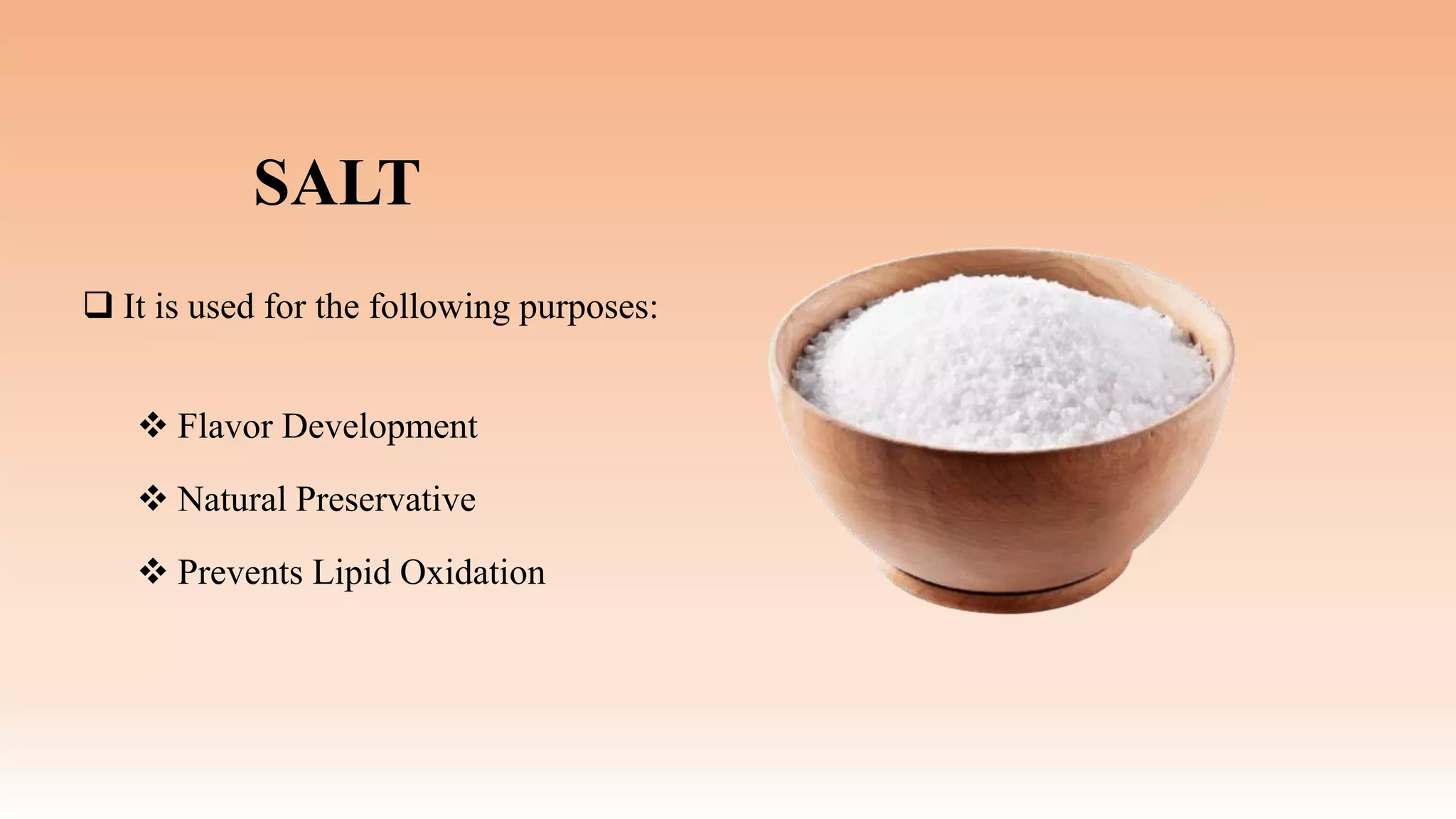
SALT
 It is used for the following purposes:
 Flavor Development
 Natural Preservative
 Prevents Lipid Oxidation
WATER
 It is used for the following purposes:
 Acts as a Solvent
 Forms the base of Emulsion
PROCESSES INVOLVED
Raw
Material
Preparatory
Operations
Hydrogenation
Process
Melting of
Oils
01 02 04 05 06 07
Aqueous
Phase
Mixing
Stage
08
Addition of
Emulsifiers
03
Pre-
Crystallization
RECEIVING OF
RAW MATERIAL
 It acts as CCP1.
 Freshness and appropriate quality
of the raw materials are inspected.
 Several Preparatory Operations are
also applied.
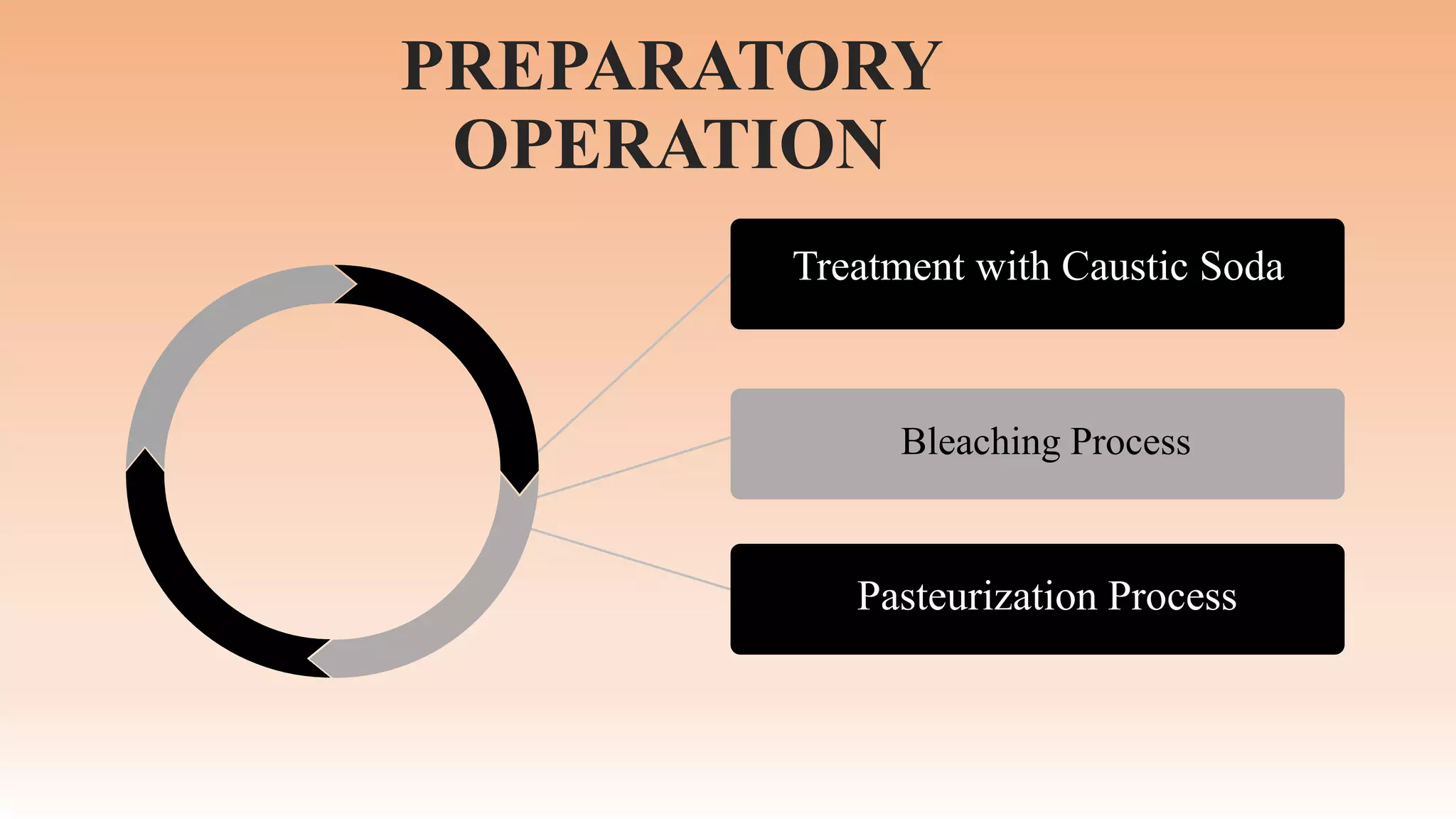
PREPARATORY
OPERATION
Treatment with Caustic Soda
Bleaching Process
Pasteurization Process
HYDROGENATION
PROCESS
 It takes place in the presence of
hydrogen gas & metal catalyst.
 It maintains the require consistency
of oil.
 It is an Exothermic Reaction.
DIAGRAMMATIC EXPRESSION
MELTING OF
OILS
 Continuous agitation mechanism
 Temperature Range 60-70 degrees
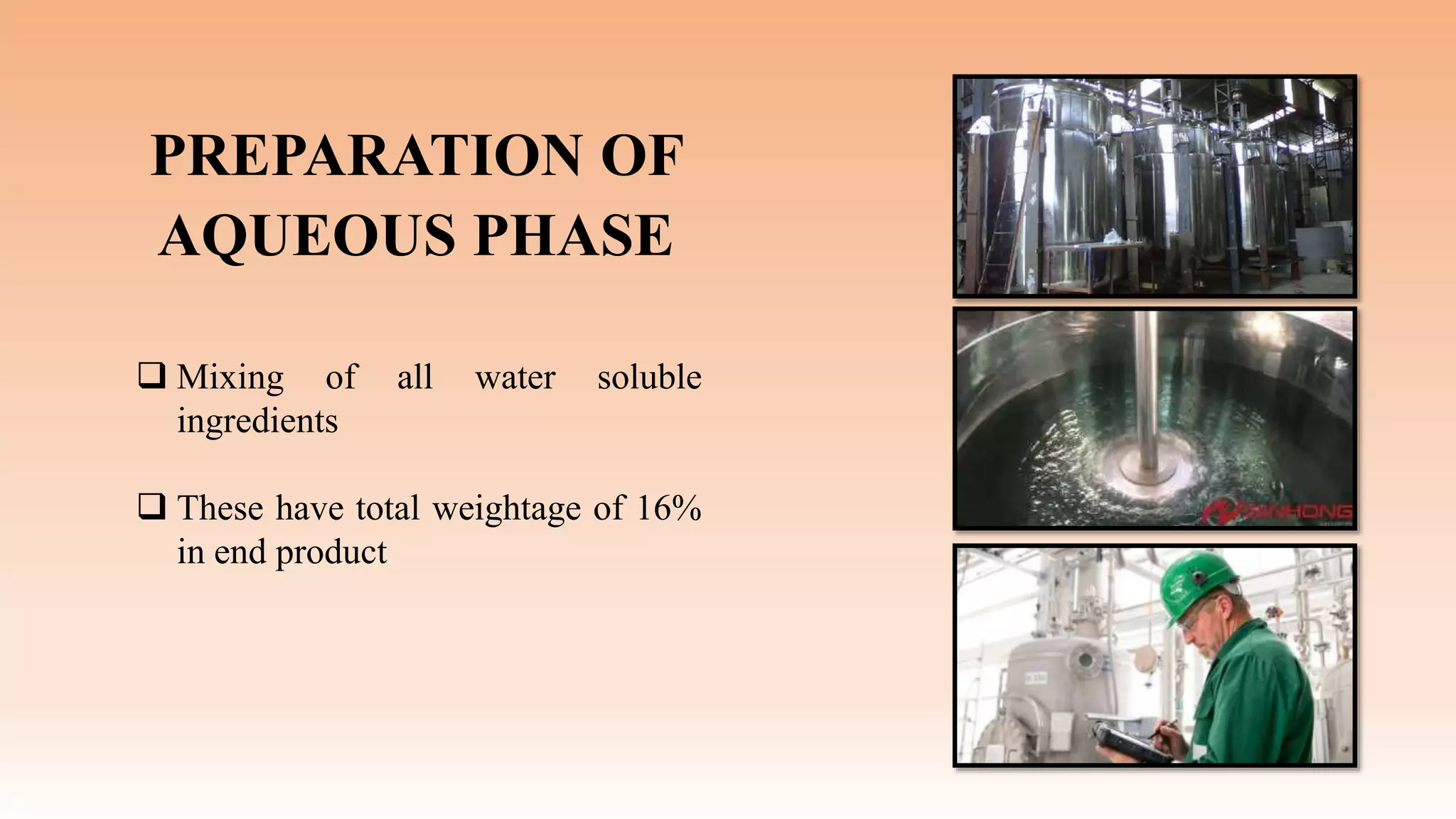
PREPARATION OF
AQUEOUS PHASE
 Mixing of all water soluble
ingredients
 These have total weightage of 16%
in end product
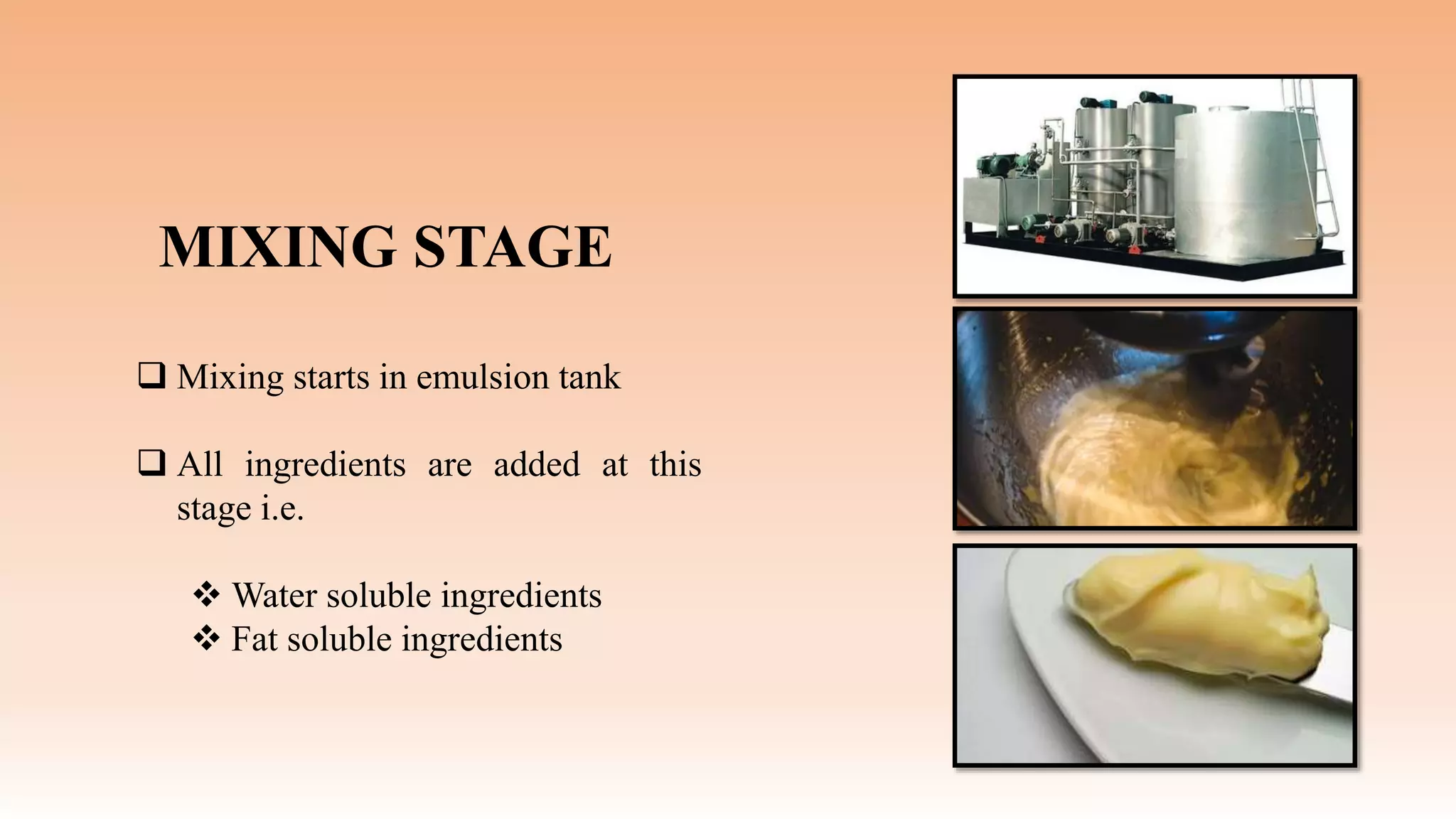
MIXING STAGE
 Mixing starts in emulsion tank
 All ingredients are added at this
stage i.e.
 Water soluble ingredients
 Fat soluble ingredients
ADDITION OF
EMULSIFIER
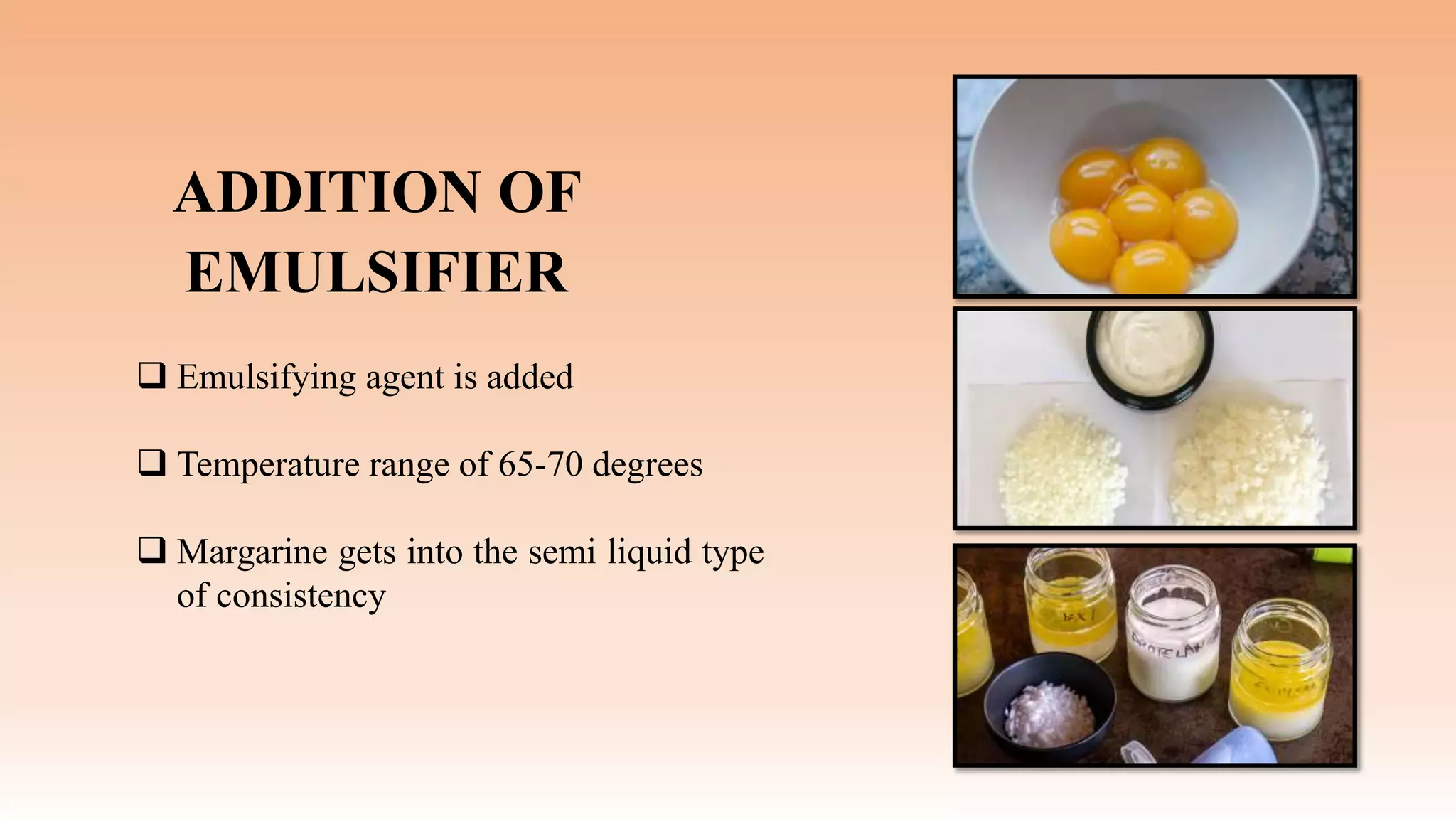
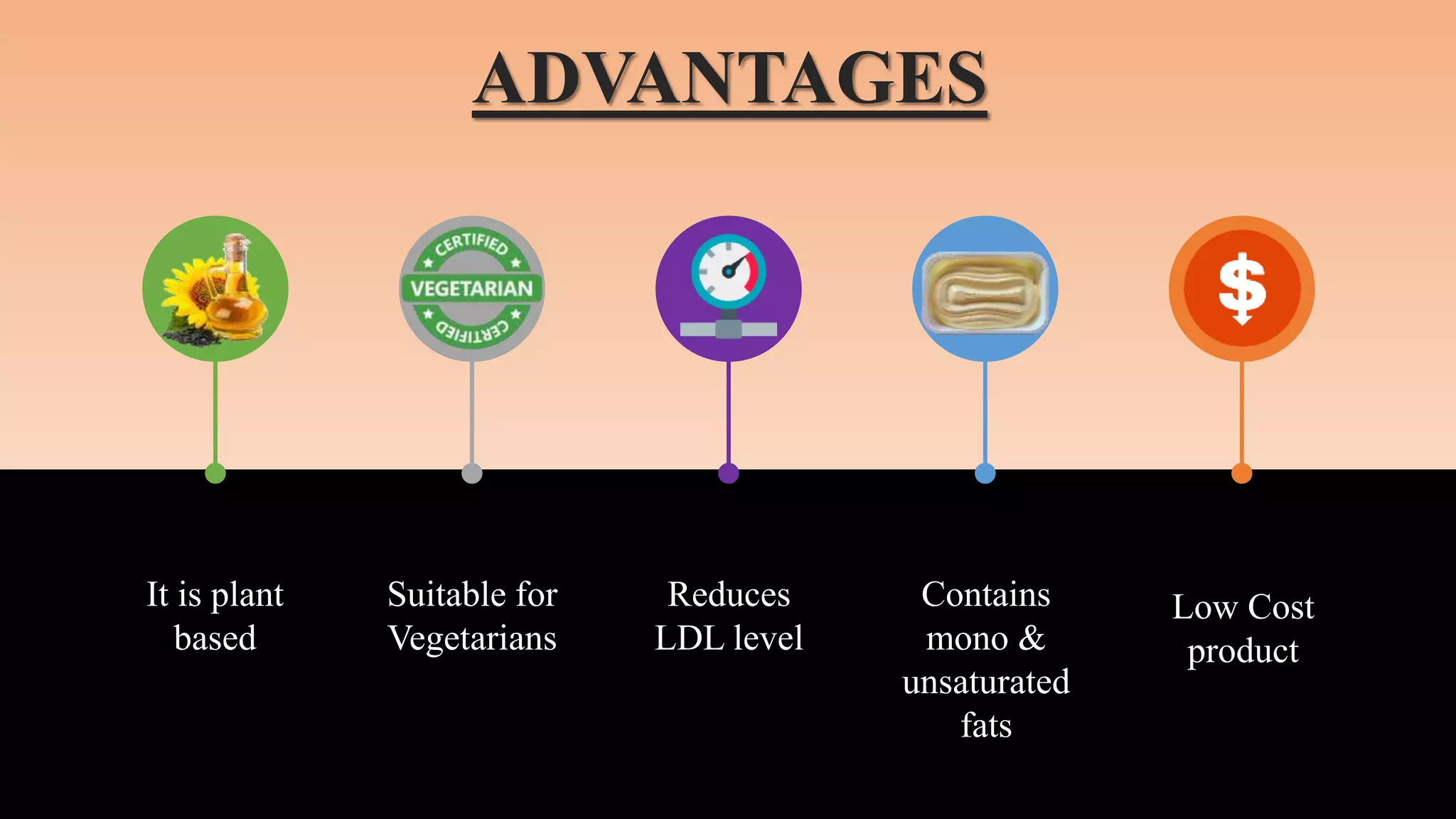
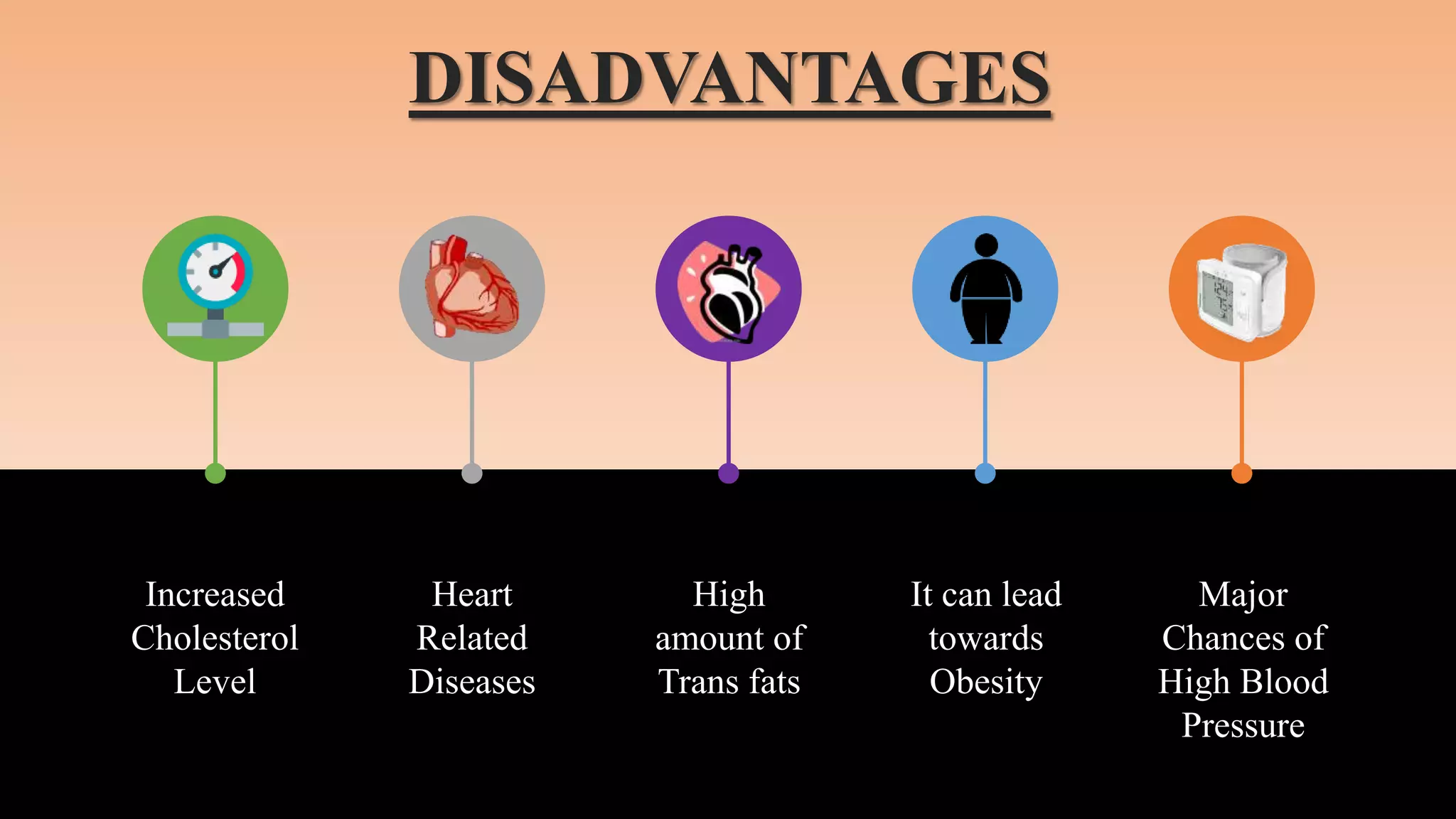
 Emulsifying agent is added
 Temperature range of 65-70 degrees
 Margarine gets into the semi liquid type
of consistency
SIGNIFICANCE OF
EMULSYFYING AGENT
Forms successful
Emulsion
Prevents oil from
separating
Acts as
Preservative
Increased Stability of
product
Improves texture of
end product
Extends Shelf
life
PRE-CRYSTALIZATION
PROCESS
 Action of rotating pins
 Cooling chamber mechanism with
insulation jacket
 Crystallized fat is scrapped
TEMPERATURE RANGE: 10-22 DEGREES
SCRAPPER SPEED: 300-1000 RPM
DIAGRAMMATIC EXPRESSION
FILLING &
PACKAGING
 Aseptic Packaging approach provides
extended shelf life.
 Different packaging approaches
 Aluminum foil
 Plastic boxes
 Disposable box
ADVANTAGES
It is plant
based
Suitable for
Vegetarians
Reduces
LDL level
Contains
mono &
unsaturated
fats
Low Cost
product
DISADVANTAGES
Increased
Cholesterol
Level
Heart
Related
Diseases
High
amount of
Trans fats
It can lead
towards
Obesity
Major
Chances of
High Blood
Pressure
THANKYOU!

Processing of Margarine