
Rotary Kilns
Experts in process design and material
processing for over 65 years.
Processes Carried Out Using
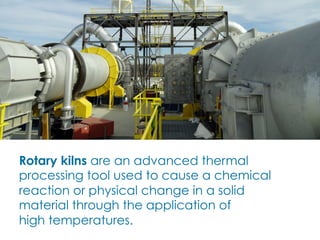
Rotary kilns are an advanced thermal
processing tool used to cause a chemical
reaction or physical change in a solid
material through the application of
high temperatures.
Rotary kilns are extremely flexible and can be
used to process a multitude of materials.
Rotary kilns are extremely flexible and can be
used to process a multitude of materials.
An overview of some of the most common
processes carried out in a rotary kiln are
covered here.
Calcination
Calcination is the process of heating a
material to cause chemical dissociation
(separation).
Calcination is the process of heating a
material to cause chemical dissociation
(separation).
Calcination is a common process and is
frequently used in the creation of
inorganic materials, such as the
dissociation of calcium carbonate to
create calcium oxide and carbon dioxide.
Calcination can also be used to remove
bound moisture, such as that which is
chemically attached in Borax.
Thermal Desorption
Thermal desorption is the process of using
heat to drive off a volatile component,
such as a pesticide, from an inorganic
mineral, such as sand.
Thermal desorption is the process of using
heat to drive off a volatile component,
such as a pesticide, from an inorganic
mineral, such as sand.
This process is not to be confused with
incineration; instead, it is a separation
process that relies on the different
reaction temperatures of absorbent
minerals and chemicals.
At high temperatures, the volatile
component is vaporized, resulting in
separation without combustion.
At high temperatures, the volatile
component is vaporized, resulting in
separation without combustion.
An indirect kiln is most suitable for this type
of application, because the volatile
chemicals may be combustible.
At high temperatures, the volatile
component is vaporized, resulting in
separation without combustion.
An indirect kiln is most suitable for this type
of application, because the volatile
chemicals may be combustible.
An indirect kiln would supply the heat for
desorption, while avoiding direct contact
between the material and flame.
Organic
Combustion
Organic combustion is the thermal
treatment of organic wastes with the
intent of reducing mass and volume.
Organic combustion is the thermal
treatment of organic wastes with the
intent of reducing mass and volume.
This process is commonly seen in waste
treatment plants in order to reduce the
volume of organic wastes for deposit
into landfill.
Organic combustion leaves behind an ash
product of considerably less mass and
volume.
Organic combustion leaves behind an ash
product of considerably less mass and
volume.
This process is most commonly carried out
in a direct-fired kiln, because contact
between the burner flame and material
is not a concern.
Sintering/
Induration
Sintering is the process of heating a
material to just below its melting point.
Sintering is the process of heating a
material to just below its melting point.
This increases the strength of the material,
and is commonly seen in the proppant
industry, where material must be strong
enough to hold open rock fissures under
extreme pressures.
Heat Setting
Heat setting refers to the process of
bonding a heat resistant core mineral with
another, less heat resistant coating
material.
Heat setting refers to the process of
bonding a heat resistant core mineral with
another, less heat resistant coating
material.
During heat setting, the coating material is
heated to just below its liquefaction point,
at which it can evenly and more securely
coat the core material.
This process is commonly seen in the
roofing granule industry, where minerals
such as granite, are coated with other
materials such as colored pigments, in
order to produce a material that both
looks good and performs as needed.
Reduction
Roasting
Reduction roasting is the removal of
oxygen from a component of an ore
usually by using carbon monoxide.
Reduction roasting is the removal of
oxygen from a component of an ore
usually by using carbon monoxide.
The CO is typically supplied by mixing a
carbonaceous material such as coal or
coke with the ore, or by feeding it
separately.
A common example of this is the roasting
of a hematite-containing material to
produce magnetite that can then be
magnetically separated.
Conclusion
Rotary kilns are extremely flexible and can be
used to process all sorts of materials. They are
capable of carrying out a wide variety of
processes, with some of the most common
including calcination, thermal desorption,
organic combustion, sintering, heat setting,
and reduction roasting.
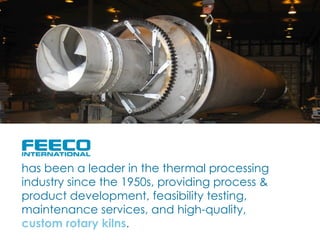
has been a leader in the thermal processing
industry since the 1950s, providing process &
product development, feasibility testing,
maintenance services, and high-quality,
custom rotary kilns.
Want to learn more?
Download our
Rotary Kiln Handbook
The Rotary Kiln Handbook
Rotary Kiln Sizing & Design
Processing Challenges
Service & Maintenance
And more…
Download Now

Processes Carried Out Using Rotary Kilns

  • 1.
    Rotary Kilns Experts inprocess design and material processing for over 65 years. Processes Carried Out Using
  • 2.
    Rotary kilns arean advanced thermal processing tool used to cause a chemical reaction or physical change in a solid material through the application of high temperatures.
  • 3.
    Rotary kilns areextremely flexible and can be used to process a multitude of materials.
  • 4.
    Rotary kilns areextremely flexible and can be used to process a multitude of materials. An overview of some of the most common processes carried out in a rotary kiln are covered here.
  • 5.
  • 6.
    Calcination is theprocess of heating a material to cause chemical dissociation (separation).
  • 7.
    Calcination is theprocess of heating a material to cause chemical dissociation (separation). Calcination is a common process and is frequently used in the creation of inorganic materials, such as the dissociation of calcium carbonate to create calcium oxide and carbon dioxide.
  • 8.
    Calcination can alsobe used to remove bound moisture, such as that which is chemically attached in Borax.
  • 9.
  • 10.
    Thermal desorption isthe process of using heat to drive off a volatile component, such as a pesticide, from an inorganic mineral, such as sand.
  • 11.
    Thermal desorption isthe process of using heat to drive off a volatile component, such as a pesticide, from an inorganic mineral, such as sand. This process is not to be confused with incineration; instead, it is a separation process that relies on the different reaction temperatures of absorbent minerals and chemicals.
  • 12.
    At high temperatures,the volatile component is vaporized, resulting in separation without combustion.
  • 13.
    At high temperatures,the volatile component is vaporized, resulting in separation without combustion. An indirect kiln is most suitable for this type of application, because the volatile chemicals may be combustible.
  • 14.
    At high temperatures,the volatile component is vaporized, resulting in separation without combustion. An indirect kiln is most suitable for this type of application, because the volatile chemicals may be combustible. An indirect kiln would supply the heat for desorption, while avoiding direct contact between the material and flame.
  • 15.
  • 16.
    Organic combustion isthe thermal treatment of organic wastes with the intent of reducing mass and volume.
  • 17.
    Organic combustion isthe thermal treatment of organic wastes with the intent of reducing mass and volume. This process is commonly seen in waste treatment plants in order to reduce the volume of organic wastes for deposit into landfill.
  • 18.
    Organic combustion leavesbehind an ash product of considerably less mass and volume.
  • 19.
    Organic combustion leavesbehind an ash product of considerably less mass and volume. This process is most commonly carried out in a direct-fired kiln, because contact between the burner flame and material is not a concern.
  • 20.
  • 21.
    Sintering is theprocess of heating a material to just below its melting point.
  • 22.
    Sintering is theprocess of heating a material to just below its melting point. This increases the strength of the material, and is commonly seen in the proppant industry, where material must be strong enough to hold open rock fissures under extreme pressures.
  • 23.
  • 24.
    Heat setting refersto the process of bonding a heat resistant core mineral with another, less heat resistant coating material.
  • 25.
    Heat setting refersto the process of bonding a heat resistant core mineral with another, less heat resistant coating material. During heat setting, the coating material is heated to just below its liquefaction point, at which it can evenly and more securely coat the core material.
  • 26.
    This process iscommonly seen in the roofing granule industry, where minerals such as granite, are coated with other materials such as colored pigments, in order to produce a material that both looks good and performs as needed.
  • 27.
  • 28.
    Reduction roasting isthe removal of oxygen from a component of an ore usually by using carbon monoxide.
  • 29.
    Reduction roasting isthe removal of oxygen from a component of an ore usually by using carbon monoxide. The CO is typically supplied by mixing a carbonaceous material such as coal or coke with the ore, or by feeding it separately.
  • 30.
    A common exampleof this is the roasting of a hematite-containing material to produce magnetite that can then be magnetically separated.
  • 31.
    Conclusion Rotary kilns areextremely flexible and can be used to process all sorts of materials. They are capable of carrying out a wide variety of processes, with some of the most common including calcination, thermal desorption, organic combustion, sintering, heat setting, and reduction roasting.
  • 32.
    has been aleader in the thermal processing industry since the 1950s, providing process & product development, feasibility testing, maintenance services, and high-quality, custom rotary kilns.
  • 33.
    Want to learnmore? Download our Rotary Kiln Handbook The Rotary Kiln Handbook Rotary Kiln Sizing & Design Processing Challenges Service & Maintenance And more… Download Now