Simple production and post-
pyrolysis processes.
By: Josiah Hunt
Owner of Landscape Ecology and
Hawaii Biochar Products LLC.
Please note
• I view this method of producing biochar only as
an alternative to more costly options.
• Any attempts to harness heat or gaseous energy
are essentially forfeited.
• It is not the safest option available.
• It can be a way to produce meaningful quantities
of high quality biochar if done correctly.
• It can provide a simple and beneficial alternative
to burning waste organic material to ash, as is
currently done by many as a means of disposing
of biomass.
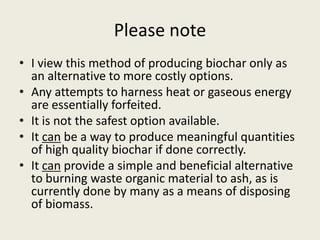
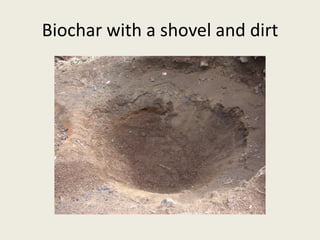
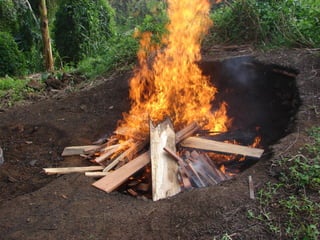
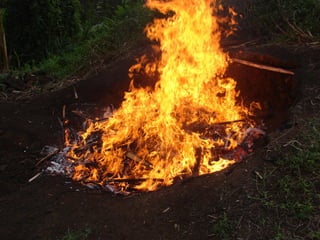
Biochar with a shovel and dirt
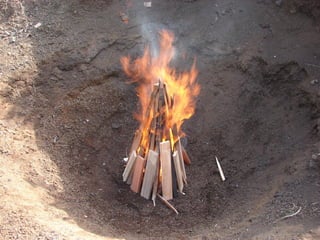
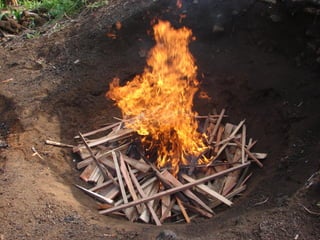
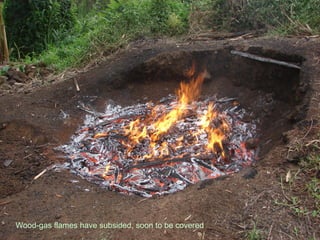
Wood-gas flames have subsided, soon to be covered
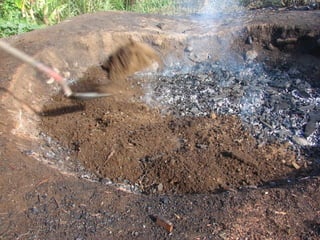
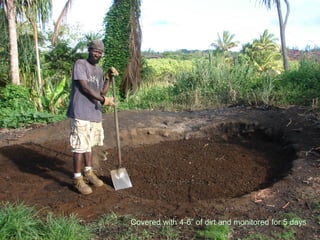
Covered with 4-6” of dirt and monitored for 5 days
Why “bake” the biochar?
• When the wood has burned to embers, it’s
then covered with dirt to “bake” for five days.
• I have found that the quality of the char as a
soil amendment can increase during this time.
• After baking, the biochar comes out softer
and cleaner (less tars and resins).
• Depending on how the soil breathes, the
temperatures can remain between 400-800oF
throughout the baking period.
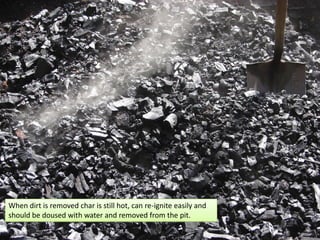
When dirt is removed char is still hot, can re-ignite easily and
should be doused with water and removed from the pit.
0.10%
1.00%
10.00%
100 120 140 160 180 200 220 240 260 280 300
Adsorption
of
R134a
-
wt
%
Temperature Celsius
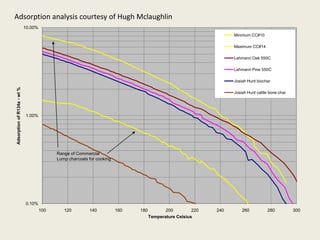
Minimum CC#10
Maximum CC#14
Lehmann Oak 550C
Lehmann Pine 550C
Josiah Hunt biochar
Josiah Hunt cattle bone char
Range of Commercial
Lump charcoals for cooking
Adsorption analysis courtesy of Hugh Mclaughlin
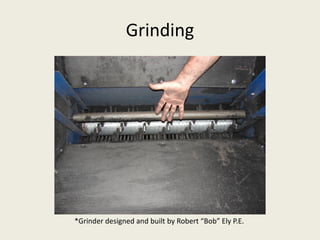
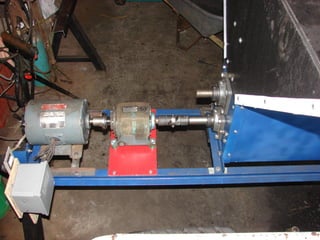
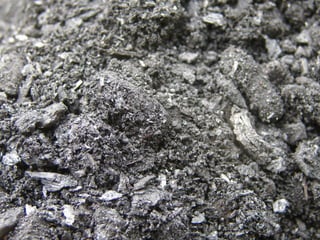
Grinding
*Grinder designed and built by Robert “Bob” Ely P.E.
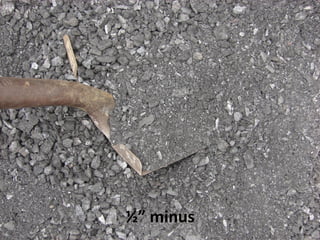
½” minus
One size does not fit all
• While a smaller particle size may give you
more available surface area, larger particles
may hold water and nutrients longer.
• We have found that for our soil type and
climate the ½” minus biochar works well for
general purposes.
• Other blends have been made for special
orders such as a ½” to ¾” clean for orchids and
a ¼” minus for fertilizer blends.
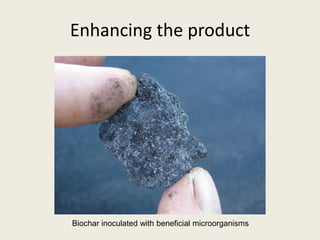
Enhancing the product
Biochar inoculated with beneficial microorganisms
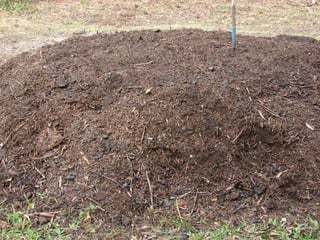
Composting with biochar
• The hot, moist, nutrient rich environment of compost
can enhance qualities of biochar important to plant
growth such as:
- Water retention
(hydrophobic tars and resins can be quickly decayed by microbial activity)
- Available nutrients
- pH
- CEC (by heat, microbial activity, and humic substances)
- Beneficial Microorganisms
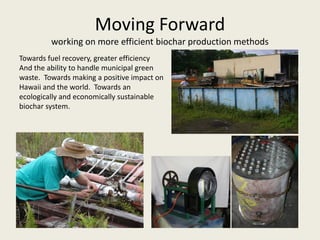
Moving Forward
working on more efficient biochar production methods
Towards fuel recovery, greater efficiency
And the ability to handle municipal green
waste. Towards making a positive impact on
Hawaii and the world. Towards an
ecologically and economically sustainable
biochar system.
www.landscapeecology-hawaii.com

JosiahHunt_s presentation Revised biochar.pdf

  • 1.
    Simple production andpost- pyrolysis processes. By: Josiah Hunt Owner of Landscape Ecology and Hawaii Biochar Products LLC.
  • 2.
    Please note • Iview this method of producing biochar only as an alternative to more costly options. • Any attempts to harness heat or gaseous energy are essentially forfeited. • It is not the safest option available. • It can be a way to produce meaningful quantities of high quality biochar if done correctly. • It can provide a simple and beneficial alternative to burning waste organic material to ash, as is currently done by many as a means of disposing of biomass.
  • 3.
    Biochar with ashovel and dirt
  • 8.
    Wood-gas flames havesubsided, soon to be covered
  • 10.
    Covered with 4-6”of dirt and monitored for 5 days
  • 11.
    Why “bake” thebiochar? • When the wood has burned to embers, it’s then covered with dirt to “bake” for five days. • I have found that the quality of the char as a soil amendment can increase during this time. • After baking, the biochar comes out softer and cleaner (less tars and resins). • Depending on how the soil breathes, the temperatures can remain between 400-800oF throughout the baking period.
  • 12.
    When dirt isremoved char is still hot, can re-ignite easily and should be doused with water and removed from the pit.
  • 13.
    0.10% 1.00% 10.00% 100 120 140160 180 200 220 240 260 280 300 Adsorption of R134a - wt % Temperature Celsius Minimum CC#10 Maximum CC#14 Lehmann Oak 550C Lehmann Pine 550C Josiah Hunt biochar Josiah Hunt cattle bone char Range of Commercial Lump charcoals for cooking Adsorption analysis courtesy of Hugh Mclaughlin
  • 14.
    Grinding *Grinder designed andbuilt by Robert “Bob” Ely P.E.
  • 17.
  • 18.
    One size doesnot fit all • While a smaller particle size may give you more available surface area, larger particles may hold water and nutrients longer. • We have found that for our soil type and climate the ½” minus biochar works well for general purposes. • Other blends have been made for special orders such as a ½” to ¾” clean for orchids and a ¼” minus for fertilizer blends.
  • 19.
    Enhancing the product Biocharinoculated with beneficial microorganisms
  • 20.
    Composting with biochar •The hot, moist, nutrient rich environment of compost can enhance qualities of biochar important to plant growth such as: - Water retention (hydrophobic tars and resins can be quickly decayed by microbial activity) - Available nutrients - pH - CEC (by heat, microbial activity, and humic substances) - Beneficial Microorganisms
  • 23.
    Moving Forward working onmore efficient biochar production methods Towards fuel recovery, greater efficiency And the ability to handle municipal green waste. Towards making a positive impact on Hawaii and the world. Towards an ecologically and economically sustainable biochar system.
  • 24.