Kiln Air Flow
Experts in process design and material
processing for over 65 years.
Options in
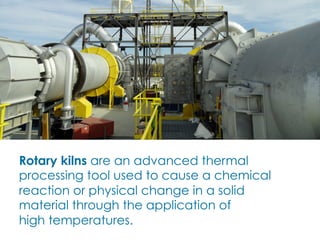
Rotary kilns are an advanced thermal
processing tool used to cause a chemical
reaction or physical change in a solid
material through the application of
high temperatures.
When designing a rotary kiln, the air flow
configuration is an important consideration,
with each type offering distinct advantages
and disadvantages.
When designing a rotary kiln, the air flow
configuration is an important consideration,
with each type offering distinct advantages
and disadvantages.
The following will give an overview on the
different types of air flow configurations
available.
Co-Current
Kilns
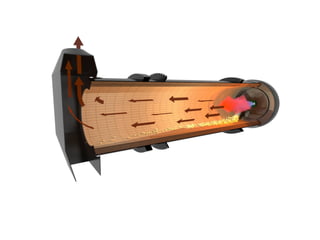
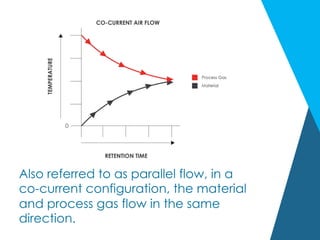
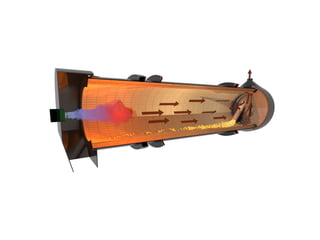
Also referred to as parallel flow, in a
co-current configuration, the material
and process gas flow in the same
direction.
This puts the coldest material in contact with
the hottest gas, resulting in a rapid initial
temperature change.
This design is best suited for materials that don’t
require a gradual change in temperature for a
controlled transformation.
This design is best suited for materials that don’t
require a gradual change in temperature for a
controlled transformation.
This configuration is commonly used for
organic combustion processes, because these
processes typically don’t require a very
specific end product.
Counter Current
Kilns
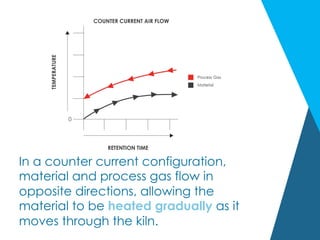
In a counter current configuration,
material and process gas flow in
opposite directions, allowing the
material to be heated gradually as it
moves through the kiln.
Here, material comes into contact with the
hottest process gas before discharge.
Here, material comes into contact with the
hottest process gas before discharge.
The advantage to this is the thermal efficiency
it provides; with the burner being mounted at
the end of the thermal processing cycle, less
heat is required, resulting in decreased fuel
consumption.
This is in contrast to the co-current
configuration, which requires a much
higher initial temperature in order to heat
the material to the point of reaction.
This is in contrast to the co-current
configuration, which requires a much
higher initial temperature in order to heat
the material to the point of reaction.
As such, with a counter current kiln,
exhaust gas temperature is lower, as are
operating costs.
The counter current design is also
commonly used when a more controlled
physical or chemical change is needed
(when temperature increases need to be
gradual).
The counter current design is also
commonly used when a more controlled
physical or chemical change is needed
(when temperature increases need to be
gradual).
For these reasons, the counter-current
configuration is more common than the
co-current configuration.
Cross-Flow
Kilns
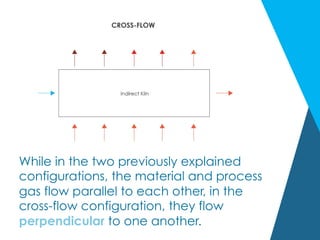
The cross-flow configuration is specific to
indirect-fired kilns.
While in the two previously explained
configurations, the material and process
gas flow parallel to each other, in the
cross-flow configuration, they flow
perpendicular to one another.
One advantage to this is that the material
can be held at a constant temperature
for an extended period of time, which is
very difficult to achieve in a co-current or
counter current kiln.
Conclusion
Understanding how each air flow configuration
works and the benefits each has to offer is an
important consideration in the design of a
rotary kiln.
Conclusion
Understanding how each air flow configuration
works and the benefits each has to offer is an
important consideration in the design of a
rotary kiln.
Working with a manufacturer that can design a
system around your unique material
characteristics and process goals will produce
the best results.
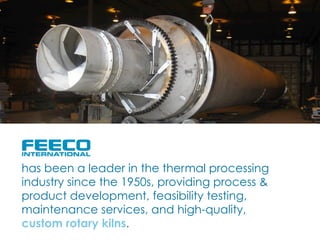
has been a leader in the thermal processing
industry since the 1950s, providing process &
product development, feasibility testing,
maintenance services, and high-quality,
custom rotary kilns.
Want to learn more?
Download our
Rotary Kiln Handbook
The Rotary Kiln Handbook
Rotary Kiln Sizing & Design
Processing Challenges
Service & Maintenance
And more…
Download Now

Options in Kiln Air Flow

  • 1.
    Kiln Air Flow Expertsin process design and material processing for over 65 years. Options in
  • 2.
    Rotary kilns arean advanced thermal processing tool used to cause a chemical reaction or physical change in a solid material through the application of high temperatures.
  • 3.
    When designing arotary kiln, the air flow configuration is an important consideration, with each type offering distinct advantages and disadvantages.
  • 4.
    When designing arotary kiln, the air flow configuration is an important consideration, with each type offering distinct advantages and disadvantages. The following will give an overview on the different types of air flow configurations available.
  • 5.
  • 7.
    Also referred toas parallel flow, in a co-current configuration, the material and process gas flow in the same direction.
  • 8.
    This puts thecoldest material in contact with the hottest gas, resulting in a rapid initial temperature change.
  • 9.
    This design isbest suited for materials that don’t require a gradual change in temperature for a controlled transformation.
  • 10.
    This design isbest suited for materials that don’t require a gradual change in temperature for a controlled transformation. This configuration is commonly used for organic combustion processes, because these processes typically don’t require a very specific end product.
  • 11.
  • 13.
    In a countercurrent configuration, material and process gas flow in opposite directions, allowing the material to be heated gradually as it moves through the kiln.
  • 14.
    Here, material comesinto contact with the hottest process gas before discharge.
  • 15.
    Here, material comesinto contact with the hottest process gas before discharge. The advantage to this is the thermal efficiency it provides; with the burner being mounted at the end of the thermal processing cycle, less heat is required, resulting in decreased fuel consumption.
  • 16.
    This is incontrast to the co-current configuration, which requires a much higher initial temperature in order to heat the material to the point of reaction.
  • 17.
    This is incontrast to the co-current configuration, which requires a much higher initial temperature in order to heat the material to the point of reaction. As such, with a counter current kiln, exhaust gas temperature is lower, as are operating costs.
  • 18.
    The counter currentdesign is also commonly used when a more controlled physical or chemical change is needed (when temperature increases need to be gradual).
  • 19.
    The counter currentdesign is also commonly used when a more controlled physical or chemical change is needed (when temperature increases need to be gradual). For these reasons, the counter-current configuration is more common than the co-current configuration.
  • 20.
  • 21.
    The cross-flow configurationis specific to indirect-fired kilns.
  • 22.
    While in thetwo previously explained configurations, the material and process gas flow parallel to each other, in the cross-flow configuration, they flow perpendicular to one another.
  • 23.
    One advantage tothis is that the material can be held at a constant temperature for an extended period of time, which is very difficult to achieve in a co-current or counter current kiln.
  • 24.
    Conclusion Understanding how eachair flow configuration works and the benefits each has to offer is an important consideration in the design of a rotary kiln.
  • 25.
    Conclusion Understanding how eachair flow configuration works and the benefits each has to offer is an important consideration in the design of a rotary kiln. Working with a manufacturer that can design a system around your unique material characteristics and process goals will produce the best results.
  • 26.
    has been aleader in the thermal processing industry since the 1950s, providing process & product development, feasibility testing, maintenance services, and high-quality, custom rotary kilns.
  • 27.
    Want to learnmore? Download our Rotary Kiln Handbook The Rotary Kiln Handbook Rotary Kiln Sizing & Design Processing Challenges Service & Maintenance And more… Download Now