ENVIRONMENTAL SCANNING
DEFINITIONEnvironmental scanning can be defined as ‘the study and interpretation of the political, economic, social and technological events and trends which influence a business, an industry or even a total market.The factors which need to be considered for environmental scanning are events, trends, issues and expectations of the different interest groups. Issues are often forerunners of trend breaks.
MODES OF SCANNINGThere are three modes of scanning Systematic scanning - Information related to markets and customers, changes in legislation, regulations having a direct impact on the organization's activities, government policy etc. are collected continuously by taking relevant factors into accountAd-hoc scanning - Conducting special surveys and studies to deal with environmental issues from time to timeProcessed-form scanning - Using information in a processed form available from different sources inside and outside the organization
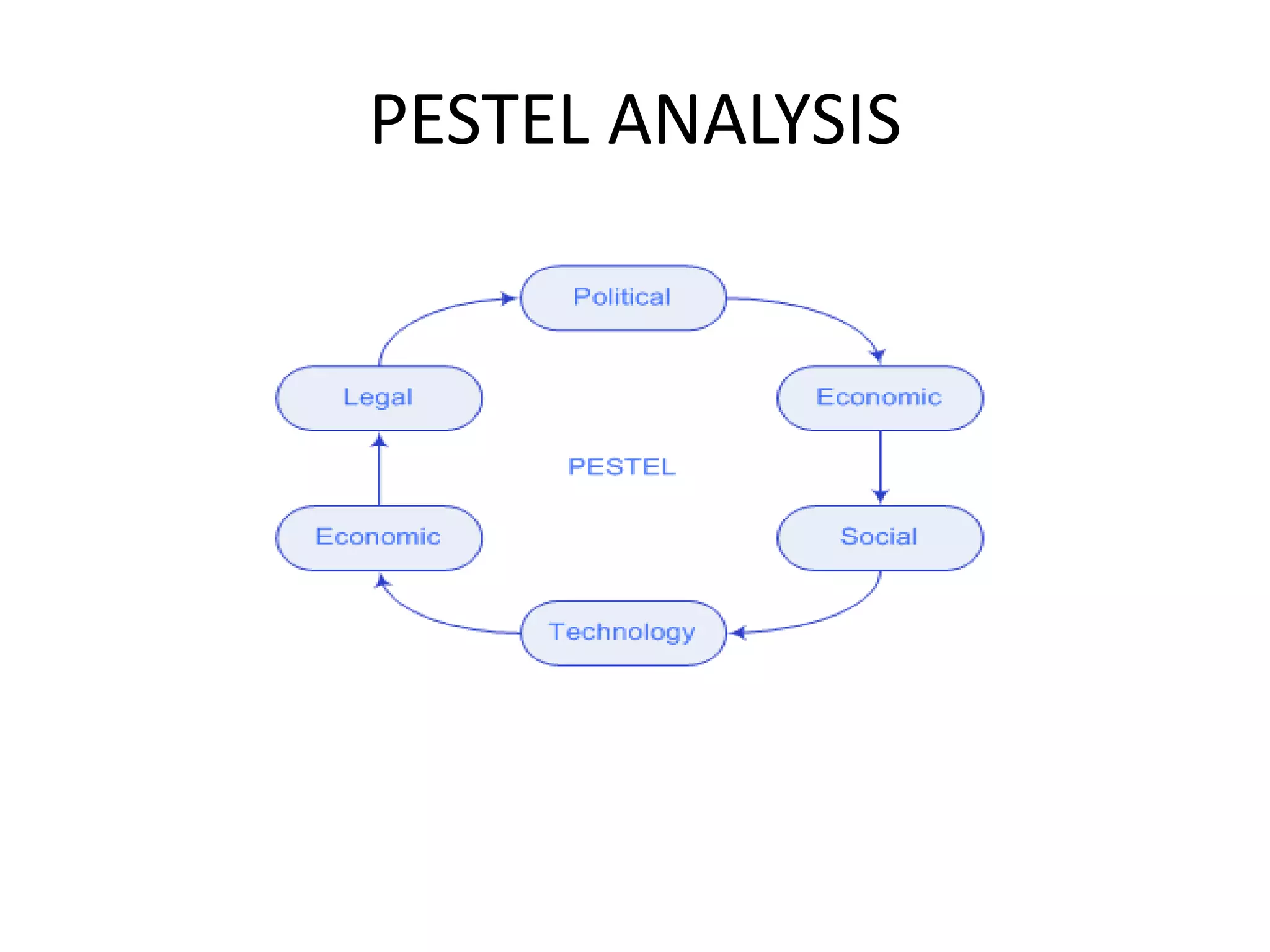
PESTEL ANALYSIS
The six environmental factors of the PESTEL analysis are the following:Political factorsTaxation PolicyTrade regulationsGovernmental stabilityUnemployment Policy etc.Economical factorsInflation rateGrowth in spending powerRate of people in a pensionable age etc.Technological factorsTechnological changesNew or improved distribution channelsImproved communication and knowledge transfer etc.
Environmental factorsLaws onWaste disposalEnergy consumptionPollution monitoring etc.Legal factorsUnemployment lawHealth and safetyProduct safetyAdvertising regulationsProduct labelling etc.
Social factors. Changes in social trends can impact on the demand for a firm's products and the availability and willingness of individuals to work. In the UK, for example, the population has been ageing. This has increased the costs for firms who are committed to pension payments for their employees because their staff are living longer. It also means some firms such as Asda have started to recruit older employees to tap into this growing labour pool. The ageing population also has impact on demand: for example, demand for sheltered accommodation and medicines has increased whereas demand for toys is falling.
SWOT ANALYSIS
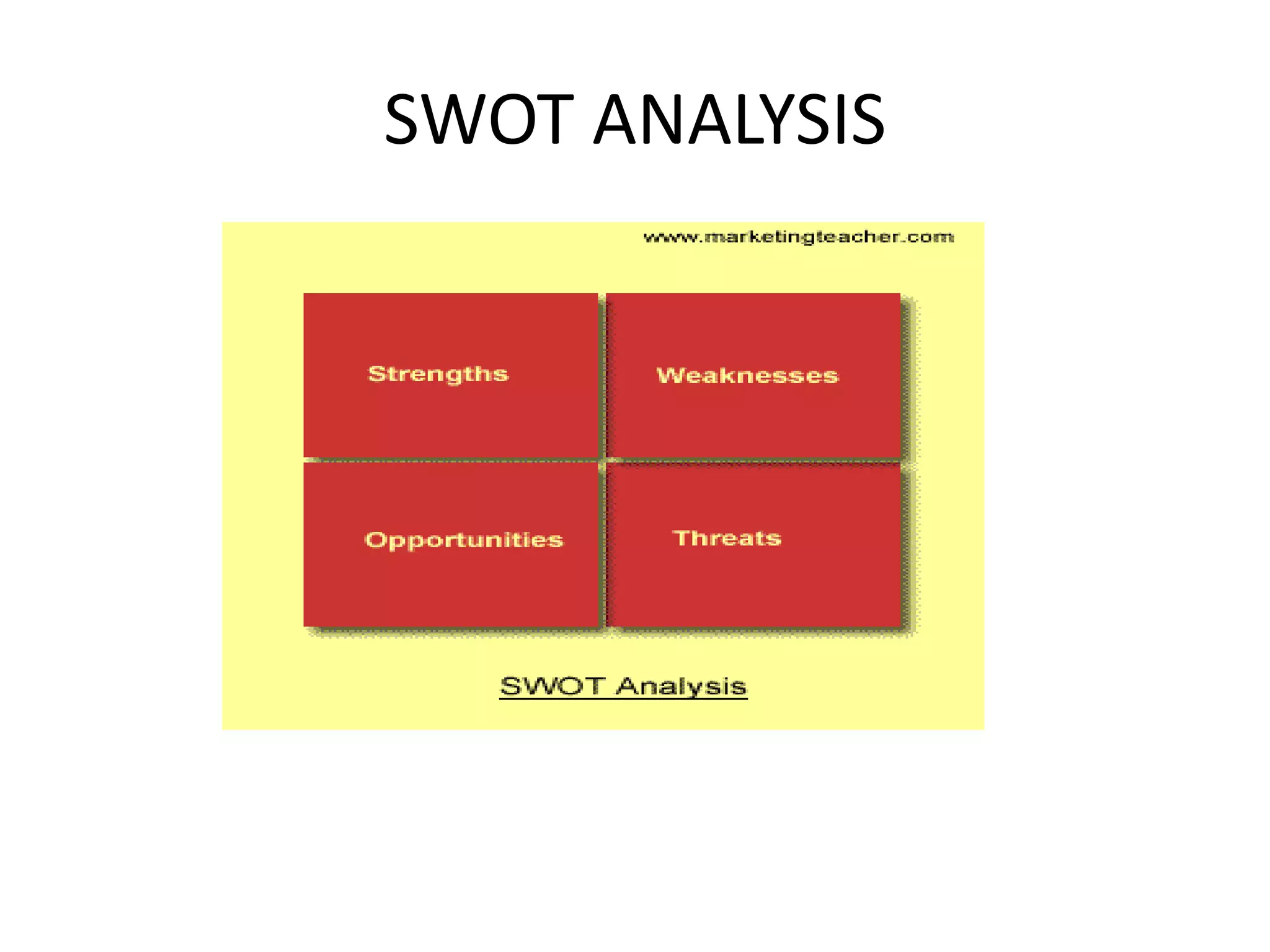
Strengths: characteristics of the business or team that give it an advantage over others in the industry.Weaknesses: are characteristics that place the firm at a disadvantage relative to others.Opportunities: external chances to make greater sales or profits in the environment.Threats: external elements in the environment that could cause trouble for the business.

Environmental scanning

  • 1.
  • 2.
    DEFINITIONEnvironmental scanning canbe defined as ‘the study and interpretation of the political, economic, social and technological events and trends which influence a business, an industry or even a total market.The factors which need to be considered for environmental scanning are events, trends, issues and expectations of the different interest groups. Issues are often forerunners of trend breaks.
  • 3.
    MODES OF SCANNINGThereare three modes of scanning Systematic scanning - Information related to markets and customers, changes in legislation, regulations having a direct impact on the organization's activities, government policy etc. are collected continuously by taking relevant factors into accountAd-hoc scanning - Conducting special surveys and studies to deal with environmental issues from time to timeProcessed-form scanning - Using information in a processed form available from different sources inside and outside the organization
  • 4.
  • 5.
    The six environmentalfactors of the PESTEL analysis are the following:Political factorsTaxation PolicyTrade regulationsGovernmental stabilityUnemployment Policy etc.Economical factorsInflation rateGrowth in spending powerRate of people in a pensionable age etc.Technological factorsTechnological changesNew or improved distribution channelsImproved communication and knowledge transfer etc.
  • 6.
    Environmental factorsLaws onWastedisposalEnergy consumptionPollution monitoring etc.Legal factorsUnemployment lawHealth and safetyProduct safetyAdvertising regulationsProduct labelling etc.
  • 7.
    Social factors. Changes insocial trends can impact on the demand for a firm's products and the availability and willingness of individuals to work. In the UK, for example, the population has been ageing. This has increased the costs for firms who are committed to pension payments for their employees because their staff are living longer. It also means some firms such as Asda have started to recruit older employees to tap into this growing labour pool. The ageing population also has impact on demand: for example, demand for sheltered accommodation and medicines has increased whereas demand for toys is falling.
  • 8.
  • 9.
    Strengths: characteristics ofthe business or team that give it an advantage over others in the industry.Weaknesses: are characteristics that place the firm at a disadvantage relative to others.Opportunities: external chances to make greater sales or profits in the environment.Threats: external elements in the environment that could cause trouble for the business.