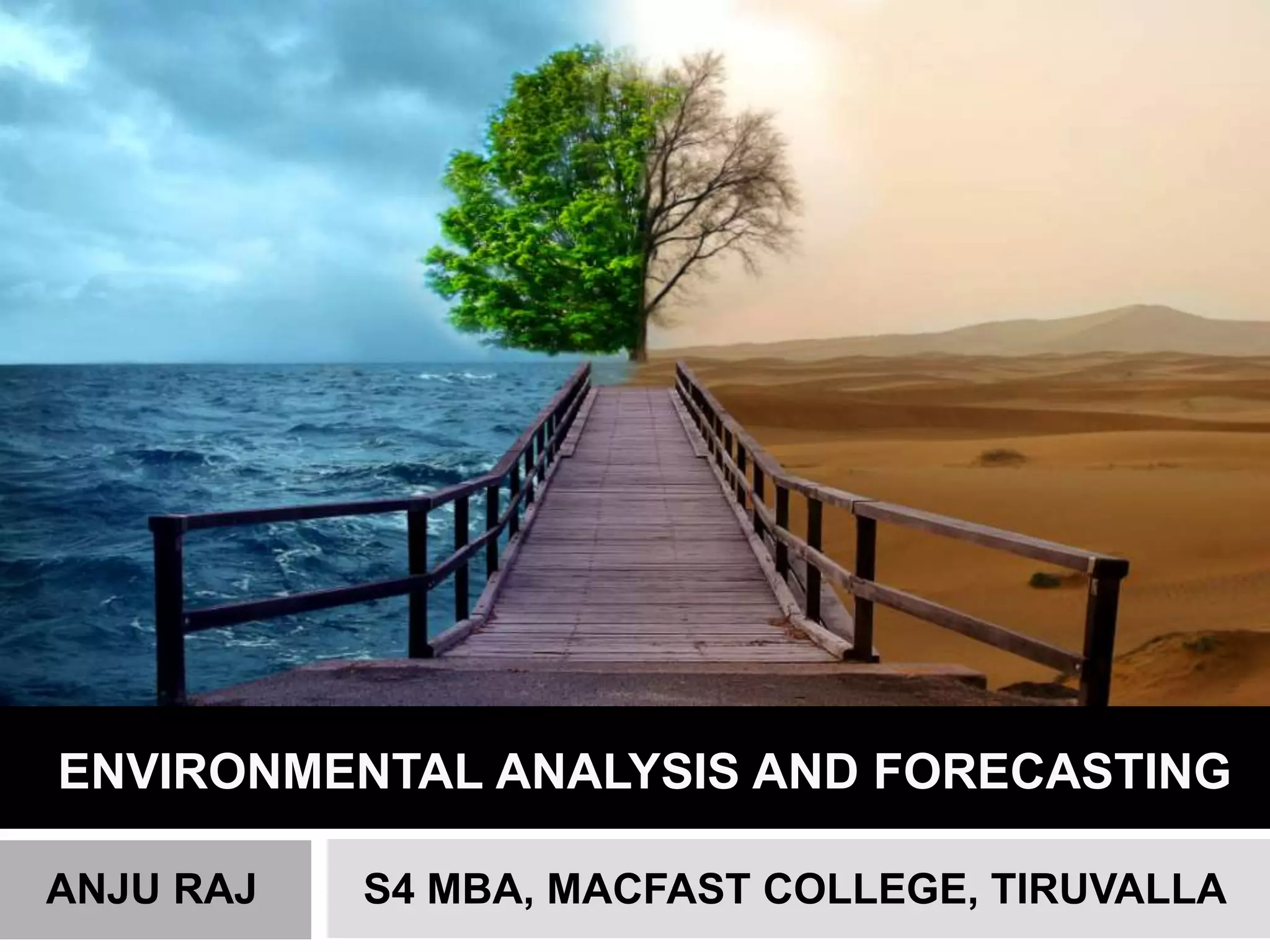
ENVIRONMENTAL ANALYSIS AND FORECASTING

ANJU RAJ   S4 MBA, MACFAST COLLEGE, TIRUVALLA
Definitions
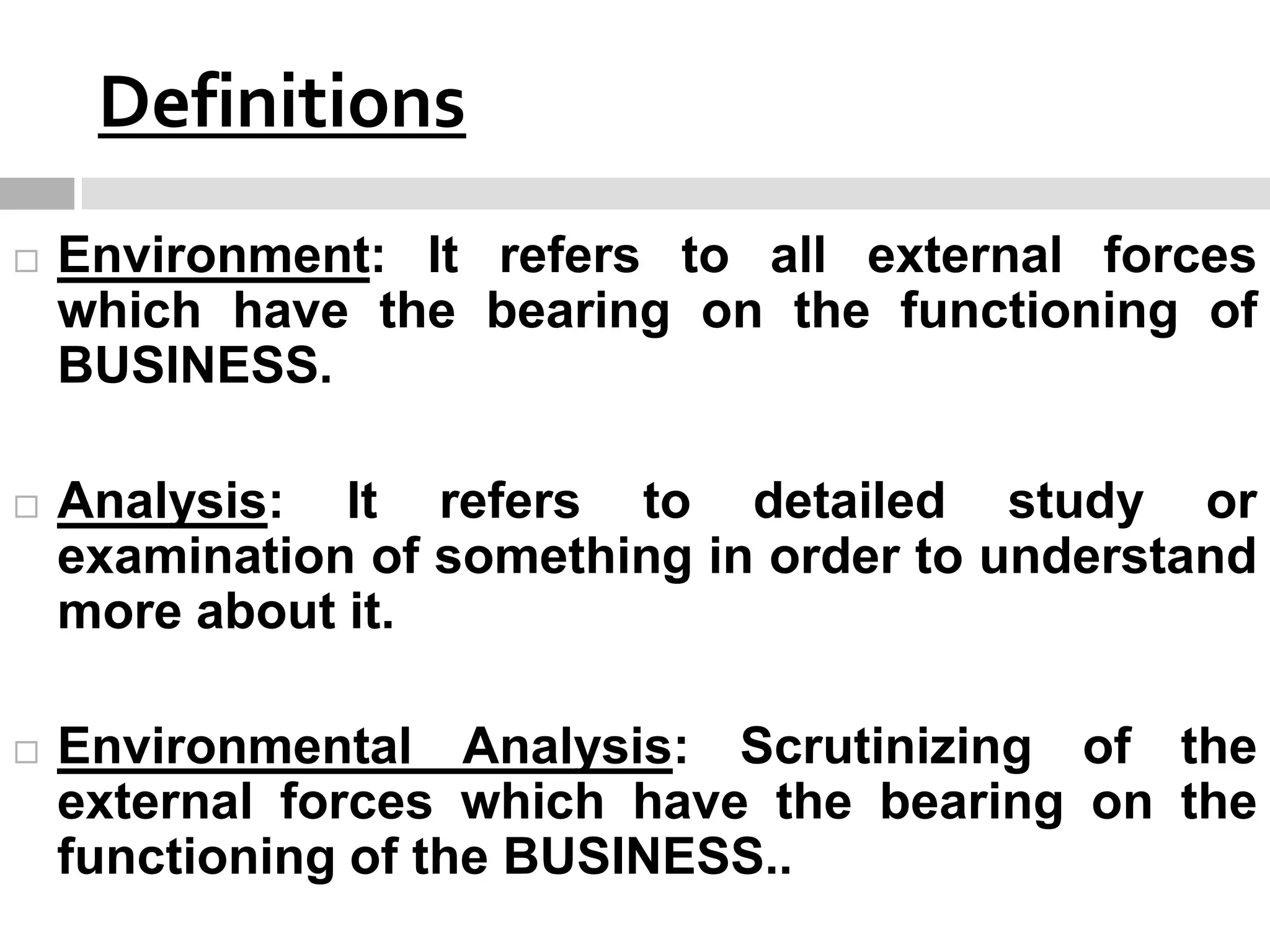
   Environment: It refers to all external forces
    which have the bearing on the functioning of
    BUSINESS.

   Analysis: It refers to detailed study or
    examination of something in order to understand
    more about it.

   Environmental Analysis: Scrutinizing of the
    external forces which have the bearing on the
    functioning of the BUSINESS..
WHY ENVIRONMENTAL ANALYSIS ?


 Analysis of the environment makes the
 business aware of the threats &
 opportunities in the environment.
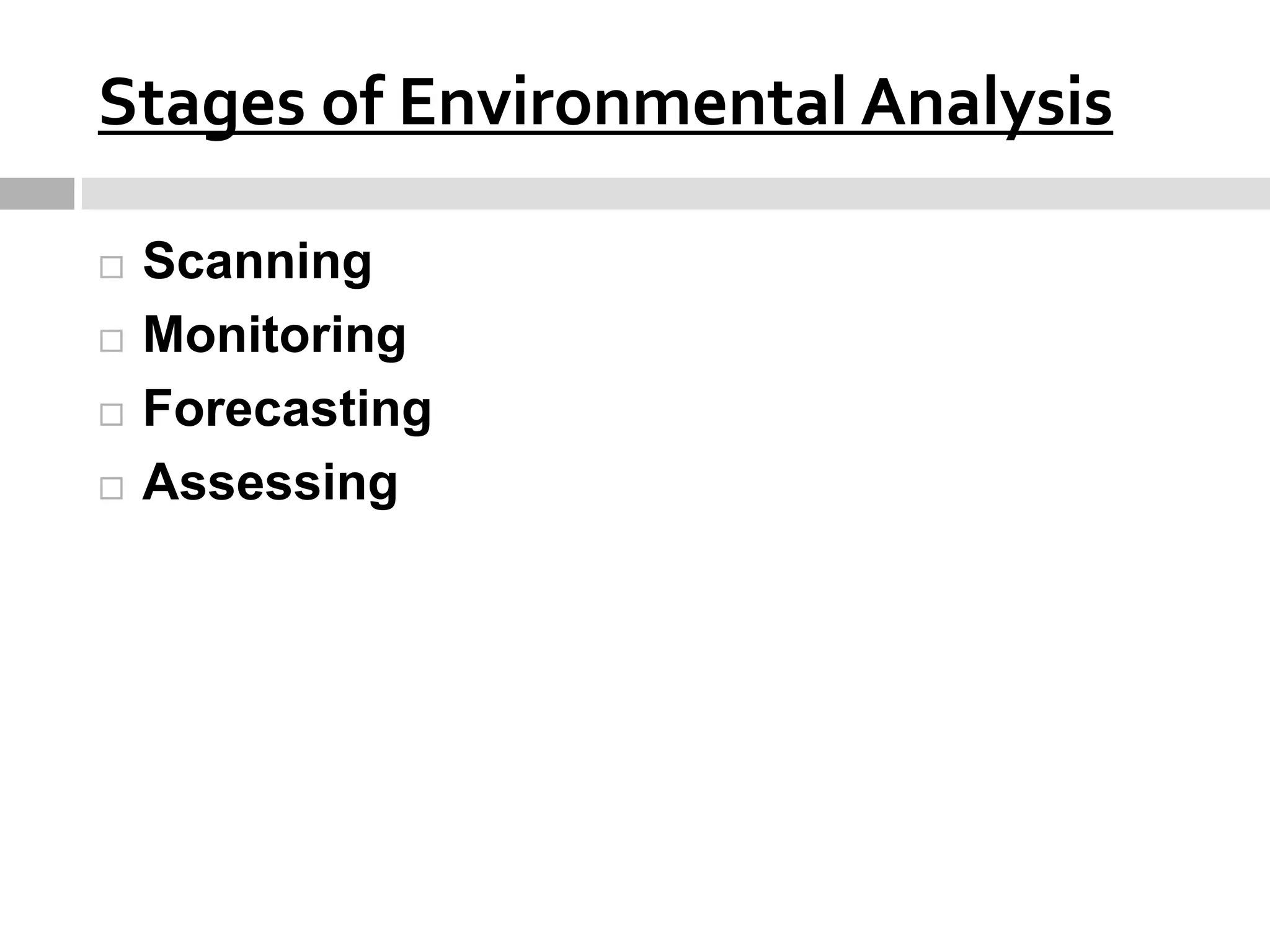
Stages of Environmental Analysis

   Scanning
   Monitoring
   Forecasting
   Assessing
Environmental scanning
   ‘the study and interpretation of the political,
    economic, social and technological events and
    trends which influence a business, an industry or
    even a total market’.

    It helps the managers to decide the future path of
    the organization.

   Scanning must identify the threats and
    opportunities existing in the environment.
Environmental monitoring
   Focused & systematic in-depth analysis of
    relevant environmental trends.

   Gather data to determine emerging
    patterns

   Outputs of monitoring :
       Environmental patterns to be forecast
       Trends for further monitoring
       Patterns requiring further scanning.
Environmental forecasting
   Environmental forecasting involves the
    development of plausible projections about
    the direction, scope, speed, and intensity of
    environmental change.

   Estimating the intensity, nature, and timing of
    the external forces that may effect
    the performance of a firm, disrupt its plans ,
    or force a change in its strategies.
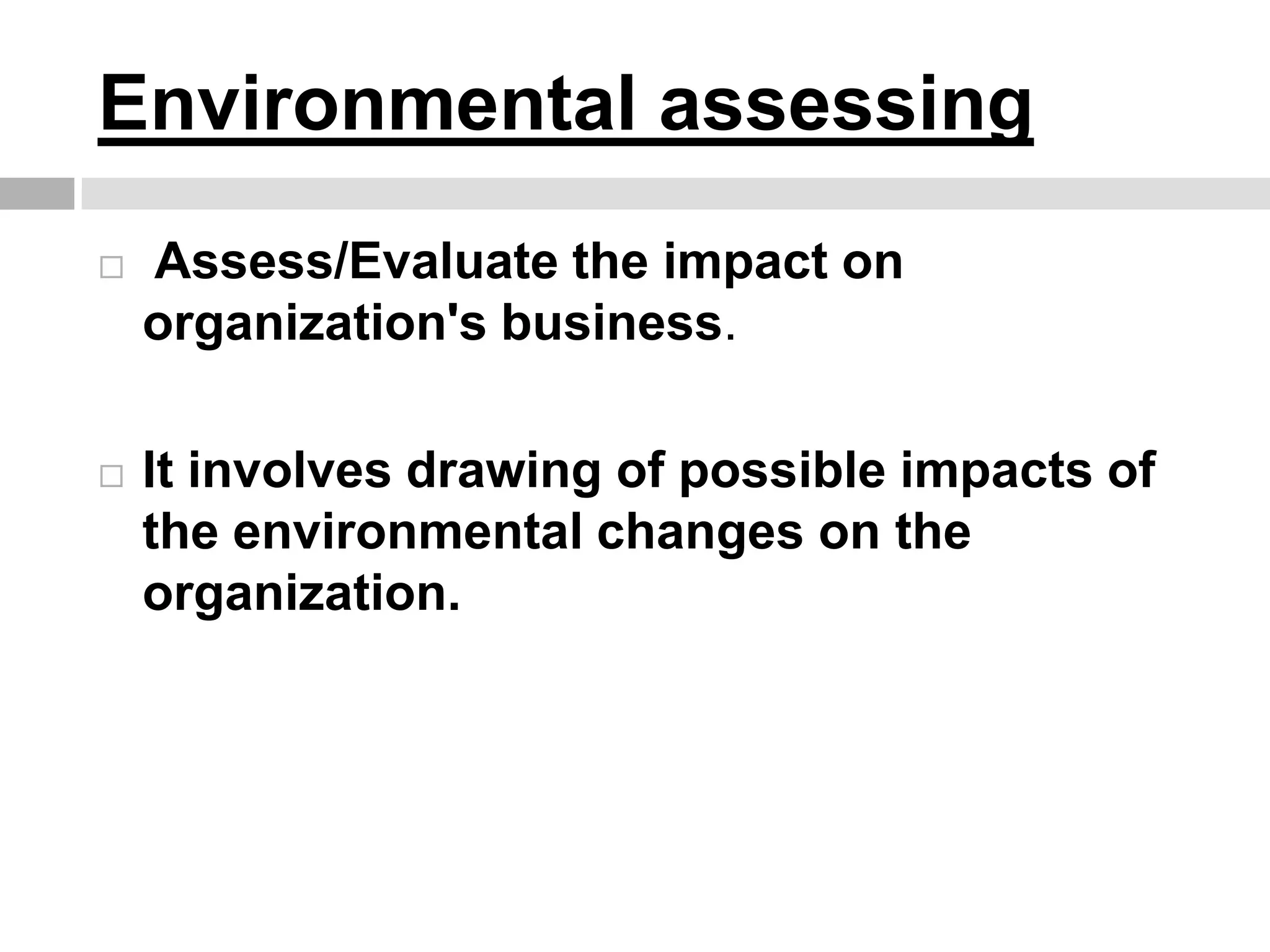
Environmental assessing
   Assess/Evaluate the impact on
    organization's business.

   It involves drawing of possible impacts of
    the environmental changes on the
    organization.
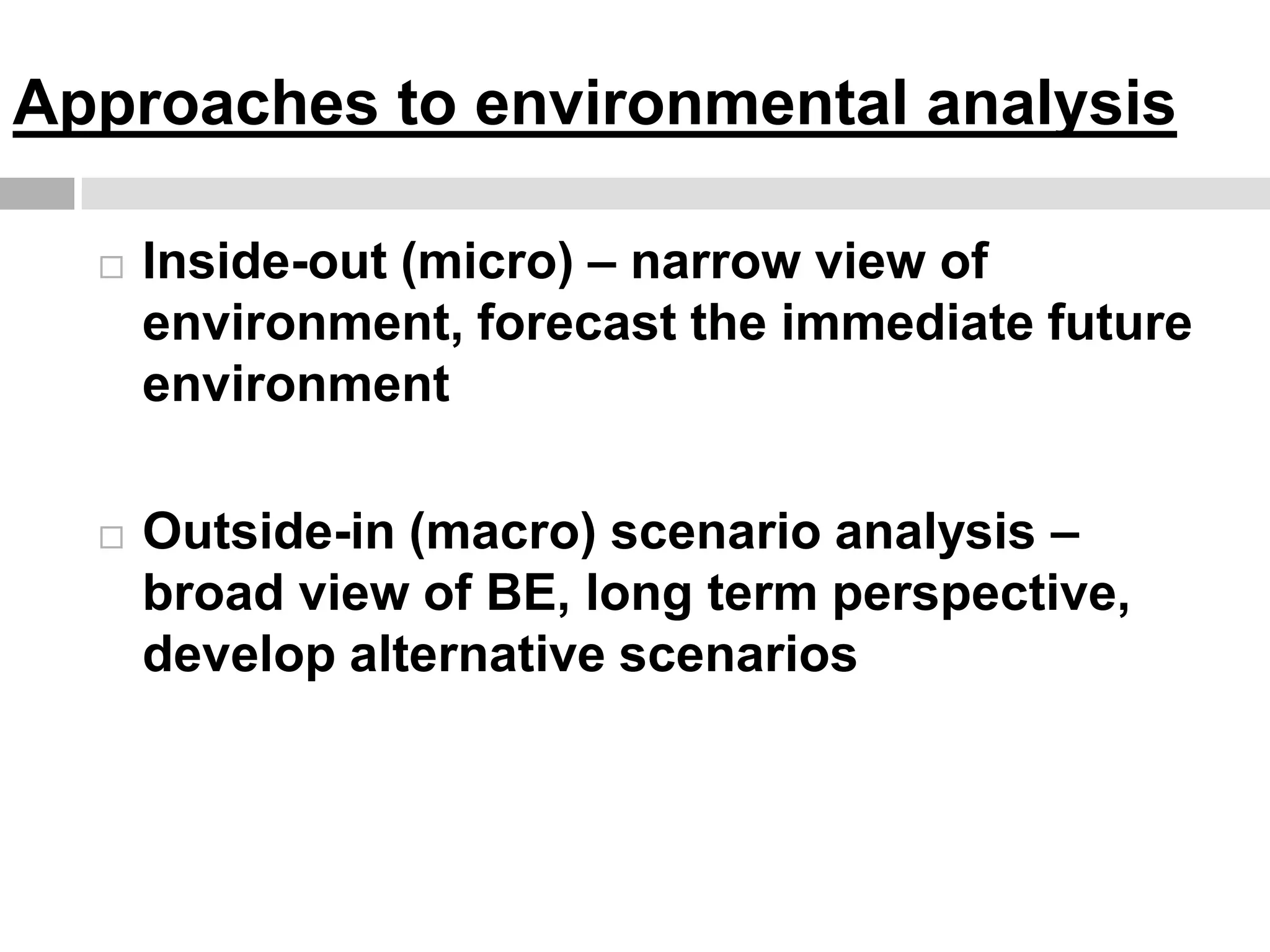
Approaches to environmental analysis

     Inside-out (micro) – narrow view of
      environment, forecast the immediate future
      environment

     Outside-in (macro) scenario analysis –
      broad view of BE, long term perspective,
      develop alternative scenarios
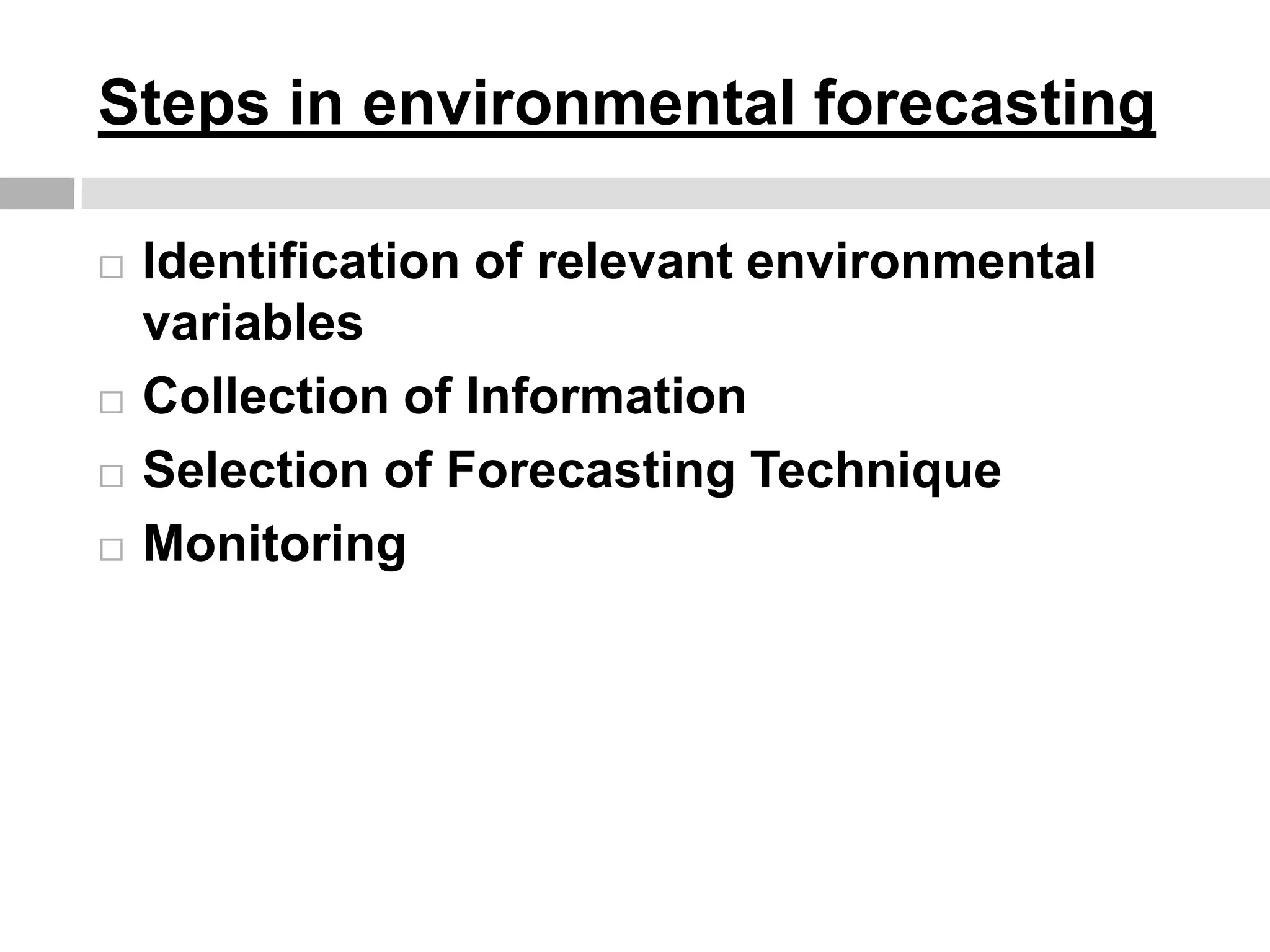
Steps in environmental forecasting

   Identification of relevant environmental
    variables
   Collection of Information
   Selection of Forecasting Technique
   Monitoring
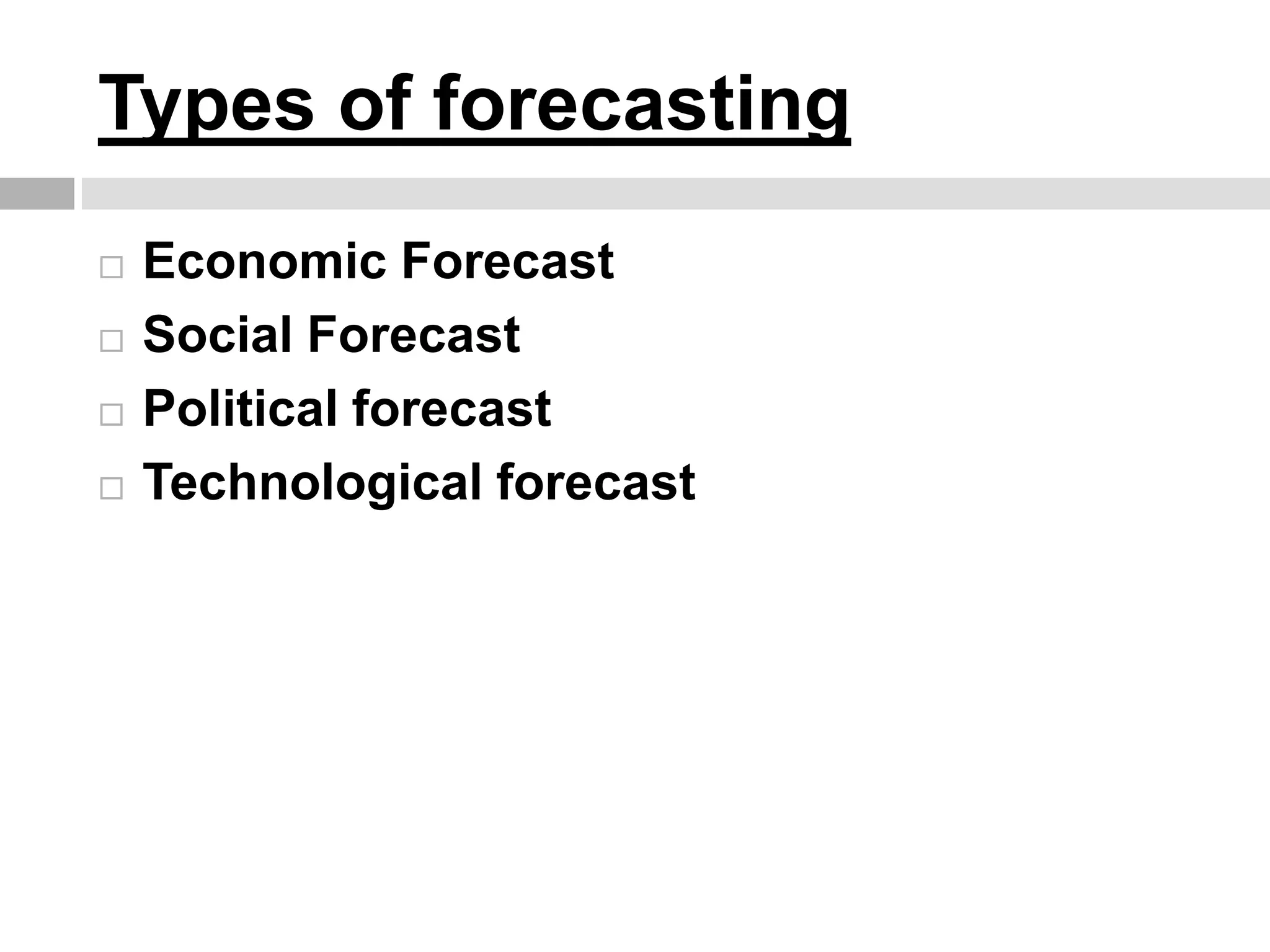
Types of forecasting
   Economic Forecast
   Social Forecast
   Political forecast
   Technological forecast
Uses of environmental analysis

   The environmental analysis makes one aware of
    the environment-organization linkage.
   It helps an organization to identify present and
    future, threats and opportunities.
   It helps to understand the transformation of the
    industry environment.
   It contributes in identification of risks.
   It helps in formulation of strategies.
   It keeps the manger informed, alert and dynamic.
Thank you

Environmental analysis

  • 1.
    ENVIRONMENTAL ANALYSIS ANDFORECASTING ANJU RAJ S4 MBA, MACFAST COLLEGE, TIRUVALLA
  • 2.
    Definitions  Environment: It refers to all external forces which have the bearing on the functioning of BUSINESS.  Analysis: It refers to detailed study or examination of something in order to understand more about it.  Environmental Analysis: Scrutinizing of the external forces which have the bearing on the functioning of the BUSINESS..
  • 3.
    WHY ENVIRONMENTAL ANALYSIS? Analysis of the environment makes the business aware of the threats & opportunities in the environment.
  • 4.
    Stages of EnvironmentalAnalysis  Scanning  Monitoring  Forecasting  Assessing
  • 5.
    Environmental scanning  ‘the study and interpretation of the political, economic, social and technological events and trends which influence a business, an industry or even a total market’.  It helps the managers to decide the future path of the organization.  Scanning must identify the threats and opportunities existing in the environment.
  • 6.
    Environmental monitoring  Focused & systematic in-depth analysis of relevant environmental trends.  Gather data to determine emerging patterns  Outputs of monitoring :  Environmental patterns to be forecast  Trends for further monitoring  Patterns requiring further scanning.
  • 7.
    Environmental forecasting  Environmental forecasting involves the development of plausible projections about the direction, scope, speed, and intensity of environmental change.  Estimating the intensity, nature, and timing of the external forces that may effect the performance of a firm, disrupt its plans , or force a change in its strategies.
  • 8.
    Environmental assessing  Assess/Evaluate the impact on organization's business.  It involves drawing of possible impacts of the environmental changes on the organization.
  • 9.
    Approaches to environmentalanalysis  Inside-out (micro) – narrow view of environment, forecast the immediate future environment  Outside-in (macro) scenario analysis – broad view of BE, long term perspective, develop alternative scenarios
  • 10.
    Steps in environmentalforecasting  Identification of relevant environmental variables  Collection of Information  Selection of Forecasting Technique  Monitoring
  • 11.
    Types of forecasting  Economic Forecast  Social Forecast  Political forecast  Technological forecast
  • 12.
    Uses of environmentalanalysis  The environmental analysis makes one aware of the environment-organization linkage.  It helps an organization to identify present and future, threats and opportunities.  It helps to understand the transformation of the industry environment.  It contributes in identification of risks.  It helps in formulation of strategies.  It keeps the manger informed, alert and dynamic.
  • 13.

Editor's Notes

  • #10 BE-business environment