
CASE STUDY
   PRESENTED BY:

    MALAV DESAI
    YASHAL SHAH
  VISHAL JHAMNANI
    DHAVAL KARIA
     KIRAN NAYAR
TABLE OF CONTENTS

•   TYPES OF CASES
•   WHAT MIGHT YOU BE EXPECTED TO DO WITH A CASE?
•   ONE APPROACH TO CASE ANALYSIS
•   GETTING ORIENTED
•   IDENTIFYING PROBLEMS
•   PERFORMING ANALYSES
•   ACTION PLANNING
•   CONCLUSION
TYPES OF CASES

• DECISION CASES: Choosing among a finite set of distinct
  decision alternatives.


• PROBLEM CASES: Diagnose a problem and formulate possible
  solutions.


• EVALUATION CASES: Analyses the underlying reasons.
WHAT MIGHT YOU BE EXPECTED TO DO WITH A CASE?

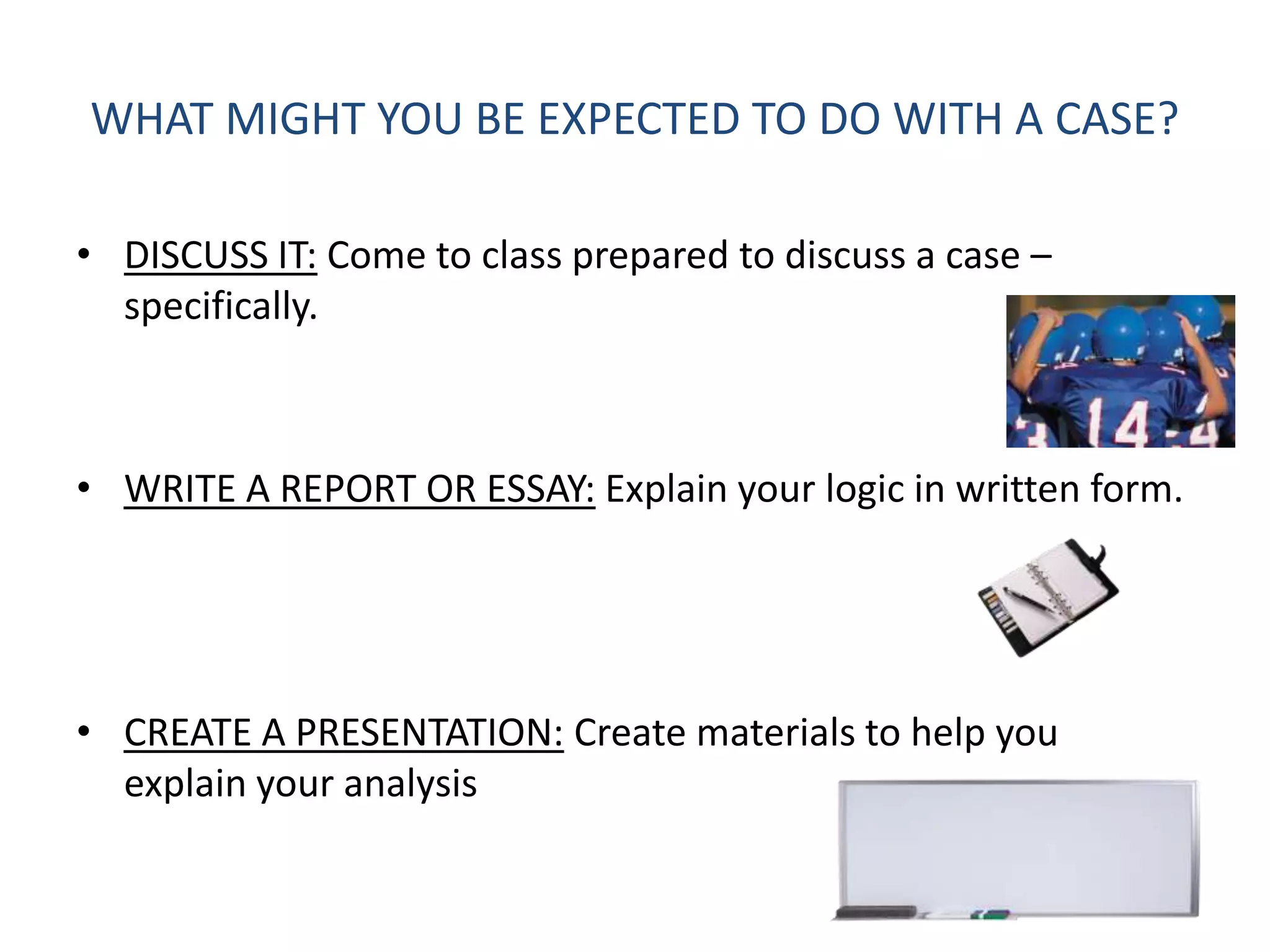
• DISCUSS IT: Come to class prepared to discuss a case –
  specifically.


• WRITE A REPORT OR ESSAY: Explain your logic in written form.


• CREATE A PRESENTATION: Create materials to help you
  explain your analysis
• LEARNING FROM CASE ANALYSIS
   – Derivation of general principles, ideas, and theories.
   – Instructor guide students.


• ASSIGNMENT QUESTIONS
   – It requires a deeper exploration of the case.
   – Identifying important issues at the heart of the case.
   – Identifying what lessons from the case can be applied more broadly.
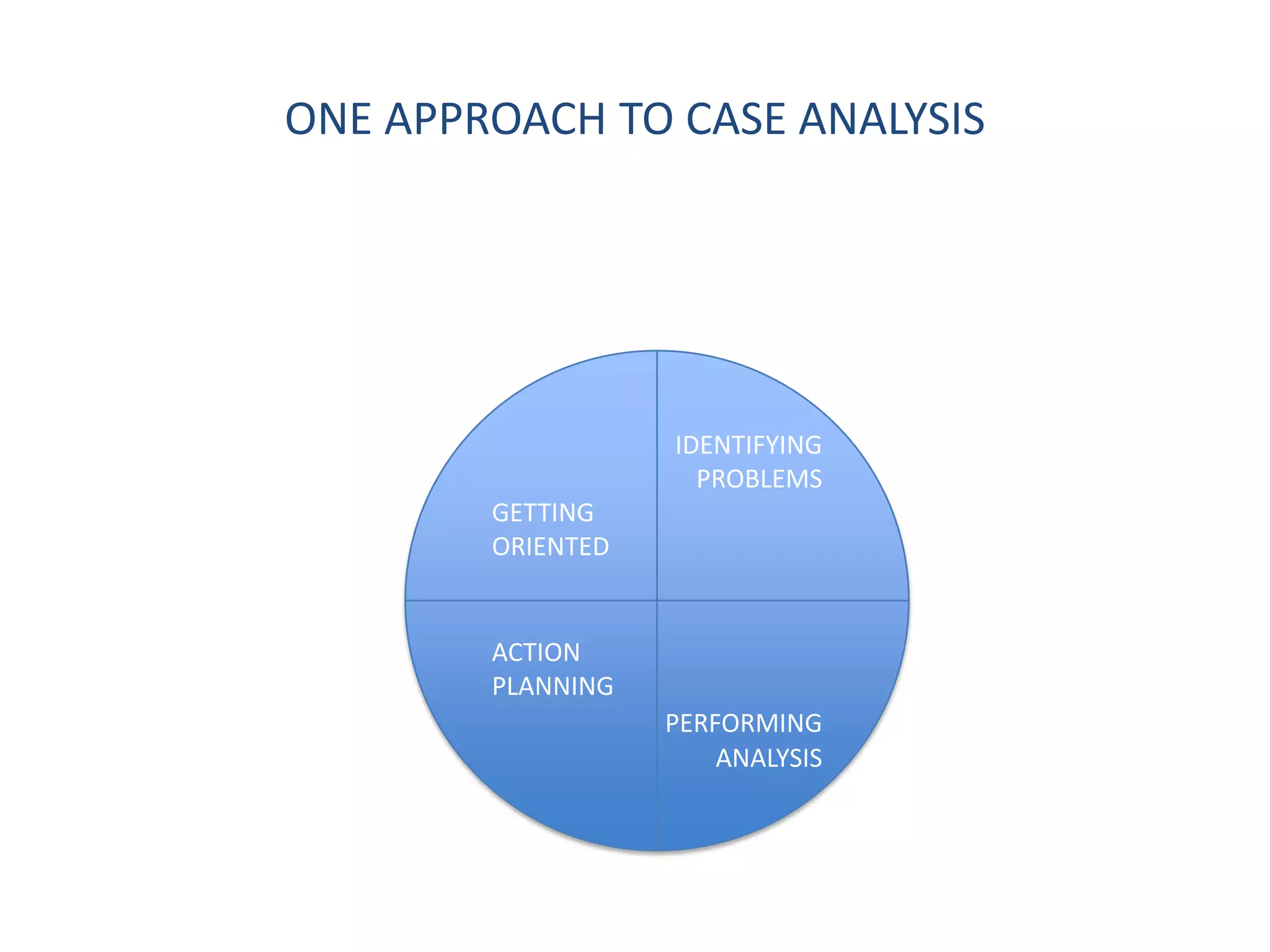
ONE APPROACH TO CASE ANALYSIS


                   IDENTIFYING
                     PROBLEMS
        GETTING
        ORIENTED


        ACTION
        PLANNING
                   PERFORMING
                       ANALYSIS
GETTING ORIENTED

• CASE ANALYSIS OVERVIEW
   – Analyzing a case.
   – Examination of information.


• YOUR FIRST PASS
   –   Gather your material and tools.
   –   Quickly read the opening section.
   –   Flip through the pages.
   –   Read and Re-read the assignment questions.
   –   Defining the problem.
IDENTIFYING PROBLEMS

• THE DIGGING PROCESS

• READING THE CASE CAREFULLY

• BRINGING OUTSIDE CONCEPTS INTO YOUR ANALYSIS

• REVISITING YOUR PROBLEM STATEMENT
PERFORMING ANALYSIS

• APPLYING JUDGEMENT
• QUALITATIVE & QUANTITATIVE ANALYSIS
• IDENTIFYING USEFUL DATA
• MATCHING FRAMEWORKS TO DATA
• REVISITING, RIFINING, AND REFLECTING
• KNOWING WHEN TO STOP
• EDUCATION FOR JUDGEMENT
ACTION PLANNING

• IT STATES WHAT WOULD BE OBJECTIELY BEST FOR THE CASE
  COMPANY.

• APPROACH FOR ACTION PLANNING.
   – IDENTIFY TASKS
   – ANALYZE AND DELEGATE TASKS
   – DOUBLE – CHECK WITH SCHEMES ( Space, Cash< Helpers, Equipment,
                                 Materials, Expertise, Systems)
• DECISION ALTERNATIVES

• FIRMING UP RECOMMENDATIONS

• REVISITING, REFINING, AND REFLECTING
CONCLUSION

• The approach may sometimes lead you to a dead end, in that
  case use your judgment to try something different way.
  Solving a case study is just like a detective solving a crime, the
  more you dig in the more solutions and clues you will get.

Process of Case Study

  • 1.
    CASE STUDY PRESENTED BY: MALAV DESAI YASHAL SHAH VISHAL JHAMNANI DHAVAL KARIA KIRAN NAYAR
  • 2.
    TABLE OF CONTENTS • TYPES OF CASES • WHAT MIGHT YOU BE EXPECTED TO DO WITH A CASE? • ONE APPROACH TO CASE ANALYSIS • GETTING ORIENTED • IDENTIFYING PROBLEMS • PERFORMING ANALYSES • ACTION PLANNING • CONCLUSION
  • 3.
    TYPES OF CASES •DECISION CASES: Choosing among a finite set of distinct decision alternatives. • PROBLEM CASES: Diagnose a problem and formulate possible solutions. • EVALUATION CASES: Analyses the underlying reasons.
  • 4.
    WHAT MIGHT YOUBE EXPECTED TO DO WITH A CASE? • DISCUSS IT: Come to class prepared to discuss a case – specifically. • WRITE A REPORT OR ESSAY: Explain your logic in written form. • CREATE A PRESENTATION: Create materials to help you explain your analysis
  • 5.
    • LEARNING FROMCASE ANALYSIS – Derivation of general principles, ideas, and theories. – Instructor guide students. • ASSIGNMENT QUESTIONS – It requires a deeper exploration of the case. – Identifying important issues at the heart of the case. – Identifying what lessons from the case can be applied more broadly.
  • 6.
    ONE APPROACH TOCASE ANALYSIS IDENTIFYING PROBLEMS GETTING ORIENTED ACTION PLANNING PERFORMING ANALYSIS
  • 7.
    GETTING ORIENTED • CASEANALYSIS OVERVIEW – Analyzing a case. – Examination of information. • YOUR FIRST PASS – Gather your material and tools. – Quickly read the opening section. – Flip through the pages. – Read and Re-read the assignment questions. – Defining the problem.
  • 8.
    IDENTIFYING PROBLEMS • THEDIGGING PROCESS • READING THE CASE CAREFULLY • BRINGING OUTSIDE CONCEPTS INTO YOUR ANALYSIS • REVISITING YOUR PROBLEM STATEMENT
  • 9.
    PERFORMING ANALYSIS • APPLYINGJUDGEMENT • QUALITATIVE & QUANTITATIVE ANALYSIS • IDENTIFYING USEFUL DATA • MATCHING FRAMEWORKS TO DATA • REVISITING, RIFINING, AND REFLECTING • KNOWING WHEN TO STOP • EDUCATION FOR JUDGEMENT
  • 10.
    ACTION PLANNING • ITSTATES WHAT WOULD BE OBJECTIELY BEST FOR THE CASE COMPANY. • APPROACH FOR ACTION PLANNING. – IDENTIFY TASKS – ANALYZE AND DELEGATE TASKS – DOUBLE – CHECK WITH SCHEMES ( Space, Cash< Helpers, Equipment, Materials, Expertise, Systems) • DECISION ALTERNATIVES • FIRMING UP RECOMMENDATIONS • REVISITING, REFINING, AND REFLECTING
  • 11.
    CONCLUSION • The approachmay sometimes lead you to a dead end, in that case use your judgment to try something different way. Solving a case study is just like a detective solving a crime, the more you dig in the more solutions and clues you will get.