Problem formulationA problem well defined is a problem half solvedcreated by the Dreamteam
OverviewWhat is a good problem formulation?Why is a good problem formulation important?How to set up a problem formulation?Do‘s & Dont‘sSources
Whatis a goodproblemformulation?Definition:„Problem formulation is the creative and probably the more important step towards overcoming a problematic state than problem-solving. A good definition of what the problem is, is believed to be more than half of the way towards is eventual elimination.“ (ask.references.com)
What is a good Problem formulation?Interesting – keeps the researcher involved in it throughout the research processResearchable – can be investigated through the collection and analysis of data, using case study or other techniques  Understandable and logically build up – well formulated and has logical structure with main question and following sub-questions
What is a good problem formulation?Manageable – fits the level of researcher’s level of research skills, needed resources, and time restrictionsPurposeful – establishes  cooperation between researcher and business which should lead to economical and practical development of both sidesEthical – does not embarrass or harm participants
Why is a good problem formulation important?Formulating a Problem formulation is the first and most important step of a research processThe problem formulation is like an identification of a destination before undertaking a journeyThe research problem serves as a foundation of a research study; like a building and its foundationIf it is well formulated, you can expect a good study to followRemember: Confusion is often but the first step to clarity
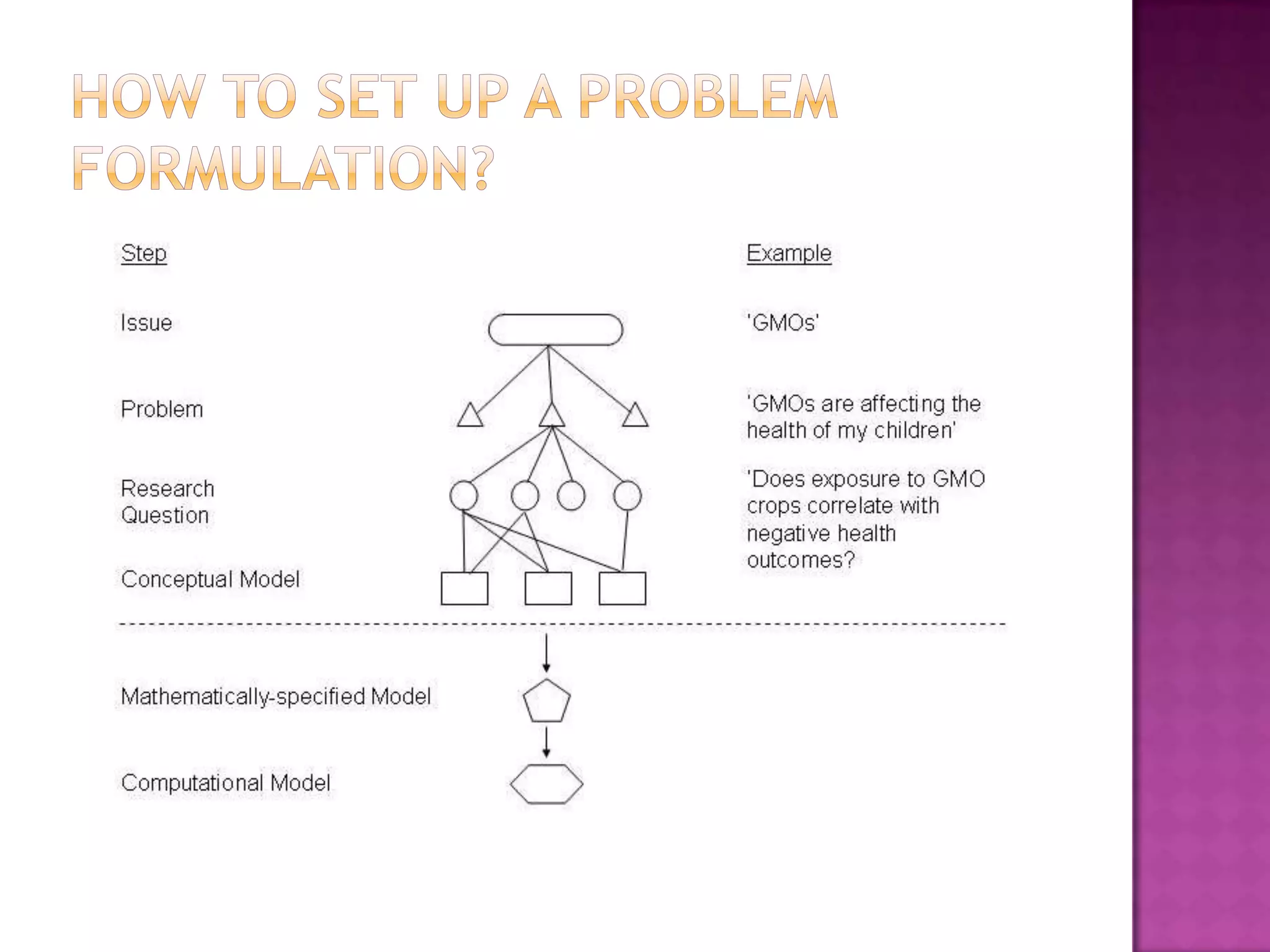
How to set up a problem formulation?
How to set up a problem formulation?Step 1: Choose a area/topicYour own interest is your most essential motivational factor (Andersen, 2005)Brainstorm techniquesBe creative, be open to new ideasQuantityStep 2:  Narrowing downBe criticalDetermine whether the information already existsChoose a subjectThink: what is the problem, why is it a problem, and who is it a problem for? (Andersen,2005)Divide the broad area into sub areas
How to set up a problem formulation?Step 3: Write the problem formulationRaise research questions + sub questionsUnderstandable languageClearly delimitedDetermine whether the question can be answeredStep 4: Double checkCheck everything (main question, sub questions)Ask yourself the question if you are satisfied with your problem formulationRemember in any case to always justify why you choose exactly the problem formulation you do, rather than other possible problem formulations (Andersen, 2005)
Do‘s & Dont‘sDo’sFree thinking wild ideas, spontaneous, creativeUse brainstorm techniquesSeek help if running in circles/empty of ideasAlways look on the bright side of lifeDont’sAvoid negative thinkingDon’t panicDon’t push yourself in a corner
Thank you for your attention
SourcesAndersen, IB (2002): Den SkinbarlingeVirkelikghed. Copenhagen: Samfundsliteraturhttp://books.google.com/books?hl=en&lr=&id=x_kp__WmFzoC&oi=fnd&pg=PR16&dq=guide+for+problem+formulation&ots=mPrby18e29&sig=eMLKjP-0v8kXOv65-EgP7Om81zY#v=onepage&q=&f=falseKumar, R (2005). Research methodology, a step by step guide for beginners, SAGEAndersen (2005). Guide to problem formulation, Samfundslitteratur PressTable: Kasper Kok, Peter Valkering, et al.http://edepot.wur.nl/19270

Problem formulation

  • 1.
    Problem formulationA problemwell defined is a problem half solvedcreated by the Dreamteam
  • 2.
    OverviewWhat is agood problem formulation?Why is a good problem formulation important?How to set up a problem formulation?Do‘s & Dont‘sSources
  • 3.
    Whatis a goodproblemformulation?Definition:„Problemformulation is the creative and probably the more important step towards overcoming a problematic state than problem-solving. A good definition of what the problem is, is believed to be more than half of the way towards is eventual elimination.“ (ask.references.com)
  • 4.
    What is agood Problem formulation?Interesting – keeps the researcher involved in it throughout the research processResearchable – can be investigated through the collection and analysis of data, using case study or other techniques Understandable and logically build up – well formulated and has logical structure with main question and following sub-questions
  • 5.
    What is agood problem formulation?Manageable – fits the level of researcher’s level of research skills, needed resources, and time restrictionsPurposeful – establishes cooperation between researcher and business which should lead to economical and practical development of both sidesEthical – does not embarrass or harm participants
  • 6.
    Why is agood problem formulation important?Formulating a Problem formulation is the first and most important step of a research processThe problem formulation is like an identification of a destination before undertaking a journeyThe research problem serves as a foundation of a research study; like a building and its foundationIf it is well formulated, you can expect a good study to followRemember: Confusion is often but the first step to clarity
  • 7.
    How to setup a problem formulation?
  • 8.
    How to setup a problem formulation?Step 1: Choose a area/topicYour own interest is your most essential motivational factor (Andersen, 2005)Brainstorm techniquesBe creative, be open to new ideasQuantityStep 2: Narrowing downBe criticalDetermine whether the information already existsChoose a subjectThink: what is the problem, why is it a problem, and who is it a problem for? (Andersen,2005)Divide the broad area into sub areas
  • 9.
    How to setup a problem formulation?Step 3: Write the problem formulationRaise research questions + sub questionsUnderstandable languageClearly delimitedDetermine whether the question can be answeredStep 4: Double checkCheck everything (main question, sub questions)Ask yourself the question if you are satisfied with your problem formulationRemember in any case to always justify why you choose exactly the problem formulation you do, rather than other possible problem formulations (Andersen, 2005)
  • 10.
    Do‘s & Dont‘sDo’sFreethinking wild ideas, spontaneous, creativeUse brainstorm techniquesSeek help if running in circles/empty of ideasAlways look on the bright side of lifeDont’sAvoid negative thinkingDon’t panicDon’t push yourself in a corner
  • 11.
    Thank you foryour attention
  • 12.
    SourcesAndersen, IB (2002):Den SkinbarlingeVirkelikghed. Copenhagen: Samfundsliteraturhttp://books.google.com/books?hl=en&lr=&id=x_kp__WmFzoC&oi=fnd&pg=PR16&dq=guide+for+problem+formulation&ots=mPrby18e29&sig=eMLKjP-0v8kXOv65-EgP7Om81zY#v=onepage&q=&f=falseKumar, R (2005). Research methodology, a step by step guide for beginners, SAGEAndersen (2005). Guide to problem formulation, Samfundslitteratur PressTable: Kasper Kok, Peter Valkering, et al.http://edepot.wur.nl/19270