Business Research Methods
(BRM )
Chapter # 5
Formulating a Research Problem
Lecturer: Noorullah Nabizai
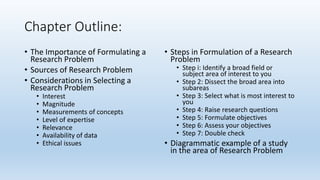
Chapter Outline:
• The Importance of Formulating a
Research Problem
• Sources of Research Problem
• Considerations in Selecting a
Research Problem
• Interest
• Magnitude
• Measurements of concepts
• Level of expertise
• Relevance
• Availability of data
• Ethical issues
• Steps in Formulation of a Research
Problem
• Step i: Identify a broad field or
subject area of interest to you
• Step 2: Dissect the broad area into
subareas
• Step 3: Select what is most interest to
you
• Step 4: Raise research questions
• Step 5: Formulate objectives
• Step 6: Assess your objectives
• Step 7: Double check
• Diagrammatic example of a study
in the area of Research Problem
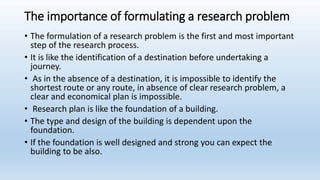
The importance of formulating a research problem
• The formulation of a research problem is the first and most important
step of the research process.
• It is like the identification of a destination before undertaking a
journey.
• As in the absence of a destination, it is impossible to identify the
shortest route or any route, in absence of clear research problem, a
clear and economical plan is impossible.
• Research plan is like the foundation of a building.
• The type and design of the building is dependent upon the
foundation.
• If the foundation is well designed and strong you can expect the
building to be also.
• The research problem serves as the foundation of a research study:
• if it is well formulated, you can expect a good study to follow.
• This is the most important step and take time over formulating your
problem, for the clearer you are about your research problem, the
easier it will be for you later on.
• Remember it is the most critical step.
• Sources of research problem
• People
• Problems
• Programs
• Phenomena
Considerations in selecting a research problem
• When selecting a research problem there are a number of
considerations to keep in mind.
• Interest:
• Interest should be the most important consideration in selecting a
research problem.
• A research endeavor (effort) is usually time consuming, and involves
hard work and possibly unforeseen (unexpected) problems.
• If the selected topic does not greatly interest you, it could become
extremely difficult to sustain the required motivation, and hence its
completion as well as the amount of time taken could be affected.
Magnitude(size):
• You should have a sufficient knowledge about the research process to
be able to visualize the work involved in completing the proposed
study.
• Narrow the topic down to something manageable, specific and clear.
• It is extremely important to select a topic that you can manage within
the time and resources at your disposal.
• Even if you are undertaking a descriptive study, you need to carefully
consider its magnitude.
Measurements of concepts:
• If you are using a concept in your study, make sure you are clear
about its indication its indicators and their environment.
• For example, if you plan to measure the effectiveness of a health
promotion program, you must be clear as to what determines
effectiveness and how it will be measured.
• Do not use concepts in your research problem that you are not sure
how to measure.
• Level of expertise:
• Make sure you have an adequate level of expertise for the task you
are proposing.
• Allow for the fact that you will learn during the study and may
receive help from your research supervisors and others, but
remember you need to do most of the work yourself.
• Relevance:
• Select a topic that is of relevance to you as a professional.
• Ensure that your study adds to the existing body of knowledge,
bridges current gaps or is useful in policy formulation.
• This will help you to sustain interest in the study.
• Availability of data:
• If your topic entails collection of information from secondary (office
records, client records, census or other already published reports,
etc.) before finalizing your topic, make sure that data are available
and in the format you want.
• Ethical issues:
• Another important consideration is formulating a research problem is
the ethical issues involved.
• Get information how the ethical issues can affect the population and
how ethical problems can be overcome.
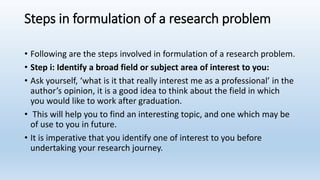
Steps in formulation of a research problem
• Following are the steps involved in formulation of a research problem.
• Step i: Identify a broad field or subject area of interest to you:
• Ask yourself, ‘what is it that really interest me as a professional’ in the
author’s opinion, it is a good idea to think about the field in which
you would like to work after graduation.
• This will help you to find an interesting topic, and one which may be
of use to you in future.
• It is imperative that you identify one of interest to you before
undertaking your research journey.
Step 2: Dissect the broad area into subareas:
• In the 2nd step divide the broad area into subareas.
• Take the example of domestic violence.
• There are many aspects and issues in the area of domestic violence in
the following diagram.
• Similarly you can select any subject area from other fields.
• In preparing this should also consult others who have some
knowledge of the area and literature in your subject area.
• Once you have developed an exhaustive list of the subareas from
various sources, you proceed to the next stage where you select what
will become the basis of your inquiry.
Step 3: Select what is most interest to you:
• Out of this list, select issues or subareas about which you are
passionate.
• This is because your interest should be the most important
determinant for selection, even though there are other
considerations which have been discussed in the previous section,
‘considerations in selecting a research problem’.
• One way to decide what interests you most is to delete all those
subareas in which you are not very interested.
Step 4: Raise research questions:
At this step you ask yourself,
• ‘What is it that I want to find out about in this subarea’?
• Within your chosen subareas, first list whatever questions you want
to find answers to.
• If you find yourself in a situation where you can think of many
questions, too many to be manageable, again go through a process of
elimination, as you did in step 3.
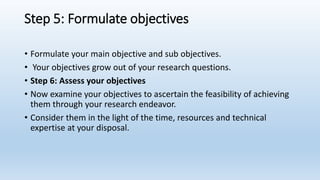
Step 5: Formulate objectives
• Formulate your main objective and sub objectives.
• Your objectives grow out of your research questions.
• Step 6: Assess your objectives
• Now examine your objectives to ascertain the feasibility of achieving
them through your research endeavor.
• Consider them in the light of the time, resources and technical
expertise at your disposal.
Step 7: Double check
• Go back and give final consideration to whether or not you are
sufficiently interested in the study, and have adequate resources to
undertake it.
• Ask yourself, ‘Am I really enthusiastic about this study’, and, ‘Do I
really have enough resources to undertake it’? Answer these
questions thoughtfully and realistically. If your answer to one of them
is ‘no’, reassess your objectives.
Ch # 5 brm

Ch # 5 brm

  • 1.
    Business Research Methods (BRM) Chapter # 5 Formulating a Research Problem Lecturer: Noorullah Nabizai
  • 2.
    Chapter Outline: • TheImportance of Formulating a Research Problem • Sources of Research Problem • Considerations in Selecting a Research Problem • Interest • Magnitude • Measurements of concepts • Level of expertise • Relevance • Availability of data • Ethical issues • Steps in Formulation of a Research Problem • Step i: Identify a broad field or subject area of interest to you • Step 2: Dissect the broad area into subareas • Step 3: Select what is most interest to you • Step 4: Raise research questions • Step 5: Formulate objectives • Step 6: Assess your objectives • Step 7: Double check • Diagrammatic example of a study in the area of Research Problem
  • 3.
    The importance offormulating a research problem • The formulation of a research problem is the first and most important step of the research process. • It is like the identification of a destination before undertaking a journey. • As in the absence of a destination, it is impossible to identify the shortest route or any route, in absence of clear research problem, a clear and economical plan is impossible. • Research plan is like the foundation of a building. • The type and design of the building is dependent upon the foundation. • If the foundation is well designed and strong you can expect the building to be also.
  • 4.
    • The researchproblem serves as the foundation of a research study: • if it is well formulated, you can expect a good study to follow. • This is the most important step and take time over formulating your problem, for the clearer you are about your research problem, the easier it will be for you later on. • Remember it is the most critical step. • Sources of research problem • People • Problems • Programs • Phenomena
  • 5.
    Considerations in selectinga research problem • When selecting a research problem there are a number of considerations to keep in mind. • Interest: • Interest should be the most important consideration in selecting a research problem. • A research endeavor (effort) is usually time consuming, and involves hard work and possibly unforeseen (unexpected) problems. • If the selected topic does not greatly interest you, it could become extremely difficult to sustain the required motivation, and hence its completion as well as the amount of time taken could be affected.
  • 6.
    Magnitude(size): • You shouldhave a sufficient knowledge about the research process to be able to visualize the work involved in completing the proposed study. • Narrow the topic down to something manageable, specific and clear. • It is extremely important to select a topic that you can manage within the time and resources at your disposal. • Even if you are undertaking a descriptive study, you need to carefully consider its magnitude.
  • 7.
    Measurements of concepts: •If you are using a concept in your study, make sure you are clear about its indication its indicators and their environment. • For example, if you plan to measure the effectiveness of a health promotion program, you must be clear as to what determines effectiveness and how it will be measured. • Do not use concepts in your research problem that you are not sure how to measure.
  • 8.
    • Level ofexpertise: • Make sure you have an adequate level of expertise for the task you are proposing. • Allow for the fact that you will learn during the study and may receive help from your research supervisors and others, but remember you need to do most of the work yourself. • Relevance: • Select a topic that is of relevance to you as a professional. • Ensure that your study adds to the existing body of knowledge, bridges current gaps or is useful in policy formulation. • This will help you to sustain interest in the study.
  • 9.
    • Availability ofdata: • If your topic entails collection of information from secondary (office records, client records, census or other already published reports, etc.) before finalizing your topic, make sure that data are available and in the format you want. • Ethical issues: • Another important consideration is formulating a research problem is the ethical issues involved. • Get information how the ethical issues can affect the population and how ethical problems can be overcome.
  • 10.
    Steps in formulationof a research problem • Following are the steps involved in formulation of a research problem. • Step i: Identify a broad field or subject area of interest to you: • Ask yourself, ‘what is it that really interest me as a professional’ in the author’s opinion, it is a good idea to think about the field in which you would like to work after graduation. • This will help you to find an interesting topic, and one which may be of use to you in future. • It is imperative that you identify one of interest to you before undertaking your research journey.
  • 11.
    Step 2: Dissectthe broad area into subareas: • In the 2nd step divide the broad area into subareas. • Take the example of domestic violence. • There are many aspects and issues in the area of domestic violence in the following diagram. • Similarly you can select any subject area from other fields. • In preparing this should also consult others who have some knowledge of the area and literature in your subject area. • Once you have developed an exhaustive list of the subareas from various sources, you proceed to the next stage where you select what will become the basis of your inquiry.
  • 13.
    Step 3: Selectwhat is most interest to you: • Out of this list, select issues or subareas about which you are passionate. • This is because your interest should be the most important determinant for selection, even though there are other considerations which have been discussed in the previous section, ‘considerations in selecting a research problem’. • One way to decide what interests you most is to delete all those subareas in which you are not very interested.
  • 14.
    Step 4: Raiseresearch questions: At this step you ask yourself, • ‘What is it that I want to find out about in this subarea’? • Within your chosen subareas, first list whatever questions you want to find answers to. • If you find yourself in a situation where you can think of many questions, too many to be manageable, again go through a process of elimination, as you did in step 3.
  • 15.
    Step 5: Formulateobjectives • Formulate your main objective and sub objectives. • Your objectives grow out of your research questions. • Step 6: Assess your objectives • Now examine your objectives to ascertain the feasibility of achieving them through your research endeavor. • Consider them in the light of the time, resources and technical expertise at your disposal.
  • 16.
    Step 7: Doublecheck • Go back and give final consideration to whether or not you are sufficiently interested in the study, and have adequate resources to undertake it. • Ask yourself, ‘Am I really enthusiastic about this study’, and, ‘Do I really have enough resources to undertake it’? Answer these questions thoughtfully and realistically. If your answer to one of them is ‘no’, reassess your objectives.